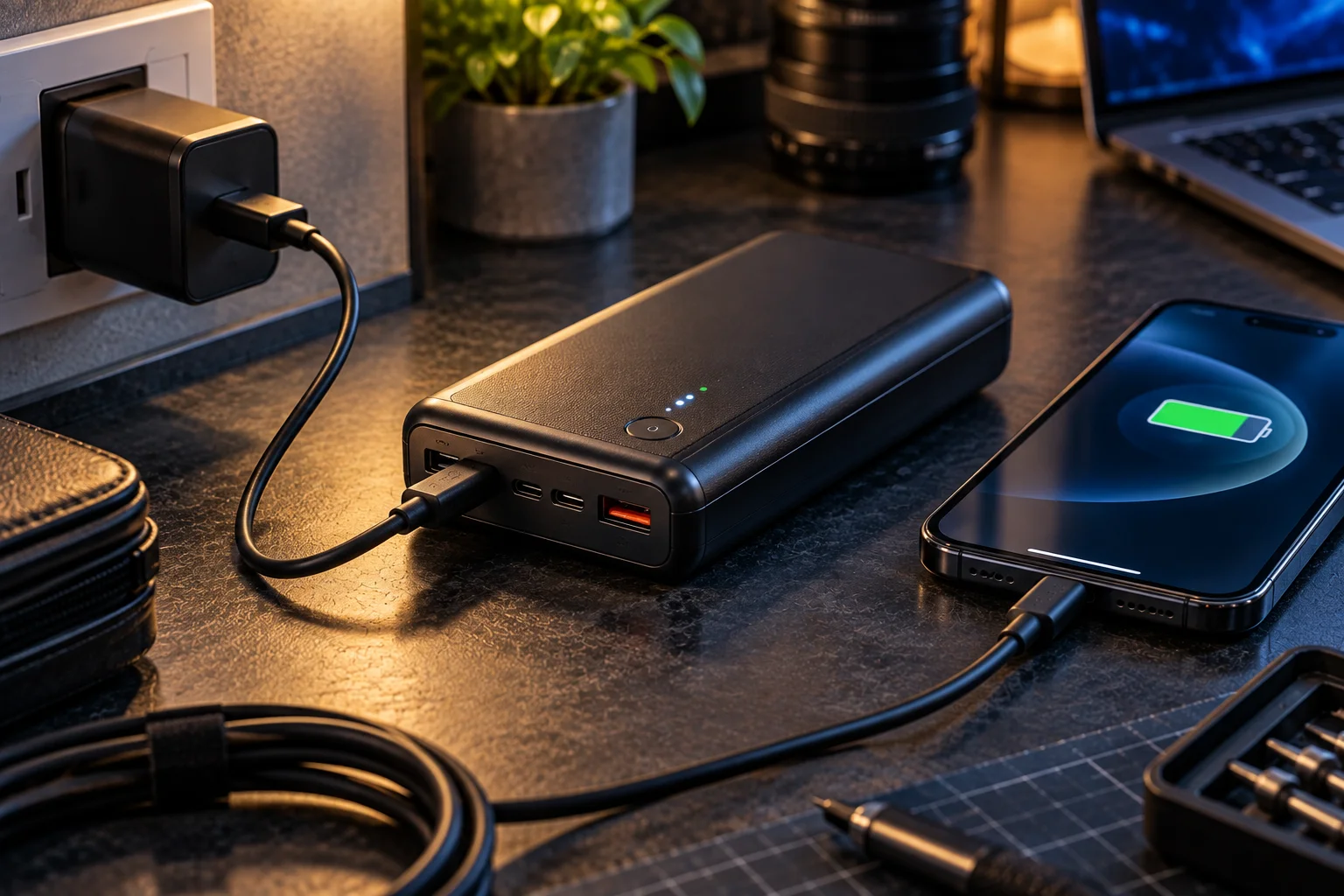
Yes, a power bank can charge itself while charging another device at the same time, but only when the power bank is designed to support pass-through charging.
Pass-through charging allows electricity from a wall charger to enter the power bank while the power bank simultaneously supplies power to a phone, tablet, earbuds or another connected device. The internal power-management circuitry controls how that incoming power is divided between the battery and the output.
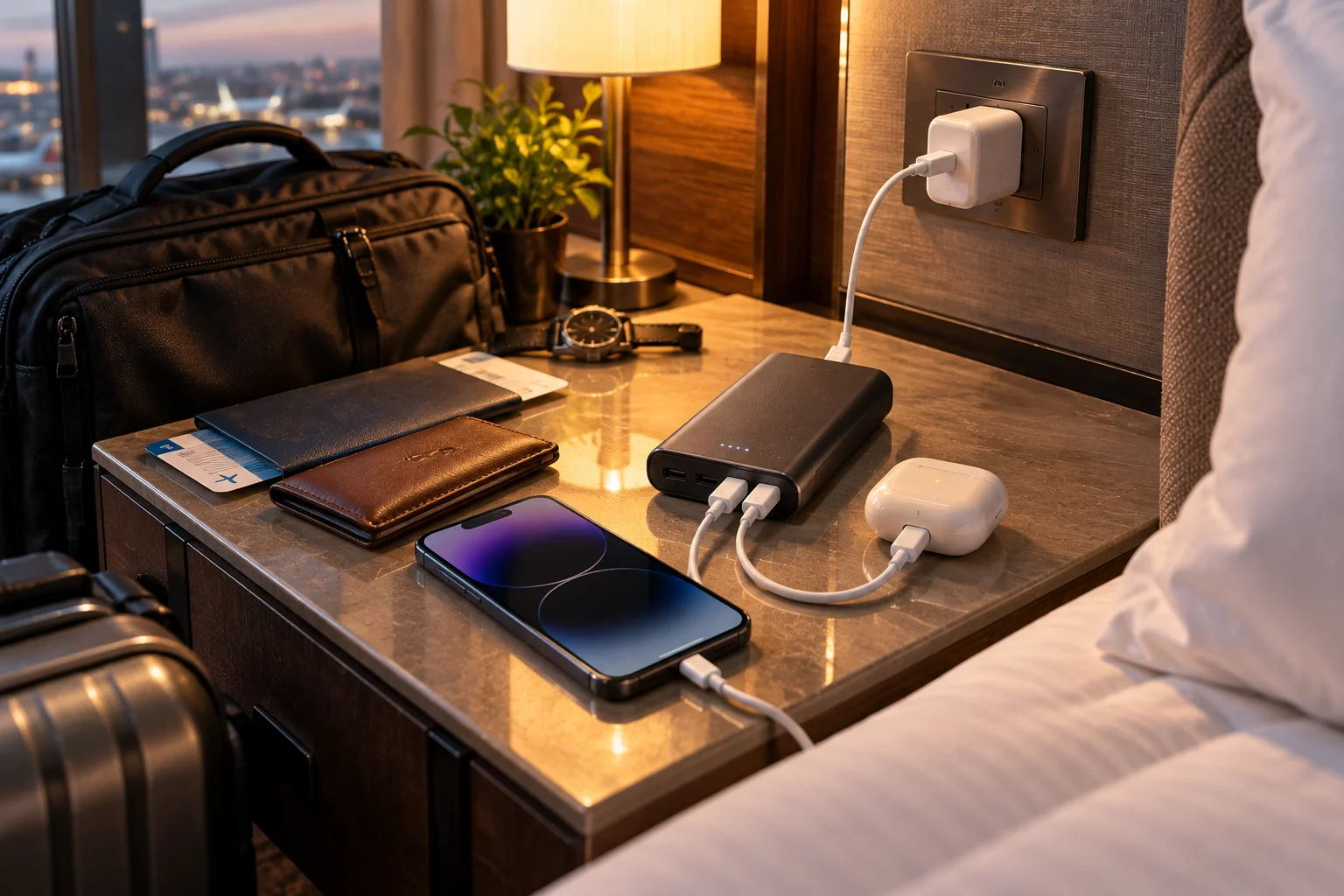
It's a useful feature when you have only one wall outlet. Instead of charging the power bank first and then using it to charge your phone, both can receive power during the same session.
However, pass-through charging isn't universal. Some manufacturers have deliberately removed the feature because of efficiency, heat and battery-longevity concerns. Anker, for example, says some of its power banks no longer support pass-through because differences between input and output power can increase charging time and potentially shorten the bank's lifespan.
So the real question isn't simply "Can I plug both in?" It's "Was this power bank designed to manage both charging paths safely?"
What Is Pass-Through Charging?
Pass-through charging means a power bank can recharge its internal battery while simultaneously powering a connected device.
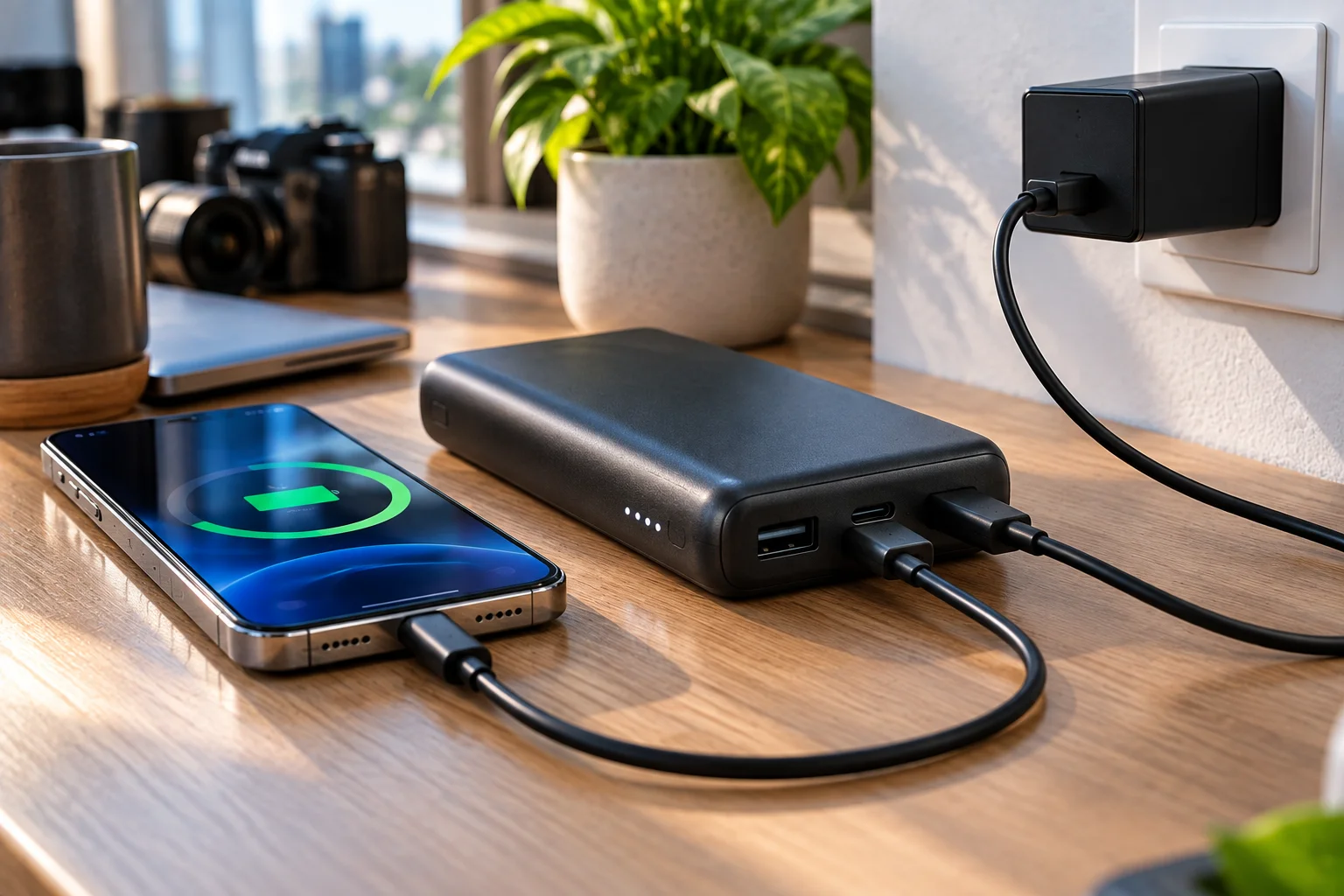
The setup is straightforward:
Wall charger → Power bank → Phone
At the same time, some of the incoming energy goes toward replenishing the power bank's battery.
A compatible power bank uses its internal power-management circuitry to control this process. Zendure, for example, describes pass-through charging as allowing the bank to charge itself while charging connected devices.
The exact implementation varies between products.
Some designs prioritize the connected device and use whatever power remains to charge the internal battery. Others limit output depending on how much power is coming into the bank.
How Does a Power Bank Charge and Discharge at the Same Time?
The electronics manage the power paths so the system doesn't simply force the battery to charge and discharge uncontrollably.
Imagine a 45W wall charger connected to a compatible power bank while a phone is drawing 20W.
A simplified scenario could look like:
45W coming in → 20W to phone + remaining power available for the bank
The actual figures will vary because of conversion losses, charging protocols, temperature and the bank's internal limits.
Modern designs can dynamically adjust output. Anker's documentation for one current power bank, for example, specifies different available output levels depending on the incoming power and states that output is automatically limited when it would otherwise exceed available input power.
So pass-through isn't simply "wall power goes straight through."
It's a managed power-distribution system.
Is Pass-Through Charging Safe?
Yes, it can be safe when the power bank explicitly supports the feature and is used within its specifications.
A compatible power bank is designed with the necessary charging and protection circuitry.
That can include protection against conditions such as:
Overheating
Overcurrent
Short circuits
Abnormal charging conditions
Excessive input or output
Zendure's documentation, for example, describes a multi-protection system that can deactivate the power bank under conditions including overheating, electrical overload and short circuits.
The important word is compatible.
If the manufacturer doesn't say that pass-through charging is supported, don't assume that simultaneously connecting the input and output is safe or useful.
Some power banks automatically disable their output when they detect that they are being recharged.
Does Pass-Through Charging Damage the Battery?
Occasional supported pass-through charging isn't inherently damaging, but frequent use can expose the battery and electronics to additional heat and charging stress.
Lithium-ion batteries age partly because of temperature, charging conditions, cycling and time.
Pass-through operation can create additional heat because energy is being converted and managed through several power paths simultaneously.
Anker specifically notes that frequent pass-through use can affect battery lifespan and recommends treating it as a useful feature rather than something that must always be active.
That doesn't mean one session will noticeably damage your power bank.
It means that if you have access to a wall outlet and don't need pass-through, there's little reason to use the feature continuously.
Why Can Pass-Through Charging Be Slower?
Because the available input power has to be shared between the connected device and the power bank.
Suppose a power bank accepts 30W but your phone is requesting 25W.
There may be relatively little remaining power for the bank's own battery after conversion losses.
If the phone requests less, more power can potentially go toward recharging the bank.
This is why pass-through charging can sometimes leave you with a phone that charges normally while the power bank's percentage barely moves.
Some power banks impose explicit limits. Zendure's documentation for one model, for example, explains that the power available to recharge the bank depends on how much current the connected device is drawing.
Why Does the Charger Wattage Matter?
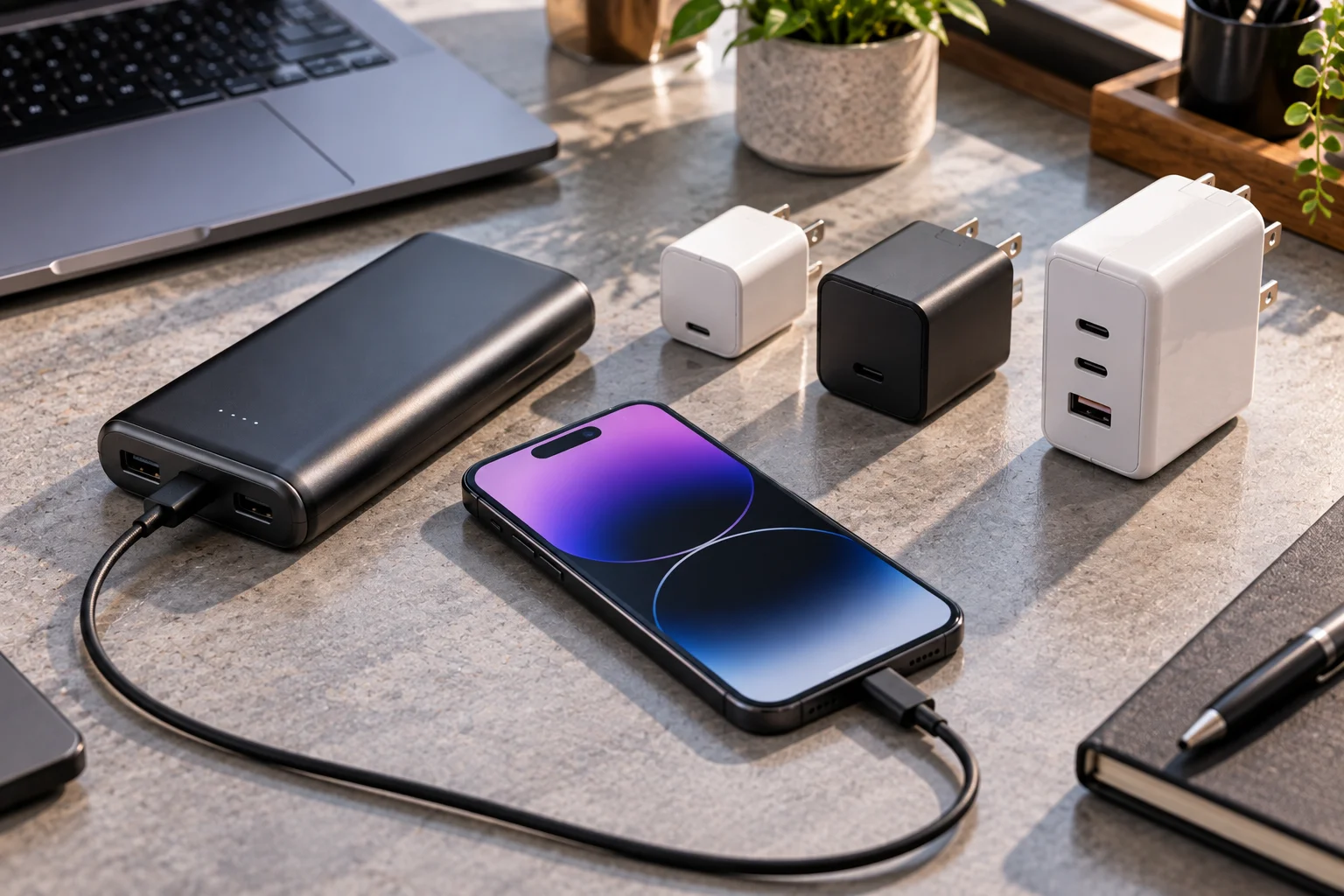
A higher-capacity charger can give the power bank more room to supply the connected device while also replenishing its own battery.
Consider a simplified example:
Wall charger | Phone demand | Power left for bank* |
|---|---|---|
20W | 15W | ~5W |
45W | 15W | ~30W |
65W | 15W | ~50W |
*Illustrative only. Actual power depends on conversion efficiency, PD negotiation and the power bank's limits.
A 65W charger therefore doesn't mean the phone receives 65W. The power bank and phone negotiate and regulate what they can use.
The power bank itself may also impose a lower pass-through limit regardless of how powerful the wall charger is.
Can Pass-Through Charging Work With Fast Charging?
Sometimes, but pass-through can change or limit the fast-charging behavior of the connected device.
A power bank may support USB Power Delivery, PPS or another fast-charging protocol when operating normally but provide different output characteristics during pass-through.
That's why the specification sheet matters.
Don't assume that:
Normal output speed = pass-through output speed
Some manufacturers publish separate input/output combinations for pass-through operation.
Can You Use Pass-Through Charging as a Mini UPS?
Some power banks can provide a UPS-like function, but this is a specialized capability rather than a universal property of pass-through charging.
Certain power banks are designed to remain connected to a device while receiving wall power and automatically switch to battery power if the external supply disappears.
Zendure describes this type of functionality for some of its products, including applications such as routers, security systems and home automation.
However, a normal pass-through power bank shouldn't automatically be treated as an uninterrupted power supply.
If uninterrupted operation matters, check whether the manufacturer specifically supports UPS or uninterrupted pass-through functionality.
How Do You Know if Your Power Bank Supports Pass-Through?
Check the manufacturer's specifications or manual for explicit terms such as "pass-through charging," "charge-through" or "power path."
Don't rely on the presence of multiple USB ports.
Also check whether the feature works through the particular input and output ports you intend to use.
Some models support pass-through through USB-C, while others may support it only under specific input/output combinations.
If the manufacturer doesn't document the feature, the safest assumption is that it isn't supported.
When Is Pass-Through Charging Actually Useful?
Pass-through charging makes the most sense when:
You have only one wall outlet.
You're travelling.
You're charging several devices overnight or during a work session.
You want to keep a low-power device running from a wall-connected power bank.
You need temporary backup power.
You want to reduce the number of charging adapters you carry.
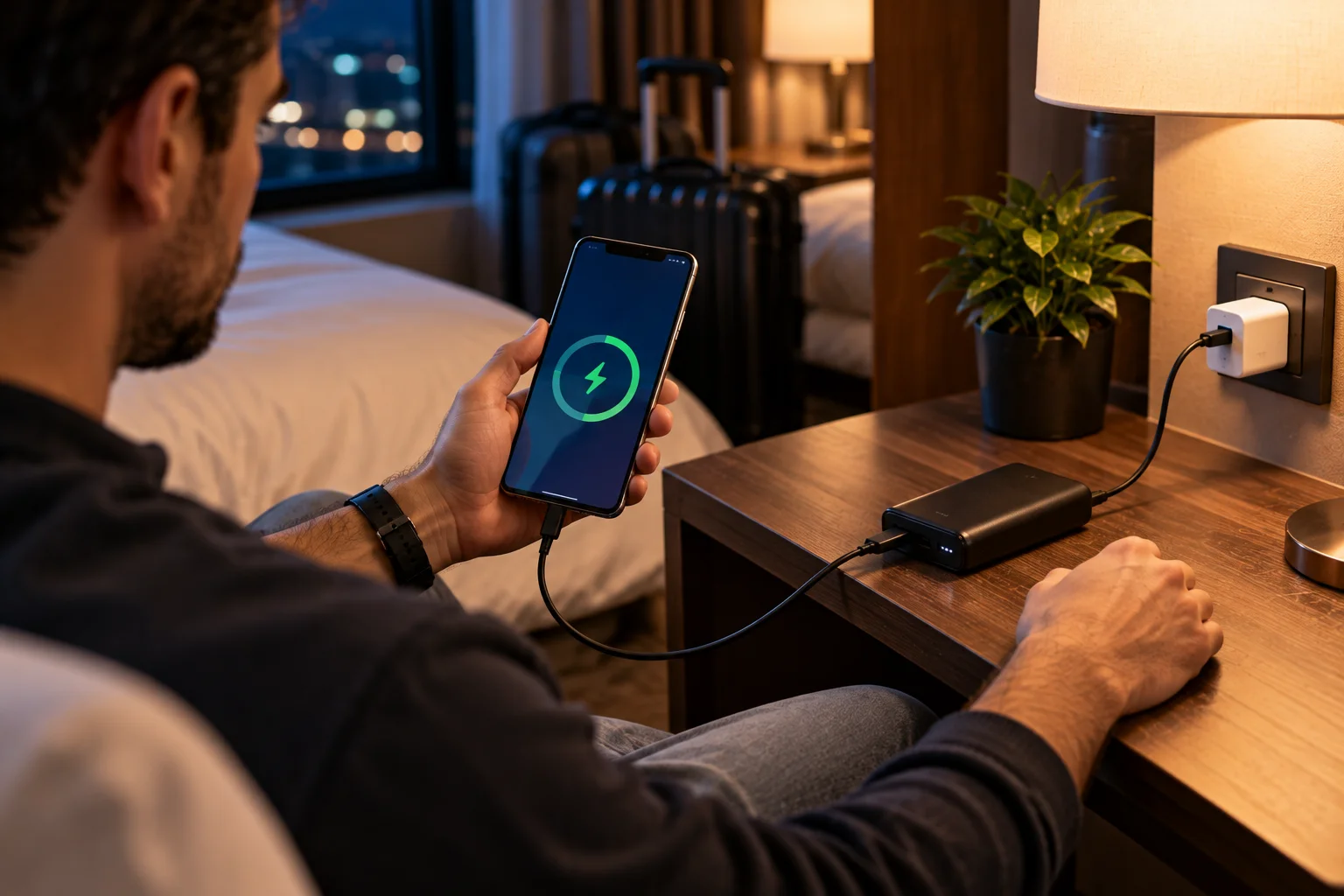
It's particularly convenient in hotels, airports, cafés and other places where outlets are limited.
What Are the Downsides?
The main trade-offs are slower charging, additional heat and potentially greater battery wear over repeated use.
Other limitations include:
Not every power bank supports it.
Fast charging may be reduced.
Output may be restricted.
Some devices may repeatedly connect and disconnect if the power system isn't designed properly.
The power bank may become noticeably warm.
The bank may not recharge if the connected device is consuming too much power.
Anker explicitly documents models where pass-through is disabled below a certain input power or when output demand exceeds available input.
Frequently Asked Questions
Can I charge my phone while charging the power bank?
Yes, if the power bank explicitly supports pass-through charging.
Is pass-through charging bad for lithium-ion batteries?
Not inherently when the feature is properly implemented, but frequent use can increase heat and charging stress. Occasional use is generally more sensible than relying on pass-through continuously.
Can I use any charger for pass-through?
Use a charger compatible with the power bank's specified input requirements. A more powerful charger can provide more available power, but the power bank determines how much it can actually accept.
Why does my power bank stop charging my phone when I plug it into the wall?
It probably doesn't support pass-through charging, or that particular input/output combination doesn't support it. Some power banks deliberately disable output while they recharge.
Does pass-through charging make a power bank charge faster?
Usually the opposite. Some of the incoming power is being used by the connected device, leaving less available for the power bank's own battery.
Can a pass-through power bank replace a UPS?
Only if the manufacturer specifically designs and rates it for UPS or uninterrupted-power operation. Ordinary pass-through charging doesn't guarantee seamless backup operation.
The Bottom Line
Pass-through charging is safe when it's an explicitly supported feature built into the power bank's power-management system.
It works by intelligently managing incoming power between the power bank's battery and the connected device. The convenience is real, particularly when you're travelling or have only one available outlet.
But it isn't free of trade-offs. Charging can be slower, the system can generate more heat, and repeated pass-through use may contribute to battery ageing.
So if you need the feature, choose a power bank that specifically lists pass-through charging or power-path support rather than assuming every USB-C power bank can safely charge and discharge at the same time.