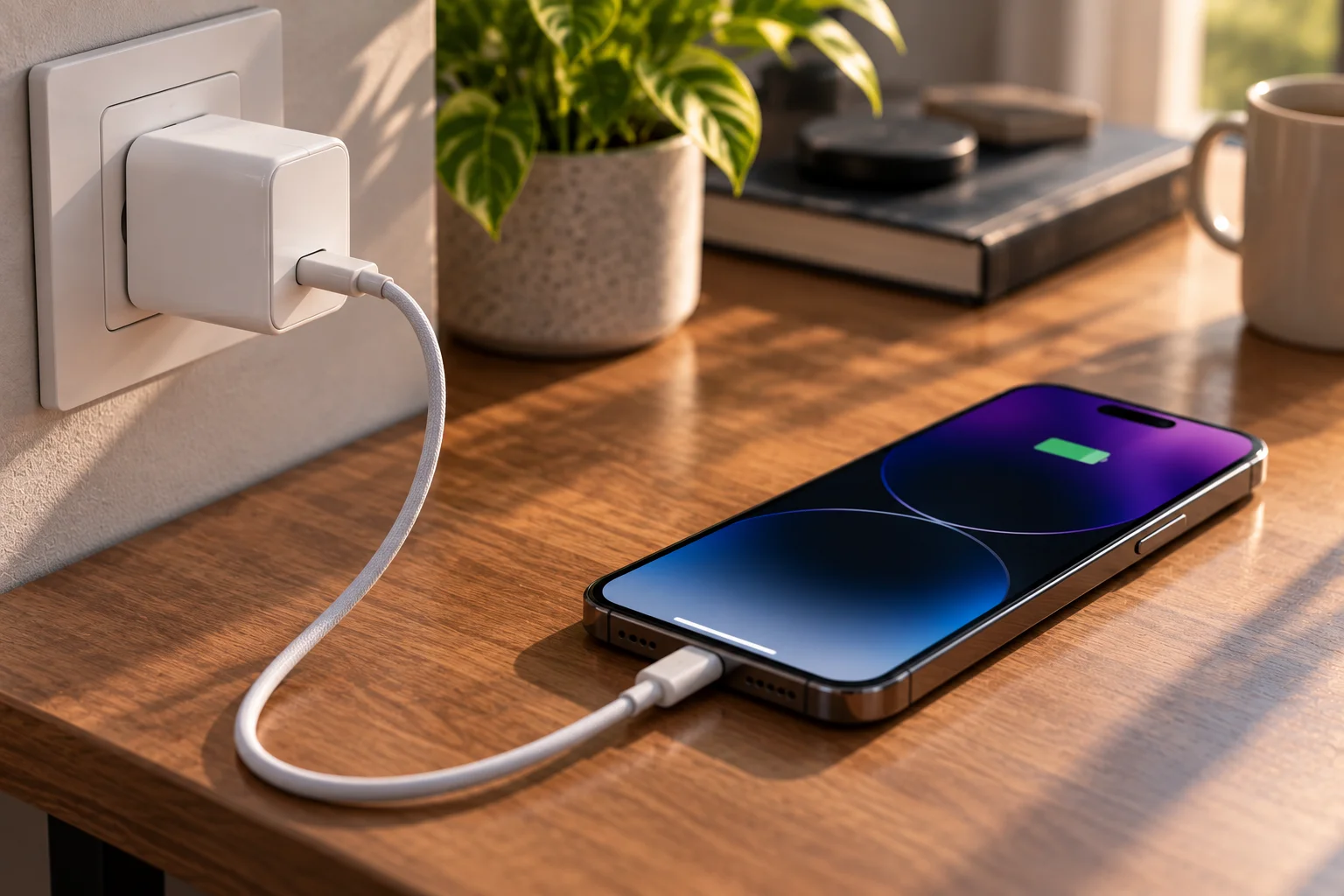
A 100W or 120W charger does not automatically push 100W or 120W into your phone.
Modern phones control how much power they accept, while compatible charging systems negotiate the voltage and current between the charger and device. USB Power Delivery, for example, is specifically designed to allow devices to negotiate for the power they require rather than simply receiving the maximum available output.
So using a higher-wattage charger is generally not dangerous simply because its number is higher than your phone's advertised charging speed.
The bigger issue is heat.
Lithium-ion batteries naturally age through charging cycles, temperature exposure and their overall charging pattern. Apple says battery lifespan is affected by chemical age, temperature history and charging patterns, while Google recommends keeping Pixel phones cool and using charging optimization features to reduce long-term battery wear.
Fast charging can generate more heat, particularly when the battery is low and the phone is working hard. Phones therefore reduce charging current as the battery approaches full and can slow or temporarily stop charging when temperatures become too high.
For everyday users, fast charging is usually a convenience, not a battery killer. The real goal is to avoid unnecessary heat and prolonged exposure to high charge levels.
Can a higher-wattage charger damage your phone?
Usually not, provided the charger and cable are compatible and the phone supports the relevant charging standard.
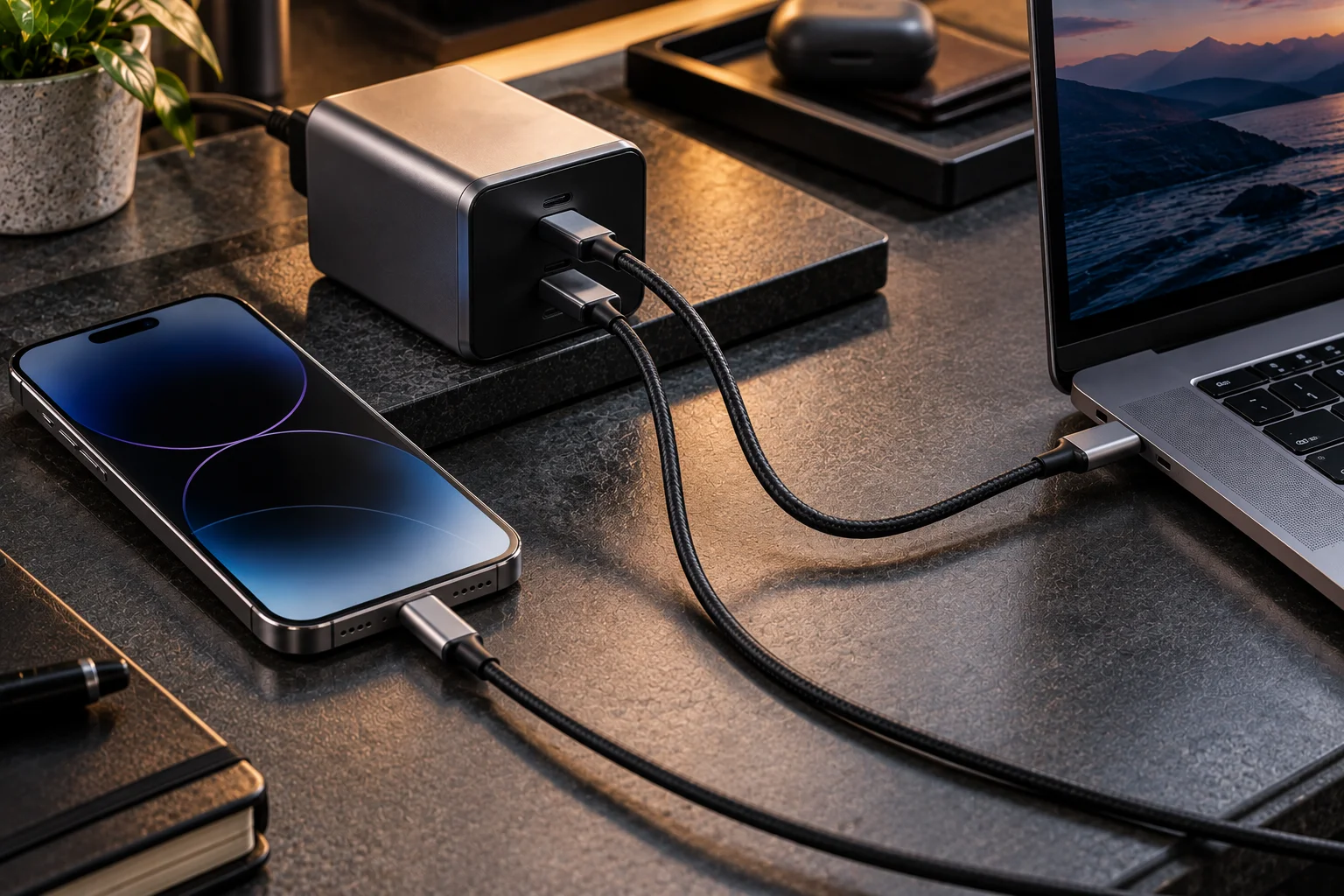
A charger rated for 100W does not mean your 25W phone suddenly receives 100W.
USB Power Delivery allows devices to negotiate for the amount of power they require. USB-IF specifically describes PD as allowing devices such as lower-power electronics to negotiate for only the power they need.
So if your phone supports a maximum charging rate of 25W and you connect it to a compatible 100W USB-C PD charger, the phone can request the appropriate power level.
The important word is compatible.
A reputable charger that supports the charging protocol your phone expects is very different from a poorly made or non-compliant charger.
Does a 100W charger charge a 25W phone at 100W?
No. The phone determines how much power it accepts.
Think of the charger's wattage as its maximum capability rather than the amount it constantly delivers.
A 100W charger is essentially saying:
I can provide up to this much power if a compatible device requests it.
The phone decides what it needs.
That is why you can use one high-power USB-C charger to charge a laptop, tablet, phone and earbuds, even though those devices have completely different power requirements.
USB Power Delivery was designed around this type of power negotiation.
What actually happens when you fast-charge a phone?
The phone initially accepts relatively high charging power when the battery is at a lower charge level, then gradually reduces charging power as the battery fills.
Charging is not a constant stream of maximum wattage from 0% to 100%.
The charging system continuously manages voltage, current, temperature and battery state.
This is particularly important near full charge.
Apple explains that iPhone gradually reduces charging current as the battery approaches full to reduce heat and its effect on battery lifespan.
That is why a phone might advertise a very fast 0%-to-50% charging time while taking considerably longer to reach 100%.
The final portion is deliberately slower.
Does fast charging reduce battery lifespan?
Fast charging can contribute to battery wear when it creates additional heat, but the charging speed itself is not the only factor determining battery lifespan.
Lithium-ion batteries naturally lose capacity over time.
Google says Pixel battery lifespan is affected by temperature, charging and discharging, and device usage. Apple similarly identifies temperature history and charging patterns as factors in battery chemical aging.
This means two phones using the same fast charger could experience different battery aging.
One might stay cool in a room-temperature environment.
Another might be charging inside a hot car while running navigation and recording video.
The second situation is considerably more stressful for the battery.
Is heat worse for a phone battery than fast charging?
Heat is one of the most important things to avoid if you want to preserve battery lifespan.
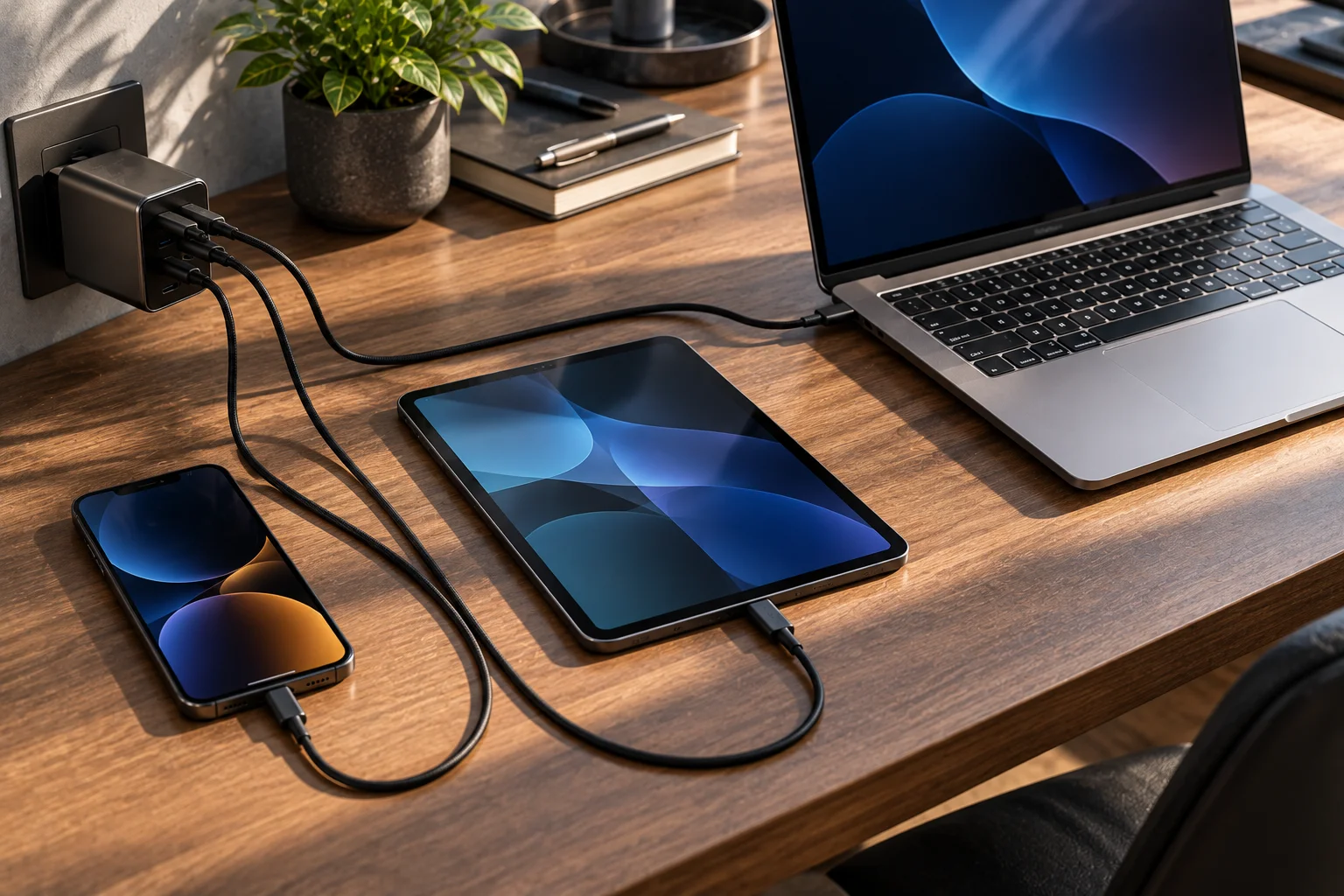
Charging naturally produces some heat, and faster charging can increase the thermal load.
Apple warns that using or charging an iPhone in ambient temperatures above 35°C can permanently reduce battery lifespan. iPhone can also slow or stop charging when internal temperatures become too high.
Google similarly recommends charging Pixel phones in a cool environment, around 25°C, and limiting exposure to external heat.
This is why charging your phone under a pillow, in direct sunlight or inside a hot car is a much worse habit than simply using a higher-wattage charger.
Why does fast charging slow down near 80%?
The battery becomes more difficult to charge quickly as it approaches a high state of charge, so the phone reduces charging power.
This protects the battery and manages heat.
You may notice a phone racing from 10% to 50%, then slowing down through 70%, 80% and beyond.
That behavior is intentional.
Apple says iPhone gradually reduces charging current as the battery approaches full, while Google's charging optimization can pause charging at 80% and finish closer to the user's expected unplug time.
So the headline charging speed usually describes the fastest portion of the charging process, not the entire session.
Is charging to 100% bad for a phone battery?
Regularly keeping a lithium-ion battery at 100% for long periods can contribute to faster aging, which is why modern phones increasingly offer optimized charging and charge limits.
That does not mean you should never charge to 100%.
If you need maximum battery life for a long day, charging fully is completely reasonable.
The concern is spending unnecessary amounts of time at a very high state of charge.
Apple's Optimized Battery Charging can pause an iPhone around 80% and complete the charge closer to when the company expects you to unplug it.
Google offers similar functionality through Adaptive Charging and an 80% charge limit on supported Pixel phones.
These features exist because charging behavior matters just as much as charging speed.
Is it better to charge a phone to 80%?
An 80% charge limit can help prioritize long-term battery health, but it is not necessary for everyone.
If you regularly finish the day with plenty of battery remaining, limiting charging to 80% can reduce the amount of time the battery spends at a very high state of charge.
Google explicitly describes its 80% limit as a way to prioritize long-term battery health.
But if you need the extra capacity, charging to 100% is perfectly practical.
Battery optimization is about balancing longevity against how much battery life you actually need.
There is little value in preserving a battery beautifully if you spend your day constantly worrying about finding a charger.
Can you use a 65W charger with a phone that supports 25W?
Yes, if the charger uses a compatible charging standard and the phone supports the appropriate connection.
A 65W charger does not automatically make a 25W phone charge at 65W.
The phone manages the charging process.
Google, for example, recommends compatible USB-C PD or PPS chargers for Pixel devices and offers chargers with power ratings higher than some individual Pixel phones' actual charging requirements.
The bigger concern is charger quality.
Use a reputable charger and an appropriate cable rather than choosing an unknown product simply because it advertises an enormous wattage number.
Can a cheap fast charger damage a phone?
A poor-quality or non-compliant charger can be a greater concern than a reputable high-wattage charger.
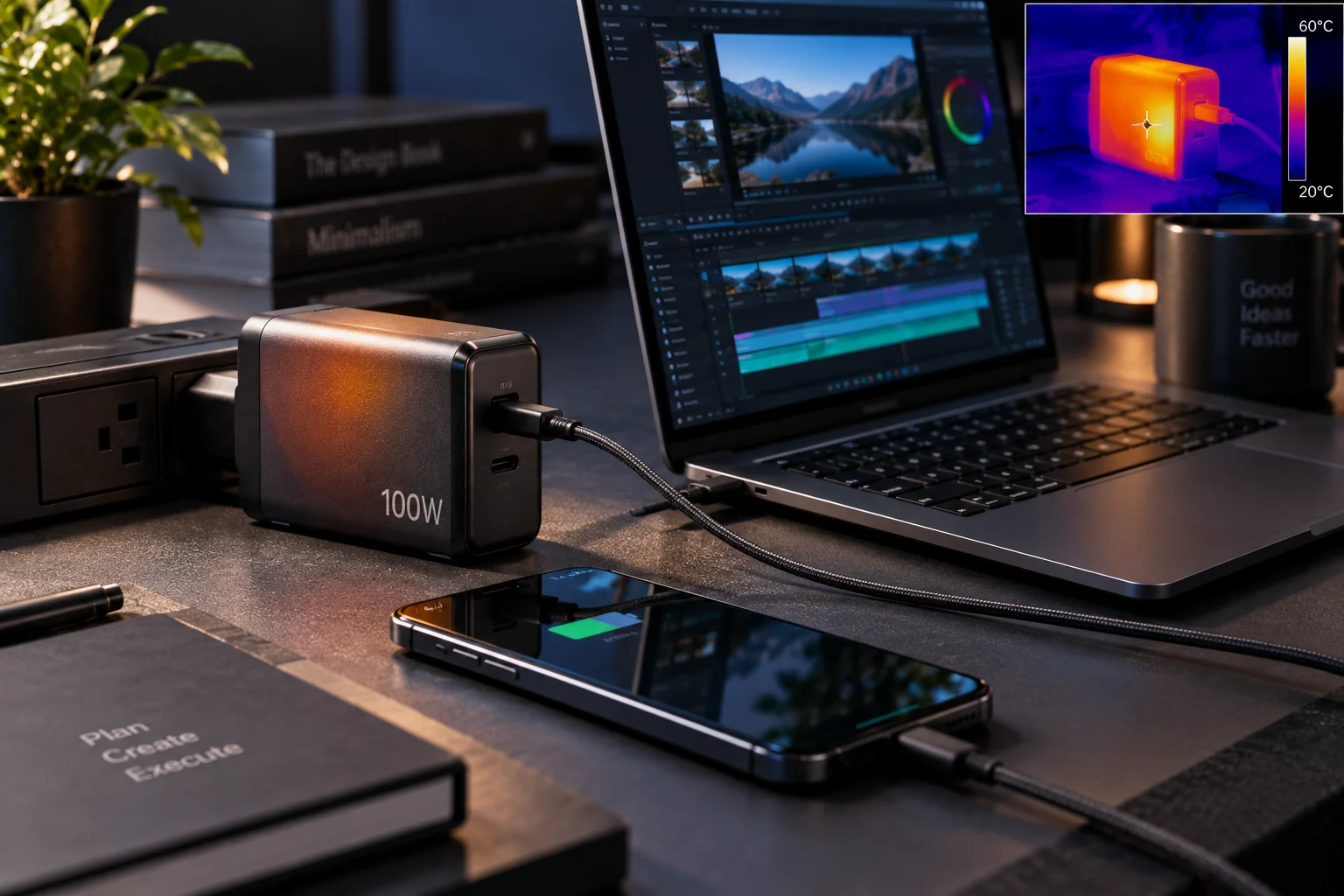
The wattage printed on a charger does not tell you everything about its electrical design.
A reputable charger should correctly implement the charging standards it claims to support and provide appropriate protections.
Your phone also contains its own charging circuitry and battery-management system, but that does not make a badly designed power adapter a good idea.
When buying a replacement charger, prioritize:
A reputable manufacturer
The correct charging standard
Appropriate USB-C cable support
Safety and compliance certifications
Sufficient power for your devices
A high-quality 65W charger is generally a more sensible purchase than an unknown 120W charger with questionable specifications.
Does using the phone while fast charging damage the battery?
Using a phone while charging can increase heat, especially during demanding tasks, and that extra heat can work against long-term battery health.
Browsing or replying to messages is unlikely to create the same thermal load as playing a demanding 3D game while fast charging.
Google specifically notes that using a Pixel while charging is possible, but recommends limiting use when you want the fastest charging.
The bigger concern is the combination of:
Fast charging + heavy processing + high ambient temperature.
If your phone becomes noticeably hot, reducing the workload or allowing it to cool is sensible.
Does wireless fast charging damage batteries more?
Wireless charging can generate additional heat, depending on the charger, phone, alignment and environment.
The basic battery-aging principle remains the same: heat matters.
Apple notes that both wired and wireless charging can cause devices to become warm and that charging may slow or stop when temperatures become too high.
Modern phones manage this automatically, but wireless charging efficiency varies.
If your priority is minimizing heat, a well-designed wired charger may be preferable in situations where wireless charging causes the phone to run noticeably warmer.
How can you fast-charge without wearing out the battery quickly?
Use a compatible charger, keep the phone cool and let the phone manage charging automatically.
A few habits make a meaningful difference:
Use a reputable compatible charger.
Use the correct cable for the charging standard.
Avoid charging in direct sunlight or extreme heat.
Don't cover the phone while fast charging.
Avoid demanding games or heavy workloads while charging if the phone gets hot.
Enable Adaptive or Optimized Charging if available.
Consider an 80% charge limit if your phone supports one and you don't need 100% every day.
Don't worry about using fast charging when you genuinely need it.
Google's current Pixel guidance specifically recommends charging in a cool environment and using charging optimization, while Apple provides Optimized Battery Charging and temperature management for iPhone.
So, can a fast charger damage your phone battery?
A compatible fast charger is not inherently harmful to your phone. The bigger long-term concern is excessive heat and charging patterns, not the maximum wattage printed on the adapter.
A 100W charger does not force 100W into a phone designed to accept 25W. The phone and charger work together to establish an appropriate charging level.
Fast charging can still produce more heat, and repeated exposure to high temperatures can accelerate battery aging. That is why modern phones reduce charging power as the battery fills and can temporarily slow or stop charging when temperatures become excessive.
For everyday users, there is no need to avoid fast charging out of fear that it will instantly damage the battery.
Use a good charger, keep the phone cool and let its charging system do the work.
Fast Charging and Phone Battery FAQs
Can a 100W charger damage a 25W phone?
Not simply because it is rated at 100W. A compatible phone controls how much power it accepts, while USB Power Delivery can negotiate the required power level.
Does fast charging reduce battery life?
It can contribute to battery aging when it produces additional heat, but battery lifespan also depends on temperature, charge cycles, charging patterns and overall use.
Is a 65W charger safe for a phone?
A reputable, compatible 65W charger is generally safe for a phone that supports a lower charging rate because the phone controls its power intake.
Should I stop charging at 80%?
An 80% limit can help prioritize long-term battery health, but it is optional. If you need the additional capacity, charging to 100% is reasonable.
Is heat worse than fast charging?
Heat is a major factor in lithium-ion battery aging. Apple and Google both recommend keeping phones cool while charging.
Is it okay to use your phone while fast charging?
Yes, but demanding tasks can increase heat. If the phone becomes hot, reduce usage or allow it to cool.
Does a phone always charge at its advertised maximum wattage?
No. Maximum charging wattage is generally a peak capability. Charging power changes depending on battery level, temperature, charger compatibility and the phone's charging strategy.
What is the best way to protect a phone battery?
Use a compatible quality charger, avoid excessive heat, enable optimized charging when available and avoid keeping the battery at very high charge levels for unnecessarily long periods.
The bottom line
Fast charging is not inherently bad for your phone battery. Excessive heat and long-term charging conditions matter more than the wattage number on the charger.
A modern phone is designed to regulate charging rather than blindly accept everything a powerful adapter can provide.
So if your phone supports 25W charging, plugging it into a quality 65W or 100W charger does not mean you are forcing 65W or 100W through the battery.
Use fast charging when you need it. Keep the phone cool. Let the built-in charging protections do their job.
And if your phone offers an 80% limit or adaptive charging, use those features when convenient rather than treating every charging session as a battery-health emergency.