Magnetic wireless charging has changed what a phone accessory can do. Instead of simply placing a phone on a charging pad and hoping the coils line up, MagSafe and Qi2 use magnetic alignment to position the phone and accessory correctly.
That small change has much bigger consequences than faster charging alone.
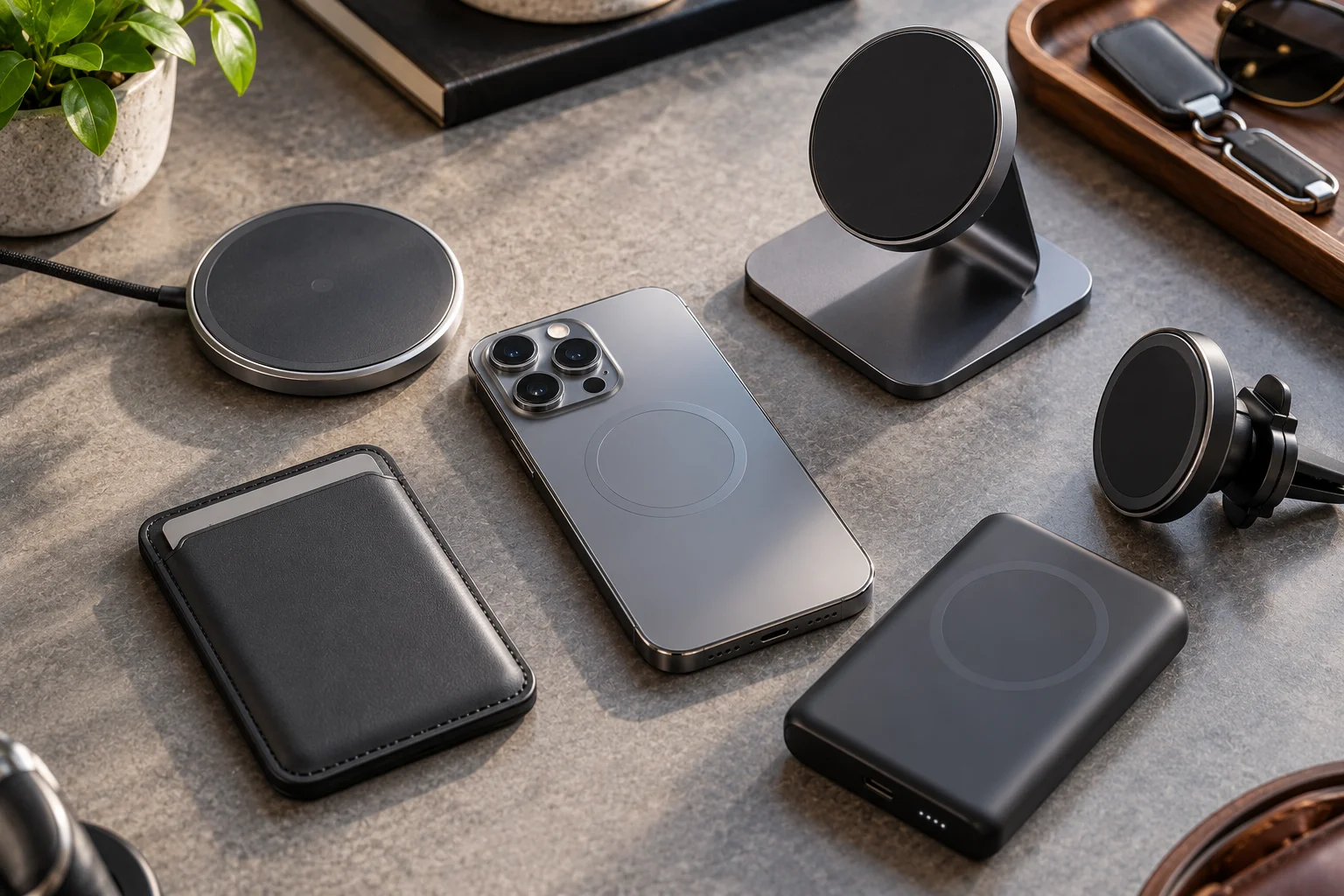
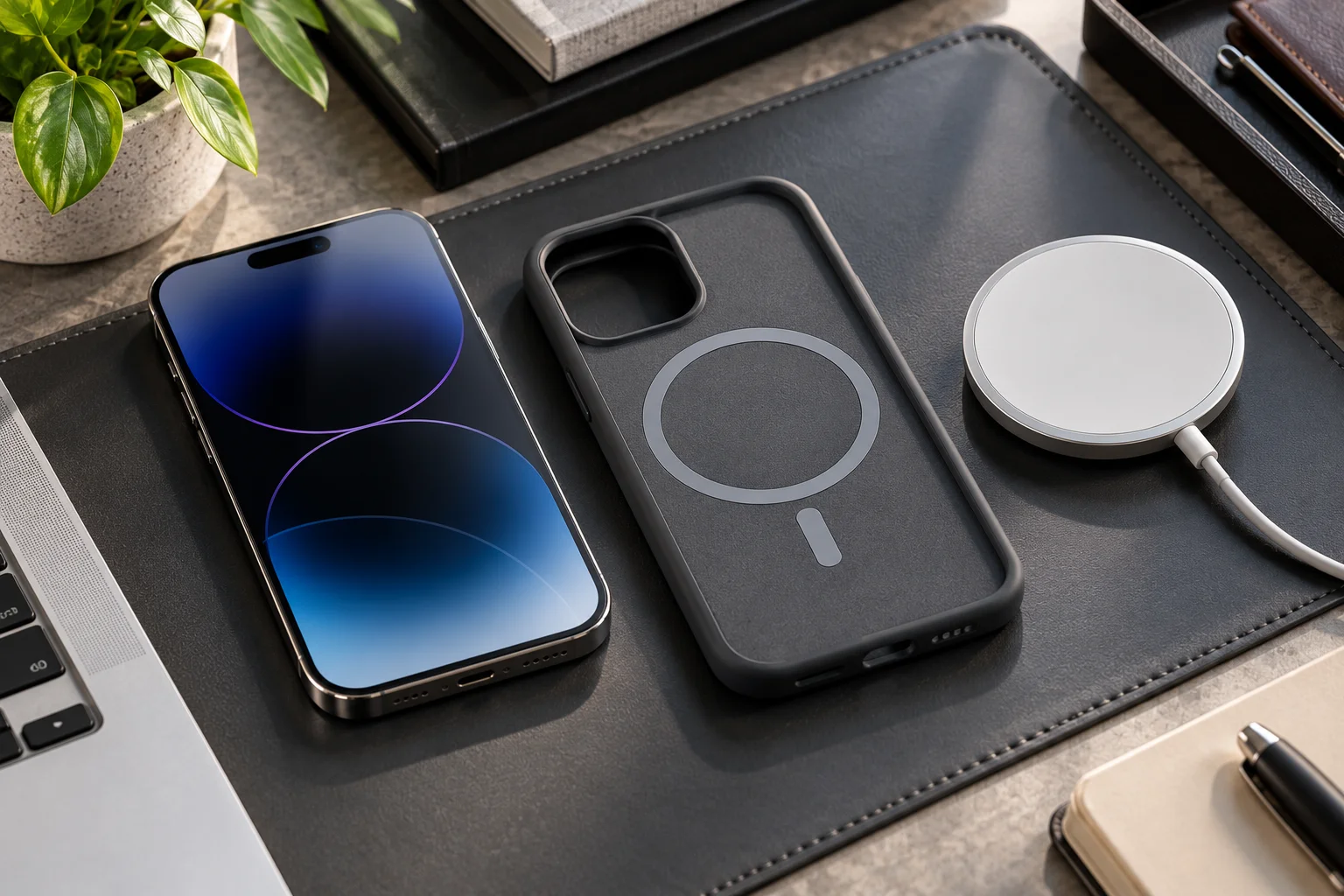
The same magnetic ring can let a phone snap onto a charger, stay attached to a car mount, connect to a desk stand, hold a wallet or attach to a battery pack. It turns the back of the phone into a standardized accessory interface.
Apple introduced MagSafe with the iPhone 12, while the Wireless Power Consortium (WPC) incorporated Apple's contributed magnetic technology into Qi2's Magnetic Power Profile (MPP). Qi2 launched with 15W charging, while Qi2 25W arrived later with substantially higher charging capability.
So what actually changes when magnets are added to wireless charging?
What Is Magnetic Alignment in Wireless Charging?
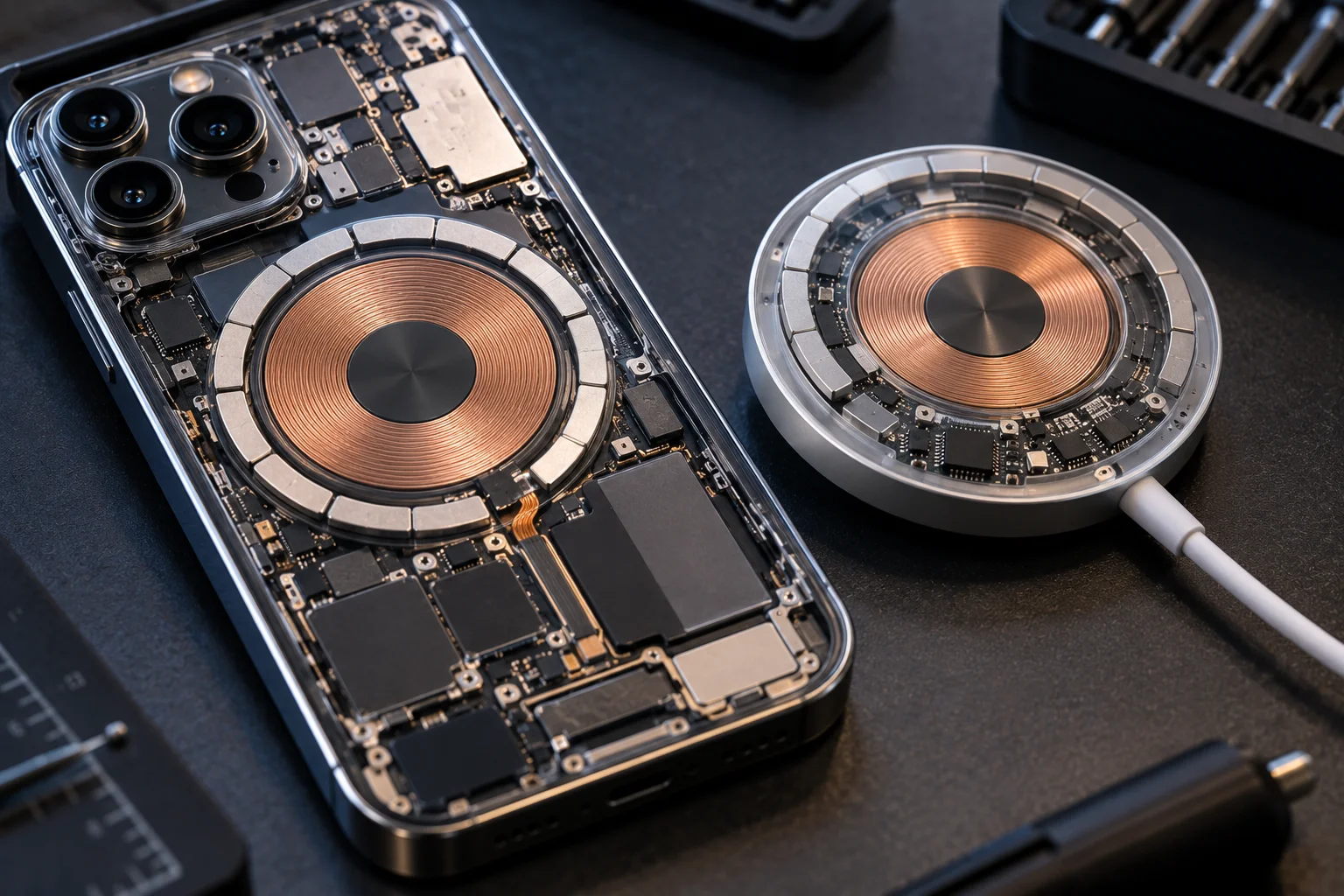
Magnetic alignment uses a ring of magnets to position the phone's wireless charging coil directly over the charger's coil.
Traditional Qi charging doesn't require the phone and charger to physically lock together. You place the phone on the charging surface and try to position it correctly.
That can work perfectly well, but even a small shift can reduce charging efficiency.
Magnetic alignment solves that problem by giving the phone and charger a defined position.
Apple describes MagSafe as providing optimal magnetic alignment for faster and more efficient wireless charging.
The magnets aren't what actually transfer electricity. Wireless charging still works through electromagnetic induction. The magnets simply help keep the transmitting and receiving coils correctly positioned.
How Is MagSafe Different From Qi2?
MagSafe is Apple's magnetic accessory and charging ecosystem, while Qi2 is an industry standard developed through the Wireless Power Consortium.
Qi2's Magnetic Power Profile is based on MagSafe technology contributed by Apple to the WPC.
That means the technologies are closely related, but they aren't simply two names for exactly the same product.
MagSafe remains Apple's branded ecosystem, while Qi2 provides a broader standardized system intended to work across manufacturers.
This distinction matters when buying accessories because compatibility, charging speed and certification can vary.
Why Does Magnetic Alignment Improve Wireless Charging?
Correct alignment can reduce the positioning errors that waste energy and limit charging performance.
Wireless charging works most effectively when the transmitting and receiving coils are properly aligned.
With a conventional flat charging pad, the phone can move away from the ideal position. Notifications, vibration or simply placing the phone slightly off-center can affect the connection.
Apple notes that movement can cause a phone to shift position on conventional charging mats, potentially stopping charging.
A magnetic system keeps the phone in a much more predictable position.
The WPC says Qi2's magnetic alignment improves efficiency and removes much of the need for users to manually adjust phone placement.
Does Qi2 Charge Faster Than Older Qi?
Qi2 initially supported up to 15W, while the newer Qi2 25W specification increases the maximum charging power substantially.

The WPC launched Qi2 in 2023 with 15W charging. In 2025, Qi2 25W was introduced with nearly 70% more charging power than the original Qi2.
However, the charger isn't the only factor.
Actual charging speed depends on the phone, charger, power adapter, temperature, battery state and the specific wireless charging implementation.
A Qi2 25W charger doesn't mean every compatible phone will charge at 25W.
What Makes MagSafe Accessories Different From Ordinary Wireless Chargers?
Magnetic accessories can physically attach to the phone rather than simply sitting underneath it.
That creates several useful possibilities.
Magnetic chargers
The charger can snap onto the back of the phone and stay aligned.
Stands
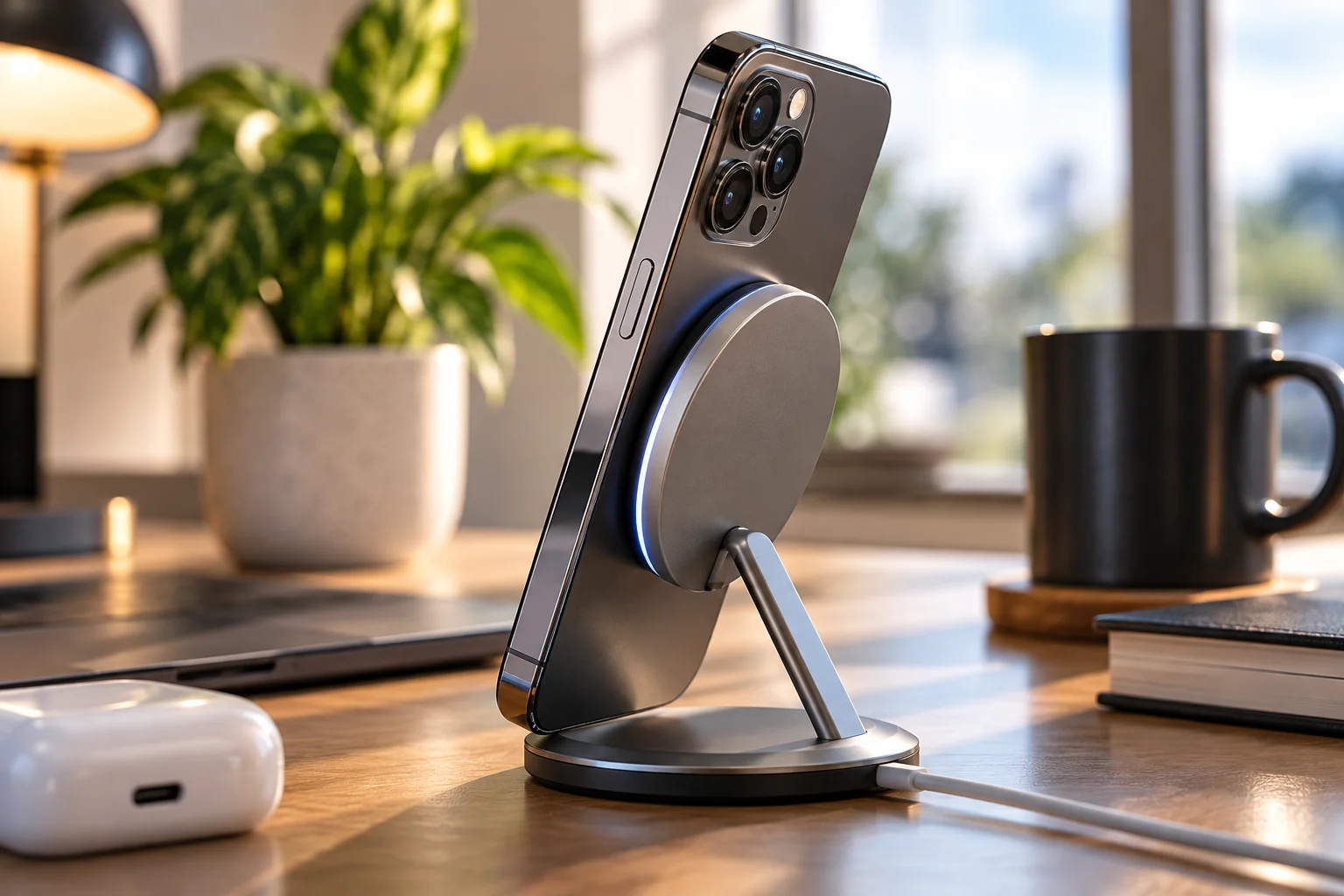
A magnetic stand can hold the phone at a convenient viewing angle while charging.
Car mounts
The phone can attach directly to a dashboard or vent-mounted magnetic interface without requiring a traditional clamp.
Battery packs
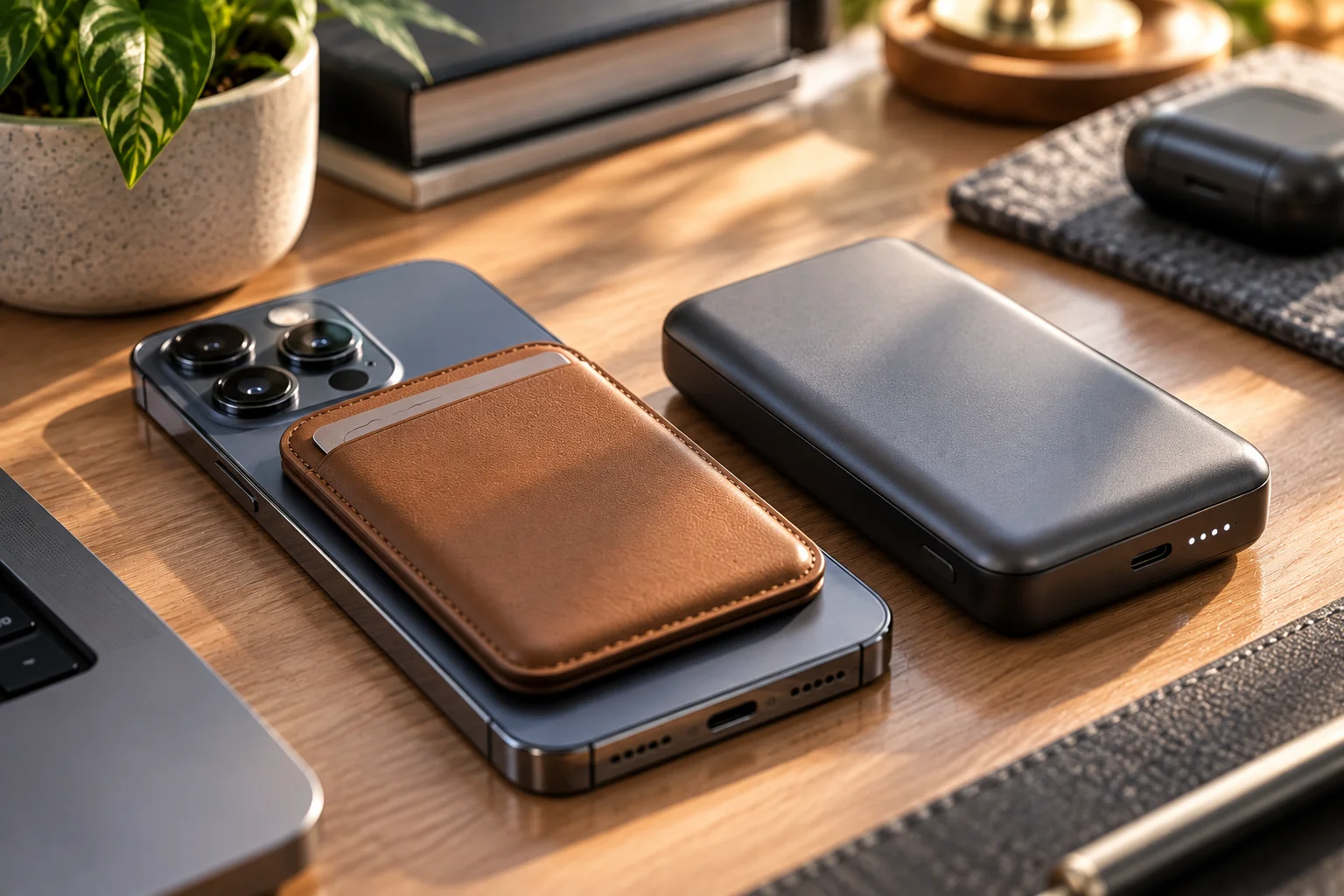
A magnetic battery can attach to the back of a compatible phone without a cable hanging from the device.
Wallets and grips
The same magnetic interface can hold accessories that don't provide power at all.
Apple's current MagSafe accessory ecosystem includes chargers, mounts, wallets, grips, power banks and multi-device charging systems.
That's arguably the more important innovation: magnetic alignment turns wireless charging into a physical accessory ecosystem.
Can Qi2 Accessories Work With MagSafe Phones?
Many Qi2 magnetic accessories can work with compatible MagSafe-style devices, but charging speed and specific functionality depend on the product and certification.
The WPC's Qi2 Magnetic Power Profile is specifically designed around magnetic attachment and alignment.
But consumers shouldn't assume that every product described as "magnetic" is a certified Qi2 accessory.
A product can contain magnets without meeting the Qi2 standard.
When charging performance matters, look for the appropriate Qi2 certification rather than relying only on phrases such as "MagSafe compatible" or "magnetic wireless charger."
Why Do Magnetic Phone Mounts Matter Even When They're Not Charging?
Magnetic alignment makes mounting faster and simpler even when no electricity is being transferred.
Consider a traditional car mount. You may need to squeeze a clamp, place the phone inside it and adjust the position.
A magnetic mount can reduce that process to essentially:
Bring phone toward mount → magnets align → phone attaches.
That is particularly useful when repeatedly mounting and removing a phone.
The magnetic ring also allows accessories to be designed around a consistent attachment point instead of requiring a bulky clamp.
Do Cases Affect MagSafe and Qi2?
Yes. The case can significantly affect magnetic attachment and wireless charging performance.
A compatible magnetic case incorporates an appropriate magnetic ring while allowing the charging coils to remain correctly positioned.
A thick case, metal components or poorly positioned magnets can interfere with charging or reduce magnetic strength.
Apple specifically warns that thick or metal cases can cause slower or unsuccessful wireless charging and recommends removing problematic cases.
That's why a case advertised as simply "wireless charging compatible" isn't necessarily equivalent to one designed specifically for a magnetic charging ecosystem.
Is Magnetic Wireless Charging More Efficient Than Wired Charging?
Not generally. Wired charging remains more energy-efficient overall, while magnetic wireless charging prioritizes convenience and alignment.
Apple notes that wireless charging can use more power than wired charging in certain circumstances.
Wireless charging involves energy transfer between coils, and some energy is lost as heat.
Magnetic alignment can improve the wireless system by keeping the coils correctly positioned, but it doesn't eliminate the inherent conversion and transmission losses associated with wireless charging.
The real advantage is convenience.
What About Qi2 25W and MagSafe 25W?
Both can now reach 25W in supported implementations, but the phone and charger must both support the relevant capability.
Apple's current MagSafe Charger is certified for Qi2 25W and can provide up to 25W to supported iPhones when paired with an appropriate 30W power adapter.
That doesn't mean every iPhone or every Qi2 accessory receives 25W.
It's better to think of 25W as a maximum supported capability, not a universal charging speed.
What Should You Check Before Buying a Magnetic Accessory?
Look at four things:
What to check | Why it matters |
|---|---|
Qi2 or MagSafe compatibility | Determines the magnetic ecosystem |
Charging wattage | Determines potential wireless charging speed |
Case compatibility | Affects alignment and magnetic strength |
Accessory purpose | Charger, mount, wallet, battery or stand |
For charging accessories, certification is particularly important.
For mounts and wallets, magnetic strength and mechanical design may matter more than charging specifications.
Frequently Asked Questions
Is MagSafe the same as Qi2?
No. MagSafe is Apple's magnetic ecosystem, while Qi2 is an industry standard. Qi2's Magnetic Power Profile is based on MagSafe technology contributed by Apple to the WPC.
Does Qi2 use magnets?
The Qi2 Magnetic Power Profile does. The original Qi2 standard introduced magnetic alignment through its MPP, while Qi2 also includes a non-magnetic profile.
Is Qi2 better than ordinary Qi?
Qi2's magnetic alignment makes positioning easier and can improve charging efficiency. The newer Qi2 25W specification also supports substantially higher charging power than the original Qi2 15W specification.
Can a magnetic mount charge my phone?
Only if it contains a wireless charging system. A magnetic mount without charging hardware simply holds the phone.
Do I need a special case for Qi2?
For reliable magnetic attachment, generally yes if the phone itself doesn't have the required magnetic interface. A compatible magnetic case can provide the necessary alignment.
Does magnetic charging damage the phone?
The magnetic attachment itself is designed as part of compatible charging systems. However, incompatible magnets or objects placed between the phone and charger can interfere with charging and may affect magnetic strips or RFID components.
The Bottom Line
MagSafe and Qi2 aren't just about making wireless charging faster.
Their bigger contribution is turning the back of a phone into a standardized attachment point.
Magnetic alignment keeps charging coils positioned correctly, while the same interface can support stands, car mounts, wallets, grips and battery packs.
Qi2 takes the basic idea beyond Apple's ecosystem by creating a standardized magnetic charging framework, while MagSafe continues to provide Apple's integrated accessory experience.
The result is a shift from "place your phone on a charger" to "attach your phone to an entire accessory ecosystem."