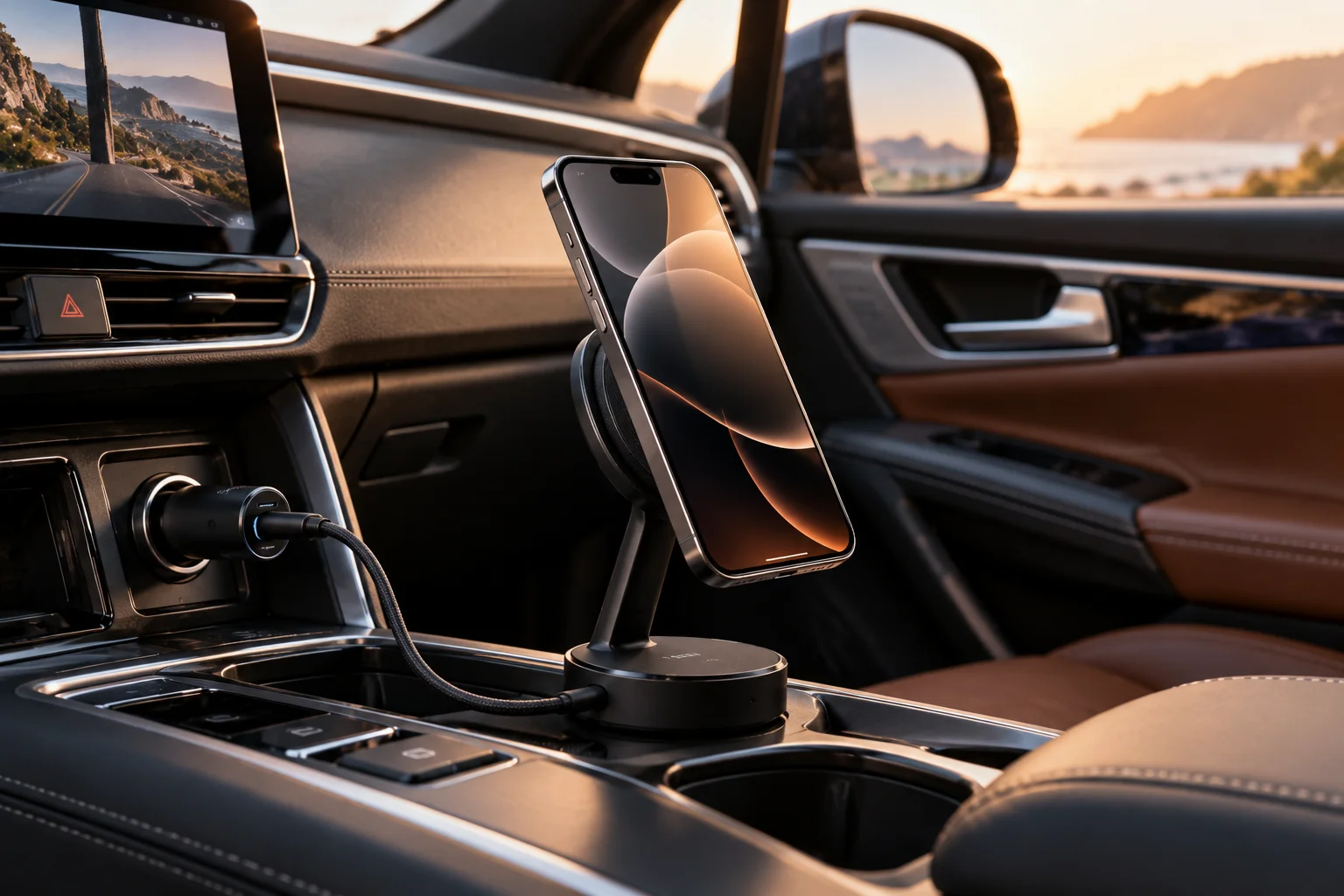
Wireless charging in a car sounds simple: put your phone on a pad and let the battery fill up.
In practice, the experience can be very different depending on whether the charger uses standard Qi, Qi2 or Apple's MagSafe system.
The biggest difference isn't just charging speed. In a moving vehicle, alignment, magnetic attachment, heat management, phone compatibility and the quality of the car's power supply all affect whether wireless charging remains reliable.
Standard Qi charging uses electromagnetic induction but doesn't inherently provide magnetic alignment. Qi2 introduced the Magnetic Power Profile (MPP), which uses magnets to align the phone and charging coil. The WPC says MPP is based on MagSafe technology contributed by Apple to the Qi standard.
Apple's MagSafe ecosystem provides magnetic alignment for supported iPhones, while Qi2 turns similar magnetic alignment into an industry standard.
And there's another important development: Qi2 25W, introduced in 2025, increased the standard's maximum power from the original Qi2's 15W to 25W.
For a modern car, that makes the choice more interesting than simply buying the charger with the highest wattage printed on the box.
What Is the Difference Between Qi, Qi2 and MagSafe?
Standard Qi provides wireless power transfer, while Qi2 adds standardized magnetic alignment and MagSafe provides Apple's magnetic charging ecosystem for compatible devices.
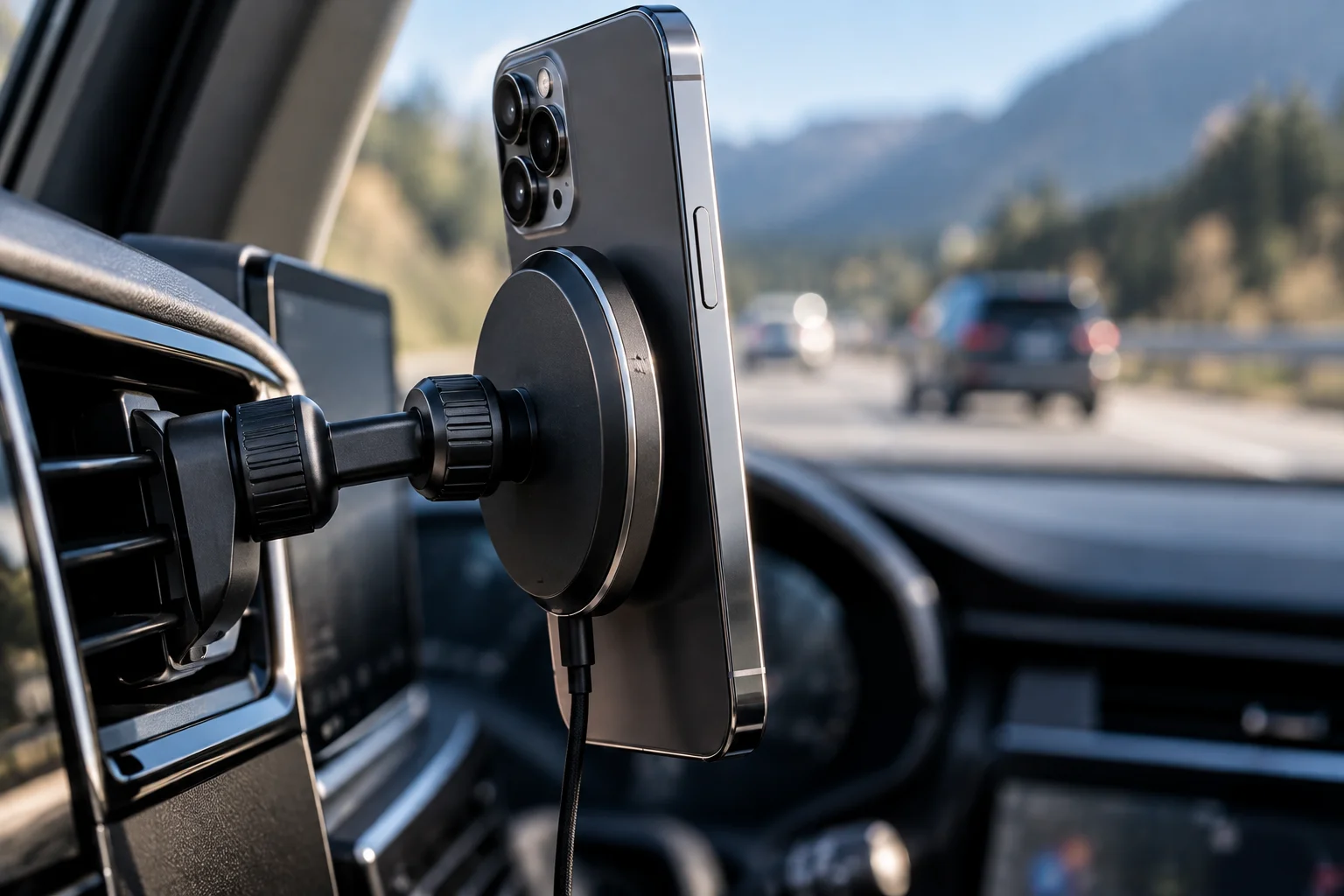
Here's the basic distinction:
Technology | Magnetic alignment | Standard | Typical advantage |
|---|---|---|---|
Standard Qi | No | Wireless Power Consortium | Broad compatibility |
Qi2 | Yes, with MPP | Wireless Power Consortium | Alignment + interoperability |
Qi2 25W | Yes | Newer Qi2 tier | Higher standardized power |
MagSafe | Yes | Apple's ecosystem, with MPP also standardized through Qi2 | Strong iPhone integration |
Qi2's MPP is based on technology Apple contributed to the WPC, which is why Qi2 magnetic charging and MagSafe have so much in common.
The important difference is that MagSafe is an Apple-branded ecosystem, while Qi2 is an industry standard.
How Does Wireless Charging Actually Work in a Car?
A wireless charger transfers electrical energy between coils using electromagnetic induction rather than a physical charging connector.
The charger contains a transmitting coil.
Your phone contains a receiving coil.
When the phone is positioned correctly:
Car power → charging electronics → transmitter coil → electromagnetic field → phone receiver coil → charging circuitry → battery
The phone and charger communicate to regulate the power transfer.
Qi also includes mechanisms for detecting foreign objects and controlling charging behavior. The WPC's specifications include foreign-object detection and other safety requirements.
The key problem in a car is that the phone isn't sitting on a perfectly stable desk.
It is moving.
Why Does Alignment Matter More in a Car?
Correct coil alignment is particularly important in a moving vehicle because vibration, cornering and acceleration can move the phone away from the charger's optimal position.
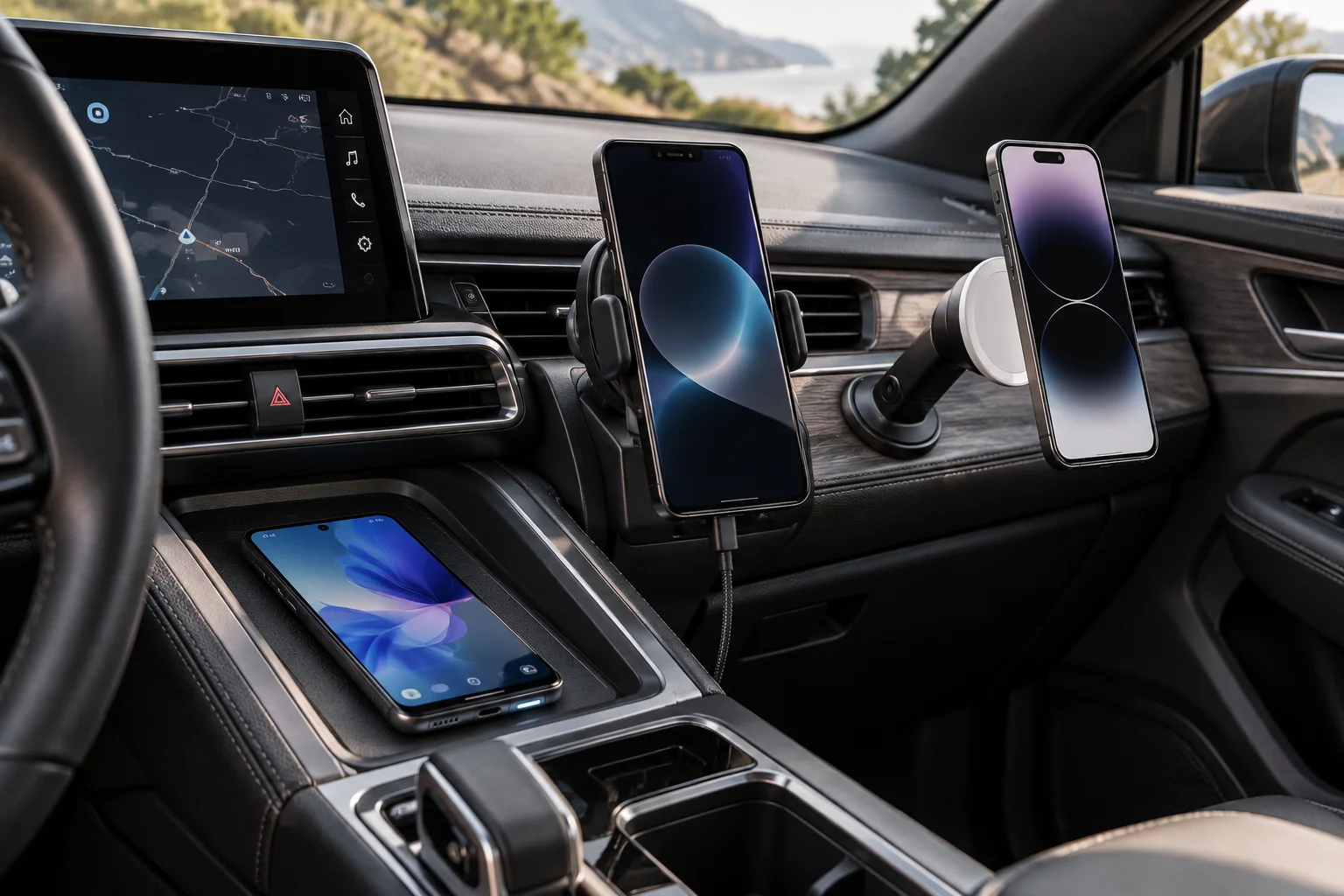
If the transmitting and receiving coils aren't aligned properly, charging efficiency can fall.
The phone may:
Charge slowly
Stop charging
Repeatedly start and stop
Generate more heat
Lose power despite showing a charging indicator
The WPC specifically highlighted this issue with automotive charging. Its moving-coil approach can locate the phone's charging coil and move the charger's coil to align with it, helping maintain charging during vehicle movement.
That's one reason magnetic charging is so useful in cars.
The magnet doesn't just make the charger feel convenient.
It helps maintain alignment.
What Is Standard Qi Charging?
Standard Qi is the broad wireless-charging standard used by thousands of certified devices and chargers, but traditional Qi doesn't require magnetic attachment.
Qi has been around since 2010 and is maintained by the Wireless Power Consortium.
The WPC says there are more than 13,000 Qi Certified products in the market.
A conventional Qi car pad typically works like this:
Place phone on pad → find the charging zone → charging begins
The phone can move because nothing physically holds it in place.
That's fine when the charging surface is large and the vehicle is moving gently.
It becomes less convenient when the phone slides during a sharp turn or over rough roads.
What Does Qi2 Add?
Qi2 adds standardized magnetic alignment through its Magnetic Power Profile, making it easier to place and keep a compatible phone in the correct charging position.
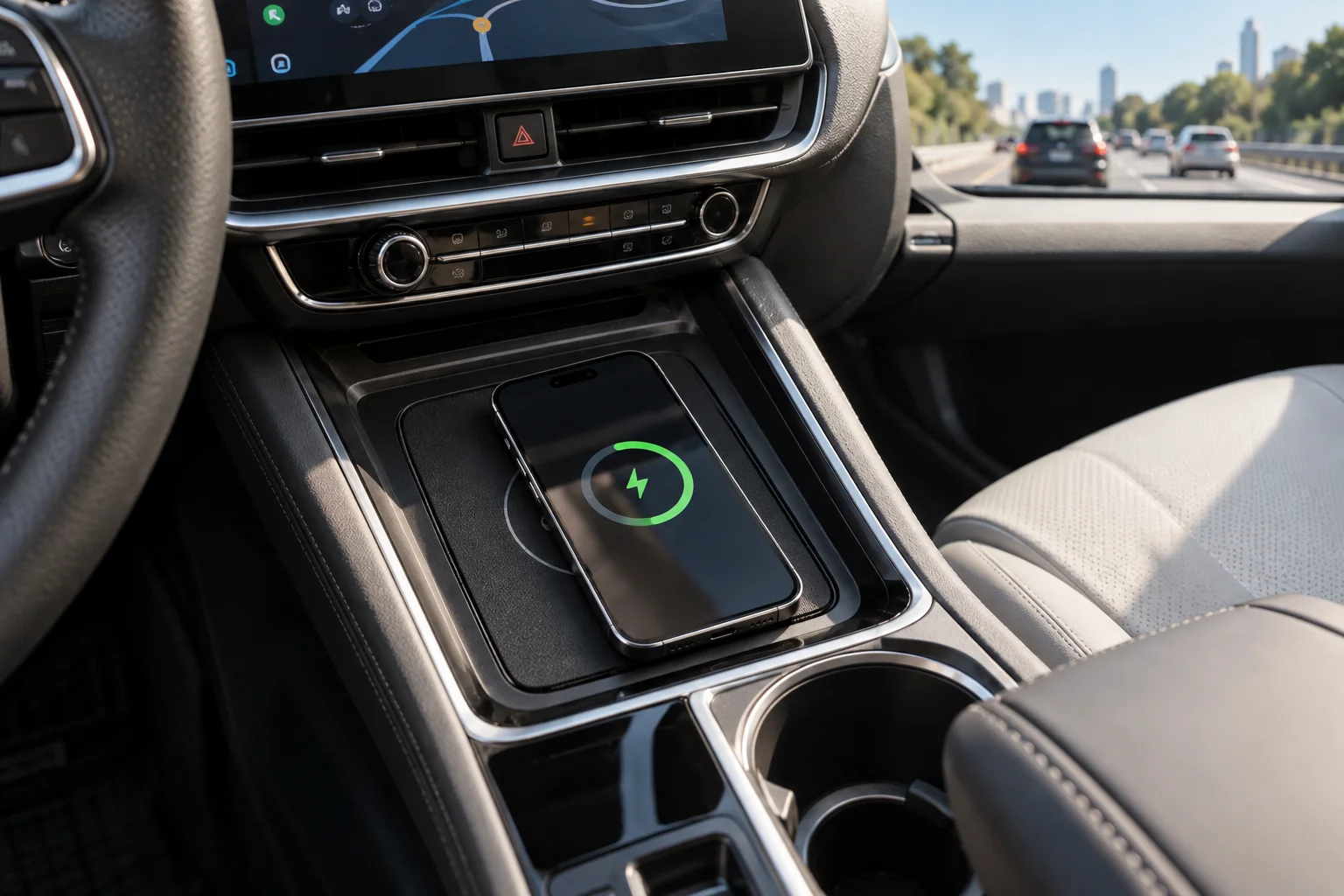
Qi2 launched in 2023 with 15W charging.
The WPC says its magnetic attachment improves alignment, convenience and charging efficiency.
For a car, the practical benefit is straightforward.
Instead of placing the phone somewhere on a flat pad, you can attach it to a magnetic charging mount.
The phone is much less likely to drift away from the charging coil.
That's particularly useful if the charger is also serving as your navigation mount.
What Is Qi2 25W?
Qi2 25W is the newer high-power version of Qi2, supporting up to 25W of wireless power transfer under the standard.
The WPC introduced Qi2 25W in July 2025 as Qi specification version 2.2.1.
It increases the power level from the original Qi2's 15W to 25W. The WPC says Qi2 25W can deliver nearly 70% more charging power than the original Qi2 and has demonstrated 0–50% charging in about 30 minutes on compatible equipment.
But there's an important catch.
A 25W charger doesn't mean every phone will charge at 25W.
The phone, charger and power adapter all need to support the relevant capability.
Is MagSafe the Same as Qi2?
MagSafe and Qi2 magnetic charging are closely related, but they aren't simply two names for exactly the same product ecosystem.
Apple's MagSafe technology was contributed to the WPC's Qi2 Magnetic Power Profile.
Apple's current iPhone specifications show both MagSafe and Qi2 wireless charging support on compatible models. For example, Apple's iPhone 17 specifications list MagSafe wireless charging up to 25W and Qi2 wireless charging up to 25W.
MagSafe also has an Apple-specific accessory ecosystem.
That can include:
Magnetic chargers
Car mounts
Battery packs
Wallets
Cases
Stands
Apple explains that supported MagSafe chargers use magnets to snap onto the back of the iPhone or a compatible MagSafe case, maintaining proper alignment.
Does Qi2 Work With iPhones?
Compatible iPhones can use Qi2 wireless charging, but the exact charging speed depends on the iPhone model and charger.
This is where checking the specifications of the actual phone matters.
For example, Apple's current iPhone 17 specifications list up to 25W for both MagSafe and Qi2 wireless charging.
Older iPhones may have different limits.
So don't assume:
“Qi2 = 25W on every iPhone.”
Instead, check the phone's official charging specifications.
Does Qi2 Work With Android Phones?
Yes, Qi2 is designed as an industry standard rather than an Apple-only system, but support varies by phone model.
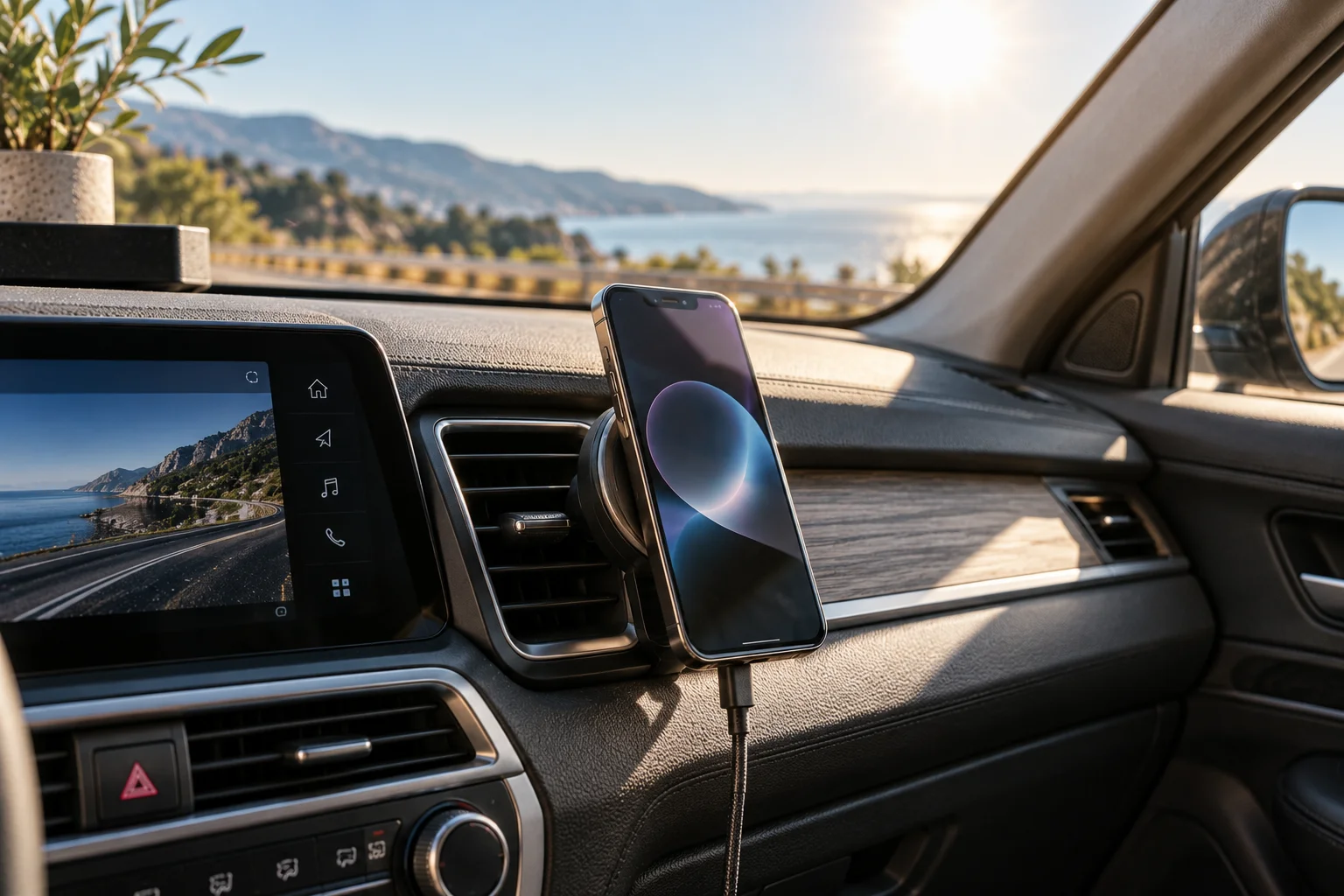
The original Qi2 ecosystem expanded beyond Apple's devices, and the WPC has continued developing Qi2-certified Android products and accessories.
For Android users, the important thing is to check whether the specific phone supports:
Qi2 magnetic charging
rather than merely:
Qi wireless charging
A phone can support Qi without supporting the magnetic features of Qi2.
Does a Magnetic Case Matter?
Yes. The phone and case need to provide an appropriate magnetic interface if you want reliable magnetic attachment.
A thick or poorly designed case can increase the distance between the charging coils.
The WPC notes that thick or metal cases can weaken magnetic attachment or increase the gap between coils, potentially reducing charging speed.
This is especially relevant in cars.
A mount may appear strong enough on an empty phone but become less secure when:
A thick case is installed
The phone is large and heavy
The vehicle hits potholes
The mount is positioned at an angle
A proper Qi2 or MagSafe-compatible case can make a significant difference.
Which Is Faster: Qi, Qi2 or MagSafe?
There is no universal answer because charging speed depends on the phone, charger generation, power adapter and thermal conditions.
The broad progression is:
Older standard Qi → Qi2 15W → Qi2 25W
But maximum charger output isn't the same thing as actual phone charging speed.
For example, a phone might accept only a certain wireless power level even if the charger is capable of more.
Similarly, charging can slow as the battery fills or if temperatures become high.
The WPC says Qi2 25W supports up to 25W power transfer and has improved power management compared with earlier generations.
Why Does Wireless Charging Get Hot in a Car?
Wireless charging generates heat through energy-transfer losses, and a hot vehicle can make thermal management more difficult.
This matters because cars can become extremely warm when parked in direct sunlight.
Charging itself also creates heat.
The combination can lead to:
Hot cabin + hot phone + wireless charging = slower charging
The phone may reduce charging power to control temperature.
This is one reason a wired USB-C connection can still be preferable when you need maximum charging speed during a long drive.
A wireless car charger is often best viewed as a convenient battery-maintenance system, rather than automatically the fastest way to refill a nearly empty phone.
Does Wireless Charging Work Through a Car's Built-In Charging Pad?
Yes, if the vehicle's built-in pad and phone support compatible wireless charging standards, but the experience depends heavily on the pad's design and phone positioning.
Automotive wireless charging has a unique challenge because the phone can move.
The WPC has developed automotive aftermarket guidelines and has also highlighted moving-coil designs specifically to improve alignment in vehicles.
A flat built-in pad can therefore work well for some vehicles and phones but may be less reliable than a magnetic mount.
Magnetic Mount vs Flat Charging Pad
A magnetic mount is generally better when you need reliable positioning and navigation visibility, while a flat pad is better when you simply want to place the phone down and charge it.
Magnetic mount
Advantages:
Holds phone in position
Easier one-handed attachment
Convenient for navigation
Better coil alignment
Phone remains visible
Disadvantages:
Requires compatible magnetic interface
Can add pressure to the phone/mount
Phone remains exposed on the dashboard
Mount placement matters
Flat charging pad
Advantages:
Simple
No magnetic attachment required
Can charge compatible Qi phones
Often integrated into the center console
Disadvantages:
Phone can move
Alignment can change
Screen may be hidden
Large camera bumps/cases can interfere
Does a Higher-Wattage Wireless Charger Always Charge Faster?
No. The phone determines how much power it can accept, and real-world charging is affected by temperature, alignment, battery state and the complete charging system.
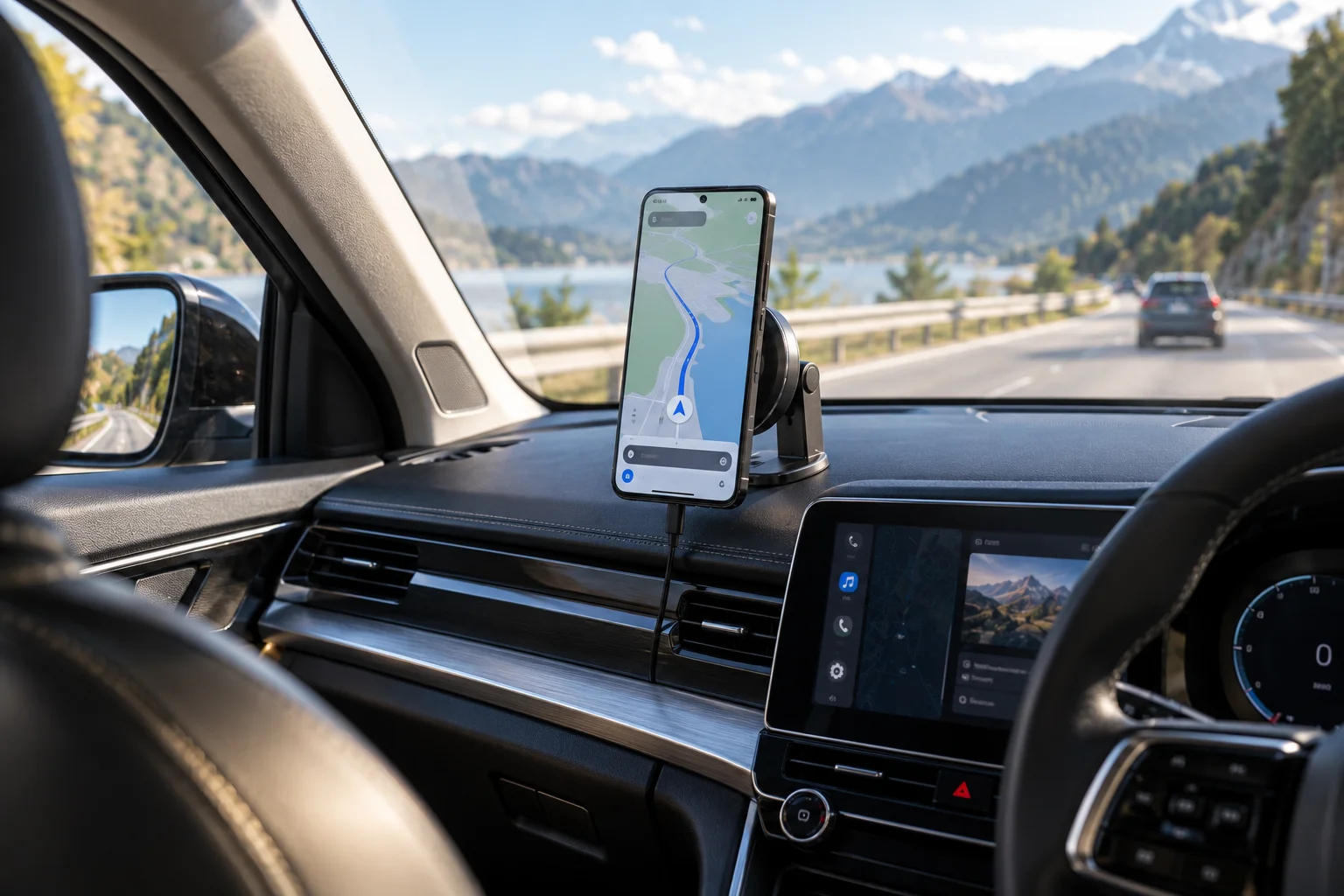
Think of the advertised wattage as the maximum capability of the charger, not a guarantee of continuous power delivery.
For example:
25W Qi2 charger + 15W phone
doesn't turn the phone into a 25W wireless-charging device.
The phone remains the limiting component.
Likewise:
15W charger + 25W phone
cannot deliver 25W.
Both sides need compatible capabilities.
How Much Power Does the Car Charger Need?
The wireless charging pad needs enough input power from the vehicle's USB port or power adapter to deliver its advertised wireless output efficiently.
This is particularly important with Qi2 25W.
The WPC notes that a Qi2 25W charging station needs an appropriately capable power adapter to reach its full output; its current guidance identifies 30–40W or larger adapters for certain 25W charging stations.
So when buying an aftermarket car charger, don't look only at:
“25W wireless charging.”
Also check:
Required USB input power
Included adapter
USB-C PD support
Cable rating
Actual Qi/Qi2 certification
Why Qi Certification Matters for a Car Charger
Look for genuine Qi or Qi2 certification rather than relying on phrases such as “Qi compatible.”
The WPC says certified products undergo independent testing for safety, interoperability and energy efficiency. It also provides a public database for checking certified products.
This is particularly important inside a vehicle.
A charger may be exposed to:
High temperatures
Continuous vibration
Electrical noise
Variable power input
Foreign objects
Long charging periods
Certification doesn't mean every charger will perform identically, but it provides an important baseline for standards compliance.
What Should You Look for in a Wireless Car Charger?
For a modern phone, prioritize genuine Qi2 certification, magnetic alignment, sufficient input power and good thermal design before chasing the highest advertised wattage.
Check these specifications:
1. Charging standard
Prefer:
Qi2 / Qi2 25W
if your phone supports it.
2. Phone compatibility
Confirm the phone's maximum wireless charging capability.
3. Magnetic compatibility
Check whether your phone or case supports the required magnetic profile.
4. Input power
A high-output charger needs an appropriate vehicle power source.
5. Mount stability
A charger that loses contact over potholes isn't useful regardless of its wattage.
6. Thermal management
Look for sensible ventilation and thermal protection.
7. Certification
Verify the model in the WPC's certification database.
8. Mount location
Make sure the phone remains safely positioned without obstructing your view of the road.
Qi vs Qi2 vs MagSafe for Car Charging
Feature | Standard Qi | Qi2 | MagSafe |
|---|---|---|---|
Wireless charging | Yes | Yes | Yes |
Magnetic alignment | Not required | Yes with MPP | Yes |
Open industry standard | Yes | Yes | Apple ecosystem |
Original Qi2 power | — | 15W | Varies by iPhone/charger |
Qi2 25W | No | Yes | Compatible iPhones can also support Qi2 |
Easy phone positioning | Moderate | Excellent | Excellent |
Android compatibility | Broad | Model dependent | Primarily Apple ecosystem |
iPhone compatibility | Broad, model dependent | Model dependent | Designed for supported iPhones |
Best automotive advantage | Broad compatibility | Magnetic alignment | Apple ecosystem + magnetic attachment |
The actual charging speed still depends on the phone and charger combination.
Which Wireless Car Charger Should You Choose?
Choose Qi2 if you want a modern magnetic standard with broad ecosystem potential; choose MagSafe if you're heavily invested in Apple's accessory ecosystem; choose standard Qi when broad compatibility and simple charging are your priorities.
Choose standard Qi if you:
Have an older Qi-compatible phone
Don't need magnetic attachment
Want a simple charging pad
Have a built-in vehicle Qi pad
Choose Qi2 if you:
Have a Qi2-compatible phone
Want magnetic alignment
Want a standardized ecosystem
Want access to newer 15W or 25W Qi2 chargers
Choose MagSafe if you:
Use a compatible iPhone
Want Apple's magnetic accessory ecosystem
Want a magnetic car mount
Already own MagSafe accessories
Choose Qi2 25W if you:
Have a phone that supports Qi2 25W
Want faster wireless charging
Have a sufficiently powerful car USB-C power source
Want the latest standardized Qi charging tier
Frequently Asked Questions About Wireless Car Chargers
Is Qi2 better than regular Qi for a car?
For compatible phones, Qi2's magnetic alignment can be particularly useful in vehicles because it helps keep the charging coils aligned while the car moves.
Is MagSafe faster than Qi2?
Not necessarily. Charging speed depends on the iPhone model, charger and power system. Current iPhone 17 specifications list up to 25W through both MagSafe and Qi2.
Does Qi2 mean 25W?
Not always. The original Qi2 generation supports 15W. Qi2 25W is the newer 25W tier introduced with Qi specification version 2.2.1.
Can a Qi2 charger charge a phone without Qi2?
A Qi2 transmitter may support other Qi charging modes depending on its certification and design, but you should check the specific charger and phone compatibility rather than assuming every combination behaves identically.
Does a magnetic car charger work with a normal Qi phone?
A phone without the appropriate magnetic interface may still support wireless power in some charger designs, but it won't necessarily attach magnetically or maintain ideal alignment. Check the phone and charger specifications.
Does wireless charging damage a phone battery?
Wireless charging itself isn't inherently damaging when the phone and charger are designed and certified appropriately. Heat is the bigger practical consideration because excessive temperature can affect charging behavior and battery aging.
Why does my phone stop charging on a wireless car pad?
Common causes include poor coil alignment, excessive heat, a thick or unsuitable case, insufficient power input or incompatibility between the phone and charger.
The Bottom Line
For modern vehicles, magnetic alignment is often more important than simply increasing wireless charging wattage.
Standard Qi remains useful because it is widely compatible.
Qi2 takes the basic concept further by adding magnetic alignment as part of its Magnetic Power Profile, making it particularly well suited to a phone that needs to stay aligned while the car is moving.
Qi2 25W then raises the ceiling to 25W of standardized wireless power, provided both the phone and charger support it.
MagSafe remains particularly attractive for compatible iPhones because Apple's magnetic ecosystem integrates charging with cases, mounts and other accessories.
For a car, though, don't buy based on the biggest number on the packaging.
Look for:
Compatible phone + genuine certification + reliable magnetic alignment + sufficient car power + sensible thermal management.
A 25W charger that repeatedly loses alignment or overheats the phone can be less useful than a well-designed 15W magnetic charger that keeps charging consistently throughout the drive.
That's the real advantage of modern wireless car charging: not simply eliminating the cable, but keeping the phone correctly positioned so wireless power can work reliably while the car is moving.