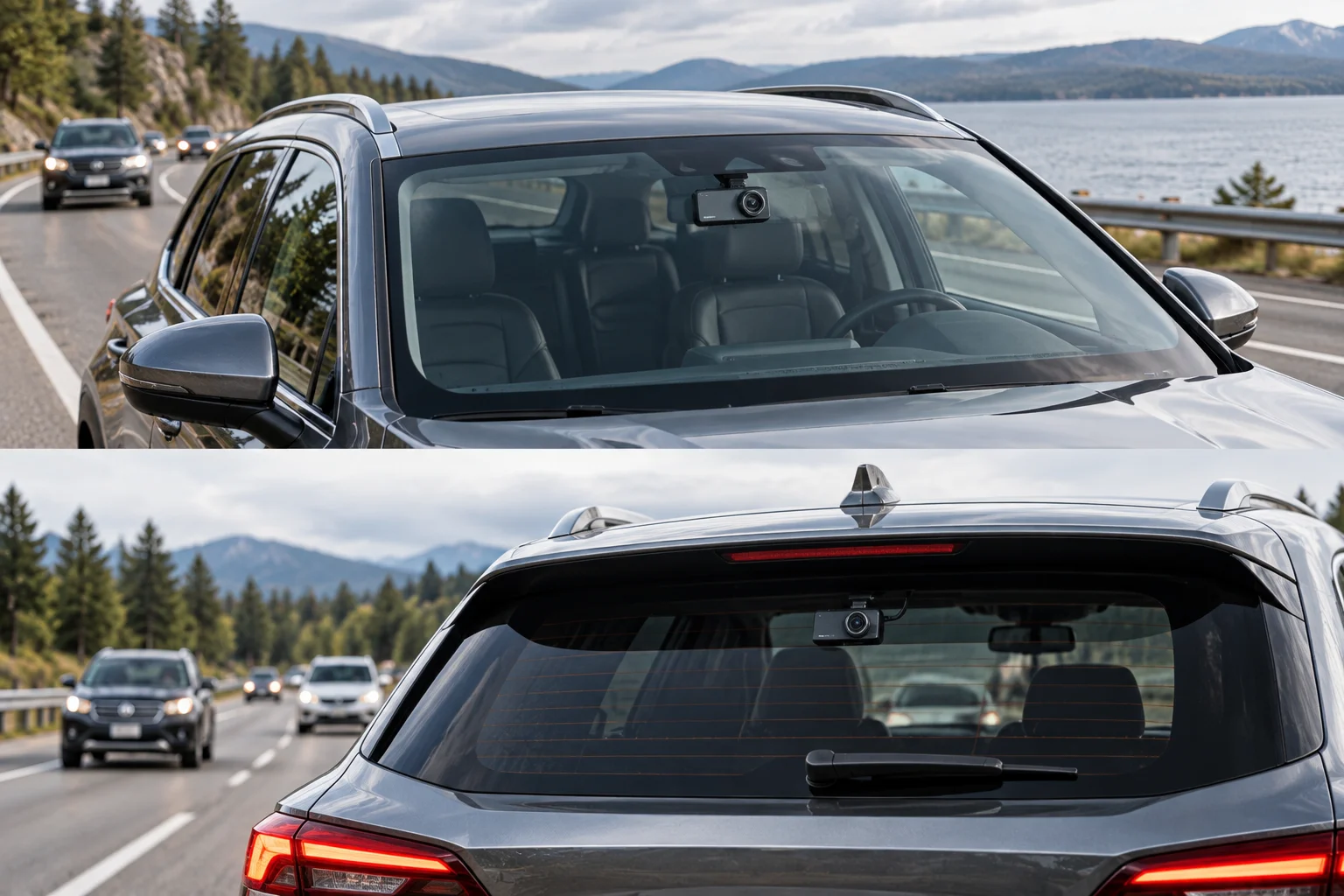
A front dash cam records what happens ahead of your vehicle, while a rear dash cam records the road and vehicles behind you. Using both cameras gives you a much wider record of what happened around your car during a collision, sudden braking event, traffic dispute or other incident.
A front camera is usually the starting point because most driving incidents happen in the area ahead of the vehicle. But it can't show everything. A rear-end collision, a vehicle approaching quickly from behind, or an incident that happens after you've passed a particular location may be outside its view.
That's where a rear camera adds another perspective.
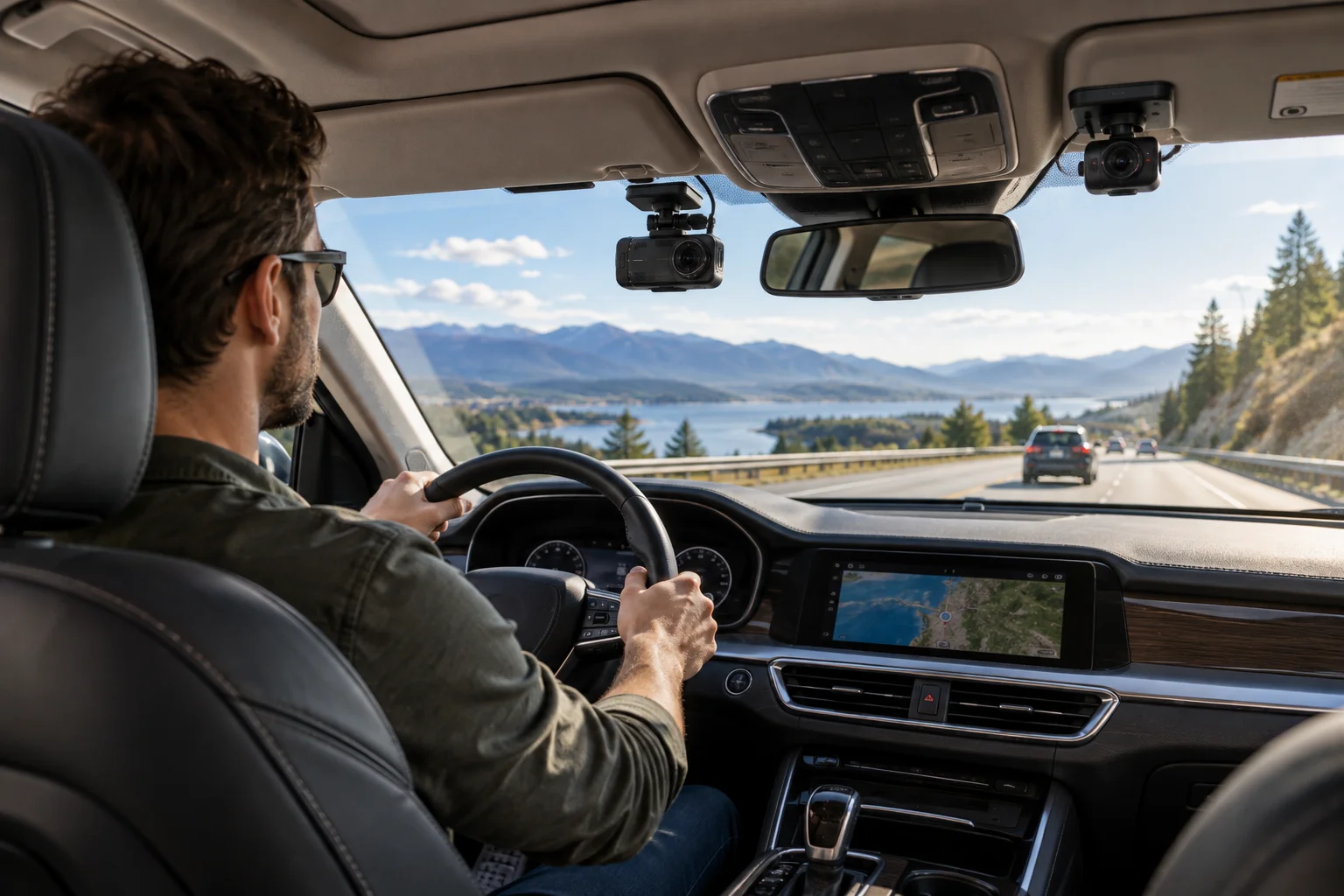
A dual-camera system doesn't necessarily mean one physical unit with two lenses. Some systems use a front camera plus a separate rear camera, while others use multiple synchronized cameras. Garmin, for example, supports networks of up to four compatible cameras and can synchronize recordings from different viewpoints.
So, do you need both? It depends on how much coverage you want and how you drive.
What Does a Front Dash Cam Record?
A front dash cam primarily records the road ahead of your vehicle.
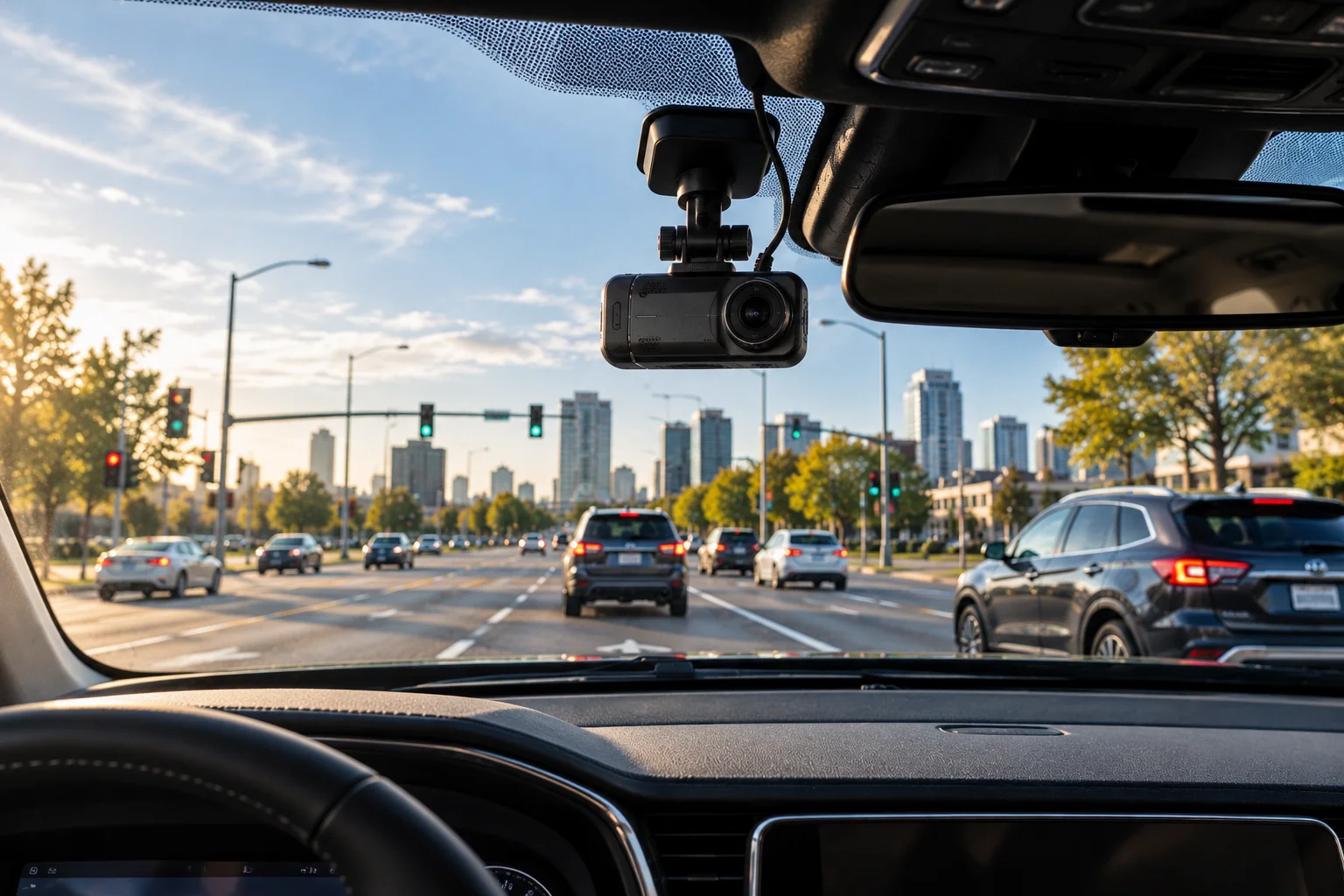
Depending on its field of view and mounting position, it can capture:
Vehicles ahead
Traffic lights and signs
Lane markings
Pedestrians and cyclists in the forward view
Road hazards
Cross traffic within the camera's field of view
Collisions occurring ahead
Your approach to an intersection
The exact area captured depends on the lens. For example, Garmin's Dash Cam 67W uses a 180-degree diagonal field of view, while several other Garmin models use 140 degrees.
A wider field of view can capture more of the surroundings, but the useful detail across the frame depends on the camera's resolution, lens quality and image processing.
For evidence purposes, the ability to clearly identify relevant details can matter more than simply having the widest possible image.
What Does a Rear Dash Cam Record?
A rear dash cam records the area behind your vehicle through the rear window or from another rear-facing mounting position.
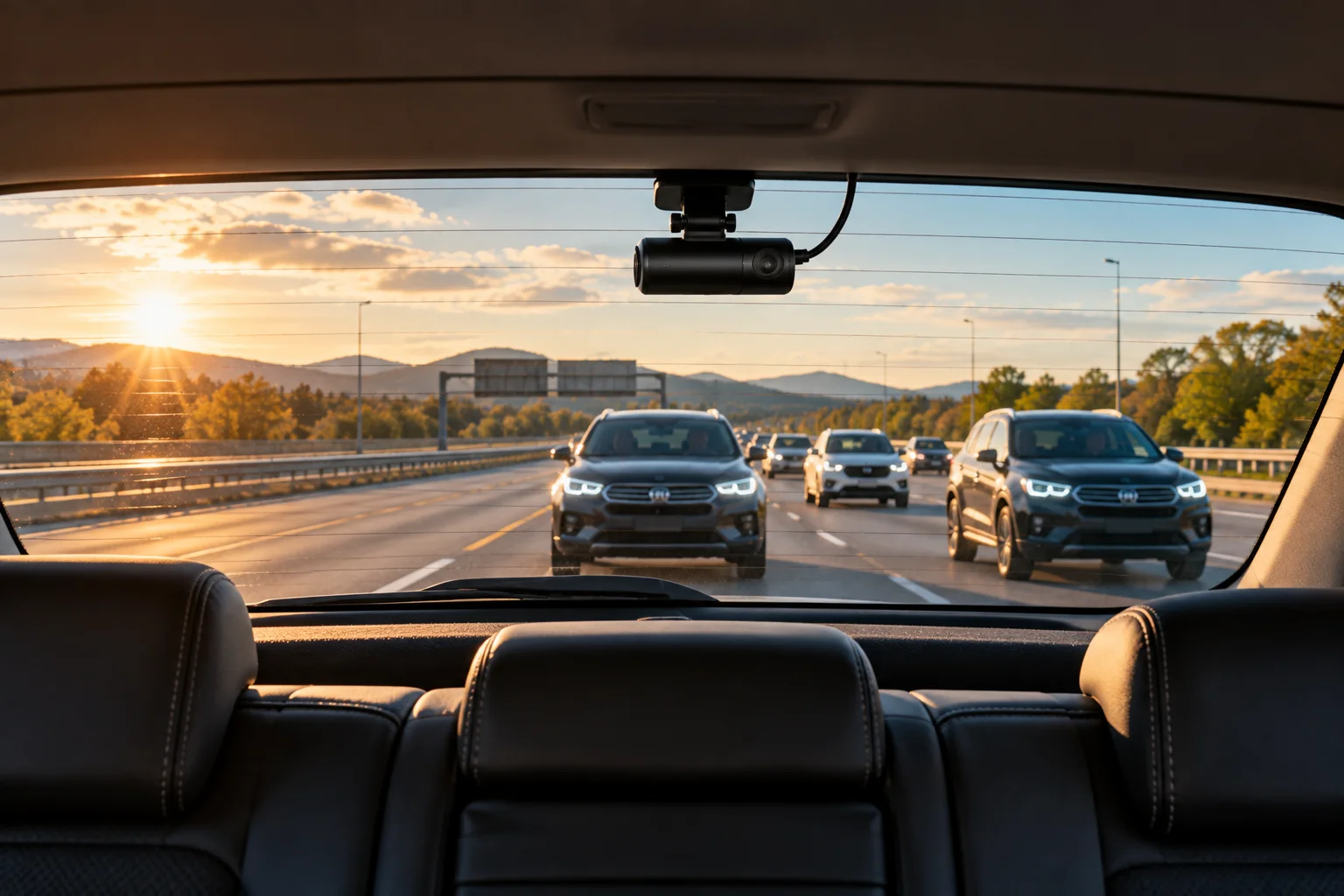
It can capture things such as:
Vehicles following you
A car approaching from behind
Rear-end collisions
Tailgating incidents
Vehicles changing lanes behind you
Traffic approaching while you're stopped
Events occurring behind your vehicle after an incident
This creates a second perspective that a front-only camera simply cannot provide.
Some multi-camera systems are specifically designed to synchronize footage from different viewpoints. Garmin's documentation, for example, describes using multiple cameras such as front and rear cameras to create synchronized recordings and combined picture-in-picture videos.
What Can a Front Camera See That a Rear Camera Can't?
The front camera has the clearest view of the road you're entering.
If a vehicle suddenly cuts across your lane, a pedestrian steps into the road or traffic stops unexpectedly ahead, the front camera can document what happened before the event.
It can also capture road signs, traffic signals and the vehicles directly ahead of you.
The rear camera has no way to see those events because its field of view faces in the opposite direction.
This is why the two cameras aren't really duplicates. They're recording two different parts of the driving environment.
What Can a Rear Camera See That a Front Camera Can't?
The rear camera becomes particularly useful when something happens behind you.
Consider a simple rear-end collision.
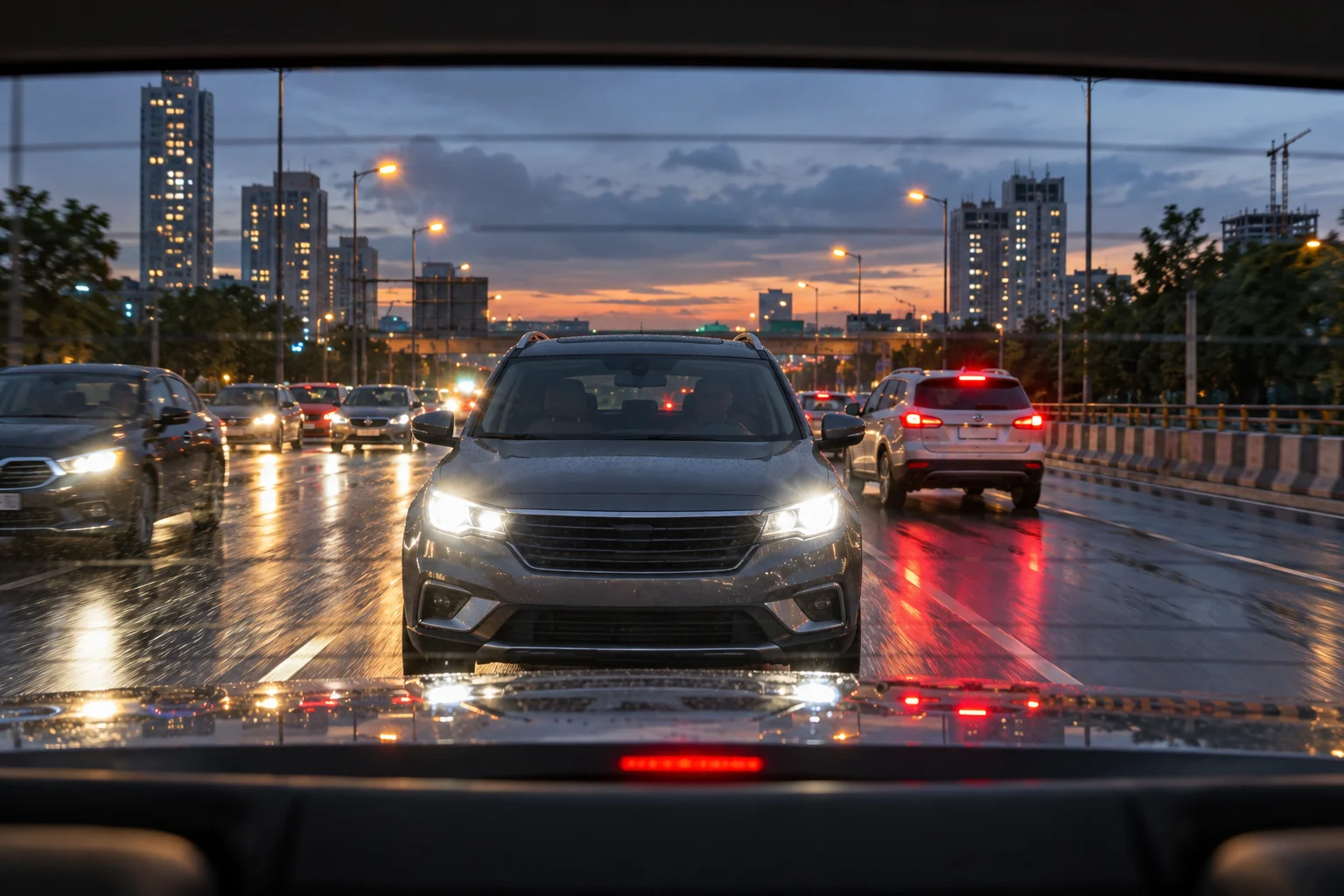
The front camera may show your vehicle suddenly being pushed forward, but it won't necessarily show the vehicle that hit you.
The rear camera can provide the missing perspective.
It may show:
The approaching vehicle → the closing distance → the impact → what happened immediately afterward
That additional footage can help establish the sequence of events.
The rear camera can also capture incidents that don't involve your own vehicle directly, such as another driver behaving aggressively behind you or a vehicle passing close to your car.
Is a Front Dash Cam Enough?
For many drivers, a front camera is a reasonable starting point.
If your main goal is to record what happens ahead while driving, one good front-facing camera can provide useful coverage without the extra installation, wiring and storage requirements of a second camera.
A front-only setup may make sense if:
You mainly want evidence of forward collisions.
You want a simple installation.
Your budget is limited.
You don't want additional wiring through the cabin.
You rarely drive in heavy traffic.
A front camera can also be useful for documenting road conditions and incidents even when no collision occurs.
But it has an obvious limitation: everything behind the vehicle is outside its view.
When Is a Front-and-Rear Dash Cam Worth It?
A front-and-rear setup becomes more useful when you want coverage in both directions.
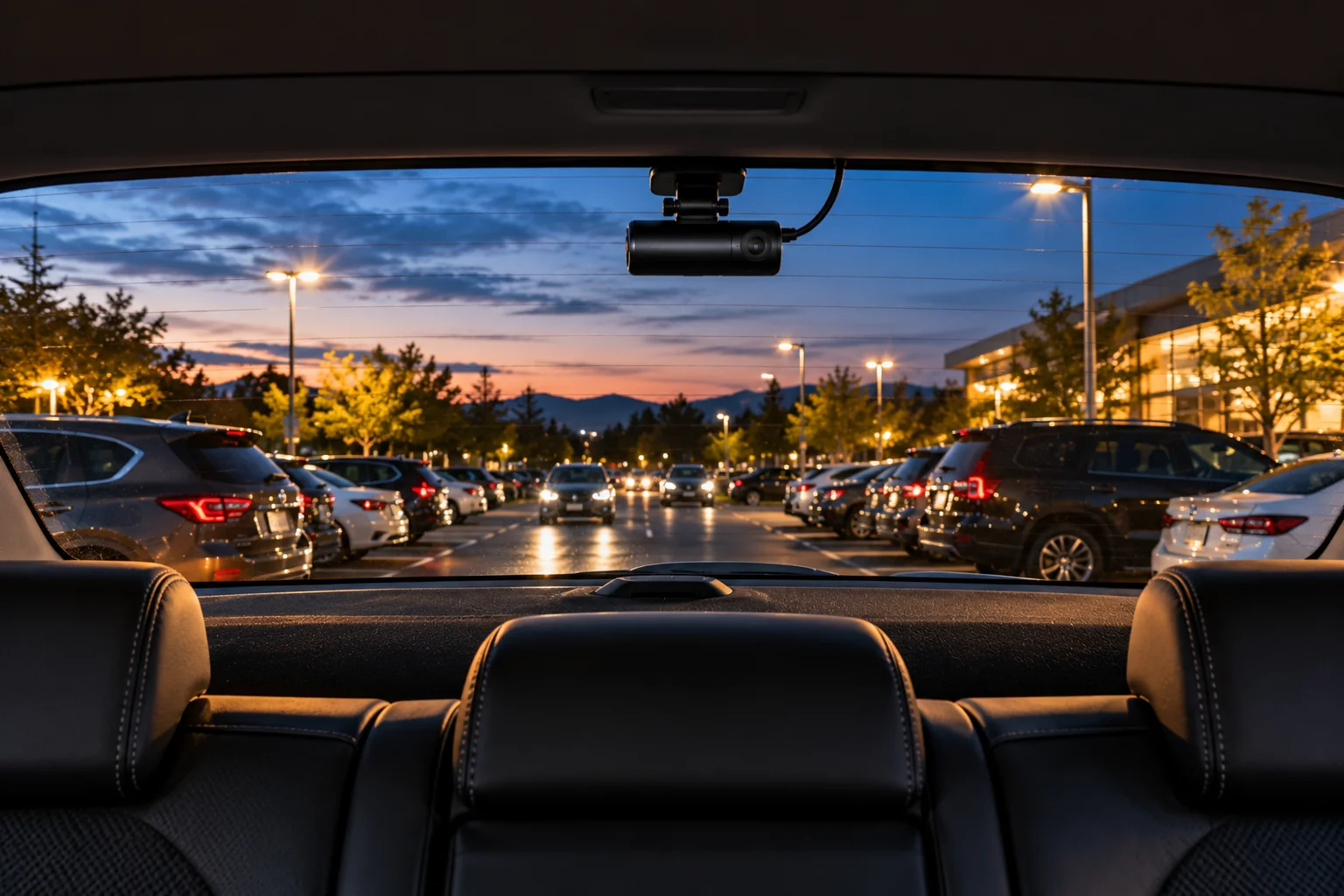
It's particularly relevant if you:
Drive frequently in dense traffic.
Spend a lot of time on highways.
Regularly deal with heavy stop-and-go traffic.
Want evidence in rear-end collisions.
Park or drive in areas where incidents can occur behind the vehicle.
Want a more complete record of an incident.
Think of it as expanding the camera's coverage rather than simply adding another feature.
The front camera watches one direction.
The rear camera watches the other.
Together, they create a much more complete record of what is happening around the car.
Does a Rear Dash Cam Record the Car Interior?
Not necessarily.
This is an important distinction when shopping for a dual-camera system.
A front-and-rear dash cam normally means:
Front-facing exterior camera + rear-facing exterior camera
An interior or cabin camera is different. It points into the vehicle and can record the driver and passengers.
Some dash cams combine an exterior-facing camera with an interior camera instead of a rear road-facing camera. Garmin's Dash Cam Tandem, for example, uses a front exterior lens and an interior lens with night vision.
So don't assume that “dual camera” means front plus rear.
Always check where the second lens actually points.
What Is the Difference Between a Rear Camera and an Interior Camera?
The easiest way to remember it is:
Camera | Main view | What it captures |
|---|---|---|
Front | Outside, forward | Road ahead |
Rear | Outside, backward | Road behind |
Interior | Inside cabin | Driver and passengers |
They're designed for different purposes.
A rideshare driver might value an interior camera because it documents activity inside the vehicle. A private driver primarily concerned with road incidents may find a rear-facing road camera more relevant.
Some systems can also combine several cameras. Garmin says its compatible multi-camera network can connect up to four cameras and synchronize recordings from different viewpoints.
Does a Rear Camera Need to Be as High Resolution as the Front Camera?
Not necessarily, but image quality still matters.
The front camera often gets the highest-resolution sensor because it is expected to capture details such as road signs, license plates and vehicles ahead.
The rear camera also needs enough detail to document vehicles and incidents clearly.
The ideal balance depends on the camera system.
For example, Garmin's Dash Cam Tandem uses a 1440p front lens and a 720p interior lens, illustrating how manufacturers can give different cameras different specifications depending on their intended purpose.
For a true front-and-rear road setup, check the resolution, field of view and low-light performance of both cameras, rather than assuming the rear unit is equivalent to the front one.
Does a Rear Dash Cam Help With Parking Incidents?
It can, depending on the dash cam's parking mode and installation.
If the system continues recording while the vehicle is parked, a rear camera can potentially capture activity approaching from behind.
However, parking surveillance isn't simply a matter of having a second camera. The dash cam needs an appropriate power setup and parking-mode functionality.
Some modern dash cams also offer remote or connected parking features, although these can require additional connectivity or subscriptions. Garmin, for example, offers Parking Guard on supported models, with some remote features requiring its Vault/LTE services.
Does a Front-and-Rear Dash Cam Use More Storage?
Yes.
Two cameras recording simultaneously generate more video data than one camera.
The amount of storage required depends on:
Resolution
Frame rate
Video compression
Recording duration
Whether audio is recorded
Number of cameras
Parking-mode recording
Higher-resolution and higher-frame-rate settings generally require more memory-card space. Garmin's documentation explicitly notes that higher resolution and FPS settings require more storage.
If you're choosing a dual-camera system, check the manufacturer's recommended microSD card capacity and specifications rather than buying a card based only on price.
Front vs Rear Dash Cam: Which One Should You Get?
Your priority | Camera setup to consider |
|---|---|
Basic forward incident recording | Front only |
More complete road coverage | Front + rear |
Rideshare/passenger monitoring | Front + interior |
Parking coverage in both directions | Front + rear, with suitable parking mode |
Maximum multi-angle coverage | Multi-camera system |
Simple installation | Front only |
A front camera keeps things simple.
A front-and-rear system gives you substantially broader coverage.
An interior camera serves a different purpose and shouldn't automatically be considered a substitute for a rear road camera.
FAQs About Front and Rear Dash Cams
Do I really need a rear dash cam?
Not necessarily. A front camera may be sufficient if you mainly want to document incidents occurring ahead. A rear camera adds coverage of the road behind you, including rear-end collisions.
Does a rear dash cam record the interior?
No, not normally. A rear dash cam points through or toward the rear of the vehicle. An interior camera points into the cabin.
Can one dash cam record both front and rear?
Some systems can, either using two lenses in one unit or multiple synchronized cameras. Check the camera's specifications because a dual-lens design may combine front and interior views rather than front and rear road views.
Does a rear dash cam record when the car is parked?
It can if the system supports rear-camera parking surveillance and has the appropriate power setup. Not every dash cam supports this, so check the specific model.
Is a front-and-rear dash cam better than a front-only dash cam?
It provides broader coverage, but it also costs more, requires additional installation and generates more video data. Whether that extra coverage is useful depends on how and where you drive.
The Bottom Line
A front dash cam records what happens ahead. A rear dash cam records what happens behind you.
That's the fundamental difference.
A front camera can document collisions, traffic situations, road hazards and other events in front of your vehicle. A rear camera adds another perspective for rear-end collisions, vehicles approaching from behind and incidents that occur outside the front camera's field of view.
If you want the simplest setup, a good front camera may be enough.
If you want a more complete record of what's happening around your vehicle, front plus rear coverage gives you a much broader view.
Just make sure you're buying the type of second camera you actually need. Front + rear, front + interior and multi-camera systems aren't the same thing, even though manufacturers may describe all of them as dual-camera setups.