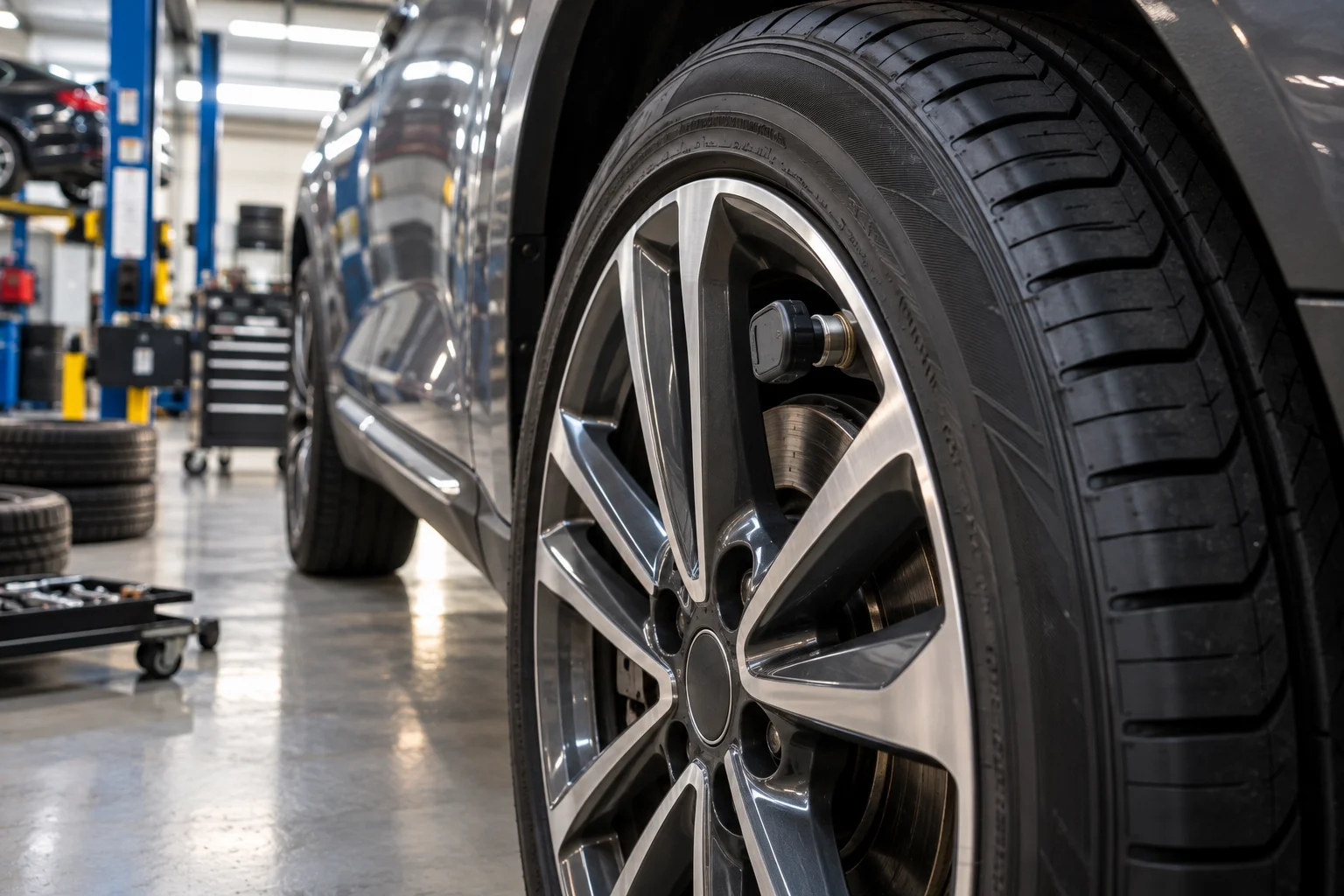
Your car's tires can lose pressure without looking obviously flat. That's one reason Tire Pressure Monitoring Systems (TPMS) have become an important part of modern vehicle safety.
TPMS continuously monitors tire pressure or uses wheel-speed information to identify conditions associated with low inflation. When the system detects a significant problem, it warns the driver through a dashboard indicator.
There are two main approaches.
Direct TPMS uses pressure sensors inside the wheels to measure tire pressure directly. Indirect TPMS uses the vehicle's wheel-speed sensors and other information to estimate whether a tire has lost pressure.
The system isn't intended to replace a pressure gauge or regular tire inspection. Instead, it provides an early warning that can be particularly valuable while you're driving.
What Is TPMS and What Does It Actually Monitor?
TPMS is an electronic system designed to alert the driver when tire inflation falls below an acceptable level.

Depending on the vehicle, the system may provide only a warning light or display individual tire pressures and other information.
A direct system typically includes a pressure sensor associated with each wheel. The sensor measures pressure and transmits information to the vehicle's control system.
An indirect system doesn't directly measure air pressure. Instead, it analyzes changes in wheel rotation and other vehicle signals to identify differences that can indicate underinflation.
Either approach has the same basic purpose: tell the driver that something about tire inflation needs attention.
How Do Direct TPMS Sensors Measure Tire Pressure?
Direct TPMS sensors physically measure the pressure inside each tire.
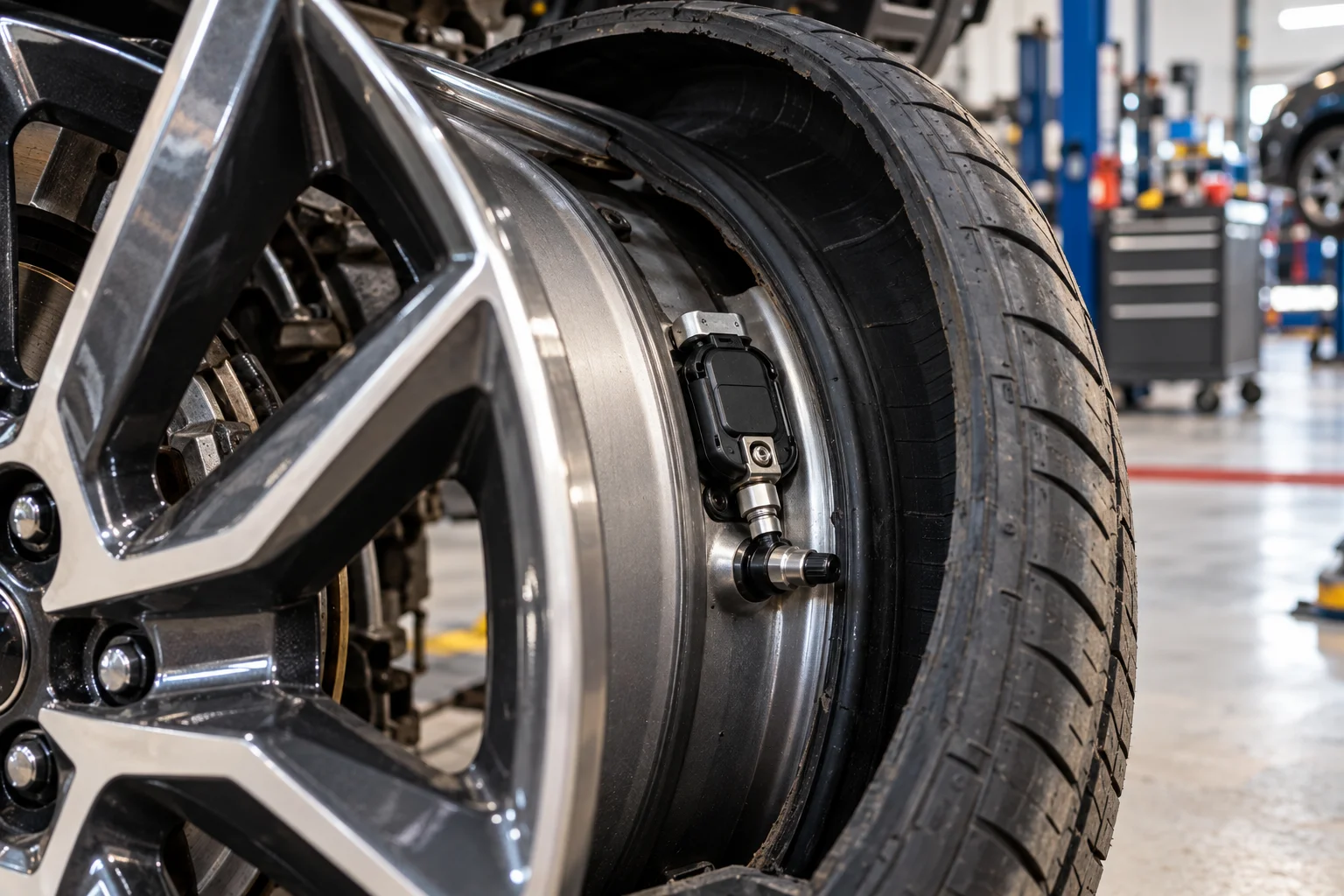
A typical sensor is mounted inside the wheel, commonly as part of or near the valve assembly. It contains pressure-sensing electronics, a transmitter and a power source.
The sensor periodically measures conditions inside the tire and sends information wirelessly to a receiver or vehicle control module. NHTSA describes direct systems as using pressure sensors in the wheels that transmit pressure information to a central receiver.
Some direct systems can also measure tire temperature.
The vehicle then interprets the sensor data and determines whether a warning should be displayed.
Because the system directly measures pressure, it can potentially identify pressure changes even when all four tires are losing pressure together.
How Does Indirect TPMS Detect Low Tire Pressure?
Indirect TPMS detects changes in how the wheels rotate rather than measuring air pressure directly.
When a tire loses pressure, its effective rolling radius can change. That can cause the affected wheel to rotate at a slightly different rate than the others.
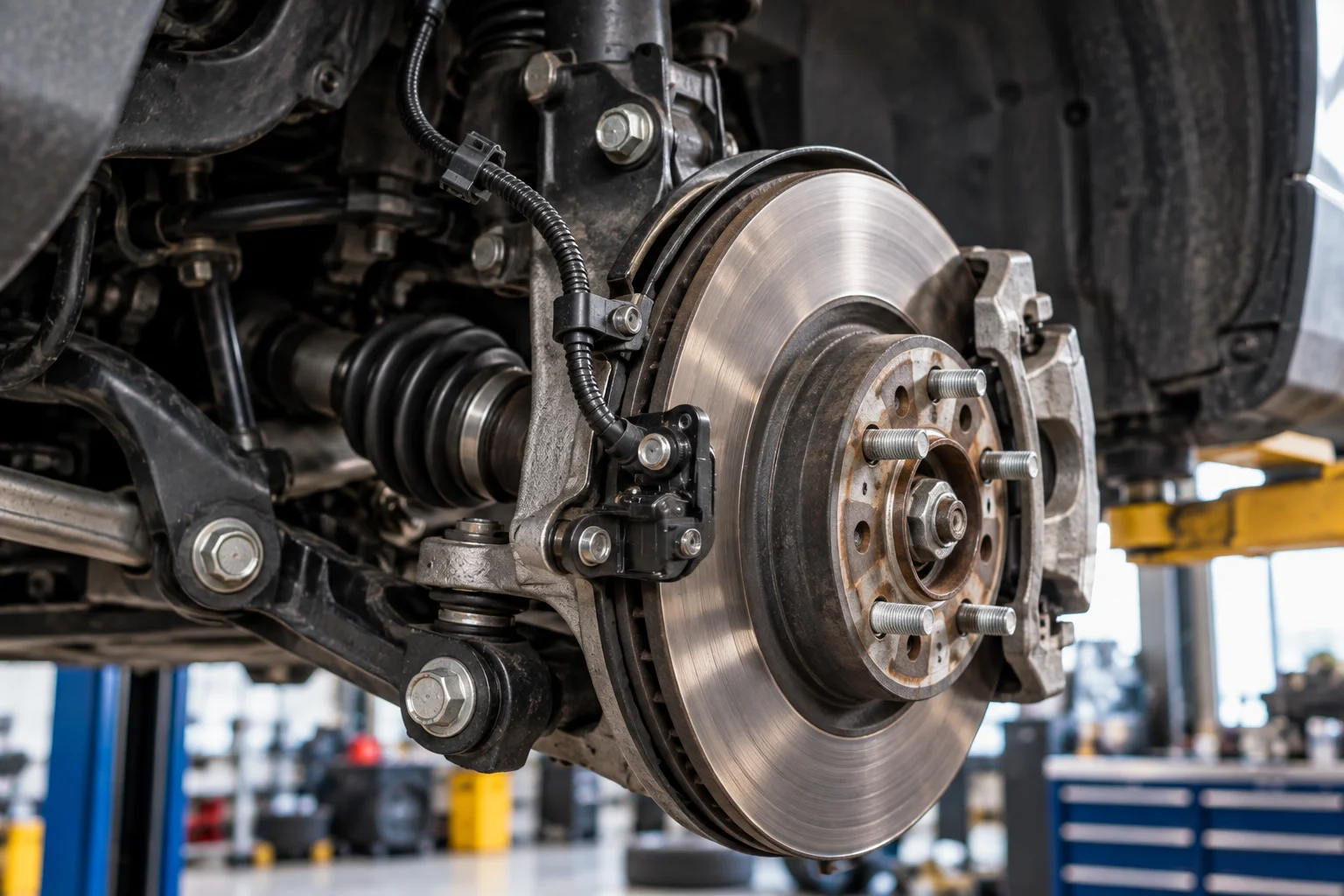
The vehicle already has wheel-speed sensors for systems such as ABS and electronic stability control. An indirect TPMS can use that information to look for patterns associated with pressure loss.
Some newer indirect systems can also use additional vehicle information and more sophisticated algorithms.
The important distinction remains:
Direct TPMS measures pressure. Indirect TPMS infers pressure loss from vehicle behavior.
Why Can a Tire Lose Pressure Without Looking Flat?
A tire can be significantly underinflated while still appearing visually normal.
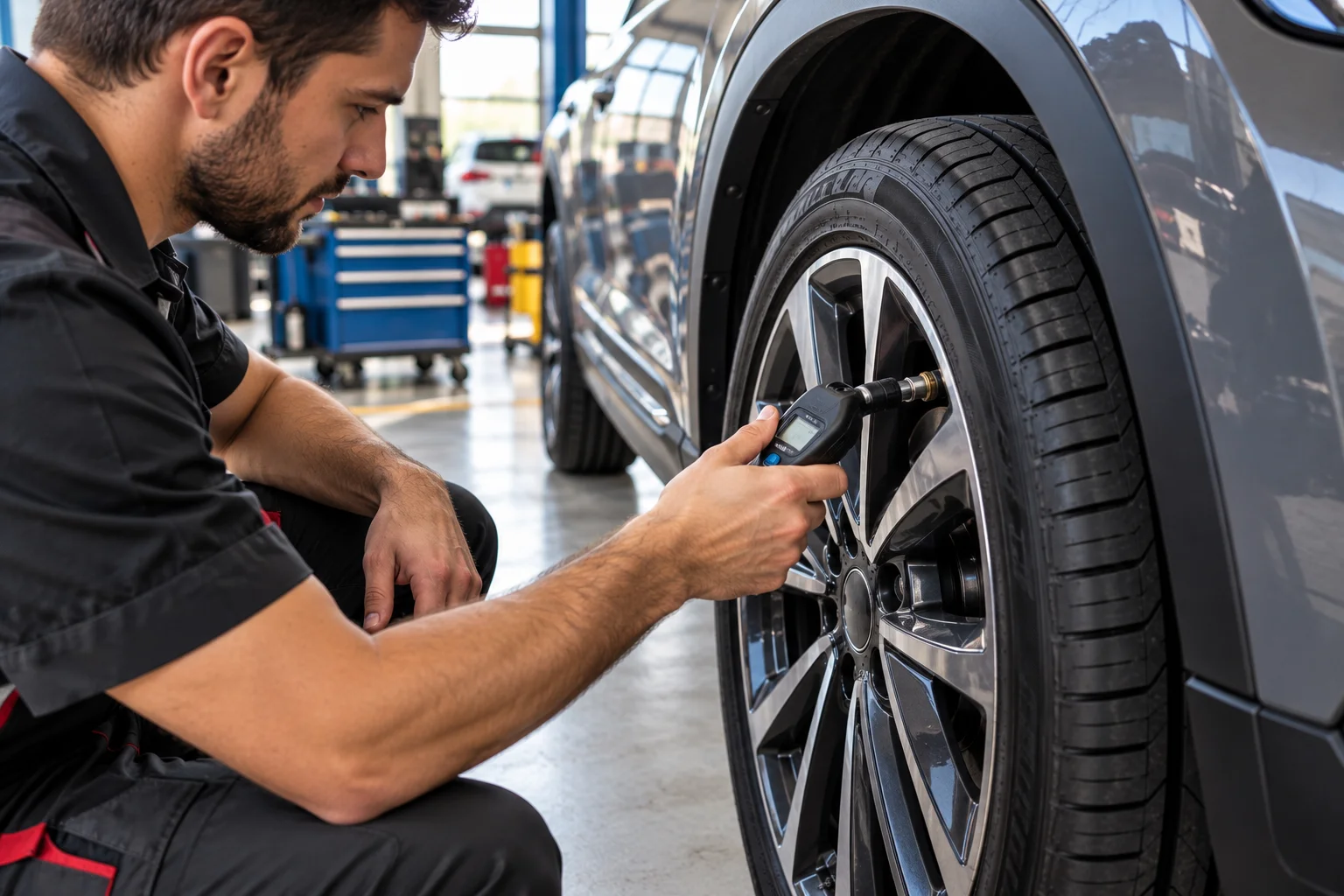
Modern tires have relatively stiff sidewalls, so a gradual pressure loss isn't always obvious from outside the vehicle.
NHTSA specifically warns that underinflated tires can be difficult to detect visually and recommends checking pressure with an accurate gauge.
That's why simply walking around the car and looking at the tires isn't enough.
A dashboard warning provides another layer of information, but the physical pressure measurement remains important.
Why Does Correct Tire Pressure Matter While Driving?
Correct tire pressure affects safety, tire durability and fuel consumption.
An underinflated tire can generate additional heat and experience greater stress as it rolls.
NHTSA identifies proper tire inflation as one of the most important parts of tire maintenance and notes that it affects safety, durability and fuel consumption.
Underinflation can also contribute to irregular tire wear.
This matters particularly during highway driving, where tires operate continuously at higher speeds and temperatures.
The correct pressure isn't necessarily the maximum pressure printed on the tire sidewall. The vehicle manufacturer's recommended cold inflation pressure is the number you should use.
Why Does TPMS Sometimes Turn On in Cold Weather?
Lower temperatures can reduce tire pressure enough to trigger a TPMS warning.

Air pressure changes with temperature. When the temperature drops, tire pressure can fall as well.
NHTSA notes that a TPMS warning may appear on cold mornings and later disappear as the tires warm up or outside temperatures increase. Even in that situation, the agency recommends checking the tires rather than ignoring the warning.
A temporary warning doesn't necessarily mean the TPMS is malfunctioning.
It can be an indication that the tire was already close to the warning threshold.
Does TPMS Tell You the Exact Tire Pressure?
Only some TPMS systems provide a numerical pressure reading to the driver.
A basic system may simply illuminate a warning symbol when pressure falls below the system's threshold.
More advanced direct systems can display individual readings for each tire.
An indirect system generally doesn't have a pressure sensor from which it can directly report an actual PSI value. It estimates abnormal pressure conditions from wheel behavior.
That's why a dashboard showing "low tire pressure" isn't necessarily equivalent to using a calibrated pressure gauge.
Can TPMS Detect a Slow Leak?
Direct TPMS can identify pressure loss as it occurs, while indirect systems detect changes in wheel behavior that indicate underinflation.
A slow leak may take time to cross the system's warning threshold.
TPMS therefore shouldn't be treated as a substitute for regular pressure checks.
NHTSA recommends checking tire pressure at least monthly, when the tires are cold, even when a vehicle has TPMS.
If you repeatedly need to add air to the same tire, the problem should be investigated rather than simply resetting the TPMS warning.
What Happens When the TPMS Warning Light Comes On?
Check the tire pressures as soon as it is safe to do so.
The TPMS warning means at least one tire has reached the system's low-pressure warning condition. NHTSA recommends inspecting the tires and checking their pressure when the warning appears.
If a tire is substantially underinflated, continuing to drive at speed can increase the risk of tire damage.
If the warning light flashes and then remains illuminated, that can indicate a TPMS malfunction rather than simply low tire pressure.
The exact warning behavior varies by vehicle, so the owner's manual is the best reference.
Do TPMS Sensors Need Batteries?
Most direct TPMS wheel sensors use their own batteries, which eventually need replacement along with or as part of sensor service.
Because the sensor is mounted inside or around the wheel, replacing its battery isn't always as simple as changing a normal external battery.
Tire removal can also create an opportunity to damage a sensor if the technician isn't aware that one is installed.
NHTSA has documented that direct TPMS sensors can require attention during tire and rim service and that some systems need to be relearned after wheel positions change.
Does TPMS Mean You Never Need a Pressure Gauge?
No. TPMS is a warning system, not a replacement for regular tire maintenance.
NHTSA recommends checking all tires at least once a month with an accurate gauge and using the vehicle manufacturer's recommended cold inflation pressure.
You should also inspect the tires for cuts, cracks, bulges, abnormal wear and other visible damage.
TPMS is best viewed as an additional safety layer.
Frequently Asked Questions
What does the TPMS light mean?
It generally means one or more tires have reached a significantly underinflated condition. Check the tire pressures as soon as practical.
What is the difference between direct and indirect TPMS?
Direct TPMS measures tire pressure using sensors in the wheels. Indirect TPMS estimates pressure loss by analyzing wheel-speed differences and related vehicle data.
Can TPMS detect a flat tire?
It can detect significant pressure loss, but the exact speed and behavior depend on the system. A rapid puncture can still require immediate driver attention.
What tire pressure should I use?
Use the vehicle manufacturer's recommended cold tire pressure shown on the vehicle's tire-information placard or in the owner's manual, not the maximum pressure printed on the tire sidewall.
Can I drive with the TPMS light on?
A TPMS warning should not be ignored. Check the tire pressure and condition as soon as it is safe. If a tire is severely underinflated or damaged, continuing to drive can be unsafe.
The Bottom Line
TPMS works as an early-warning system for one of the most important variables affecting your tires.
Direct systems measure pressure. Indirect systems infer pressure loss from wheel behavior. Both can help identify underinflation, but neither eliminates the need for regular tire checks.
The most useful way to think about TPMS is simple: it gives you information you might otherwise miss.
When that warning appears, don't just reset the light and continue driving. Check the actual tire pressure, inspect the tire and use the vehicle manufacturer's recommended cold inflation pressure.
TPMS can warn you about a pressure problem. It can't replace maintaining the tire.