
A premium car stereo doesn't necessarily sound better simply because it has more speakers or a larger amplifier.
What you're hearing is the result of an entire system working together: speaker design, amplifier power, digital signal processing (DSP), speaker placement, cabin acoustics and vehicle-specific tuning.
That's important because a car is an unusually difficult environment for audio. The speakers are mounted in doors, dashboards, pillars and other locations that weren't designed like a conventional home listening room. The windshield, seats, glass, trim and cabin dimensions all affect how sound reaches your ears.
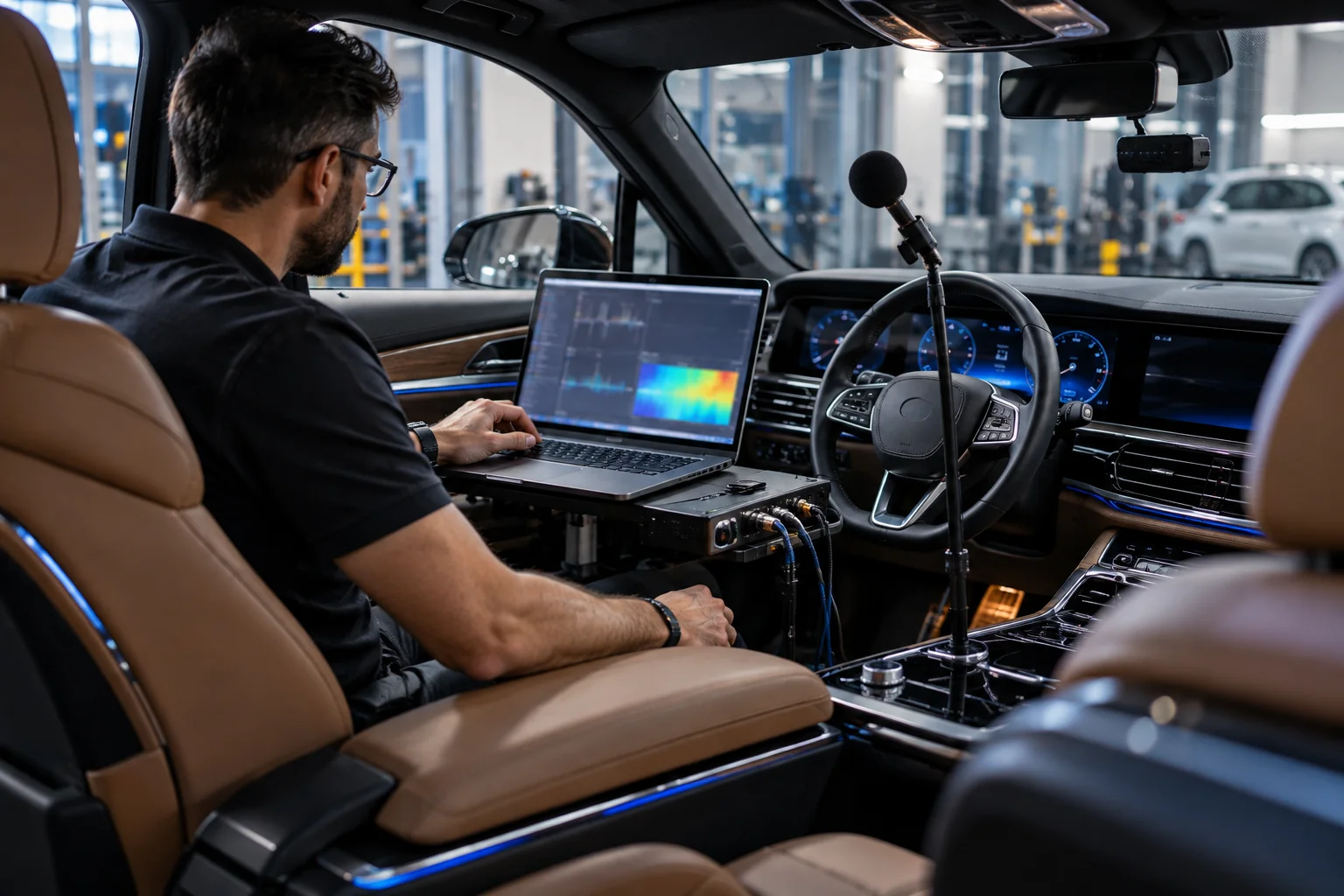
Premium automotive audio engineers therefore tune the car and audio system as one acoustic environment. HARMAN describes this approach as treating the speakers and listening space as a cohesive system rather than simply optimizing individual speakers.
That's why two cars with similar-looking speaker specifications can sound dramatically different.
What Makes a Premium Car Stereo Different?
Premium systems are usually distinguished by system-level engineering rather than one individual component.
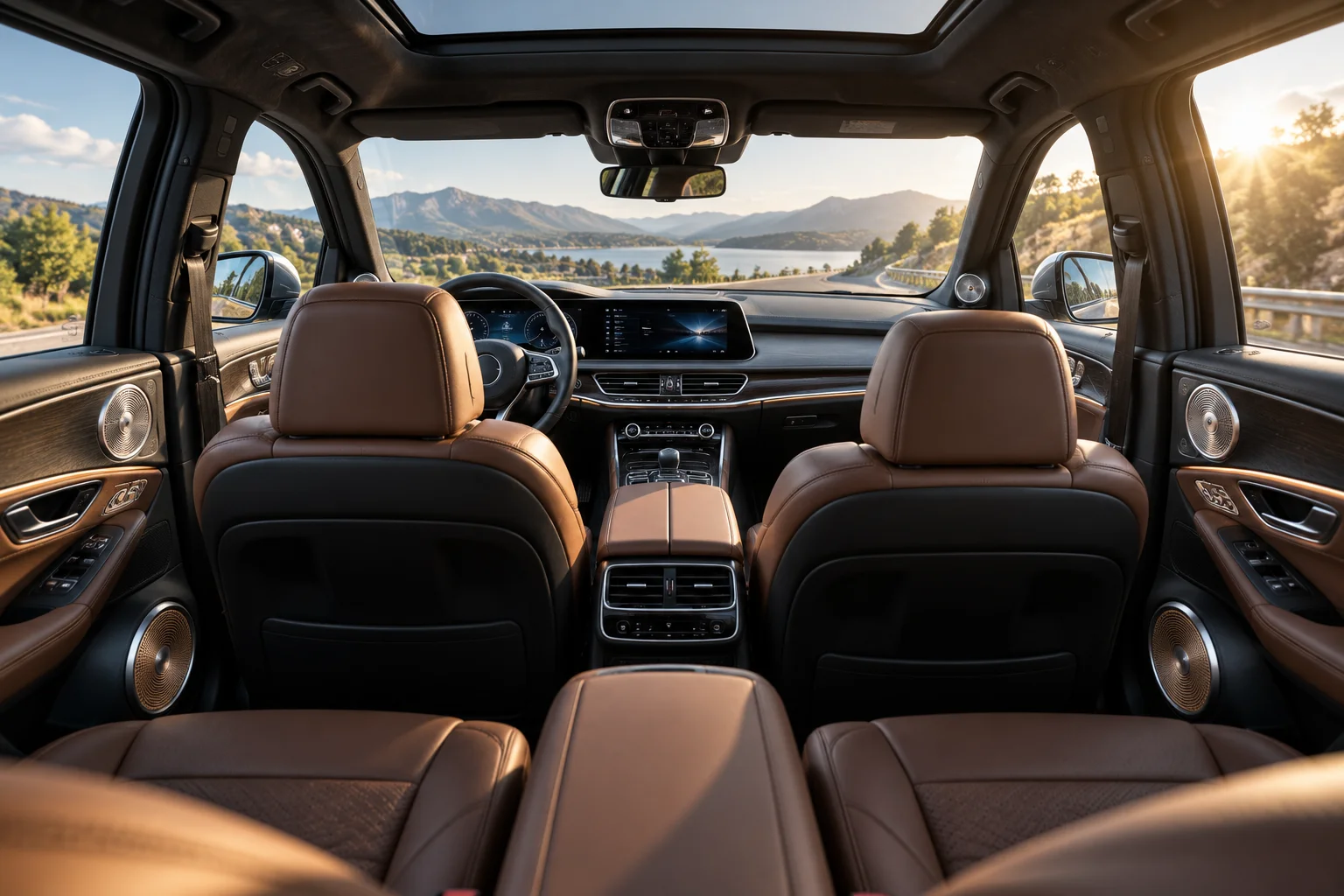
A typical premium system can combine:
More carefully designed speakers
Dedicated amplifiers
Multiple amplifier channels
Digital crossovers
Equalization
Time alignment
Cabin-specific tuning
Subwoofers
Surround or immersive processing
Noise compensation
Carefully selected speaker locations
HARMAN says speaker number, placement, materials and physical design all influence the sound characteristics of an automotive system. Its engineers can even work with vehicle designers to modify doors specifically for acoustic performance.
The result is less about "bigger hardware" and more about how every component interacts with the cabin.
Why Do Premium Systems Use More Speakers?
Additional speakers allow the system to divide the audible frequency range and control sound placement more precisely.
Instead of asking one speaker to reproduce everything, a system can use different drivers for different frequency ranges.
For example:
Tweeters handle high frequencies.
Midrange drivers reproduce much of the vocal and instrument range.
Woofers handle lower frequencies.
Subwoofers reproduce deeper bass.
A premium system may also add center, rear or height-oriented speakers to create a wider or more immersive soundstage.
But speaker count alone doesn't guarantee better sound.
HARMAN explicitly notes that speaker count and wattage aren't sufficient measures of automotive audio quality; software, hardware, materials and tuning also matter.
What Does the Amplifier Actually Do?
The amplifier provides the electrical power needed to drive the speakers and gives the system enough headroom to reproduce demanding passages cleanly.
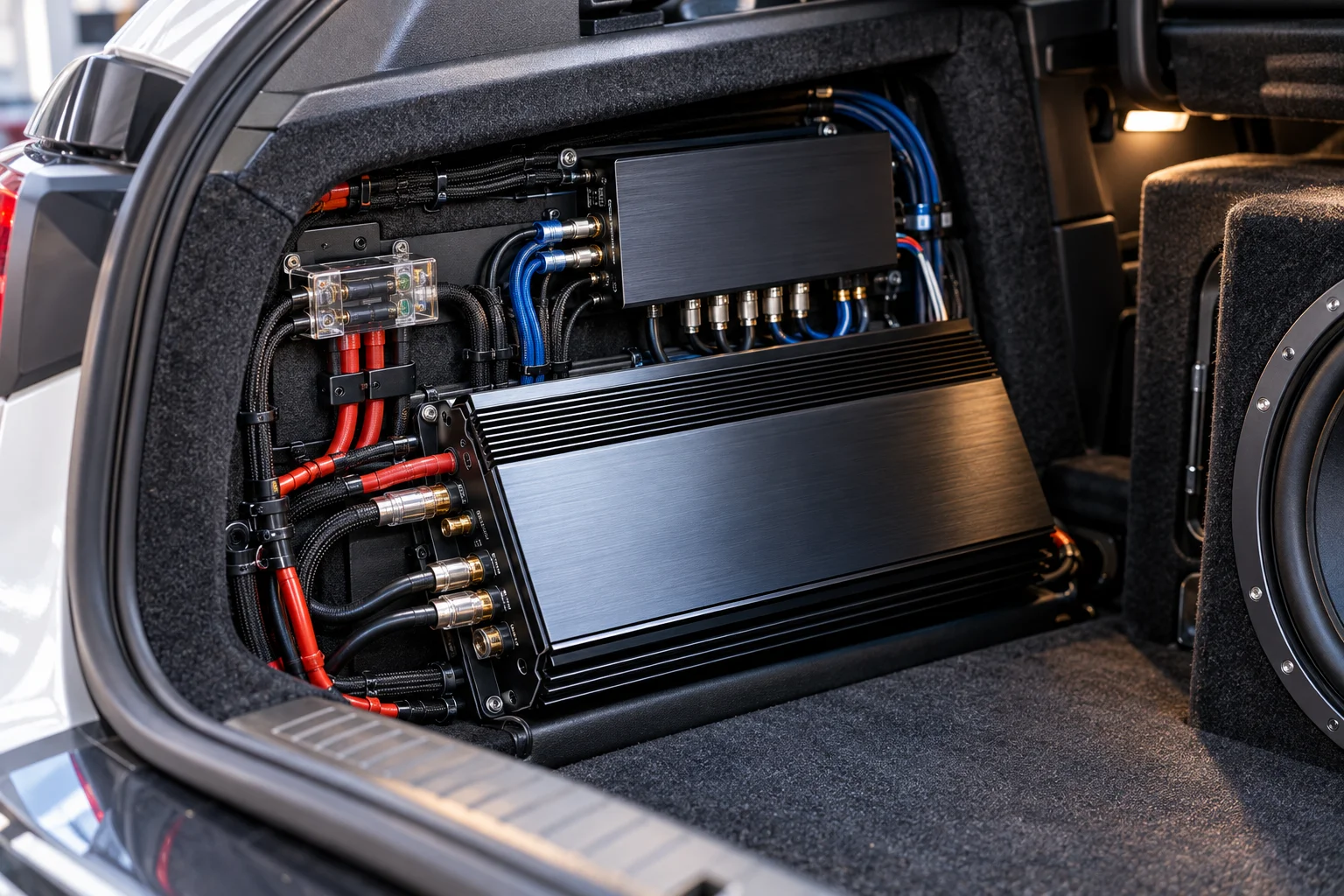
A weak amplifier can struggle when music becomes loud or contains powerful bass transients.
A properly designed amplifier can provide sufficient power without continuously approaching its limits.
Premium systems may use multiple amplifier channels so individual speakers or speaker groups can be controlled independently.
That makes it easier for the DSP to apply precise equalization, crossover and timing adjustments to each channel.
The amplifier therefore isn't simply a "volume booster."
It's part of the system's overall control architecture.
Why Is Digital Signal Processing So Important?
DSP allows engineers to digitally manipulate the audio signal before it reaches the amplifiers and speakers.
This is where much of the invisible engineering happens.
A DSP can control:
Equalization
Crossover frequencies
Time alignment
Phase relationships
Channel levels
Dynamic processing
Surround processing
Individual listening zones
Noise compensation
HARMAN's AudioworX platform, for example, includes a large library of DSP components and tools for configuring and tuning automotive audio systems.
Without DSP, engineers would have much less ability to compensate for the unusual positions of speakers inside a vehicle.
How Does Time Alignment Improve Car Audio?
Time alignment compensates for the fact that different speakers are different distances from your ears.
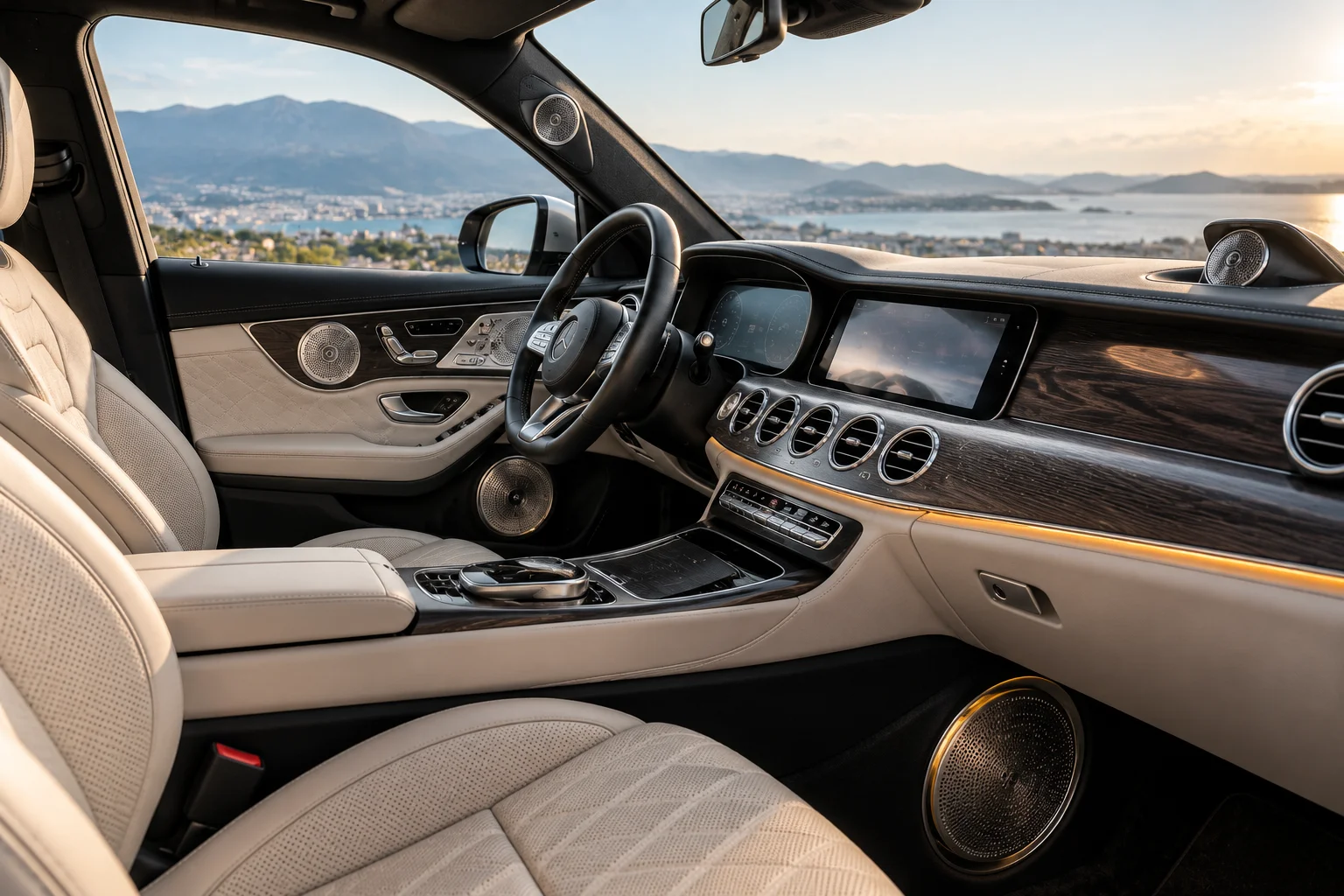
Consider the driver's seat.
The left door speaker might be relatively close to the driver, while a passenger-side speaker is considerably farther away.
If both speakers produce the same signal at exactly the same time, the sound from the closer speaker reaches your ears first.
DSP can introduce carefully calculated delays so signals arrive at the listening position in a more controlled relationship.
This helps create a more coherent soundstage rather than making the nearest speaker dominate.
The same principle becomes increasingly important as a system tries to create a consistent experience across multiple seats.
What Does Cabin Tuning Actually Mean?
Cabin tuning means adjusting the audio system specifically for the vehicle's interior and listening positions.
A car cabin isn't acoustically neutral.
Sound reflects from:
Glass
Dashboard surfaces
Doors
Seats
Headliner
Floor
Trim panels
Some frequencies can become reinforced while others can be absorbed or cancelled depending on the cabin geometry.
HARMAN describes automotive cabin acoustics and speaker placement as significant challenges and says its tuning technologies are designed around the vehicle's specific listening environment.
This is why a speaker that sounds excellent in a laboratory or home enclosure can require substantial tuning when installed inside a vehicle.
Why Does the Same Music Sound Different in Different Cars?
Every vehicle has a different acoustic environment, so the same recording interacts with the cabin differently.
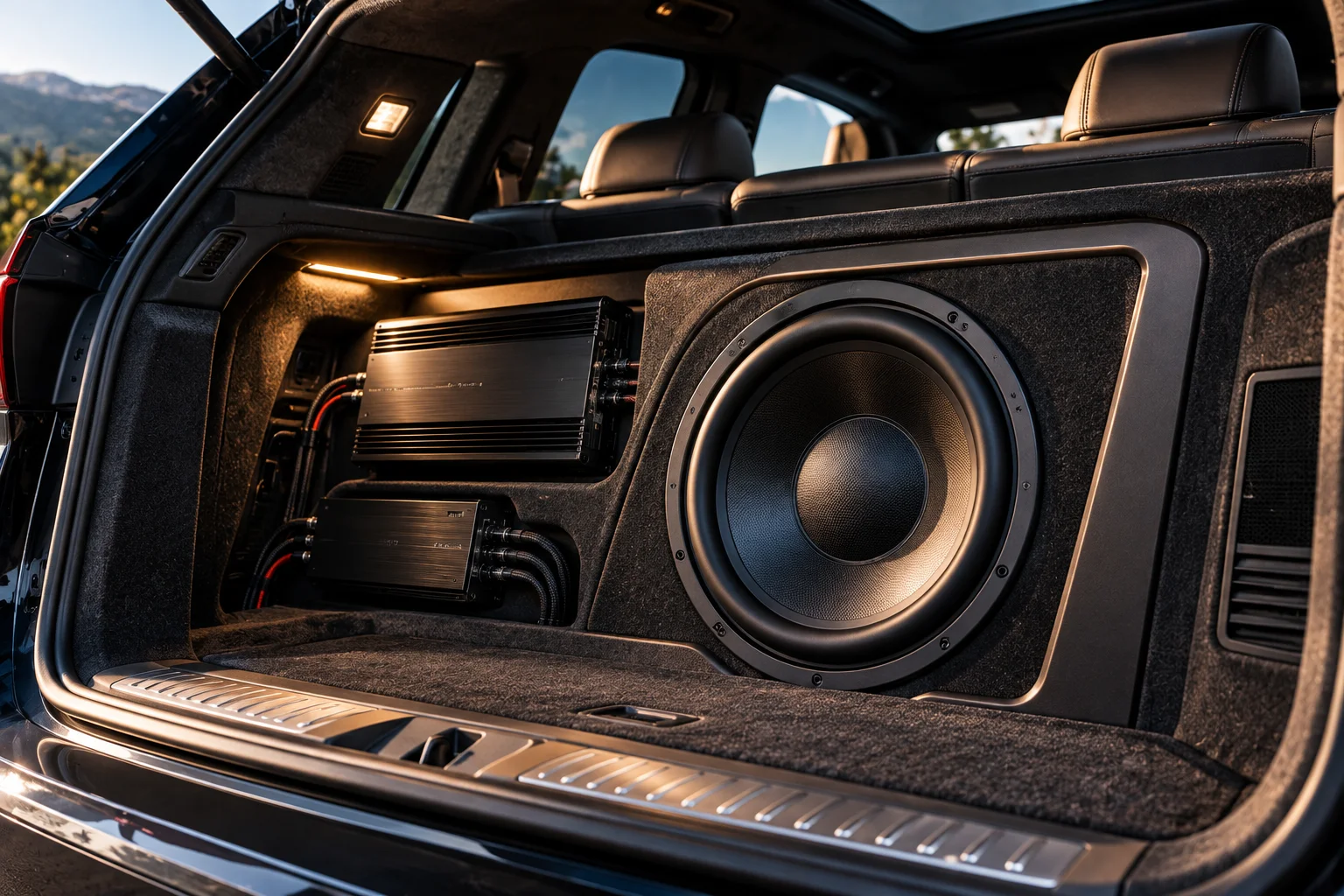
A small hatchback, luxury sedan and large SUV can have completely different:
Cabin volume
Glass area
Seat positions
Speaker locations
Door construction
Interior materials
Sound reflections
Background noise
Premium audio suppliers therefore create vehicle-specific tunings rather than simply installing the same system everywhere.
HARMAN says its premium systems are differentiated through architecture, technology, materials, design and signal processing, with tuning intended to reflect the vehicle and audio brand.
Why Does a Premium System Often Have Better Bass?
Premium bass performance comes from the combination of dedicated low-frequency drivers, amplifier control, enclosure design and DSP rather than simply higher volume.
A dedicated subwoofer can reproduce low frequencies without asking smaller door speakers to handle the entire range.
DSP can also control bass response and prevent the amplifier or speaker from being driven beyond its useful limits.
Some advanced automotive systems even use vibration or seat transducers so occupants can physically feel certain low-frequency effects. HARMAN describes "Personal Bass Impact" as one example of this approach.
Good bass isn't necessarily about producing the most powerful thump.
It's about controlled low-frequency reproduction without overwhelming vocals and instruments.
Can Premium Car Audio Reduce Road Noise?
Some systems actively compensate for or cancel certain vehicle noises, making music easier to hear.
Road and tire noise can mask low-level musical details.
HARMAN's HALOsonic technology includes Road Noise Cancellation, which uses sensors and the vehicle's audio system to counter unwanted low-frequency road noise. It also offers Engine Order Cancellation for reducing certain engine-related noise.
This doesn't mean the audio system magically makes the car silent.
Instead, reducing specific background noise can change the perceived quality of the entire audio experience.
Does a Premium Badge Guarantee Better Sound?
No. A branded premium system can still sound different from another premium system, and personal preference matters.
Automotive audio brands use different tuning philosophies.
One system might emphasize a neutral presentation. Another might prioritize strong bass or an expansive surround effect.
HARMAN itself notes that listeners have different preferences and that audio systems are tuned around different listening experiences.
The vehicle integration also matters.
A premium audio package developed specifically for one vehicle isn't necessarily directly comparable with another system carrying a different badge.
Why Does Premium Audio Cost More?
You're paying for the complete engineering package, not just the speakers.
Costs can come from:
Additional speakers
More amplifier channels
Higher-quality drivers
Dedicated subwoofers
DSP hardware and software
Vehicle-specific acoustic development
Cabin tuning
Installation and integration
Noise-management technology
Some of this work happens long before the vehicle reaches a showroom.
HARMAN says its automotive audio development process can begin years before production and may involve physical changes to components such as vehicle doors to achieve the desired acoustic result.
What Should You Actually Listen For?
Don't judge a premium system by speaker count or maximum volume alone.
When comparing systems, listen for:
Clear vocals
Controlled bass
Separation between instruments
Consistent sound when changing seats
A stable center image
Detail at low volume
Lack of harshness at high volume
Natural transitions between bass, midrange and treble
Useful surround effects rather than artificial echo
A system that simply gets louder isn't necessarily reproducing music better.
Frequently Asked Questions
Do more speakers automatically mean better car audio?
No. Speaker placement, driver quality, amplifier design, DSP and cabin tuning can matter as much as or more than speaker count.
What does DSP do in a car stereo?
DSP digitally processes the audio signal to control things such as equalization, crossovers, timing, channel levels and surround processing.
Why is car audio harder to tune than home audio?
Speakers are positioned at very different distances from occupants, while glass, seats and other interior surfaces reflect and absorb sound in complex ways.
Does a bigger amplifier mean better sound?
Not automatically. Adequate amplifier power and headroom are useful, but sound quality depends on the complete system and its tuning.
Why does premium car audio sound better at the driver's seat?
Many systems are specifically optimized around the driver's position, using techniques such as time alignment and seat-specific correction. Some newer systems can even adapt tuning based on occupant location.
Is a premium car stereo worth paying extra for?
That depends on how much you value the audio experience. A premium system can involve substantial hardware and engineering improvements, but the audible difference depends on the vehicle, system and your listening preferences.
The Bottom Line
Premium car audio isn't simply more speakers + more watts = better sound.
The real difference comes from how the entire system is engineered around the vehicle.
Speakers create the sound, amplifiers provide controlled power, DSP shapes and coordinates the signals, and cabin tuning makes the whole system work inside a difficult acoustic environment.
That's why a well-engineered premium system can sound more spacious, balanced and controlled without necessarily being dramatically louder.
In a car, the speakers aren't the whole stereo.
The car itself is part of the speaker system.