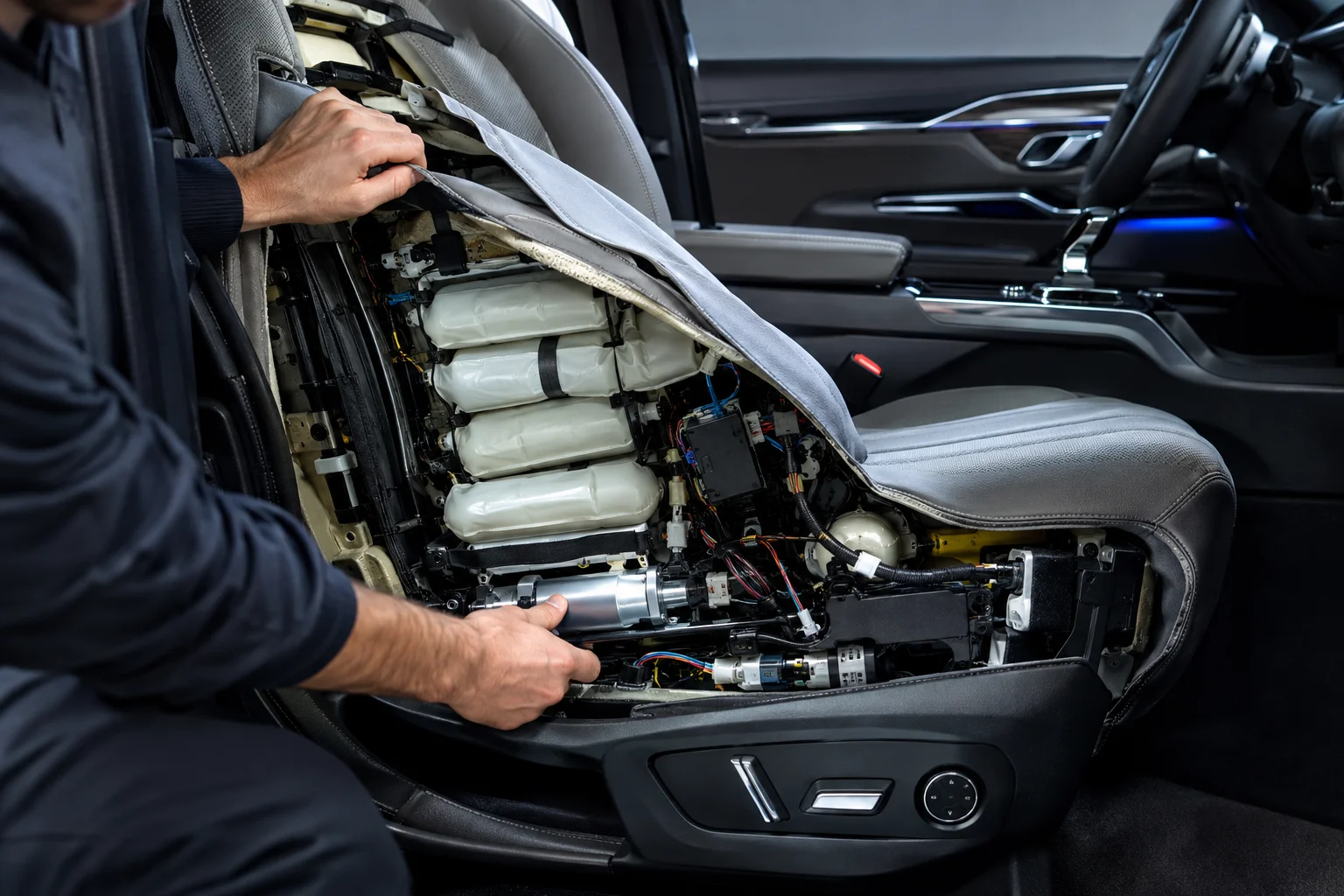
Car massaging seats aren't powered by one simple mechanism. Depending on the vehicle, a massage function can use inflatable air chambers, vibration motors, mechanical massage modules, or a combination of these technologies to create pressure and movement against your back, shoulders, thighs and legs.
The basic idea is surprisingly clever. Instead of having a person move their hands across your back, the seat contains multiple actuators hidden underneath the upholstery. Software controls those actuators in a particular sequence, creating sensations such as pulsing, rolling, kneading or wave-like movement.
Mercedes-Benz, for example, has used inflatable air chambers, vibration motors and heated massage programs in its multicontour seats. Newer systems are also moving toward mechanical massage modules that can create more pronounced kneading and tapping sensations.
So what actually happens underneath the leather or fabric when you press Massage on the infotainment screen?
How Do Car Massaging Seats Work?
Car massage seats work by repeatedly changing pressure or movement at different points beneath the seat upholstery.
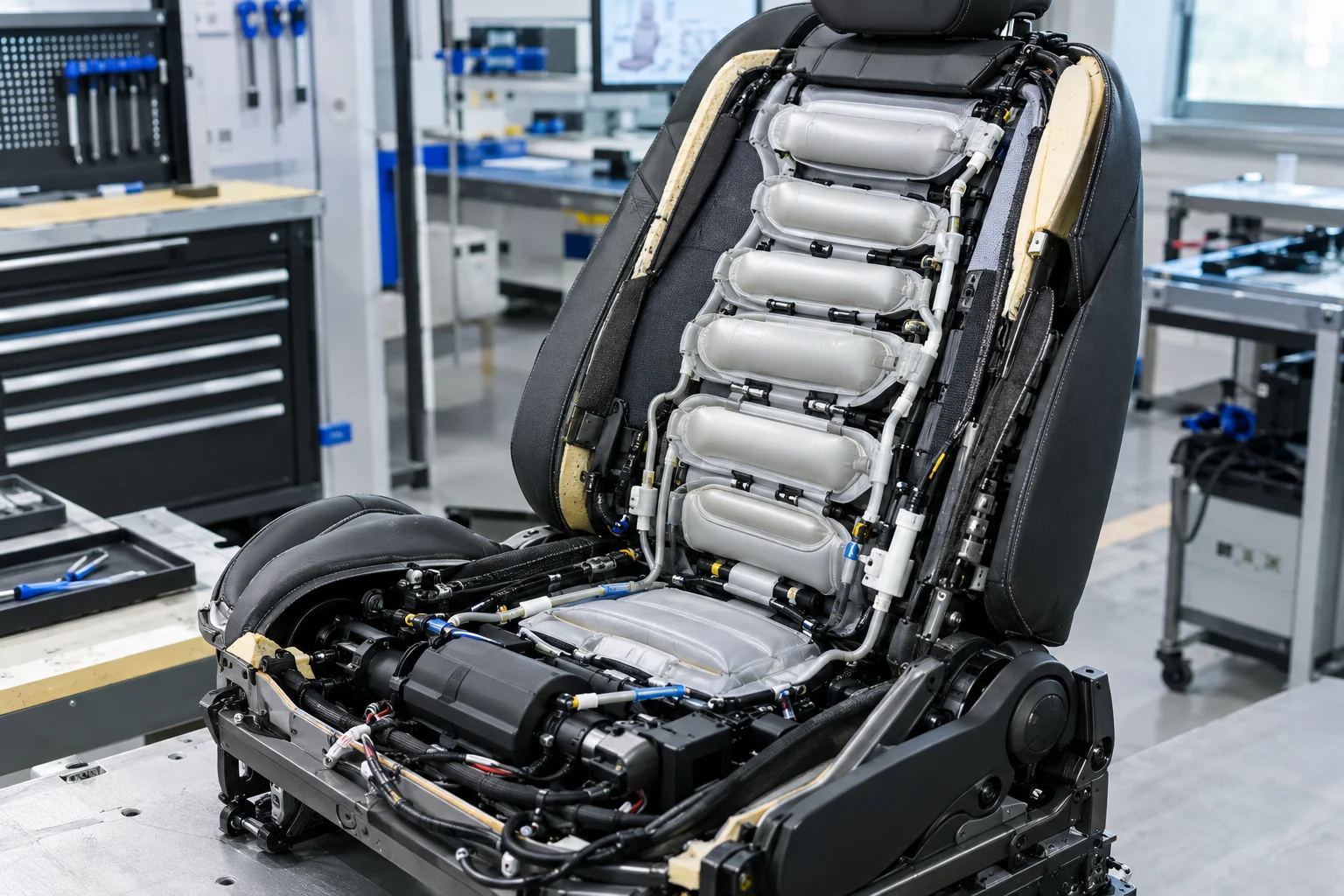
A typical system can contain:
Air bladders or pneumatic chambers
Small electric pumps and valves
Vibration motors
Mechanical massage modules
Seat-position actuators
Heating elements
Electronic control units
Sensors and software
The control system determines which parts of the seat activate and when.
For example, a lumbar massage might begin with a chamber inflating near your lower back, followed by another chamber slightly higher up. As the first deflates and the next inflates, the sensation moves upward.
This creates a massage wave without the entire seat physically moving.
Mercedes-Benz describes this approach in its current GLC, where pulsating air chambers in the lumbar region generate the massage function.
How Do Air Bladder Massage Seats Work?
Air-bladder systems use small inflatable chambers that expand and contract in controlled sequences to create pressure against your body.
Think of them as miniature pneumatic cushions hidden inside the seat.
A simplified cycle looks like this:
Pump → valve opens → chamber inflates → pressure increases → chamber deflates → next chamber activates
By controlling several chambers independently, the system can create different patterns.
For example:
Massage effect | How it can be created |
|---|---|
Lumbar pulse | Repeated inflation of lower chambers |
Wave massage | Sequential inflation from lower to upper chambers |
Shoulder massage | Alternating upper-back chambers |
Rolling sensation | Moving pressure sequence |
Deep pressure | Higher chamber pressure |
Relaxation | Slower, gentler cycles |
Mercedes-Benz has previously described seats using multiple inflatable pockets that are pumped and drained sequentially to create a wave-like motion across the lower back.
The advantage is that pneumatic systems can be relatively compact and can integrate with other seat functions such as lumbar adjustment, heating and ventilation.
What Do Vibration Motors Do in a Car Seat?
Vibration motors create rapid localized movement rather than physically pushing your body through large pressure changes.
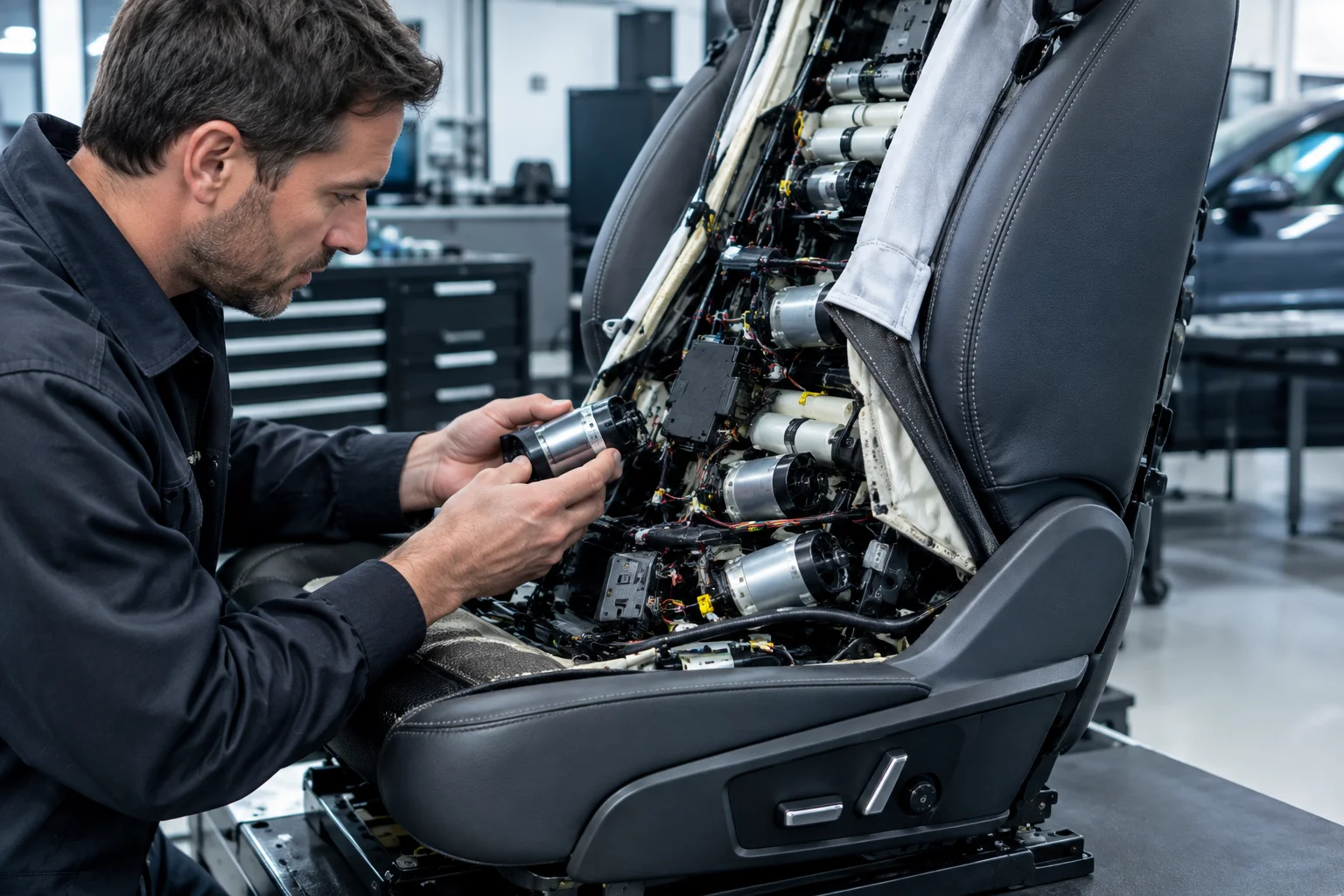
They're conceptually similar to the small vibration motors found in phones and game controllers, although automotive systems can use multiple motors and different control strategies.
Mercedes-Benz has used dedicated vibration motors for certain massage programs. Its S-Class documentation describes four vibration motors in the massage system and programs that combine vibration with heat and inflatable air chambers.
Vibration is particularly useful when manufacturers want to create:
Gentle pulsation
Rapid massage sensations
Calf massage
Workout-style programs
Additional sensations alongside pneumatic massage
The limitation is that vibration doesn't necessarily feel like the pressure or kneading produced by a mechanical massage mechanism.
Why Are Some Premium Car Massage Seats Much Better?
The biggest difference is often the number, location and type of actuators rather than the massage button itself.
A basic system might concentrate on lumbar inflation and simple vibration.
A premium system can combine:
Multiple independent air chambers
Mechanical massage heads
Several vibration motors
Heating
Seat ventilation
Adjustable lumbar support
Multi-zone control
Longer massage coverage
Different massage patterns
Automatic body-position adjustment
That allows the system to create more sophisticated movement across the seat.
Lear, a major automotive seating supplier, describes premium seating systems with multi-zone massage and posture-control functions.
What Are Mechanical Massage Seats?
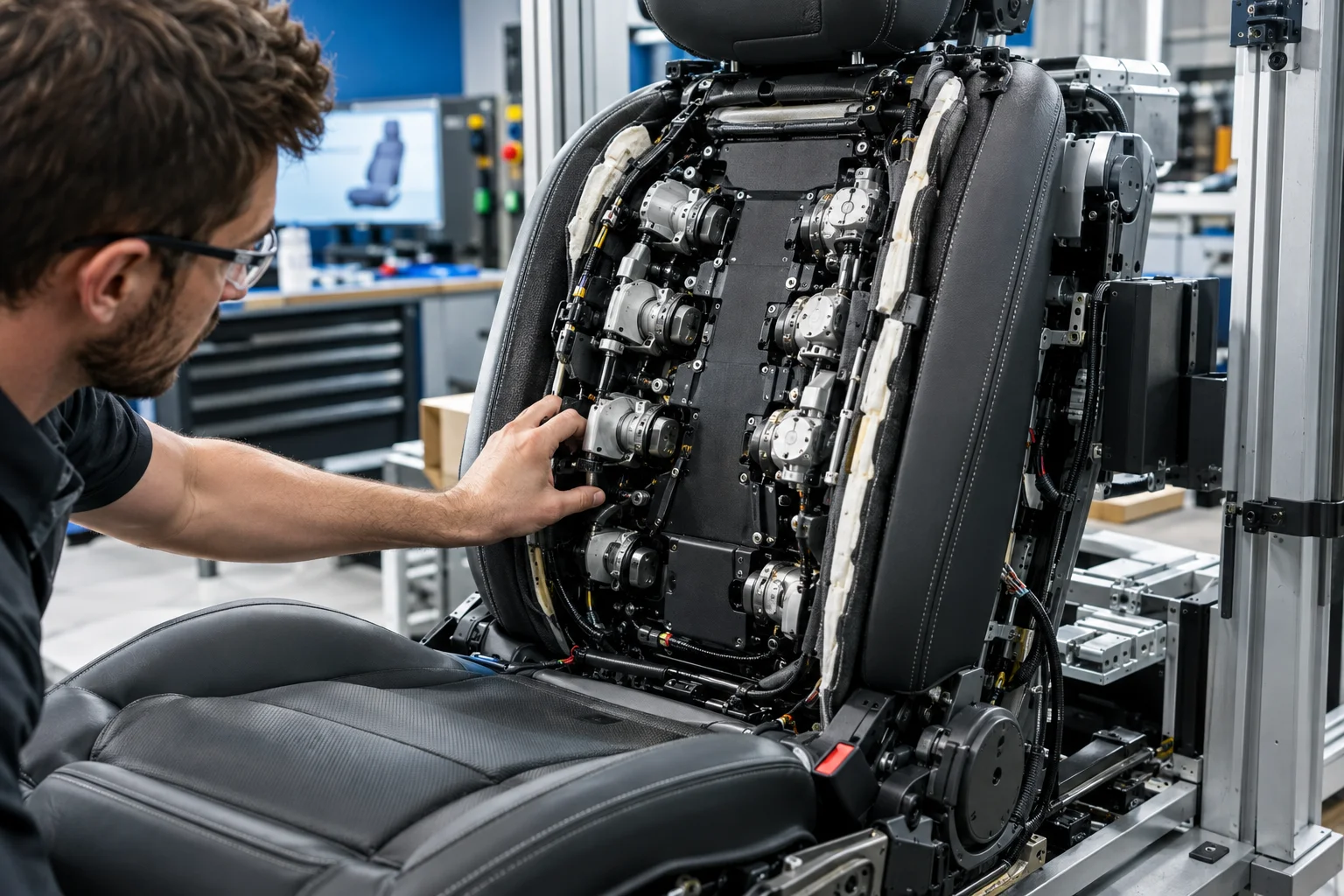
Mechanical massage seats use moving structures or massage heads inside the seat to create more pronounced physical movement.
This is an important development in automotive seating.
In 2025, Adient introduced a mechanical massage system using a 3D massage module designed to simulate techniques such as kneading. The company says its system can produce stronger massage effects than traditional pneumatic solutions.
In 2026, Adient expanded the technology with its ProForce Massage Flow system. The platform uses moving modules capable of applying kneading, tapping and rolling techniques, with two-head and four-head configurations.
This approach is closer to the sensation of a mechanical massage chair because the system can physically move against the occupant rather than simply inflating a cushion.
Why Premium Massage Seats Feel More Natural
Better massage isn't necessarily about making the seat vibrate harder; it's about controlling where, when and how pressure is applied.
Imagine two systems.
System A: Four vibration motors activate simultaneously.
System B: Several pressure zones activate sequentially, with different intensities and timing across the lower back, mid-back and shoulders.
System B can create the perception of movement travelling through your body, even though the seat itself barely moves.
That's why premium massage programs often have names such as:
Wave
Classic
Relaxation
Mobilizing
Deep
Hot Stone
Workout
Mercedes-Benz, for example, offers multiple massage programs combining different patterns, heat and vibration depending on the seat configuration.
How Do Car Seats Combine Massage With Heat and Ventilation?
Premium seats can combine massage with heating and ventilation because these systems are integrated into the same seat structure.
Heating elements warm the upholstery while massage actuators provide movement.
Ventilation systems use fans and air channels to move air through perforated upholstery.
Modern seat suppliers increasingly design these functions together. Lear has developed seating modules that combine pneumatic lumbar support, massage, heating and ventilation.
This integration also creates an engineering challenge: manufacturers have to fit pumps, motors, wiring, fans and heating components into a seat without making it uncomfortable or excessively bulky.
Does a Car Massage Seat Actually Massage Your Muscles?
It can create pressure and vibration against the body, but it shouldn't be confused with a professional massage performed by a person.
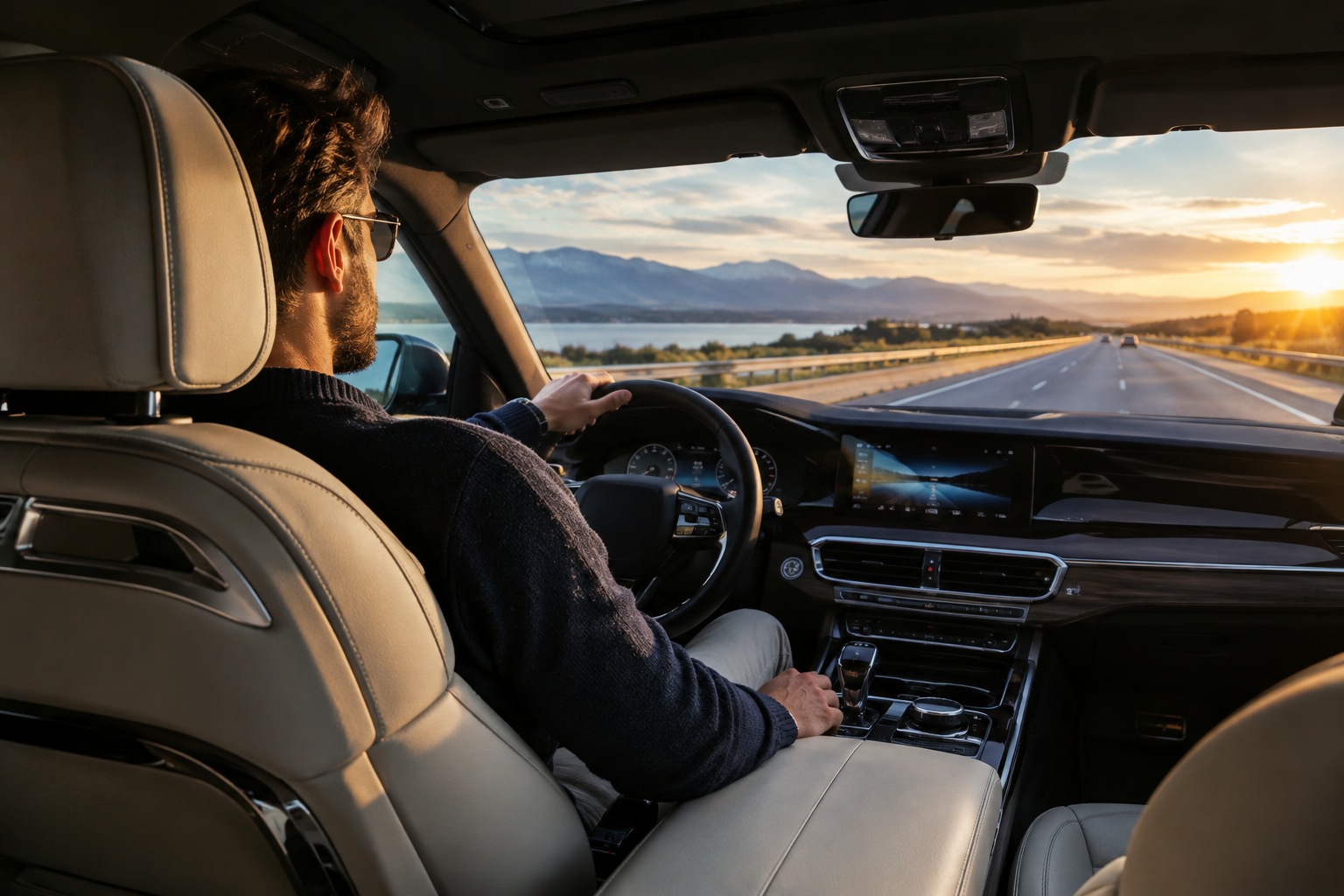
The sensation depends heavily on the technology.
Air chambers generally create changing pressure.
Vibration motors create localized vibration.
Mechanical modules can provide more targeted physical movement.
The result can feel relaxing during a long drive, particularly when combined with heating and ergonomic seat support. But manufacturers' descriptions of comfort or fatigue relief shouldn't be interpreted as medical treatment.
Are Expensive Massage Seats Worth It?
The value depends on how frequently you drive and how sophisticated the system is.
A basic massage function may be useful if you regularly spend long periods in the car but may feel more like vibration than a genuine massage.
Premium systems become more interesting when they combine:
Multiple massage zones
Mechanical massage
Adjustable intensity
Heating
Ventilation
Lumbar adjustment
Shoulder and upper-back coverage
Multiple programs
Automatic seat positioning
For someone who spends several hours driving every day, those differences can matter considerably more than a simple “massage available” specification.
Frequently Asked Questions About Car Massaging Seats
Do car massage seats use air?
Many do. Pneumatic systems use inflatable air chambers that repeatedly fill and empty to create pressure and wave-like massage patterns. Other systems use vibration motors or mechanical massage modules.
Do car massage seats have motors?
Some do. Vibration motors can create localized pulsing, while newer mechanical systems use moving massage modules or heads for more pronounced kneading, tapping or rolling sensations.
Are expensive car massage seats better?
Not automatically, but premium systems generally offer more actuators, more coverage and more control. Mechanical massage, multiple zones, heating and ventilation can produce a more sophisticated experience than basic vibration.
Can massage seats help during long drives?
They can make a seat feel more comfortable and provide changing pressure or vibration during long journeys. However, they shouldn't replace proper driving breaks, movement or medical care for persistent pain.
Do massage seats use a lot of power?
The system uses electricity for pumps, motors, valves and control electronics, but the energy demand is generally small compared with major vehicle systems. The exact consumption depends on the design and which comfort functions are operating.
Can the massage function work while driving?
That depends on the vehicle. Some manufacturers allow massage programs while driving, while specific functions or seat adjustments may be restricted for safety. Always follow the vehicle's instructions.
The Bottom Line
Car massage seats are essentially miniature automated massage systems built into the seat structure.
Air-bladder systems create changing pressure. Vibration motors add localized movement. Newer mechanical systems can physically move massage modules to produce kneading, tapping and rolling sensations.
The biggest difference between an ordinary and premium system isn't simply the number of massage modes displayed on the screen. It's the underlying hardware: how many zones can move independently, how precisely they can be controlled, how much of the body they cover and whether the system can combine pressure, vibration, movement and heat.
As automotive seating technology develops, the gap between a basic vibrating seat and a genuinely sophisticated massage system is becoming much easier to feel.