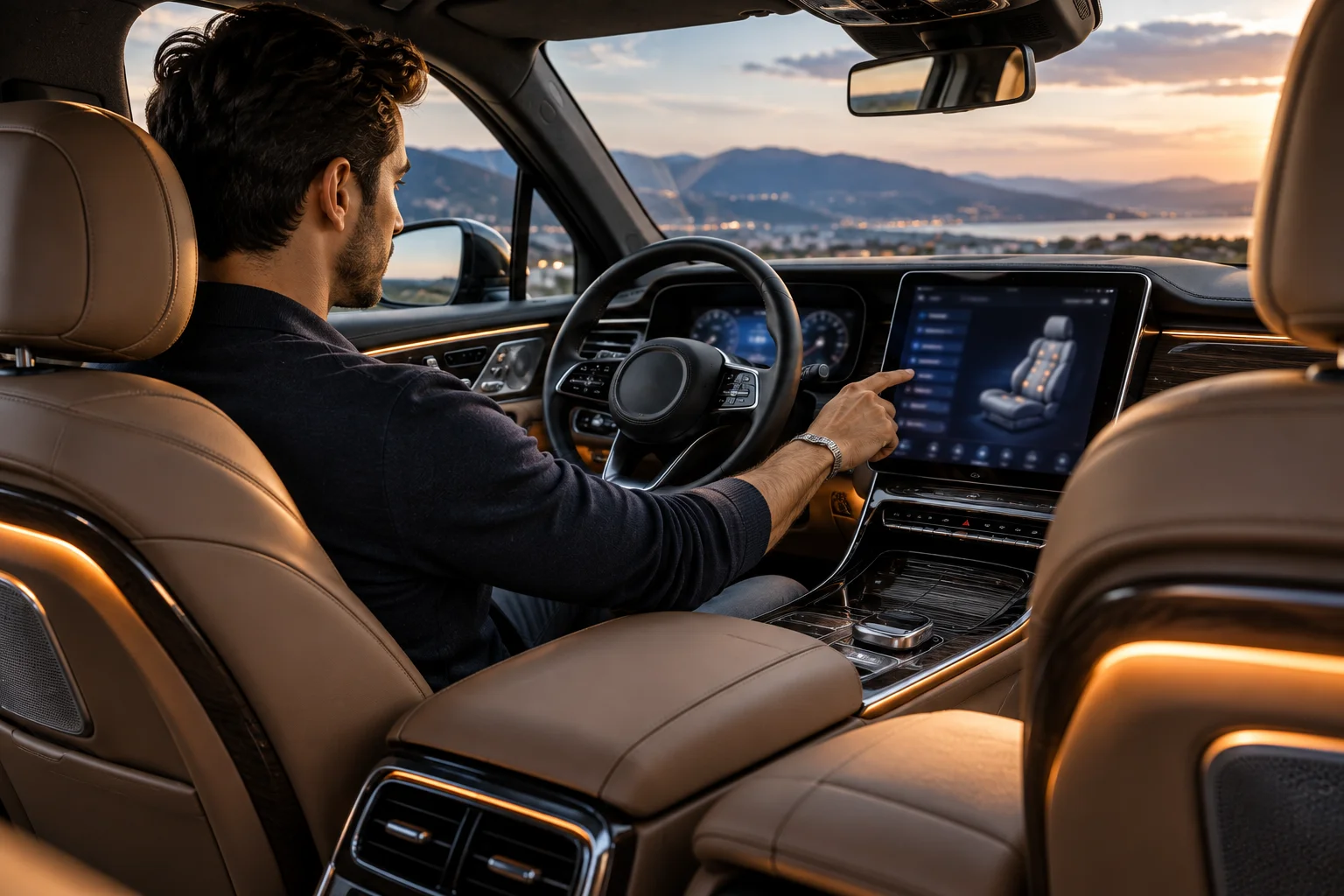
A car's massage seat doesn't contain a tiny person kneading your back. Instead, it uses a combination of air chambers, vibration motors, mechanical actuators and carefully programmed movement sequences to create different sensations across the seat.
The simplest systems inflate and deflate air bladders behind the upholstery. More advanced seats can coordinate several pressure zones so that the sensation moves from the lower back toward the shoulders. Some newer systems go further, using mechanical massage heads that physically move against the occupant's body to simulate kneading, tapping or rolling. Adient's current ProForce Massage Flow system, for example, uses moving modules to expand massage coverage and provide different mechanical techniques. (adient.com)
That means the "massage pattern" isn't a single mechanical action.
It's a sequence of precisely controlled movements and pressure changes.
How Do Air Chambers Create a Massage?
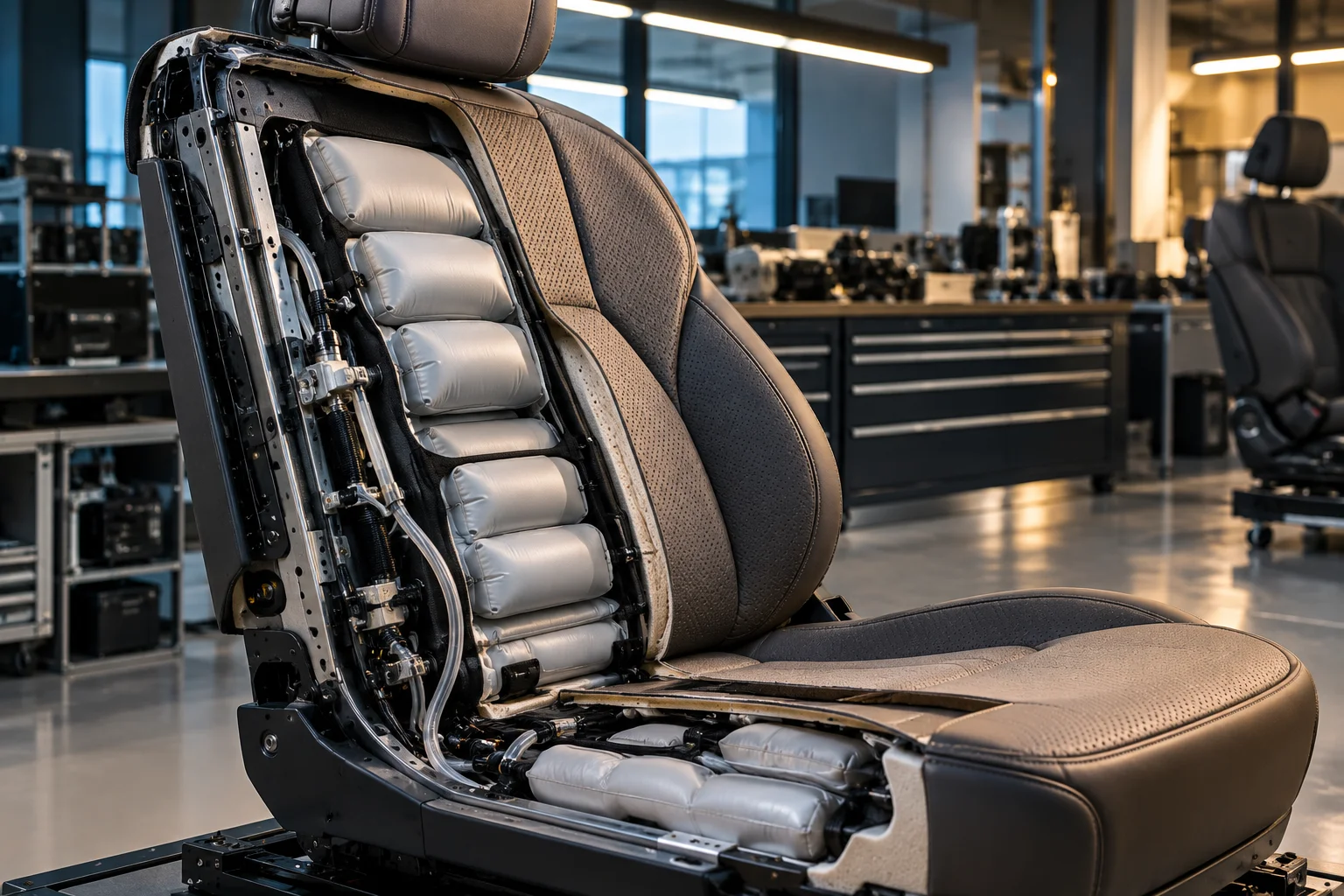
Air-chamber systems create massage by repeatedly inflating and deflating small pneumatic bladders positioned beneath the seat upholstery.
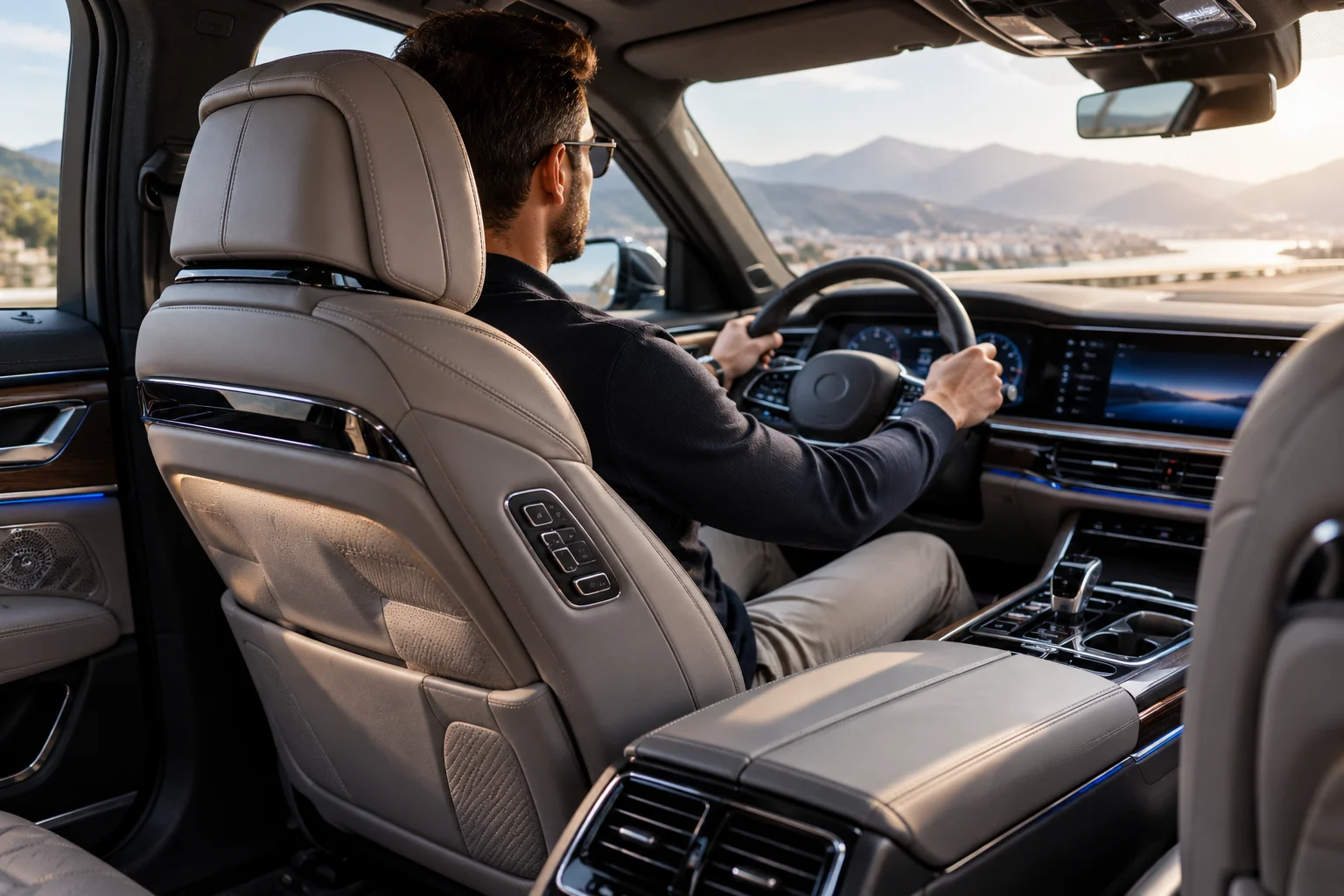
Imagine several soft cushions hidden behind the leather or fabric.
When one chamber inflates, it pushes the occupant slightly forward. When it deflates, that pressure disappears. If another chamber inflates immediately afterward, the sensation can appear to travel across the body.
Mercedes-Benz uses pulsating air chambers in the lumbar region of some current seats, while higher-end configurations can extend the massage function across more of the backrest. (media.mercedes-benz.com)
The system needs more than just airbags.
A pump supplies air, valves control individual chambers and electronic controls determine when each chamber inflates or deflates.
By changing the timing, pressure and order of activation, the same hardware can produce several different patterns.
What Are Pressure Zones in a Massage Seat?
Pressure zones are different sections of the seat that can be controlled independently or in coordinated groups.
A sophisticated seat might divide the backrest into areas such as:
Lower lumbar
Mid-back
Upper back
Shoulder region
Seat cushion
The more independently controlled zones a system has, the more precisely it can create a moving sensation.
For example, a simple lumbar program might repeatedly inflate two lower-back chambers.
A wave-style program could activate the lower chambers first, followed by the middle and upper sections.
Your body interprets that sequence as movement even though the individual air chambers are stationary.
Mercedes-Benz's seat systems include programs based on upward-moving massage waves and wave-like movements through the back and cushion. (static.oneweb.mercedes-benz.com)
How Does the Seat Create a "Wave" Massage?
A wave effect is created by activating pressure points sequentially rather than simultaneously.
Consider four pressure zones arranged vertically:
Zone 1 → Zone 2 → Zone 3 → Zone 4
If the controller inflates them in that order and then repeats the sequence, the pressure sensation appears to move upward.
Reverse the order and the sensation can appear to travel downward.
Change the timing and intensity, and the same chambers can feel slower, faster, softer or more energetic.
This is why massage programs don't necessarily require completely different hardware.
Much of the variety comes from software-controlled timing and coordination.
What Do Vibration Motors Add?
Vibration motors create rapid oscillations that feel different from the slower pressure changes produced by air chambers.
Vibration can be concentrated in the seat cushion, lumbar region or other parts of the seat.
Mercedes-Benz currently uses four precisely positioned vibration motors in the front seat cushion of certain GLS configurations. The company says these motors can deepen its massage programs. (media.mercedes-benz.com)
Earlier Mercedes-Benz S-Class systems also combined vibration motors with inflatable air chambers, allowing heat, pressure and vibration to be coordinated within different programs. (media.mercedes-benz.com)
The result can feel more like a buzzing or pulsing sensation than the slower push-and-release effect of pneumatic chambers.
How Do Mechanical Massage Seats Work?
Mechanical systems use moving structures or massage heads to apply physical pressure to specific areas.
This is a significant step beyond simply inflating an air bladder.
Adient's ProForce Massage Flow system uses moving modules capable of applying kneading, tapping and rolling techniques individually or in combination. The system can use two-head or four-head configurations and is designed to cover fatigue-prone lower-back areas. (adient.com)
Adient's earlier ProForce mechanical system similarly uses a 3D mechanism designed to create stronger physical massage sensations than traditional pneumatic systems. (adient.com)
Because the mechanism physically moves, manufacturers can create more distinct pressure patterns.
The trade-off is greater mechanical complexity and packaging requirements inside the seat.
Why Do Some Massage Seats Feel Much Stronger Than Others?
The difference usually comes down to actuator type, actuator placement, available movement, pressure, number of zones and how directly the mechanism contacts the occupant.
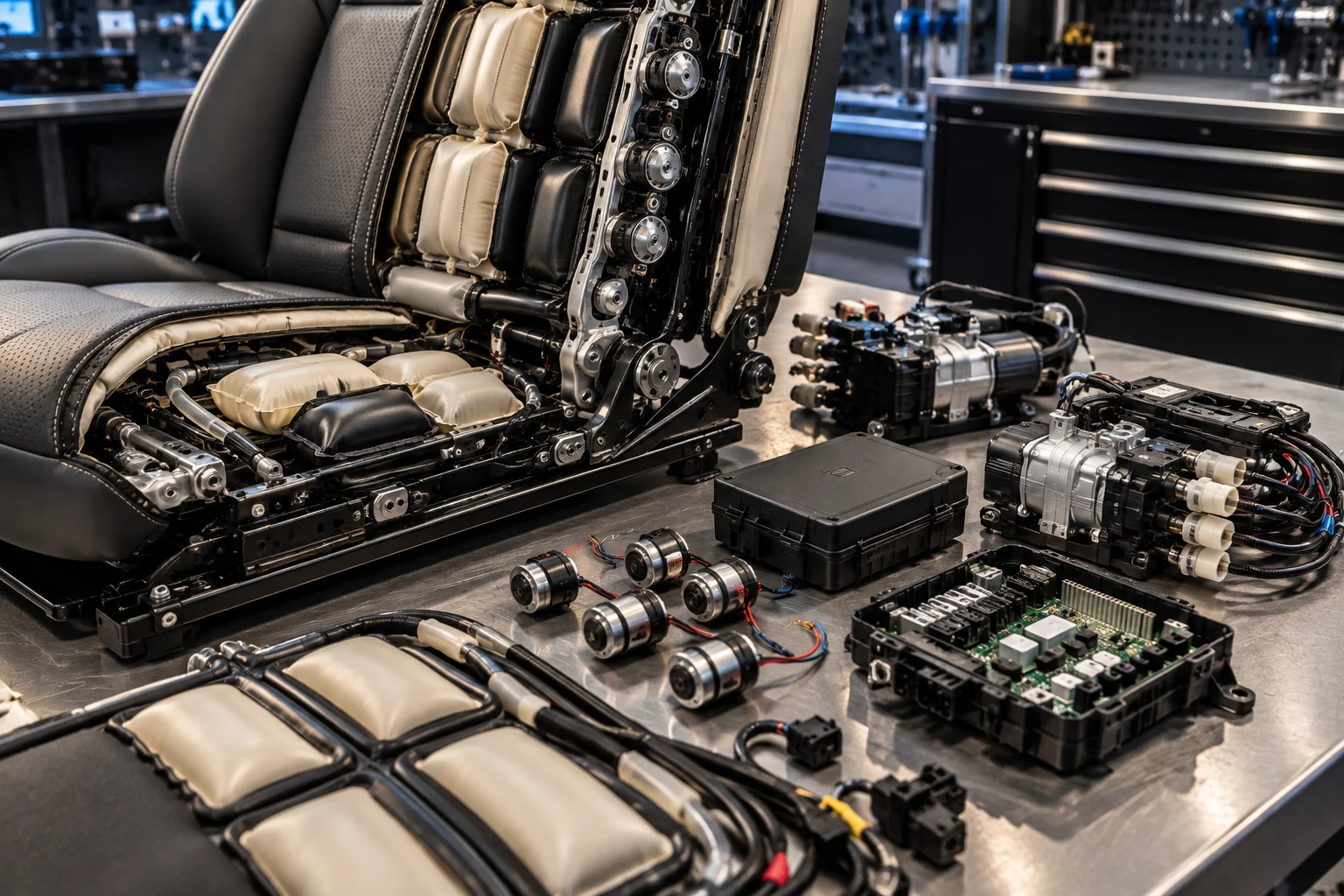
Two seats can both advertise "massage" while producing very different sensations.
A basic system may have a few pneumatic chambers concentrated around the lumbar region.
A premium system might combine:
Multiple air chambers
Mechanical massage modules
Vibration motors
Adjustable lumbar support
Heating
Seat ventilation
Independent intensity controls
Multiple massage zones
Mercedes-Benz's current GLC, for example, offers a basic massage function using pulsating lumbar air chambers, while a high-end seat can extend the relaxation massage along the entire seatback. (media.mercedes-benz.com)
How Does Software Turn the Same Hardware Into Different Programs?
The seat controller changes the timing, intensity, sequence and combination of its actuators to create different massage programs.
A "relax" program might use slow, gentle pressure changes.
An "activating" program could use faster pulses and stronger vibration.
A "wave" program might move pressure from the pelvis toward the shoulders.
A "workout" program could coordinate pressure and vibration so the occupant actively pushes against changing pressure points.
Mercedes-Benz documents programs including Classic Massage, Activating Massage, Wave Massage, Deep Waves and Workout modes. (static.oneweb.mercedes-benz.com)
So the massage program is essentially a choreographed actuator sequence.
Can Heating Be Part of a Massage Program?
Yes. Some premium seats coordinate heat with massage to change the overall sensation.
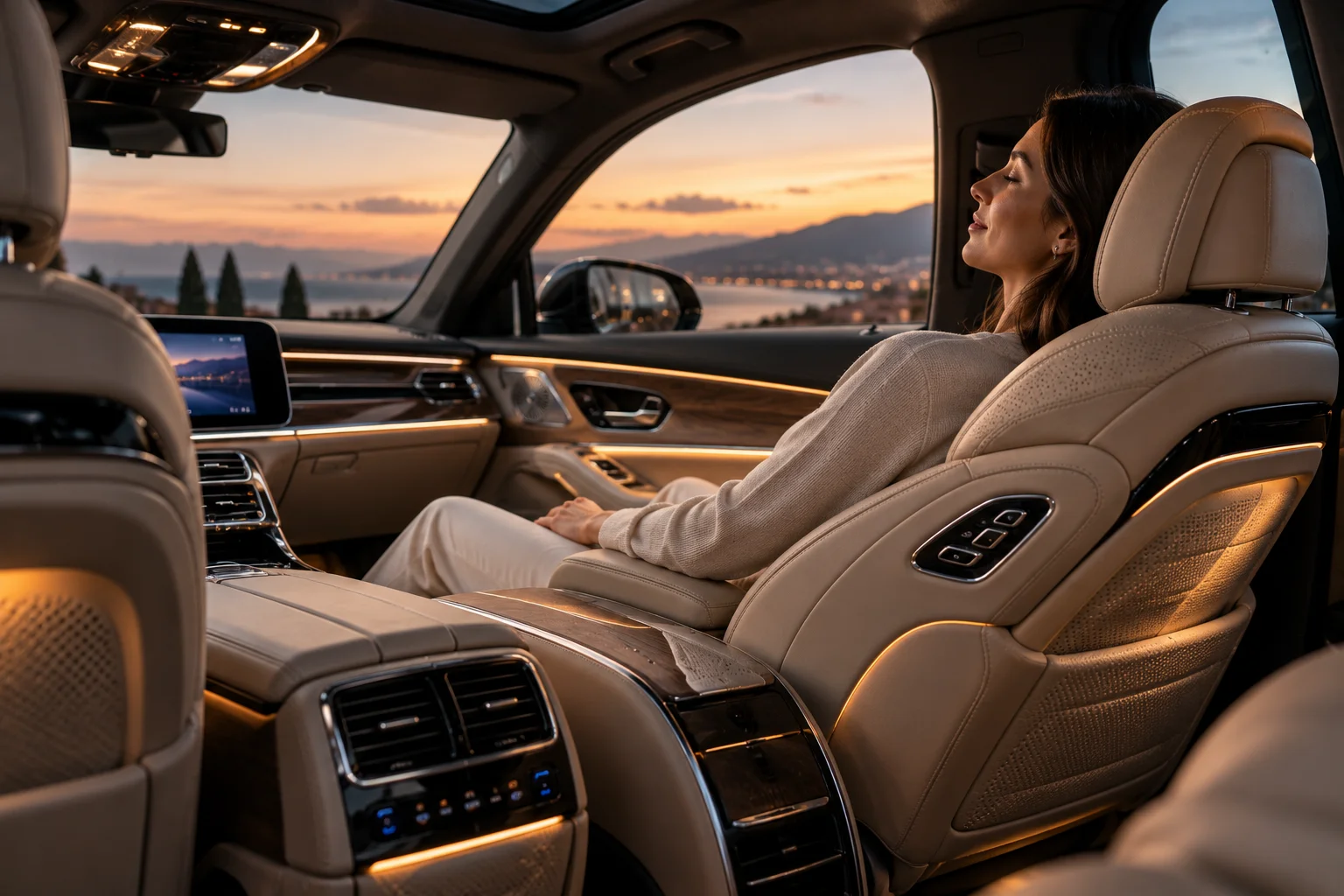
Heating doesn't physically create the massage, but it can be activated simultaneously with pressure or vibration.
Mercedes-Benz's Hot Relaxing programs combine heat and massage, while its earlier S-Class systems combined seat heating with inflatable air chambers. (media.mercedes-benz.com)
This illustrates an important point about modern automotive massage seats: the feature is increasingly part of a broader seat-comfort system, rather than an isolated actuator.
Can the Seat Move While It Massages You?
Some advanced systems coordinate massage with changes in seat position and support.
Mercedes-Benz's ENERGIZING seat kinetics, for example, uses small movements in the seat cushion and backrest to support the body's musculature. (media.mercedes-benz.com)
This is different from massage itself.
The seat is changing its geometry while the massage system applies pressure or vibration.
The combination can make the experience feel more dynamic because the body isn't interacting with a completely stationary surface.
Why Don't All Car Massage Seats Feel Like Professional Massage Chairs?
Automotive seats have to satisfy far more constraints than a home massage chair.
A car seat must remain:
Comfortable for normal driving
Thin enough to fit within the vehicle
Compatible with airbags and safety systems
Durable for years of use
Adjustable for different body sizes
Compatible with heating and ventilation
Safe during a crash
Quiet enough for a premium cabin
Adient's mechanical systems, for example, incorporate mechanisms that can retract or provide pressure relief during a collision while integrating with heating and ventilation. (adient.com)
That makes automotive massage a packaging and safety engineering challenge as much as a comfort feature.
Are Car Massage Seats Actually Massaging Your Muscles?
They can create pressure, vibration and movement that feels like massage, but they shouldn't automatically be considered equivalent to professional therapeutic massage.
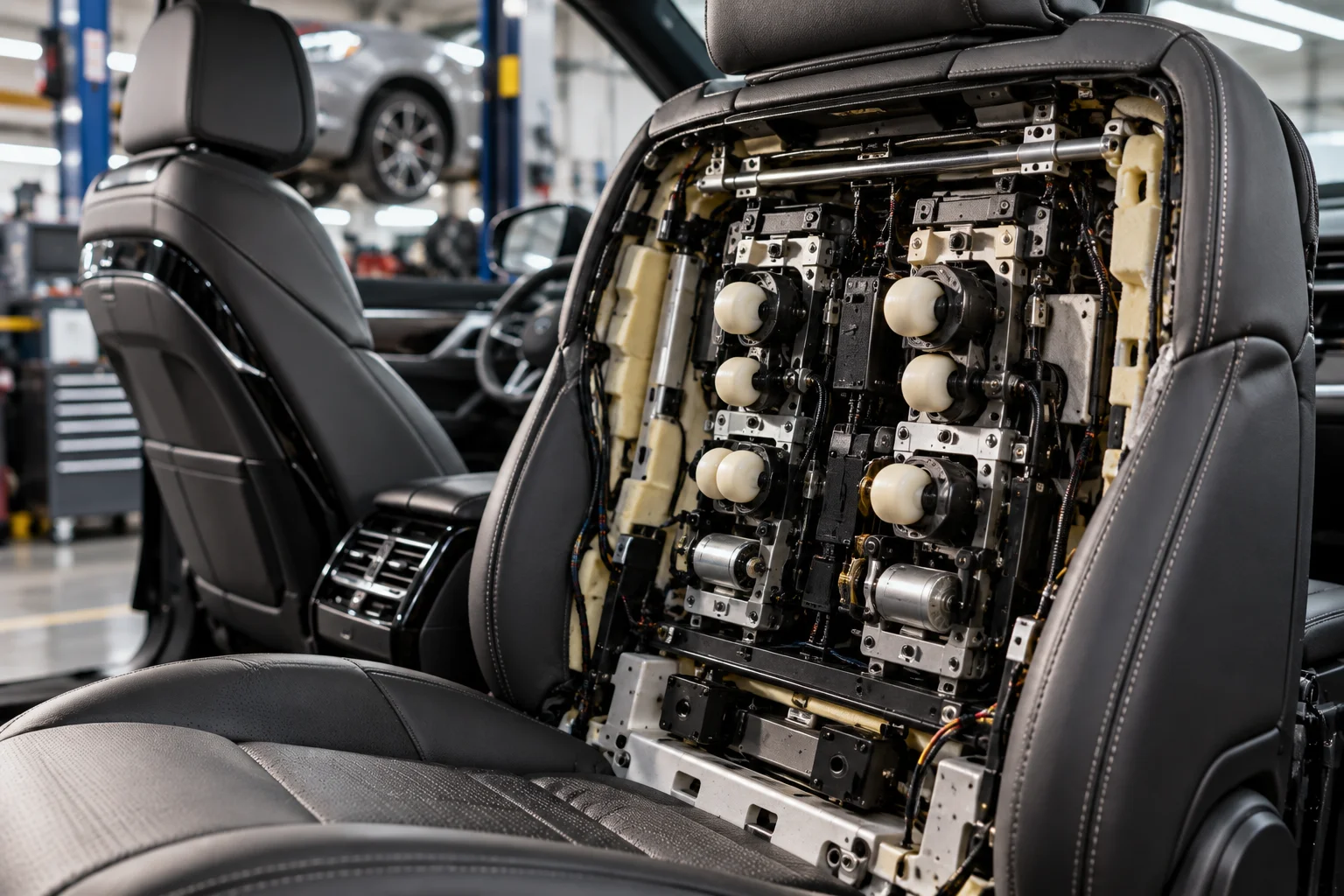
The sensation depends on how the system applies pressure to the body.
Some systems primarily inflate air chambers. Others use vibration. Newer mechanical designs can apply more targeted physical movement.
The technology is designed primarily around occupant comfort and relaxation rather than medical treatment.
Frequently Asked Questions
Do all car massage seats use air bags?
No. Air chambers are common, but some systems use vibration motors or mechanical massage modules. Modern seats can combine multiple technologies.
How do massage seats create different patterns?
They vary the timing, intensity and sequence of individual pressure zones, vibration motors or mechanical actuators. This can create wave, pulsing, kneading or tapping sensations.
Are mechanical massage seats stronger than air-based systems?
They can provide more direct mechanical pressure, but the experience depends on the particular system. Adient specifically positions its mechanical ProForce systems as providing stronger effects than traditional pneumatic systems. (adient.com)
Why does one car's massage feel different from another's?
The number and location of pressure zones, actuator type, movement range, intensity and software programs can all differ significantly.
Do massage seats use a lot of electricity?
They consume additional electrical power through pumps, valves, motors and control electronics, but the actual consumption varies substantially by system and program.
Can a massage seat work without the engine running?
That depends on the vehicle's electrical management and the specific feature. Some comfort functions may be limited when the vehicle is stationary or switched off to protect the battery.
The Bottom Line
A modern car massage seat is essentially a small electromechanical system hidden inside a normal-looking seat.
Air chambers create controlled pressure. Vibration motors add rapid pulses. Mechanical modules can physically knead, tap or roll against the occupant. Software coordinates these components into different sequences, while heating, ventilation, lumbar adjustment and seat movement can add another layer to the experience.
That's why two cars can both advertise "massage seats" while feeling completely different.
The real difference isn't the word "massage." It's the hardware hidden underneath the upholstery and how precisely the car can control it.