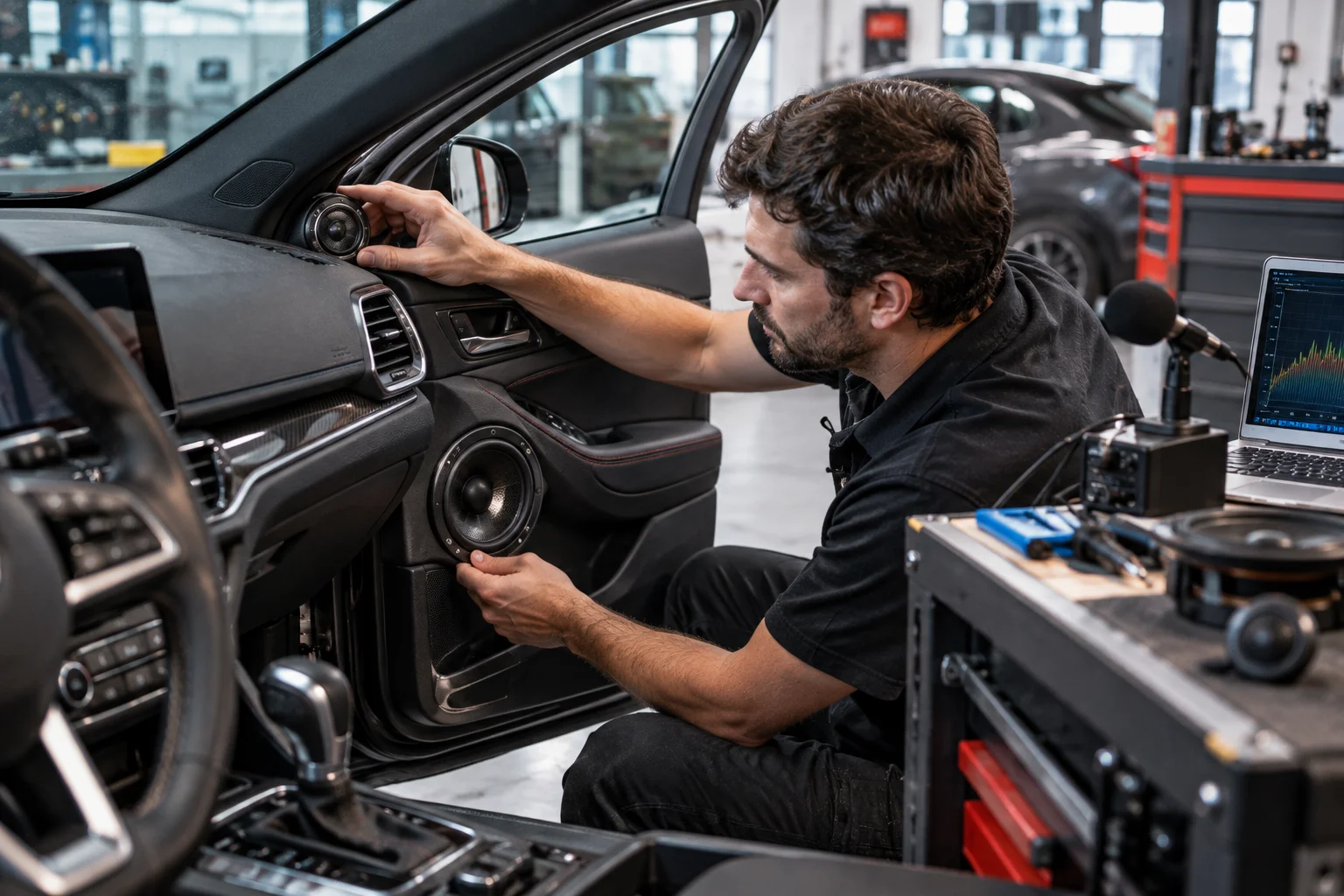
A car's standard stereo can be perfectly adequate for podcasts, radio and casual music listening. But premium factory audio systems promise something different: cleaner sound at higher volume, stronger bass, better separation between instruments and a more convincing sense of space throughout the cabin.
The difference isn't simply more speakers.
A premium car audio system can combine better-designed speakers, additional amplification, subwoofers, digital signal processing (DSP), cabin-specific tuning, noise compensation and surround or immersive audio processing. HARMAN, for example, describes modern automotive audio as a combination of hardware and software, with DSP tools used for precise system tuning.
So when a car manufacturer charges several hundred or even thousands more for a branded system, what are you actually buying?
What Is the Difference Between a Factory Stereo and Premium Audio?
A standard factory stereo usually uses fewer speakers and less amplification, while a premium system adds hardware, processing and extensive tuning designed specifically for that vehicle's cabin.
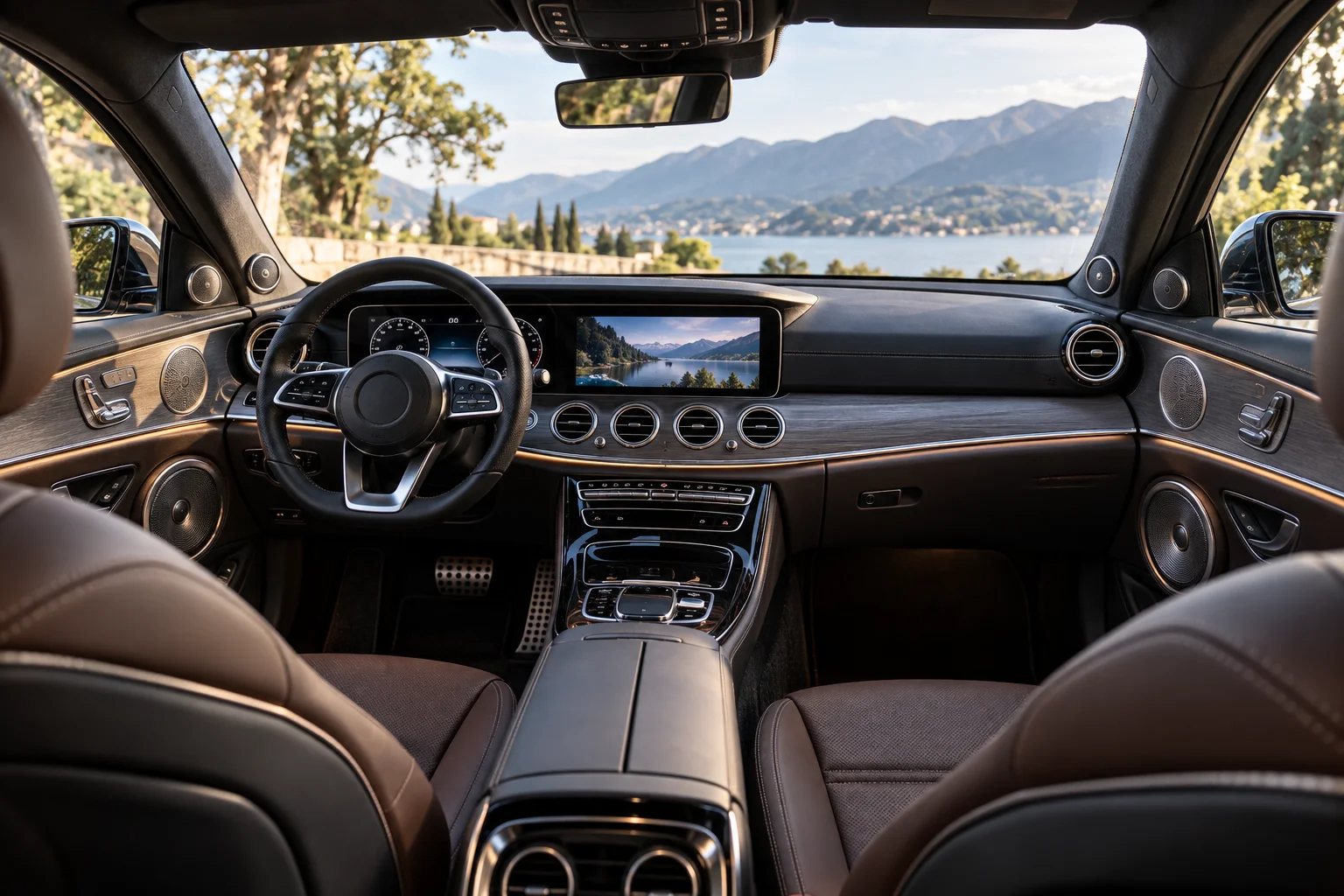
A typical entry-level system might include:
Four to eight speakers
A relatively modest amplifier
Basic equalization
Standard door speakers
Limited bass capability
A premium system can add:
More speakers
Dedicated tweeters and midrange drivers
Larger or dedicated subwoofers
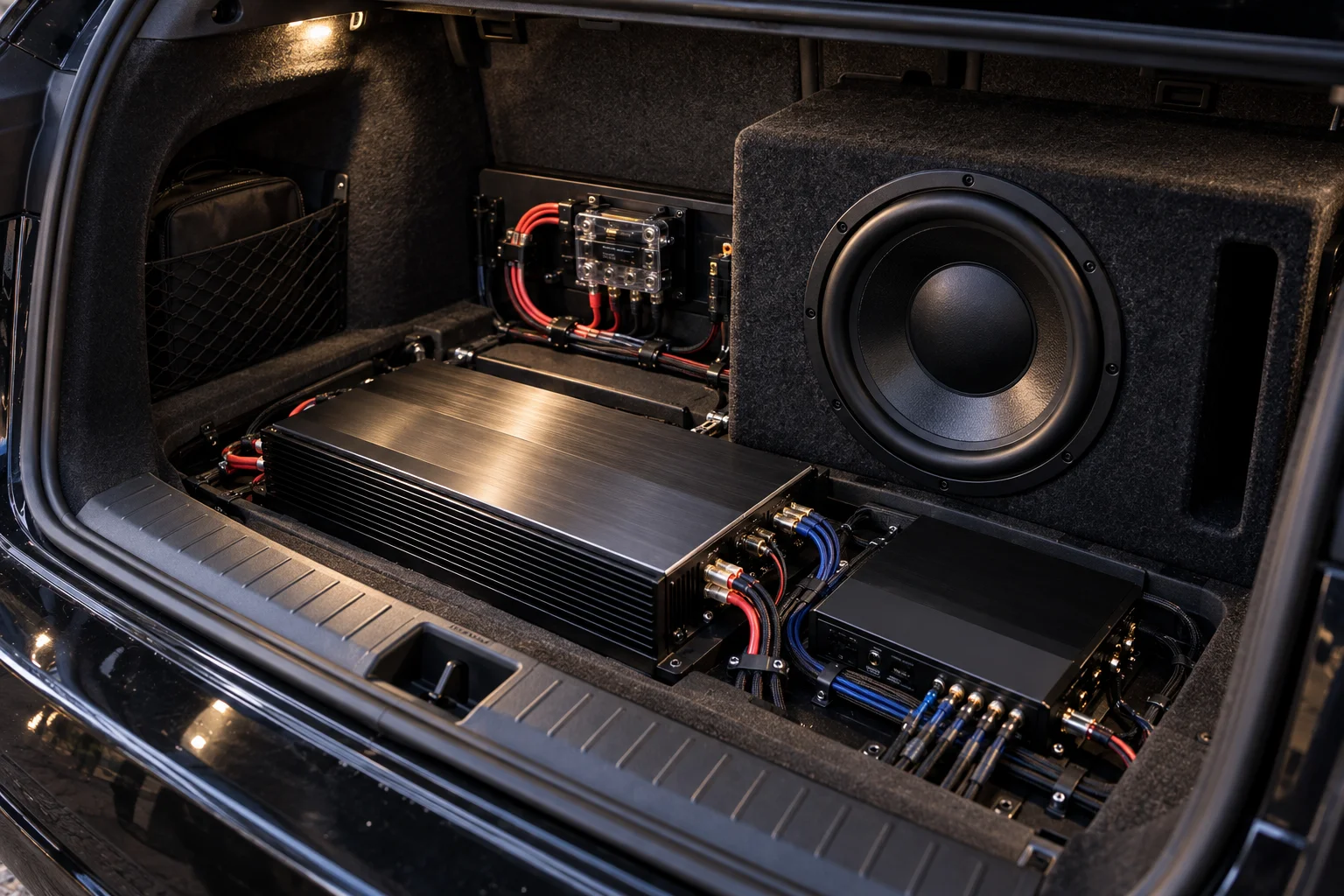
Multi-channel amplification
More powerful amplifiers
DSP
Surround or immersive processing
Cabin-specific tuning
Active noise compensation
The exact configuration varies enormously between vehicles.
For example, HARMAN has developed automotive systems ranging from relatively compact configurations to systems with 15 or more speakers, multiple amplifier channels and dedicated subwoofers.
Do More Speakers Automatically Mean Better Sound?
No. Speaker count is only one part of a car audio system, and a well-tuned system with fewer speakers can outperform a poorly designed system with more.
Cars are difficult acoustic environments.
You're sitting inside a small reflective cabin with glass, seats, dashboard surfaces and doors affecting the way sound travels. Road and wind noise constantly compete with the music.
Bang & Olufsen describes automotive audio as particularly challenging because of confined spaces, changing acoustics and ambient noise. Its automotive engineers use measurements and listening evaluations to tune individual speakers for the vehicle.
That's why speaker placement and tuning can matter just as much as speaker quantity.
A premium system might place tweeters high in the dashboard or doors, midrange speakers around the cabin and subwoofers in locations chosen to produce more consistent bass.
What Does a Car Audio Amplifier Actually Do?
The amplifier provides the electrical power needed to drive the speakers and gives engineers separate control over different parts of the system.
A standard system may use relatively few amplifier channels.
A premium setup can use a multi-channel amplifier where different channels drive different speakers or frequency ranges.
This allows the audio system to control the:
Tweeters
Midrange drivers
Woofers
Subwoofers
Center speaker
Surround speakers
More amplifier power doesn't automatically mean better sound, either.
What matters is whether the amplifier has enough clean output for the speakers and whether the entire system has been designed and tuned as a package.
Some premium automotive systems use Class-D amplification because it can provide substantial power efficiently within the vehicle's space and electrical constraints. HARMAN has documented premium systems using multi-channel Class-D amplifiers.
Why Is DSP So Important in Premium Car Audio?
DSP lets engineers digitally shape and control the sound from individual speakers so the system works with the specific vehicle cabin.
This is one of the biggest differences between an ordinary stereo and a sophisticated premium system.
DSP can be used for:
Equalization
Time alignment
Crossover management
Speaker-level correction
Surround processing
Bass management
Driver compensation
Noise compensation
Imagine that the driver's left speaker is much closer to their ears than a speaker on the opposite side of the cabin.
Without careful processing, the stereo image can pull toward one side.
DSP can adjust timing and frequency response so the sound reaches the listener more coherently.
HARMAN's AudioworX platform, for example, includes more than 200 DSP components for audio features and system tuning.
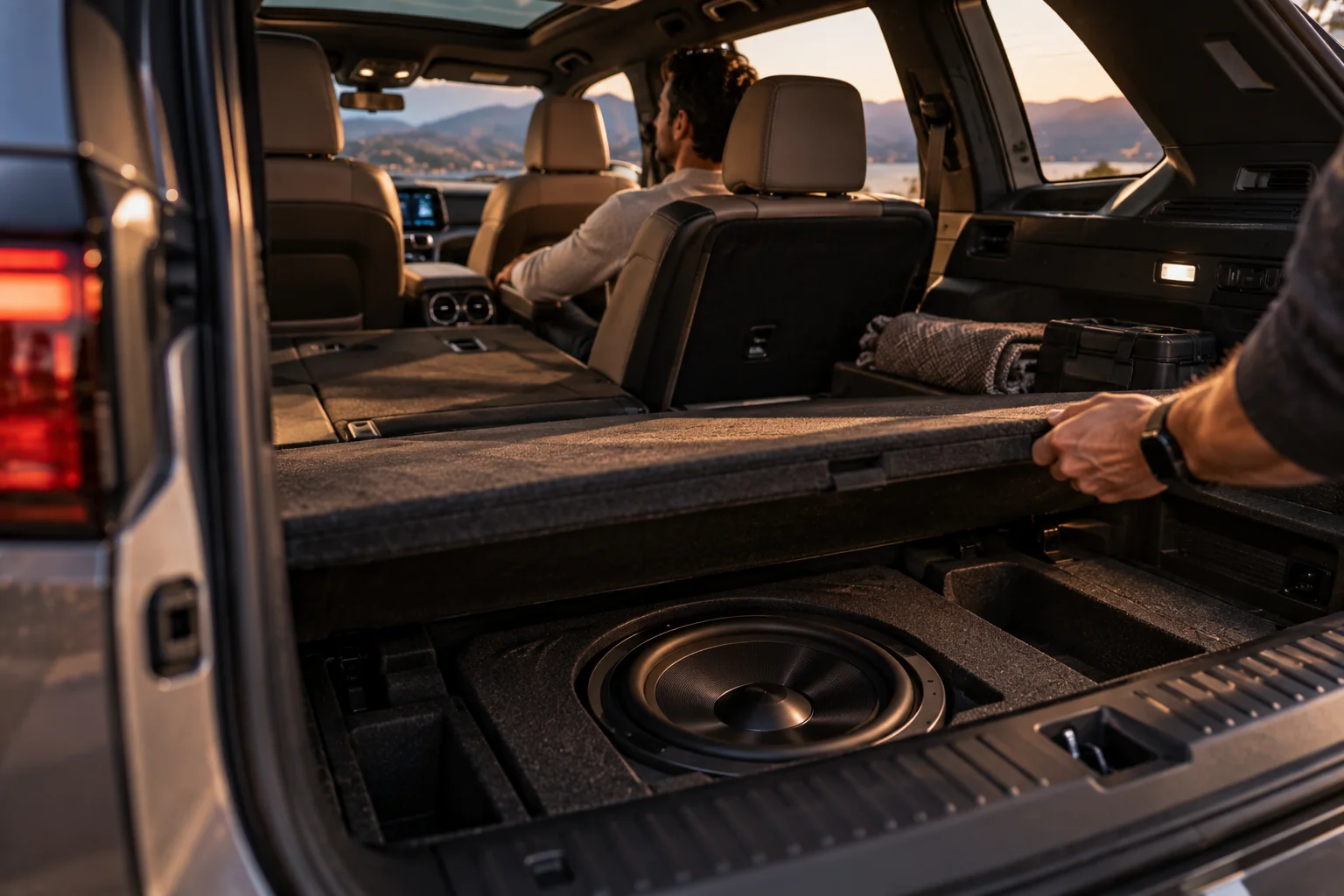
What Does a Premium Subwoofer Actually Add?
A dedicated subwoofer gives the system greater control over low frequencies, making bass deeper and allowing smaller speakers to concentrate on midrange and treble.
This is particularly noticeable with:
Electronic music
Hip-hop
Rock
Orchestral music
Film soundtracks
A door speaker has to fit inside a relatively constrained space and reproduce a wide range of frequencies.
Separating the lowest frequencies into a dedicated woofer or subwoofer lets the rest of the system focus on vocals and instruments.
Premium automotive systems sometimes place subwoofers beneath the seats or elsewhere in the cabin to save space while maintaining bass performance. HARMAN has used this approach in multiple factory systems.
What Do You Actually Hear When You Upgrade?
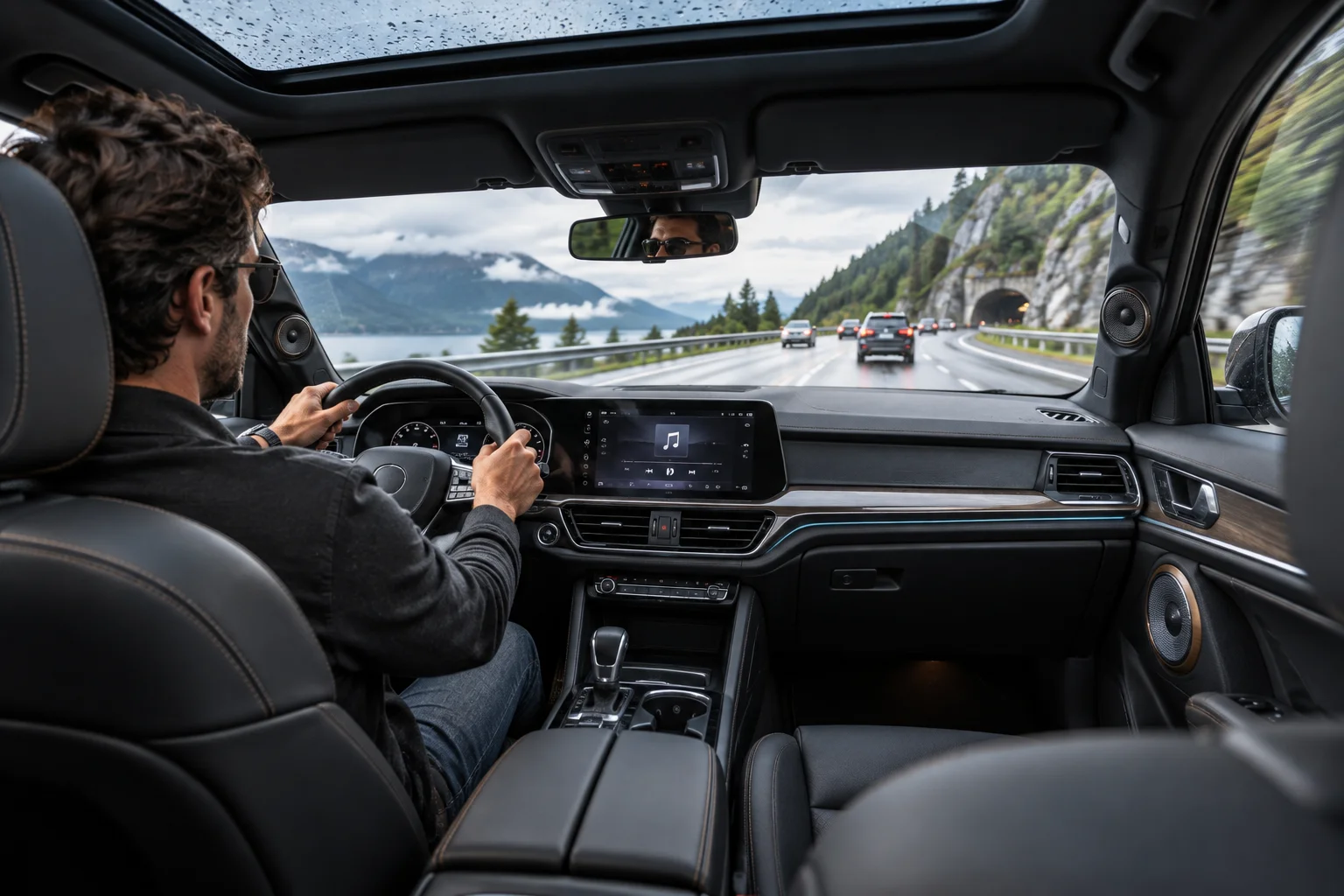
The biggest audible improvements are usually clarity, bass control, separation, soundstage and consistency across the cabin.
Here's what that can mean in practice:
Difference | Standard system | Premium system |
|---|---|---|
Vocals | Clear enough | More separated and focused |
Bass | Adequate | Deeper and better controlled |
High frequencies | Can become harsh | More refined |
Volume | Can become strained | More headroom |
Instrument separation | Basic | More distinct |
Soundstage | Often concentrated near speakers | More expansive |
Rear-seat experience | Can vary | Usually more consistent |
Cabin tuning | Basic | Vehicle-specific |
The improvement is especially noticeable when you listen to well-recorded music rather than heavily compressed audio.
If your primary use is talk radio and podcasts, however, the difference may be much less important.
Why Do Premium Systems Sound Better at High Volume?
Premium systems often have more amplifier and speaker headroom, allowing them to play louder without sounding as strained.
When a basic system approaches its limits, distortion can become more noticeable.
A premium system may have additional amplifier capacity and speakers designed to handle higher output.
That doesn't mean you should simply turn it up to maximum.
The advantage is headroom: the system can reproduce peaks in music without immediately running out of clean output.
This can make drums hit harder, vocals remain clearer and complex music feel less congested.
What Is Surround or 3D Car Audio?
Surround processing uses multiple speakers and digital processing to create a larger, more immersive sound field than conventional stereo.
Instead of trying to make everything sound as though it originates from two points, the system can distribute certain elements around the cabin.
Some premium systems use proprietary surround algorithms, while newer systems can support immersive formats or spatial processing.
HARMAN's automotive portfolio includes Immersi-Fi, which can upmix stereo into surround or 3D sound, while its Ready Together platform can create personalized audio zones for different seating areas.
But surround isn't automatically better.
Some listeners prefer conventional stereo because it can sound more natural with music that was mixed specifically for two-channel playback.
Can a Premium System Compensate for Road Noise?
Yes, modern automotive audio systems can use microphones, vehicle data and DSP to compensate for changing cabin conditions.
Road noise changes with:
Vehicle speed
Road surface
Tire noise
Wind
Engine or motor noise
Open windows
HARMAN's Vehicle Noise Compensation technology uses cabin microphones and speed data to adjust audio output automatically. Its HALOsonic technology is also designed to manage unwanted vehicle noise.
This can make a premium system sound more consistent as driving conditions change.
Is a Premium Factory Audio System Worth the Extra Money?
It can be worth paying for if you regularly listen to music and care about sound quality, but the value depends heavily on the specific system and vehicle.
Consider paying for the upgrade if you:
Spend hours driving every week
Listen to music frequently
Prefer high-quality recordings
Want strong but controlled bass
Notice differences in soundstage and detail
Often carry passengers who use the rear seats
The upgrade may be less worthwhile if you primarily listen to podcasts, audiobooks or low-quality streaming sources.
Also remember that a branded badge such as Bowers & Wilkins, Bang & Olufsen, Harman Kardon, Bose or another premium name doesn't guarantee identical performance across every vehicle. Automotive systems are developed and tuned specifically for individual cabins. HARMAN, for example, says its branded systems are differentiated through architecture, technology, materials, design and signal processing.
How to Judge a Premium Car Audio System Before Buying
Listen to the actual system in the exact vehicle rather than choosing based solely on the brand name or speaker count.
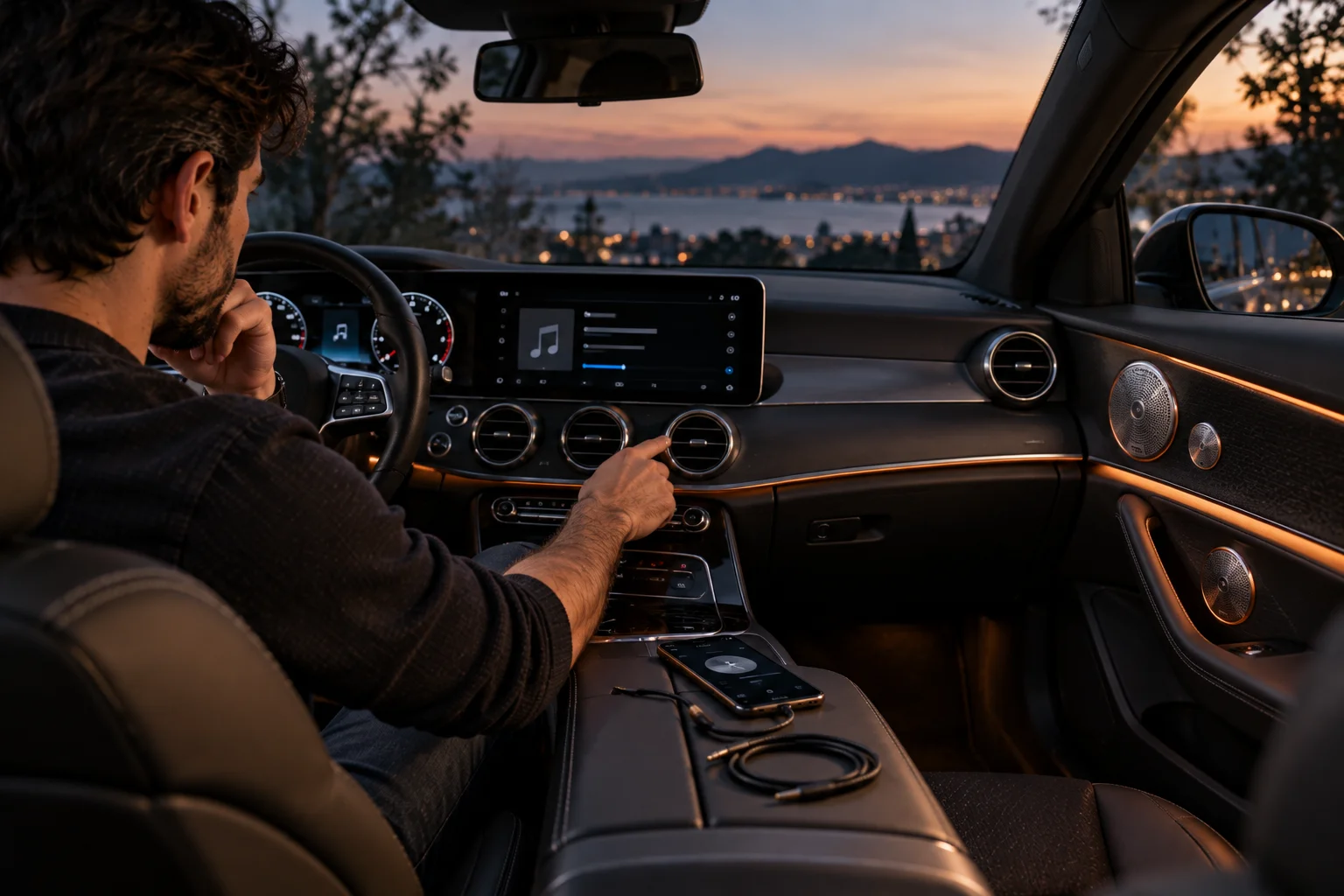
During a test drive, try familiar tracks containing:
Deep bass
Female and male vocals
Acoustic instruments
Complex orchestral sections
High-frequency percussion
Quiet passages followed by loud sections
Listen for whether the bass remains controlled, vocals stay natural and individual instruments remain distinguishable as you increase the volume.
Also test the system from the driver's seat and, if possible, the rear seats.
The best premium system isn't necessarily the one with the most speakers. It's the one whose hardware, amplifier, DSP, speaker placement and cabin tuning work together.
Frequently Asked Questions About Car Audio Systems
Is a factory premium sound system better than the standard stereo?
Usually, a premium factory system adds hardware and tuning that can improve clarity, bass, volume headroom and soundstage. However, the difference varies considerably between vehicles and systems.
Does more wattage mean better car audio?
No. Amplifier power is only one specification. Speaker design, distortion, DSP, acoustic tuning, speaker placement and the vehicle's cabin all affect sound quality.
Does having more speakers make a car stereo better?
Not necessarily. More speakers can provide greater control and coverage, but poor placement or tuning can still produce mediocre sound.
Is DSP important in car audio?
Yes. DSP allows manufacturers to control equalization, timing, crossovers and other characteristics for the specific cabin. It is one of the key technologies behind sophisticated factory audio systems.
Is a premium car stereo worth paying for?
It depends on how much you value music playback. If you spend significant time driving and regularly listen to music, the improvements can be meaningful. For mostly podcasts and radio, a standard system may be sufficient.
Can I upgrade a factory stereo later?
Often, yes, but modern vehicles can make aftermarket upgrades more complicated because the factory infotainment system may be deeply integrated with the car's electronics. A professional installer should assess the specific vehicle before replacing speakers, amplifiers or the head unit.
What matters more: speakers or amplifier?
Neither works independently. The speakers convert electrical signals into sound, while the amplifier provides the power and control. DSP and acoustic tuning connect the two into a complete system.
The Bottom Line
Paying more for a premium car audio system isn't really about buying more speakers.
You're paying for a more carefully engineered combination of speakers, amplifiers, subwoofers, DSP, placement, cabin tuning and sometimes noise compensation or immersive processing.
That's why two cars with similar speaker counts can sound dramatically different.
If music is an important part of your driving experience, listen to the system before you buy the car. And don't judge it by the badge, wattage or speaker count alone.
The real upgrade is what you hear: cleaner vocals, deeper controlled bass, better separation, greater volume headroom and a more convincing soundstage throughout the cabin.