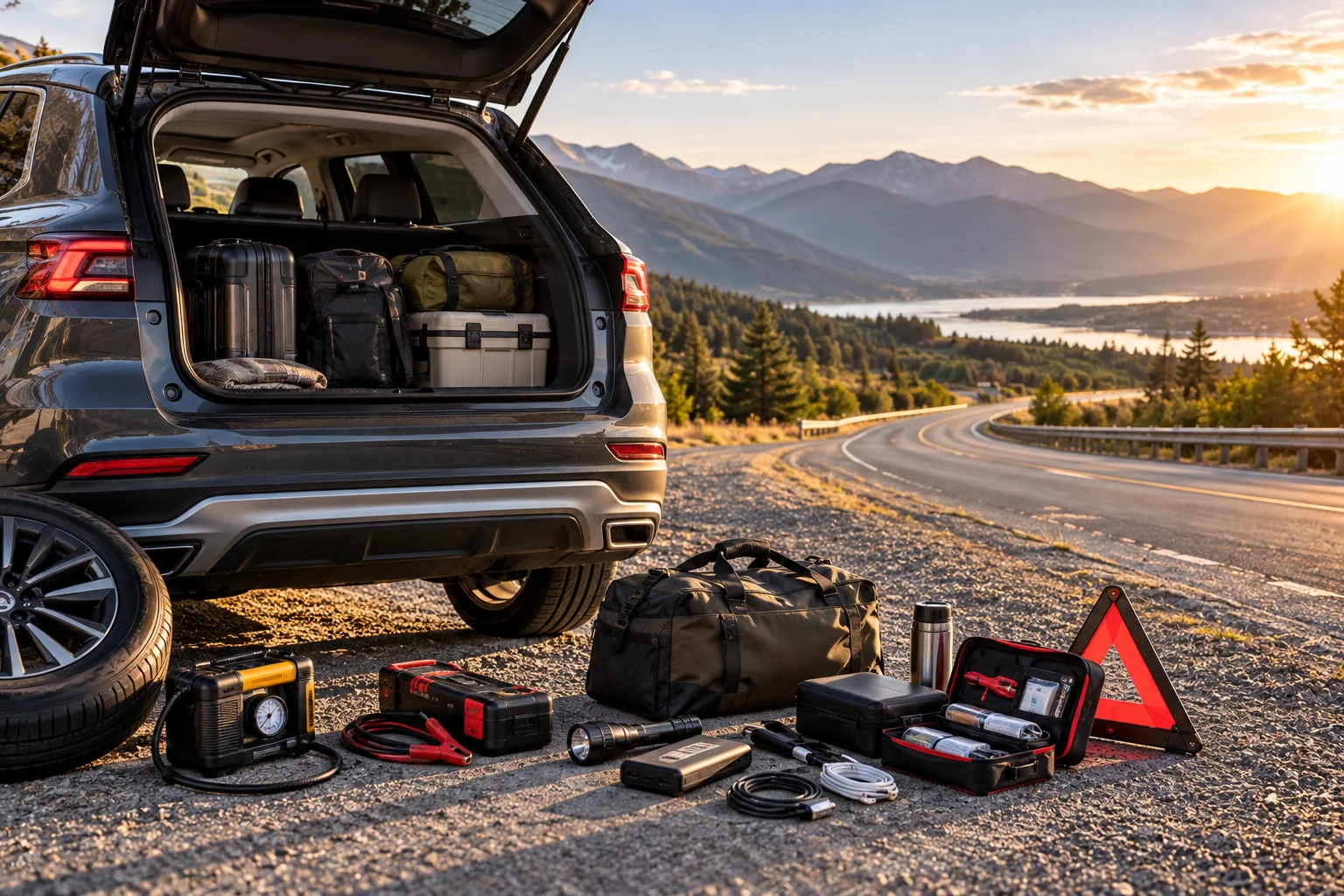
The best car accessories for long drives aren't necessarily the gadgets that make your dashboard look more futuristic. The useful ones are the accessories that solve problems when you're hundreds of miles from home: a phone that is running out of battery, a tire losing pressure, a dead car battery, poor cellular coverage or an incident that needs to be documented.
A good long-distance setup therefore starts with power, navigation, tire equipment and emergency tools. A dash cam is useful for documenting the journey and unexpected incidents, while a reliable phone mount keeps navigation visible without requiring you to hold the phone.
AAA's current road-trip guidance recommends carrying equipment such as a portable jump starter, tire inflator, OBD-II scanner, navigation apps with downloadable maps and backup power. NHTSA likewise recommends a roadside kit containing a phone and charger, flashlight, jumper cables, tire-pressure gauge and other emergency supplies before a long trip.
The trick is knowing which technology solves a real problem and which gadget simply adds clutter.
What Are the Most Useful Car Accessories for Long Drives?
The most useful long-drive accessories are a phone mount, high-output car charger, power bank or jump starter, portable tire inflator, dash cam and offline navigation backup.
Here's a practical starting point:
Accessory | What it solves | Priority |
|---|---|---|
Phone mount | Safe, visible navigation | Essential |
USB-C car charger | Keeps phones powered | Essential |
Portable tire inflator | Low tire pressure | Essential |
Jump starter | Dead car battery | Very useful |
Dash cam | Records driving incidents | Very useful |
Power bank | Backup device power | Useful |
Offline maps | Poor cellular coverage | Useful |
OBD-II scanner | Warning-light diagnosis | Optional |
Portable Wi-Fi hotspot | Weak/inconsistent connectivity | Optional |
Car vacuum | Cleaning during trips | Convenience |
The priorities can change depending on the type of trip. A weekend highway journey doesn't require the same equipment as a remote cross-country drive.
Why Is a Good Phone Mount One of the Best Car Accessories?
A good phone mount keeps navigation visible without requiring you to hold or repeatedly pick up the phone.
Look for a mount that:
Holds the phone securely.
Doesn't obstruct your view.
Doesn't block important vehicle controls.
Can be adjusted without excessive movement.
Works with your phone and case.
Doesn't loosen significantly on rough roads.
The mounting location matters as much as the mount itself. A badly positioned phone can become a distraction even if the hardware is excellent.
If your car already has Android Auto or Apple CarPlay, the phone mount becomes less important because navigation and other supported apps can appear on the vehicle's display.
Why Should You Carry a Portable Tire Inflator?
A portable tire inflator can be one of the most practical accessories on a long journey.
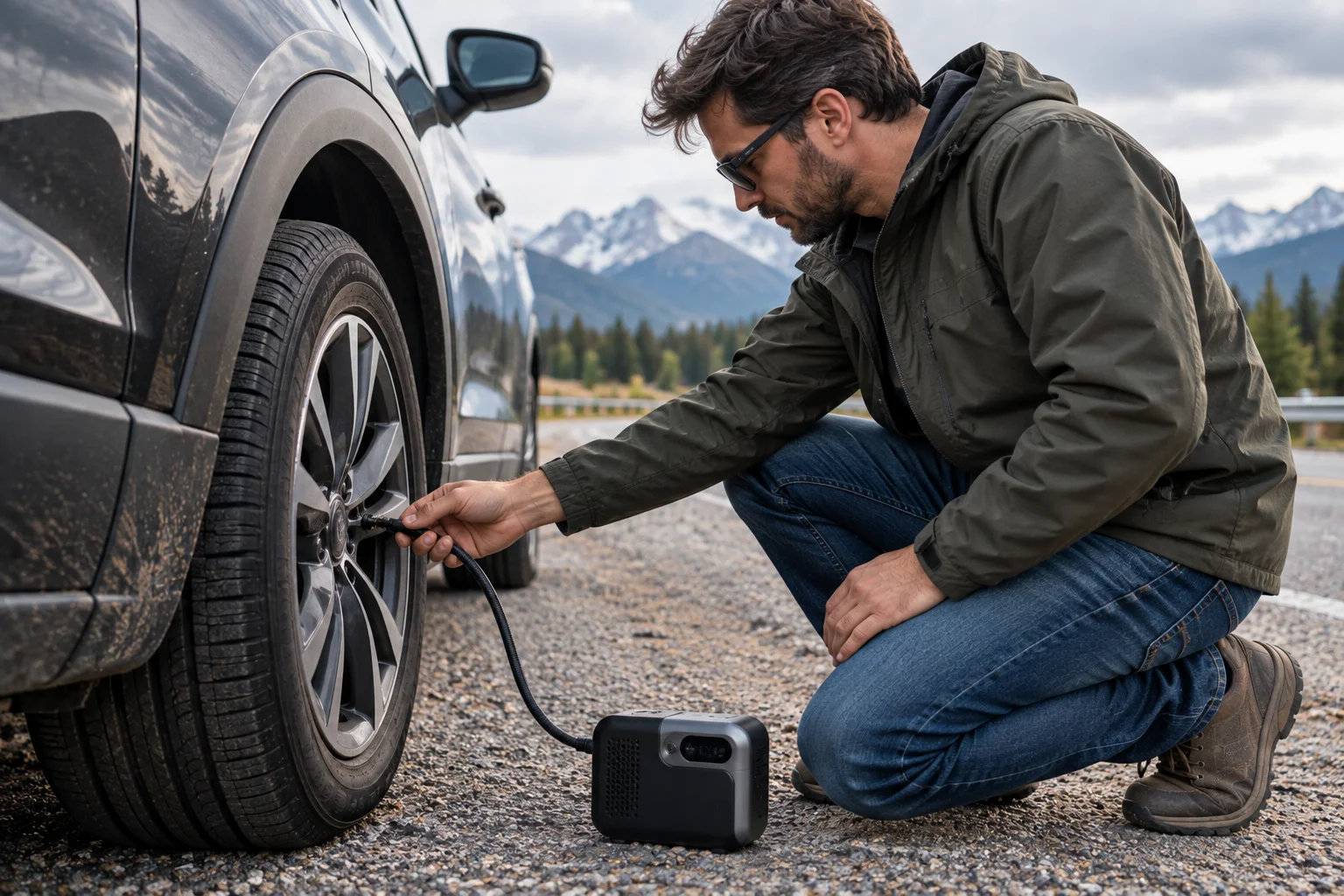
Tires naturally lose air over time, and NHTSA recommends checking tire pressure before long trips. It also recommends checking pressure when the tires are cold and using the vehicle manufacturer's recommended pressure rather than the maximum pressure printed on the tire.
A portable inflator gives you a way to restore pressure without immediately searching for a fuel station or repair shop.
Useful features include:
Digital pressure display
Automatic shutoff
Built-in flashlight
Suitable power source
Hose long enough to reach the valve
Preset pressure function
AAA also recommends portable tire inflators as a useful car accessory and notes that battery-powered models need periodic charging, especially when stored in hot vehicles.
Remember that an inflator isn't a substitute for repairing a puncture. It's a way to restore pressure temporarily or handle a slow loss of air.
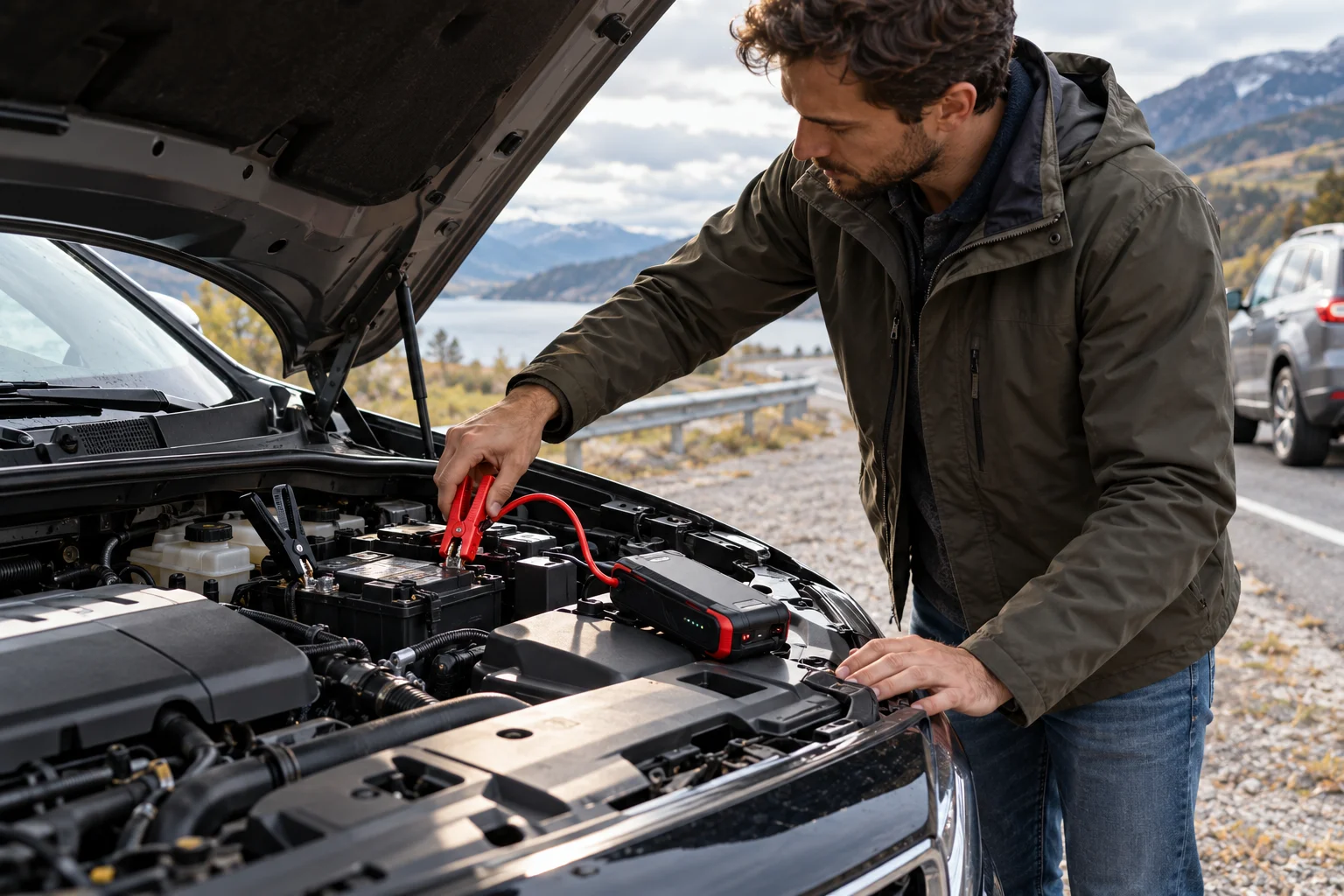
Is a Portable Jump Starter Worth Carrying?
For long-distance driving, a portable jump starter can be a useful backup.
A dead battery can leave you stranded even when the rest of the car is perfectly healthy.
Modern jump starters can also function as USB power banks, allowing the same device to charge phones and other electronics.
AAA's 2026 Route 66 road-trip guidance specifically lists a portable car battery jump starter/power bank among its recommended tech essentials.
When choosing one, check:
Compatibility with your vehicle
Maximum starting current
Battery capacity
Clamp and cable quality
Reverse-polarity protection
Operating-temperature range
Whether it can charge your phone
Don't wait until the battery is dead to discover that the jump starter itself hasn't been charged for two years.
Do You Need a Dash Cam for Long Drives?
A dash cam isn't essential for every driver, but it's useful if you want a record of what happens on the road.
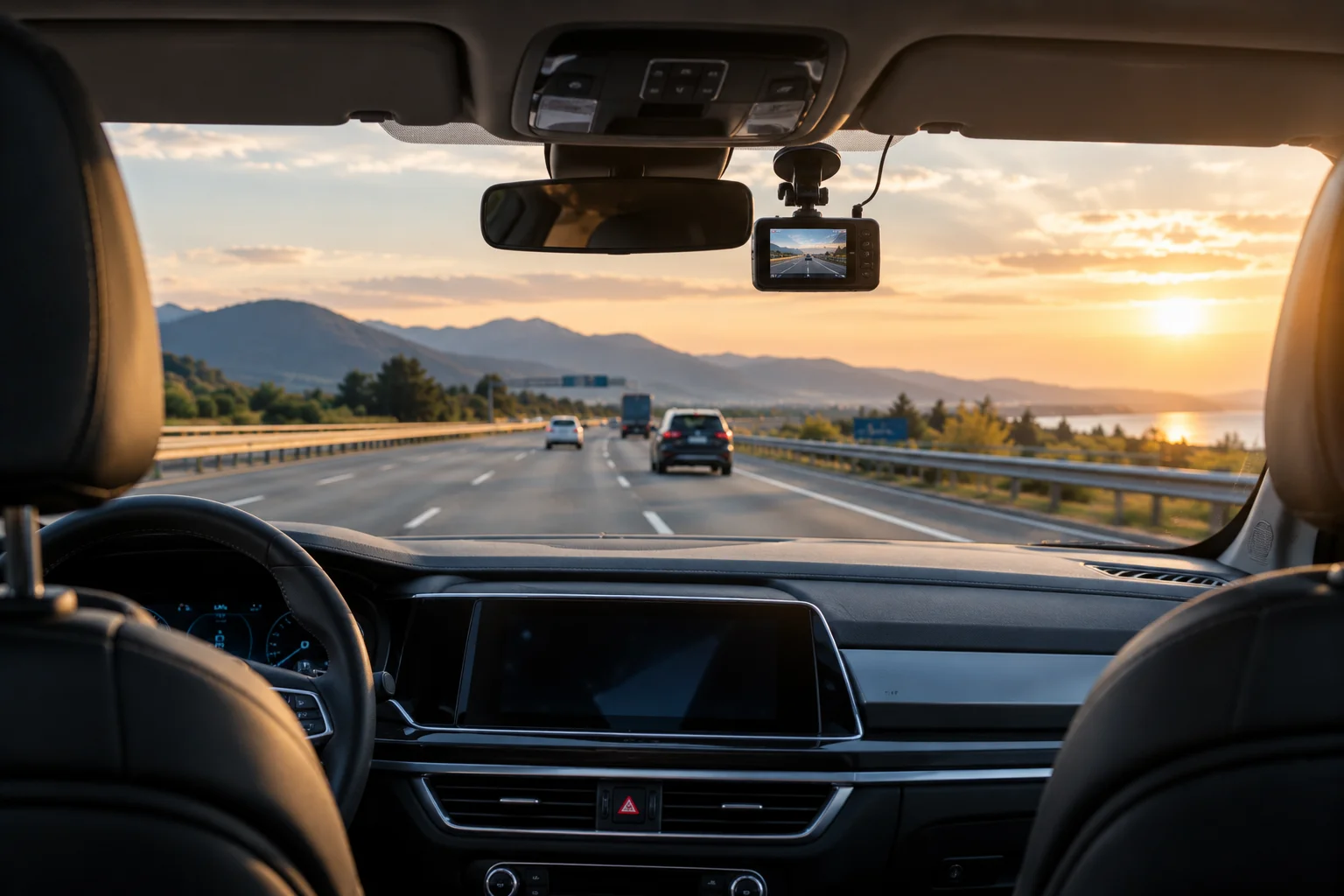
A front camera can capture:
Traffic ahead
Road signs
Traffic lights
Collisions
Sudden braking situations
Road hazards
A front-and-rear system adds coverage behind the vehicle.
If you're buying one specifically for long trips, prioritize image quality, night performance, reliable loop recording and storage rather than simply choosing the camera with the longest feature list.
AAA includes dash cams among its recommended car tools for unexpected roadside situations.
Why Should You Carry a High-Output Car Charger?
Your phone may be your navigation system, communication device, camera and emergency connection all at once.
That makes charging particularly important on long drives.
A modern USB-C car charger can power phones, tablets and other compatible devices. If several people are travelling, a multi-port charger can be more useful than a single high-output port.
Look for:
USB-C Power Delivery
Enough wattage for your phone
Multiple ports
Quality construction
Compatibility with your devices
AAA specifically lists a cell phone and car charger as part of a recommended roadside emergency kit.
Is a Power Bank Useful If Your Car Already Has USB Ports?
Yes, because a power bank gives you power after you leave the car.
If you stop for a hike, walk around a town or have to leave the vehicle during an emergency, the car's USB ports obviously aren't much help.
A power bank can keep your phone available for navigation, communication and emergency calls.
AAA's road-trip guidance also recommends backup power and notes that a portable power bank can be useful when you're far from convenient charging points.
For longer trips, consider a USB-C power bank with enough capacity to provide multiple phone charges.
Should You Download Offline Maps Before a Long Drive?
Yes, especially when your route includes rural or remote areas.
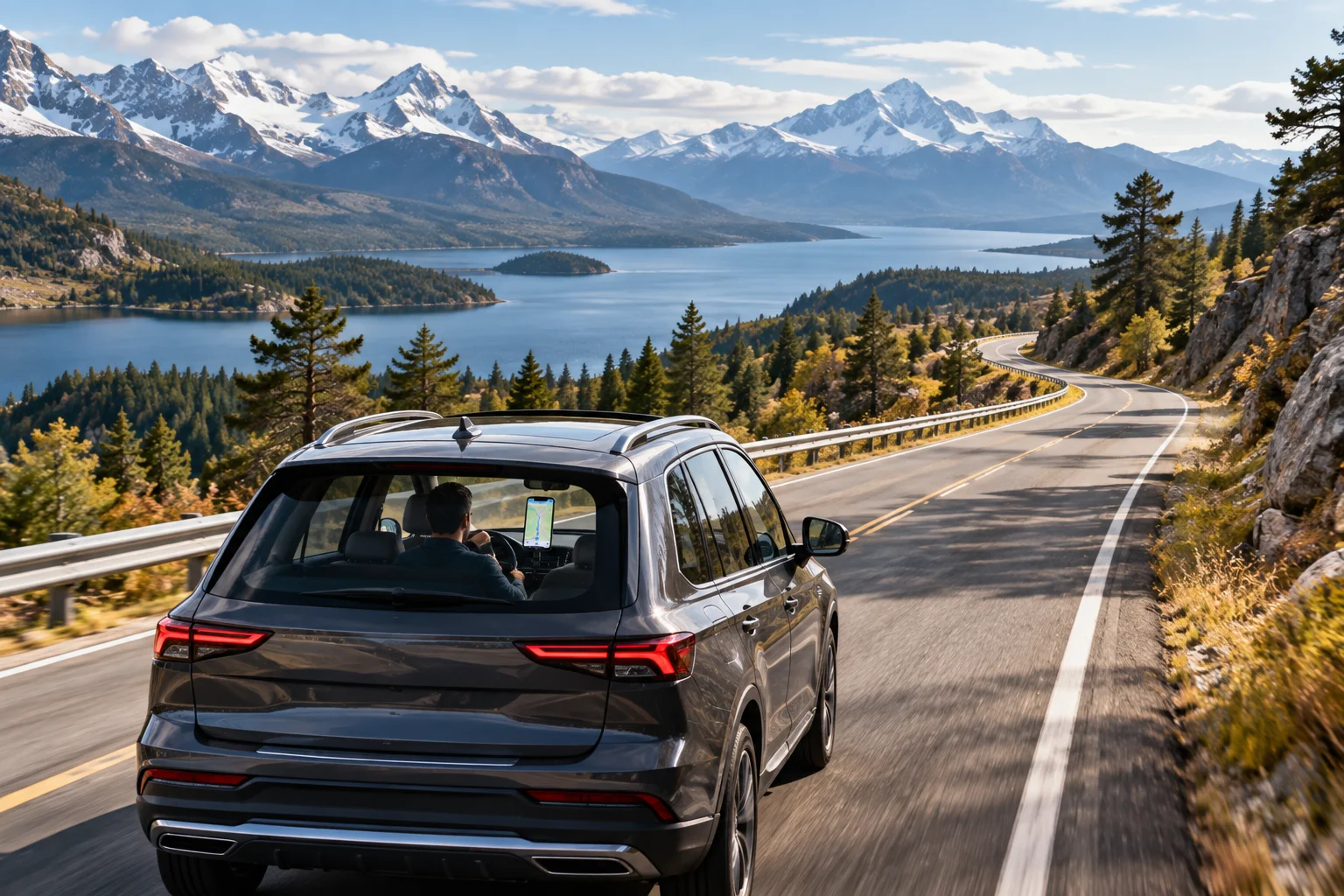
Online navigation is excellent when you have a reliable connection, but mobile coverage isn't guaranteed everywhere.
Downloading maps before departure means your navigation app can continue providing basic map information when connectivity disappears.
AAA specifically recommends navigation apps with downloadable maps for areas where cellular service may be poor.
You don't need a separate navigation gadget if your phone already supports offline maps. The important part is preparing them before you lose the connection.
Is an OBD-II Scanner Worth Keeping in the Car?
An OBD-II scanner is more of a troubleshooting tool than a travel essential.
If the check-engine light appears during a road trip, a compatible scanner can retrieve diagnostic trouble codes and help you understand what the vehicle's computer has detected.
It doesn't replace professional diagnosis, and you shouldn't use a scanner to decide that a serious warning can safely be ignored.
But for drivers who travel frequently, a compact Bluetooth or standalone OBD-II scanner can be useful for basic diagnostics.
AAA includes an OBD-II scanner among its recommended road-trip tech tools.
Do You Need a Portable Wi-Fi Hotspot?
Not usually.
A dedicated hotspot makes more sense when multiple passengers need reliable internet access for work, entertainment or connected devices.
For most trips, a phone's hotspot is sufficient when cellular coverage is available.
A hotspot also won't solve the fundamental problem of having no cellular signal. If you're travelling through areas with unreliable coverage, offline maps and downloaded entertainment are more useful backups.
What Emergency Tech Should Stay in the Car?
Long drives aren't only about convenience.
A basic emergency setup should include:
Flashlight
Phone and charger
Tire-pressure gauge
Jumper cables or jump starter
First-aid kit
Warning devices or reflective equipment
Basic tools
Water
Nonperishable food
Spare fluids where appropriate
NHTSA recommends carrying a roadside emergency kit and specifically lists a phone and charger, flashlight, jumper cables, tire-pressure gauge, jack and basic repair tools among its suggested contents.
Technology should complement this kit rather than replace it.
Which Long-Drive Accessories Are Actually Worth Buying?
If you want to keep the setup simple, start with these:
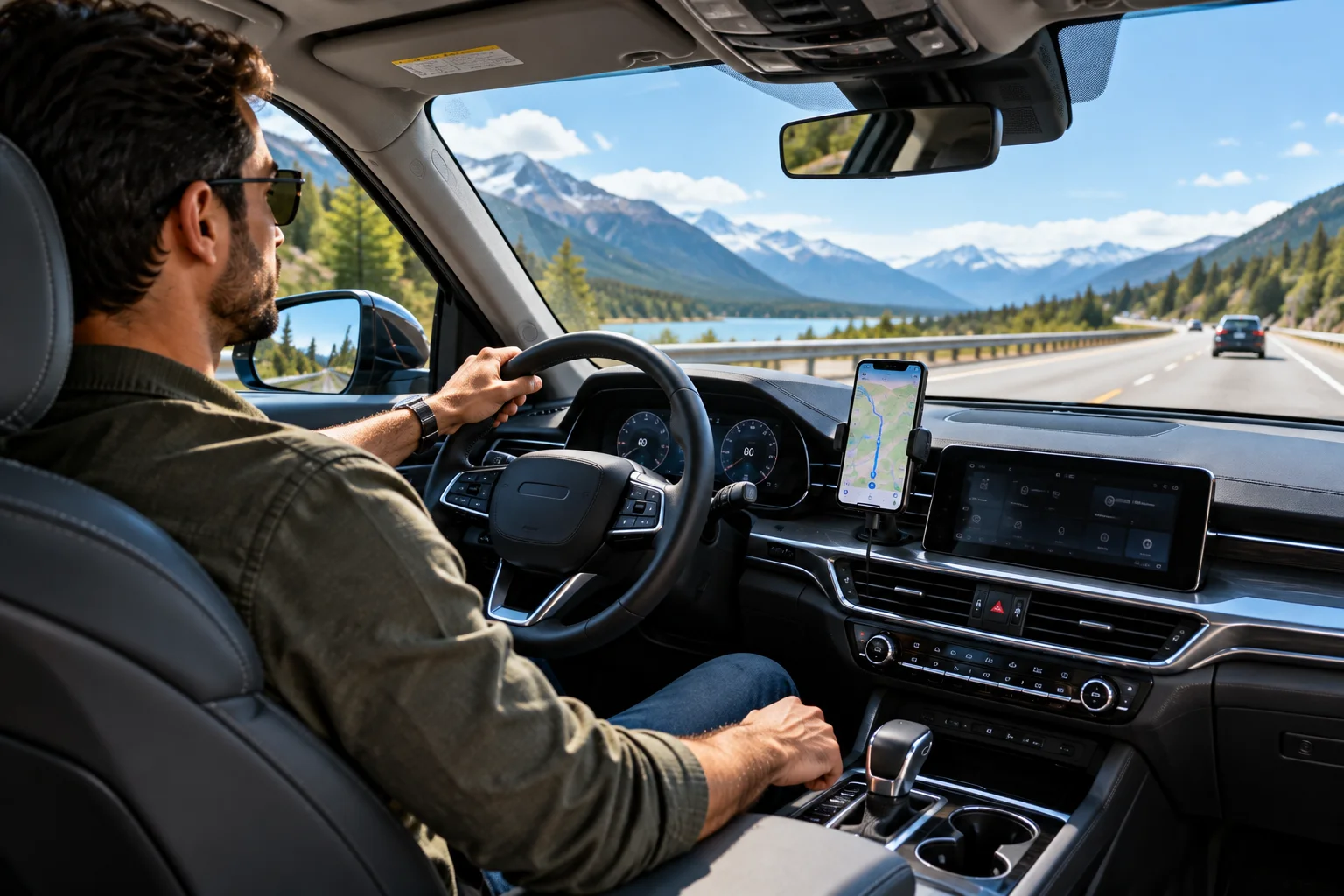
1. Phone mount
Keeps navigation visible and accessible without holding the phone.
2. USB-C car charger
Keeps the primary communication and navigation device powered.
3. Portable tire inflator
Useful when tire pressure drops away from a service station.
4. Portable jump starter
Provides a backup if the car battery dies.
5. Dash cam
Creates a record of the road and unexpected incidents.
6. Power bank
Provides electricity when you're away from the car.
7. Offline maps
Protects against poor cellular coverage.
After those, consider an OBD-II scanner, hotspot or other convenience accessories based on how you travel.
FAQs About Car Accessories for Long Drives
What should I always keep in my car for a road trip?
At minimum, carry a phone and charger, flashlight, tire-pressure equipment, emergency supplies and the tools required for your vehicle's spare-tire setup. NHTSA recommends checking tires and carrying a roadside emergency kit before long trips.
Is a portable tire inflator better than carrying a spare tire?
No. They serve different purposes. An inflator can restore pressure, but it cannot properly replace a spare tire when you have a serious puncture or tire damage.
Do I need both a power bank and a jump starter?
Not necessarily. Some jump starters include USB charging, so one device can provide both emergency starting power and backup power for electronics.
Is a dash cam necessary for a road trip?
It's optional, but it can provide useful video evidence of incidents and unexpected events.
What's the most important accessory for a long drive?
There isn't one universal accessory. For most drivers, keeping the phone powered, maintaining tire pressure and having a way to deal with a dead battery address more practical problems than entertainment-focused gadgets.
The Bottom Line
The best car accessories for long drives are the ones that solve problems before they become emergencies.
A good phone mount and car charger keep navigation and communication available. A tire inflator and jump starter provide useful roadside backup. A dash cam documents what happens on the road, while offline maps keep navigation available when cellular service disappears.
You don't need to turn your car into a mobile electronics store.
Start with power, tires, navigation and emergency equipment. Then add accessories such as an OBD-II scanner, hotspot or extra charging hardware if your driving habits justify them.
The smartest road-trip setup isn't the one with the most gadgets. It's the one that leaves you prepared when the nearest service station, charging point or strong cellular signal is much farther away than expected.