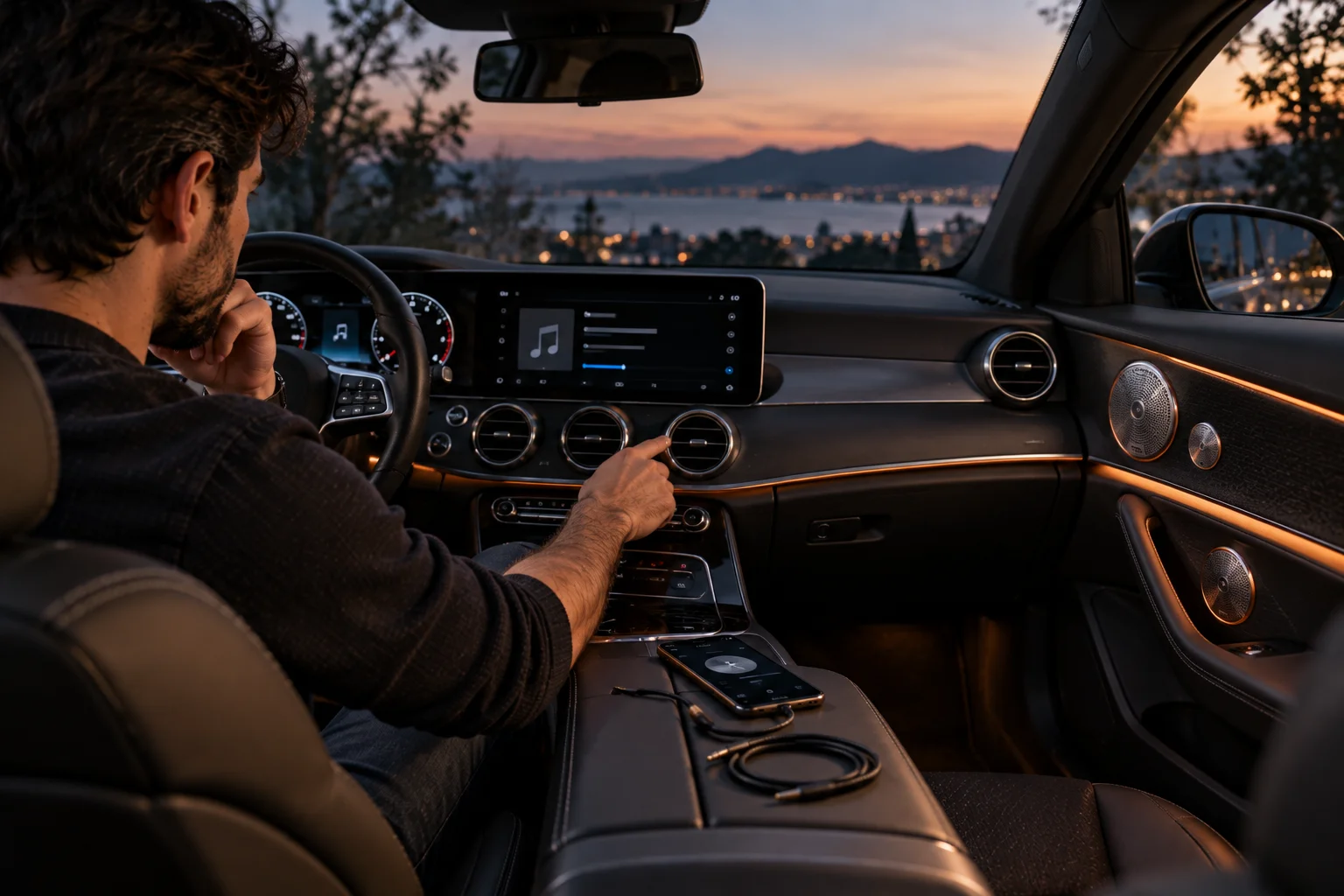
AUX and Bluetooth both let you play music from your phone through a car's speakers, but they work very differently.
An AUX connection sends an analog audio signal through a physical cable, while Bluetooth sends compressed digital audio wirelessly to the car's receiver. That difference affects sound quality, latency, convenience, battery use and compatibility.
For pure simplicity, AUX has an advantage: connect the cable and play. There is no wireless pairing, Bluetooth codec negotiation or battery requirement for the connection itself.
Bluetooth wins on convenience. There's no cable running across the cabin, modern cars can remember your phone, and you can control music and calls through the infotainment system or steering-wheel controls.
But which sounds better?
For a properly implemented system, AUX can have the technical advantage because it avoids Bluetooth audio compression. However, that doesn't automatically mean you'll hear a major difference in a real car. The quality of the phone's analog output, AUX input, cable, car stereo, speakers, road noise and Bluetooth codec all influence the final result.
How Does AUX Work in a Car?
AUX sends analog audio directly from the phone or source device to the car's audio input, usually through a 3.5mm cable.
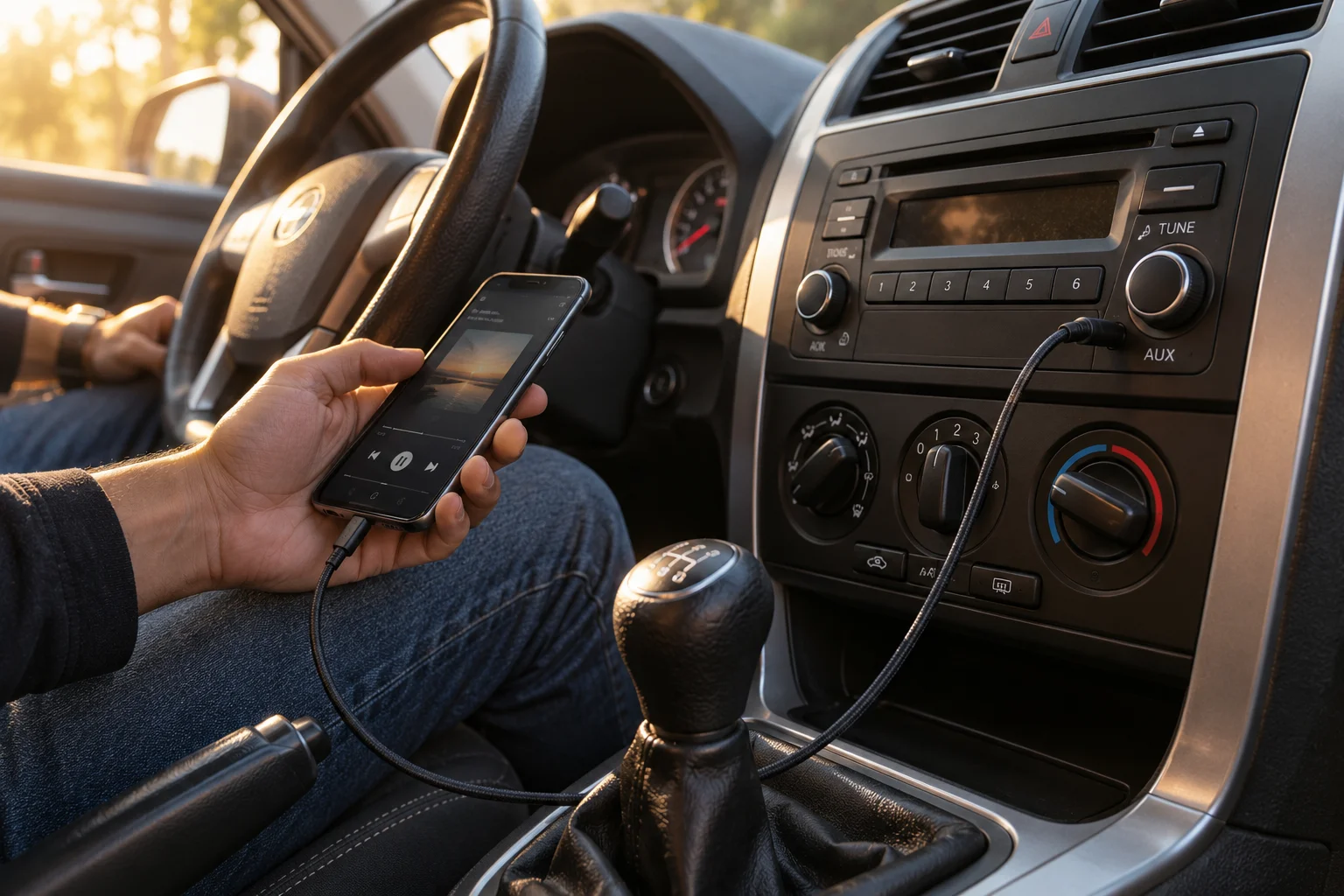
The basic signal path is:
Phone → DAC → 3.5mm cable → car AUX input → amplifier → speakers
The phone converts digital music into an analog electrical signal through its DAC. The car then receives that analog signal and amplifies it.
There is no Bluetooth codec involved.
That makes AUX attractive when you're using a high-quality wired source and want to avoid another lossy wireless encoding stage.
The downside is that the analog signal can be affected by electrical noise, poor-quality connectors or differences in the DAC and input circuitry.
How Does Bluetooth Audio Work in a Car?
Bluetooth converts the phone's audio into a wireless digital stream that the car receives and decodes.
Most traditional in-car Bluetooth music uses Bluetooth Classic with the Advanced Audio Distribution Profile (A2DP). Bluetooth's A2DP system supports the SBC codec and can also support alternatives such as AAC and proprietary codecs depending on the devices involved.
The simplified path is:
Phone → Bluetooth codec → wireless transmission → car Bluetooth receiver → decoding → amplifier → speakers
That means the audio may be compressed before reaching the car.
Bluetooth SIG notes that A2DP was designed for high-quality music but uses buffering and retransmission mechanisms that can introduce latency.
For normal music playback, however, that delay generally isn't something you'll notice.
AUX vs Bluetooth: Which Sounds Better?
AUX can deliver the cleaner technical signal, but Bluetooth can sound extremely good when the phone, codec and car system are well matched.
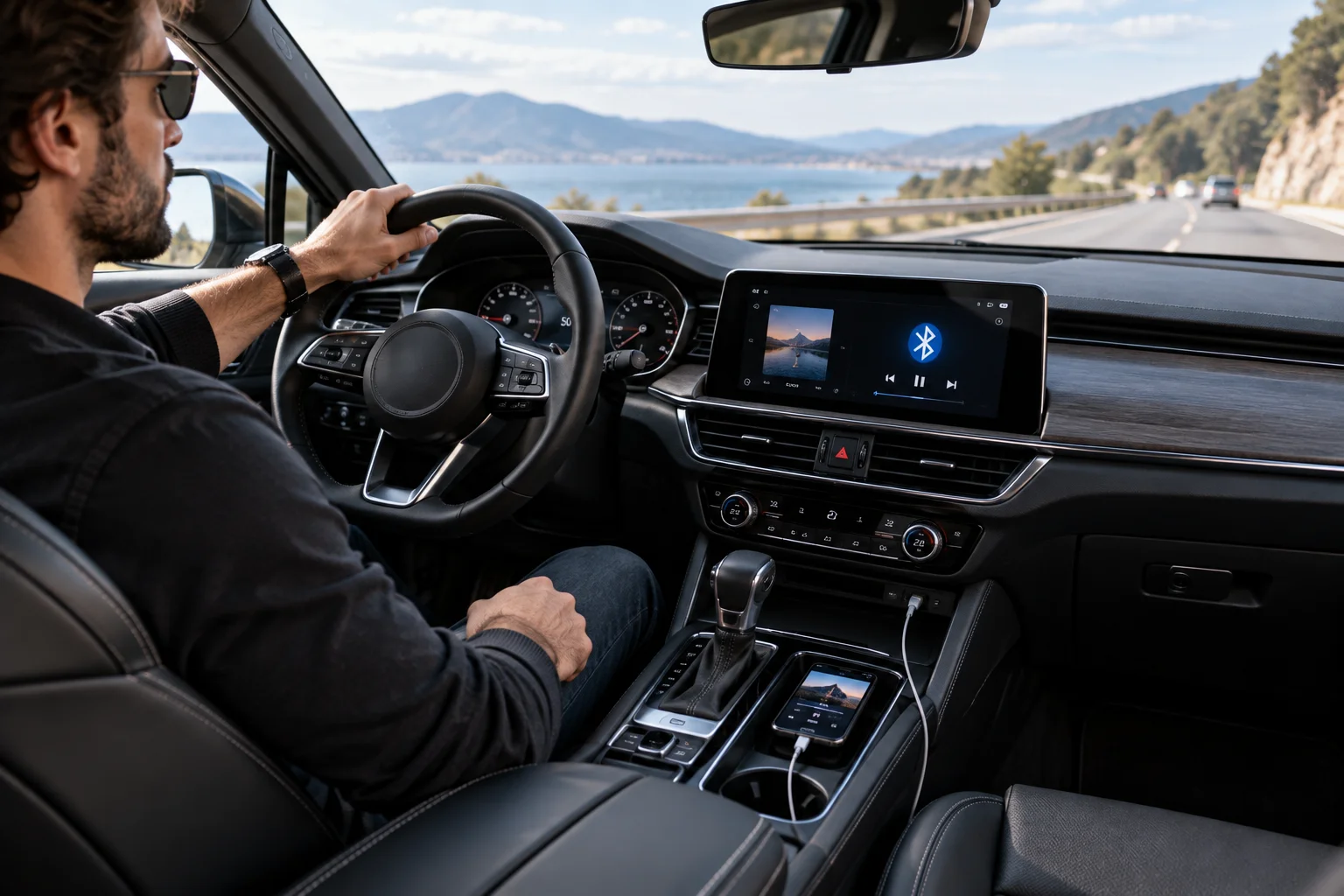
With AUX, the audio remains uncompressed during the cable connection. With conventional Bluetooth A2DP, the source is encoded using a Bluetooth audio codec and decoded by the car.
Apple explicitly states that its Bluetooth audio connections aren't lossless, even though devices such as iPhones and AirPods support high-quality AAC Bluetooth audio.
But don't assume that AUX automatically sounds dramatically better.
In a moving car, road noise, tire noise, cabin acoustics and the quality of the factory stereo can easily matter more than subtle codec differences.
Factor | AUX | Bluetooth |
|---|---|---|
Connection | Wired | Wireless |
Audio compression | No Bluetooth compression | Usually codec-dependent |
Latency | Very low | Usually higher |
Pairing | None | Required |
Phone battery | Generally lower impact | Uses Bluetooth power |
Cable required | Yes | No |
Music controls | Depends on car | Usually integrated |
Phone calls | Usually limited | Strong integration |
Compatibility | Requires AUX input | Requires Bluetooth audio |
Convenience | Moderate | High |
Which Has Lower Latency: AUX or Bluetooth?
AUX normally has much lower latency than traditional Bluetooth audio.
With AUX, the signal travels through the cable with essentially no wireless buffering.
Bluetooth audio needs to encode, transmit, buffer and decode the signal. Bluetooth SIG notes that Classic Audio can introduce delays because of buffering and its asynchronous transport.
This can matter when:
Watching videos
Playing games
Using interactive apps
Monitoring audio in real time
Synchronizing sound with visual content
For music, latency is rarely important because you're not comparing the sound with a visual event.
Bluetooth technology is evolving, though. Bluetooth LE Audio uses isochronous channels to reduce latency and improve synchronization, making it better suited to interactive applications than traditional Bluetooth Classic audio.
That doesn't mean every current car automatically benefits from LE Audio. The phone and vehicle must both support the relevant technology.
Which Is More Reliable in a Car?
AUX is mechanically simple, while Bluetooth is more convenient but depends on successful wireless pairing and software compatibility.
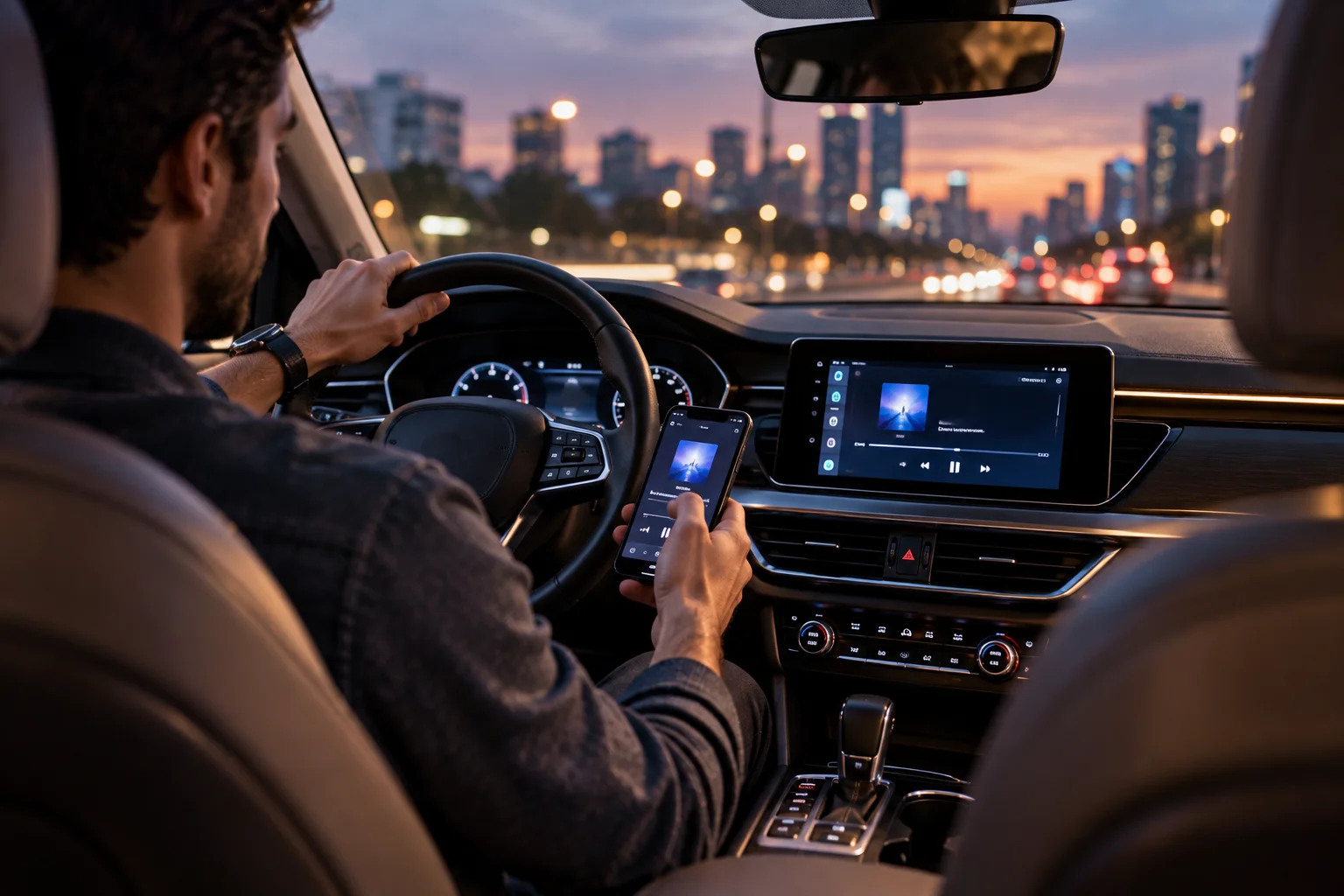
An AUX connection generally works as soon as you plug it in, assuming the phone and vehicle have compatible connections.
Bluetooth introduces more variables:
Pairing problems
Multiple saved devices
Connection priority
Software bugs
Codec compatibility
Bluetooth profiles
Infotainment firmware
Phone settings
Once properly configured, Bluetooth can be extremely reliable.
But if your car is older or its infotainment system has outdated Bluetooth support, AUX can be the more predictable option.
Which Has Fewer Compatibility Problems?
AUX generally has fewer software-related compatibility problems, but Bluetooth is far more convenient on modern vehicles.
The main requirement for AUX is straightforward: both devices need a compatible analog audio connection.
Modern phones increasingly don't include a 3.5mm headphone jack. For example, current iPhones use USB-C, and Apple provides USB-C audio connectivity and adapters for wired audio accessories.
That means an older car with a 3.5mm AUX input may require a USB-C-to-3.5mm adapter.
Bluetooth has the opposite situation: almost every modern smartphone supports Bluetooth audio, and Android's current compatibility requirements include support for Bluetooth audio profiles such as A2DP on devices implementing Bluetooth audio.
So AUX is technically simple but increasingly dependent on adapters, while Bluetooth is more universally built into modern phones and cars.
Does the AUX Cable Affect Sound Quality?
It can, but cable quality is usually less important than the electronics connected to it.
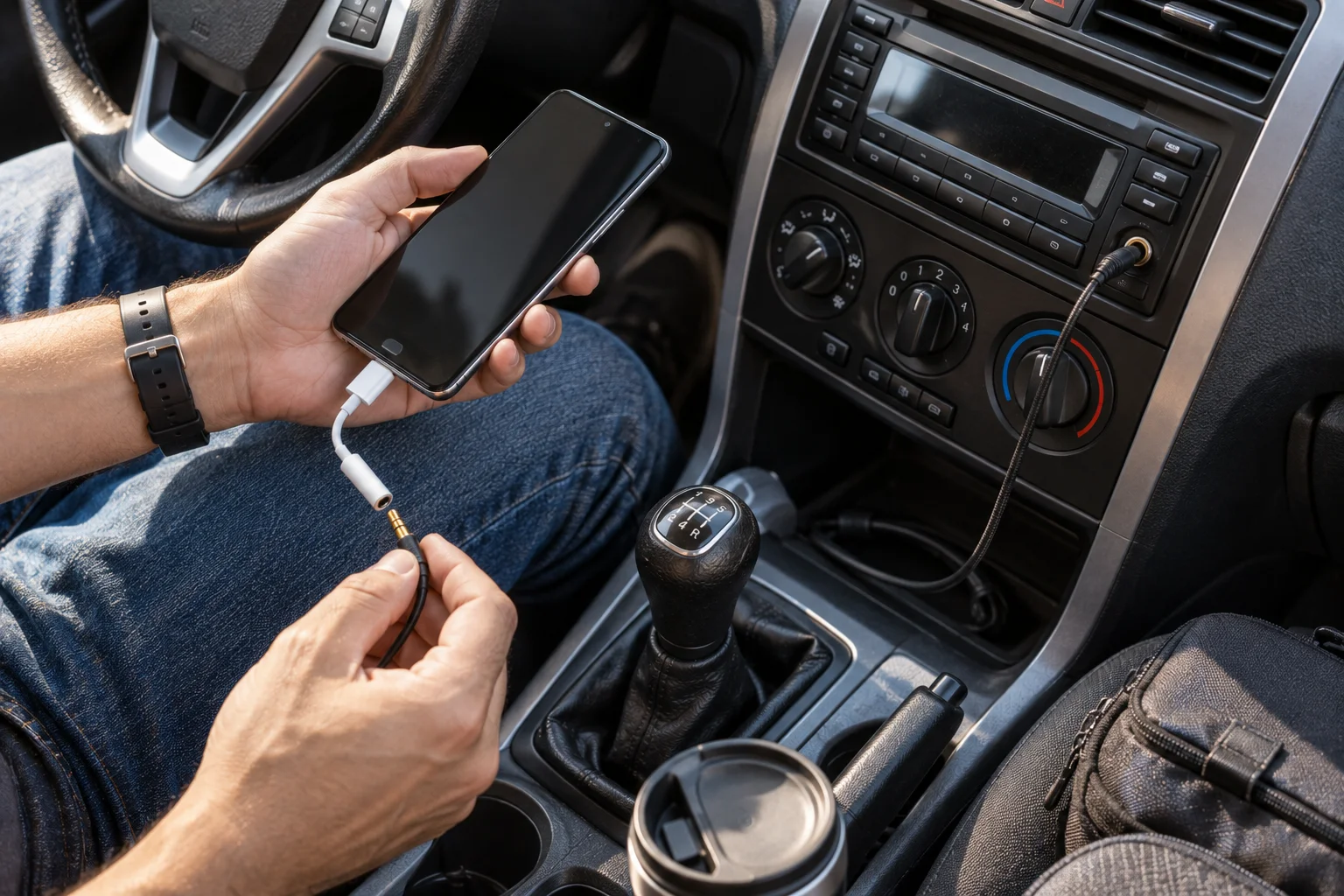
A cheap or damaged cable can introduce:
Crackling
Intermittent connections
Ground-loop noise
Poor physical contact
Channel problems
But buying an expensive “audiophile” AUX cable doesn't automatically transform a car stereo.
A properly functioning, reasonably constructed cable is normally sufficient. The phone's DAC, car's AUX input stage, amplifier and speakers have a much larger influence on the final sound.
Why Can Bluetooth Sound Different From AUX?
Bluetooth can sound different because the audio is encoded and decoded before reaching the car's audio system.
The codec determines how the digital audio is compressed.
SBC is the mandatory baseline codec for A2DP. AAC is widely used by Apple, while Android devices and compatible hardware can support additional codecs such as LDAC.
However, codec support is only useful when both sides support the same codec.
If your phone supports a high-quality codec but your car only accepts SBC or AAC, the connection will use the codec the two devices can negotiate.
That's why simply having a phone with an advanced Bluetooth codec doesn't guarantee that your car will use it.
What About Bluetooth Audio in Newer Cars?
Newer vehicles are increasingly treating Bluetooth as part of a broader connected infotainment system rather than simply a wireless AUX replacement.
Bluetooth can integrate:
Music playback
Phone calls
Contact access
Steering-wheel controls
Voice assistants
Track information
Automatic reconnection
Some newer systems also support wireless Apple CarPlay or Android Auto, which introduces another layer of connectivity beyond basic Bluetooth audio.
For everyday driving, that convenience can outweigh the technical advantages of a wired AUX connection.
Should You Use AUX or Bluetooth in Your Car?
Use AUX when your priority is low latency, a direct wired connection or avoiding Bluetooth compression. Choose Bluetooth when convenience, hands-free calling and integrated controls matter more.
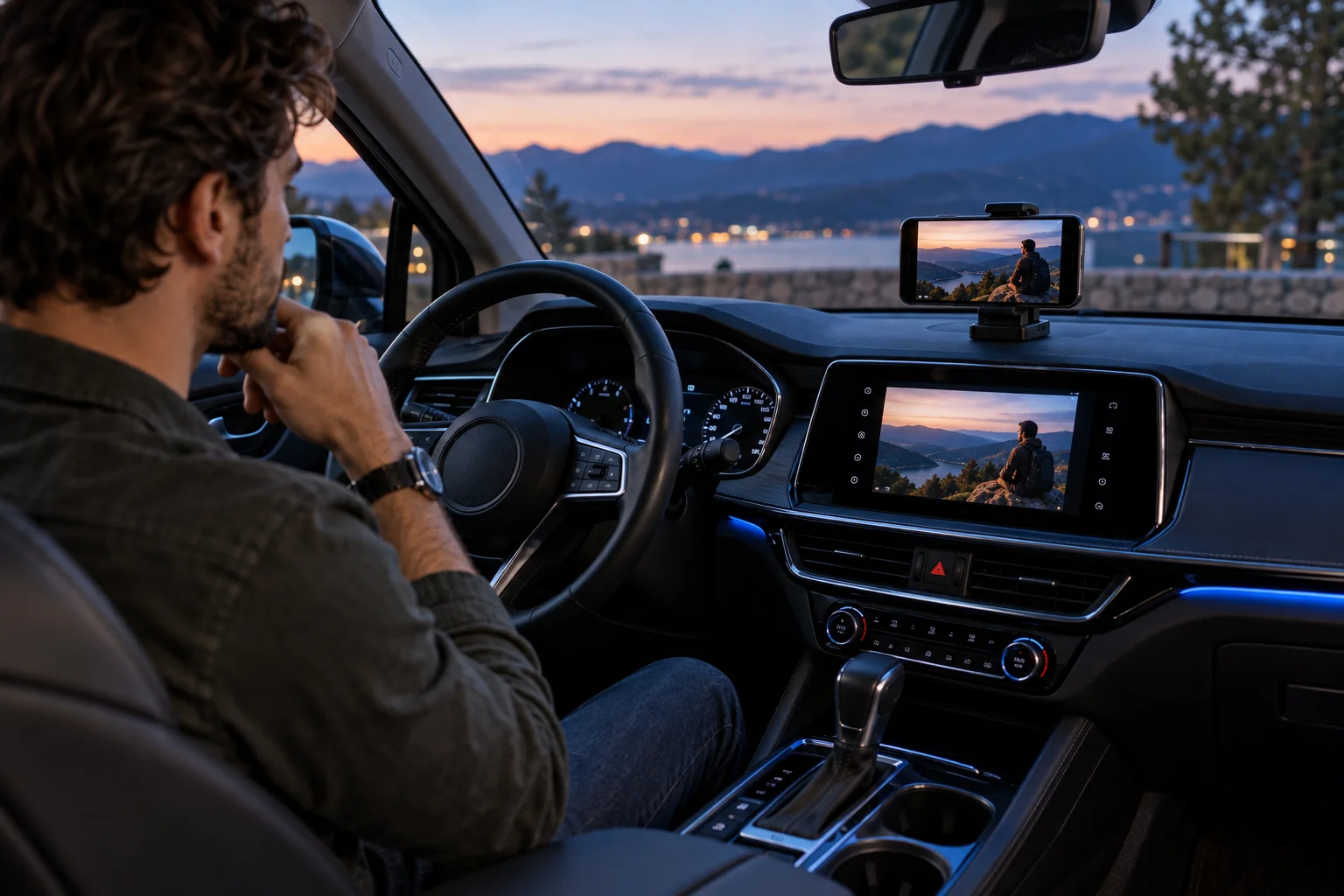
A simple decision guide:
Choose AUX if you:
Care about the lowest possible latency
Prefer a wired connection
Have a good analog source
Regularly watch video or use interactive audio
Don't mind carrying a cable or adapter
Choose Bluetooth if you:
Want wireless convenience
Make hands-free calls
Want automatic reconnection
Use steering-wheel controls
Prefer not to keep a cable connected
For most everyday music listening, Bluetooth is the more practical choice. For the technically cleanest and lowest-latency connection, AUX still has advantages when a proper wired connection is available.
Frequently Asked Questions About AUX vs Bluetooth in Cars
Is AUX better quality than Bluetooth?
AUX can have a technical advantage because it avoids Bluetooth's lossy audio encoding. However, the audible difference depends on the phone, DAC, Bluetooth codec, car stereo, speakers and listening environment.
Is Bluetooth louder than AUX?
Neither connection is inherently louder. Output level depends on the phone's source volume, car input sensitivity, amplifier gain and system design.
Does Bluetooth use more phone battery than AUX?
Bluetooth requires the phone's wireless radio to remain active, so it consumes some power. The exact difference depends on the phone, connection and other active wireless features.
Is AUX better for watching videos in a car?
AUX generally has lower latency, so it can keep audio and video synchronized more easily. Traditional Bluetooth audio can introduce noticeable delay in some situations.
Does Bluetooth reduce music quality?
It can, because traditional Bluetooth A2DP normally uses an audio codec. The amount of quality loss depends on the codec, bitrate, source material and implementation. Apple, for example, states that its Bluetooth audio connections aren't lossless.
Why does my AUX sound better than Bluetooth?
Your Bluetooth connection may be using a different codec, processing chain or volume level. The car's Bluetooth implementation can also have different tuning from its AUX input.
Why does my Bluetooth keep disconnecting from my car?
Possible causes include outdated infotainment software, phone Bluetooth issues, interference, multiple paired devices or compatibility problems. Removing the pairing and reconnecting both devices can sometimes resolve the issue.
Do new cars still have AUX inputs?
Some do, but AUX inputs have become less common as manufacturers increasingly rely on Bluetooth, USB and smartphone integration. The availability depends on the vehicle and model year.
The Bottom Line
AUX wins the technical battle; Bluetooth usually wins the everyday usability battle.
AUX provides a direct wired signal with very low latency and avoids the compression associated with conventional Bluetooth audio. Bluetooth adds convenience, wireless playback, hands-free calling and deeper integration with modern infotainment systems.
For most drivers listening to streaming music in a noisy vehicle, the difference may be smaller than the specifications suggest.
If you're choosing between the two, don't obsess over codec charts alone. Consider the quality of your car's stereo, the source audio, your phone, your listening habits and how much you value convenience.
For everyday driving, Bluetooth is usually the easier connection. For the lowest latency and a direct wired signal, AUX remains hard to beat.