Learning does not always require an hour long class, a textbook, or an uninterrupted afternoon.
Sometimes, the most useful lesson can take five minutes.
A short video explaining a software feature, a quick language exercise during a commute, a coding challenge between meetings, or a short quiz before starting work can all become part of a larger learning journey.
This approach is known as Microlearning.
In 2026, short form digital education is becoming increasingly relevant because the way people work and consume information has changed. Professionals often need to learn while managing full schedules, students use mobile devices as part of everyday education, and companies need employees to update skills without taking them away from their regular responsibilities for long periods.
Microlearning does not mean reducing every subject to a few minutes.
Instead, it focuses on breaking larger learning objectives into smaller, focused experiences that can be completed and practiced in manageable sessions.
That distinction is important.
The value of Microlearning is not simply that lessons are short. It is that short lessons can make learning easier to fit into everyday life.
What Is Microlearning?

Microlearning is a learning approach in which information or activities are divided into relatively small, focused units.
A micro lesson might cover one concept, one procedure, one vocabulary group, one software function, or one practical skill.
For example, instead of taking a single two hour lesson on spreadsheet analysis, a Microlearning program might divide the subject into separate lessons covering:
• Basic formulas
• Sorting data
• Filtering information
• Creating charts
• Using conditional formatting
• Building a simple report
Each lesson has a specific purpose.
This makes it easier for the learner to understand what they are expected to learn and complete one step before moving to the next.
Microlearning can be delivered through mobile applications, websites, learning management systems, videos, quizzes, interactive exercises, emails, digital flashcards, and workplace training platforms.
Why Microlearning Is Growing in 2026

The modern learner often has limited uninterrupted time.
Professionals move between meetings, projects, emails, customer requests, and other responsibilities.
Students may divide their attention between formal education, work, family, and other activities.
That creates demand for learning experiences that can fit around existing schedules.
Mobile technology also makes short learning sessions easier to access.
A learner can complete a lesson while waiting for a meeting, during a commute, during a lunch break, or before going to bed.
This does not necessarily mean people have shorter attention spans.
It can simply mean that learning has to compete with more activities.
Microlearning provides a way to make progress without requiring every learning session to be long.
Microlearning vs Traditional Learning
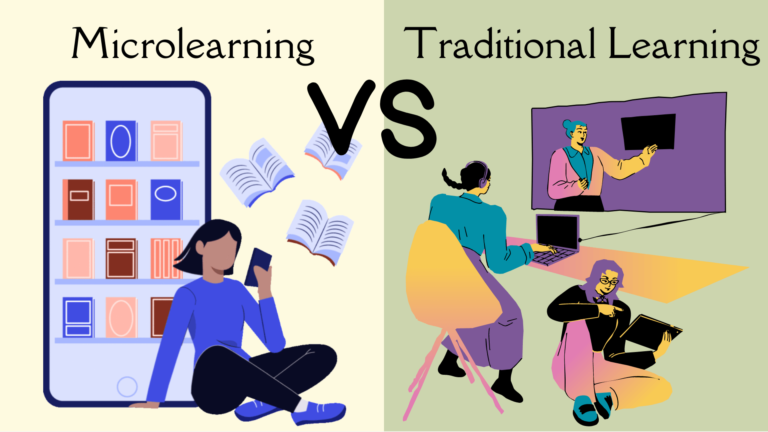
Traditional learning and Microlearning do not have to compete.
They can serve different purposes.
Traditional learning | Microlearning |
|---|---|
Longer sessions | Short focused sessions |
Broader topics | Specific concepts |
Often follows a fixed schedule | Often more flexible |
May include lectures and assignments | Often includes quick exercises |
Useful for deep structured study | Useful for focused knowledge and reinforcement |
Can require dedicated time | Can fit into smaller time periods |
A university course, professional certification, or technical bootcamp may require extended study.
Microlearning can complement those experiences by providing revision, practice, reminders, or focused explanations.
The strongest approach depends on the subject.
Learning advanced mathematics may require sustained study.
Remembering keyboard shortcuts or reviewing vocabulary may work particularly well through short repeated sessions.
The Science Behind Short Learning Sessions
Microlearning is often connected with ideas such as retrieval practice and spaced repetition.
Retrieval practice involves actively trying to recall information rather than simply reading it again.
For example, a learner studying a language might see a word and attempt to remember its meaning before revealing the answer.
Spaced repetition involves revisiting information over time rather than studying everything in one session.
Digital learning applications can make these techniques easier to implement because software can schedule exercises and track previous performance.
This does not mean that every short lesson automatically produces better learning.
The quality of the activity still matters.
A five minute quiz that requires active recall can be more educational than five minutes of passively watching content.
Microlearning for Professional Skills

Businesses are increasingly interested in learning formats that do not require employees to spend long periods away from their normal responsibilities.
Microlearning can be useful for workplace training because individual lessons can focus on specific tasks.
A company might create short training modules covering:
• A new software feature
• Cybersecurity awareness
• Customer service procedures
• Sales techniques
• Workplace policies
• Product knowledge
• Communication skills
• Compliance topics
Instead of asking employees to complete one large training session, an organization can divide the material into smaller units.
This can also make it easier to update individual lessons when information changes.
For example, if a company's internal software changes, the training team may only need to update the short lesson covering that feature rather than redesigning an entire course.
Microlearning for Software and Technology
Technology is an especially interesting area for Microlearning because software changes frequently.
A professional may not need an entire course to learn one new feature.
They might need a short lesson explaining how to use a particular function, command, tool, or workflow.
For example, a developer learning a new framework could use short lessons to review individual concepts.
A marketing professional could learn one analytics feature at a time.
An employee learning a new productivity platform could complete separate modules for email, documents, calendars, collaboration, and automation.
This makes Microlearning particularly useful as a supplement to larger technical training programs.
Microlearning for Language Learning
Language learning is one of the clearest examples of where short lessons can fit naturally into everyday routines.
A learner might practice vocabulary for five minutes in the morning, complete a grammar exercise during lunch, and listen to a short conversation in the evening.
The repetition is important.
Language ability develops through exposure and practice rather than through a single large study session.
Many language applications therefore use short activities, quizzes, vocabulary exercises, pronunciation practice, and spaced review.
Microlearning does not replace longer conversations or immersion.
Instead, it can make daily practice easier to maintain.
Microlearning and Artificial Intelligence

Artificial intelligence is giving Microlearning another dimension.
AI systems can potentially analyze learning activity and recommend what a learner should review next.
For example, if someone repeatedly struggles with a particular concept, a learning platform could provide additional explanations or practice.
AI can also help generate:
• Practice questions
• Summaries
• Flashcards
• Examples
• Explanations
• Revision exercises
• Personalized learning recommendations
This can make short learning sessions more responsive to individual needs.
However, AI generated learning content still requires appropriate quality control.
Incorrect explanations can create confusion, especially in technical, scientific, financial, or professional subjects.
The best use of AI is therefore not simply generating more lessons.
It is helping learners receive relevant practice and explanations while maintaining reliable educational oversight.
Microlearning Apps and Platforms
Microlearning appears across many types of digital education.
Duolingo
Language applications such as Duolingo are built around short learning activities and repeated practice.
The format naturally supports frequent sessions rather than requiring learners to schedule long classes.
LinkedIn Learning
LinkedIn Learning provides professional courses that can be consumed in shorter sections, making it possible to focus on specific workplace skills.
Udemy
Udemy's broad course marketplace includes many courses that learners can divide into smaller sessions based on individual lessons.
Coursera
Coursera provides structured courses and programs that can combine longer learning paths with individual lessons, quizzes, and activities.
Corporate Learning Platforms
Many businesses also use dedicated learning management systems that provide short training modules, assessments, and employee progress tracking.
The important distinction is that Microlearning is a learning format rather than a single product category.
A platform does not need to advertise itself specifically as a Microlearning service to support short learning experiences.
Microlearning for Employee Onboarding
Employee onboarding can involve a huge amount of information.
New employees may need to learn company policies, software, internal processes, product information, security procedures, team structures, and communication expectations.
Giving all of this information to a new employee in one large training session can be difficult to absorb.
Microlearning allows companies to divide onboarding into manageable stages.
For example:
Day One
Company basics and essential policies.
Day Two
Communication tools and team workflows.
Day Three
Security and account management.
Day Four
Product knowledge.
Day Five
Role specific procedures.
This approach can make onboarding feel more manageable while giving employees opportunities to apply what they learn.
Microlearning for Compliance and Security Training
Cybersecurity awareness is another area where frequent short training can be useful.
Employees may need reminders about:
• Phishing
• Password security
• Multi factor authentication
• Suspicious attachments
• Social engineering
• Data handling
• Device security
Instead of delivering one annual security presentation and expecting employees to remember everything, organizations can use short recurring lessons.
A five minute security reminder may be easier to integrate into the workday.
However, Microlearning should complement rather than replace comprehensive security policies, technical controls, and incident response procedures.
Advantages of Microlearning
Microlearning can offer several practical advantages.
Flexible
Short lessons can fit around work, study, travel, and other commitments.
Focused
Each activity can concentrate on one specific learning objective.
Accessible
Mobile based lessons can allow learners to study in different locations.
Easier to Review
Short modules can be revisited when a concept needs reinforcement.
Useful for Continuous Learning
Professionals can gradually develop skills rather than waiting for a large training opportunity.
Easy to Update
Organizations can update individual modules when information changes.
Potentially More Engaging
Interactive quizzes, exercises, and short challenges can create a more active learning experience than passive content consumption.
The Limitations of Microlearning
Microlearning is not suitable for everything.
Complex subjects can require sustained attention.
A learner cannot necessarily master advanced mathematics, medicine, software architecture, law, or scientific research through a collection of isolated five minute lessons.
Short lessons can introduce concepts, but deeper learning may require:
• Long form explanations
• Projects
• Discussion
• Reading
• Problem solving
• Mentorship
• Practical experience
• Extended concentration
There is also a risk of fragmentation.
If lessons are too small or poorly connected, learners may understand individual facts without understanding how those facts relate to each other.
Good Microlearning therefore needs structure.
Short does not mean disconnected.
How to Design Effective Microlearning
Whether you are a learner, educator, or business creating training, several principles can improve the experience.
Define One Objective
Each lesson should have a clear purpose.
Keep the Content Focused
Avoid trying to explain an entire subject in one short lesson.
Add Active Practice
Use questions, exercises, examples, or scenarios.
Connect Lessons
Short modules should form part of a larger learning journey.
Provide Feedback
Learners should understand whether they have mastered the concept.
Encourage Application
Give learners an opportunity to use the knowledge outside the lesson.
Review Over Time
Important concepts should return through revision rather than appearing only once.
Microlearning vs Nanolearning
The terms Microlearning and nanolearning are sometimes used interchangeably, but they can describe slightly different approaches.
Microlearning generally refers to relatively short learning units focused on a specific objective.
Nanolearning is sometimes used to describe even smaller learning experiences, such as a single concept, question, reminder, or very short video.
There is no universally fixed duration that defines either approach.
The educational objective matters more than the exact number of minutes.
A useful lesson should be long enough to communicate and practice the intended concept without adding unnecessary material.
How to Build a Microlearning Routine
The easiest way to start is to connect learning with an existing routine.
For example:
Morning
Complete a five minute language exercise.
Lunch break
Review one professional concept.
Afternoon
Complete a short coding challenge.
Evening
Review important material from earlier lessons.
The schedule does not need to be complicated.
The goal is to create a repeatable learning habit.
It can also help to establish a specific target.
Instead of saying, “I want to learn digital marketing,” set a smaller objective such as learning how search intent works or understanding one analytics report.
Once that concept is understood, move to the next.
How Businesses Can Use Microlearning
Businesses can use Microlearning throughout the employee lifecycle.
Onboarding
Teach new employees essential information in manageable modules.
Product Training
Introduce product features and updates as they become relevant.
Sales Training
Provide short lessons covering objections, product knowledge, and communication techniques.
Software Training
Teach individual features instead of overwhelming employees with an entire software manual.
Security Awareness
Provide regular reminders about common threats.
Leadership Development
Break larger management programs into focused topics.
Continuous Upskilling
Give employees opportunities to learn new skills without requiring long periods away from their regular work.
This can be particularly useful for distributed teams because digital training can be accessed regardless of physical location.
How to Measure Microlearning Success
Completing a lesson does not necessarily mean learning has occurred.
Businesses and educators should look beyond completion rates.
Useful measurements can include:
• Assessment performance
• Knowledge retention
• Practical application
• Error reduction
• Employee performance
• Course engagement
• Skill improvement
• Learner confidence
For example, if employees complete a cybersecurity lesson but continue clicking suspicious links, the training strategy may need improvement.
The ultimate objective should be better knowledge and behavior, not simply higher completion numbers.
The Future of Microlearning in 2026 and Beyond
Microlearning is likely to become increasingly connected with AI, workplace software, and personalized learning systems.
Instead of asking employees to visit a separate training portal, future systems may deliver short learning experiences within the tools people already use.
An employee working with a new software feature could receive a short explanation at the moment it is needed.
A sales professional could receive a quick lesson before an important customer conversation.
A developer could receive a focused explanation of a new technology while working on a project.
This concept is sometimes described as learning in the flow of work.
The idea is simple.
Learning becomes part of the activity rather than something completely separate from it.
AI can make this more personalized by identifying knowledge gaps and recommending relevant material.
But successful implementation will still depend on educational quality, accurate information, thoughtful instructional design, and appropriate human oversight.
Final Thoughts
Microlearning is popular because it fits naturally into the way many people live and work.
Short lessons can make it easier to begin learning, maintain a regular habit, review important concepts, and develop skills gradually.
That does not mean every subject should be reduced to a few minutes.
Deep expertise still requires sustained study, practice, projects, feedback, and experience.
The real opportunity is combining both approaches.
Use longer courses when a subject requires depth.
Use Microlearning for practice, revision, reminders, focused explanations, and continuous development.
In 2026, AI is making this approach even more adaptable by helping platforms personalize lessons, generate practice activities, and identify areas that need additional attention.
For learners and businesses alike, the most effective short lessons will not simply be short.
They will be focused, relevant, practical, connected to a larger learning goal, and easy to apply.
That is what can turn a few spare minutes into meaningful professional development.
Frequently Asked Questions
What is Microlearning?
Microlearning is a learning approach that breaks information or training into small, focused units. Each lesson generally addresses a specific concept or objective.
How long should a Microlearning lesson be?
There is no universally accepted duration. A useful lesson should be long enough to explain and practice its intended objective without unnecessary information.
Is Microlearning effective?
It can be useful for focused learning, revision, practice, and continuous professional development. Its effectiveness depends on content quality, active practice, repetition, feedback, and how well the lessons connect to broader learning objectives.
Can Microlearning replace traditional education?
Not generally. Complex subjects often require longer explanations, projects, reading, discussion, and practical experience. Microlearning is often most useful as a complement to deeper learning.
Is Microlearning useful for employee training?
Yes. Businesses can use short digital lessons for onboarding, software training, cybersecurity awareness, product education, sales training, compliance, and ongoing professional development.
How does AI improve Microlearning?
AI can potentially personalize lessons, recommend revision, generate practice questions, explain concepts, and identify areas where learners need additional support.
Is Microlearning good for learning languages?
Short, frequent practice can work particularly well for vocabulary, grammar, listening exercises, and other language learning activities. Real conversation and broader exposure remain important for developing stronger communication ability.