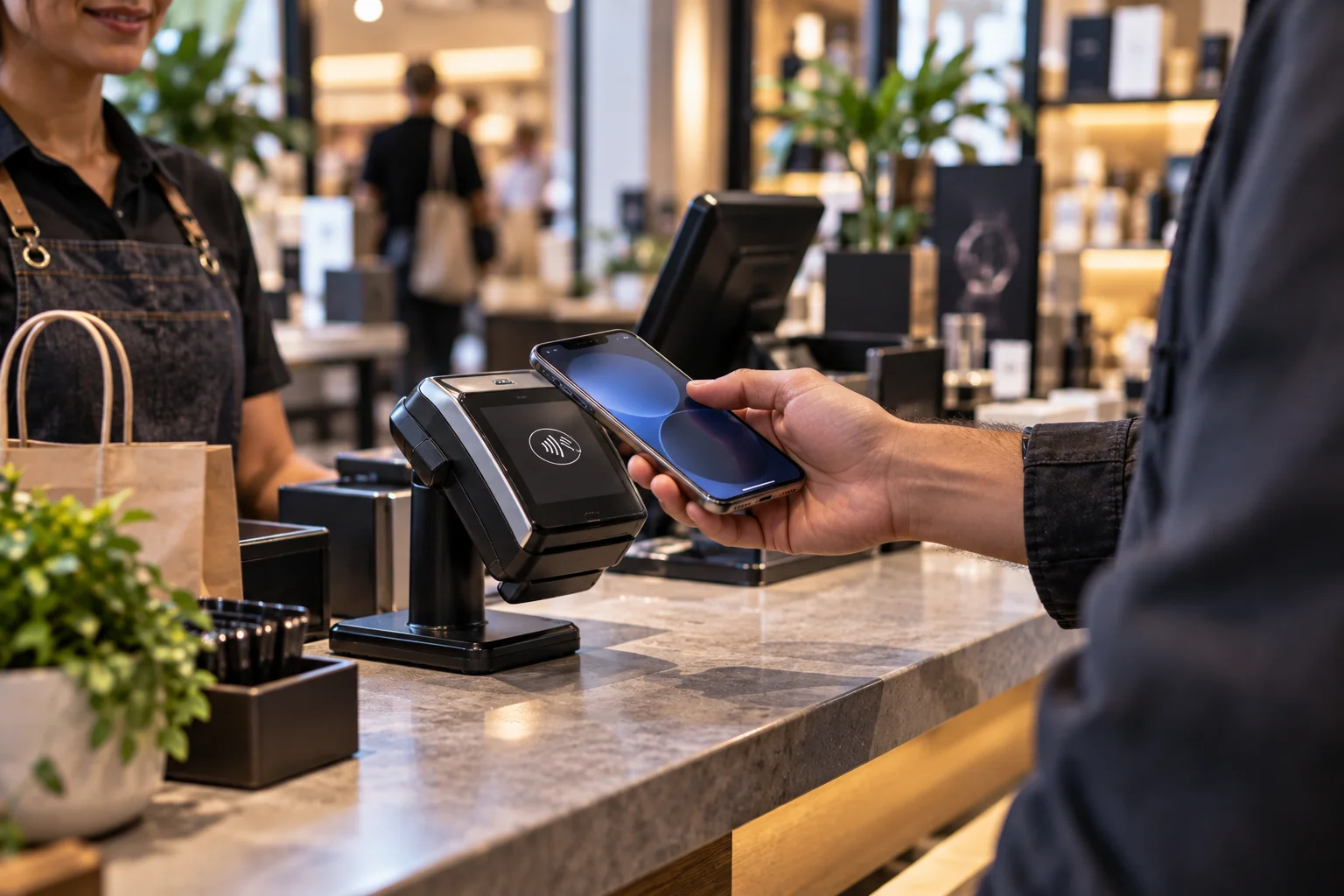
When you tap your phone at a payment terminal, it can feel as though your bank card is simply being transmitted wirelessly from the phone to the merchant.
That's not what happens.
Modern digital payments use several layers of security, and one of the most important is payment tokenization. Instead of sending your actual 16-digit card number, a digital wallet or payment system can use a different value called a payment token. The token can be restricted to a particular device, merchant or transaction scenario, making stolen token data much less useful to an attacker.
Another security layer is a cryptogram, a dynamic value associated with the transaction. Device authentication, encryption and the bank's authorization systems add further checks.
So when you tap a phone, the transaction isn't simply:
Phone → terminal → bank
It's closer to:
Phone → token + transaction security data → merchant → payment processor → card network → issuing bank → authorization response
The entire process can happen in fractions of a second.
What Is Payment Tokenization?
Payment tokenization replaces your real card number, or PAN, with a different payment credential that can be used within defined conditions.
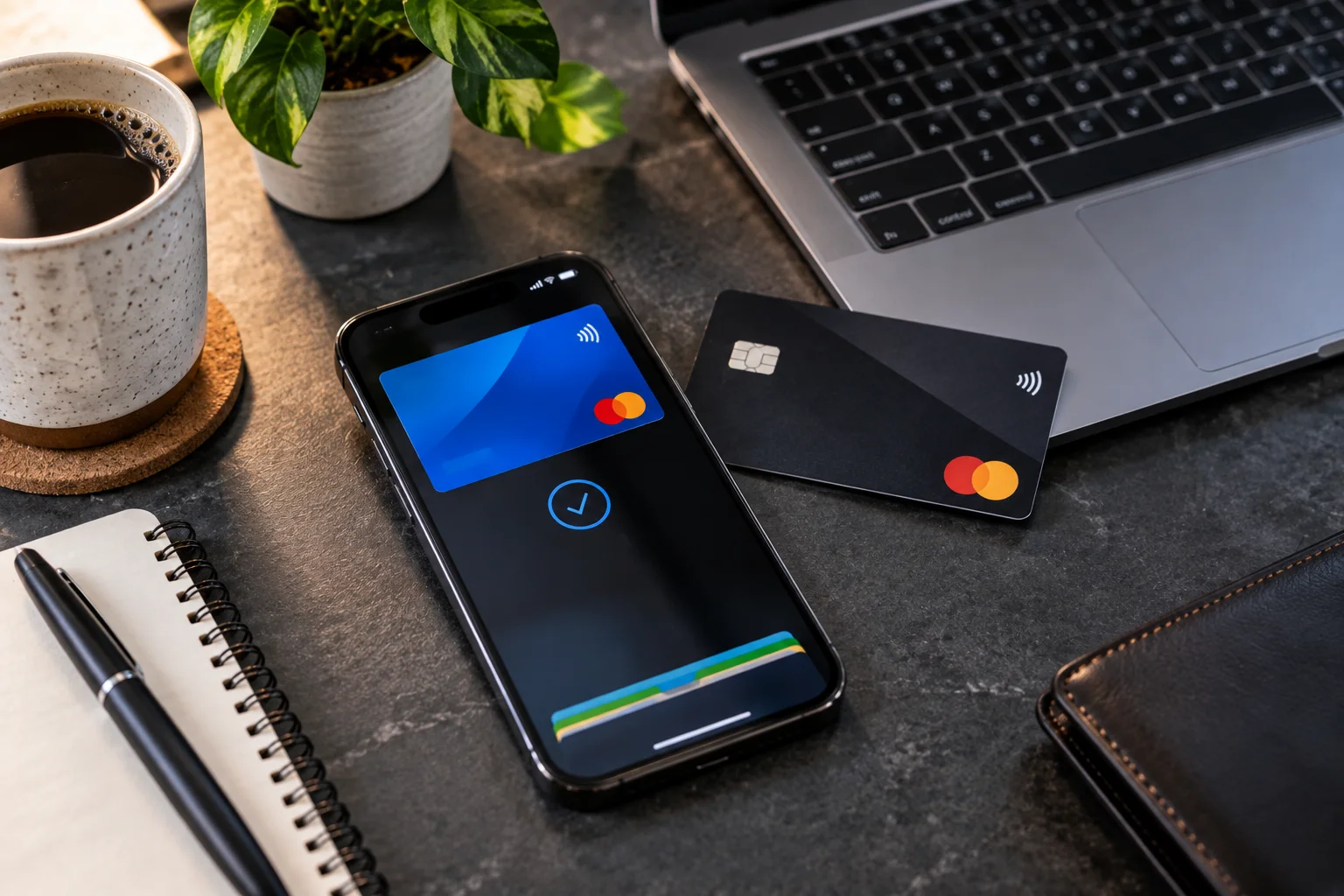
PAN stands for Primary Account Number, essentially the card number associated with your payment account.
With tokenization, that number is replaced by an alternative value.
EMVCo defines an EMV Payment Token as a unique alternative value that replaces the PAN and can be constrained to a particular merchant, device or payment scenario.
That restriction is what makes tokenization different from simply generating another random number.
Imagine your actual card number is:
1234 5678 9012 3456
A payment system might instead use a token such as:
9876 5432 1098 7654
The token isn't simply another version of your card number that anyone can freely use.
Its usability can be limited by the payment ecosystem that issued and manages it.
Why Don't Merchants Just Store Your Card Number?
Tokenization reduces the amount of sensitive card information that merchants and other participants need to handle.
If an online retailer stores thousands or millions of real card numbers, a security breach could expose extremely valuable payment credentials.
With tokenization, the merchant can instead store a token.
Mastercard describes tokenization as replacing the real card number with a stand-in value so the merchant doesn't need to see or store the underlying card number.
That changes the consequences of a data breach.
A stolen token may have little or no useful value outside its intended environment.
This doesn't make a compromised merchant harmless, and tokenization isn't a substitute for other cybersecurity controls. But it can significantly reduce the value of the payment data that an attacker obtains.
What Happens When You Add a Card to Apple Pay or Google Pay?
Adding a card to a digital wallet involves a provisioning process in which the wallet, token service provider and card issuer work together before the card becomes available for payments.
The process varies between wallets and payment networks, but the broad sequence looks like this:
You enter or scan your card details.
The wallet sends a request to tokenize the card.
The payment network or token service provider communicates with the card issuer.
The issuer evaluates the request.
Additional authentication may be required.
Once approved, a payment token is provisioned to the device.
The wallet receives the credentials needed to make tokenized payments.
Mastercard describes this process as involving the digital wallet, token service provider and issuing bank, with additional authentication potentially including an OTP, banking-app authentication or another verification method.
After that, your phone can use the digital version of the card without exposing the underlying PAN to the merchant during the transaction.
What Actually Leaves Your Phone When You Tap to Pay?
The payment transaction uses a token and additional transaction-specific security data rather than simply transmitting your underlying card number.
For mobile wallet payments, Visa describes a device-specific Device Account Number (DAN) that replaces the card's PAN. The same physical card can therefore have different tokenized credentials on different devices.
The transaction also includes a cryptogram.
The cryptogram provides dynamic transaction information that helps the payment system verify that the payment is legitimate.
Mastercard explains that digital wallet transactions combine tokenization with a unique cryptogram for each transaction.
This creates two important protections:
The merchant doesn't receive your underlying card number.
The transaction contains dynamic security information rather than relying solely on a reusable credential.
What Is a Payment Cryptogram?
A payment cryptogram is a dynamic security value generated for a particular transaction and used to help authenticate that transaction.
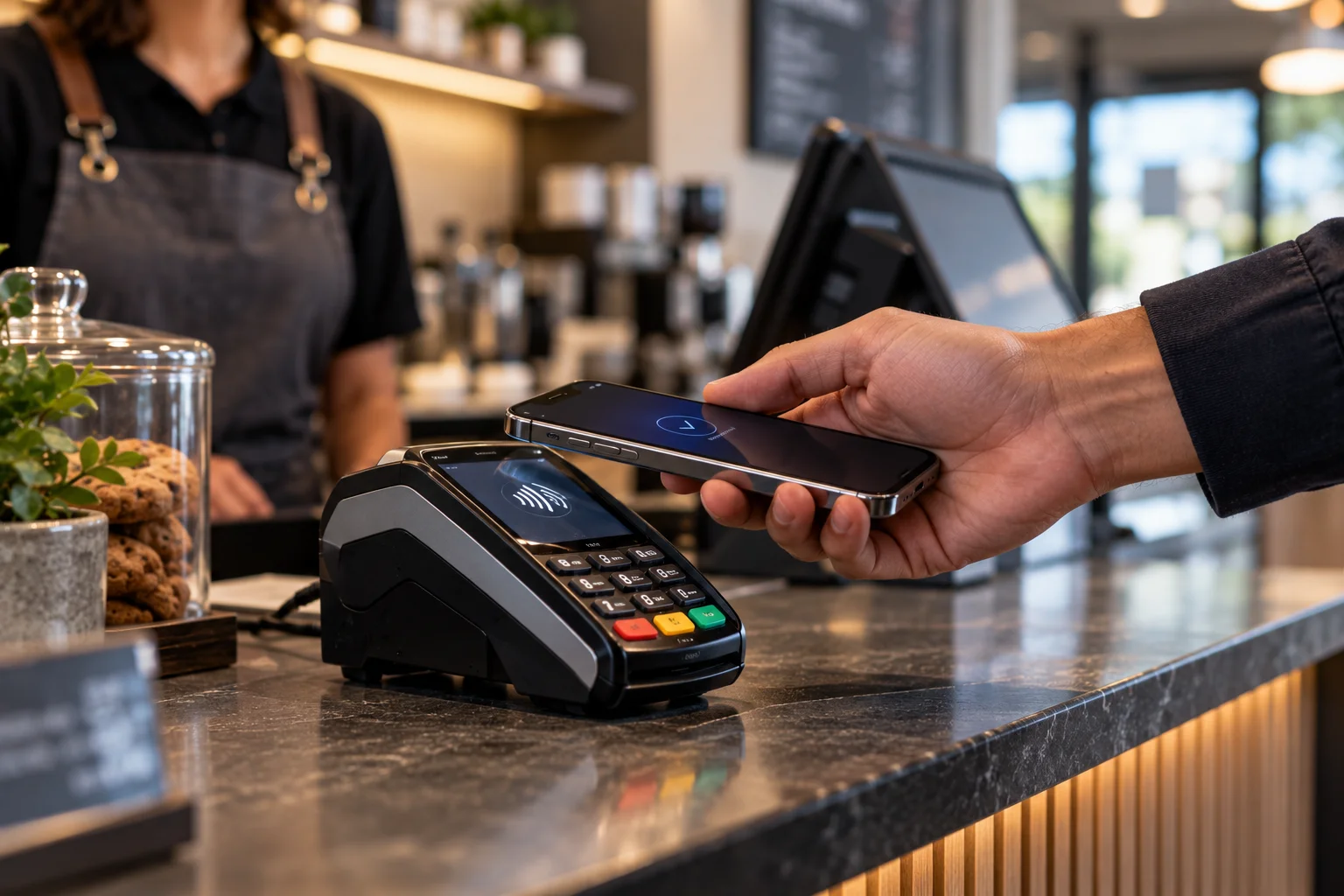
This is important because a static credential is easier to reuse.
Imagine someone somehow captures data associated with one payment.
If the security information were permanently reusable, the attacker could potentially attempt to replay it.
A transaction-specific cryptogram makes that much harder because the payment system can validate the transaction's authenticity and context.
Visa describes tokenized transactions as combining the payment token with a unique cryptogram for each transaction.
Tokenization and cryptograms therefore solve related but different problems:
Tokenization protects the underlying card number.
Cryptograms help protect the individual transaction.
What Happens After the Merchant Receives the Payment?
The tokenized payment travels through the payment ecosystem toward the card issuer, where the transaction is evaluated and authorized or declined.
A simplified card-payment path is:
Phone
↓
Payment terminal
↓
Merchant / acquirer
↓
Payment network
↓
Card issuer
↓
Authorization response
The token can remain part of the transaction through the payment ecosystem.
EMVCo says payment tokenization can protect payment data from the point of purchase through the acquirer and payment network to payment authorization by the issuer.
The exact architecture varies depending on the transaction and type of tokenization.
The important point is that the payment network and issuer have systems capable of associating the token with the underlying account without requiring the merchant to handle the original PAN.
How Does the Bank Know Which Card the Token Represents?
The payment ecosystem maintains a secure relationship between the token and the underlying card account.

The merchant doesn't need to know your actual PAN.
Instead, the token service infrastructure can map the token to the underlying payment credential within controlled systems.
Mastercard describes tokenization systems in which the original PAN is securely maintained in a token vault and the token is matched with the PAN within that protected environment.
This is one reason tokenization shouldn't be confused with encryption.
Encryption transforms data so that authorized systems can recover the original information using cryptographic keys.
Tokenization instead substitutes the sensitive value with another identifier whose meaning and usability are controlled by the tokenization system.
Is Tokenization the Same as Encryption?
No. Tokenization and encryption are different security technologies that can work together.
Technology | Main purpose |
|---|---|
Tokenization | Replaces sensitive card data with a constrained token |
Encryption | Makes data unreadable without the appropriate cryptographic key |
Cryptogram | Adds transaction-specific authentication data |
Device authentication | Confirms the authorized user/device |
Bank authorization | Determines whether the transaction should proceed |
Visa describes digital-wallet security as combining tokenization, encryption and device-level security rather than relying on tokenization alone.
That's an important distinction.
A secure digital payment isn't protected by one magic technology.
It's protected by multiple layers that address different threats.
Why Is a Stolen Payment Token Less Useful Than a Stolen Card Number?
A payment token can be restricted to a particular context, so stealing it doesn't necessarily give an attacker a reusable card credential.
EMVCo specifically notes that payment tokens can be constrained by:
Merchant
Device
Payment scenario
Transaction type
This limits where the token can be used.
Visa similarly explains that network tokens replace sensitive card data and can be used within defined payment environments.
That creates an important security principle:
Don't just hide the valuable credential. Reduce the value of the credential that is exposed.
Tokenization does exactly that.
What Happens If Your Phone Is Lost?
A lost phone does not automatically expose your underlying card number, and modern wallets add device-level authentication and remote security controls.

A payment token stored on a device is different from storing the physical card number in an ordinary notes app.
Mobile wallets generally require authentication before payment credentials can be used.
Depending on the platform, this may involve:
Face recognition
Fingerprint authentication
Device passcode
Other device security mechanisms
Visa describes device authentication as an additional layer alongside tokenization and transaction cryptograms.
If the device is lost, the wallet provider and device ecosystem can also provide mechanisms to disable or remove payment credentials remotely.
The exact procedure depends on the device and wallet.
Does Tokenization Work for Online Shopping?
Yes. Tokenization isn't limited to tap-to-pay transactions.
It can also protect:
Mobile-app payments
Online checkout
Saved cards
Subscription payments
Card-on-file transactions
Guest checkout
Mastercard explains that when a customer saves a card with an online merchant, the merchant can receive a token rather than retaining the underlying card information.
Visa also describes network tokens being used throughout the online payment ecosystem, from merchants and payment service providers through the payment network.
This is particularly useful for subscription services.
If the underlying card is replaced or expires, token lifecycle systems can sometimes update the payment credential without requiring the customer to manually enter the new card details.
What Happens When You Tap Your Phone at a Store?
The phone authenticates the user, presents the tokenized payment credential and generates transaction security data before the payment is sent through the card network.
A simplified tap looks like this:
1. You unlock or authenticate
Your phone verifies that you're authorized to use the wallet.
2. The wallet prepares the payment
The device uses its tokenized payment credential.
3. Transaction security data is generated
A cryptogram or equivalent dynamic authentication data is included.
4. The terminal receives the payment
The terminal communicates with the phone using the contactless payment interface.
5. The merchant sends the transaction onward
The merchant's payment infrastructure forwards the transaction.
6. The payment network routes it
The network identifies the appropriate issuing bank.
7. The bank evaluates the transaction
The issuer applies authorization and fraud-detection checks.
8. The response returns
The approval or decline travels back through the payment system to the merchant.
All of this can happen extremely quickly.
Does Tokenization Make Digital Payments Completely Safe?
No. Tokenization substantially reduces the value of exposed card data, but it doesn't eliminate every form of payment fraud.
Attackers can still target:
User accounts
Passwords
Device access
Social-engineering victims
Fake payment pages
Merchant systems
Fraudulent transactions
Token-provisioning processes
That's why payment security uses multiple layers.
Visa, for example, describes tokenization alongside authentication and fraud-detection systems, including risk assessment during token provisioning.
Tokenization is therefore best understood as one important component of a larger security architecture.
Tokenization vs Traditional Card Payment
Traditional exposure | Tokenized digital payment |
|---|---|
Merchant may handle PAN | Merchant can use a token |
PAN has broad value if stolen | Token can be restricted |
Static card number | Token + dynamic transaction security |
Card number can be reused | Token may be limited by context |
Physical card details exposed | Underlying PAN can remain protected |
Replacement can require manual updates | Token lifecycle can support automatic updates |
The exact implementation depends on the payment network, merchant, wallet and transaction type.
Frequently Asked Questions About Payment Tokenization
Does Apple Pay send my real card number to the store?
For tokenized wallet payments, the merchant does not receive the underlying PAN as the payment credential. A device-specific token is used instead.
Can someone steal my card through contactless payment?
Contactless payments use multiple security mechanisms, including tokenization for supported digital-wallet transactions and transaction-specific authentication data. However, no payment system eliminates every form of fraud.
Is a payment token the same as my card number?
No. A payment token is an alternative credential representing the underlying card account and can be restricted to a specific device, merchant or payment scenario.
Can a stolen token be used anywhere?
Not necessarily. One of the main security benefits of payment tokenization is that tokens can be constrained to particular contexts.
Does tokenization protect online subscriptions?
Yes. Tokenization can be used for card-on-file and recurring payments, and token lifecycle management can allow payment credentials to remain usable when underlying card details change.
Does tokenization replace encryption?
No. Tokenization and encryption address different security problems and can be used together.
What is a cryptogram in a card payment?
A cryptogram is transaction-specific security data used to help authenticate a tokenized payment. It provides an additional protection layer beyond the payment token itself.
The Bottom Line
Your phone doesn't simply send your credit or debit card number to the store when you pay.
For tokenized digital payments, the underlying card number is replaced by a payment token. That token can be constrained to a particular device, merchant or payment scenario, reducing its value if compromised. A transaction-specific cryptogram adds another layer, while device authentication, encryption and the bank's own authorization and fraud systems provide additional protection.
The simplified journey is:
Your card → token provisioning → token stored in wallet → device authentication → token + cryptogram → merchant → payment network → issuing bank → authorization
That's why digital payments can work so quickly without exposing the most valuable piece of information: your underlying card number.
Tokenization doesn't make fraud impossible. What it does is change the security equation. Instead of repeatedly sending a credential with broad value, the payment ecosystem can use a credential designed to be useful only in the context where it was issued.