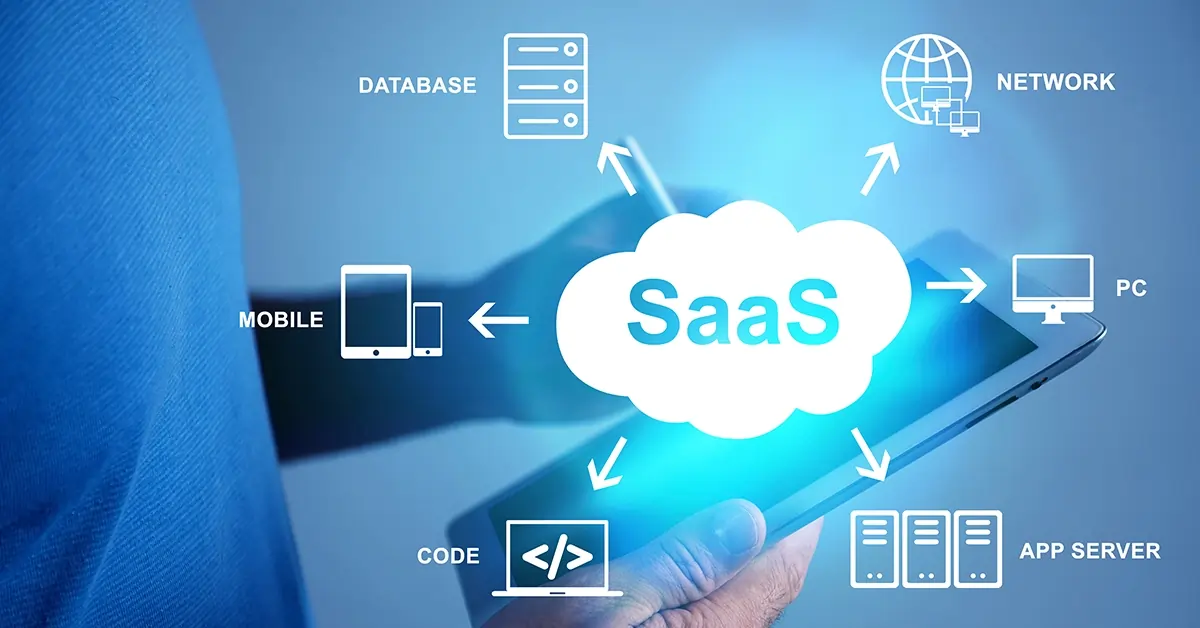
Software has changed dramatically in the past few years. Businesses that once evaluated software mainly by looking at features, licensing costs, integrations, and technical requirements are now asking another question: How much of the work can the software actually help perform?
That question is helping reshape the SaaS market in 2026.
Traditional business software still plays an important role. Reliable databases, accounting platforms, customer relationship management systems, productivity suites, and industry specific applications remain essential to everyday operations. At the same time, a new generation of AI powered SaaS products is adding capabilities that can analyze information, generate content, recommend actions, automate workflows, and increasingly perform tasks with limited human intervention.
The shift is not simply about replacing older software with AI. In many businesses, the more realistic change is the evolution of existing SaaS platforms into intelligent work environments.
According to McKinsey’s 2026 global AI survey, nearly nine in ten respondents reported regular AI use in at least one business function, while 44 percent said AI was scaling across their organizations.
So what does this mean for businesses choosing software in 2026? The answer depends on the work being performed, the organization's data, budget, security requirements, and how much automation it actually needs.
What Is Traditional Software?
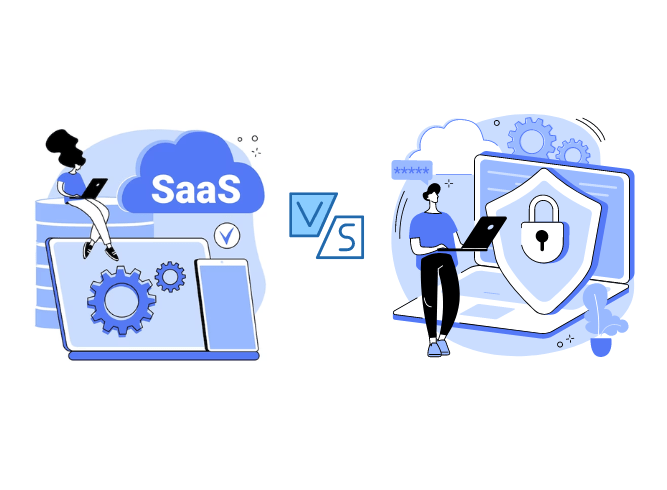
Traditional software generally refers to applications where the primary value comes from predefined functionality, rules, workflows, and user controlled actions.
Think about a conventional accounting application. A user enters transactions, reviews reports, creates invoices, and manages financial records through established workflows.
The software performs those functions consistently, but it generally waits for the user to initiate the activity.
Traditional software can be delivered in several ways. Some applications are installed locally, while many modern products are cloud based. This means traditional software and SaaS are not exact opposites.
In fact, SaaS simply describes how software is delivered and accessed. AI describes capabilities that can be added to that software.
This distinction is important because a cloud based SaaS product can be completely conventional, highly automated, AI assisted, or increasingly agentic.
What Makes AI Powered SaaS Different?
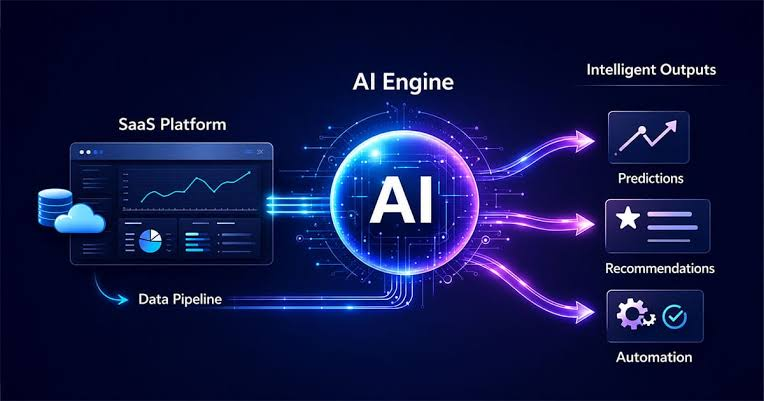
AI powered SaaS adds artificial intelligence to familiar cloud software workflows.
Instead of requiring users to manually perform every step, AI can assist with tasks such as summarizing information, generating drafts, identifying patterns, answering questions, classifying data, predicting outcomes, or recommending next actions.
The difference becomes particularly noticeable when software has access to relevant business context.
For example, a conventional CRM might show a sales representative a list of leads and previous customer interactions.
An AI powered CRM can potentially summarize the relationship, identify recent activity, suggest follow up messaging, highlight buying signals, and automate parts of the sales process.
Current SaaS platforms are already moving in this direction. HubSpot, for example, describes AI tools that can help identify buying signals, manage leads, automate outreach, and support sales workflows.
The result is a shift from software that primarily stores and processes information toward software that can increasingly interpret information and participate in workflows.
Why Businesses Are Moving Toward AI Powered SaaS
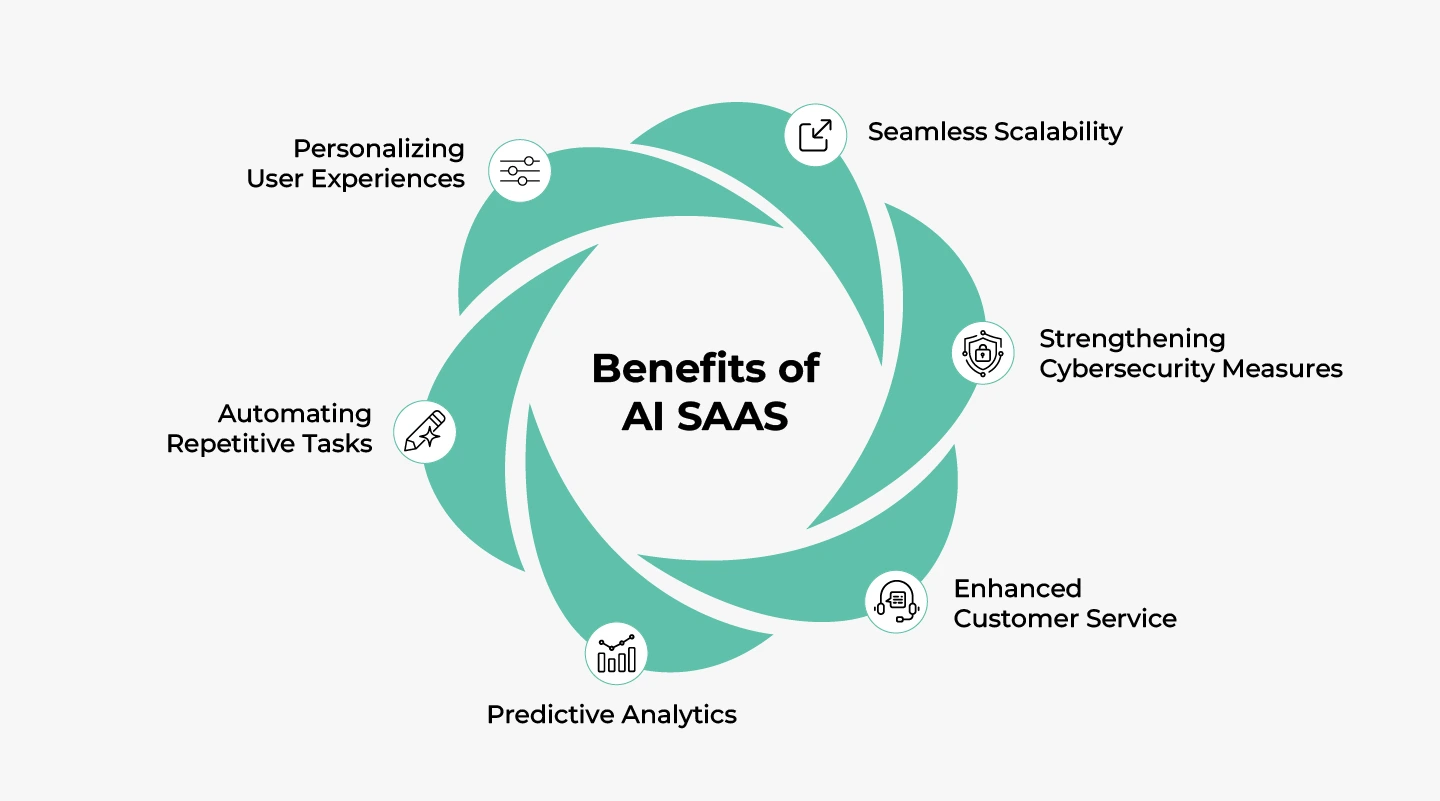
The biggest reason is not novelty. It is productivity.
Businesses are under constant pressure to accomplish more without making every process more complicated. AI can help reduce the amount of repetitive manual work employees need to perform.
McKinsey’s 2026 research found that 80 percent of surveyed respondents said AI had improved their individual productivity, while 50 percent reported that AI helped them make better decisions.
That does not mean every AI feature automatically creates business value. It means businesses are increasingly finding practical uses for AI inside everyday workflows.
Faster Information Processing
Employees can spend considerable time reading documents, searching databases, summarizing conversations, preparing reports, and organizing information.
AI can assist with these activities by processing large amounts of information quickly and presenting the result in a more accessible format.
Less Repetitive Work
AI powered SaaS can automate parts of workflows that previously required employees to move information between systems or repeat similar actions.
For example, a customer service platform could summarize a conversation and help prepare a response rather than requiring an employee to manually review every previous interaction.
More Accessible Business Intelligence
Traditional reporting often requires users to understand dashboards, filters, formulas, and reporting structures.
AI interfaces can make data easier to explore using natural language questions.
Instead of manually searching through several reports, a manager may be able to ask a software platform a question and receive a contextual answer.
Personalized Workflows
AI can also adapt software experiences around different users, customers, or situations.
This can make large software platforms easier to navigate while allowing businesses to automate more personalized interactions.
Where Traditional Software Still Makes Sense
The growth of AI does not make traditional software irrelevant.
Some business processes benefit from predictable rules more than flexible intelligence.
Accounting calculations, inventory records, database management, compliance workflows, payroll processing, and other structured activities often require consistency and traceability.
In these situations, businesses may prioritize:
• Predictable behavior
• Clear permissions
• Established workflows
• Audit trails
• Stable integrations
• Data consistency
• Administrative controls
• Lower operational complexity
There is also a practical consideration. If a process already works efficiently, introducing AI may not provide enough additional value to justify the cost, training, security review, or implementation effort.
The goal should therefore be improvement rather than simply adding AI because it is available.
AI Powered SaaS vs Traditional Software: The Key Differences
The difference becomes easier to understand when the two approaches are viewed through everyday business requirements.
Business requirement | Traditional software | AI powered SaaS |
|---|---|---|
Data management | Structured records and workflows | Structured records plus AI assisted analysis |
Reporting | Predefined dashboards and reports | Reports plus natural language analysis |
Content creation | Usually manual | AI can assist with drafts and variations |
Customer service | Rules and manual responses | AI assisted conversations and summaries |
Automation | Rule based workflows | Rules combined with AI driven actions |
Decision support | User interprets available data | AI can identify patterns and provide suggestions |
Personalization | Predefined settings | Context aware personalization |
User interaction | Menus, forms and dashboards | Dashboards plus conversational interfaces |
Complexity | Generally predictable | Potentially more flexible but harder to govern |
Neither column automatically represents the right choice for every company.
A small business with a straightforward process may benefit from a conventional SaaS application. Another business with large volumes of customer interactions may gain more value from AI assisted workflows.
The Rise of Agentic SaaS
One of the biggest changes in SaaS during 2026 is the movement from AI assistants toward AI agents.
An assistant generally helps a person complete a task.
An agent can potentially take a series of actions to achieve a defined objective.
For example, an AI assistant might summarize a sales call.
A more advanced agent could potentially analyze the call, update a CRM record, identify the next action, prepare a follow up message, and route the task to the appropriate employee.
The distinction matters because it changes how companies think about software.
Instead of asking which application has the most features, businesses increasingly need to ask which tasks can safely be delegated to software and which decisions should remain under human control.
McKinsey reported in 2026 that 40 percent of respondents from organizations with annual revenue above $1 billion said they were scaling AI agents, compared with 22 percent among smaller organizations.
This suggests that adoption is not uniform. Larger organizations are currently moving faster in some areas, while smaller businesses may still be evaluating where AI delivers practical value.
The Hidden Cost of AI Powered SaaS
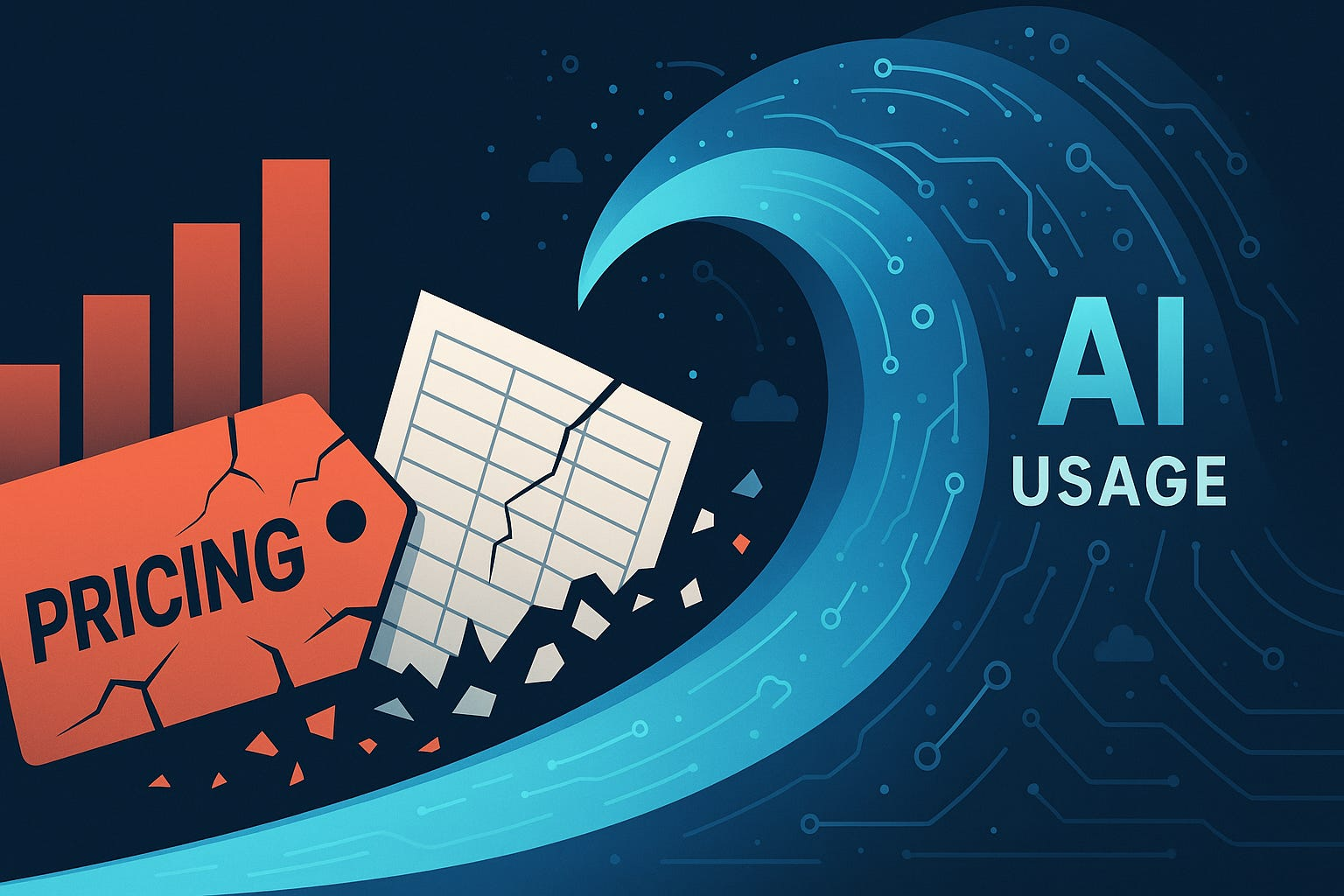
AI can introduce new costs and management challenges.
A business evaluating AI powered SaaS should look beyond the advertised subscription price.
Potential considerations include usage based AI charges, additional user licenses, storage, integrations, implementation, training, data governance, security reviews, and administrative overhead.
McKinsey's 2026 survey found that around 20 percent of respondents reported AI related operating costs constraining their use of AI, even though most organizations planned to increase AI investment.
There is another issue: software sprawl.
BetterCloud's 2026 State of SaaS report found that organizations were again expanding their application portfolios, with AI cited as a major driver. Its research reported an average of 27 AI powered SaaS applications per organization.
This creates a new challenge for IT teams.
Instead of asking only, “Can we add this AI tool?” businesses increasingly need to ask, “Do we already have software that can perform this task?”
Security and Data Governance Matter More
AI powered software often needs access to business information to provide useful results.
That makes data governance especially important.
Before adopting an AI powered SaaS platform, businesses should understand:
• What data the application can access
• Where business information is stored
• How user permissions work
• Whether customer information can be used for model improvement
• What administrative controls are available
• How data can be exported or deleted
• What integrations are connected to the platform
• How AI generated actions can be reviewed
Security should also extend to employees.
An AI application that is not officially approved by the organization can create what is commonly described as shadow AI. Employees may adopt external tools without IT teams knowing what information is being shared.
This is becoming a practical governance issue as the number of AI powered applications grows. BetterCloud's 2026 research reported that only 56 percent of applications in use carried IT approval in its surveyed organizations.
Are Businesses Replacing Traditional Software?
The more interesting trend is not simply replacement.
Businesses are often combining traditional software infrastructure with AI capabilities.
A company may continue using its accounting platform, CRM, project management system, productivity suite, and database while adding AI features to those existing environments.
This hybrid model can be more practical than replacing everything at once.
There is also evidence that AI is beginning to influence software purchasing itself.
McKinsey's 2026 research found that 32 percent of respondents said their organizations had decided against buying at least one software product or feature because they believed it could be built internally using agentic coding tools.
That does not mean traditional software purchasing is disappearing. Instead, businesses now have another option to consider: buying software, customizing existing SaaS, or building specific functionality with AI assisted development tools.
What Small Businesses Should Consider
For smaller companies, the decision can be simpler when it starts with the business problem rather than the technology.
Ask these questions before choosing a SaaS platform:
What task are we trying to improve?
Start with a specific workflow.
Customer support, marketing, accounting, sales follow ups, reporting, scheduling, and document management may all have different requirements.
How much manual work exists today?
If employees spend hours repeating the same task, automation may offer meaningful value.
If the task only takes a few minutes each week, an advanced AI solution may add unnecessary complexity.
Does the team actually need AI?
AI features can be useful, but businesses should not pay for capabilities nobody will use.
How sensitive is the data?
Customer records, financial information, intellectual property, employee data, and confidential documents require careful consideration before being connected to AI services.
Can employees understand the system?
A sophisticated platform is not necessarily useful if employees cannot learn or trust it.
Training and adoption should be part of the software decision.
What the 2026 SaaS Stack May Look Like
A modern business may not choose between AI and traditional SaaS at all.
Instead, it may build a layered software environment.
A typical stack could include:
• A CRM for customer and sales data
• Accounting software for financial records
• Productivity software for documents, email and collaboration
• Project management software for tasks and deadlines
• AI tools for research and content creation
• Automation software for connecting workflows
• Analytics tools for reporting
• AI agents for selected repetitive processes
The key is integration.
When applications can exchange information securely, employees spend less time copying data between systems.
This is one reason major SaaS vendors are embedding AI directly into existing platforms rather than offering completely separate products.
For example, Salesforce describes its current platform as combining predictive, generative, and agentic AI with CRM workflows, while Microsoft is expanding Copilot around productivity and business processes.
How to Choose Between AI Powered and Traditional SaaS
A practical evaluation can focus on six areas.
1. Business value
Identify the specific result the software should improve.
2. Workflow fit
Look at how the application fits into the processes employees already use.
3. AI usefulness
Separate genuinely useful AI capabilities from features that simply sound impressive.
4. Integration
Check whether the platform works with the systems the business already depends on.
5. Security
Review permissions, data handling, authentication, compliance documentation, and administrative controls.
6. Total cost
Calculate the complete cost rather than looking only at the advertised monthly subscription.
This approach can help businesses avoid adopting technology simply because it is described as AI powered.
The Future of SaaS Is Likely to Be Hybrid
The SaaS market in 2026 is moving toward software that can understand context, assist employees, automate repetitive work, and increasingly perform multi step tasks.
But traditional software principles remain important.
Businesses still need reliable records, predictable workflows, security controls, integrations, permissions, reporting, and accountability.
The most practical future may therefore be a hybrid one.
Traditional software provides the foundation.
AI provides an additional layer of intelligence and automation.
Humans remain responsible for the decisions that require business judgment, context, accountability, and oversight.
That model also reflects where enterprise AI adoption currently stands. McKinsey's 2026 research shows that organizations are moving from experimentation toward broader deployment, but the transition is uneven and AI costs, governance, and implementation challenges remain significant.
For businesses evaluating SaaS in 2026, the question is therefore less about choosing AI or traditional software.
The better question is:
Which parts of our business should software manage, which should AI assist with, and where should people remain firmly in control?
That is a much more useful way to evaluate the next generation of business software.
Frequently Asked Questions
Is AI powered SaaS replacing traditional software?
Not completely. Many businesses are adding AI capabilities to existing SaaS platforms rather than replacing their entire software infrastructure.
Is AI powered SaaS more expensive?
It can be. Businesses may need to account for subscription fees, AI usage charges, integrations, implementation, training, security, and administration. Actual costs vary considerably by vendor and usage.
Is traditional software still useful in 2026?
Yes. Structured workflows, predictable calculations, databases, financial records, compliance processes, and other repeatable operations can continue to benefit from conventional software.
What is agentic SaaS?
Agentic SaaS refers to software that uses AI agents capable of performing sequences of actions toward a defined objective rather than simply responding to individual user requests.
Should small businesses adopt AI powered SaaS?
The decision should depend on the specific workflow, expected value, data sensitivity, budget, integration requirements, and employee readiness. AI adoption is growing, but research indicates many small and midsized businesses are still developing the foundations needed to scale AI effectively.
What is the biggest difference between AI powered SaaS and traditional software?
Traditional software generally follows predefined workflows and user instructions. AI powered SaaS can add capabilities such as natural language interaction, prediction, content generation, contextual recommendations, and increasingly autonomous task execution.
Final Thoughts
The software market is entering a different phase.
Businesses are no longer evaluating SaaS only by asking what an application can do. They are increasingly asking how much work it can help accomplish, how intelligently it can use business information, and how safely it can operate within existing workflows.
AI powered SaaS offers new possibilities for automation, analysis, personalization, and productivity. Traditional software continues to provide the reliable infrastructure that businesses depend on.
The strongest software strategy in 2026 is therefore not necessarily about choosing one side.
It is about creating a thoughtful technology stack where dependable software handles structured business processes, AI assists where it can provide genuine value, and people retain appropriate oversight.
That approach can help businesses adopt AI without losing sight of the fundamentals that make software useful in the first place.