
Managing money has traditionally required a combination of spreadsheets, banking apps, receipts, reminders and plenty of personal discipline. Today, a new generation of financial technology is attempting to make that process more automated.
AI powered personal finance apps can analyze spending, categorize transactions, identify recurring payments, create budgeting insights and answer questions about financial activity. Some can also provide personalized prompts designed to help users understand where their money is going.
The appeal is obvious. Instead of spending an hour reviewing transactions at the end of every month, an app may be able to organize much of the information automatically.
But there is an important question behind the excitement: Can AI actually help people manage money better, or does it simply make financial information easier to look at?
The answer depends on how the technology is used.
What Are AI Powered Personal Finance Apps?
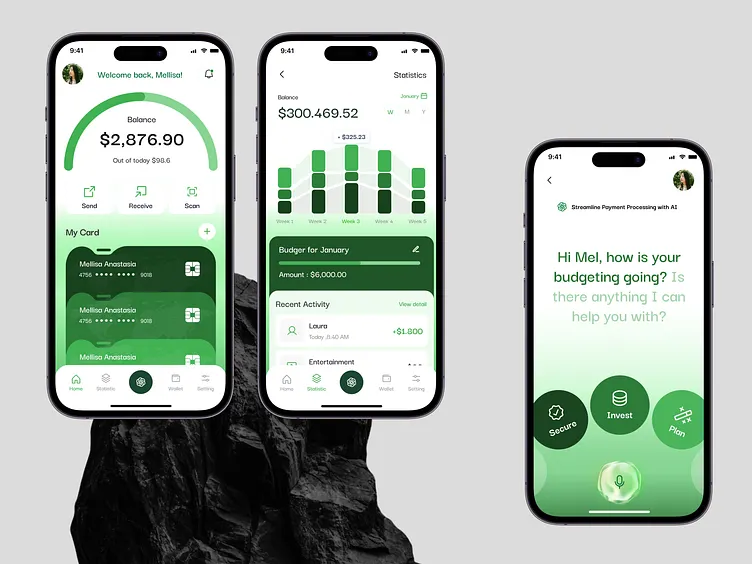
AI powered personal finance apps combine traditional financial tracking with automation and artificial intelligence.
A conventional budgeting application might show how much you spent on groceries last month. An AI enhanced system may go further by identifying patterns, explaining changes and helping you think about what they could mean for your budget.
Depending on the service, AI can assist with:
• Categorizing transactions
• Identifying recurring expenses
• Summarizing spending
• Creating budgeting suggestions
• Answering questions about financial activity
• Finding unusual spending patterns
• Organizing financial information
• Providing financial education
The exact capabilities vary considerably between products. Some applications focus primarily on budgeting and spending, while others combine budgeting with investing, credit monitoring or broader financial planning.
NerdWallet's 2026 review of budgeting applications, for example, describes a market that includes flexible budgeting, zero based budgeting, wealth tracking, spending snapshots and automated transaction categorization.
How AI Can Help You Understand Your Spending

One of the simplest uses of AI in personal finance is turning large amounts of transaction data into something easier to understand.
Imagine reviewing three months of bank and credit card transactions.
You might notice that you spent more money than expected, but finding the reason could take time. Transactions need to be grouped, recurring payments identified and unusual purchases separated from regular expenses.
Automation can make that process easier.
An AI powered application may recognize that several transactions belong to categories such as:
• Dining
• Transportation
• Entertainment
• Subscriptions
• Groceries
• Household expenses
Once the information is organized, patterns become easier to see.
For example, a user might discover that several small subscriptions collectively represent a meaningful monthly expense. Another person might notice that food spending increases significantly during weekends.
The technology does not necessarily create the financial discipline. It can make the information required for that discipline easier to access.
AI Budgeting: Can It Build a Better Money Plan?

Budgeting is another area where AI can potentially reduce repetitive work.
Traditional budgeting often begins with estimating income, listing fixed expenses and deciding how much can be allocated to flexible spending and savings.
AI can assist by organizing existing financial information and identifying patterns.
For example, if your income and regular expenses remain relatively stable, an application might help you understand how much of your available money is being consumed by recurring commitments.
Some tools can also provide reminders or alerts when spending changes.
The value is not necessarily in allowing an algorithm to decide how you should spend every dollar. The more useful role may be helping you see the consequences of your existing habits.
A practical approach is to treat AI suggestions as information rather than instructions.
You remain responsible for deciding whether a suggested adjustment actually fits your circumstances.
Can AI Help Find Unnecessary Expenses?
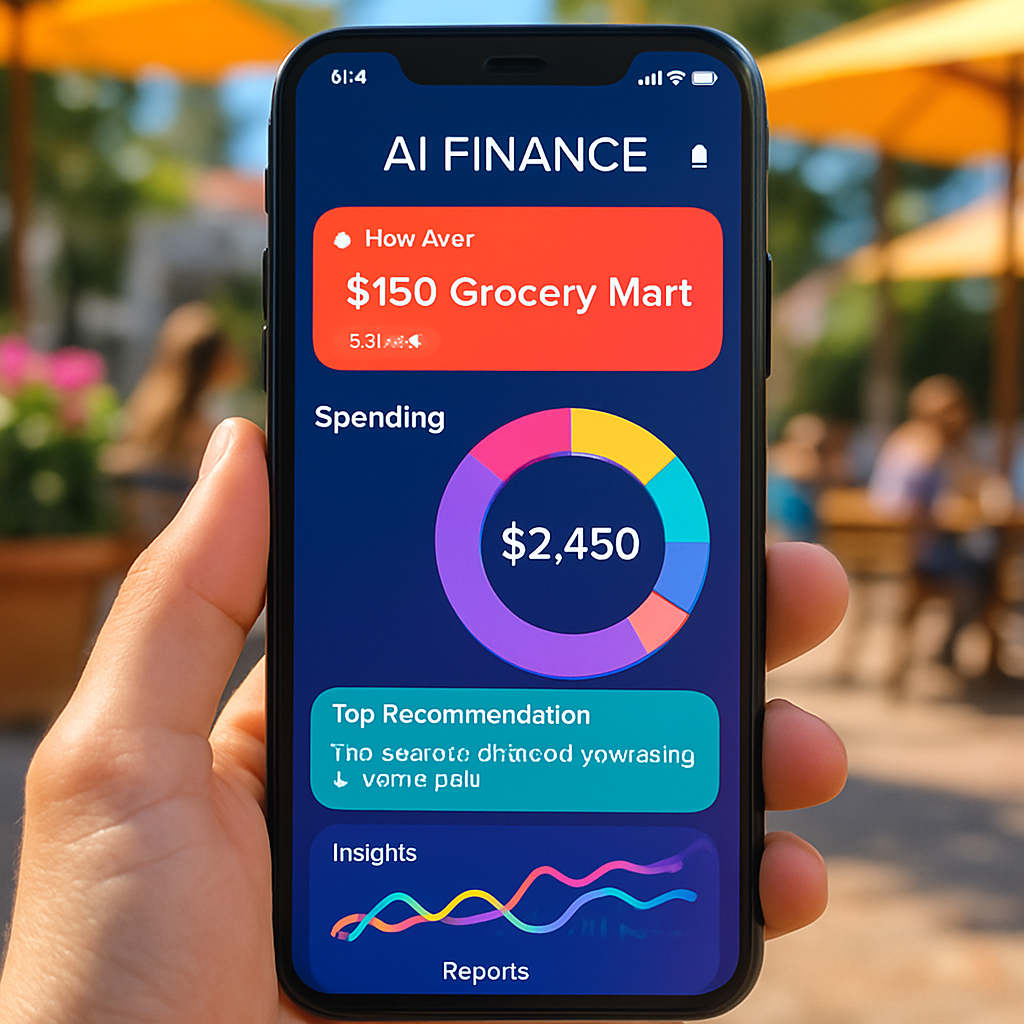
Recurring expenses can be surprisingly difficult to track.
A subscription might cost only a small amount each month, but several subscriptions can accumulate into a noticeable annual expense.
AI assisted financial applications can help identify recurring transactions and organize them so users can review them.
This can be particularly useful for services that are:
• Rarely used
• Automatically renewed
• Forgotten after an initial signup
• Duplicated by another service
• No longer relevant
The important distinction is between identifying an expense and deciding whether to cancel it.
AI can help surface information. The final decision should remain with the account holder.
That approach is especially useful because a subscription that looks unnecessary from a transaction history may actually be important to the person using it.
AI Financial Assistants and Personalized Questions

One of the more interesting developments in Fintech is the move toward conversational financial interfaces.
Instead of navigating several menus, users can ask questions in everyday language.
For example:
“What did I spend on restaurants last month?”
“How much did my transportation spending change?”
“What recurring payments appeared this month?”
“Where did most of my discretionary spending go?”
A conversational interface can make financial data feel more approachable.
This can be particularly useful for people who find traditional spreadsheets or detailed financial dashboards difficult to interpret.
However, there is an important distinction between financial information and personalized financial advice.
An AI system can help explain your own transaction history without necessarily being qualified or authorized to provide regulated investment or financial advice. Users should understand what a particular application actually offers before relying on it for important decisions.
NerdWallet's 2026 guidance on AI and personal finance similarly highlights both potential uses and risks, noting that AI driven financial tools include chatbots, financial assistants, apps and robo advisors.
Where AI Personal Finance Apps Can Go Wrong

AI can make financial information easier to analyze, but that does not mean every output is automatically correct.
Transactions can be categorized incorrectly.
Income may be irregular.
A purchase may have several possible categories.
An algorithm may misunderstand an unusual financial situation.
This means users should review important information rather than assuming that an automated system is always accurate.
There is also the issue of privacy.
Personal finance applications may need access to financial information from bank accounts, credit cards or other services. The Consumer Financial Protection Bureau advises consumers to understand what information a service accesses, how it is used, whether it is shared with third parties, how long it is stored and how access can be stopped.
Deleting an application from your phone also does not necessarily terminate an existing authorization to access financial data. Users should check the relevant account or service settings when they stop using an application.
What Should You Look For in a Fintech App?
Not every financial application needs advanced AI.
The most useful choice depends on the actual problem you want to solve.
Before connecting financial accounts, consider:
Feature | Why it matters |
|---|---|
Automatic categorization | Reduces manual transaction sorting |
Spending analysis | Makes financial patterns easier to identify |
Budget tracking | Helps compare spending with personal targets |
Recurring payment detection | Makes subscriptions easier to review |
Alerts | Can bring attention to unusual activity |
Account connectivity | Allows information from multiple accounts to be viewed together |
Privacy controls | Helps users understand and manage data access |
Export options | Makes it easier to retain or analyze your information |
Clear pricing | Helps avoid unexpected service costs |
Human support | Provides another route when automated systems fail |
A good financial application should make its data practices understandable rather than hiding important information behind complicated language.
How to Use AI Without Giving Up Financial Control
The most sensible approach to AI powered money management is to use automation for organization while keeping humans responsible for decisions.
A simple workflow could look like this:
Step 1: Connect only the accounts you actually need
Avoid providing unnecessary access simply because an application requests it.
Step 2: Review the transaction categories
Automated categorization can save time, but mistakes should be corrected.
Step 3: Look for patterns
Pay attention to recurring expenses, spending changes and areas that consistently exceed your expectations.
Step 4: Set realistic goals
A budget should reflect your actual circumstances rather than an unrealistic ideal.
Step 5: Review regularly
Even the most automated system benefits from human attention.
Step 6: Recheck privacy permissions
If you stop using an application, review whether its access to your financial information should also be removed.
This creates a useful balance between convenience and control.
AI Finance Apps Compared With Traditional Budgeting
AI does not make traditional financial management obsolete.
Instead, it changes how much manual work is required.
Approach | Manual effort | Automation | Personal control |
|---|---|---|---|
Spreadsheet | High | Low | High |
Basic budgeting app | Medium | Medium | High |
AI assisted finance app | Lower | High | High when reviewed |
Financial professional | Varies | Varies | Depends on relationship |
A spreadsheet can still be excellent for someone who wants complete control.
A budgeting application can be useful for someone who wants automation without extensive AI features.
An AI powered application may appeal to people who want their financial information organized and explained with less manual effort.
There is no single approach that works for everyone.
The Future of AI and Personal Finance
The broader Fintech industry is moving toward financial services that are increasingly connected, automated and personalized.
One important area is financial data sharing.
In the United States, the Consumer Financial Protection Bureau finalized a personal financial data rights rule in 2024 that established requirements around consumer access to certain financial data and authorized third party access. The implementation landscape has continued to evolve, including regulatory developments and a court ordered stay affecting compliance dates.
This matters because AI systems depend heavily on data.
The more effectively financial information can be accessed and organized with appropriate consumer permission, the more useful automated financial tools could become.
At the same time, greater connectivity makes privacy, security and consumer control increasingly important.
The future of AI personal finance is therefore unlikely to be simply about smarter algorithms.
It will also depend on whether consumers can understand, control and trust the systems handling their financial information.
Final Thoughts
AI powered personal finance apps can genuinely make parts of money management easier.
They can organize transactions, identify recurring expenses, summarize spending patterns and make financial information easier to understand. For people who find traditional budgeting time consuming, that automation can be valuable.
But AI is not a replacement for financial judgment.
The strongest use case is often surprisingly simple: let technology handle repetitive organization while you remain responsible for decisions.
Before connecting an account, examine the application's privacy practices, security controls, pricing and data access requirements. Once connected, review automated categorizations and important recommendations rather than accepting them automatically.
Used thoughtfully, AI can become a useful layer between complicated financial data and everyday money decisions.
The technology can help you see your financial picture more clearly.
What you do with that information is still up to you.
Frequently Asked Questions
1. What is an AI powered personal finance app?
It is a financial application that uses artificial intelligence or advanced automation to help organize, analyze or explain personal financial information.
2. Can AI really help with budgeting?
Yes. AI can help categorize transactions, identify spending patterns and organize information that can be used when creating or reviewing a budget. Users should still decide what financial goals are appropriate for their circumstances.
3. Are AI finance apps safe?
Safety depends on the individual service, its security practices and how users manage account access. Before connecting an account, review the service's privacy policy, security information, data sharing practices and account permissions.
4. Can AI find subscriptions I forgot about?
Some personal finance applications can identify recurring transactions, which can help users spot subscriptions and other repeating expenses.
5. Should I let an AI decide how to invest my money?
AI generated information should not automatically be treated as personalized investment advice. Users should understand the nature and limitations of a service before relying on it for investment decisions.
6. What information can a finance app access?
Depending on the service and permissions granted, an application may access transaction information and other financial account data. The exact information varies by provider and connection method.
7. Can AI replace a financial advisor?
AI can automate certain informational and analytical tasks, but it does not automatically replace the personalized judgment, accountability and professional services that some people seek from financial professionals.
8. What is the biggest benefit of AI in personal finance?
For many users, the biggest benefit is reducing the manual effort required to organize and understand financial information.
9. What is the biggest risk?
Privacy, security and inaccurate outputs are important considerations. Users should understand how their financial information is accessed and used and should review important AI generated information.
10. Is Fintech going to become more AI driven?
AI is already being incorporated into many areas of financial technology, including personal finance, customer service, financial analysis and automation. The pace and direction of adoption will depend on technology, consumer demand, regulation and how financial institutions and technology companies manage risk.