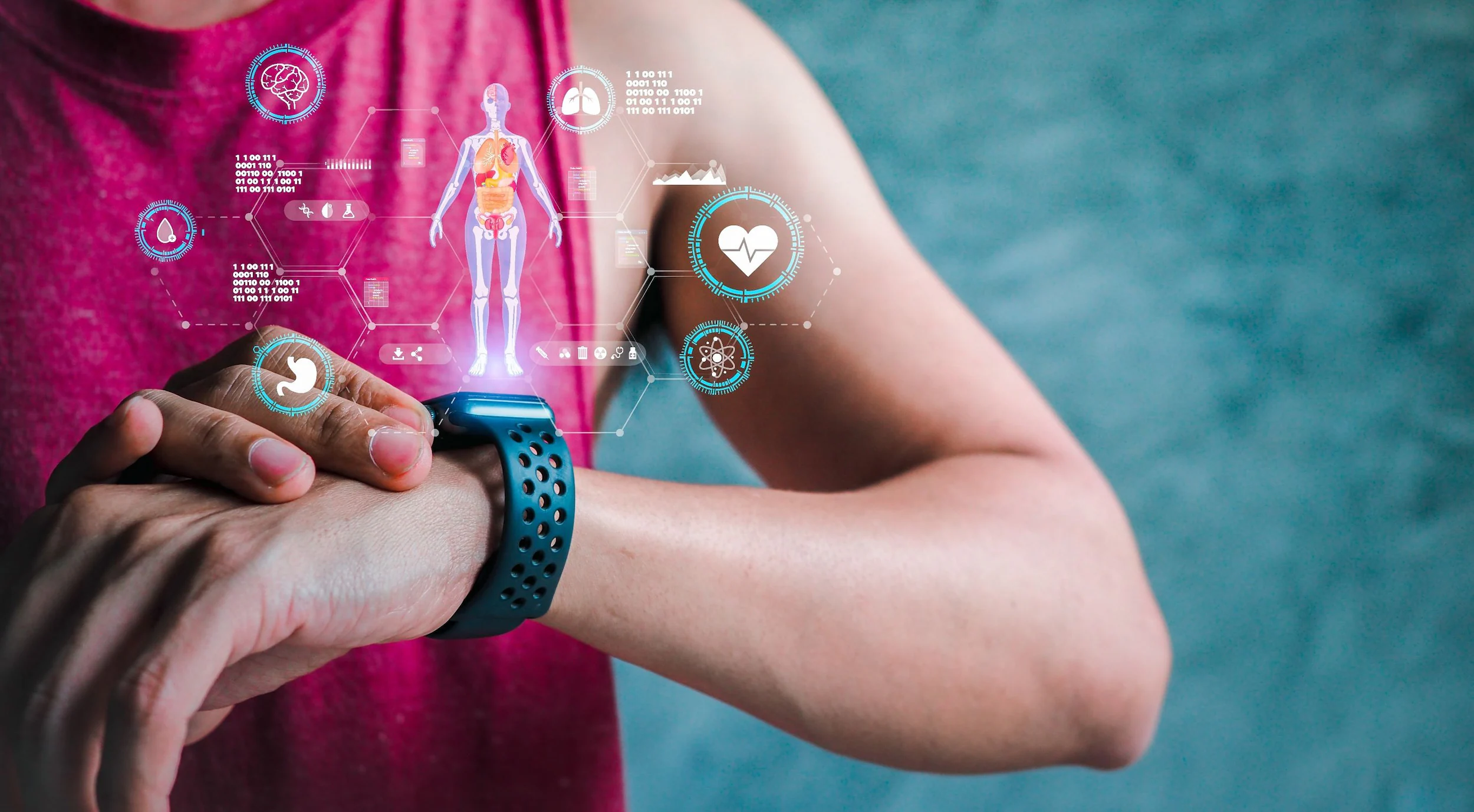
Fitness wearables used to be relatively simple devices.
They counted steps, measured approximate distance, tracked workouts, and displayed basic heart rate information. Today, wearable technology is becoming considerably more sophisticated. Modern devices can collect information from multiple sensors and use software algorithms to turn those measurements into more meaningful insights.
This is where artificial intelligence is becoming increasingly important.
AI powered Fitness Tracking can analyze patterns across activity, heart rate, sleep, exercise, and other measurements. Instead of simply showing a collection of numbers, newer wearable platforms are increasingly designed to explain what those numbers may mean within the context of a person's routine.
The result is a shift from basic tracking toward more personalized digital wellness experiences.
But what exactly is AI doing inside a fitness wearable, and how much difference does it actually make?
What Is AI Powered Fitness Tracking?

Traditional fitness tracking generally involves sensors collecting measurements and software displaying them.
AI powered Fitness Tracking goes a step further by using algorithms to identify patterns, classify activities, estimate metrics, and provide personalized insights.
For example, a wearable may collect movement data from an accelerometer, heart rate information from an optical sensor, and sleep related signals during the night.
Instead of presenting each measurement separately, algorithms can analyze those signals together.
The system might recognize that a particular period of movement resembles running rather than walking. It may identify changes in sleep patterns or detect that exercise intensity was different from previous sessions.
The important distinction is that AI does not replace sensors.
It helps interpret the information that sensors collect.
How Smart Algorithms Understand Your Activity
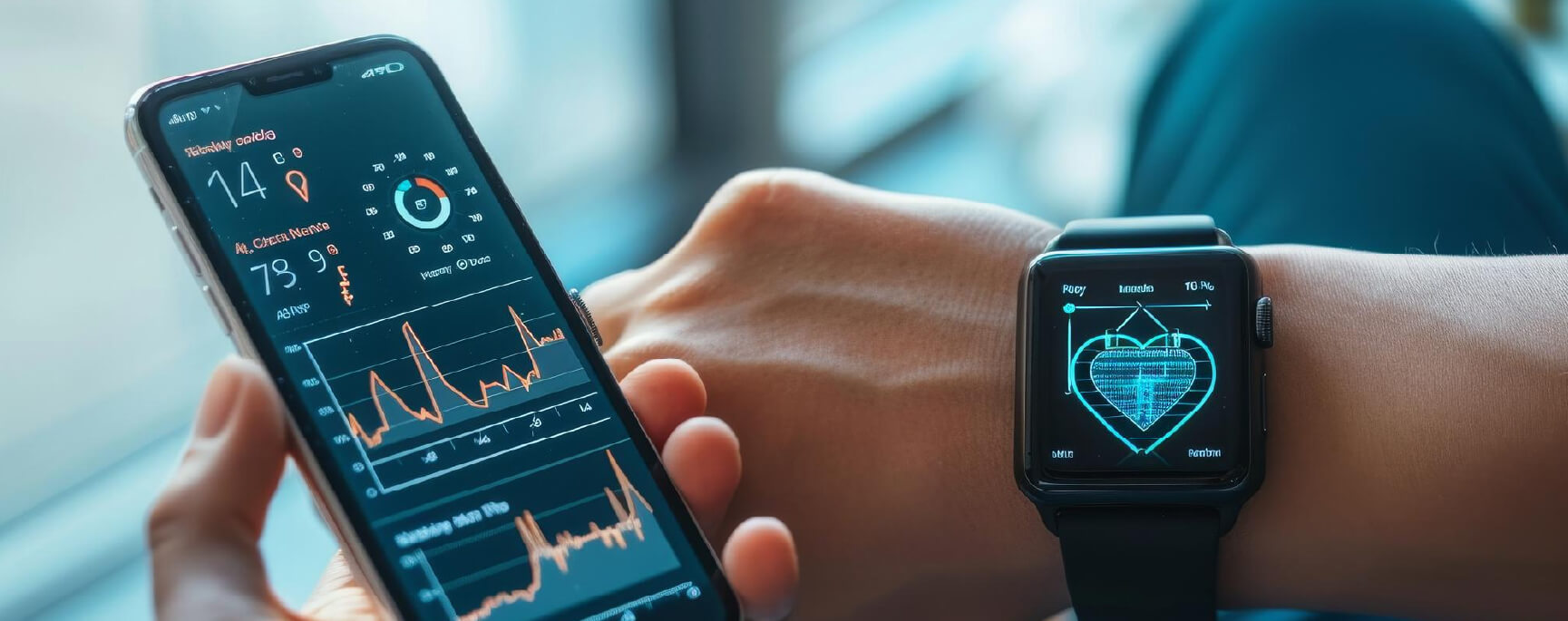
A wearable can collect enormous amounts of information throughout the day.
Movement sensors detect changes in acceleration and orientation.
Optical sensors can monitor changes associated with heart rate.
Location systems can provide information about outdoor movement where GPS is available.
Other sensors may contribute additional information depending on the device.
AI and machine learning algorithms can analyze these signals together.
Imagine someone starts walking without manually selecting a workout mode.
The device can examine movement patterns, pace, duration, and other signals to determine whether the activity resembles walking.
Over time, algorithmic models can become better at recognizing different patterns across a wide range of users and activities.
This is one reason modern wearables can feel more automatic than earlier generations of fitness trackers.
AI Can Make Activity Recognition More Intelligent
Automatic activity recognition is one of the most visible applications of intelligent algorithms.
Instead of requiring users to manually start every workout, compatible devices may recognize activities automatically.
Depending on the wearable, this can include walking, running, cycling, swimming, or other forms of exercise.
The system looks for patterns in sensor data.
A running session, for example, produces movement patterns that are different from ordinary walking. Cycling creates another distinct pattern.
AI can help classify those signals.
This makes tracking more convenient, particularly for people who do not want to interact with their device every time they start moving.
Personalized Insights Instead of Simple Numbers
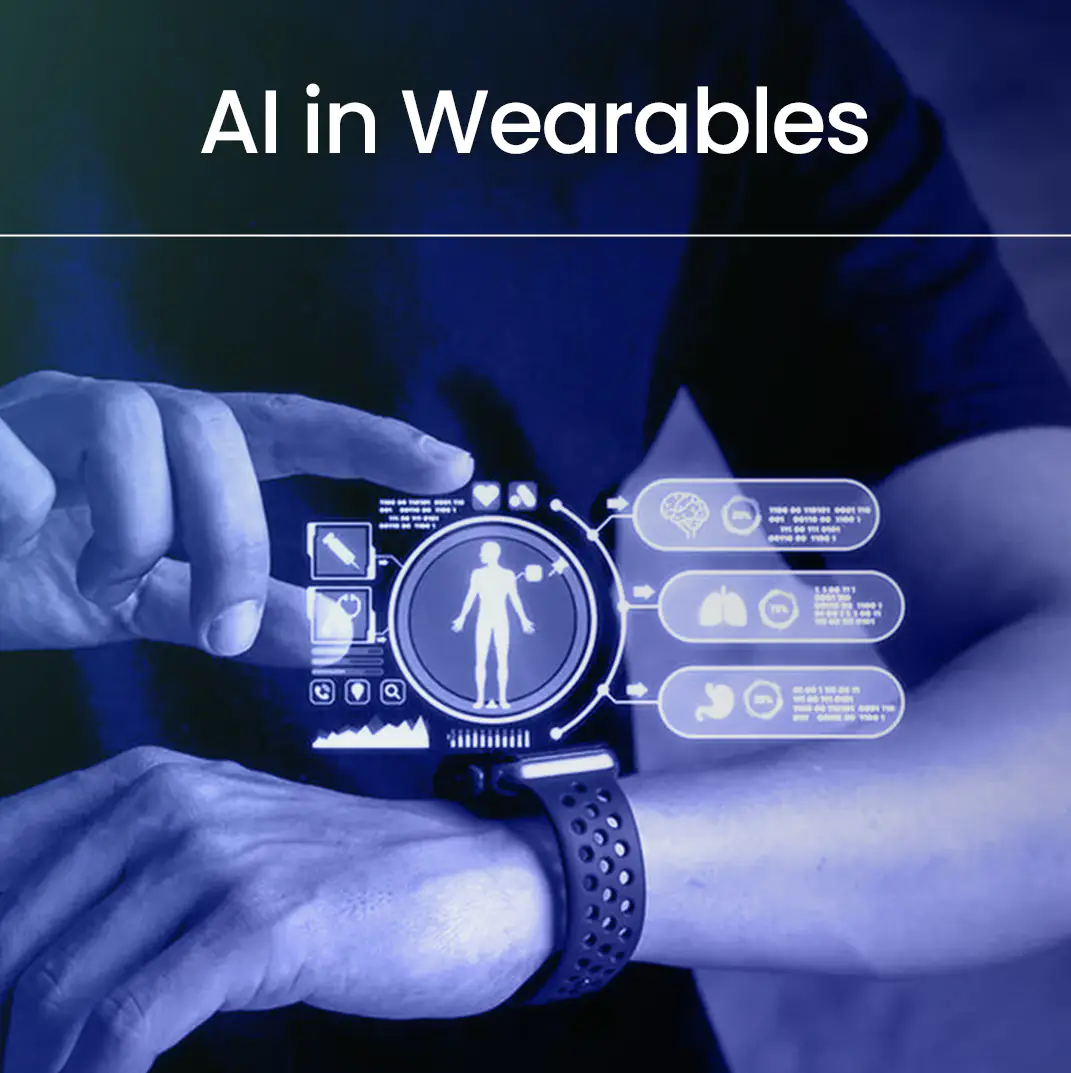
One of the biggest changes in Fitness Tracking is the move from measurements toward interpretation.
A basic tracker might tell you that you walked a certain number of steps.
A smarter platform may compare that activity with your previous days and identify a trend.
For example, it could show that your activity has been consistently higher on days when you take an evening walk.
The value comes from context.
A single number can be difficult to interpret.
A trend can be much more useful.
AI systems can potentially analyze longer periods of information and identify relationships that are difficult to notice manually.
However, users should remember that an algorithm identifying a pattern does not necessarily mean it has identified a cause.
That distinction is important when interpreting wellness data.
AI and Sleep Tracking

Sleep is another area where algorithms are becoming increasingly important.
Wearables can collect movement and physiological signals while users sleep.
Algorithms can then estimate sleep duration and identify patterns within the collected data.
Some platforms provide information about sleep stages, nighttime movement, sleep consistency, or recovery related metrics.
AI can help analyze large amounts of historical data rather than treating each night as an isolated event.
For example, the system may identify that your sleep schedule has become less consistent over several weeks.
That type of trend can be more useful than focusing on one unusually good or bad night.
At the same time, consumer sleep tracking remains an estimation.
Wearables should not be assumed to provide the same level of measurement as clinical sleep testing.
Recovery Tracking Is Becoming More Sophisticated

Modern fitness platforms increasingly attempt to answer a question that basic activity trackers rarely addressed:
How prepared am I for today's activity?
Recovery related systems can consider factors such as recent exercise, sleep patterns, heart rate measurements, and other available signals.
The resulting score or recommendation is generally designed to provide context rather than a definitive medical assessment.
For an active person, this can help highlight differences between training days and rest days.
Someone who exercises frequently might see that their recent workload has been significantly higher than usual.
Another user might notice that their sleep has been inconsistent during a busy period.
AI can help bring these separate pieces of information together.
AI Can Help Personalize Fitness Goals
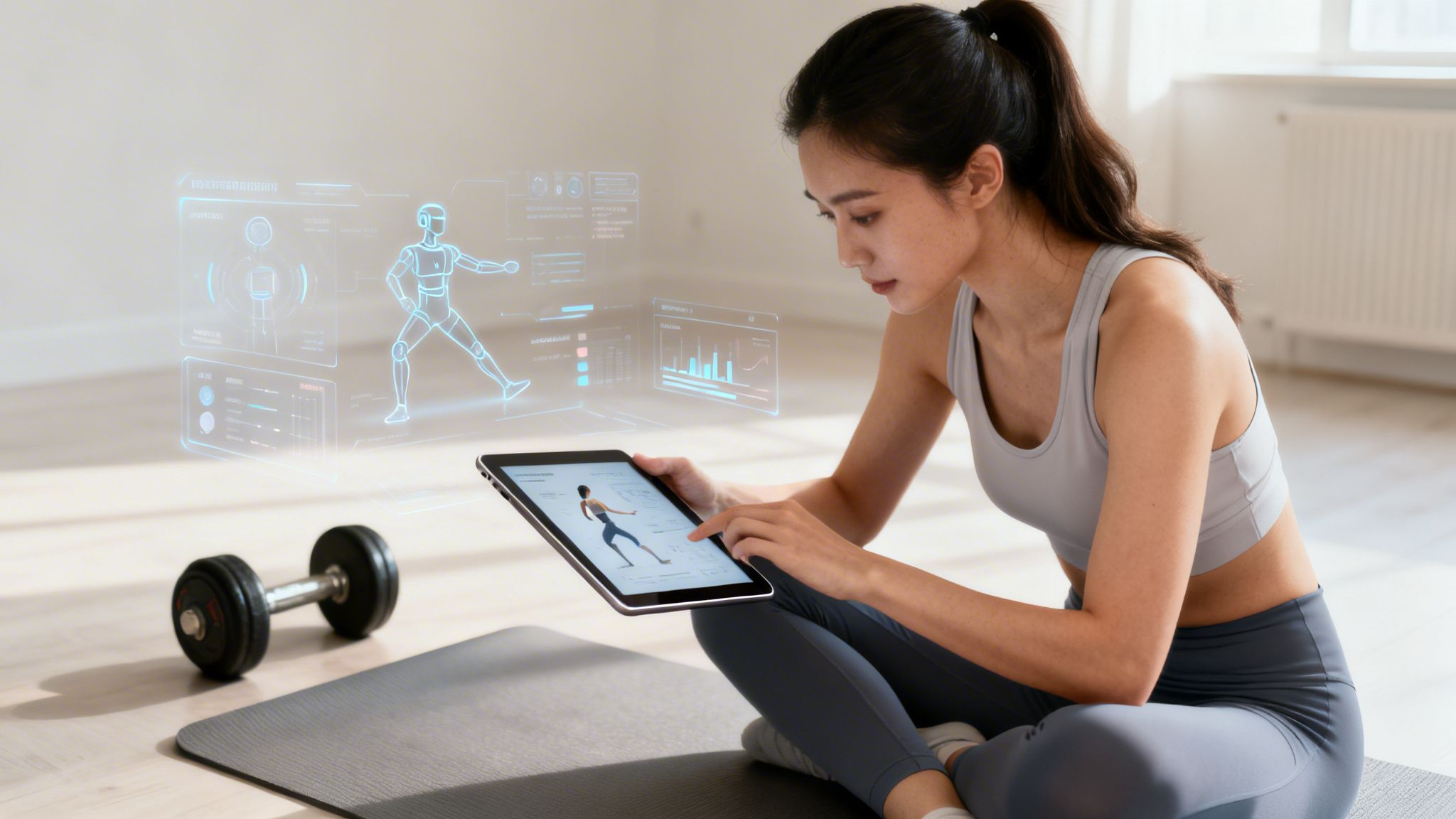
Traditional fitness targets are often based on generic goals.
AI powered systems can potentially make recommendations more personalized by analyzing a user's historical activity.
For example, a platform could recognize that someone regularly achieves a certain activity level but struggles to maintain consistency on weekends.
Rather than simply increasing the target, a smarter system might focus on consistency.
This represents an important change.
Personalization is not necessarily about making goals harder.
It is about making them more relevant to the individual.
AI and Heart Rate Data

Heart rate is one of the most important data sources available to many modern wearables.
AI can help analyze changes in heart rate across different situations, such as rest, exercise, recovery, and sleep.
During exercise, algorithms can help estimate workout intensity and classify different periods of activity.
Over longer periods, the software can identify changes relative to an individual's previous measurements.
This can make the data more meaningful than simply displaying a heart rate number.
However, wearable heart rate measurements can be affected by movement, fit, skin contact, sensor design, and other factors.
AI can improve interpretation, but it cannot make an imperfect sensor completely error free.
AI Is Changing Workout Analysis
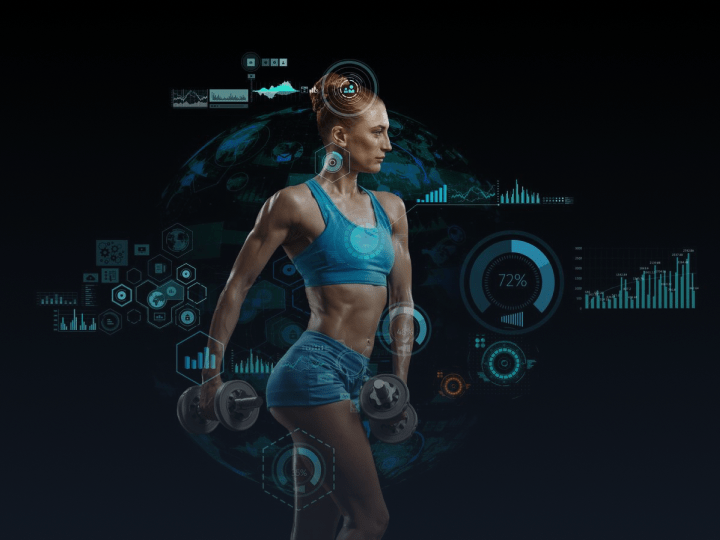
Workout tracking is becoming more detailed as wearables collect more data.
For runners, this can include pace, distance, heart rate, cadence, elevation, and other measurements depending on the device.
For cyclists, swimming enthusiasts, and other athletes, different data sets can become relevant.
AI can analyze these measurements together to identify trends in performance.
Instead of simply recording that a workout happened, a platform may help users understand how their performance changed.
This can be especially useful for people who repeat similar workouts regularly.
The system can compare current sessions with previous sessions and provide a longer term perspective.
AI Can Help Reduce the Need for Manual Tracking
One of the biggest practical benefits of AI is automation.
People often forget to start workouts, record meals, log activities, or review their fitness information.
Automation can reduce the amount of manual input required.
A wearable can continuously collect selected signals while software handles much of the interpretation.
This makes tracking more passive.
For busy users, that can make a major difference.
A fitness platform that requires constant manual interaction may eventually be abandoned.
A system that quietly records useful information in the background can become a more natural part of everyday life.
What AI Cannot Do Perfectly
AI can make wearable technology smarter, but it does not eliminate measurement limitations.
Algorithms depend on the data available to them.
If a sensor produces inaccurate information because the device is loose or the user is moving in an unusual way, the resulting analysis can also be affected.
Activity recognition can occasionally confuse similar movements.
Sleep algorithms can estimate sleep periods incorrectly.
Heart rate readings can vary during intense movement.
This is why wearable data should generally be viewed as useful personal information rather than absolute truth.
Consistency is often more valuable than obsessing over a single measurement.
Privacy and Personal Data Matter
AI powered Fitness Tracking also raises an important question:
What happens to all that personal data?
Wearables can generate sensitive information about daily activity, sleep patterns, exercise routines, and other aspects of personal behavior.
Before choosing a device, users should review the manufacturer's privacy policy and understand how data is stored, processed, shared, and synchronized.
It is also worth checking account security options and permissions.
A sophisticated fitness platform is useful only if users are comfortable with how their information is handled.
Privacy should therefore be considered alongside battery life, sensors, and software features.
On Device AI vs Cloud Based Analysis
AI processing can happen in different places.
Some analysis can take place directly on the wearable or connected smartphone.
Other processing may rely on cloud based services.
On device processing can potentially reduce the need to send certain information elsewhere and may allow some features to work without a continuous internet connection.
Cloud based systems can provide access to significantly larger computing resources and can support more complex analysis.
Users should check how their chosen platform works because the balance between local and cloud processing can affect privacy, connectivity, and functionality.
AI Fitness Tracking and Battery Life
Continuous sensors and intelligent processing can create additional demands on wearable hardware.
Manufacturers therefore have to balance data collection with battery efficiency.
A device that continuously monitors multiple signals may need more power than a simple activity tracker.
Software optimization can help.
Modern wearable platforms can determine when intensive monitoring is necessary and reduce unnecessary processing at other times.
Battery performance still varies according to display usage, GPS, sensors, notifications, connectivity, and other settings.
For people who want continuous sleep and activity tracking, battery life remains an important consideration even when AI features are the main attraction.
The Role of AI Fitness Coaches
AI is also beginning to influence the way fitness information is presented.
Instead of browsing multiple charts, users may increasingly interact with conversational fitness assistants that summarize their activity and answer questions about trends.
For example, an AI assistant might help explain how activity changed during the previous week or summarize recent workout patterns.
The usefulness of these systems depends heavily on the quality of the underlying data and algorithms.
An AI generated explanation should not be confused with professional medical or fitness advice.
The most useful role for these systems is often helping users understand their own data more easily.
What to Look for in an AI Fitness Wearable
When choosing a device, look beyond the word AI on the product page.
Consider the underlying hardware and software ecosystem.
Sensor Quality
Look at the types of sensors included and the measurements they are designed to capture.
Activity Recognition
Automatic workout detection can make everyday tracking easier.
Sleep Analysis
If sleep is important, check what information the platform provides and how it presents long term trends.
Battery Life
Continuous tracking becomes more useful when the device can remain on your wrist for extended periods.
Smartphone Compatibility
Make sure the companion application works with your phone and provides the features you need.
Data Privacy
Review how the company stores, processes, and shares wearable data.
Software Support
AI features can evolve through software updates, making ongoing support an important consideration.
Data Presentation
The best tracking system is not necessarily the one collecting the most information. It is the one that helps you understand the information clearly.
How AI Powered Fitness Tracking Could Evolve
The next stage of wearable technology is likely to focus increasingly on context.
Instead of simply asking how many steps you took, future systems may combine activity, sleep, exercise, environmental information, and personal routines to create a broader picture of daily wellness.
More capable on device processing could make wearables more responsive while reducing dependence on constant connectivity.
AI assistants may also become better at translating complex data into simple explanations.
At the same time, privacy, transparency, and accuracy will remain important challenges.
The future of wearable technology is not simply about collecting more data.
It is about collecting useful data and turning it into information people can understand.
A Practical AI Fitness Tracking Checklist
Before choosing a wearable, consider:
• What activities do I want to track?
• Do I want automatic workout detection?
• Is sleep tracking important to me?
• Do I need built in GPS?
• How accurate and useful are the available sensors?
• How long does the battery last with my preferred settings?
• Does the device work with my smartphone?
• How does the companion application present trends?
• Does the platform use AI for useful personalization or simply marketing language?
• How is my fitness data stored and processed?
• Can I control privacy and data sharing settings?
• Will the manufacturer provide software updates?
Frequently Asked Questions About AI Powered Fitness Tracking
What is AI Powered Fitness Tracking?
It uses artificial intelligence and machine learning techniques to analyze information collected by wearable sensors and provide activity recognition, personalized insights, trend analysis, and other fitness related features.
Does AI make fitness trackers more accurate?
AI can improve how sensor data is interpreted, but it cannot eliminate limitations in the underlying sensors. Accuracy varies according to the device, activity, fit, environment, and metric being measured.
Can AI detect workouts automatically?
Many modern wearables use algorithms to identify common activities automatically. The specific activities supported depend on the device and software.
Can AI improve sleep tracking?
Algorithms can analyze movement and physiological signals to estimate sleep patterns. These estimates can be useful for observing trends but should not be treated as clinical sleep measurements.
Can an AI fitness tracker replace a personal trainer?
AI can provide automated insights, workout information, and personalized suggestions, but it does not fully replace the experience, judgment, and individualized support of a qualified professional.
Is fitness data private?
Privacy practices vary between manufacturers and platforms. Users should review the relevant privacy policy, account settings, permissions, and data sharing controls before using a wearable.
Does AI fitness tracking require an internet connection?
Some features can operate on the device or smartphone, while other analysis may depend on cloud services. The exact requirements vary between platforms.
Should I trust every health insight from a wearable?
No single wearable measurement should automatically be treated as definitive. Look for longer term patterns and consult a qualified healthcare professional when you have health concerns.
Final Thoughts
AI is changing Fitness Tracking from a simple measurement system into a more intelligent interpretation platform.
Sensors remain the foundation, but algorithms increasingly determine how the information is classified, organized, and presented.
For everyday users, that can mean less manual tracking and more useful summaries.
For athletes, it can mean deeper analysis of workouts and performance trends.
For people interested in sleep and recovery, algorithms can help turn large amounts of overnight data into understandable patterns.
But smarter technology does not mean perfect technology.
The quality of AI insights depends on the sensors, software, algorithms, user behavior, and context behind the data. Privacy also deserves careful consideration as wearables collect increasingly detailed information about everyday life.
The most useful AI fitness technology will therefore not necessarily be the one that promises the most futuristic features.
It will be the technology that quietly collects relevant information, interprets it responsibly, protects user data, and presents meaningful insights without making everyday health tracking unnecessarily complicated.