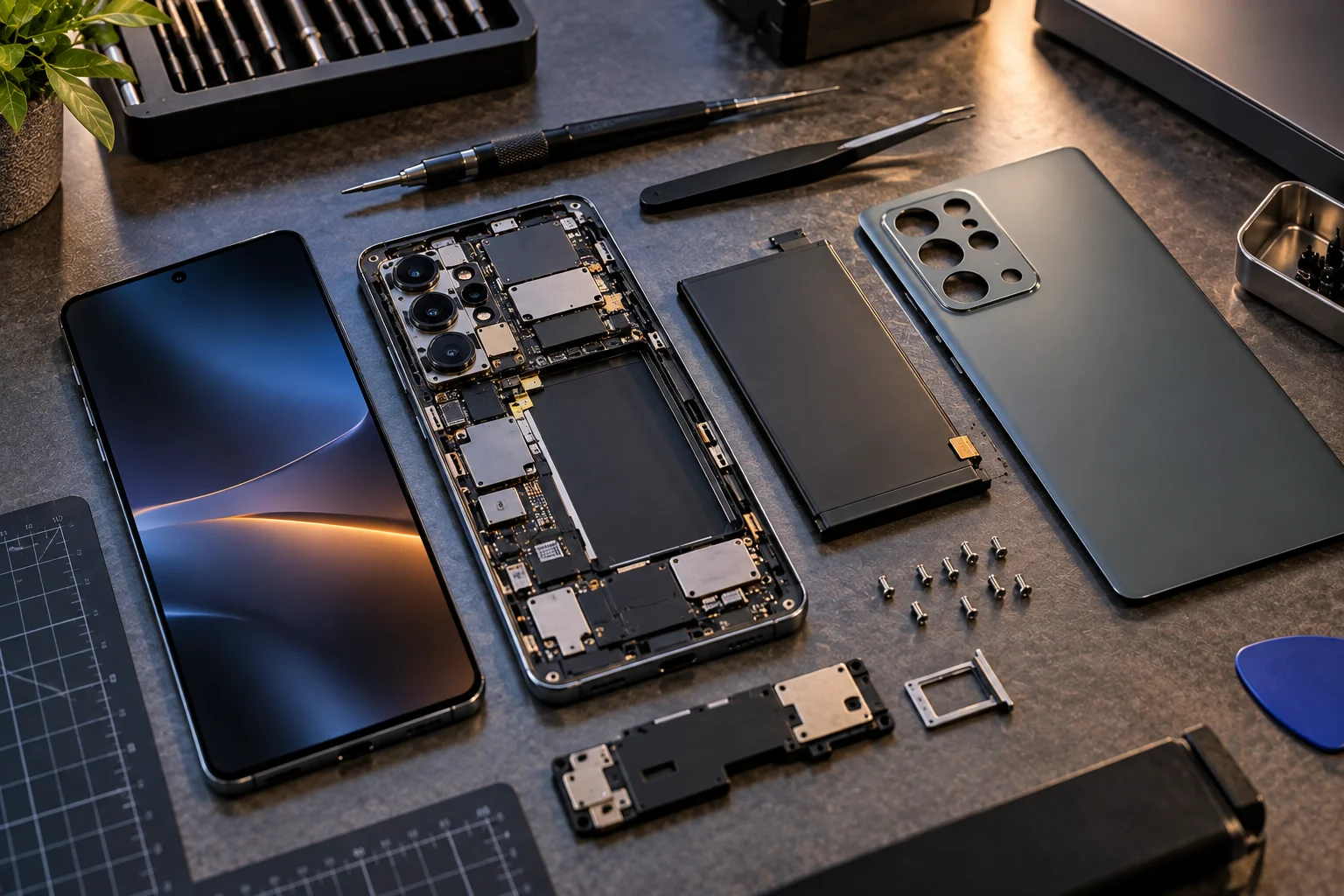
Replaceable batteries are making a comeback because manufacturers, regulators and consumers are putting more emphasis on repairability and longer product lifespans. The change is most visible in smartphones, but the bigger story extends to laptops, headphones, tablets, smart devices and other battery-powered electronics.
For years, consumer electronics moved in the opposite direction.
Phones became thinner.
Water resistance became more common.
Components became more tightly integrated.
And batteries that users could once remove in seconds became glued or sealed inside the device.
There were good engineering reasons for some of those changes. Sealed batteries can make it easier to build thin products, improve structural rigidity and simplify certain forms of water and dust protection.
But they also created a problem.
Lithium-ion batteries age faster than many other major components inside a modern device.
The processor might still be perfectly capable.
The display might still look great.
The storage might still work.
Yet a degraded battery can make the entire product feel old.
That's why replaceable batteries are returning to the conversation.
The European Union's Batteries Regulation generally requires portable batteries incorporated into products to be removable and replaceable by end users, with the relevant Article 11 obligations applying from February 18, 2027. The rules also require battery spare parts to remain available for at least five years after the last unit of a model is placed on the market.
The result could be bigger than simply bringing back the removable battery cover.
It could change how manufacturers design consumer electronics from the beginning.
Why Did Removable Batteries Disappear From Phones?
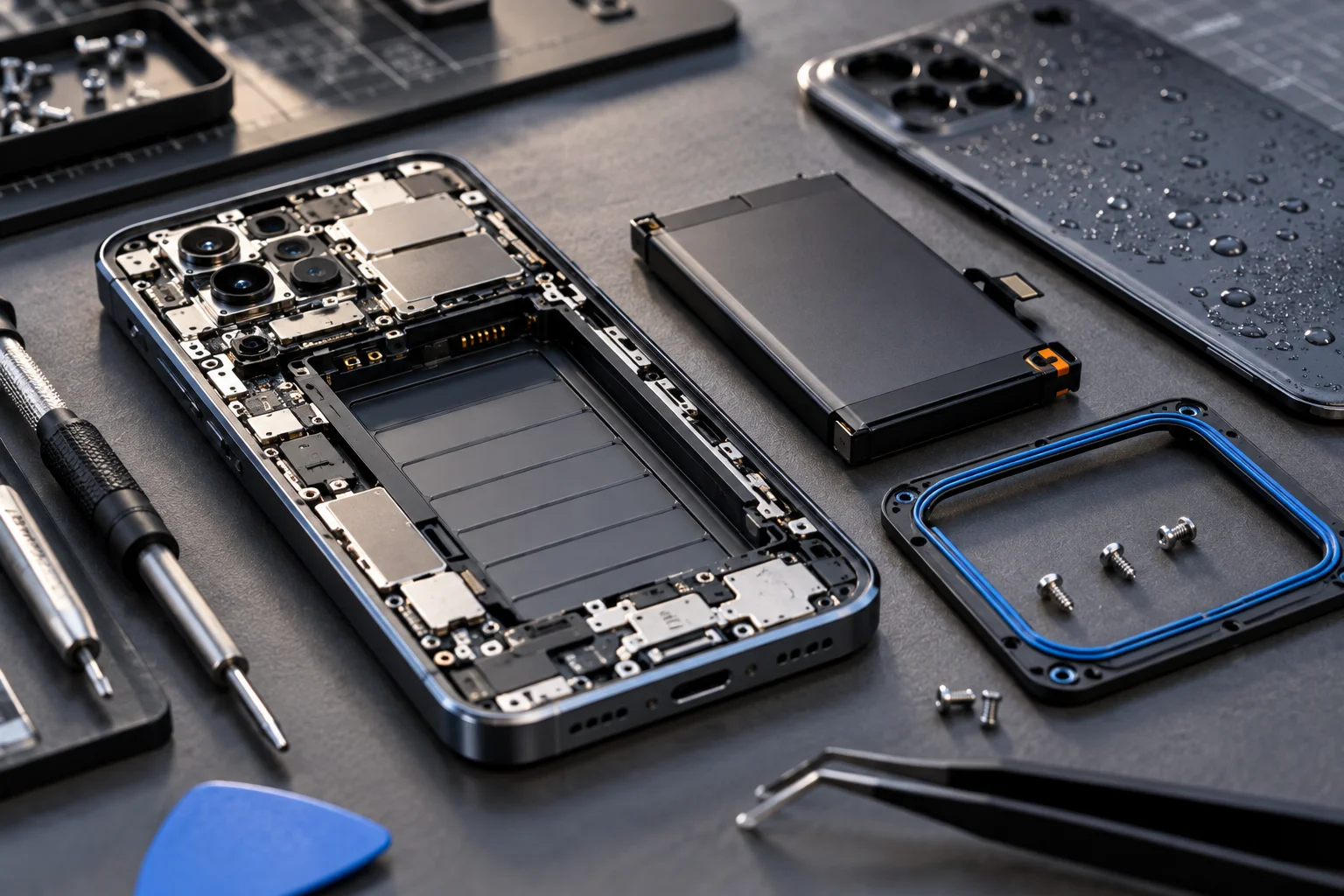
Removable batteries became less common because sealed designs offered manufacturers more freedom with thinness, structural design, water resistance and internal component placement.
Older mobile phones often had a simple construction:
Back cover → battery → internal electronics
The user could remove the cover and replace the battery.
Modern smartphones typically look more like:
Display → frame → tightly integrated components → adhesive → battery → back cover
The battery is often physically bonded into the device.
That allows manufacturers to use the internal space efficiently.
It can also make the device easier to seal against water and dust.
And eliminating a removable battery cover can reduce the number of openings and mechanical interfaces that need to be engineered.
But there's a trade-off.
The battery becomes one of the least accessible components in the device.
The European Commission's Joint Research Centre describes this transition directly: mobile phone batteries were commonly replaceable by users in the early 2000s, before the industry shifted toward non-replaceable designs that made repairs more difficult and expensive.
Why Are Replaceable Batteries Coming Back Now?
The renewed interest is being driven primarily by product longevity, repairability, waste reduction and regulation rather than a simple return to older phone designs.
A battery is a wear component.
It loses capacity over repeated charging cycles.
That means a device with a healthy battery on day one can become much less useful after several years even if everything else remains functional.
If the battery can be replaced easily, the device can potentially continue operating.
If replacement requires specialized equipment, adhesive removal, professional service and significant labor, owners may decide that replacing the entire product is easier.
The European Commission explicitly connects battery removability with extending product lifetimes, reuse and reducing post-consumer waste.
That's the central argument behind the renewed push.
What Is the EU Battery Rule Actually Changing?
EU rules generally require portable batteries built into products to be removable and replaceable by the end user, but the legislation includes specific exceptions and does not mean every electronic device must have a traditional snap-off battery cover.
Under Article 11 of the EU Batteries Regulation, portable batteries incorporated into products must generally be readily removable and replaceable by the end user during the product's lifetime. The regulation defines this around commercially available tools and says removal should not require specialized tools, proprietary tools, thermal energy or solvents, subject to the applicable exceptions.
Manufacturers also have to provide instructions and safety information.
And compatible replacement batteries must remain available for at least five years after the last unit of the equipment model is placed on the market.
This is an important distinction:
Replaceable doesn't necessarily mean tool-free.
A product could still require a screwdriver.
The point is that replacing the battery should be a realistic repair rather than a task effectively restricted to a manufacturer's service center.
Does This Mean Every Device Will Have a Removable Battery?
No. The EU rules include exemptions, and the European Commission added further exemptions in 2026 for categories including smartwatches and fitness trackers.
The Commission's July 2026 delegated act added six categories to the exemptions from the general consumer-removability requirement. Wearable devices such as smartwatches and fitness trackers are among them.
The reason is partly practical.
Small wearables have unusual engineering constraints.
A smartwatch needs:
Compact dimensions
Water resistance
Sensors against the skin
Structural durability
Wireless charging
Efficient use of tiny internal space
A user-removable battery could make those engineering problems harder.
So the future is unlikely to be:
Everything gets a removable battery.
It's more likely to be:
More products become designed around battery replacement, while products with genuine technical or safety constraints can receive appropriate exemptions.
Why Battery Replacement Matters More Than Ever
Modern electronics can remain useful for years after their original battery has degraded, making the battery one of the clearest opportunities to extend product life.
Imagine two identical smartphones.
Phone A
Battery degrades after four years.
Battery replacement costs $100 and takes an hour.
The phone continues working for another two years.
Phone B
Battery replacement requires extensive disassembly and specialized service.
The repair costs $250.
The owner buys a new phone instead.
The processor didn't become obsolete.
The display didn't fail.
The storage didn't suddenly stop working.
The battery became the economic reason to replace the device.
That distinction matters for sustainability.
The European Commission's smartphone and tablet ecodesign rules already focus on extending product lifetimes through repairability, battery durability, spare parts and software support.
Could Replaceable Batteries Make Phones Thicker?
They could influence thickness, but replaceability doesn't automatically require a bulky removable back cover.
This is where modern battery design could look very different from the phones of the 2000s.
A future phone could use:
A removable battery module
A secured internal battery accessible through a repair panel
Standardized connectors
Replaceable battery packs
Structural frames designed around service access
The goal doesn't necessarily have to be:
"Pop off the plastic back."
It could instead be:
"Make the battery a serviceable module."
That would allow manufacturers to preserve many modern design characteristics while still making the most important wear component replaceable.
What Could Happen to Smartphone Design?
Battery replacement could push smartphone designers toward more modular internal layouts and easier access to high-wear components.
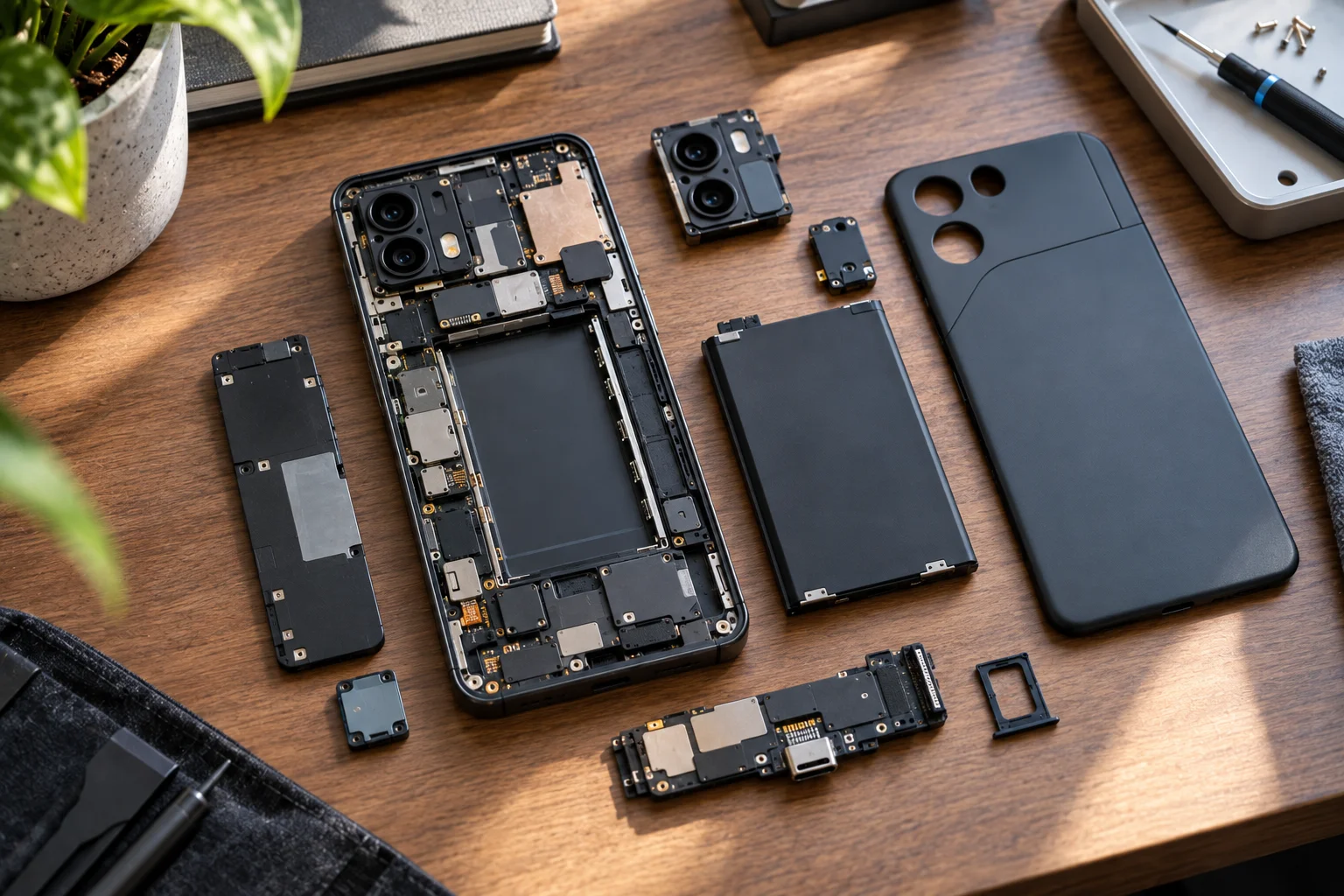
A smartphone contains many parts that can potentially fail or age:
Battery
USB-C port
Cameras
Speakers
Microphones
Buttons
Display
Back glass
The battery is simply one of the most predictable wear components.
If manufacturers redesign the phone around battery replacement, they may find it easier to make other components serviceable too.
That could encourage:
Modular design
rather than:
Everything permanently bonded together.
Fairphone provides a current example of this philosophy. Its Gen 6 uses a user-removable 4,415mAh battery and a modular design that allows owners to replace parts with a T5 Torx screwdriver. Fairphone also advertises 12 affordable spare parts and a five-year warranty for the Gen 6.
That doesn't prove every future smartphone will look like a Fairphone.
It does demonstrate that modern smartphones can combine removable batteries with contemporary hardware.
What Happens to Water Resistance?
A removable or serviceable battery makes water resistance more complicated, but it doesn't make water resistance impossible.
Traditional removable battery phones often had obvious openings.
A modern sealed phone can be engineered around fewer external interfaces.
That's one reason manufacturers have historically preferred sealed construction.
But replaceability doesn't necessarily require a user-accessible external battery door.
A manufacturer could design:
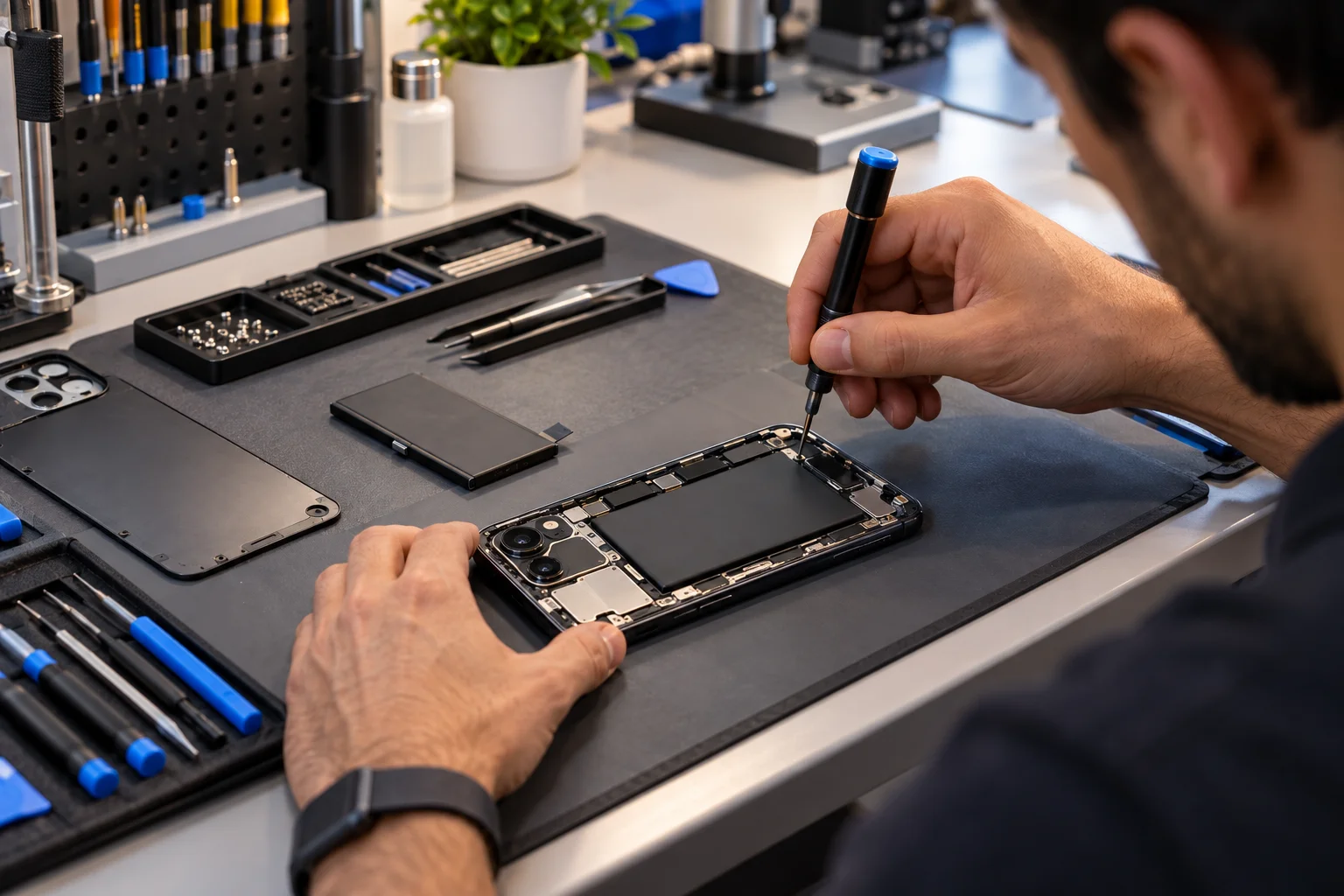
Rear cover → controlled fasteners → gasket → battery module
rather than:
Snap-off cover → exposed battery compartment
The first design could potentially retain significant environmental protection.
The engineering challenge is making that serviceable without compromising the device.
The EU regulation recognizes this issue by allowing specific exceptions where consumer removal would create safety concerns or where products are designed for environments involving regular water exposure and cannot reasonably be redesigned to maintain safe use.
Could Replaceable Batteries Improve Repairability?
Yes, but battery replacement alone doesn't make a device repairable.
Imagine a phone with a removable battery but:
Glued display
Soldered charging port
Unavailable replacement camera
No software support
Proprietary parts
No repair documentation
The battery is replaceable.
The product isn't necessarily easy to repair.
That's why the EU's approach goes beyond batteries.
For smartphones and tablets sold in the EU, current ecodesign rules include requirements around spare-part availability, repair information, battery durability, operating-system upgrades and repairability information.
Battery replaceability is therefore one piece of a larger design philosophy.
What Could Replaceable Batteries Mean for Product Lifespan?
The biggest potential benefit is that a device could stay useful after its original battery reaches the end of its practical life.
The European Commission estimates that increasing the average lifetime of a mid-range smartphone from 3.0 to 4.1 years can reduce annual sales needed to maintain the same installed stock.
That is significant.
If millions of devices remain usable for longer, fewer replacement devices need to be manufactured and shipped.
But there is an important condition:
The rest of the product must remain useful.
A replaceable battery cannot compensate for:
No security updates
Broken displays
Insufficient storage
Unsupported software
Failed charging hardware
Incompatible networks
Severely outdated performance
A longer battery life and a longer product life are related, but they're not the same thing.
Could Replaceable Batteries Make Devices Easier to Upgrade?
They could make some products easier to maintain, but battery replacement should not be confused with hardware upgrading.
Replacing a battery gives you:
More usable battery capacity
It doesn't automatically give you:
A faster processor or more RAM.
However, once manufacturers begin designing around accessible modules, other replaceable components become easier to consider.
Imagine a future laptop with:
Replaceable battery
Replaceable SSD
Replaceable Wi-Fi module
Replaceable keyboard
Replaceable display
The processor might still be fixed.
But the product could remain useful much longer.
This is where repairability starts to become a product-design philosophy rather than a single feature.
What Could Happen to Laptops?
Laptops could be particularly interesting because battery degradation is already a major reason older portable computers become less convenient.
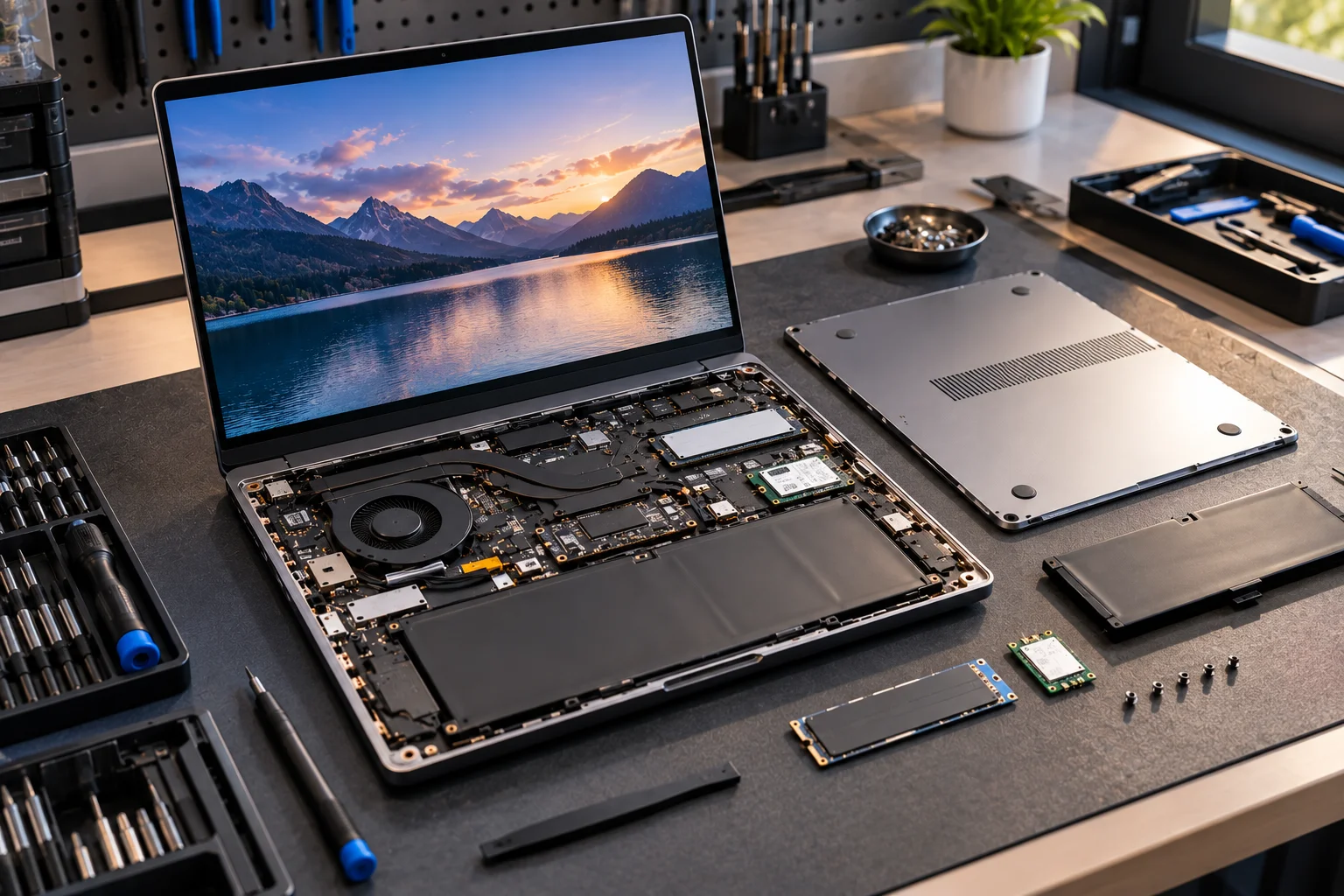
Unlike smartphones, many laptops already provide some level of serviceability.
Some allow replacement of:
SSDs
RAM
Battery
Wi-Fi modules
Others increasingly integrate components onto the motherboard.
A replaceable laptop battery could extend useful portable life without requiring the owner to replace an otherwise functional computer.
For people who keep laptops for five, six or seven years, this can matter more than shaving a few millimeters from the chassis.
What Could Happen to Wireless Earbuds?
Wireless earbuds are a much harder case because their extremely small size makes battery replacement technically difficult and economically complicated.
True wireless earbuds have tiny batteries packed into very small housings.
They also need:
Water resistance
Compact speakers
Microphones
Wireless charging coils
Antennas
Sensors
Bluetooth electronics
A removable battery compartment would dramatically increase the physical complexity.
That's why the more realistic future for earbuds may not be:
"User swaps the battery in 30 seconds."
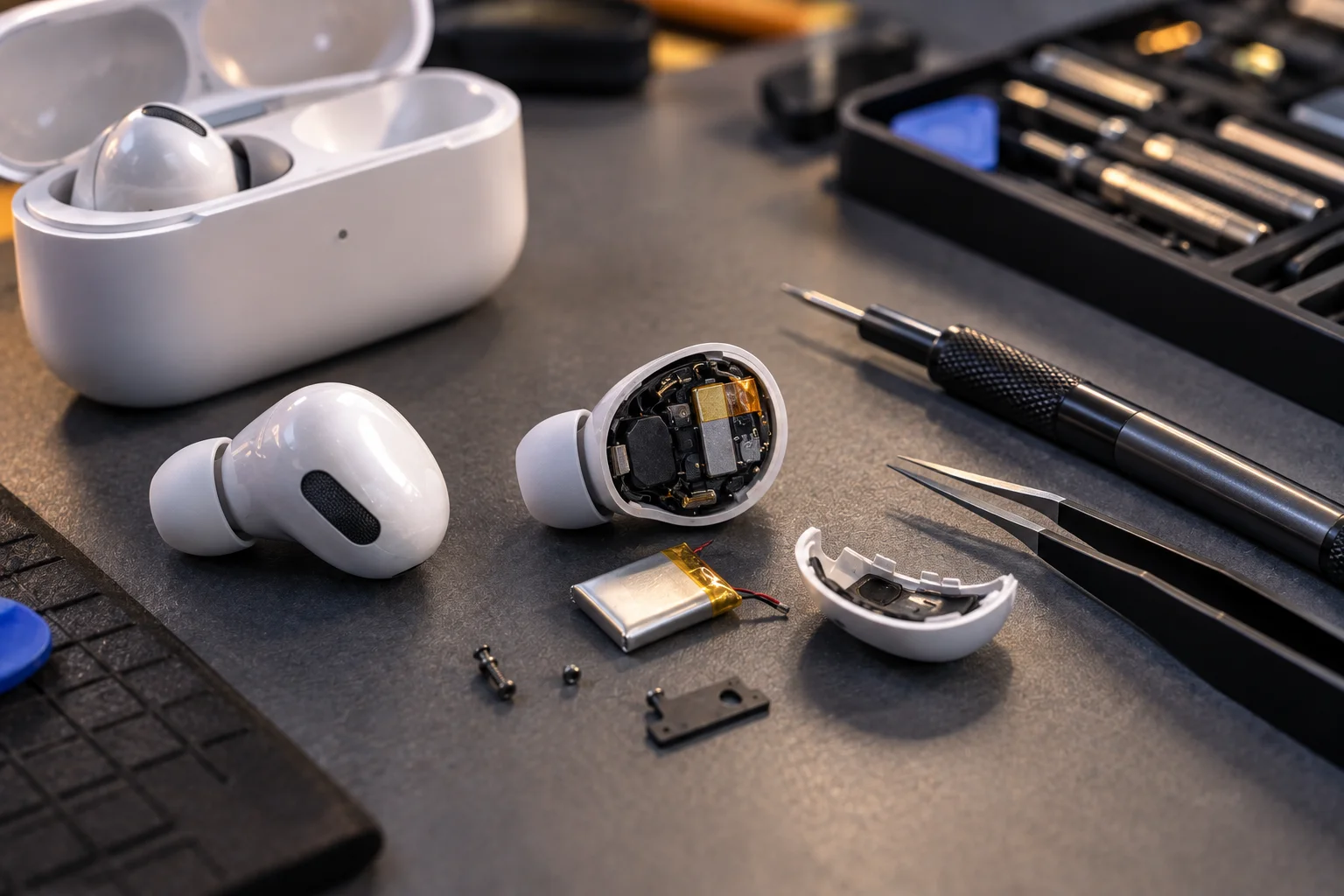
It could instead be:
"Battery module can be replaced by a repair professional."
The EU's exemption framework already recognizes that some small or specialized products may need different approaches to battery replacement.
Could Replaceable Batteries Change Product Pricing?
They could increase manufacturing and engineering costs initially while reducing some long-term ownership costs for consumers.
A serviceable device may require:
More mechanical components
More fasteners
More seals
Replaceable connectors
Service documentation
Spare-parts logistics
Battery inventory
Repair support
That can increase the cost of designing and manufacturing the product.
But consumers could potentially save money by replacing:
a $70 battery
instead of:
a $700 device.
The economic calculation therefore moves from:
Purchase price
toward:
Total cost of ownership.
Fairphone explicitly promotes this approach with its modular spare parts and battery replacement design.
Could Battery Replacement Become a Bigger Buying Criterion?
Yes, battery replaceability could become as important to some buyers as storage, software support and water resistance.
Imagine two phones with similar specifications.
Phone A
Excellent battery life
Sealed battery
Seven years of software support
Difficult battery replacement
Phone B
Similar performance
Similar battery life
User-replaceable battery
Long software support
Spare batteries available
For someone planning to keep the phone for six or seven years, the second design could have a different long-term value proposition.
This is why the EU smartphone energy label already includes information about battery longevity, repairability and other durability-related characteristics.
The specifications buyers see at launch are increasingly becoming only part of the ownership story.
What Happens to Battery Manufacturers?
A larger replaceable-battery market could create more demand for standardized, compatible replacement packs and better long-term battery supply.
This could change the accessory market.
Instead of buying:
New phone → new battery permanently installed
consumers could increasingly buy:
New phone → replacement battery after several years
That creates an aftermarket.
Manufacturers may need to maintain battery inventory long after a device's launch.
Third-party battery manufacturers could also become more important, provided compatibility and safety requirements are properly managed.
The EU Batteries Regulation already requires manufacturers to make compatible spare batteries available for at least five years after the last unit of a model is placed on the market.
Could Batteries Become More Standardized?
Replaceability creates pressure for more predictable battery dimensions, connectors, electrical specifications and safety controls, although it does not necessarily require one universal battery shape.
Manufacturers could still differentiate their products.
But serviceable batteries need:
Correct voltage
Appropriate capacity
Safe charging characteristics
Compatible physical dimensions
Proper electrical communication where required
Reliable thermal protection
That makes battery design more complex than simply creating a larger version of the same battery.
The EU rules also prohibit software from being used to impede replacement of a portable battery or its key components with another compatible battery.
That's a significant design principle.
A replacement battery shouldn't become artificially unusable simply because the device's software refuses to recognize it.
Could Replaceable Batteries Create New Safety Risks?
Yes. Battery replaceability has to be designed around safety, because damaged or incompatible lithium-ion batteries can create serious hazards.
A modern battery is not simply a container of electricity.
It involves:
Cells
Protection circuits
Temperature monitoring
Charging control
Electrical connections
Mechanical protection
Poor-quality replacement batteries can create risks.
That's one reason the EU rules allow professional-replacement requirements for certain products and circumstances where consumer replacement could create safety problems.
The goal isn't:
Make every battery removable regardless of consequences.
It's:
Make replacement possible when it can be done safely.
What Does This Mean for Recycling?
Replaceable batteries can make battery collection and recycling easier because the battery can be separated from the rest of the product more effectively.
The EU's battery legislation explicitly connects removability and replaceability with collection, treatment and high-quality recycling.
This matters because electronic products contain multiple materials that need different treatment.
If a battery is permanently integrated into a device, recycling operations may need to process the product as a more complex assembly.
If the battery is removable, it can potentially enter an appropriate battery collection stream more directly.
But again, design is only part of the solution.
Consumers also need convenient collection systems.
Does a Replaceable Battery Automatically Make a Product More Sustainable?
No. Replaceability can extend product life, but sustainability depends on the entire product lifecycle.
A device with a replaceable battery can still have:
High manufacturing emissions
Poor software support
Short component lifetimes
Difficult recycling
Unsustainable materials
Excessive energy consumption
The battery is one variable.
The European Commission's approach therefore combines battery rules with broader ecodesign requirements covering repairability, durability and software support.
The useful question isn't:
"Does this product have a removable battery?"
It's:
"How long can this product realistically remain useful, and how easy is it to maintain during that time?"
What Could the Future Smartphone Look Like?
The future probably won't recreate a 2005 smartphone exactly; it could combine modern sealed-device engineering with intentionally serviceable internal components.
Imagine a future phone with:
High-quality OLED display
IP-rated water resistance
Wireless charging
Modern processors
Long software support
Replaceable battery
Replaceable USB-C assembly
Replaceable cameras
Accessible screws and fasteners
Official repair manuals
Batteries available for years
That would be a very different proposition from the old removable-back phone.
The important idea isn't nostalgia.
It's serviceability.
What Should You Look for When Buying Electronics Now?
Battery replacement should be evaluated alongside software support, repairability, spare-part availability and expected ownership period.
Before buying a device, ask:
How long will the battery realistically last?
Look for published cycle-life or battery durability information.
Can the battery be replaced?
Check whether the manufacturer allows consumer replacement or professional replacement.
Are replacement batteries actually sold?
A "replaceable" battery is much less useful if replacement packs disappear after two years.
How long will software be supported?
A battery replacement won't help if the device becomes insecure or incompatible.
Are other parts repairable?
Check displays, charging ports, storage and other common failure points.
Is the device designed to be opened?
Look for screws, service documentation and replacement parts.
What is the warranty?
Understand whether opening or replacing components affects coverage.
These questions give you a much better idea of long-term value than launch specifications alone.
FAQ: Replaceable Batteries in Consumer Electronics
Why did manufacturers stop using removable batteries?
Sealed batteries allowed manufacturers to make devices thinner, improve structural integration and simplify certain approaches to water and dust resistance. They also made it easier to use internal space efficiently.
Are replaceable batteries coming back?
Yes, at least in some categories. Regulation is pushing manufacturers toward removable or replaceable portable batteries, while companies such as Fairphone already sell modern smartphones with user-removable batteries.
Will all smartphones have removable batteries?
Not necessarily. EU rules generally require removable and replaceable portable batteries in covered products, but there are exemptions and specific professional-replacement cases.
When do the EU battery removability rules apply?
Article 11 of the EU Batteries Regulation applies from February 18, 2027. The regulation generally requires portable batteries incorporated into products to be readily removable and replaceable by end users, subject to exemptions.
Does a replaceable battery mean a phone will be thicker?
Not necessarily. Modern serviceable designs can use internal fasteners, gaskets and modular components rather than the old removable plastic back-cover design. However, designing for serviceability can create engineering trade-offs.
Will replaceable batteries reduce electronic waste?
They can help extend product lifetimes and make battery collection easier, but the overall effect depends on how long the rest of the product remains useful and how effectively batteries are collected and recycled.
Can replaceable batteries be waterproof?
Potentially, yes. A replaceable battery doesn't inherently prevent water resistance, although it makes sealing and serviceability more challenging.
Are Fairphone phones using replaceable batteries?
Yes. The current Fairphone Gen 6 and Gen 6+ use a user-removable 4,415mAh battery and modular components designed for self-repair.
Will laptops get replaceable batteries too?
Battery repairability is part of the broader move toward longer-lived electronics, although the exact requirements vary by product category and jurisdiction. Laptops are already among the products being considered within broader EU repairability work.
Why are smartwatches getting exemptions?
The European Commission added wearables such as smartwatches and fitness trackers to the exemption categories in 2026, reflecting technical and safety considerations associated with very small, water-exposed devices.
Does replaceable mean I can change the battery myself?
Not always. Some products can be designed for consumer replacement, while others may require replacement by an independent professional under applicable exemptions.
The Bottom Line: The Battery Could Become a Serviceable Part Again
The return of replaceable batteries isn't really about bringing back an old smartphone feature.
It's about changing the question manufacturers ask when designing electronics.
For years, the emphasis was often:
How thin can we make it?
How tightly can we integrate everything?
How much can we fit inside?
The emerging approach adds another question:
How long can the owner realistically keep it working?
That's a meaningful change.
The EU's battery regulation requires covered portable batteries to become removable and replaceable by end users from February 2027, while also requiring compatible replacement batteries to remain available for at least five years after the final unit of a model is placed on the market.
At the same time, the European Commission's broader smartphone rules already combine battery durability with spare parts, repairability and software support.
And products such as the Fairphone Gen 6 show that removable batteries and modern smartphone design don't have to be mutually exclusive.
But this won't produce a universal return to old-fashioned battery covers.
Some devices will remain difficult to make user-serviceable.
Some will qualify for exemptions.
Some will use professional replacement rather than consumer replacement.
And manufacturers will still have to balance repairability against size, durability, water resistance, cost and performance.
The bigger change is philosophical.
A battery may stop being treated as a component that stays inside the product until the product itself is discarded.
Instead, it could increasingly be treated like a replaceable wear component, much like a tire on a car or a storage drive in a computer.
If that approach spreads across more categories, the device you buy in 2027 or 2028 may not just be designed to work well on day one.
It may be designed with the expectation that you'll still be using it years later.