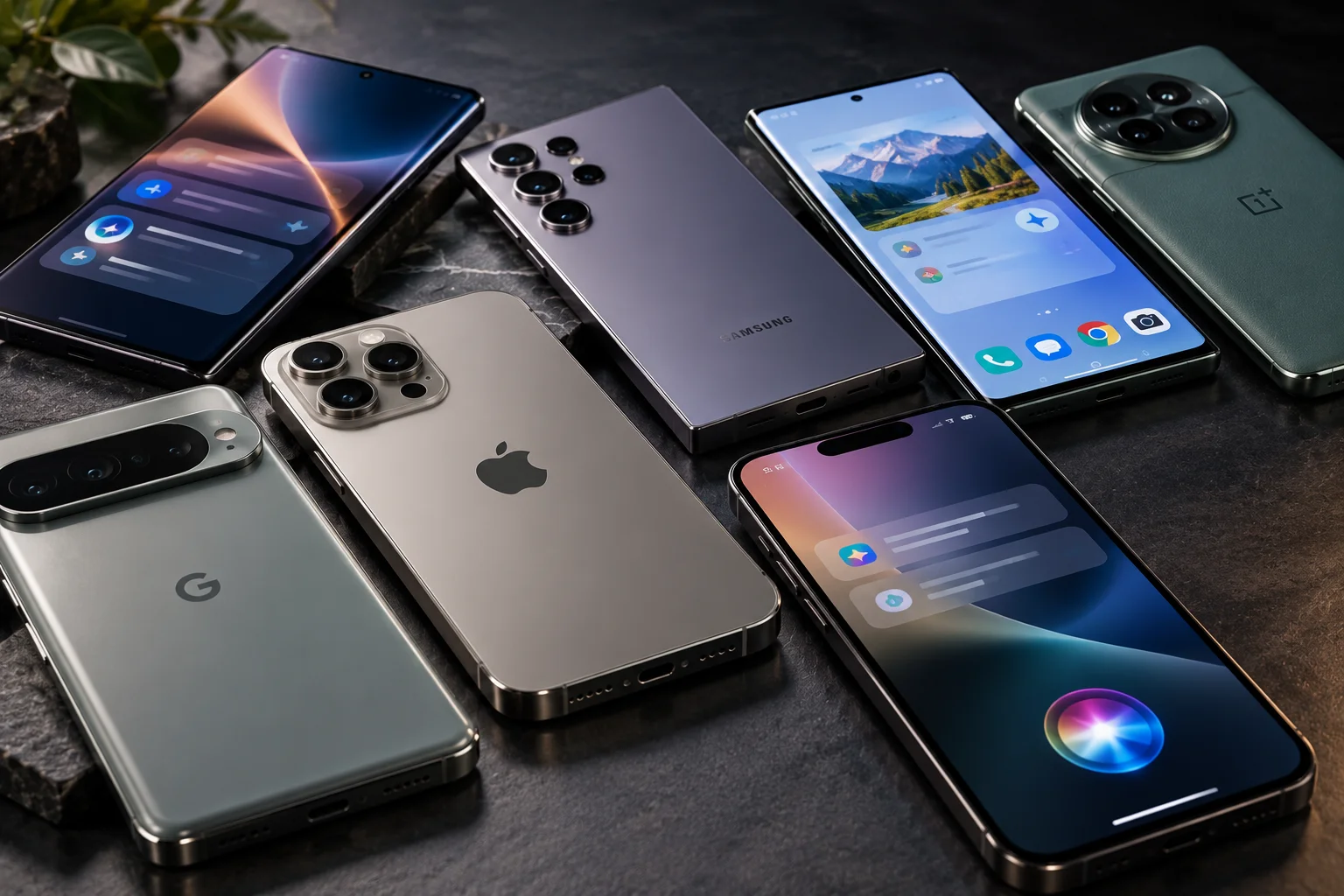
The smartphone industry in 2026 is being reshaped by three major forces: AI, foldable designs and premiumization. But there is another part of the story that is easy to miss. The overall market is shrinking even as smartphone prices rise.
Counterpoint Research's September 2026 forecast expects global smartphone shipments to decline 14.3% this year, making 2026 the steepest annual contraction on record. Memory shortages linked partly to booming AI infrastructure demand are putting particular pressure on cheaper devices, while smartphones priced above $600 are proving more resilient.
At the same time, AI-capable phones are becoming much more common. Counterpoint expects GenAI-capable smartphones to represent 45% of global shipments in 2026, compared with 36% in 2025.
Foldables are also moving beyond the experimental stage, although they remain a small part of the overall market.
The result is a smartphone industry that is selling fewer devices but increasingly concentrating its attention on higher-priced, more capable phones that give consumers a reason to upgrade.
Why is the smartphone market shrinking in 2026?
Global smartphone shipments are falling mainly because of memory shortages, higher component costs and longer replacement cycles.

Counterpoint's latest forecast puts the 2026 decline at 14.3%, while IDC's most recent forecast projects a 16.7% drop to just over one billion units. The exact forecasts differ, but both point to an unusually severe contraction.
Memory has become a particularly important problem.
AI data centers are consuming huge quantities of memory, including high-performance DRAM and HBM. That is putting pressure on memory supply available for smartphones and other consumer electronics.
Lower-cost phones are particularly exposed because manufacturers have less room to absorb higher component costs.
For consumers, that can mean fewer genuinely cheap new smartphones and more pressure to keep an existing phone for another year.
How is AI changing smartphones in 2026?
AI is becoming a standard feature of premium smartphones rather than a niche selling point.
Counterpoint expects GenAI-capable devices to account for 45% of global smartphone shipments this year. However, AI has not yet become a universally compelling reason for consumers to replace otherwise functional phones.
That distinction matters.
Early smartphone AI features often focused on tasks such as photo editing, transcription, translation and writing assistance. The next stage is increasingly about understanding context and completing tasks across multiple applications.
That could eventually make the smartphone feel less like a collection of apps and more like an assistant that operates across them.
The hardware is changing to support this shift, too. More RAM, faster processors and dedicated AI acceleration are becoming increasingly important as models run directly on devices.
Are AI smartphones actually giving people a reason to upgrade?
Not consistently yet, especially for consumers who already own a recent premium phone.
Counterpoint says GenAI capability has become standard in high-end smartphones above the $400 wholesale price level, but notes that AI has not yet created a sufficiently compelling upgrade reason for everyone.
This leaves manufacturers with a familiar problem.
A faster processor or slightly better camera can be difficult to demonstrate in everyday use. An AI system that can meaningfully save time could be more noticeable, but only if it works reliably and offers something consumers cannot easily get elsewhere.
That is why smartphone companies are increasingly emphasizing AI features that connect multiple parts of the device rather than simply adding another chatbot.
Why are foldable phones becoming more important?
Foldables remain a niche category, but they are one of the few parts of the smartphone market still showing meaningful growth.
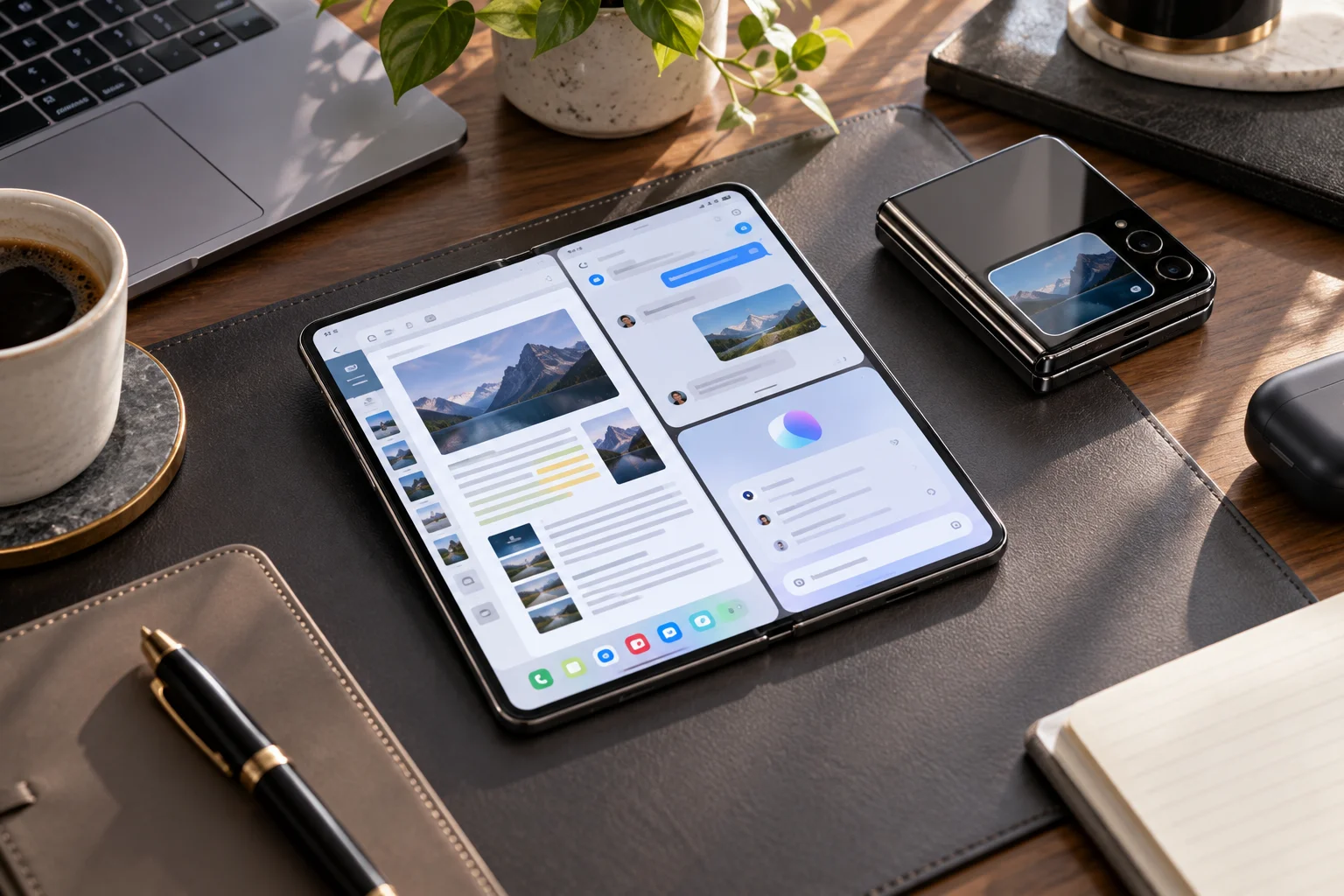
Counterpoint forecasts global foldable shipments to grow 20% in 2026. The category is also moving further toward premium pricing, with book-style foldables becoming increasingly important.
The appeal is relatively easy to understand.
A conventional smartphone gives you a large display in a relatively compact slab. A foldable can provide a much larger screen without requiring a permanently larger device.
That becomes more interesting as smartphones take on productivity and AI tasks.
A larger internal display gives users more room to compare information, monitor an AI-generated task, work across applications or read long documents.
Why are foldable smartphones getting more expensive?
The foldable market is becoming more premium rather than following the traditional pattern of falling prices as a category matures.
Counterpoint expects the average wholesale price of foldable smartphones to rise 18% in 2026. It also forecasts models priced above $1,600 to represent 60% of foldable shipments this year.
Book-style models are largely responsible.
They require sophisticated hinges, flexible displays, compact components and increasingly capable camera and battery systems.
Clamshell foldables are moving toward more accessible pricing, but book-style devices remain firmly positioned toward buyers willing to pay for a different form factor.
Why are premium smartphones becoming more important?
Premium phones are proving more resilient because manufacturers can better absorb higher component costs and consumers are more likely to finance expensive devices.
Counterpoint expects smartphones above $600 to remain relatively resilient during the 2026 downturn. IDC similarly says rising component costs are pushing manufacturers toward higher price tiers.
This is creating a major shift in the economics of the smartphone market.
For years, growth depended heavily on selling enormous numbers of affordable Android phones. In 2026, that model is under greater pressure.
Premium smartphones have higher margins and can support expensive components such as advanced processors, sophisticated camera systems, larger amounts of memory and AI-focused hardware.
The industry is consequently becoming less dependent on volume alone.
What does the memory shortage mean for cheaper smartphones?
Budget smartphones are facing the strongest pressure because rising memory costs can represent a much larger percentage of their total manufacturing cost.
Counterpoint reports that smartphone memory prices have risen sharply as semiconductor manufacturers redirect capacity toward AI-related products, with lower-end devices particularly exposed.
That could accelerate consolidation.
Some manufacturers may reduce the number of entry-level models they sell, while others could increase prices, reduce specifications or focus on higher-margin products.
Consumers may also respond by repairing phones, buying refurbished models or extending replacement cycles.
The refurbished market could therefore become increasingly important during this period.
How are smartphone companies competing in 2026?
The competitive battle is increasingly about ecosystems, AI, cameras, form factors, software support and supply-chain control rather than specifications alone.
Apple and Samsung remain particularly important in the premium segment, while Chinese manufacturers continue experimenting with foldables, camera technology and aggressive hardware designs. Counterpoint says the five largest smartphone OEMs accounted for 72% of global shipments in Q1 2026.
AI is adding another layer to the competition.
The underlying models matter, but so does how manufacturers integrate them into their operating systems and hardware.
A useful AI feature that understands the user's context and works across apps can be more meaningful than simply having a higher benchmark score.
What will the smartphone industry look like after 2026?
The smartphone market is likely to become smaller in volume but more expensive, more AI-centric and increasingly focused on premium devices and differentiated form factors.
The traditional smartphone upgrade cycle is changing.
Consumers are keeping phones longer, while manufacturers are concentrating on features that can justify higher prices. AI could eventually become one of those features, but it still needs to demonstrate consistent everyday value.
Foldables have a different challenge: they need to become durable, useful and affordable enough to move beyond early adopters.
Meanwhile, the memory crisis is exposing how closely smartphones are connected to the wider semiconductor industry. The AI boom is not only creating new AI devices. It is affecting the components inside ordinary phones.
For buyers, the biggest question in 2026 is no longer simply “Which phone has the best specifications?”
It is increasingly “What does this phone let me do that my current phone cannot?”
Smartphone Industry in 2026 FAQs
Are smartphone sales falling in 2026?
Yes. Major research firms expect a significant global decline in smartphone shipments in 2026, although their forecasts differ. Counterpoint currently expects a 14.3% decline, while IDC forecasts a 16.7% decline.
Are AI smartphones becoming mainstream?
Yes. Counterpoint expects GenAI-capable smartphones to account for 45% of global shipments in 2026, up from 36% in 2025.
Are foldable phones growing in 2026?
Yes. Counterpoint forecasts 20% year-over-year growth in global foldable shipments in 2026, although foldables still represent a small share of the overall smartphone market.
Why are smartphones getting more expensive?
Higher memory and component costs are putting pressure on manufacturers. Premium devices are better positioned to absorb those increases, while lower-priced phones face much tighter margins.
Will budget smartphones disappear?
Not entirely, but the lowest-priced segment is under significant pressure. Higher memory costs could make some ultra-low-cost models increasingly difficult to produce profitably.
What is the biggest smartphone trend in 2026?
The combination of AI, premiumization and new form factors such as foldables is defining the market. At the same time, semiconductor and memory shortages are changing the economics of the devices themselves.