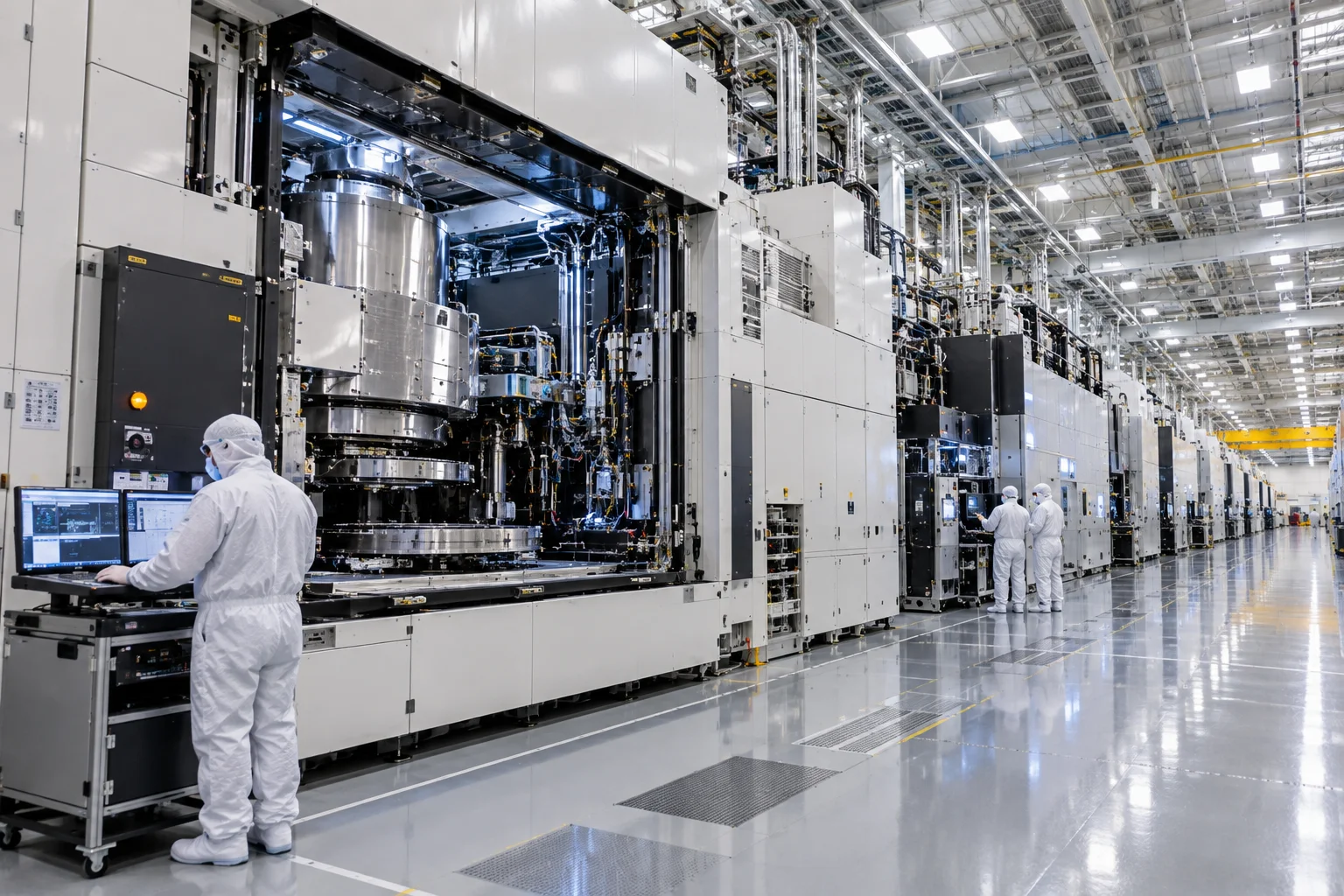
The semiconductor industry is entering a very different phase in 2026. Artificial intelligence is no longer just one source of chip demand. It is becoming a major force determining which chips get manufactured, where new factories are built, how much memory costs and which parts of the supply chain receive investment.
Market forecasts vary considerably, but all point to unusually strong growth. Gartner forecasts worldwide semiconductor revenue of about $1.6 trillion in 2026, up 92% from 2025, while WSTS projects approximately $1.51 trillion. Gartner expects memory alone to account for 54% of industry revenue this year.
The reason is straightforward: modern AI systems require enormous quantities of advanced compute, high-bandwidth memory, networking silicon and sophisticated packaging.
That demand is creating opportunities for chipmakers, but it is also producing bottlenecks. HBM supply, advanced packaging capacity and leading-edge manufacturing are becoming strategic resources, while higher component costs are beginning to affect PCs, smartphones and other electronics.
Why is AI driving the semiconductor market in 2026?
AI data centers require far more advanced semiconductor capacity than conventional computing workloads, particularly for accelerators, memory and networking.
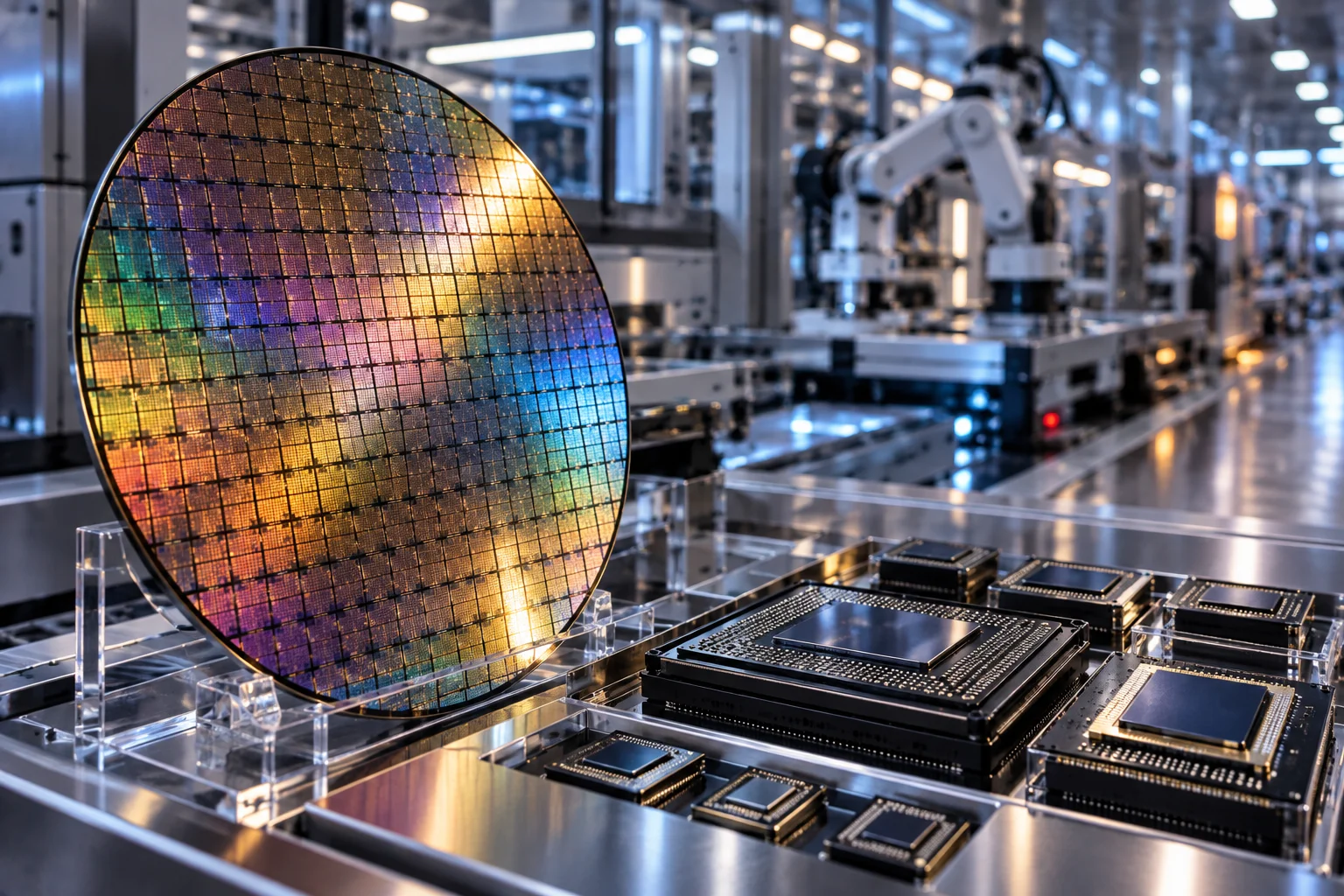
Training and running large AI models requires processors capable of performing huge numbers of calculations simultaneously. Those processors also need extremely fast memory to keep data moving.
Gartner forecasts AI data-center revenue will represent 36.5% of semiconductor revenue in 2026 and expects that share to exceed 53% by 2030.
That changes the industry's center of gravity.
Chip manufacturers aren't simply producing more chips. They are prioritizing the types of components needed for increasingly dense AI infrastructure.
Why is high-bandwidth memory so important?
HBM is critical because AI accelerators need to move enormous amounts of data quickly while keeping power consumption manageable.
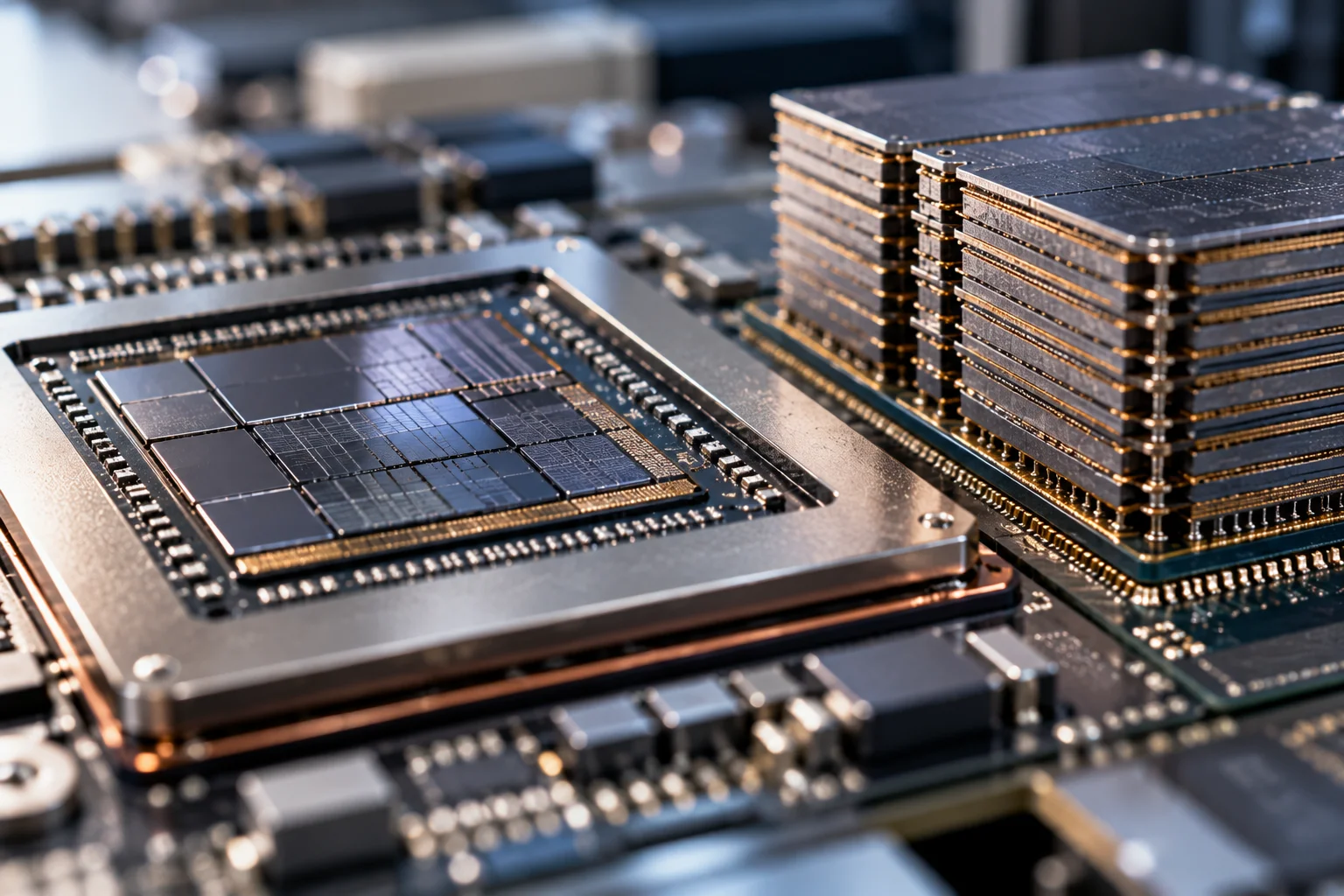
Unlike conventional memory modules, HBM stacks multiple memory layers and places them very close to the processor through advanced packaging.
Gartner expects memory revenue to reach about $837 billion in 2026, with DRAM revenue rising 246.6% and NAND revenue increasing 371.9%. It specifically identifies HBM and higher memory requirements per AI server as major drivers.
This creates a downstream effect.
When memory manufacturers prioritize HBM and other high-value AI products, supply available for conventional applications can become tighter. That can raise costs for PCs, smartphones and other electronics.
AI demand therefore isn't confined to data centers. It can influence the price and availability of components inside everyday devices.
Why is advanced chip packaging becoming a bottleneck?
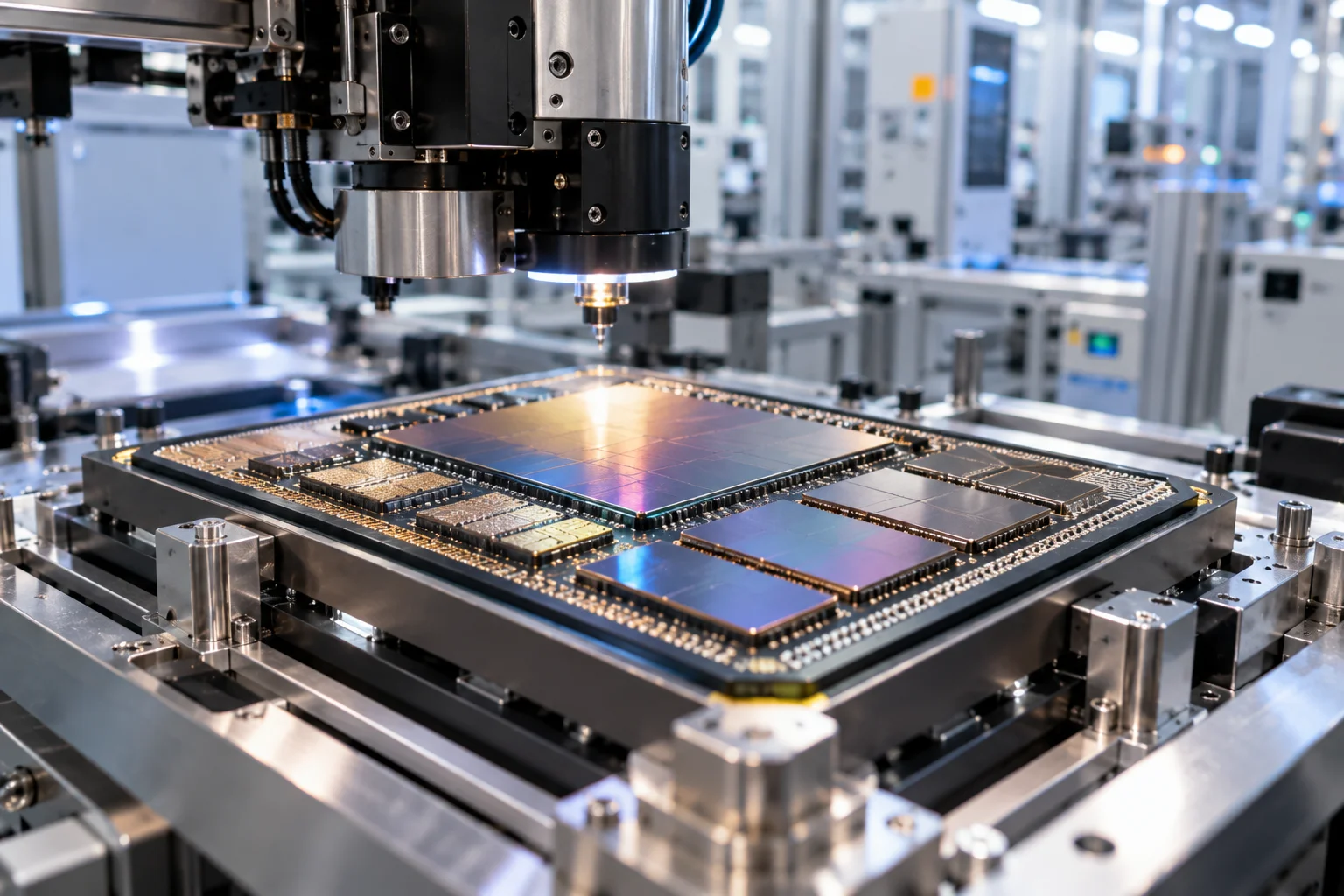
AI processors increasingly depend on advanced packaging to connect large compute dies with high-bandwidth memory, making packaging capacity almost as important as wafer manufacturing.
Techniques such as TSMC's CoWoS allow multiple components to be integrated into increasingly sophisticated packages.
TrendForce says AI demand has created bottlenecks in 3nm–2nm wafer capacity and 2.5D/3D advanced packaging, with shortages extending into substrates, materials and equipment.
This is significant because simply building another semiconductor fab does not immediately solve the problem.
The industry also needs specialized packaging equipment, materials, testing capacity and engineering expertise.
SEMI expects semiconductor manufacturing equipment sales to reach a record $165.9 billion in 2026, with spending driven by leading-edge logic, advanced memory, testing and packaging.
Why are TSMC and other foundries so important?
AI chip designers increasingly depend on access to leading-edge manufacturing processes, particularly advanced nodes used for high-performance processors.
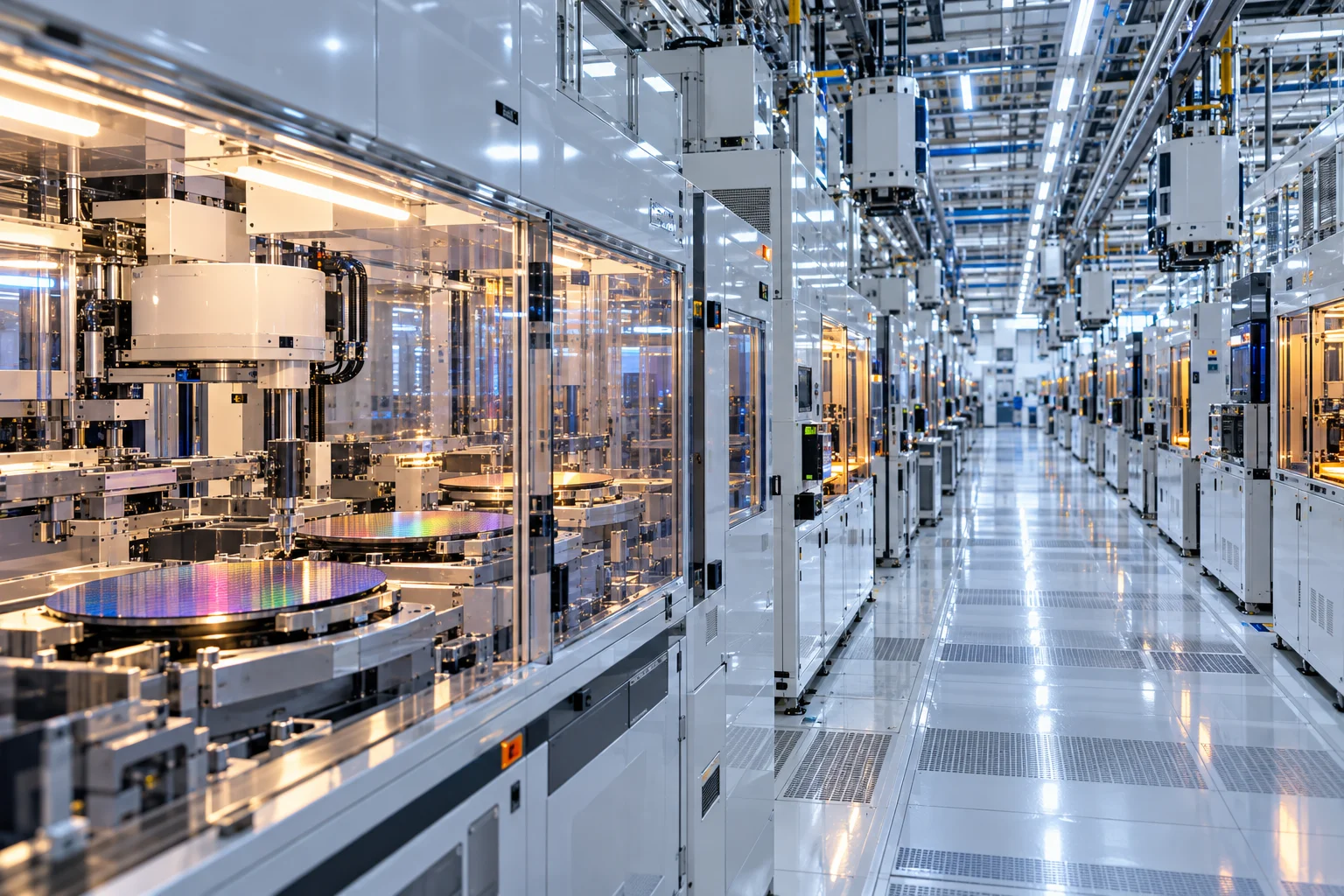
Companies such as NVIDIA, AMD and many custom accelerator designers can develop chip architectures without owning the factories that manufacture them.
That makes foundries strategically important.
TSMC remains a major supplier of advanced logic manufacturing, while Samsung and Intel are investing in their own foundry capabilities and next-generation processes.
TrendForce reports that AI demand has concentrated pressure on 3nm capacity and that TSMC has been accelerating expansion to address the imbalance.
The result is a semiconductor industry where chip design, manufacturing capacity and packaging capacity are increasingly interconnected.
How is AI changing semiconductor manufacturing investment?
Chipmakers and equipment manufacturers are investing heavily in capacity designed around AI workloads rather than treating AI as another end market.
SEMI expects wafer-fab equipment spending to rise 23.1% in 2026 to approximately $143.9 billion. It says leading-edge logic investment is being driven by AI accelerators and high-performance computing, while memory investment is being pushed by HBM and advanced DRAM.
Memory-related 300mm fab equipment investment is expected to exceed $50 billion in 2026, according to SEMI.
This creates a self-reinforcing cycle:
More AI demand → more chip orders → more factory investment → more advanced capacity → more AI infrastructure.
The challenge is making sure that investment doesn't overshoot if AI infrastructure spending eventually slows.
Is the semiconductor industry becoming too dependent on AI?
AI is becoming a dominant growth engine, creating both opportunities and concentration risk.
Deloitte describes 2026 as a high-stakes period for the semiconductor industry because strong AI demand is pushing revenues higher while increasing exposure to a single powerful growth driver.
If AI infrastructure investment remains strong, semiconductor manufacturers stand to benefit from sustained demand.
If hyperscalers substantially reduce capital spending, however, companies that have expanded heavily around AI could face excess capacity or weaker pricing.
This is particularly relevant for memory because the market is historically cyclical.
The industry therefore has to balance aggressive investment with the possibility that demand will eventually normalize.
How is AI affecting consumer electronics?
Consumers can feel the AI semiconductor boom through higher memory costs and tighter component supply, even when they aren't buying AI hardware.
Omdia expects memory ICs to account for more than half of total semiconductor revenue in 2026 and says AI-driven demand is contributing to higher component costs for smartphones, PCs and consumer electronics.
That creates an unusual situation.
A person buying a conventional laptop may effectively be competing for memory supply with a hyperscale data center building an AI cluster.
Manufacturers can respond by raising prices, changing memory configurations or prioritizing higher-margin products.
Over time, increased semiconductor production should help ease some shortages, but new fabs and packaging facilities take years to build and qualify.
Why are governments investing in semiconductor supply chains?
AI has made semiconductor manufacturing a strategic issue because advanced chips are critical infrastructure for computing, defense and technology industries.
The concentration of advanced manufacturing and packaging in particular regions has encouraged the US, Europe and Asian economies to invest in domestic or regional semiconductor capabilities.
The goal isn't necessarily complete self-sufficiency. Semiconductor production is too globally interconnected for that to happen quickly.
Instead, governments and companies are attempting to diversify critical stages of the supply chain, including fabrication, advanced packaging and memory.
That diversification is expensive, but AI has made the resilience question much harder to ignore.
What happens to chip companies outside the AI market?
AI is creating both competition and spillover demand across the semiconductor industry.
Automotive chips, industrial electronics, smartphones and PCs still require semiconductor capacity.
At the same time, AI infrastructure needs CPUs, networking chips, power-management components, optical technologies, storage and other supporting silicon.
Gartner expects non-memory semiconductor revenue to grow from $589 billion in 2025 to about $718 billion in 2026.
That means the AI boom isn't benefiting only GPU manufacturers.
It is reshaping the entire infrastructure stack around them.
What does the semiconductor market look like by the end of 2026?
The industry is likely to be larger, more AI-focused and more dependent on advanced memory and packaging than it was at the beginning of the year.
The biggest structural change is that semiconductor performance is no longer determined only by the transistor technology inside an individual chip.
System-level design now matters enormously.
AI processors need high-bandwidth memory, advanced interconnects, sophisticated packaging, powerful networking and efficient power delivery. SEMI's investment forecasts reflect how much of the manufacturing ecosystem is adapting to those requirements.
The semiconductor industry is therefore moving toward a model where compute, memory, packaging and infrastructure are increasingly designed as one system.
AI is driving that transition faster than almost any previous computing trend.
Semiconductor Industry in 2026 FAQs
Why is AI increasing demand for semiconductors?
AI systems require large numbers of high-performance processors, HBM, networking chips, storage and power-management components. The scale of AI data-center construction is therefore creating demand across the semiconductor supply chain.
What is HBM and why does AI need it?
High-bandwidth memory is a specialized form of memory designed to provide very high data-transfer rates close to AI processors. It helps accelerators receive data quickly enough to keep their computing resources busy.
Why is advanced packaging important for AI chips?
Advanced packaging allows processors, memory and other components to be integrated closely together. This can increase bandwidth and efficiency while allowing manufacturers to build more complex AI systems.
Will AI make chips more expensive?
It can contribute to higher component prices when demand exceeds available supply. Gartner and Omdia both identify strong AI-driven memory demand and supply constraints as major factors affecting the 2026 semiconductor market.
Is the semiconductor industry still growing outside AI?
Yes. AI is the dominant growth driver in many parts of the market, but automotive, industrial, mobile and other applications continue to generate substantial semiconductor demand.
What is the biggest semiconductor trend in 2026?
The integration of AI compute, high-bandwidth memory and advanced packaging is one of the defining trends. The industry is increasingly building the entire computing system around the requirements of AI workloads.