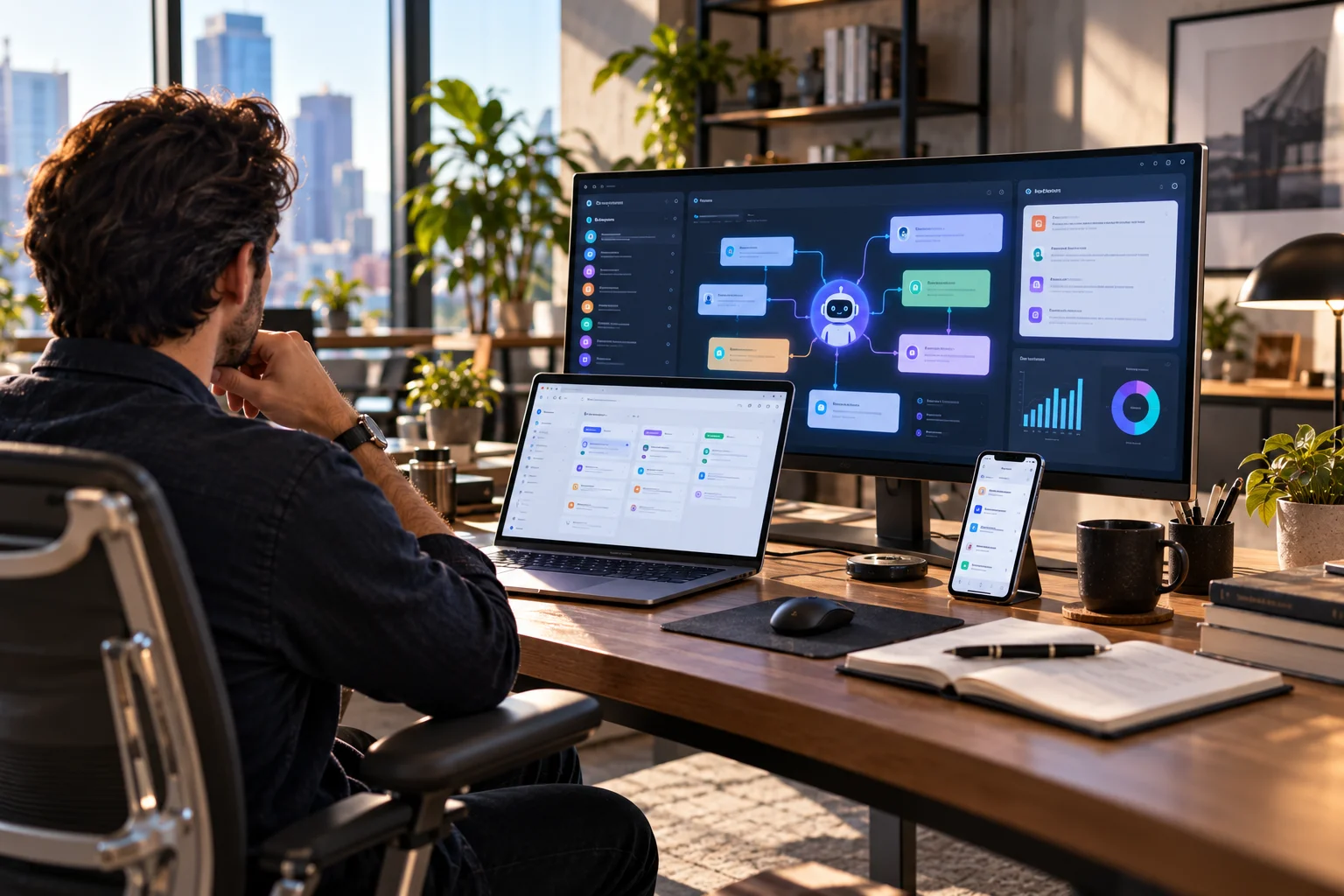
Technology in 2027 is likely to look less like a collection of separate trends and more like a connected shift toward autonomous software, intelligent devices and AI operating across the physical world.
AI agents are moving from experiments toward practical workflows. Smart glasses and other screenless devices are creating new interfaces. Robots are gaining more capable AI systems. AI processing is moving closer to devices, while data centers continue expanding to support increasingly demanding workloads.
Gartner forecasts worldwide AI spending will reach $3.2 trillion in 2027, up from $2.7 trillion in 2026. Its forecast includes particularly rapid growth in AI agents and assistants, which are projected to rise from $29.2 billion in 2026 to $65.5 billion in 2027.
IDC's FutureScape 2027 similarly describes a major shift in which intelligence moves from the cloud toward devices and the physical world, while software applications increasingly become agentic platforms.
The interesting question for 2027 is therefore not whether AI will continue growing.
It is where that intelligence will live, what it will be allowed to do and how people will interact with it.
What will be the biggest technology trend in 2027?
AI agents are likely to be one of the defining technology trends of 2027, moving AI from generating responses toward completing tasks.
IDC predicts that enterprise use of AI agents will increase tenfold by 2027, while agentic automation is expected to become part of more than 40% of enterprise applications.
That represents a meaningful change in software.
A traditional application waits for a user to open it and perform a sequence of actions.
An agent can potentially understand a goal, access the required tools, execute several steps and return with a result.
For example, instead of asking an employee to search several systems and prepare a report manually, an agent could gather the information, analyze it and produce a draft.
The human increasingly becomes the person who sets the objective, reviews the result and handles exceptions.
Will AI agents replace traditional apps?
AI agents are more likely to sit across applications and coordinate them than immediately eliminate every traditional app.
Gartner expects the software industry to increasingly embed agentic AI into existing products, while IDC predicts major companies will begin rationalizing their growing portfolios of agents and applications.
This could change how software is designed.
Instead of opening a CRM, spreadsheet, email client and project-management platform separately, a user might increasingly interact with an AI layer that works across them.
The underlying applications still provide databases, permissions and specialized functionality.
But the interface could become conversational and goal-driven.
That creates a new competitive question for software companies: does the user still need to interact directly with your application?
Why will AI move beyond the screen?
The next stage of AI is increasingly about physical devices that can sense, understand and act in the real world.
Omdia identifies Physical AI as one of four forces expected to reshape technology in 2027, describing a shift in which intelligence moves beyond software and screens into physical environments.
Smart glasses are an early example.
Instead of opening an app to identify something, translate speech or ask a question, a user can potentially interact with AI through glasses equipped with cameras, microphones and speakers.
Robots take the idea further.
They can perceive an environment, make decisions and physically perform actions.
The result is a broader definition of computing: AI is no longer confined to a display or keyboard.
Are AI glasses becoming mainstream in 2027?
AI glasses are likely to become an increasingly important consumer technology category as manufacturers combine AI with familiar eyewear.

Recent consumer research points toward strong momentum. NIQ reports smart glasses grew more than 300% across the EU5 in Q1 2026, while highlighting hands-free capture, open-ear audio, translation and contextual AI assistance as key use cases.
The form factor matters.
A pair of glasses can provide computing without requiring users to hold a device or constantly look at a screen.
That could make AI more useful during activities such as walking, travelling, shopping and working.
But privacy and social acceptance remain important considerations, particularly when cameras and microphones are involved.
Why will robotics become more important?
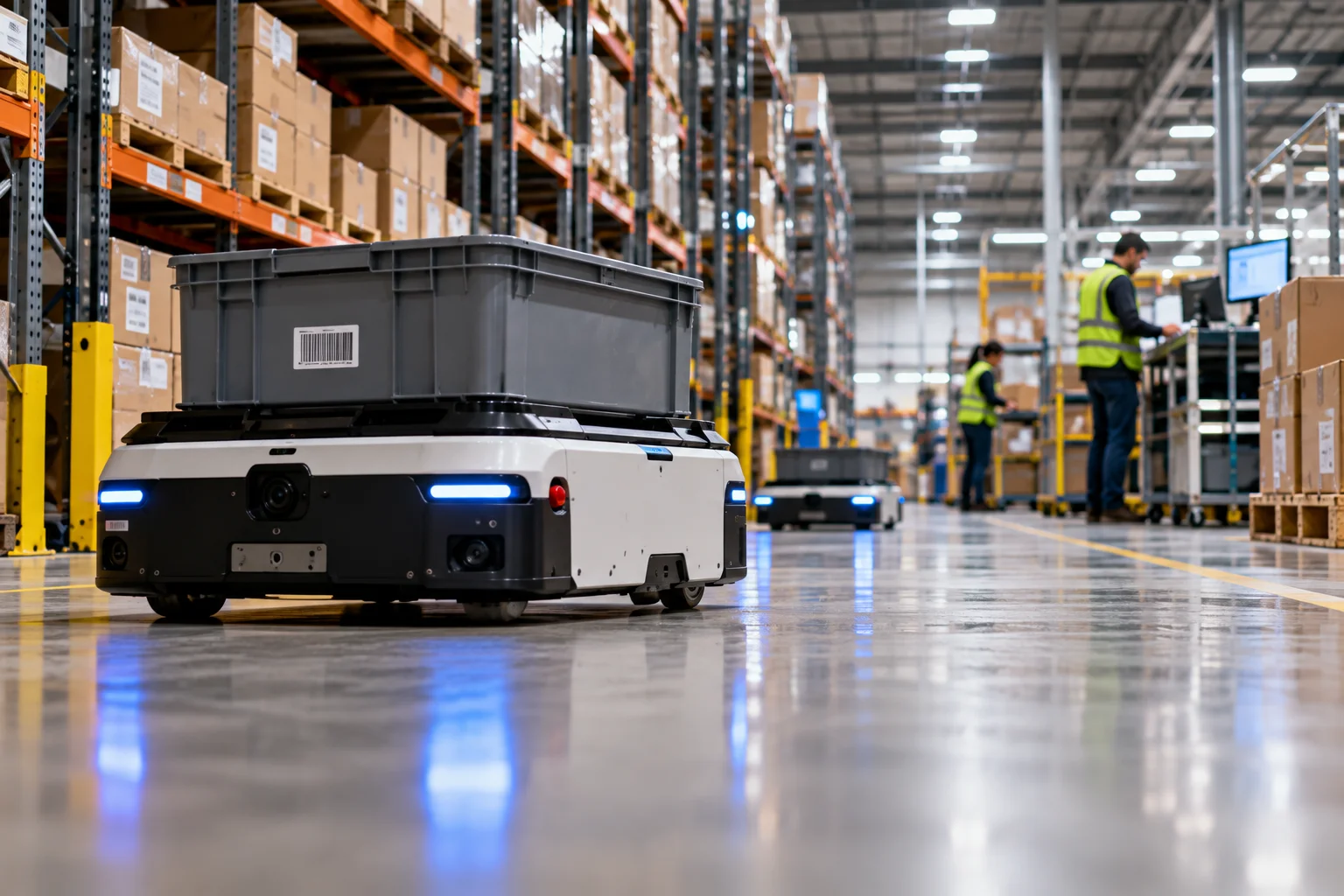
AI is giving robots better perception, reasoning and adaptability, expanding automation beyond predictable industrial environments.
Robots are already common in manufacturing and logistics. The emerging change is the use of AI to help machines deal with more complicated and variable environments.
IDC reports that household cleaning robots shipped more than 30 million units globally in 2025 and that the market grew by more than 25% year over year during the first half of 2026. It expects household cleaning-robot shipments to reach 54 million units by 2030.
The same underlying technology is beginning to spread beyond vacuum cleaners.
Lawn-care robots, pool-cleaning robots, warehouse systems and eventually more general-purpose machines can use combinations of computer vision, sensors, AI models and autonomous navigation.
Gartner predicts that by 2030, 80% of front-line workers at international companies will be assisted by physical AI systems such as robots, drones and autonomous vehicles.
Will AI become more local and less dependent on the cloud?
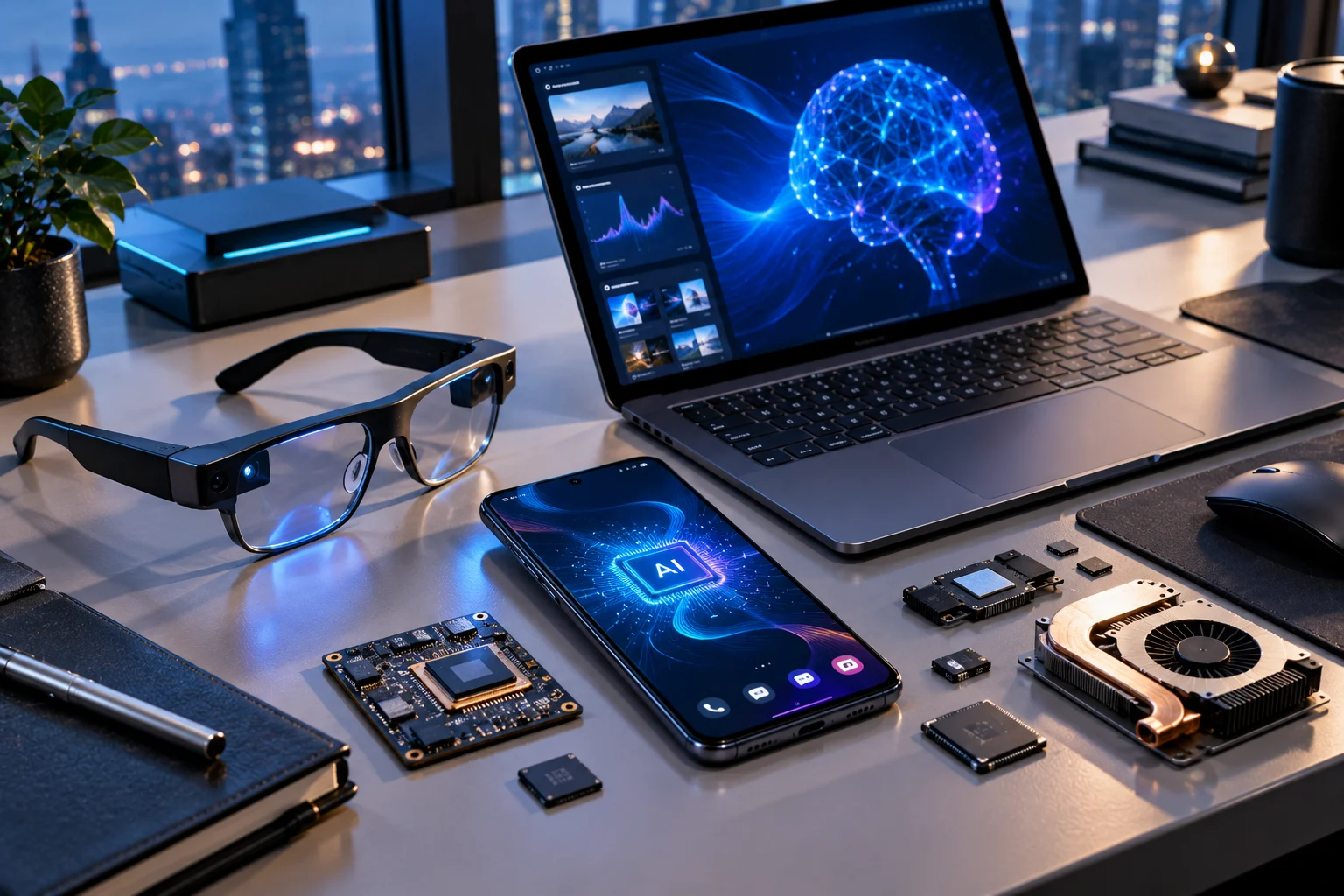
More AI processing is likely to move onto PCs, smartphones, wearables and other edge devices while cloud infrastructure continues handling the largest workloads.
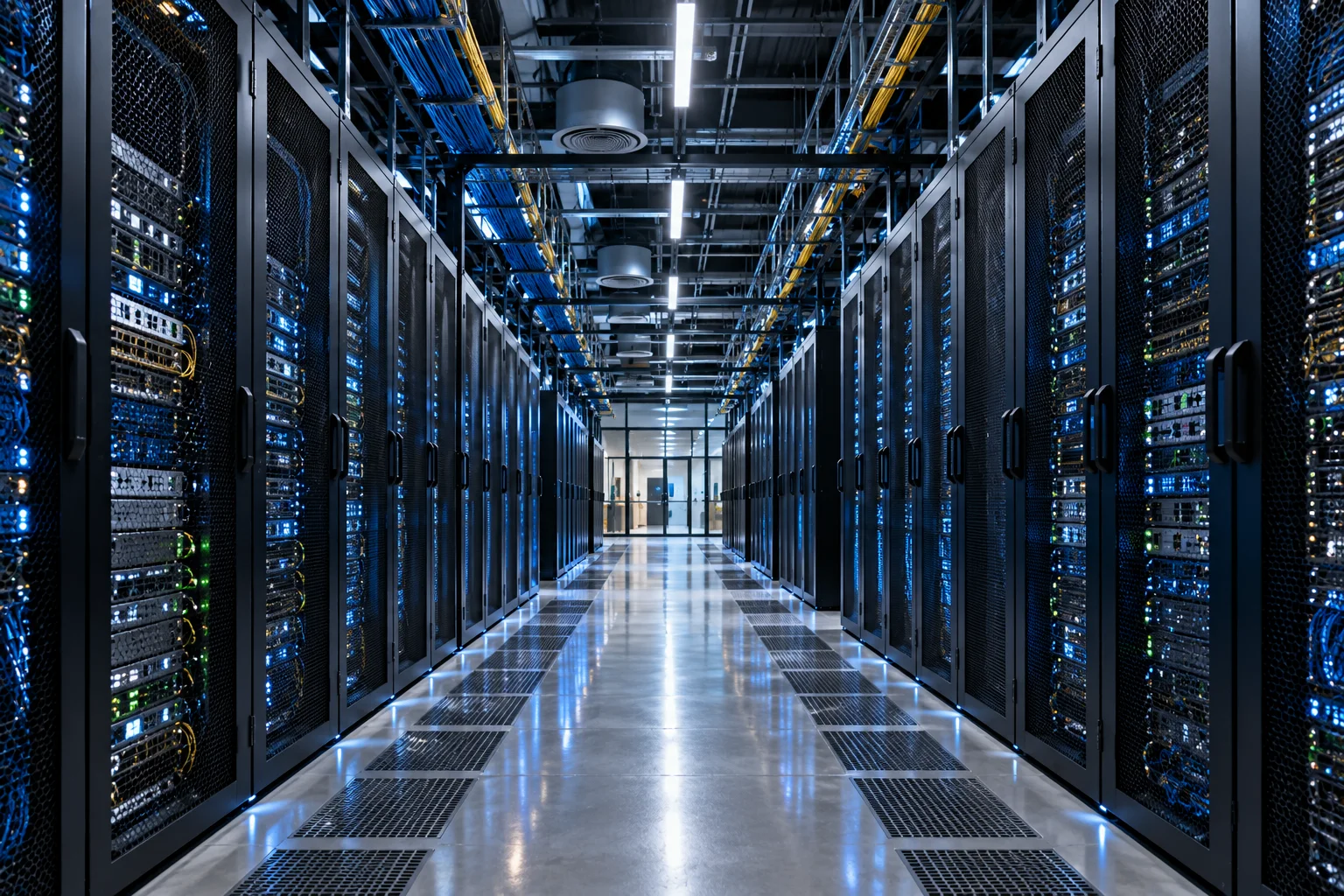
IDC's 2027 predictions describe intelligence moving from the cloud toward devices themselves, with AI factories handling large-scale inference while agents increasingly operate at the network edge.
There are practical reasons for this shift.
Local processing can reduce latency, improve privacy and allow certain AI features to work without a constant cloud connection.
But powerful models still require substantial computing resources.
The likely result is a hybrid architecture: small or specialized models run locally, while more demanding reasoning is sent to cloud infrastructure.
Why will AI chips and data centers remain important?
The growth of AI software and agents will continue creating demand for specialized processors, memory, networking and data-center capacity.
Gartner expects AI infrastructure investment to remain a major driver of overall AI spending, describing the expansion of AI data-center capacity as an enormous infrastructure buildout.
This means the AI boom is also a semiconductor and energy story.
Every additional agent interaction consumes computing resources.
As agents move from answering questions to performing multi-step tasks, the amount of inference performed across cloud and edge infrastructure can increase substantially.
That will put pressure on chip efficiency, networking, cooling and electricity supply.
Will cybersecurity change as AI agents become more autonomous?
Yes. Security will increasingly have to protect not only data and applications but also AI systems that can take actions.
An agent with permission to access email, documents, financial systems or business applications creates a different security problem from a chatbot that only produces text.
Gartner's 2027 predictions highlight emerging risks including AI-driven pressure on public services and attacks designed to deliberately increase AI usage and costs.
Organizations will need stronger identity controls, permission systems, monitoring and audit trails.
The question will increasingly be:
Who authorized the AI to perform this action, what information did it use and can we prove what happened?
That makes AI governance part of everyday cybersecurity rather than a separate compliance exercise.
Why will AI cost and ROI become more important in 2027?
The technology industry is moving from proving what AI can do toward proving that it is economically worthwhile.
Omdia identifies AI monetization as one of the four forces shaping technology in 2027.
Gartner similarly expects organizations to create dedicated functions for measuring AI costs against value as agentic systems become more widespread.
This could change how AI software is priced.
Instead of paying simply for user seats, businesses may increasingly pay according to tasks completed, inference consumed or measurable outcomes.
That makes efficiency important.
A slightly less capable model that completes a task at a fraction of the cost could become more attractive than the most powerful model available.
What other technology trends could shape 2027?
Quantum computing, connectivity, physical automation and digital sovereignty will remain important alongside AI.
IDC's 2027 outlook highlights quantum computing moving toward practical use cases beyond cryptography, while connectivity is expanding through satellite and other infrastructure.
At the same time, Omdia identifies digital sovereignty and persistent supply-chain disruption as major forces shaping technology competition.
This reflects a broader reality.
Technology companies are no longer competing only on software features.
They are also competing over chips, energy, networks, manufacturing capacity, data and control of critical infrastructure.
What will technology look like in 2027?
Technology in 2027 is likely to become more autonomous, more physical and more distributed.
AI agents will increasingly perform tasks instead of simply answering questions.
Smart glasses and other wearables will bring AI closer to everyday activities.
Robots will carry intelligence into factories, homes and other physical environments.
AI processing will spread between cloud data centers and edge devices.
And businesses will become more focused on whether AI produces measurable value rather than simply demonstrating impressive capabilities.
The common thread is AI becoming infrastructure rather than a standalone feature.
The biggest technology shift of 2027 may therefore be difficult to see as a single product launch. It will be the gradual disappearance of the boundary between software, hardware and intelligent automation.
Technology Trends 2027 FAQs
What is the biggest technology trend for 2027?
AI agents are expected to be one of the most significant trends. IDC forecasts enterprise agent use to increase tenfold by 2027, while Gartner forecasts spending on AI agents and assistants to reach $65.5 billion.
Will AI agents replace apps?
Not necessarily. Agents are more likely to operate across existing applications and services, changing how users interact with them. Traditional software will continue providing specialized functionality, data and infrastructure.
Will AI glasses become mainstream in 2027?
AI glasses are expected to gain momentum as manufacturers improve their design, AI capabilities and everyday usefulness. Consumer research already shows strong growth in smart glasses and interest in hands-free AI experiences.
What is Physical AI?
Physical AI refers to AI systems that perceive and interact with the physical world. Robots, autonomous vehicles and drones are examples of technologies that can use physical AI.
Will robots become more common in homes?
The household robotics market is already expanding beyond traditional robot vacuums into lawn care, pool cleaning and other applications. IDC expects household cleaning-robot shipments to reach 54 million units by 2030.
Will AI run directly on devices?
Increasingly, yes. Smartphones, PCs, glasses and other edge devices are gaining dedicated AI processing, although demanding workloads will continue relying on cloud infrastructure.
Why will AI costs matter more in 2027?
As agents perform more tasks and make more AI calls, inference and infrastructure costs can become substantial. Gartner expects organizations to increasingly measure AI spending against business value and introduce stronger cost controls.
What should consumers watch in 2027?
Look beyond individual AI models. AI glasses, agentic assistants, AI PCs and smartphones, household robotics, on-device AI and new forms of human-computer interaction are likely to have a more visible impact on everyday technology.