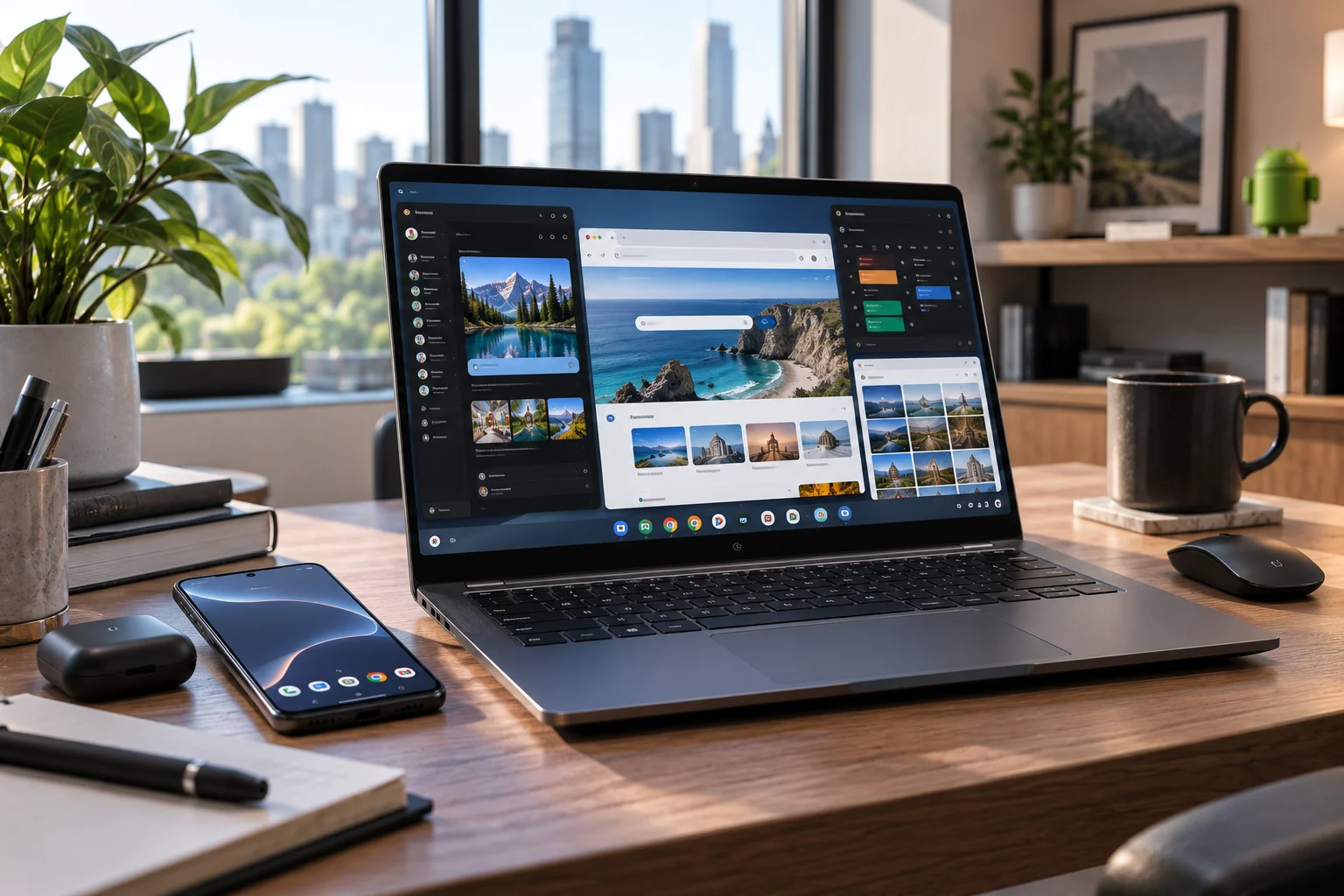
Googlebook is Google's new premium laptop category built around Gemini Intelligence, Android integration and higher-end hardware, marking a significant departure from the company's traditional Chromebook strategy. Instead of positioning these machines primarily as simple, cloud-first computers, Google is trying to make the laptop a more intelligent extension of the Android ecosystem.
The first Googlebooks are being produced by Acer, ASUS, Dell, HP and Lenovo, with prices starting at $899 in the US. Google says the initial machines use Intel Core Ultra Series 3 or Qualcomm Snapdragon X Elite processors, include dedicated NPUs capable of more than 45 TOPS, start with 16GB of RAM, and offer up to 14 hours of video playback or 16 hours of web use depending on configuration.
But the hardware isn't really the story.
The bigger change is the software architecture.
Google is combining Android technology with the desktop foundations of ChromeOS, while putting Gemini directly into the operating system. The result is intended to compete in a space traditionally occupied by Windows laptops and MacBooks rather than simply offering another inexpensive Chromebook.
What Is Googlebook and How Is It Different From a Chromebook?
Googlebook is a new premium laptop category that combines Android technology, ChromeOS desktop foundations and Gemini Intelligence, rather than simply being a more expensive Chromebook.
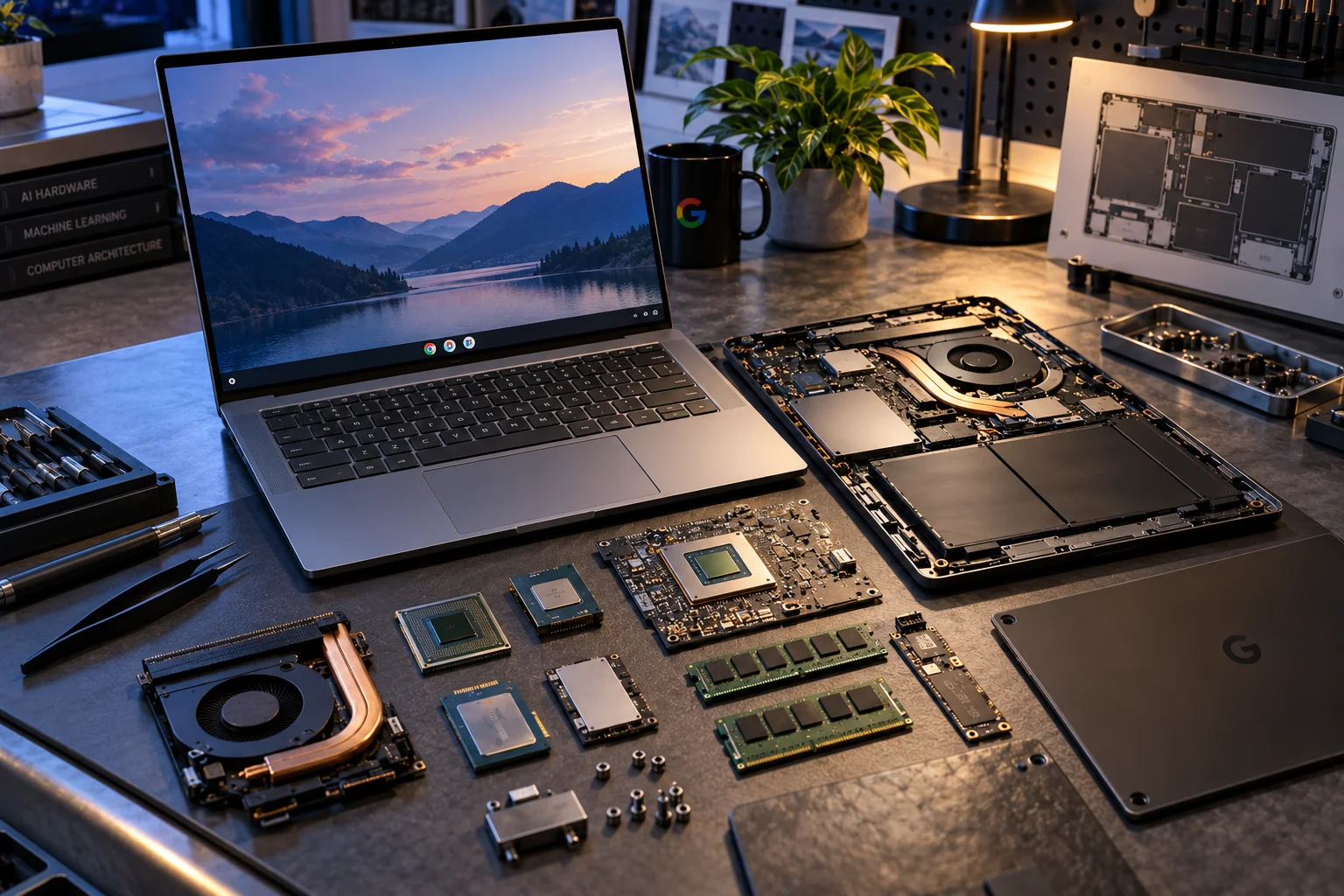
Google describes the platform as bringing together what it sees as the strengths of Android and ChromeOS.
Android contributes:
Access to Google Play and Android applications
Smartphone integration
A common technology foundation across devices
Modern AI capabilities
Cross-device experiences
ChromeOS contributes:
Desktop browsing
Laptop-oriented interaction
Keyboard and trackpad workflows
Cloud-based productivity
Chrome's desktop environment
The security and management foundations Google has developed for ChromeOS
Google's own FAQ makes the distinction explicit: Chromebooks continue to run ChromeOS, while Googlebooks combine ChromeOS and Android technology in a new premium category designed around Gemini and Android-phone connectivity.
That makes Googlebook less like "Chromebook Pro" and more like Google's attempt to redefine what its laptop platform should be.
Why Is Google Moving Beyond the Chromebook?
Google is trying to capture users who want a premium laptop experience without giving up the Android ecosystem they already use on their phones.
Chromebooks established Google's presence in laptops, particularly in education, business and users who primarily work through the browser.
But the premium laptop market is different.
People spending $900 or more increasingly expect:
High-quality displays
Powerful processors
Local AI
Excellent speakers
Premium materials
Long battery life
Advanced multitasking
High-quality webcams
Smartphone integration
Desktop-class applications
Googlebook is designed around those expectations.
Google says its new laptops feature premium materials such as aluminium, magnesium alloy and carbon fibre, displays up to 2.8K OLED, haptic trackpads, backlit keyboards and up to six speakers with Dolby Atmos.
The message is clear:
Google no longer wants its premium laptop proposition to be defined by affordability and simplicity alone.
Gemini Is the Real Reason Googlebook Exists
Gemini is not being treated as an application you open when you need AI; Google is building it into the laptop experience itself.
This is probably the most important distinction between Googlebook and a conventional laptop with a Gemini app installed.
Google describes Googlebook as an "intelligence system", with Gemini integrated directly into the device and able to understand the context of what you're doing.
One example is Magic Pointer.
Instead of opening a separate chatbot, you can use a cursor gesture to invoke Gemini around the content you're working with. Google says Magic Pointer can understand text, images and context and bring Gemini into the workflow.
That changes the basic interaction model.
Traditional workflow:
See something → select it → open an AI tool → explain what you want → get the result
Google's proposed workflow:
See something → invoke Gemini in context → let the system understand what you're looking at
That's a subtle change, but potentially a significant one.
What Can Gemini Actually Do on a Googlebook?
Google is positioning Gemini as a proactive assistant that can work across information, applications and the desktop rather than functioning solely as a conversational chatbot.
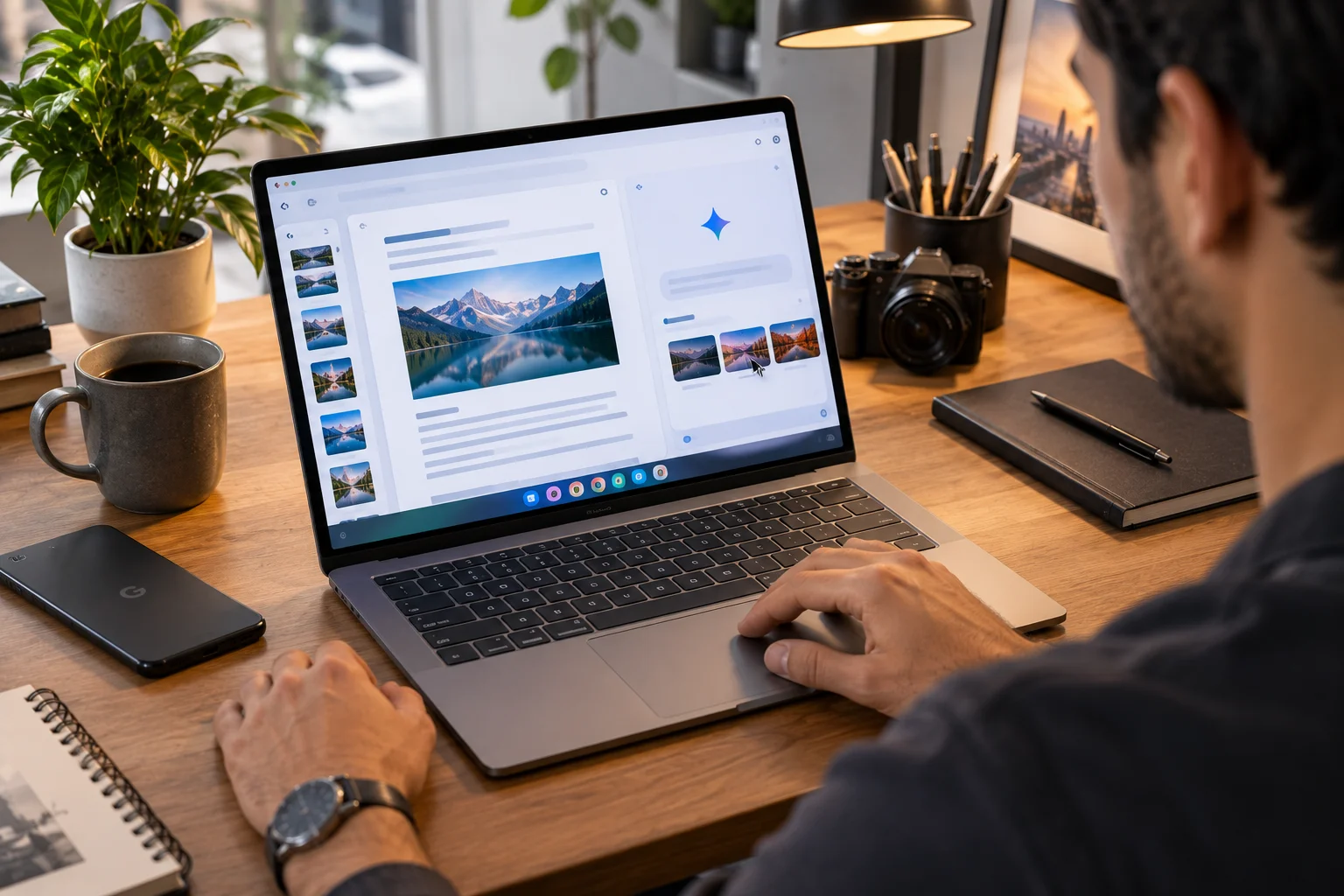
Google says Gemini can connect with Google apps such as Gmail and Calendar to create personalized information on the desktop. For example, information about travel plans, reservations and schedules can be brought together into a more contextual workspace.
Googlebook also introduces features designed around contextual interaction.
These include:
Magic Pointer for contextual AI interaction
Gemini integration across the desktop
Personalized suggestions
Android app integration
Task continuation between phone and laptop
File sharing between devices
Phone-app access from the laptop
Google's broader vision is that the AI understands what you're doing, rather than requiring you to describe the entire situation manually.
That's where Googlebook starts to resemble Google's wider Gemini Intelligence strategy.
How Does Googlebook Connect to Android Phones?
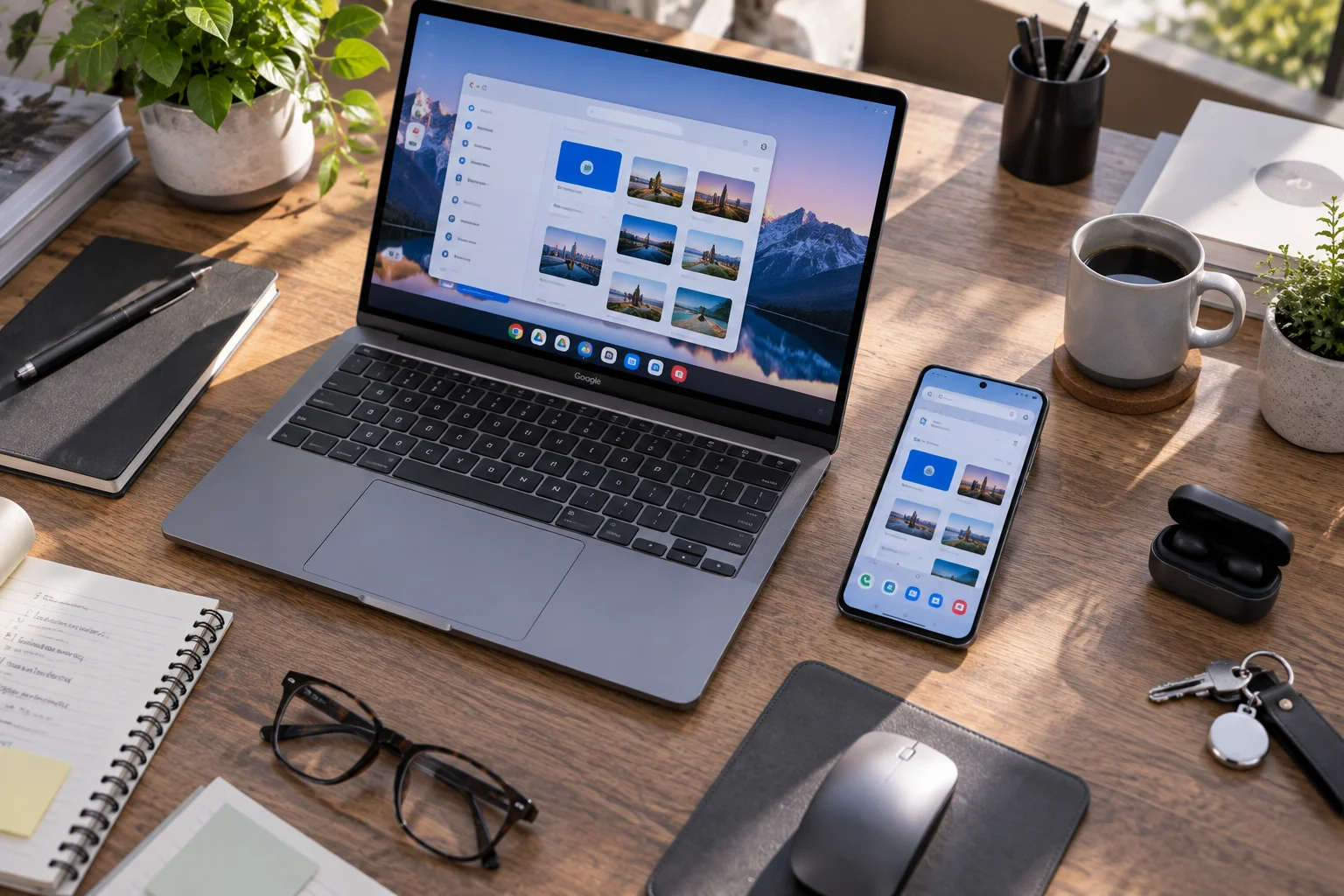
Android-phone integration is one of Googlebook's defining features, turning the laptop into an extension of the phone rather than a separate device.
Google says Googlebook is built on a shared Android technology foundation specifically to make the transition between phone and laptop more seamless.
The company has demonstrated experiences where users can:
Continue tasks between phone and laptop
Access Android apps from the laptop
Share files
Transfer activities between devices
Interact with phone content from the larger screen
Google's example is deliberately simple: you might be working on your laptop, open a phone app to complete a quick task and then return to your existing workflow.
That approach directly addresses one of the biggest advantages Apple has created with the iPhone-Mac relationship.
Can Googlebook Run Android Apps?
Yes, Android applications are part of the Googlebook strategy, but Google is also designing them to behave more naturally within a laptop environment.
This is important because Android apps have traditionally been awkward on larger screens.
A phone application designed around a 6-inch touchscreen doesn't automatically become a good desktop application.
Googlebook is therefore trying to make Android apps part of a broader desktop environment.
Google says the platform provides access to millions of Android apps through Google Play while retaining Chrome's desktop browsing environment.
Some experiences go even further.
Google's current Googlebook materials describe Cast My Apps, allowing supported Android apps to appear on the laptop without requiring a conventional local installation. Availability depends on compatible Android devices and software.
That could make the distinction between "phone app" and "desktop app" much less important for everyday tasks.
What Hardware Does a Googlebook Have?
Googlebook hardware is positioned much closer to premium Windows laptops and MacBooks than traditional entry-level Chromebooks.
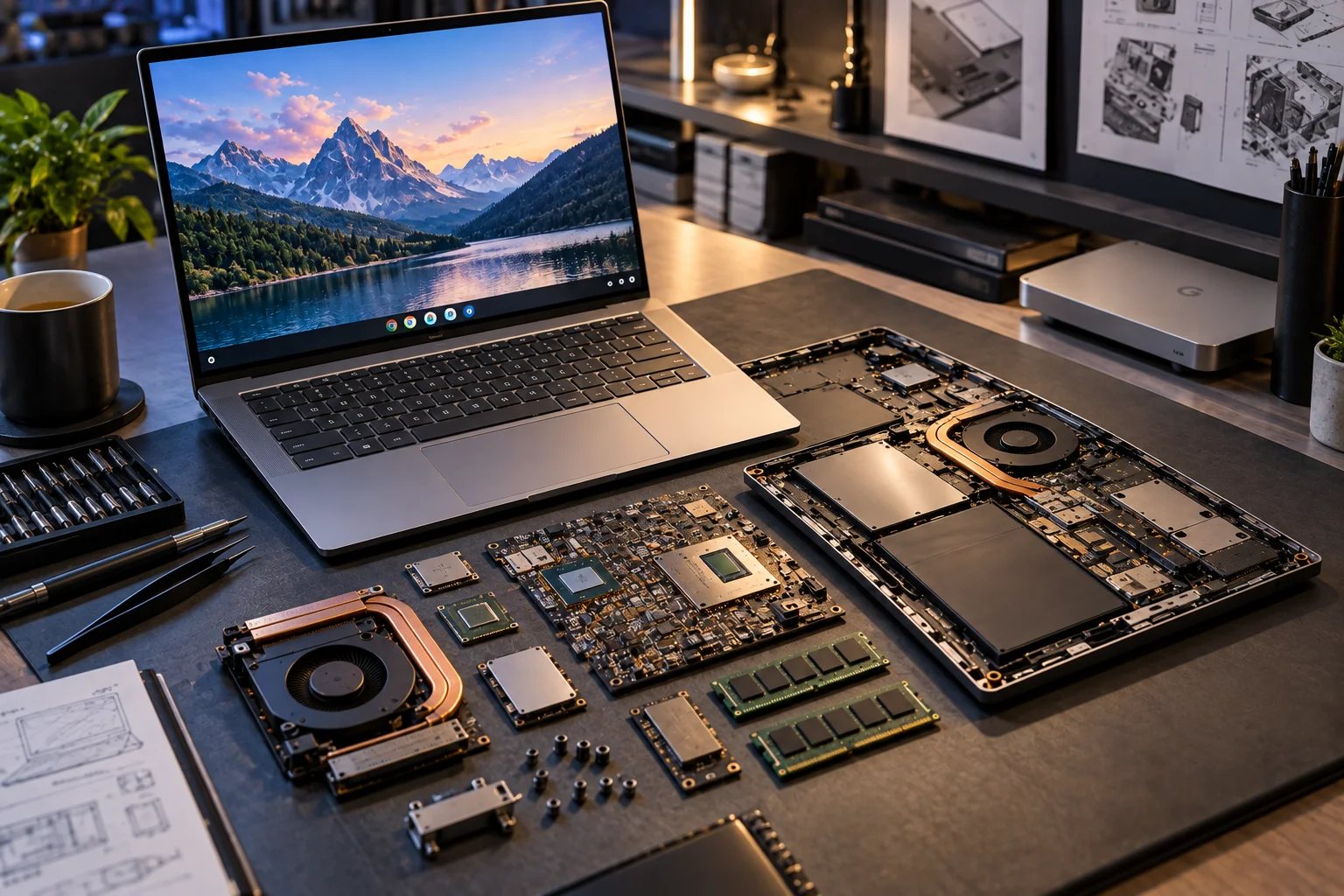
Google's initial lineup starts at $899 and includes machines from five manufacturers.
Across the portfolio, Google says buyers can expect:
Hardware | Googlebook platform |
|---|---|
Starting price | $899 |
RAM | 16GB baseline |
Maximum RAM | Up to 32GB on some models |
Processors | Intel Core Ultra Series 3 / Snapdragon X Elite |
NPU | More than 45 TOPS |
Displays | Up to 2.8K OLED |
Storage | Varies by manufacturer |
Battery | Up to 14h video / 16h web |
Touch | Available across the premium lineup |
Trackpad | Haptic on Googlebook models |
Keyboard | Backlit |
Materials | Aluminium, magnesium alloy, carbon fibre |
Exact specifications vary considerably by manufacturer.
That's intentional.
Google is treating Googlebook more like the Windows PC ecosystem than a single Google-designed laptop.
Acer can build a convertible.
ASUS can prioritise portability.
Dell can focus on its own premium design.
HP can target a different audience.
Lenovo can build a larger productivity-oriented machine.
Google supplies the software platform and ecosystem layer.
Why Are NPUs So Important to Googlebook?
The NPU gives Googlebook hardware dedicated local AI processing, allowing some Gemini and other AI workloads to run more efficiently on the device.
Google says its launch Googlebooks use processors with dedicated NPUs capable of more than 45 TOPS.
This follows the broader PC industry's move toward heterogeneous AI processing.
The basic division is:
CPU → general-purpose computing
GPU → graphics and high-throughput parallel workloads
NPU → efficient AI inference
That doesn't mean the NPU replaces the CPU or GPU.
Instead, Googlebook can use specialized hardware for AI tasks that don't need the full resources of the main processor.
Google explicitly connects the NPU hardware with its on-device AI ambitions and says the system is designed to handle complex AI workflows without unnecessarily relying on loud, disruptive cooling systems.
Does Googlebook Mean Gemini Works Entirely Offline?
No. An AI-first laptop should not be assumed to perform every Gemini feature locally.
Google is combining on-device intelligence with cloud-based Gemini capabilities.
The NPU provides local AI processing capacity, but many advanced generative AI services can still depend on Google's cloud infrastructure, internet connectivity, account access and feature availability.
This distinction matters because:
On-device AI ≠ all AI is offline.
Local processing can improve responsiveness, privacy for certain tasks and efficiency.
Cloud processing provides access to much larger models and services.
Googlebook's strategy is essentially to combine both.
What Does Googlebook Mean for Chromebooks?
Google isn't abandoning Chromebooks; it is positioning Googlebook as a premium category above the existing Chromebook experience.
Google's ChromeOS team says Chromebooks will continue receiving support and describes ChromeOS as a long-term platform for businesses and schools. Google says ChromeOS will continue receiving 10 years of automatic updates.
That makes the product strategy easier to understand.
Think of it as:
Chromebook → simplicity, efficiency and cloud-first computing
Googlebook → premium hardware, Android integration and AI-first computing
The two categories can coexist.
A school deploying hundreds of affordable laptops doesn't necessarily need OLED screens, advanced NPUs and premium materials.
A consumer spending $1,000 on a laptop may want exactly those things.
Why Is Googlebook Starting at $899?
The $899 starting price deliberately places Googlebook in premium laptop territory rather than competing directly with inexpensive Chromebooks.
Google is making a strategic choice.
Instead of asking:
"How can we make a cheaper laptop?"
Googlebook asks:
"What should a premium laptop look like if Gemini and Android are designed into it from the beginning?"
Reuters reported that Google opened preorders with initial Googlebook models from Acer, ASUS, Dell, HP and Lenovo starting at $899.
Google is therefore moving into a part of the market where buyers compare laptops against:
MacBook Air
Premium Windows laptops
Snapdragon Windows PCs
AI PCs
High-end Chromebooks
That makes software integration much more important.
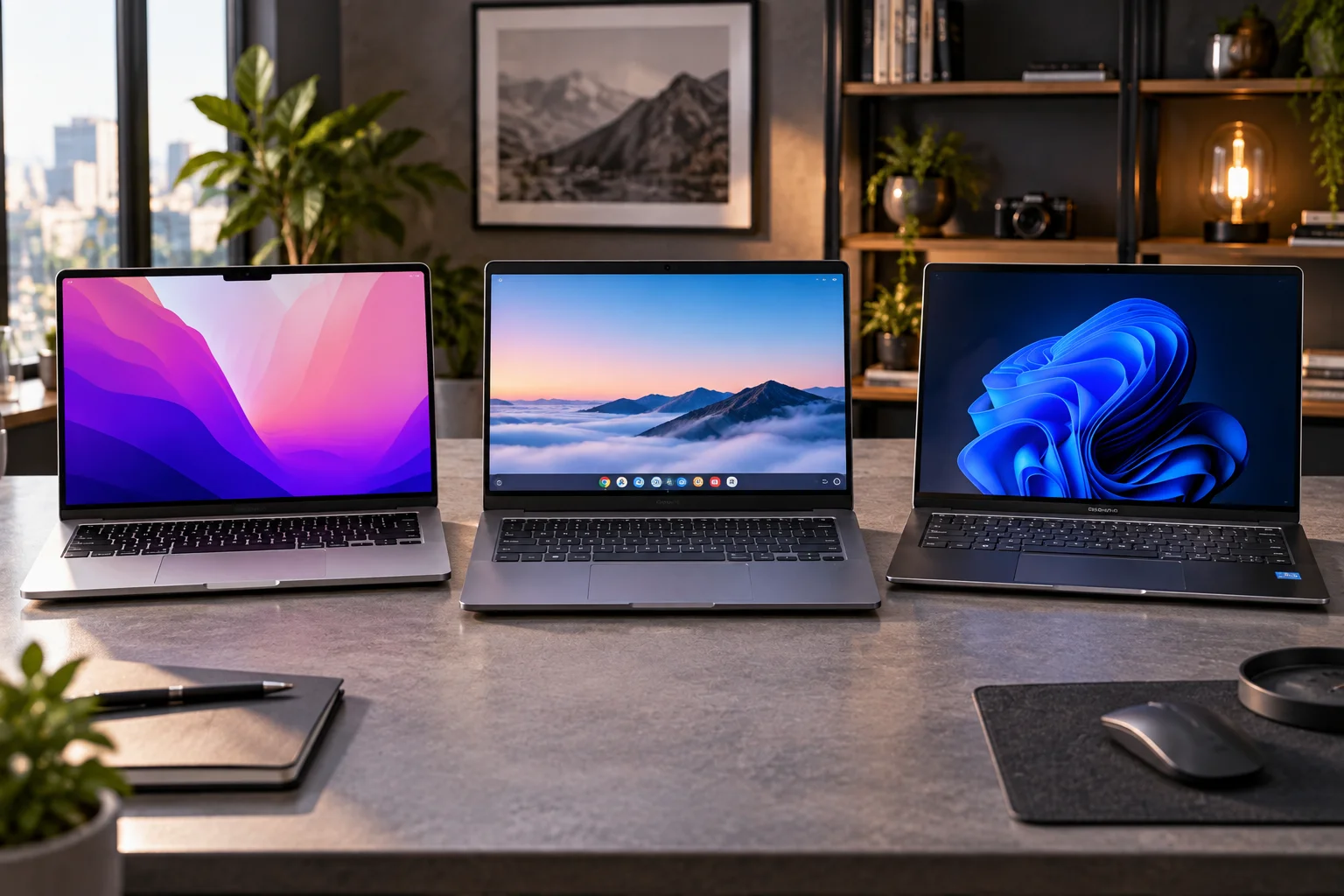
Googlebook vs MacBook: Why the Comparison Matters
Googlebook's biggest strategic challenge may not be Windows; it may be Apple's tightly integrated iPhone-Mac ecosystem.
Apple has spent years making the iPhone and Mac behave like parts of one system.
Features such as:
Handoff
AirDrop
iPhone Mirroring
Continuity
Messages
Calls
Shared clipboard
iCloud
make the devices feel connected.
Googlebook is approaching the same problem from the Android side.
Google has an enormous installed Android base.
The opportunity is to turn that installed base into a reason to choose a Googlebook.
If your phone already contains your:
apps + photos + files + messages + calendar + AI assistant
then your laptop should understand that context too.
Googlebook is Google's attempt to make that relationship native rather than relying on third-party integrations.
Is Googlebook Really a New Laptop Operating System?
Googlebook is a new category and software experience built on Android technology with ChromeOS desktop foundations, rather than simply being another version of ChromeOS.
Google describes the platform as combining the best of Android and ChromeOS technology.
That distinction is important because the name could easily cause confusion.
Googlebook isn't simply:
Chromebook + Gemini
It's closer to:
Android technology + ChromeOS desktop foundations + Gemini Intelligence + premium PC hardware
That is a much more ambitious product strategy.
When Will Googlebook Be Available?
Googlebook preorders are now open, with retail availability beginning October 4 in the US and October 5 in the UK, Canada, Ireland, France, Germany and Australia.
Google says the initial Googlebook lineup includes Acer, ASUS, Dell, HP and Lenovo models.
The starting price is $899 in the US.
Every Googlebook also includes 12 months of Google AI Pro, which provides expanded Gemini access, 5TB of cloud storage and other benefits. Google also says the launch package includes three months of YouTube Premium and Adobe Photoshop access among the promotional benefits.
Exact pricing, configurations and availability vary by market.
What Could Make Googlebook Successful?
Googlebook's success will depend less on the hardware and more on whether Gemini and Android integration genuinely remove friction from everyday laptop use.
The hardware specifications are competitive.
OLED displays, modern Intel and Qualcomm processors, NPUs, 16GB of RAM and premium materials are no longer unusual in the premium laptop market.
The differentiator is supposed to be the software.
If Googlebook can make tasks such as:
phone → laptop → AI → files → apps → phone
feel like one continuous workflow, it has a reason to exist.
If Gemini integration simply amounts to another AI button on an otherwise conventional laptop, the category becomes much harder to justify.
That's the bet Google is making.
FAQ: Googlebook
What is Googlebook?
Googlebook is Google's new premium laptop category designed around Gemini Intelligence and Android integration. It combines Android technology with ChromeOS desktop foundations and premium laptop hardware.
Is Googlebook replacing Chromebook?
No. Google says Chromebooks will continue to be supported, including 10 years of automatic ChromeOS updates. Googlebook is a separate premium category aimed at more powerful hardware and deeper Android and Gemini integration.
How much does Googlebook cost?
The first Googlebooks start at $899 in the US. Individual models from Acer, ASUS, Dell, HP and Lenovo cost more depending on their hardware configuration.
Which companies make Googlebooks?
The initial Googlebook partners are Acer, ASUS, Dell, HP and Lenovo.
Does Googlebook work with Android phones?
Yes. Android-phone integration is one of the platform's central features, including task continuation, file sharing and supported Android-app experiences. Some features require compatible phones and software versions.
Does Googlebook run Android apps?
Yes. Googlebook provides access to Android applications through Google Play and is designed to integrate supported Android apps into the laptop experience.
Does Googlebook have Gemini built in?
Yes. Gemini is a core part of Googlebook rather than simply an optional application. Google has introduced features such as Magic Pointer that bring Gemini into the context of what you're doing on screen.
Does Googlebook require an internet connection for Gemini?
Not for every AI capability, because Googlebook includes local AI hardware. However, advanced Gemini services can still rely on cloud processing and internet connectivity, so "AI laptop" shouldn't be interpreted as "everything works offline."
Does Googlebook have better hardware than a Chromebook?
The Googlebook category is specifically positioned around premium hardware, with Google stating that launch models start at 16GB RAM, use modern Intel or Qualcomm processors and feature premium displays and materials.
Is Googlebook a competitor to MacBook?
Strategically, yes. Google is positioning Googlebook as a premium laptop category rather than a low-cost Chromebook alternative. Its Android integration is particularly aimed at creating the kind of phone-to-laptop continuity that has become a major part of Apple's Mac and iPhone ecosystem.
Googlebook is therefore much more significant than the arrival of another Chromebook.
Google is changing the question it wants Android users to ask.
Instead of:
"Which Chromebook should I buy?"
the question becomes:
"What should my laptop look like if it is designed around my Android phone and Gemini from the beginning?"
That is the real experiment behind Googlebook.
The premium hardware gets Google into the conversation. The Android ecosystem gives it a potential user base. But Gemini is the piece Google hopes will make the entire category feel fundamentally different from a conventional laptop.
If that integration genuinely saves users time, reduces the friction between phone and PC and makes AI useful inside everyday workflows, Googlebook could become an important new branch of Google's hardware strategy.
If not, it risks becoming a premium laptop with a new name.