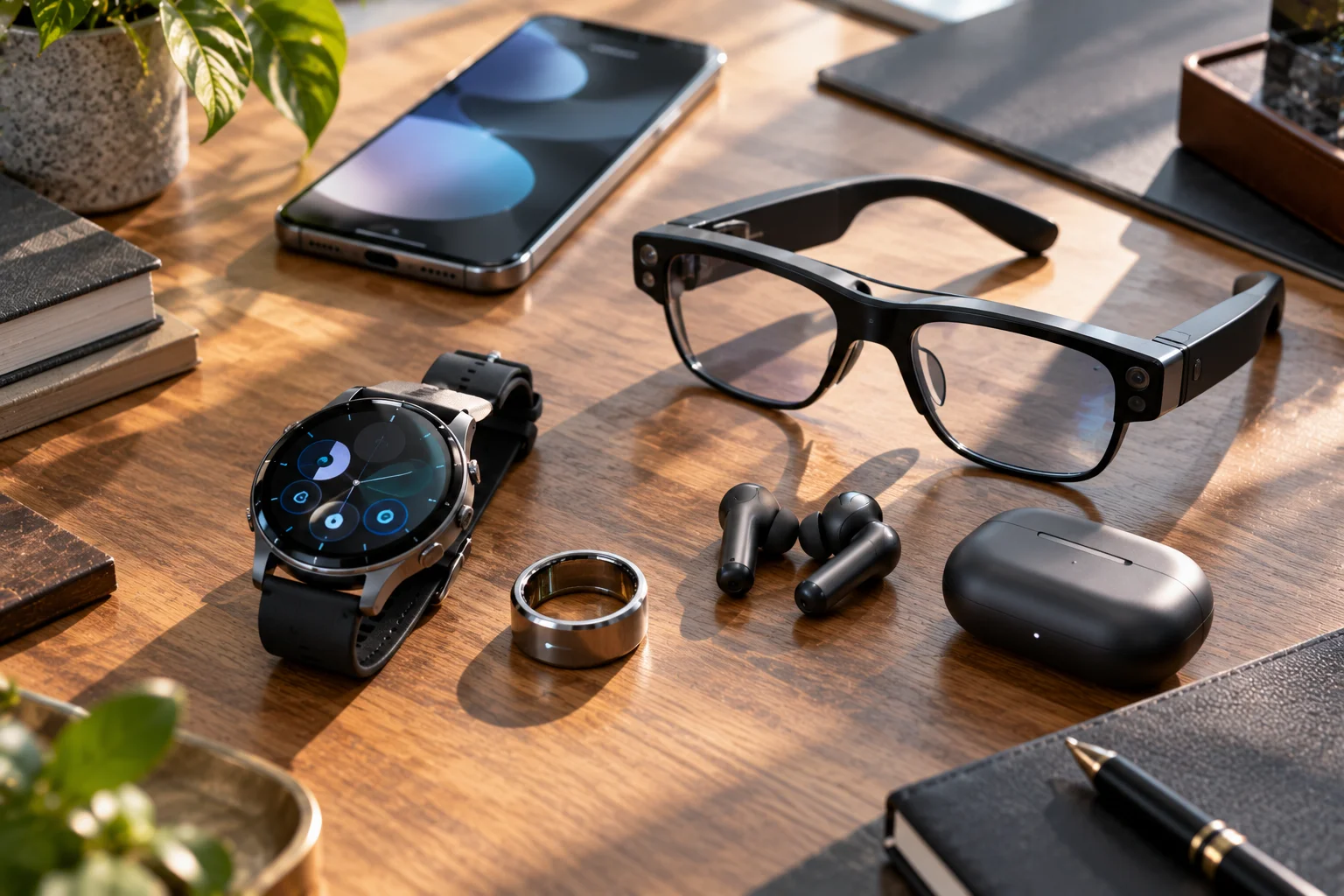
Wearable technology is entering its next phase. Smartwatches helped establish the idea that a computer could live on your body, but the industry's next major opportunity may look very different.
AI glasses, smart rings, intelligent earbuds and other screenless devices are pushing wearables toward more natural, hands-free computing.
The shift is already visible in market data. IDC expects global smart-glasses shipments to reach 13.6 million units in 2026, representing 41.4% year-over-year growth. Smart rings are also expanding, with 4.9 million units forecast for the year. By comparison, smartwatch shipments are expected to decline 2.8% to 159.7 million units.
That does not mean smartwatches are disappearing. They remain far more established than glasses.
The bigger change is that manufacturers are no longer treating the wrist as the only important location for wearable computing. Cameras, microphones, speakers, health sensors and AI are allowing technology to move closer to the way people naturally interact with the world.
The next generation of wearables may not ask you to look at a screen at all.
Why are wearable companies moving beyond smartwatches?
The smartwatch category has matured, while newer form factors offer manufacturers opportunities to create entirely different user experiences.

Smartwatches are now highly capable. They can track workouts, monitor health metrics, display notifications, support payments and handle basic communication.
But that familiarity creates a problem for manufacturers.
It is becoming harder to persuade someone with a recent smartwatch that they need another one simply because the processor is faster or the display is brighter.
Glasses offer a different proposition.
They can capture what you see, listen to conversations, play audio and connect an AI assistant to your surroundings. Rings can collect health data without putting another screen on your wrist.
This is turning the wearable market into a collection of specialized devices rather than a single smartwatch category.
Why are AI glasses becoming the next big wearable category?
AI glasses combine familiar eyewear with cameras, microphones, speakers and AI, creating a hands-free interface that can operate while users go about their normal activities.
The growth is already substantial.
IDC says display-less smart glasses grew 167% year over year in the first quarter of 2026, reaching approximately 2.25 million units in a single quarter. It forecasts 13.6 million display-less smart glasses for the full year.
The interesting part is that these products do not necessarily need a display.
A camera can identify something in front of you. An AI assistant can answer a question. Speakers can deliver the response directly to your ears.
That makes the glasses useful without turning them into another miniature smartphone screen.
For consumers, that could be the beginning of a different kind of computing.
Why are display-less AI glasses growing faster than AR glasses?
Display-less glasses are currently easier to make smaller, lighter and more socially familiar than full augmented-reality eyewear.
IDC's Q2 data shows audio glasses accounted for 70.3% of XR headset and glasses shipments during the quarter, while display glasses represented 14.3%.
That gap highlights an important point.
The industry's first mass-market smart glasses may not be the science-fiction version many people imagined.
Instead of projecting digital objects into your field of vision, today's successful products can look much closer to ordinary glasses.
The technology is effectively hidden in the frame.
That makes adoption easier because users do not have to change how they see the world or learn an entirely new interface.
What does AI actually add to smart glasses?
AI turns smart glasses from connected accessories into devices capable of understanding and responding to their surroundings.

A conventional pair of connected glasses might capture photos or play music.
AI adds another layer.
The glasses can potentially identify objects, answer questions, translate speech, summarize information, help with navigation or provide contextual assistance.
This is where the category becomes more interesting than a camera built into eyewear.
The camera provides the visual input. The microphones provide audio input. The speakers provide output. AI connects those pieces.
The result is an interface that can interact with the world around the wearer without requiring a phone to be constantly pulled from a pocket.
Are smartwatches becoming less important?
No. Smartwatches remain the dominant wrist-worn computing platform, but their role is becoming more specialized.
IDC forecasts 159.7 million smartwatch shipments in 2026, compared with just 13.6 million smart glasses.
The difference in scale is enormous.
Smartwatches also have an advantage that glasses currently lack: a mature ecosystem built around fitness, notifications, apps, payments and health features.
Their future may therefore be less about replacing them and more about working alongside other wearables.
A smartwatch could monitor health and provide detailed information on its display, while glasses handle hands-free AI assistance.
That creates a broader wearable ecosystem rather than a winner-takes-all replacement cycle.
Why are smart rings becoming part of this transition?
Smart rings are showing that wearable technology does not always need a screen or a complex interface to be useful.
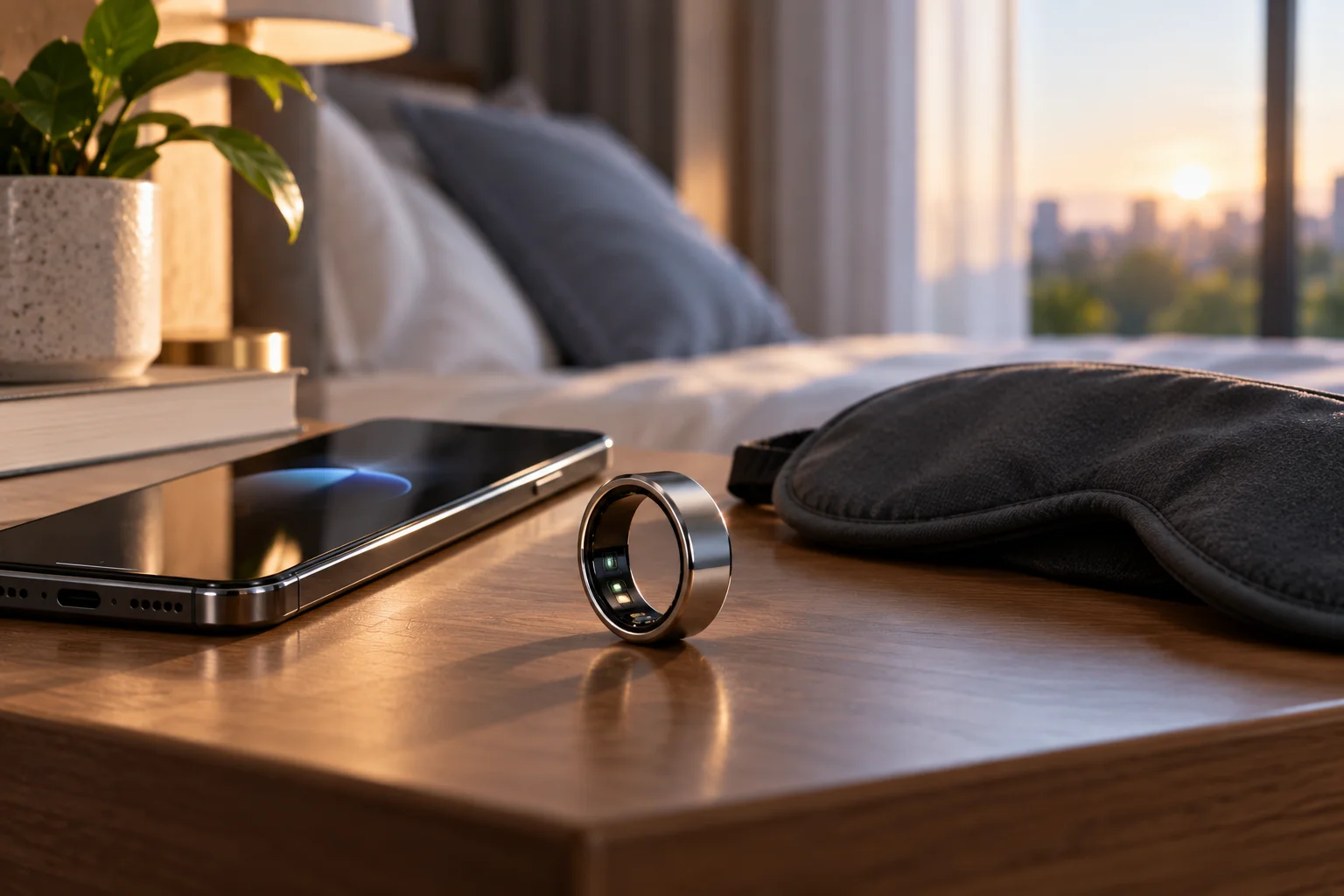
IDC expects smart-ring shipments to reach 4.9 million units in 2026, up 12.8% year over year.
The appeal is straightforward.
A ring can remain on the finger throughout the day and night while collecting health and activity information without constantly demanding attention.
That is particularly useful for sleep tracking.
The broader lesson is important for the wearable industry: consumers may not want more screens. They may want better sensors that quietly collect useful information.
What role will AI play across wearable technology?
AI is becoming the software layer that connects sensors, context and user requests across different wearable devices.
Consider how the pieces could work together.
A smart ring monitors health and sleep. Earbuds provide audio interaction. Glasses provide visual context. A smartwatch displays detailed information when the user wants to see it.
AI can potentially connect all of those signals.
Instead of treating each device as an isolated gadget, an AI assistant could become the layer that understands the user's context and decides which device should respond.
That is a much bigger opportunity than simply putting a chatbot into a smartwatch.
Why are smart glasses becoming more affordable?
Growing competition and larger production volumes are expected to push smart-glasses prices toward the mainstream over time.
IDC forecasts display-less smart-glasses shipments rising from 13.6 million units in 2026 to 27.3 million by 2030. It also expects the average selling price to fall from approximately $376 in 2026 to around $229 by 2030.
Lower prices could be critical.
Early wearable technology often struggled because consumers had to pay premium prices for products with uncertain everyday value.
If AI glasses become inexpensive enough to resemble a normal consumer accessory, trying them becomes a much easier decision.
That could create a feedback loop: more users generate more demand, more manufacturers enter the category, and greater competition pushes prices down.
What are the biggest challenges for AI glasses?
Privacy, battery life, social acceptance and reliable AI performance could determine whether smart glasses become mainstream.

The camera is both the attraction and the problem.
People may appreciate being able to capture moments without holding a phone, but people nearby may not always be comfortable with a device that can record them.
IDC notes that privacy concerns and questions around meaningful notice and consent are already becoming important issues as smart glasses gain wider adoption.
There are also practical problems.
A pair of glasses needs to remain lightweight. Battery life needs to last through normal daily use. AI responses need to be fast enough to feel natural.
If the technology constantly requires charging, cloud connectivity or awkward interactions, consumers may simply stop wearing it.
What will wearable technology look like after smartwatches?
The future of wearables is likely to be distributed across several devices rather than controlled by one dominant form factor.
Smartwatches will continue to make sense for people who want a screen and detailed health or fitness information.
Smart rings can focus on passive health monitoring.
Earbuds can become increasingly capable AI interfaces.
And smart glasses could become the most natural way to interact with AI while moving through the physical world.
IDC forecasts total wearable-device shipments to grow at a 2.6% CAGR from 2026 through 2030, reaching approximately 693.2 million units by 2030.
The most important change may therefore not be a particular product.
It is the shift from wearable screens to wearable intelligence.
The smartphone will remain central for complex tasks, but the next generation of wearables could handle more of the small interactions that currently require taking a phone out of your pocket.
From Smartwatches to AI Glasses FAQs
Are AI glasses replacing smartwatches?
Not currently. Smartwatches ship in much larger volumes and remain stronger for fitness, health tracking, notifications and screen-based interaction. AI glasses are emerging as a complementary, hands-free interface.
How fast are smart glasses growing?
IDC forecasts display-less smart-glasses shipments to reach 13.6 million units in 2026, up 41.4% year over year.
Do AI glasses need a display?
No. Many current AI glasses use cameras, microphones and speakers without a visual display. This makes them lighter and closer to conventional eyewear.
What can AI glasses do?
Depending on the product, AI glasses can capture photos and video, play audio, answer questions, interpret visual information and provide hands-free assistance.
Are smart rings becoming mainstream?
Smart rings remain much smaller than the smartwatch market, but IDC forecasts 4.9 million shipments in 2026, representing 12.8% annual growth.
What is the biggest wearable trend?
The biggest shift is toward screenless, AI-powered and continuously sensing devices. Instead of putting everything onto a wrist display, manufacturers are distributing computing across glasses, rings, earbuds and watches.
Will AI glasses replace smartphones?
There is no indication that they are replacing smartphones. Their more immediate role is to handle quick, contextual and hands-free interactions while smartphones remain the primary device for complex visual tasks, apps and communication.
What comes next for wearable technology?
The next phase will likely combine better AI, smaller sensors, longer battery life and more natural interfaces. The most successful wearables may be the ones users barely think about wearing at all.