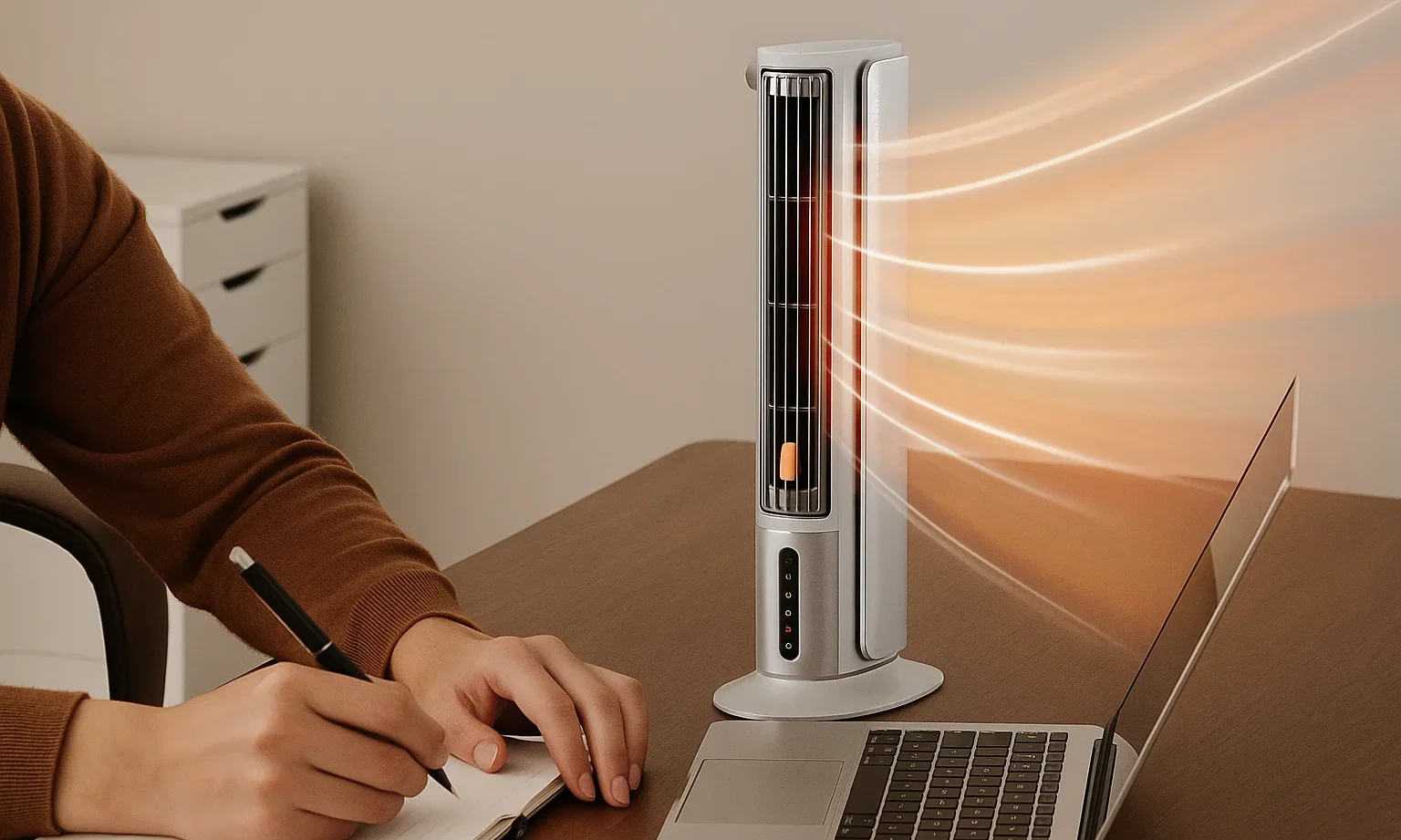
Choosing the right Bauhaus electric heater for a Spanish home depends on three things: the room you want to heat, how long you plan to use it and how much you're comfortable spending on electricity. A compact ceramic heater can be useful for a chilly bathroom on a winter morning, while an oil-filled radiator may suit a bedroom or home office where you need steady warmth for several hours.
Spain's winters vary considerably by region. Homes in coastal Andalusia have different heating needs from apartments in Madrid or colder properties in Castilla y León. Even within the same city, insulation, window quality, ceiling height and exposure to the sun can make a noticeable difference.
The good news is that modern Electric Heaters come in several designs, each suited to a different situation. Fan heaters warm a space quickly, infrared heaters provide more direct warmth, and convector heaters are useful for general room heating. Oil-filled radiators take longer to warm up but can provide comfortable, steady heat.
This guide explains how the main types compare, how to estimate running costs using Spanish electricity prices, which safety features matter and how to compare suitable options at BAUHAUS Spain. The goal is to help you choose a heater that fits your home and your budget, rather than simply buying the highest-wattage model on the shelf.
1. Which type of electric heater is best for a Spanish home?
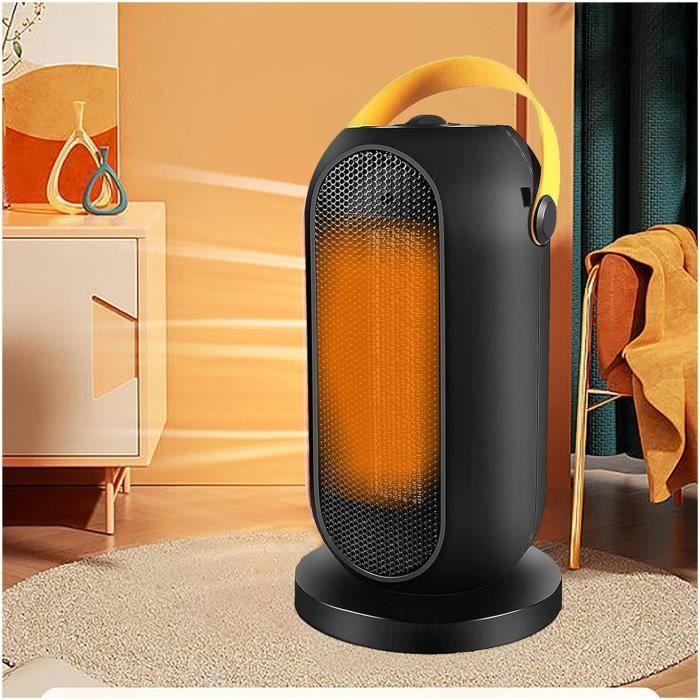
The best electric heater depends on how you use the room. Fan heaters suit short bursts of warmth, convectors work well for general room heating, oil-filled radiators provide steady heat, and infrared heaters are useful when you want warmth directed towards a particular area.
Here's how the main options compare.
Heater type | Best suited to | Main advantage | Main consideration |
|---|---|---|---|
Ceramic or fan heater | Short periods in small rooms | Warms the nearby air quickly | Fan noise and concentrated heat |
Convector heater | Bedrooms and smaller living spaces | Relatively quick, even room heating | Heat can escape quickly in a poorly insulated room |
Oil-filled radiator | Bedrooms and home offices | Quiet operation and steady warmth | Takes time to heat up |
Infrared heater | Targeted heating and some outdoor spaces | Direct warmth for people and objects | Comfort depends on positioning |
Electric thermal emitter | Regular heating over scheduled periods | Available with programmable controls | Purchase cost and actual running hours matter |
Electric towel radiator | Bathrooms and towel drying | Combines warmth with a practical bathroom function | Check its bathroom rating and suitable installation |
BAUHAUS Spain stocks several of these categories, including convectors, infrared heaters, thermal emitters and electric towel radiators. Its range makes it possible to compare different heating approaches rather than assuming one design will suit every room.
Ceramic and fan heaters: best for quick warmth
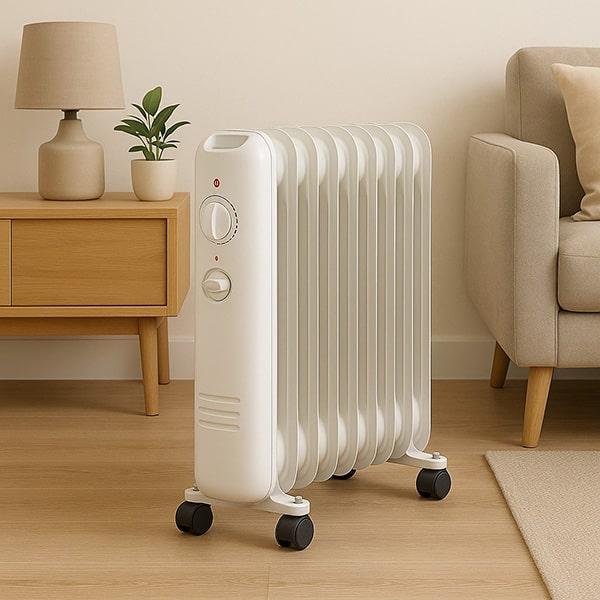
Imagine getting out of bed on a chilly morning and wanting to warm a small room before getting dressed. A compact fan heater can be useful because it starts delivering warm air almost immediately.
These models are generally better for short sessions than for heating a large room throughout the day. Look for adjustable power settings, a thermostat and overheat protection. If you plan to use one in a bedroom, noise levels are worth checking.
Oil-filled radiators: best for quiet comfort
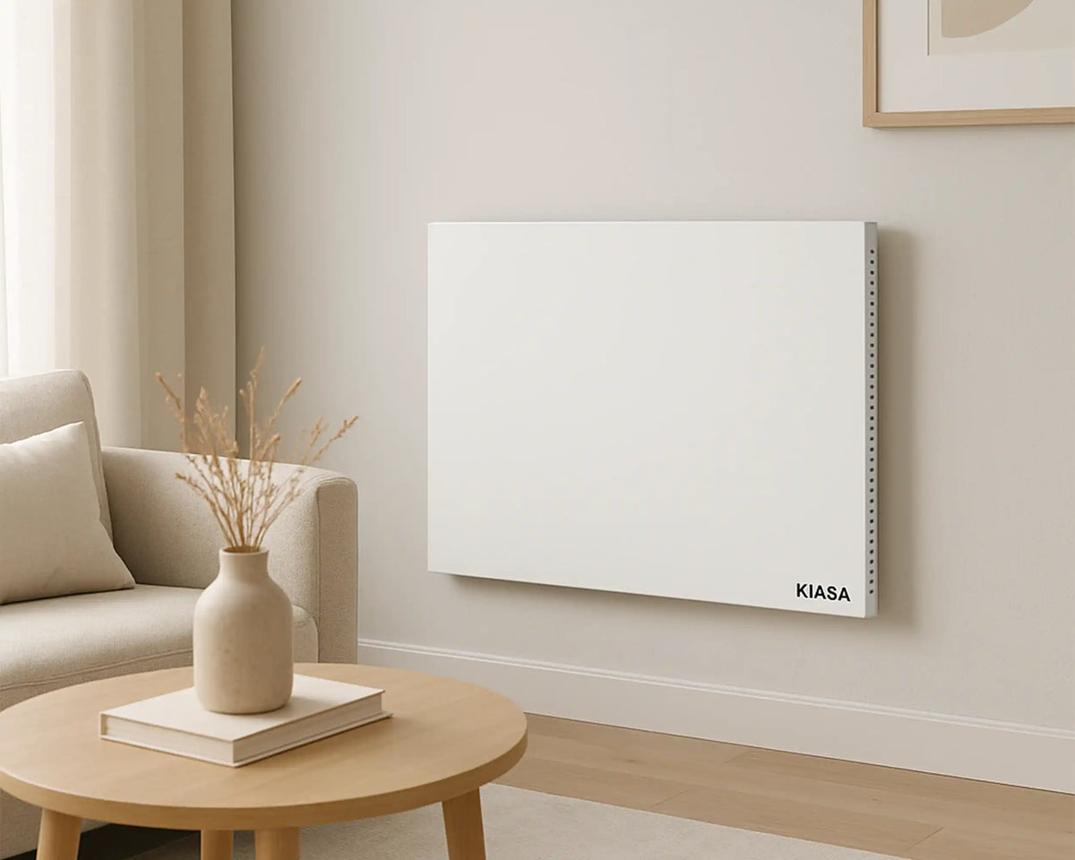
Oil-filled radiators are a good option for people who work from home or prefer a quieter heating experience. The internal oil transfers heat through the radiator's body, which continues releasing warmth as the unit cools.
They usually take longer to warm up than fan heaters. The benefit is a gentler, more sustained heat output that many people find comfortable for longer periods.
Infrared heaters: best for direct warmth
Infrared models warm people and surfaces they reach rather than relying mainly on heating all the surrounding air. That can be useful when you're sitting at a desk, relaxing in a particular part of a room or using a suitable covered outdoor area.
Positioning matters. If furniture or other objects block the radiant heat, the benefit may be reduced.
2. How much power does an electric heater need?
For a typical Spanish home, a rough starting point is around 80–100 watts per square metre in a reasonably insulated room. A 10 m² bedroom might therefore need approximately 800–1,000 watts, while a 20 m² room could need 1,600–2,000 watts.
These are planning estimates, not guarantees. High ceilings, draughty windows, poor insulation and cold regional conditions can increase heating requirements. A room that receives plenty of winter sunshine may need less supplementary heating.
Match the wattage to the room
Room size | Approximate starting power |
|---|---|
5–8 m² | 400–800 W |
8–12 m² | 800–1,200 W |
12–16 m² | 1,200–1,600 W |
16–20 m² | 1,600–2,000 W |
For example, a 2,000 W heater may be appropriate for a moderately insulated living room, but it could be excessive for a tiny study where a lower setting would do the job.
A heater's advertised coverage area should be treated as a guide. It's worth checking the manufacturer's recommendation alongside the room's insulation and layout.
One thing people often overlook is the electrical circuit. A 2,000 W heater draws roughly 8.7 amps at 230 volts. Running several powerful appliances on the same circuit can overload it, so check the circuit capacity and avoid relying on unsuitable extension leads.
3. How much does it cost to run an electric heater in Spain?
The running cost of an electric heater depends on its wattage, how long it operates and the electricity rate you pay. At an illustrative rate of €0.25 per kWh, a 1,500 W heater running continuously for one hour costs about €0.38, while a 2,000 W heater costs €0.50.
You can calculate the cost yourself:
\[ \text{Cost}=\frac{\text{Watts}}{1000}\times\text{Hours}\times\text{Price per kWh} \]
The €0.25 rate below is an example for budgeting, not a claim about the current Spanish average or your specific electricity contract.
Example running costs
Illustrative electricity rate: €0.25/kWh, assuming the heater operates at full rated power throughout.
Heater power | Cost per hour | Cost for 4 hours | Cost for 30 days at 4 hours/day |
|---|---|---|---|
800 W | €0.20 | €0.80 | €24 |
1,000 W | €0.25 | €1.00 | €30 |
1,500 W | €0.38 | €1.50 | €45 |
2,000 W | €0.50 | €2.00 | €60 |
These estimates assume continuous operation at full power. In practice, a thermostat may switch the heating element on and off as the room reaches its target temperature, reducing consumption. Actual costs will vary with your tariff and conditions.
Are low-consumption electric heaters really cheaper?
This is where the marketing can be confusing. Most conventional plug-in electric resistance heaters convert electricity into heat at broadly similar rates at the point of use. A 2,000 W heater running at full power consumes 2 kWh in an hour, regardless of whether it uses a fan, an oil-filled body or a convector design.
The difference lies in how the heat is delivered, how quickly you need it, the comfort you experience and how effectively you control operating time.
A well-positioned infrared heater may let you heat the area you occupy instead of trying to warm an entire room. A programmable radiator may avoid running unnecessarily when nobody is home. Both can help manage consumption, but neither guarantees a particular saving.
If you use heating every evening, compare the cost of the unit with its controls, expected operating hours and the comfort it provides. The cheapest heater to buy isn't always the most suitable choice for your routine.
4. Which features should you look for when buying an electric heater?
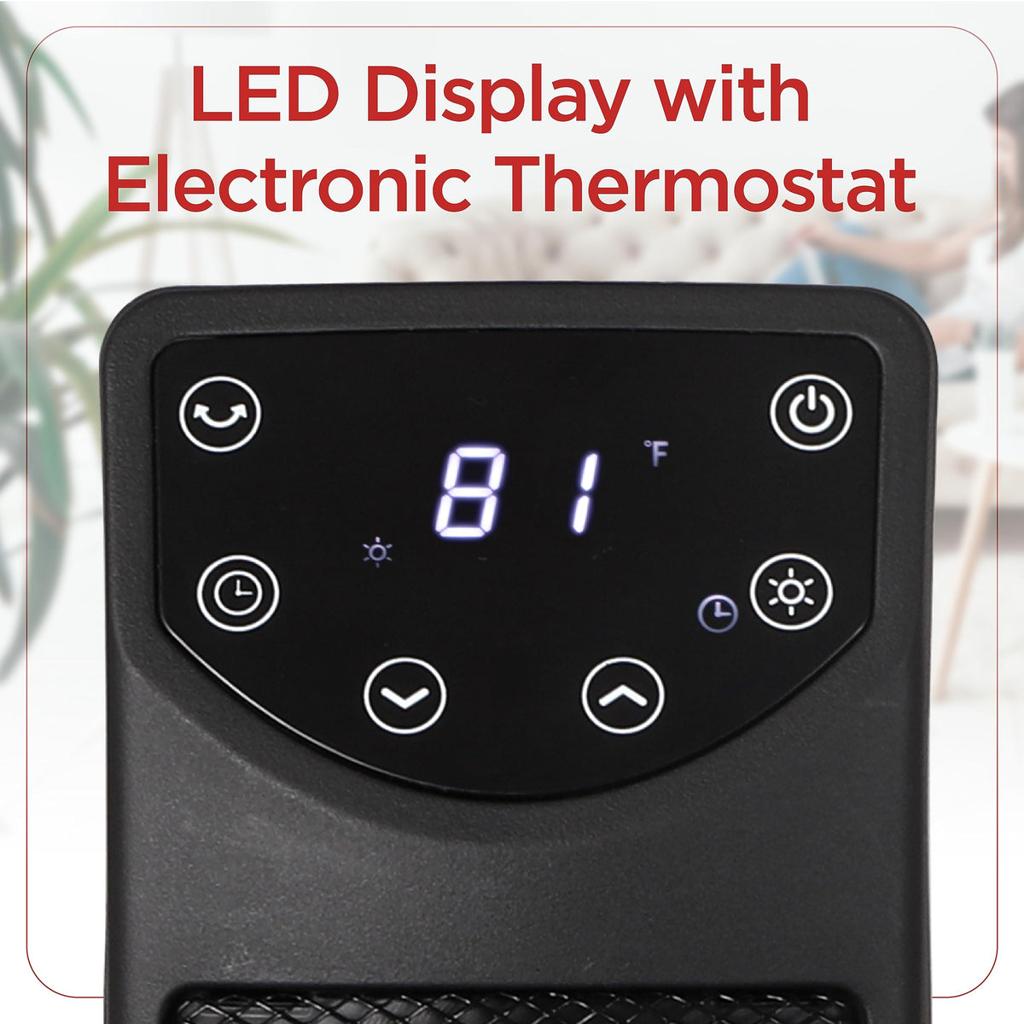
The most useful features are a reliable thermostat, adjustable power, a timer and appropriate safety protections. These functions make it easier to control room temperature, avoid unnecessary heating and use the appliance responsibly.
Thermostat and adjustable power
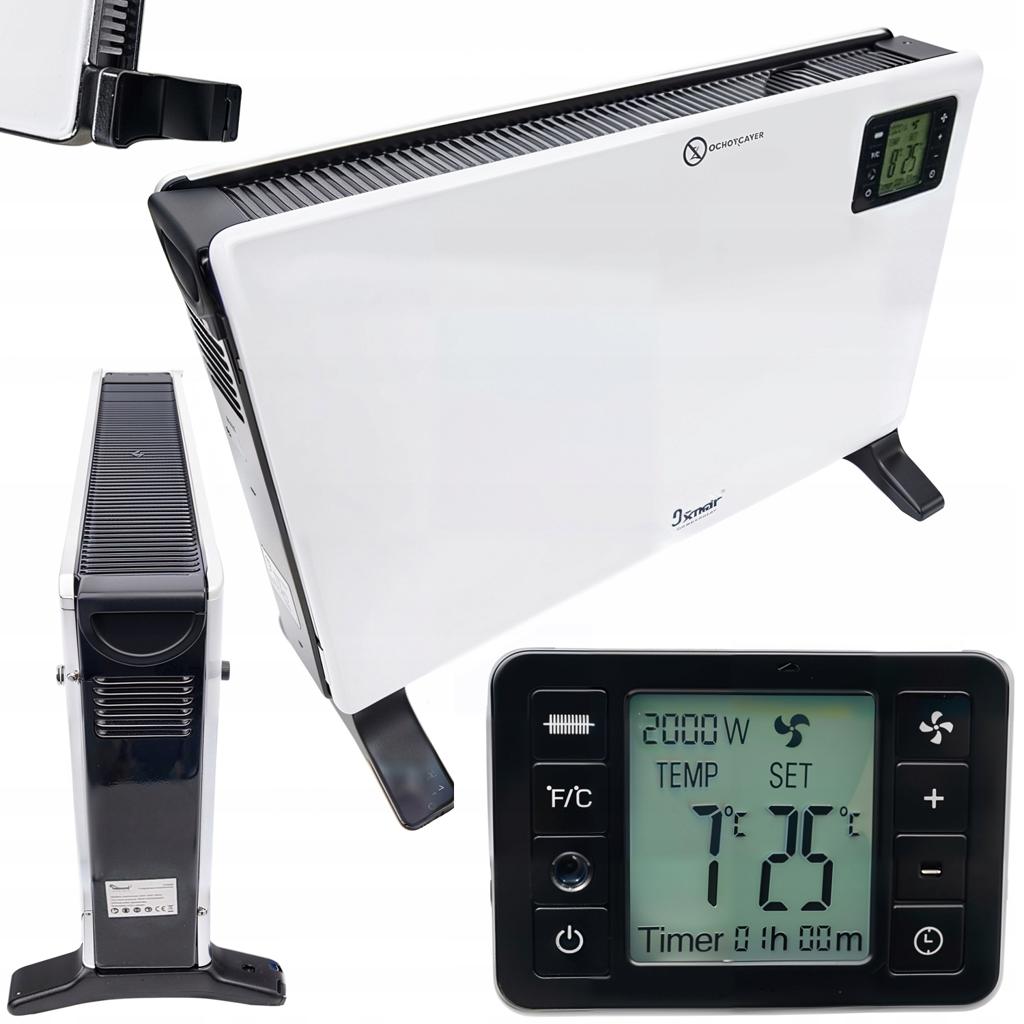
A thermostat helps maintain a chosen temperature by controlling when the heater operates. Multiple power settings are useful when a room needs only a little extra warmth rather than maximum output.
For instance, you might use a higher setting to warm a cold room initially, then reduce the power or let the thermostat regulate the temperature.
Timer and programmable schedules
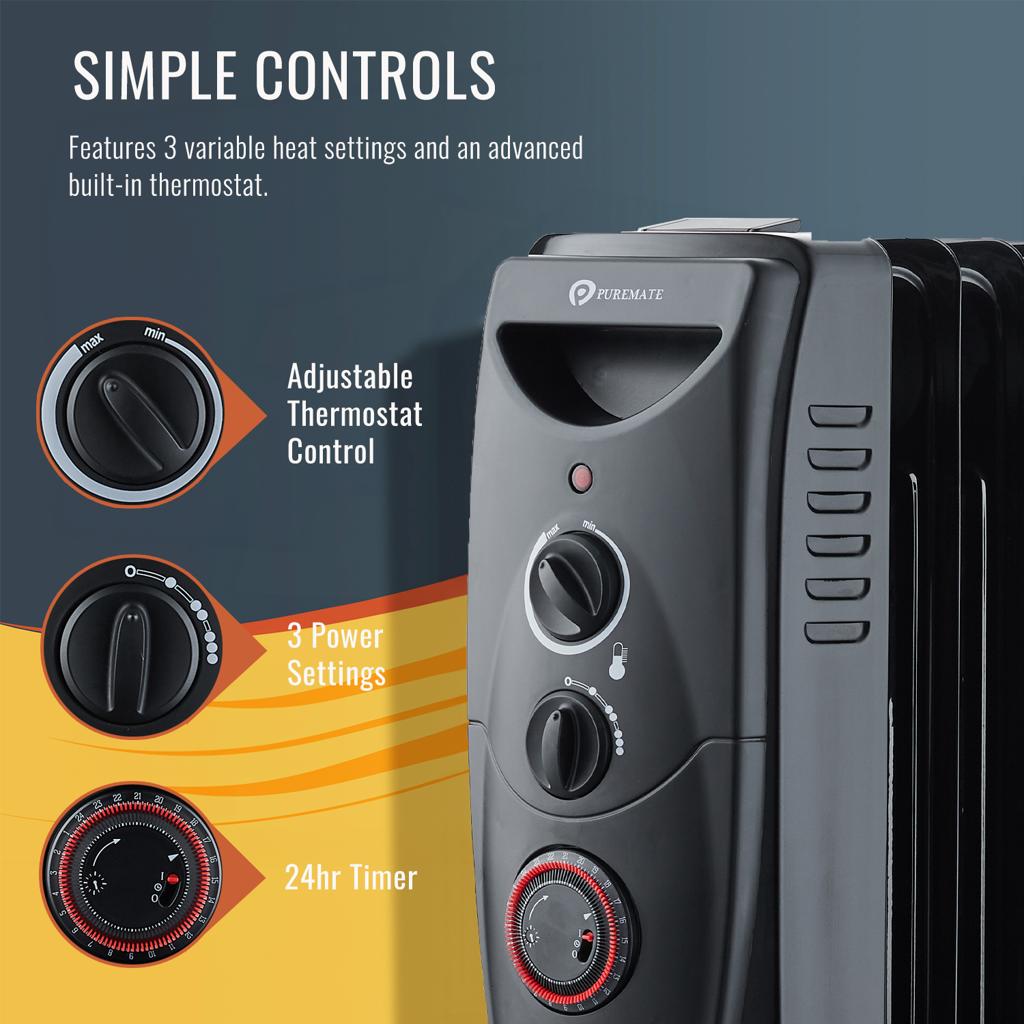
Timers are helpful if you follow a predictable routine. You can schedule heating around your working hours or use a countdown timer to limit a session.
Some models also offer remote control or smart-home functions. These are convenient extras, but they're worth paying for only if you'll use them regularly.
Safety features
Look for overheat protection and, for freestanding models, tip-over protection where available. A stable base and cool-touch surfaces can also be helpful in homes with children or pets.
Never cover an electric heater, place clothing directly over it or position it close to curtains, bedding or upholstered furniture. Keep it away from water unless it is specifically rated for the intended environment.
For bathrooms, use only a heater suitable for the relevant bathroom location and moisture exposure. Check its IP rating, the manufacturer's instructions and applicable electrical installation requirements. A general-purpose portable heater shouldn't automatically be considered safe for bathroom use.
5. Which electric heaters are worth comparing at BAUHAUS Spain?
BAUHAUS Spain offers a useful starting point for comparing heater types, power ratings and features. Rather than picking a product based only on price or appearance, narrow the options according to where you'll use it and how long you need the warmth to last.
Here are three categories worth exploring.
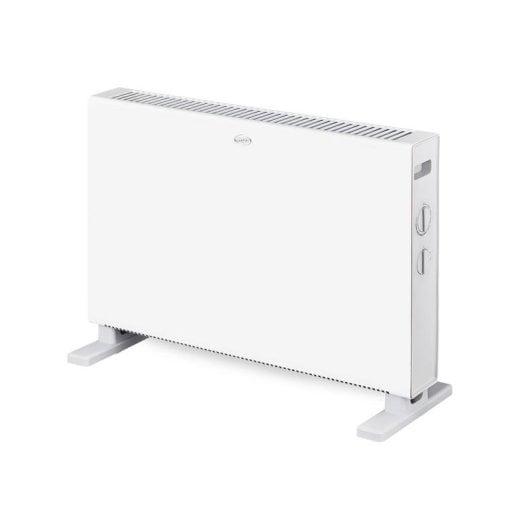
Convectors for everyday room heating
BAUHAUS lists convectors in different power ratings, including portable options around 1,200 W and 2,000 W. This category is worth comparing if you want a straightforward heater for a bedroom, study or smaller living space. Check the room coverage, thermostat and overheat protection.
Explore convectors at BAUHAUS Spain.
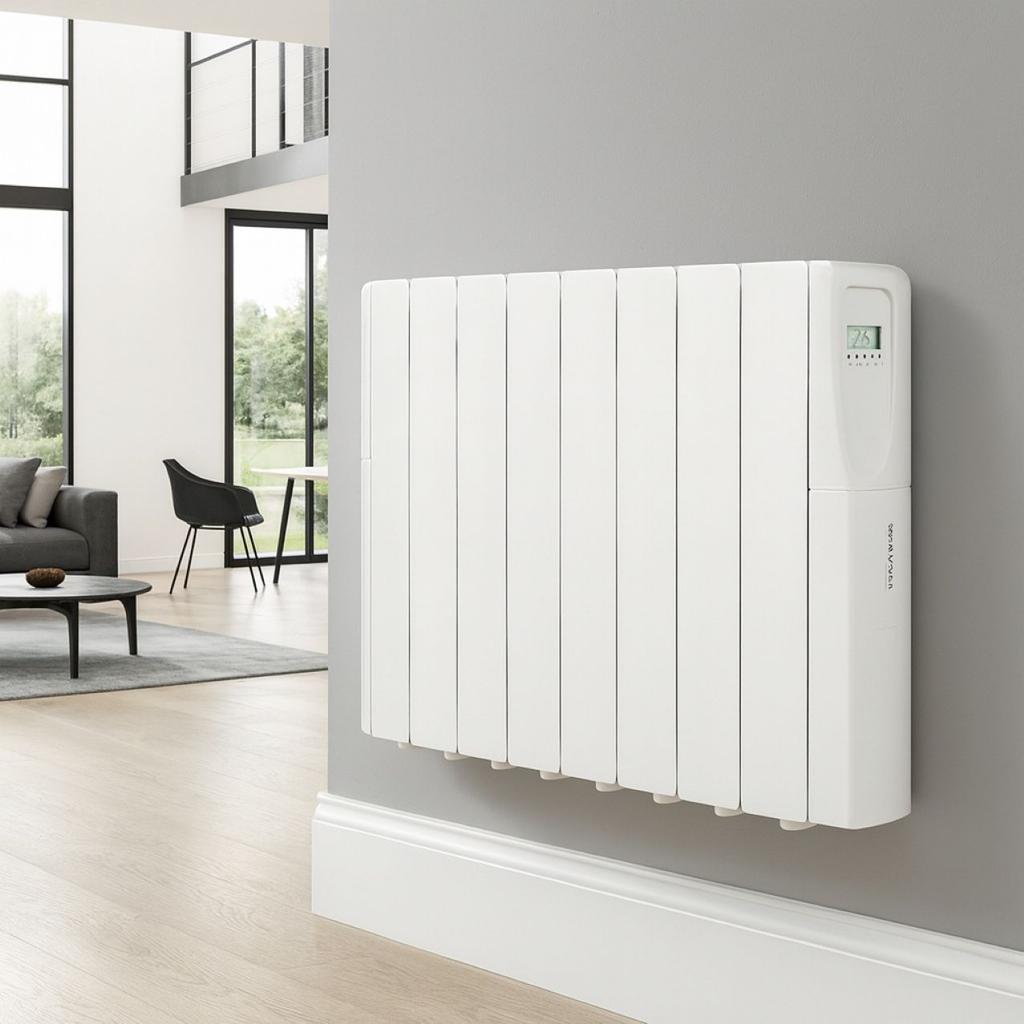
Thermal emitters for planned heating
Thermal emitters come in dry, fluid-filled and ceramic designs. Their heat-up and cool-down characteristics differ, making it sensible to compare them according to your expected daily schedule. Programmable models can be especially useful when heating is needed at regular times.
Explore thermal emitters at BAUHAUS Spain.
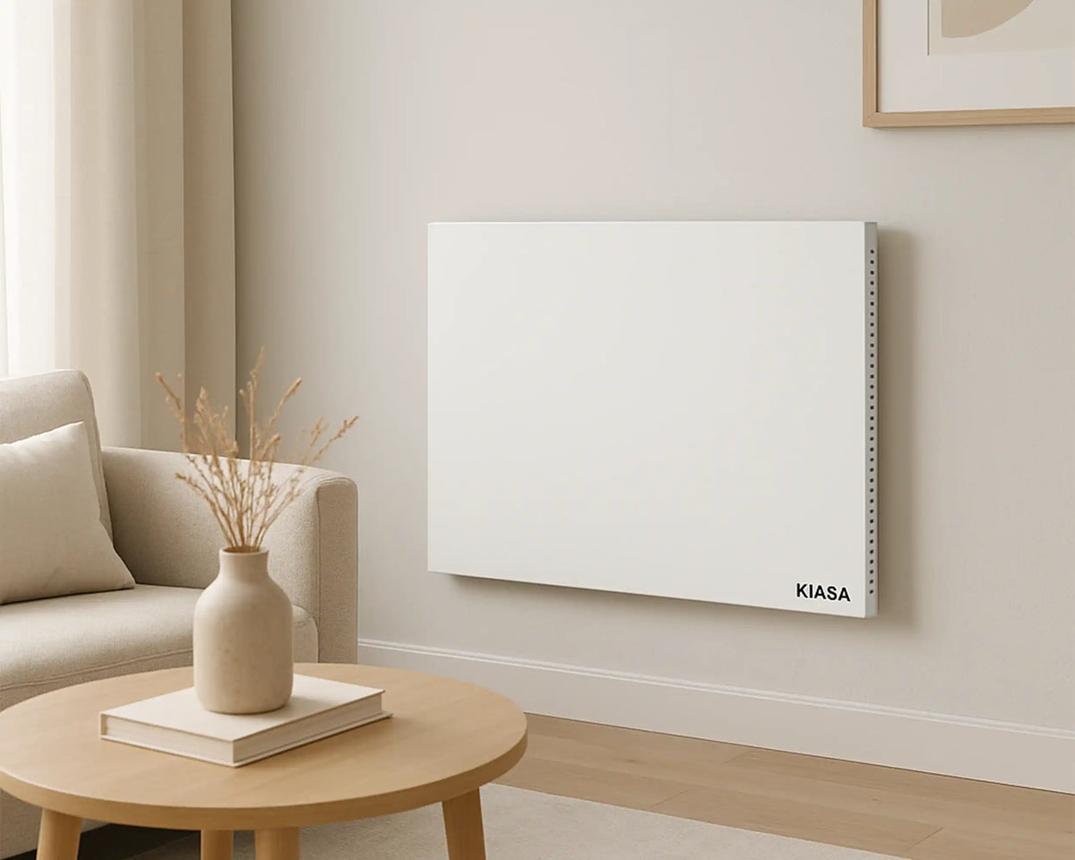
Infrared heaters for targeted warmth
Infrared models are worth considering for spaces where you want direct warmth rather than heating every part of the room equally. Compare mounting options, power, controls and the area the heater is designed to serve.
Explore infrared heaters at BAUHAUS Spain.
Product ranges, prices and availability can change, so check the current listing and specifications before making a purchase.
6. How can you heat your home more efficiently during a Spanish winter?
The easiest way to control heating costs is to warm the rooms you actually use, reduce heat loss and avoid leaving appliances running unnecessarily. A suitable electric heater works best when the room retains warmth rather than allowing it to escape through draughty windows and doors.
A few practical changes can help:
Improve insulation where possible. Draught excluders, suitable curtains and attention to window seals can help a room retain heat.
Use a comfortable, moderate temperature. Raising the thermostat more than necessary can increase energy use without making the room noticeably more comfortable.
Heat occupied rooms. If you spend the afternoon in a home office, concentrate on that space rather than heating unused rooms.
Use timers thoughtfully. Schedule heating around your routine, and switch it off when you no longer need it.
Keep the heater unobstructed. Furniture, curtains and laundry can interfere with heat distribution and create safety risks.
For a small flat in Valencia, a compact heater used during a few chilly evening hours may be sufficient. In a colder inland location, a larger room or a poorly insulated property may need a more considered heating plan.
If you're heating several rooms for many hours every day, compare electric heaters with other available heating systems before committing to a long-term solution. Purchase price is only one part of the cost.
Final thoughts: Which electric heater should you choose from Bauhaus?
The right heater is the one that matches your room, routine and budget. A ceramic fan heater is useful for quick bursts of warmth, an oil-filled radiator suits quieter, longer sessions, a convector provides straightforward room heating, and an infrared model can work well for targeted warmth.
Before buying from Bauhaus, check the wattage, thermostat, safety features and recommended room size. Calculate the likely running cost using your own electricity tariff, and remember that insulation and operating time can matter just as much as the appliance itself.
You don't necessarily need the most powerful model or the one with the longest list of features. You need a heater that keeps the space comfortable without using more electricity than your situation requires.
If you're ready to compare Electric Heaters for your home, visit BAUHAUS Spain to explore the available options and find a model suited to your winter heating needs.