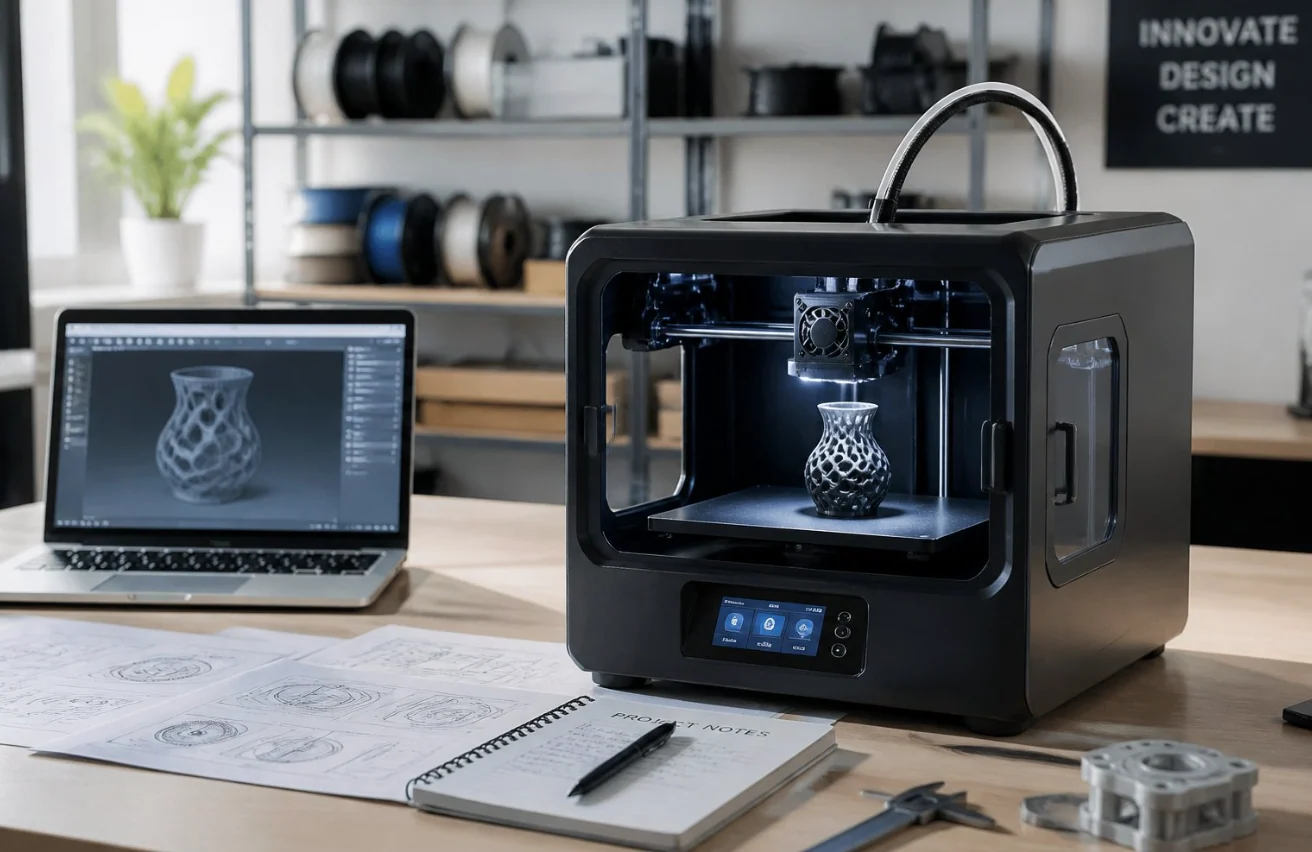
A 3D printer can make far more than miniature figures, decorative objects and desk toys. At its most useful, it is a way to turn a digital design into a physical object without needing traditional moulds, tooling or a large manufacturing setup.
That makes 3D printing surprisingly useful for everyday problems. You can make replacement parts, cable organizers, custom brackets, phone stands, tool holders and prototypes. More advanced printers and materials are also used for manufacturing fixtures, architectural models, medical devices, prosthetics and specialized components.
The biggest advantage is customization. Instead of buying an object that is almost right, you can design one around a particular size, shape or requirement. 3D printing is particularly practical for small quantities, one-off designs and parts that would otherwise be difficult or expensive to manufacture.
1. Replacement Parts for Broken Products
One of the most practical things you can make with a 3D printer is a replacement part.
Small plastic components such as clips, knobs, brackets, covers, spacers and mounts can sometimes be recreated when the original part breaks or is no longer sold. This is particularly useful for older products where buying an official replacement may be difficult.
2. Custom Phone and Tablet Stands
A 3D printer can create stands designed for a specific phone, tablet or viewing angle.
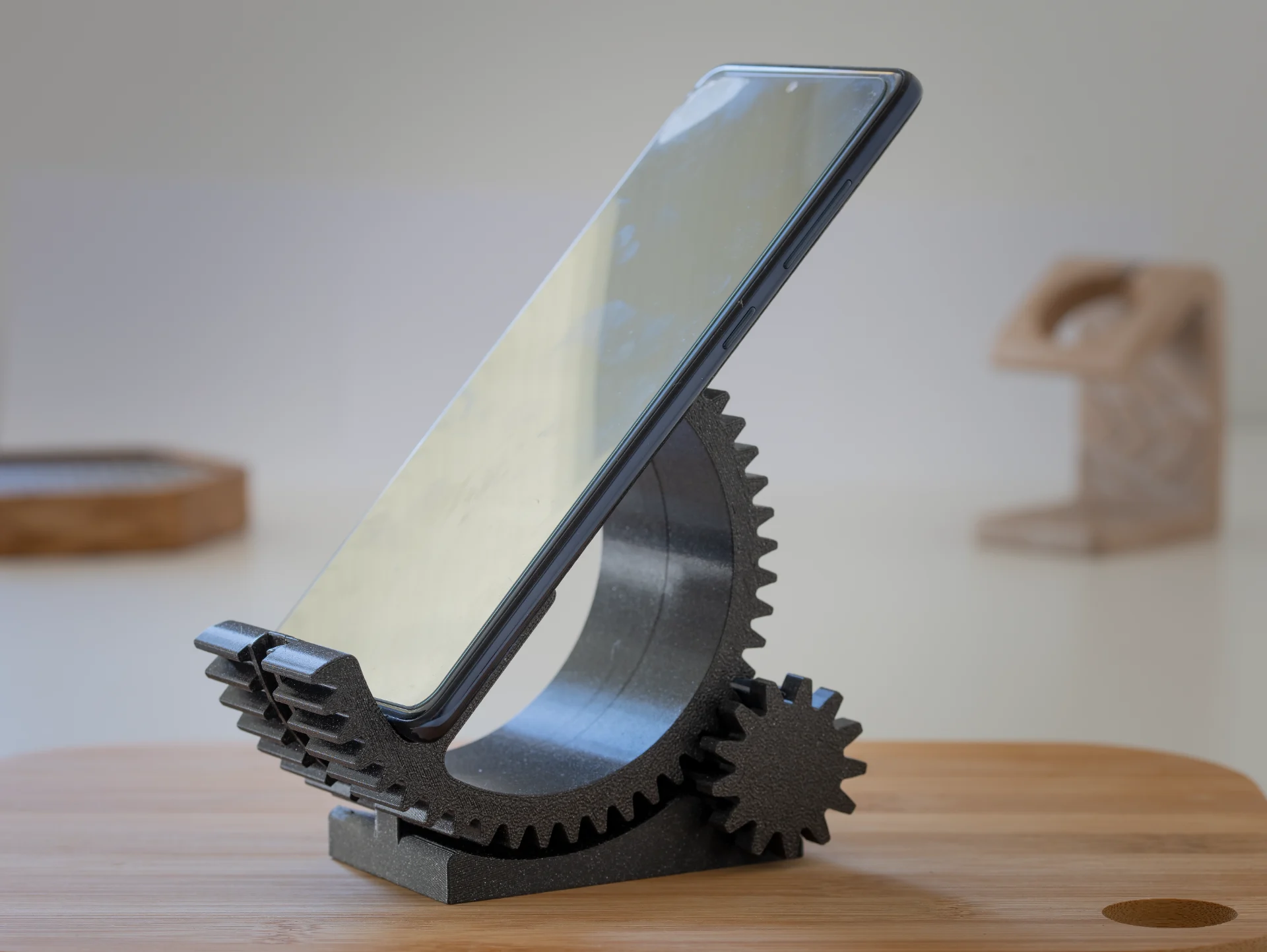
You can adjust the dimensions, viewing angle, cable opening and base shape yourself. This makes 3D printing useful for creating stands that fit a particular desk or charging setup.
3. Cable Management Accessories
Cable clips, desk cable guides, headphone hooks and charging-cable organizers are simple but genuinely useful 3D printing projects.
Because these objects are small, they can also be inexpensive to print and easy to customize for the exact cables you use.
4. Tool Organizers and Workshop Storage
A 3D printer can turn an otherwise messy drawer into a custom storage system.
You can print holders for screwdrivers, drill bits, hex keys, measuring tools, small components and other workshop equipment. Instead of adapting your storage around commercially available organizers, you can design the organizer around your tools.
5. Custom Brackets and Mounts
Need to mount something in an awkward location? A custom bracket can sometimes solve the problem.
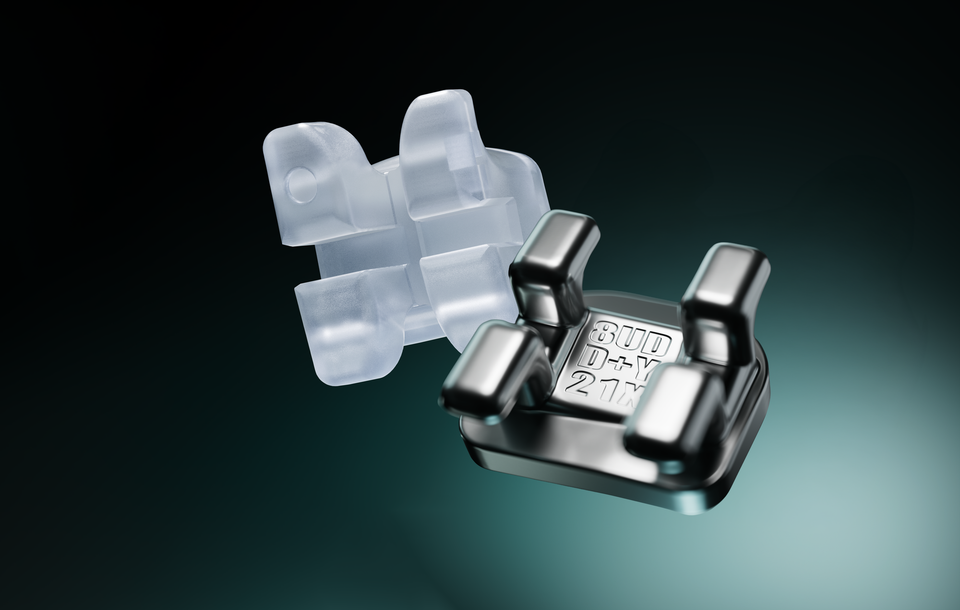
Examples include camera mounts, sensor brackets, wall mounts, shelf supports and equipment holders. For load-bearing applications, however, the printed material, orientation and structural design need to be appropriate for the forces involved.
6. Prototype Parts for New Products
This is one of the major professional uses of 3D printing.
Designers and engineers can print a physical version of a product before committing to expensive tooling or mass production. They can hold it, test dimensions, identify problems and modify the design before producing the final version.
7. Functional Prototypes
A prototype does not always have to look good. Sometimes it needs to demonstrate how something works.
You can print housings, moving mechanisms, handles, gears, hinges and other components to test an idea. This allows designers to discover mechanical problems much earlier in the development process.
8. Jigs and Fixtures
3D printing can also produce tools used to manufacture other products.
Jigs and fixtures can hold components in a particular position while someone drills, cuts, assembles or measures them. Autodesk describes these as practical manufacturing applications because they can be produced and modified relatively quickly when production requirements change.
9. Custom Enclosures for Electronics
If you are building an electronics project, the circuit board is only part of the job. You also need somewhere to put it.
A 3D printer can produce custom enclosures for sensors, Raspberry Pi projects, controllers, IoT devices and other electronics. Openings for buttons, displays, USB ports and cables can be incorporated directly into the design.
10. Camera and Photography Accessories
Photographers can use 3D printing for small accessories such as lens caps, cable clips, cold-shoe mounts, tripod accessories, filter holders and custom brackets.
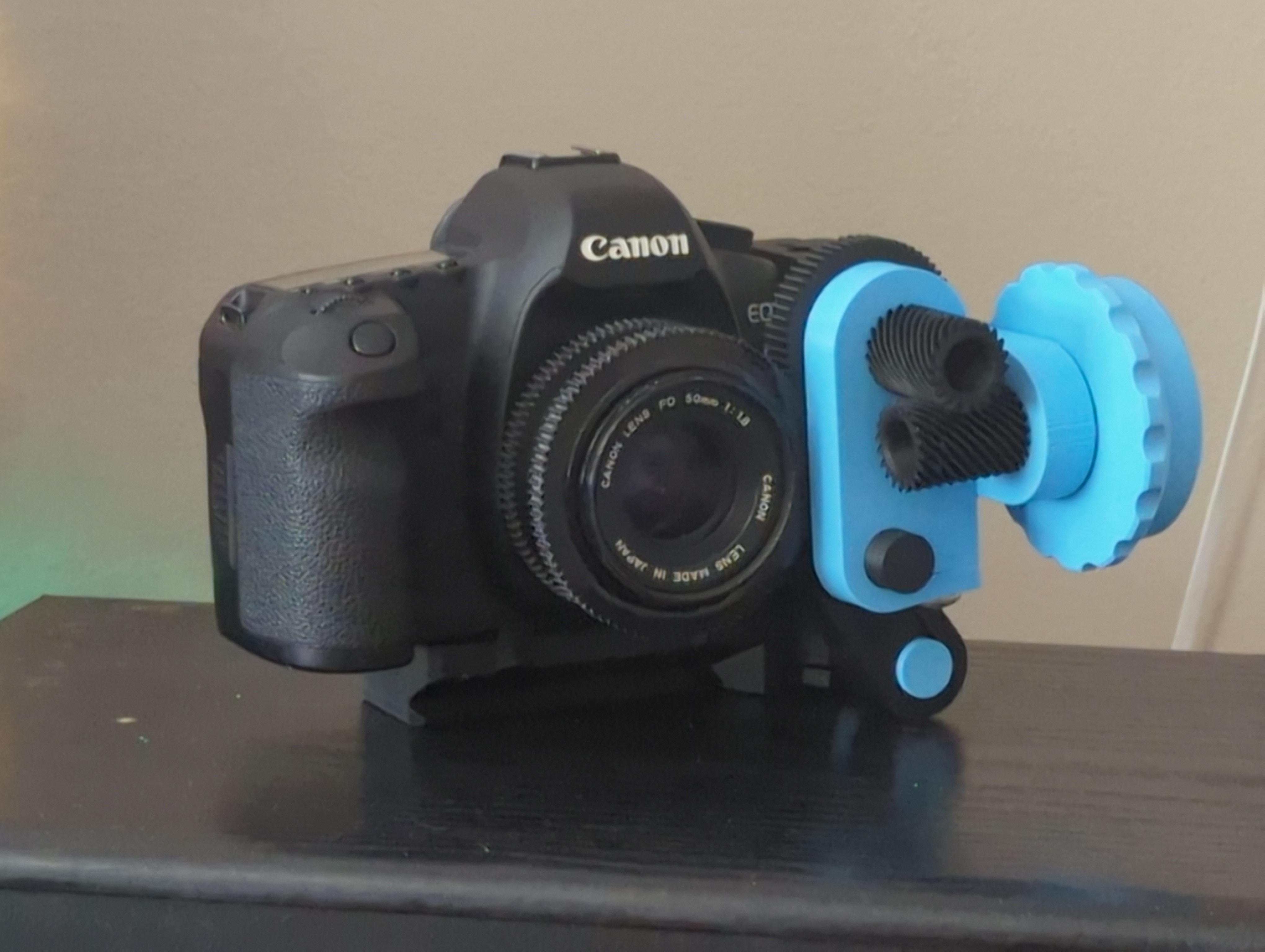
The ability to create unusual dimensions is particularly useful when a commercial accessory does not fit a specific camera setup.
11. Drone Accessories
3D printing can be useful for creating non-critical drone accessories such as landing supports, protective mounts, camera brackets, battery holders and storage solutions.
The design must account for vibration and weight, especially when a printed component is attached to a flying aircraft.
12. Automotive Interior Accessories
There are plenty of small vehicle components that can potentially be customized with 3D printing.
Examples include dashboard mounts, cable organizers, switch covers, storage inserts, trim clips and holders for accessories. Components exposed to high temperatures or significant mechanical loads require materials specifically suited to those conditions.
13. Architectural Models
Architects and designers can turn digital building designs into physical models.
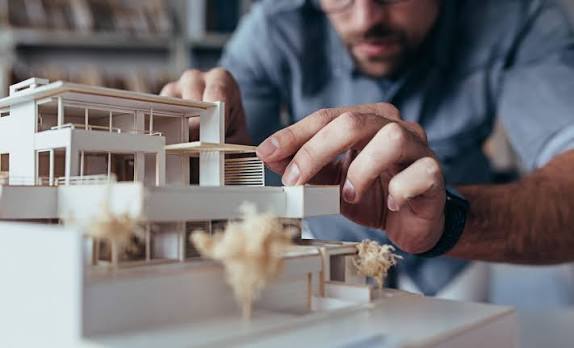
A printed model can make the shape, proportions and relationship between different structures easier to understand during presentations or design reviews. 3D printing is already used for architectural models and structural components.
14. Custom Furniture Components
You do not need to print an entire chair or table to benefit from 3D printing.
Small furniture components such as brackets, feet, cable-management parts, drawer organizers, connectors and decorative fittings can be designed around a particular piece of furniture.
15. Educational Models
Schools, universities and training centres can use 3D printers to create physical teaching aids.
Students can study mathematical shapes, mechanical mechanisms, geological structures, architectural forms and scientific models by physically handling them rather than viewing everything on a screen.
16. Anatomical and Medical Training Models
Healthcare is another important application.
3D printing can produce anatomical models based on medical imaging, including bones, organs and patient-specific structures. The FDA notes that 3D-printed medical devices can include surgical guides, implants and external prostheses.
Research has also found that 3D-printed anatomical models can support medical education by making complex structures easier to visualize and manipulate.
These professional medical applications require appropriate design, materials, manufacturing controls and regulatory compliance. They are not ordinary DIY projects.
17. Prosthetic Components
3D printing can also be used to manufacture certain prosthetic devices and components.
Its ability to produce customized shapes makes it particularly interesting for applications where dimensions need to be adapted to an individual. The FDA lists external prostheses among commercially available categories of 3D-printed medical devices.
18. Custom Assistive Devices
Simple customized devices can make everyday tasks easier for people with particular physical requirements.
Examples can include adapted grips, holders, handles and positioning aids. The important advantage is that the design can be adjusted around the user's specific dimensions instead of forcing the user to adapt to a standard product.
19. Product Packaging and Presentation Prototypes
Businesses can print early versions of packaging, product inserts, display stands and presentation models.
This allows designers to examine dimensions and appearance before committing to larger production runs. 3D printing is particularly useful when only a small number of prototypes are needed.
20. Small-Batch Products
3D printing can make sense when you need dozens rather than thousands of products.
Small businesses can produce specialized brackets, organizers, accessories, decorative products or replacement components without investing in expensive injection moulds. Autodesk identifies low-quantity production as an area where additive manufacturing can reduce the cost and complexity of producing small runs.
21. Customized Household Accessories
This is where 3D printing becomes particularly useful for everyday users.
You can make:
Drawer dividers
Plant supports
Remote-control holders
Door hooks
Cleaning-tool holders
Kitchen organizers
Storage clips
Furniture spacers
Wall-mounted organizers
The common thread is simple: if a standard product almost fits your needs, a custom print may fit better.
22. Board Game and Tabletop Accessories
Beyond decorative miniatures, 3D printers can produce practical gaming accessories.
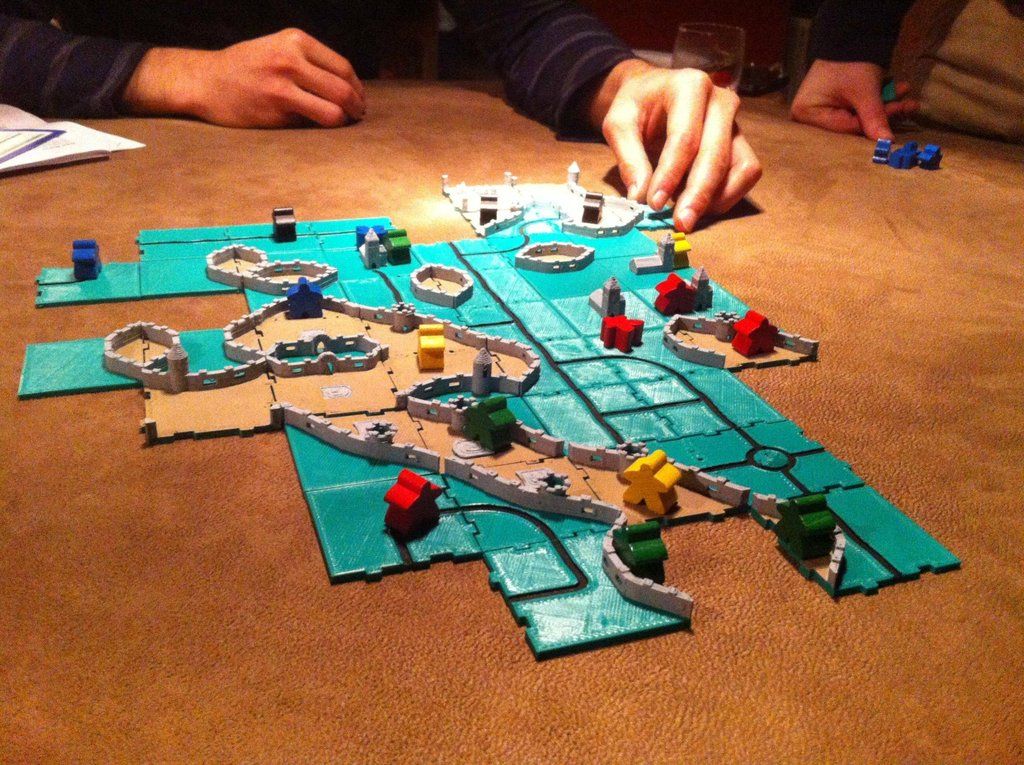
Dice towers, card holders, token trays, board-game organizers and storage inserts can all be designed around specific games. For people with large collections, custom inserts can make transporting and storing components much easier.
23. Cosplay and Costume Components
3D printing is particularly useful for costume parts that need unusual shapes.
Helmets, armour sections, props, masks and decorative components can be printed in pieces and assembled later. Autodesk also identifies prop-making and costuming as practical rapid-prototyping applications.
24. Art, Sculptures and Custom Decor
3D printing can function as a creative manufacturing tool.
Artists can design geometric sculptures, lampshades, wall pieces, custom ornaments and unusual decorative objects that would be difficult to produce using conventional methods.
The difference from simply downloading a decorative model is that the designer can create something specifically around an artistic concept, space or physical constraint.
25. Custom Tools and Problem-Solving Devices
Perhaps the most interesting use of a 3D printer is making a tool that does not exist in a shop.
Need a small alignment guide? A specialized measuring aid? A holder for an oddly shaped component? A temporary assembly tool?
If you can describe the problem mathematically and create the design in CAD software, a 3D printer can turn that solution into a physical object. That ability to rapidly move from an idea to a working part is one of the technology's biggest strengths.
What Should You Not 3D Print at Home?
Not every object is automatically suitable for a home 3D printer.
Parts that carry significant structural loads, operate at high temperatures, come into contact with food, or are intended for medical use require much more consideration than a simple storage box.
Food-contact applications are a particularly important example. A filament being marketed as a particular plastic does not automatically mean a finished home-printed object is suitable for food contact. Food-contact materials and their intended uses are subject to specific safety requirements and conditions.
Similarly, medical devices and patient-specific products are subject to regulatory requirements.
What Makes a 3D Printer So Useful?
The biggest advantage is not that a 3D printer can make almost anything. It is that it can make the specific thing you need.
Traditional manufacturing becomes increasingly difficult to justify when you need only one unusual part. 3D printing changes that calculation because the same machine can produce a replacement clip in the morning, a prototype in the afternoon and a custom organizer later without requiring a new mould for every object.
For hobbyists, that means turning ideas into physical objects. For designers and businesses, it can mean faster prototyping and small-batch manufacturing. For engineers, it can mean custom tools and fixtures. And in specialized fields such as healthcare, it can enable highly customized physical models and devices.
Frequently Asked Questions
What is the most practical thing to make with a 3D printer?
Replacement parts, organizers, brackets, mounts and custom tools are among the most practical everyday applications because they solve specific problems and can be customized to exact dimensions.
Can a 3D printer make functional parts?
Yes. Depending on the printer, material and design, 3D-printed parts can be functional components, prototypes, fixtures and small-batch products. The required strength, temperature resistance and durability determine which material and printing process are appropriate.
Can you make replacement parts with a 3D printer?
Yes. Replacement parts are one of the established applications of 3D printing, particularly for low-volume or discontinued components.
Can you 3D print something that touches food?
Some food-contact applications are possible with appropriately authorized materials and manufacturing processes, but you should not assume that any consumer filament or home-printed object is automatically food-safe. Food-contact requirements depend on the material and intended conditions of use.
Is 3D printing useful outside of hobbies?
Definitely. It is used for prototyping, manufacturing fixtures, small-batch production, architecture, healthcare, education and customized products.
Final Takeaway
The most useful way to think about a 3D printer is not as a machine for making plastic models. It is a small-scale digital manufacturing tool.
You can use one to replace a broken component, organize a workspace, prototype a product, create a custom mount, build a teaching model or manufacture a small run of specialized parts. The more specific the problem, the more valuable the ability to design and print a customized solution becomes.
That is why 3D printing remains useful well beyond hobby models: it turns a digital idea into a physical object without requiring a conventional manufacturing line for every new design.