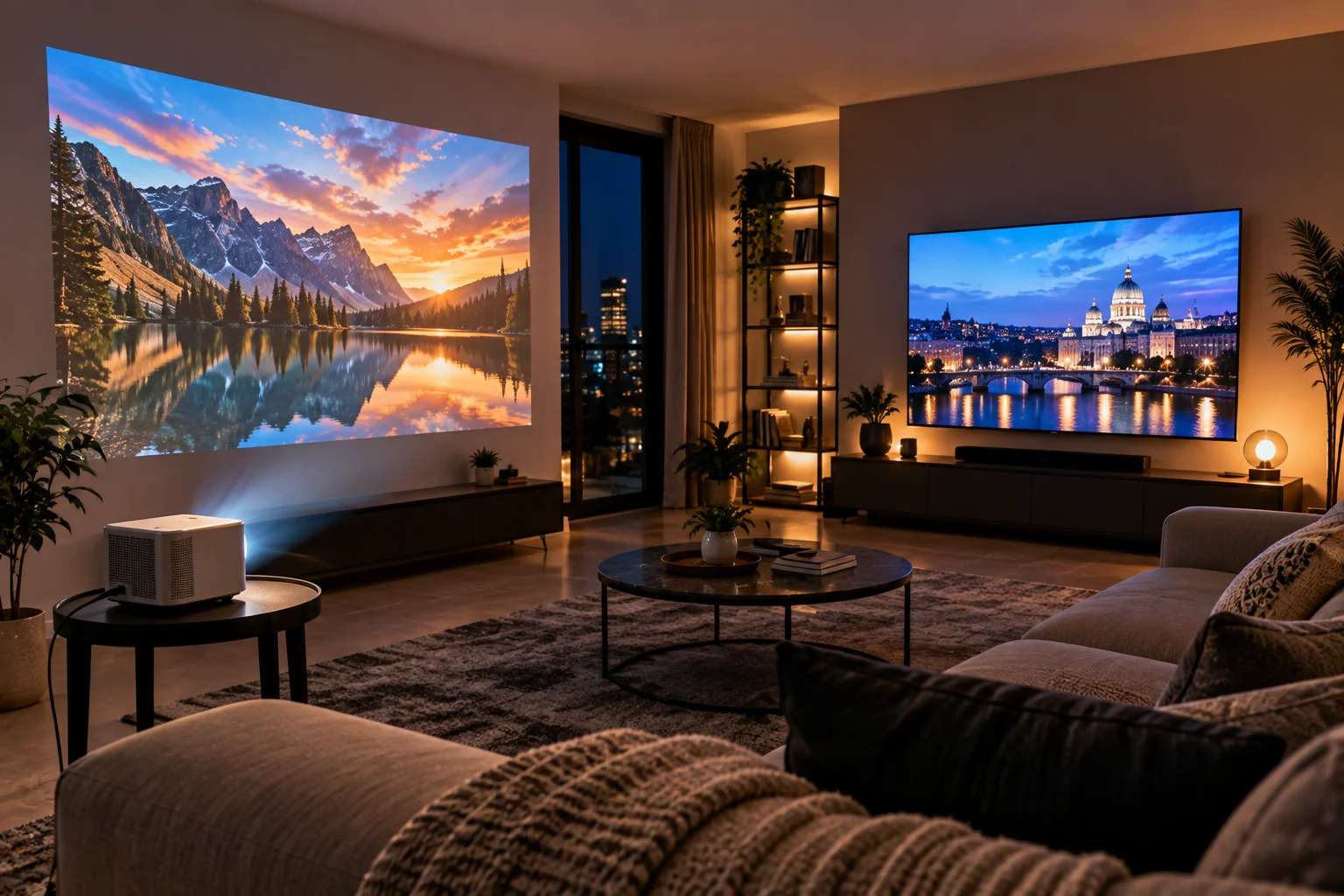
A portable projector can give you an enormous 80-, 100- or even larger image without physically owning a huge television. A large TV, meanwhile, produces a bright, consistent image without requiring a dark room, careful placement or a projection screen.
That difference matters more than the size number on the box.
When comparing portable projectors vs large TVs, brightness, resolution, viewing distance, throw distance and ambient light all interact. A projector's light is spread across a large surface, while a TV generates light directly from its display. As the projected image gets larger, the available light is distributed over more area, making the image appear dimmer.
Portable projectors can be fantastic for movie nights, bedrooms, travel and flexible setups. But if you want a screen that looks punchy at noon with sunlight entering through the windows, a large TV usually has a much easier job.
The real question isn't simply “Which is bigger?” It's “Which display works better in the room where I'll actually use it?”
Portable Projector vs Large TV: What Is the Biggest Real-World Difference?
A TV controls its own light output, while a projector has to fight the room and the screen at the same time.
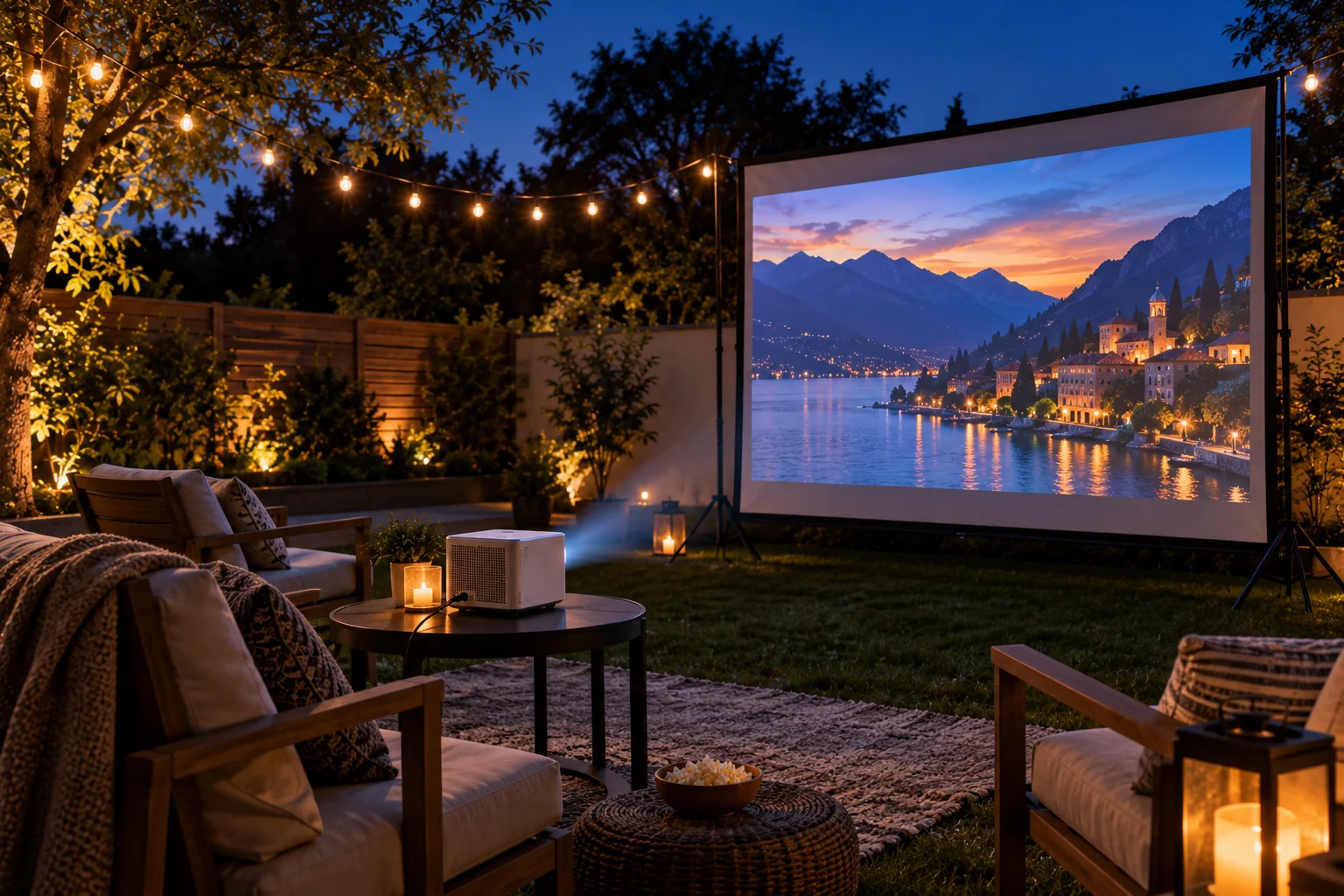
This is the fundamental difference.
A television emits light directly toward your eyes. A projector sends light onto a wall or screen, where some of that light is reflected toward you while the surrounding room can also illuminate the same surface.
That's why a projector that looks excellent in a dark bedroom can look washed out in a bright living room.
BenQ specifically notes that ambient light, projection size and brightness interact, with larger projected images requiring more light to maintain image quality.
A TV has its own challenges, particularly reflections and glare, but it isn't dependent on the room being dark to produce a visible image.
How Does Projector Brightness Compare With TV Brightness?
Projectors are generally specified in lumens, while TVs are commonly discussed in nits, so you can't directly compare the two headline numbers.
Projector brightness describes how much light the projector produces. TV brightness describes the luminance of the display, usually measured in nits or cd/m².
Epson also distinguishes between white brightness and color brightness and recommends looking at both when comparing projectors.
The important practical point is that projector brightness gets spread across the entire projected image.
For example, a projector may look perfectly convincing at 80 inches in a dark room but become noticeably weaker when enlarged to 120 inches.
A TV doesn't have the same size-related light-spreading problem because its display surface is itself the light source.
Why Does Room Lighting Matter So Much?
Ambient light can dramatically reduce a projector's perceived contrast and make dark scenes look gray or washed out.
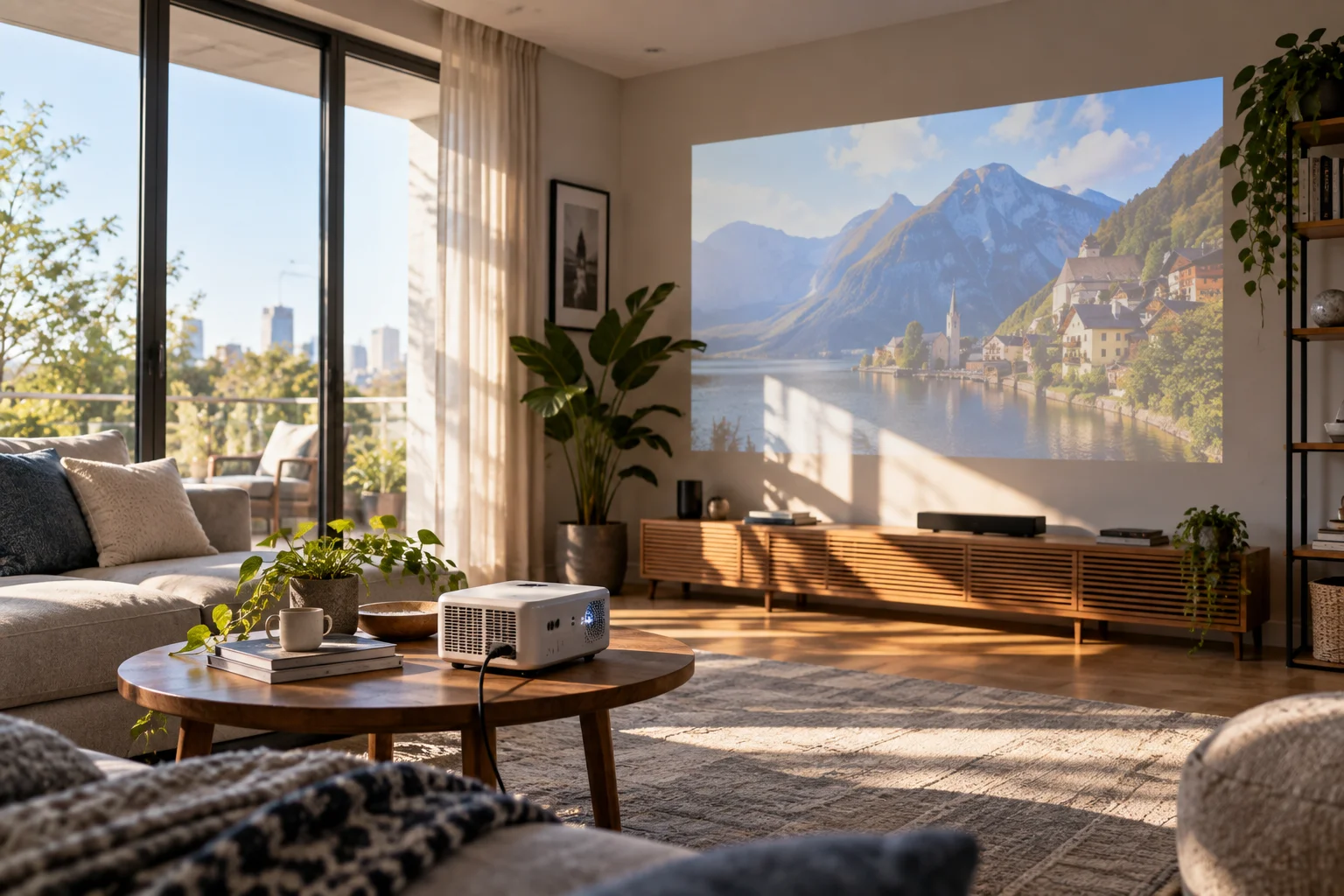
Imagine watching a nighttime movie scene.
In a dark room, the projector can create a convincing separation between bright objects and dark areas.
Now open the curtains.
Light from the windows falls onto the projection screen. That additional light raises the apparent brightness of the screen's dark areas, reducing the perceived difference between blacks and highlights.
The same principle applies to ceiling lights and lamps.
BenQ recommends considering ambient light alongside screen size when selecting projector brightness and notes that a brighter projector is generally needed as ambient light increases.
A TV can also suffer from glare, but modern TVs can produce substantially higher screen luminance and some models can adjust brightness according to ambient conditions.
A simple room comparison
Room condition | Portable projector | Large TV |
|---|---|---|
Dark bedroom | Excellent potential | Excellent |
Dim living room | Good to excellent | Excellent |
Bright living room | Can look washed out | Usually much easier |
Direct sunlight | Very difficult | Usually preferable |
Outdoor at night | Possible with suitable model | Impractical |
Outdoor daytime | Generally poor | Impractical |
Does a Higher Projector Resolution Always Look Better?
Resolution matters, but brightness, image size and viewing distance determine how much of that resolution you can actually appreciate.
Resolution describes the number of pixels used to create the image. A 1920 × 1080 image contains roughly 2.1 million pixels, while 3840 × 2160 contains roughly 8.3 million.
At a normal viewing distance, the difference between 1080p and 4K becomes more noticeable as the screen gets larger and the viewer sits closer.
That's one reason 4K can be particularly attractive for large projection screens.
But a dim 4K projector isn't automatically preferable to a brighter 1080p projector in a bright room.
The image has to be visible before its extra pixels become useful.
There is another complication: not every projector marketed as “4K” produces a native 3840 × 2160 image from its imaging panels. Some systems use pixel-shifting or other enhancement technologies. Epson, for example, describes its 4K Enhancement technology as shifting pixels diagonally to increase the displayed resolution.
So check whether a projector is native 4K or uses a 4K-enhancement technique.
Why Does Throw Distance Matter?
Throw distance determines how large the projected image can become from a particular position.
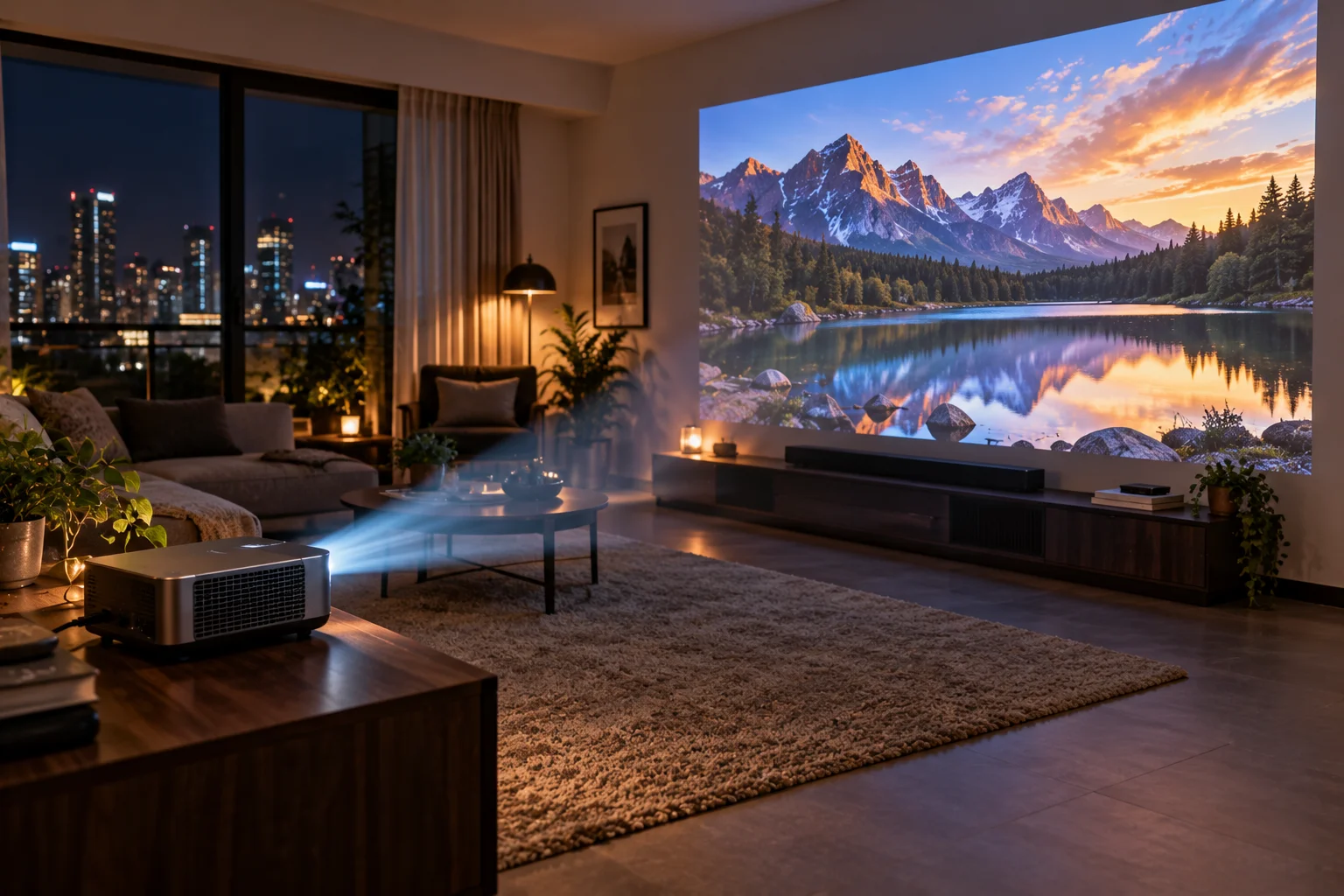
A projector doesn't simply create any screen size from anywhere in the room.
Its lens has a throw ratio, which describes the relationship between the projector's distance from the screen and the resulting image width.
A conventional projector might need several metres to create a large image.
A short-throw model can create the same approximate screen size from considerably closer, while an ultra-short-throw projector can sit very close to the wall.
BenQ explains that throw ratio determines the projection distance required for a particular screen size, while short-throw designs allow large images from much shorter distances.
This matters enormously in apartments, bedrooms and small living rooms.
Before buying a portable projector, measure:
Distance from the intended projector position to the wall
Available screen width
Seating distance
Projector mounting height
Available power
Potential obstructions
A projector that looks perfect on paper may simply be impractical for your room.
Is a 100-Inch Projector Image Better Than a 75-Inch TV?
It depends on whether you value image size more than brightness, contrast and convenience.
A 100-inch projected image is genuinely immersive.
Movies can feel more cinematic, sports can become easier to share with a group, and the sheer physical scale can be impressive.
But a 75-inch TV may produce a substantially brighter, more contrast-rich picture in a living room with daylight.
There's also an important psychological factor: bigger isn't automatically better if the image loses quality in the process.
A slightly smaller image that remains bright and punchy can be more enjoyable than a giant but washed-out projection.
Which Handles HDR Better?
Large TVs generally have an easier time delivering convincing HDR in rooms with ambient light, although high-end projectors can produce excellent HDR in controlled environments.
HDR depends heavily on brightness, contrast and the ability to reproduce both highlights and dark areas.
Projector performance is particularly sensitive to room conditions. BenQ notes that a dark environment is important for getting the most from HDR projection.
High-end home-theater projectors can nevertheless deliver sophisticated HDR processing and substantial dynamic range. Sony's current home-cinema models, for example, combine high-resolution panels with dynamic HDR processing and contrast-control systems.
For a typical living room, though, a bright large-screen TV remains the simpler HDR solution.
Which Is Better for Gaming?
A large TV is generally easier for gaming, while a projector becomes attractive when you specifically want a huge gaming image.
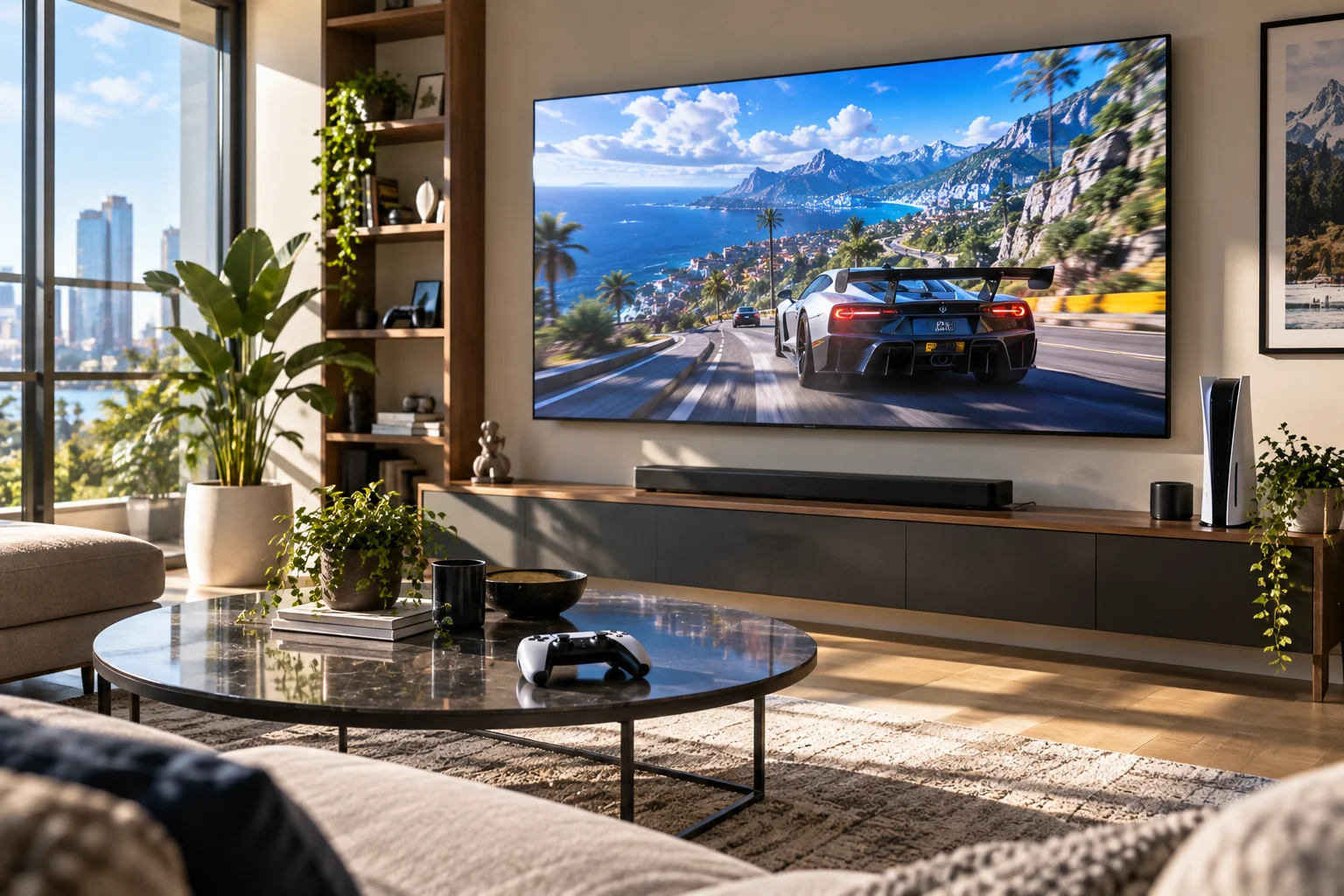
A gaming TV can offer:
High refresh rates
Low input latency
Strong HDR brightness
Consistent image quality
No throw-distance calculations
Some projectors also offer low-latency modes and high refresh rates, but model specifications vary considerably.
A portable projector is particularly interesting for casual gaming where screen size and portability matter more than achieving the best competitive performance.
For competitive gaming, check input lag, refresh rate, supported resolution and gaming-specific HDMI features rather than assuming that a projector or TV is automatically better.
When Does a Portable Projector Make More Sense?
A portable projector makes the most sense when flexibility and giant image size are more important than maximum brightness and convenience.
It's particularly appealing for:
Movie nights
Bedroom viewing
Dorm rooms
Temporary setups
Camping and outdoor movie nights
Travel
Small apartments
Occasional big-screen entertainment
Portable models can also integrate speakers, streaming features, batteries and automatic image adjustments, making them much easier to move than traditional home-theater projectors.
But portability usually comes with compromises in brightness, optics, speakers or battery life.
BenQ notes that portable projector brightness needs to match the intended environment and that ambient light becomes a major consideration.
When Is a Large TV the Better Choice?
A large TV is the better fit when you want consistent image quality throughout the day with minimal setup.
Choose a TV if you:
Watch mostly during daylight
Have lots of windows
Want strong HDR
Watch sports frequently
Play competitive games
Want instant-on convenience
Don't want to manage throw distance
Don't want a separate screen
Prefer consistent contrast and black levels
Modern TVs can also include ambient-light sensors and image-processing features that adapt the display to the room.
Portable Projector vs Large TV: Which One Should You Buy?
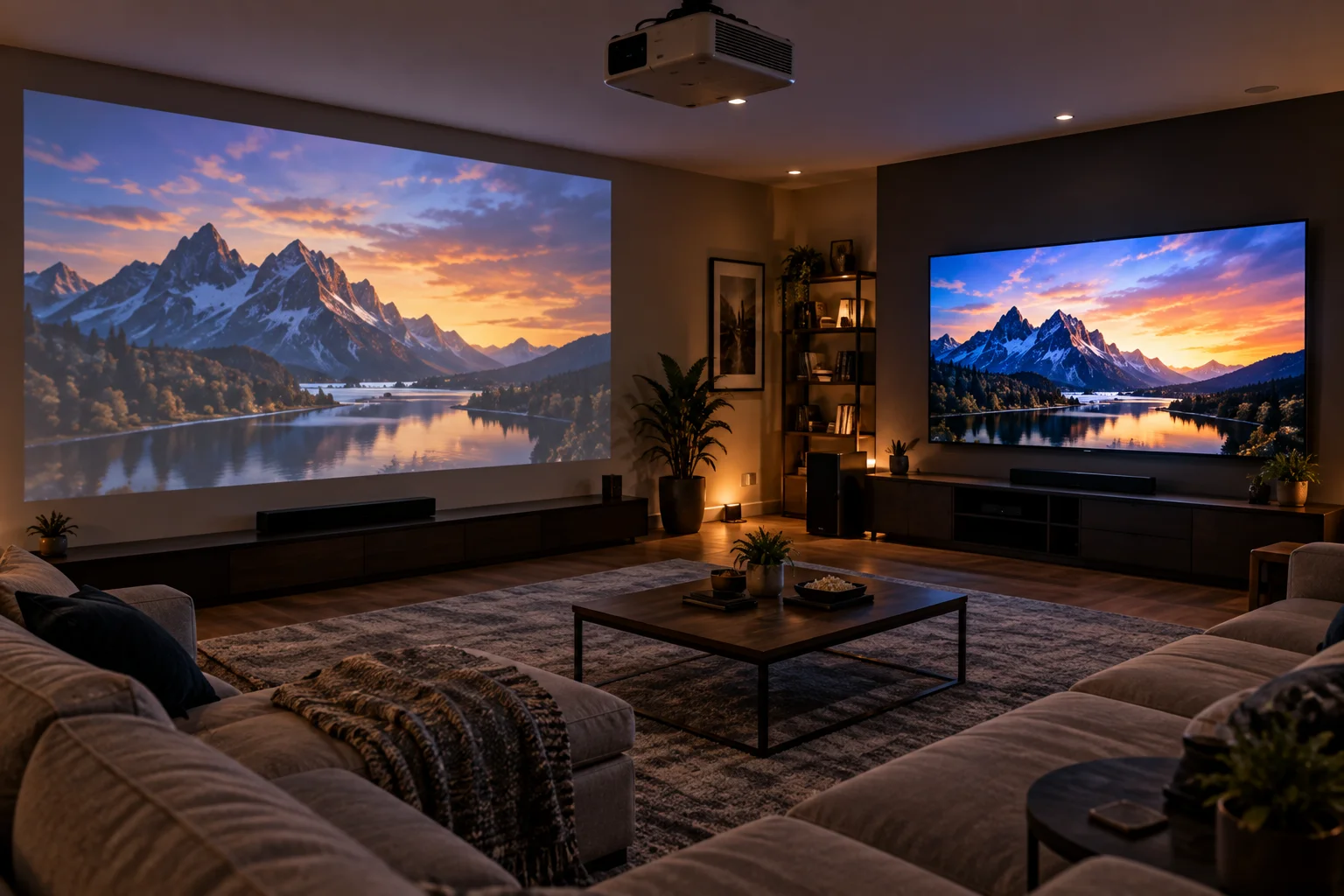
Choose based on your room first and specifications second.
Your priority | Better fit |
|---|---|
Huge cinematic image | Portable projector |
Daytime viewing | Large TV |
Dark movie room | Projector |
Strong HDR | Large TV |
Portability | Portable projector |
Easy setup | Large TV |
Outdoor night movies | Portable projector |
Competitive gaming | Large TV |
100-inch-plus screen | Projector |
Bright living room | Large TV |
Occasional movie nights | Portable projector |
Consistent picture quality | Large TV |
If you're considering a projector, don't start with “How many inches can it produce?”
Start with:
How much light is in my room, where can I place the projector, how large do I really want the image, and how often will I watch during the day?
Those answers will tell you much more than the headline resolution.
Frequently Asked Questions About Portable Projectors vs Large TVs
Is a projector better than a TV for movies?
A projector can provide a much larger, more cinematic image, particularly in a dark room. A large TV generally provides higher brightness and more consistent contrast, especially with ambient light.
Can a portable projector work in daylight?
Some can, but daylight is one of the biggest challenges for projection. As ambient light increases, the projected image can look washed out. A brighter projector and appropriate screen can help, but a TV is generally easier to use in bright conditions.
How many lumens do I need for a portable projector?
There isn't one universal number because screen size and ambient light matter. BenQ recommends considering both factors rather than choosing a projector solely by its lumen rating.
Is 1080p enough for a projector?
Yes, 1080p can look very good, particularly at moderate screen sizes and normal viewing distances. Higher resolutions become more useful as the image gets larger or viewers sit closer.
Does a projector need a screen?
No. You can project onto a suitable wall, but a dedicated screen can provide a more predictable surface and improve the viewing experience.
Is a 100-inch TV better than a 100-inch projector?
They can provide very different experiences. A 100-inch TV can deliver much higher direct luminance, while a projector can achieve the same size with less physical bulk. Room lighting becomes especially important for the projector.
The Bottom Line
Portable projectors win on flexibility and sheer image size; large TVs win on brightness, consistency and convenience.
A projector can transform a blank wall into a huge movie screen and is particularly compelling at night or in a controlled-light room. But the same device can struggle when sunlight or room lighting hits the projection surface.
The most important specifications aren't isolated numbers.
Brightness determines how well the image survives ambient light. Resolution determines how much fine detail the image can contain. Throw distance determines whether the projector fits your room. Screen size determines how widely that light is spread. Room lighting determines how much of the projector's contrast you actually see.
Get those relationships right, and either technology can be excellent. Ignore them, and even an impressive specification sheet can produce a disappointing real-world picture.