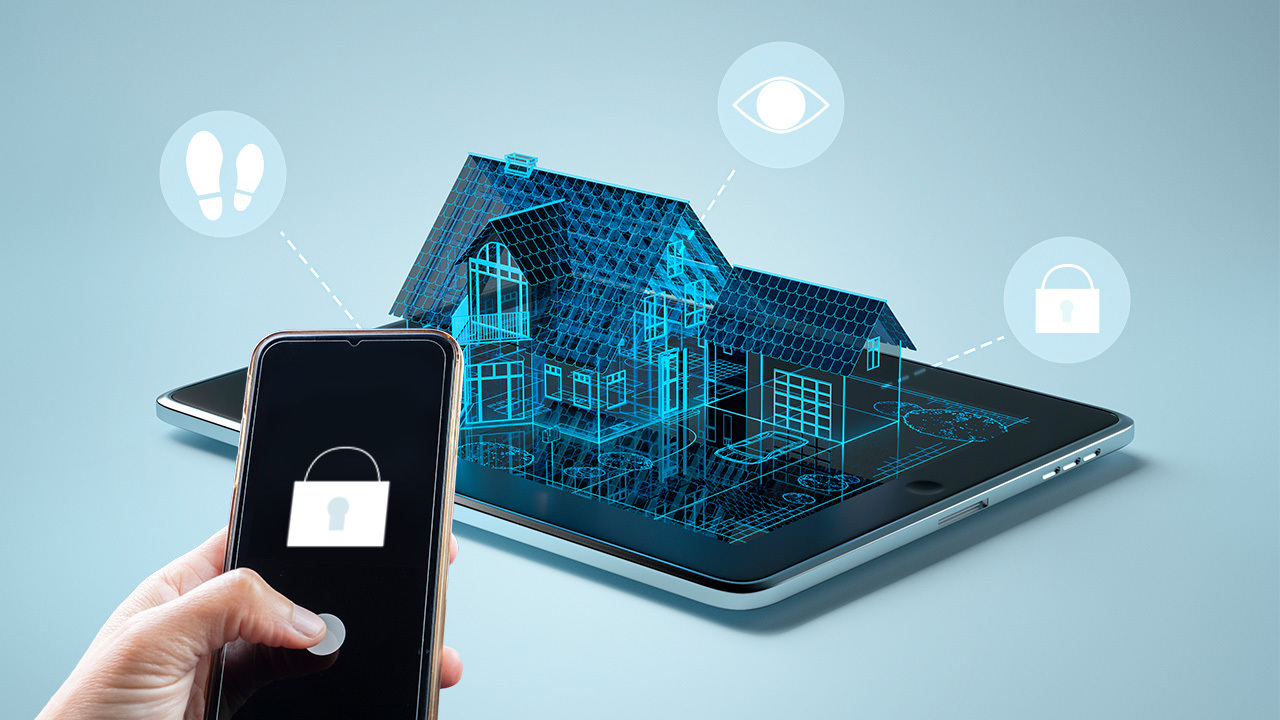
Imagine receiving a notification on your phone that someone is standing at your front door, a delivery has just arrived, or an unfamiliar person is moving around your property. Instead of checking hours of security footage or responding to every motion alert, you get a notification that tells you what your camera has detected.
This is the idea behind AI-powered Home Security. By combining smart cameras, motion sensors, computer vision and intelligent software, modern security systems are becoming better at understanding what's happening around a home rather than simply recording movement.
For homeowners, this technology can make everyday monitoring more convenient. Whether you're at work, travelling or relaxing at home, intelligent detection can help you stay informed about activity around your property.
But how does it actually work? Can AI distinguish a delivery driver from an intruder? And how reliable are these systems when it comes to detecting suspicious activity?
Let's explore how AI-powered Home Security works, the features that matter most and what homeowners should know before investing in a smarter security setup.
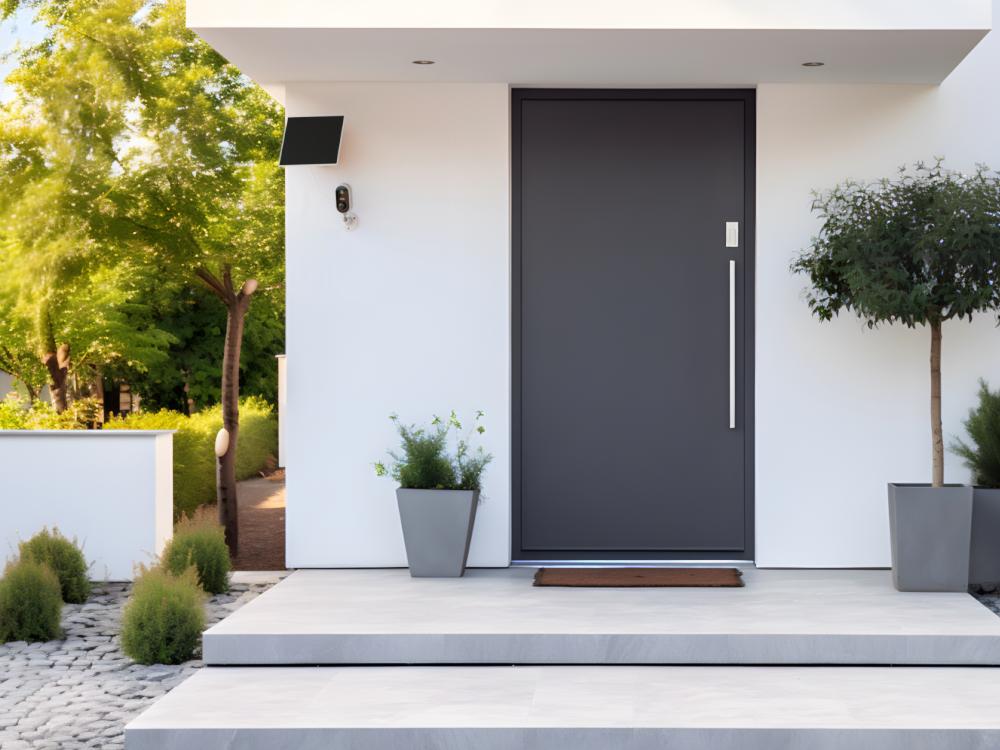
What Is AI-Powered Home Security?
Traditional home security cameras primarily capture footage when they detect motion or operate continuously. Although useful, basic motion detection doesn't always distinguish between different types of movement.
A passing vehicle, a person walking along the driveway, a pet crossing the garden or a delivery driver approaching the entrance may all trigger similar alerts.
AI-powered Home Security takes this process a step further by using algorithms to analyze images, recognize patterns and categorize activity.
Depending on the system, it may identify:
People: Individuals approaching doors, walking through gardens or entering monitored areas.
Packages: Deliveries placed near entrances or picked up from designated locations.
Vehicles: Cars entering driveways or moving through monitored spaces.
Unusual activity: Movement that meets user-defined conditions, such as activity in a restricted area at an unexpected time.
The important difference is that AI-assisted systems can provide more context about an event, helping homeowners decide whether they need to take action.
Not every smart camera includes the same capabilities. Some offer basic person detection, while more advanced models support package recognition, activity classification and customizable alerts.
How AI Detects Activity Around Your Home
AI-powered security systems typically combine cameras, sensors and software to interpret activity.
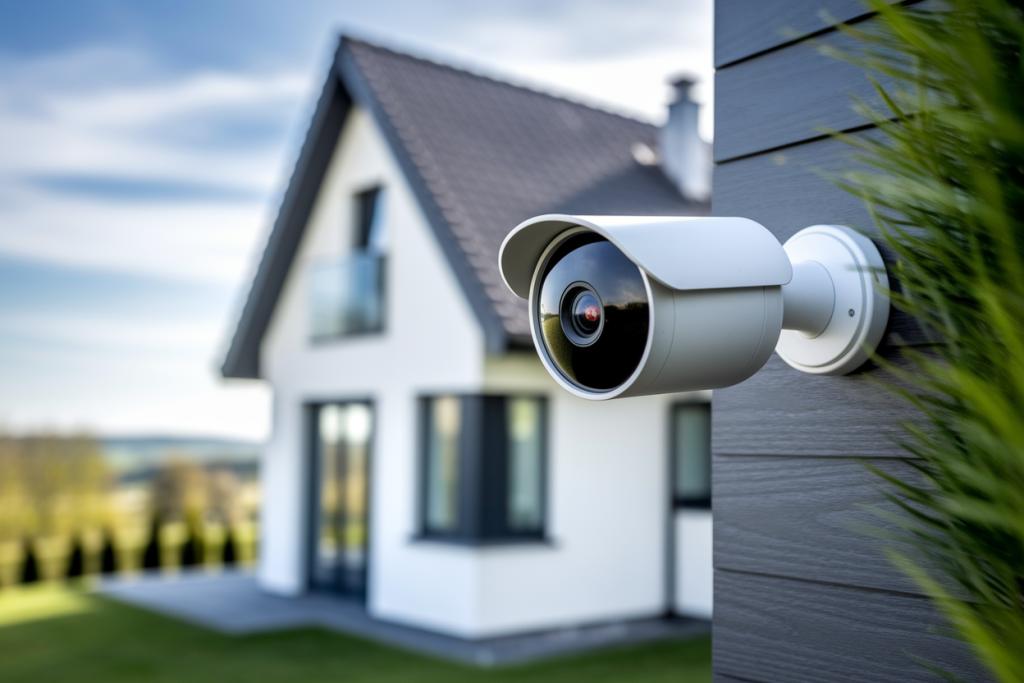
1. Cameras and sensors capture activity
Security cameras record video or images, while motion sensors may detect changes in their surroundings. Some systems also use infrared sensors to monitor activity in low-light conditions.
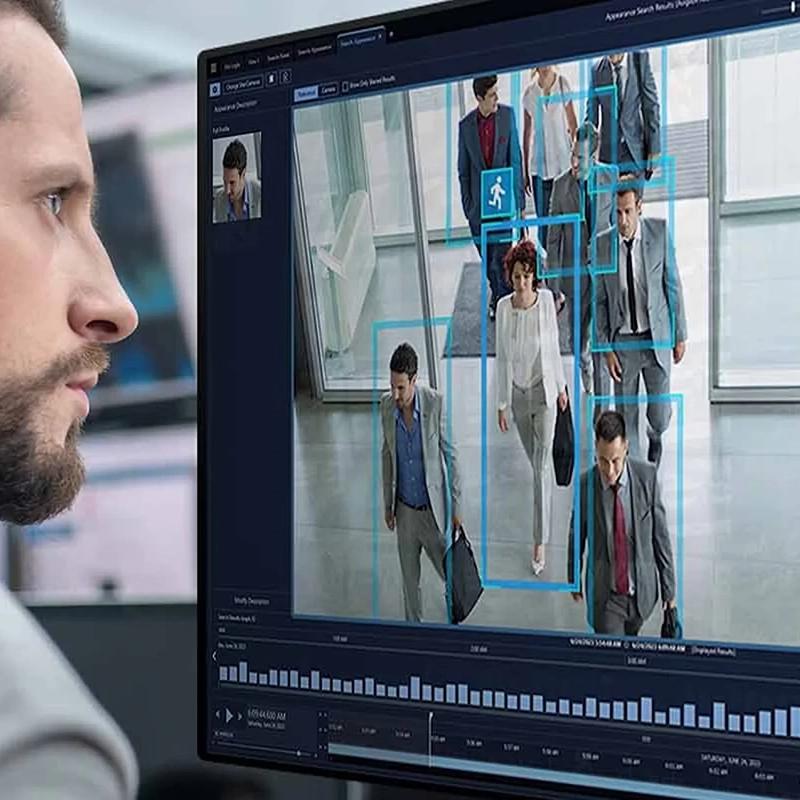
2. AI analyzes the footage
Computer vision models examine visual information to identify objects, people or movement patterns. Depending on the system, processing happens on the camera, a local hub or a cloud server.

3. Activity is classified
The system categorizes detected events, such as a person entering a designated area or a package being left at the doorstep. Configurable detection zones and sensitivity settings help determine which events matter.
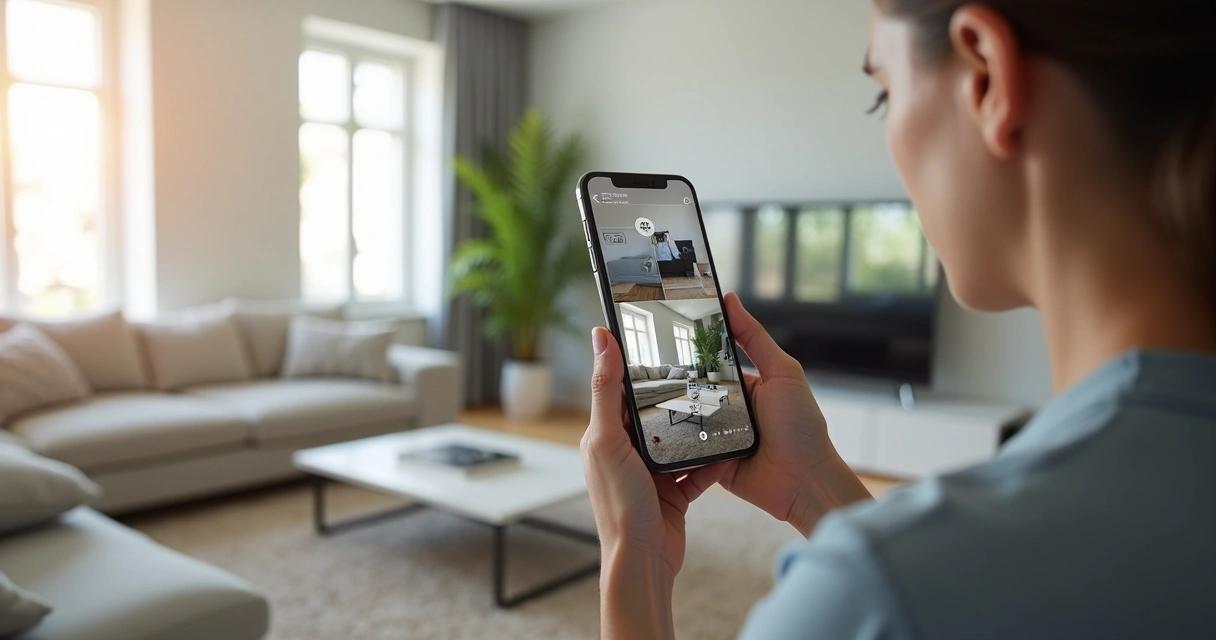
4. Relevant notifications are delivered
If an event meets the system's alert criteria, it may send a notification to a smartphone, save a recording or activate a compatible security device.
Some systems use machine learning to improve classification over time, while others rely on models that remain fixed until a software update. AI doesn't necessarily learn individual household behavior automatically, so it's worth checking how a particular product handles detection and personalization.
How AI Detects People
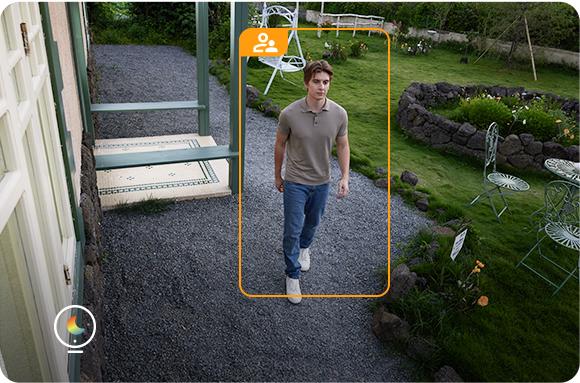
Person detection is among the most widely available AI-assisted security features.
Instead of responding to every change in the camera's view, the system analyzes visual characteristics that help it distinguish a person from other objects.
For example, if someone walks toward your front entrance, a compatible camera may identify the movement as human activity and send a person-detection alert.
This can be especially useful for:
Monitoring front doors and driveways.
Receiving alerts when someone enters a backyard.
Distinguishing people from passing vehicles.
Reducing notifications caused by certain types of environmental movement.
Some advanced security systems also offer familiar-face recognition, but this is different from general person detection. Facial recognition introduces additional privacy considerations and may be subject to legal restrictions.
Person detection is not the same as identifying someone's intentions. A camera may recognize a person accurately without being able to determine whether that individual is a visitor, a delivery worker or someone behaving suspiciously.
How AI Recognizes Packages
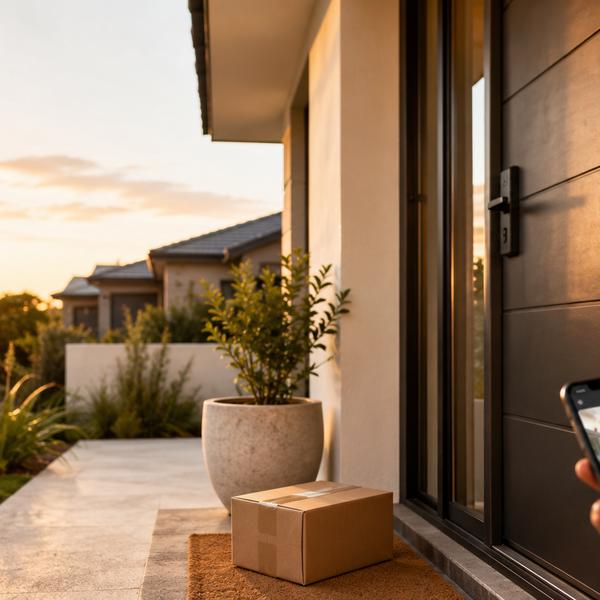
Online shopping has made package monitoring an increasingly useful part of Home Security.
Some smart cameras use object recognition to identify delivery packages in monitored areas. Depending on the product, they may detect when a package is placed near the front door, remains unattended or is picked up.
Imagine ordering groceries or a new household appliance while you're away. A compatible camera may notify you when a package is detected at your entrance.
Package detection can be particularly useful for:
Knowing when deliveries arrive.
Checking whether a package remains outside.
Reviewing recorded delivery activity.
Receiving alerts when a detected package is removed.
However, performance depends on camera positioning, lighting, package visibility and the specific detection technology. A parcel hidden behind a plant or placed outside the camera's field of view may go unnoticed.
Package detection is therefore a helpful monitoring feature, not a guarantee that every delivery will be recognized.
Can AI Identify Suspicious Activity?
One of the more interesting developments in intelligent Home Security is the ability to detect activity that matches specific conditions.
For instance, homeowners may configure cameras to monitor particular areas, such as a side entrance, garage or backyard. If movement is detected within a restricted zone, the system can generate an alert.
Some cameras also offer features such as:
Activity zones: Monitor selected areas while ignoring others.
Loitering detection: Flag prolonged presence in a designated area, where supported.
Unusual-hour alerts: Notify users about movement during selected time periods.
Object classification: Distinguish between people, vehicles and other detectable objects.
IMPORTANT DISTINCTION
Detecting activity doesn't mean detecting criminal behavior.
AI can recognize movement, classify objects and flag certain patterns. It cannot reliably establish whether someone has criminal intentions. Treat suspicious-activity alerts as prompts to review footage rather than definitive conclusions.
For households, customizable detection zones can be particularly useful. If a camera faces a busy street, for example, excluding the sidewalk may reduce irrelevant notifications while keeping the driveway under observation.
AI vs. Traditional Home Security Cameras
The biggest difference between traditional cameras and AI-assisted systems is the way they interpret movement.
Feature | Traditional motion cameras | AI-powered cameras |
|---|---|---|
Motion alerts | Yes | Yes |
Person detection | Not always | Common |
Package detection | Usually limited | Available on some models |
Object classification | Limited | Often supported |
Custom activity zones | Varies | Common |
Contextual notifications | Basic | More detailed, model-dependent |
Automated responses | Depends on setup | Depends on setup and integrations |
AI-assisted systems can reduce unnecessary notifications by classifying certain events before alerting users. However, performance varies, and even advanced systems can generate false alarms or miss activity.
The most practical advantage is often not more alerts, but more informative alerts.
The Role of Smart Sensors and Connected Devices
AI cameras are only one part of a modern security setup. Smart sensors and connected devices can provide additional information about what's happening around a property.
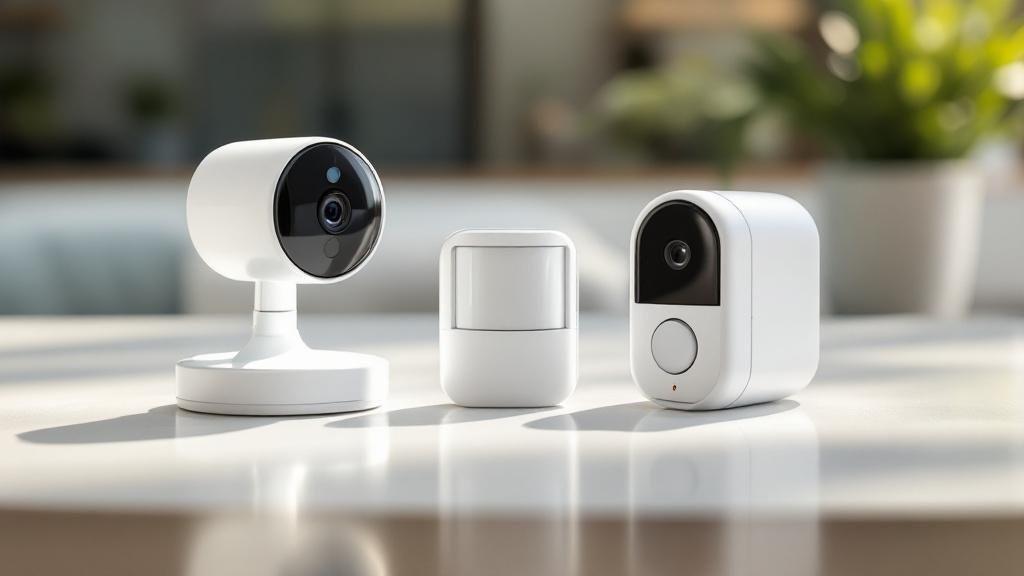
Depending on compatibility, a connected Home Security system may include:
Motion sensors: Detect movement in rooms, hallways and selected outdoor areas.
Door and window sensors: Identify when a monitored entry point opens.
Video doorbells: Show visitors and support two-way communication.
Smart lighting: Illuminate areas when specific activity is detected.
Security alarms: Sound alerts when configured conditions are met.
For example, a camera might detect a person near the front entrance, while a door sensor confirms whether the entrance was subsequently opened.
Combining different types of information can offer greater awareness than relying on a single camera. However, integrations should be configured carefully to prevent unnecessary alerts or unintended automation.
Real-Time Alerts and Remote Monitoring
One of the most convenient aspects of AI-powered Home Security is receiving useful information while away from home.
Instead of waiting until you return to review footage, compatible systems can send event notifications directly to your smartphone.
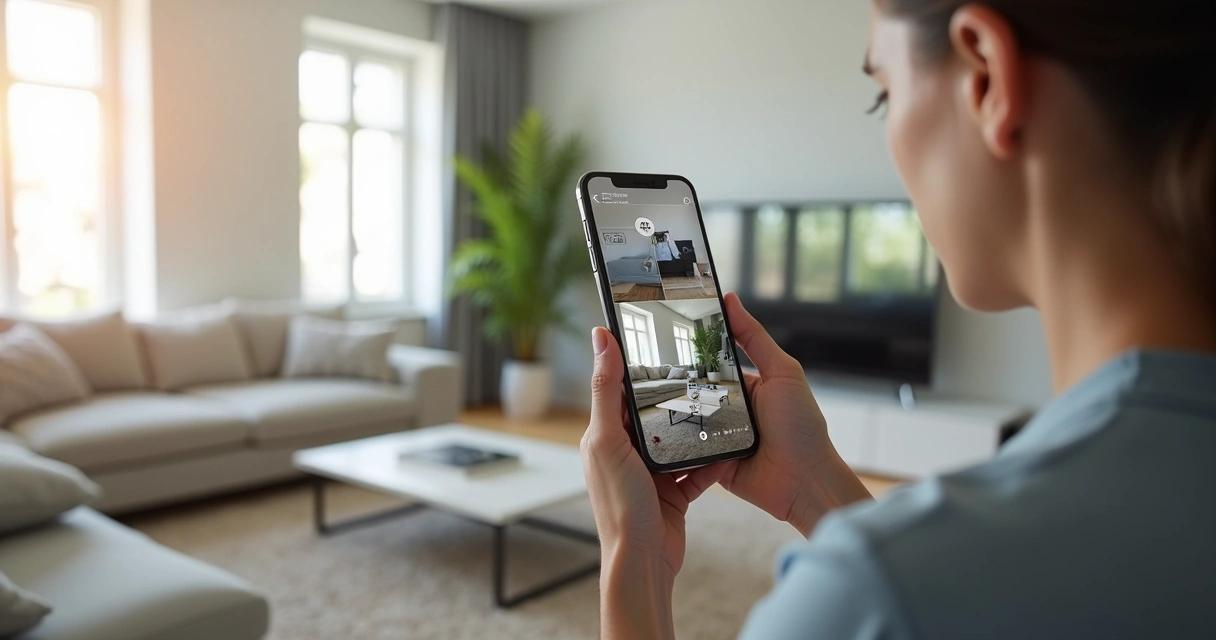
For example, a typical day might involve:
Morning: A person-detection notification appears when a visitor approaches the entrance.
Afternoon: A package alert arrives when a delivery is left at the front door.
Evening: An activity-zone alert is triggered by movement near the garage.
From a connected app, homeowners may be able to open live video, review recorded events and adjust their camera settings.
Some systems also support shared access, allowing other authorized household members to receive notifications or monitor cameras.
Keep in mind that real-time alerts depend on factors such as internet connectivity, app permissions, power availability and the manufacturer's service infrastructure.
What About Nighttime Detection?
Security monitoring needs to work beyond daylight hours.
AI-powered cameras may combine infrared night vision, low-light sensors and image processing to detect people and other activity after dark.
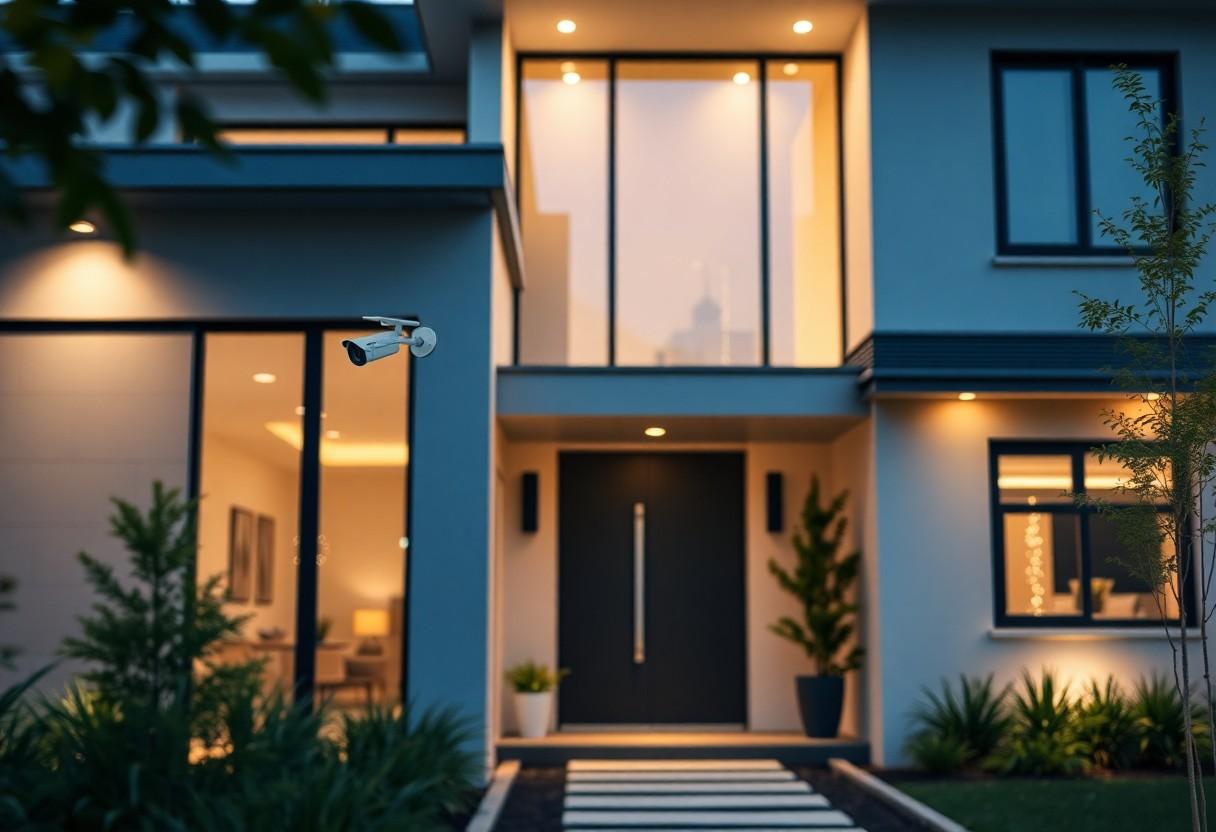
When comparing nighttime performance, consider:
Infrared night vision for dark environments.
Low-light color imaging, where available.
Motion-detection range.
Camera placement and lighting.
The ability to recognize objects at a distance.
AI classification depends on the visual information available. Poor lighting, rain, shadows and obstructed views can all reduce detection reliability.
If a particular entrance is important to monitor, a combination of appropriate lighting and a well-positioned camera can make a meaningful difference.
Privacy, Data Storage and Security
Intelligent cameras can capture information about household members, visitors, neighbors and passersby. Privacy should therefore be a core consideration when choosing Home Security technology.
Before buying, review the manufacturer's policies and check:
Video storage: Is footage saved locally or in the cloud?
Access controls: Can you restrict who views live feeds and recordings?
Encryption: What protections are provided for stored and transmitted footage?
Software updates: Does the manufacturer provide ongoing security updates?
Privacy zones: Can parts of the camera's view be excluded?
Data processing: Is AI analysis performed on the device or through external servers?
Where possible, use strong passwords, enable two-factor authentication and position cameras so they monitor your own property without unnecessarily recording neighboring spaces.
These considerations are particularly important for households using multiple connected cameras.
How to Choose the Right AI Home Security System
Not every home needs an extensive camera network. The right setup depends on your property's layout, the areas you want to monitor and the level of automation you prefer.
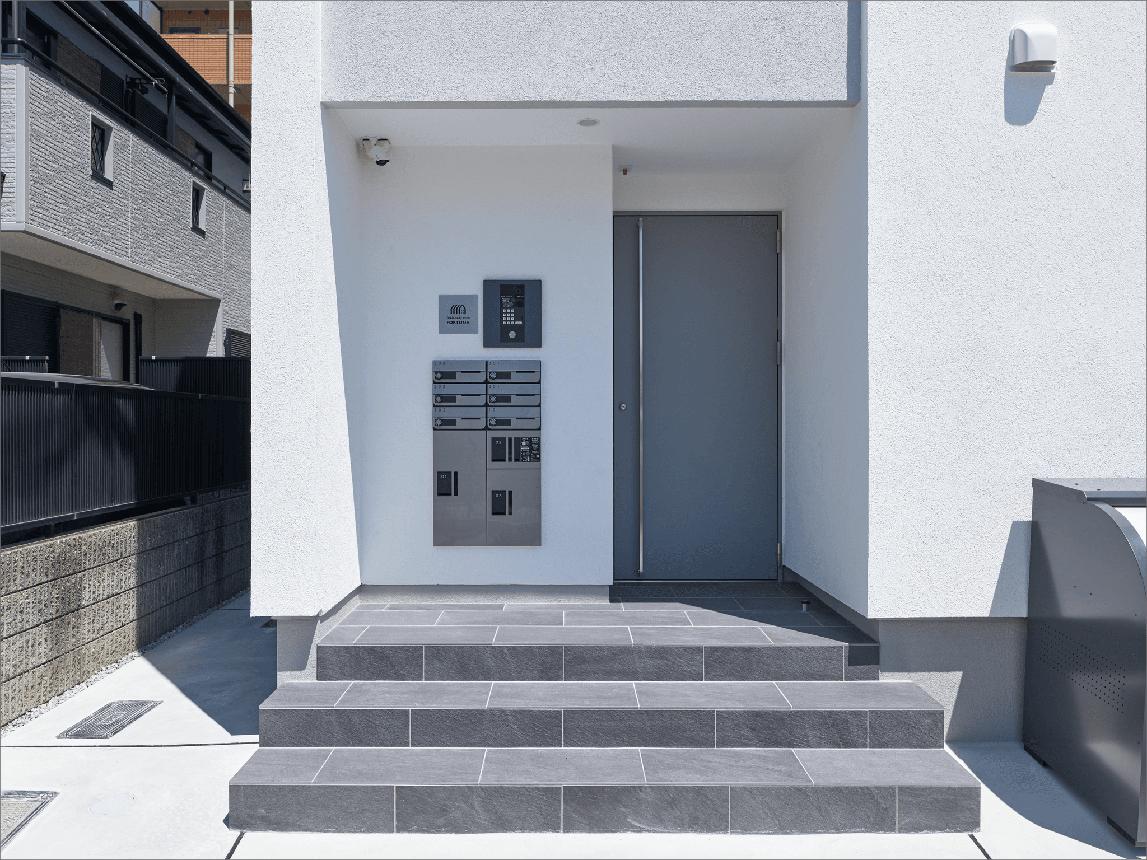
For apartments
A video doorbell, a suitable indoor camera and entry alerts may be sufficient. Check installation restrictions, especially if you rent or share common areas.

For family homes
Consider cameras covering the entrance, driveway and backyard, combined with door sensors and customizable activity zones.
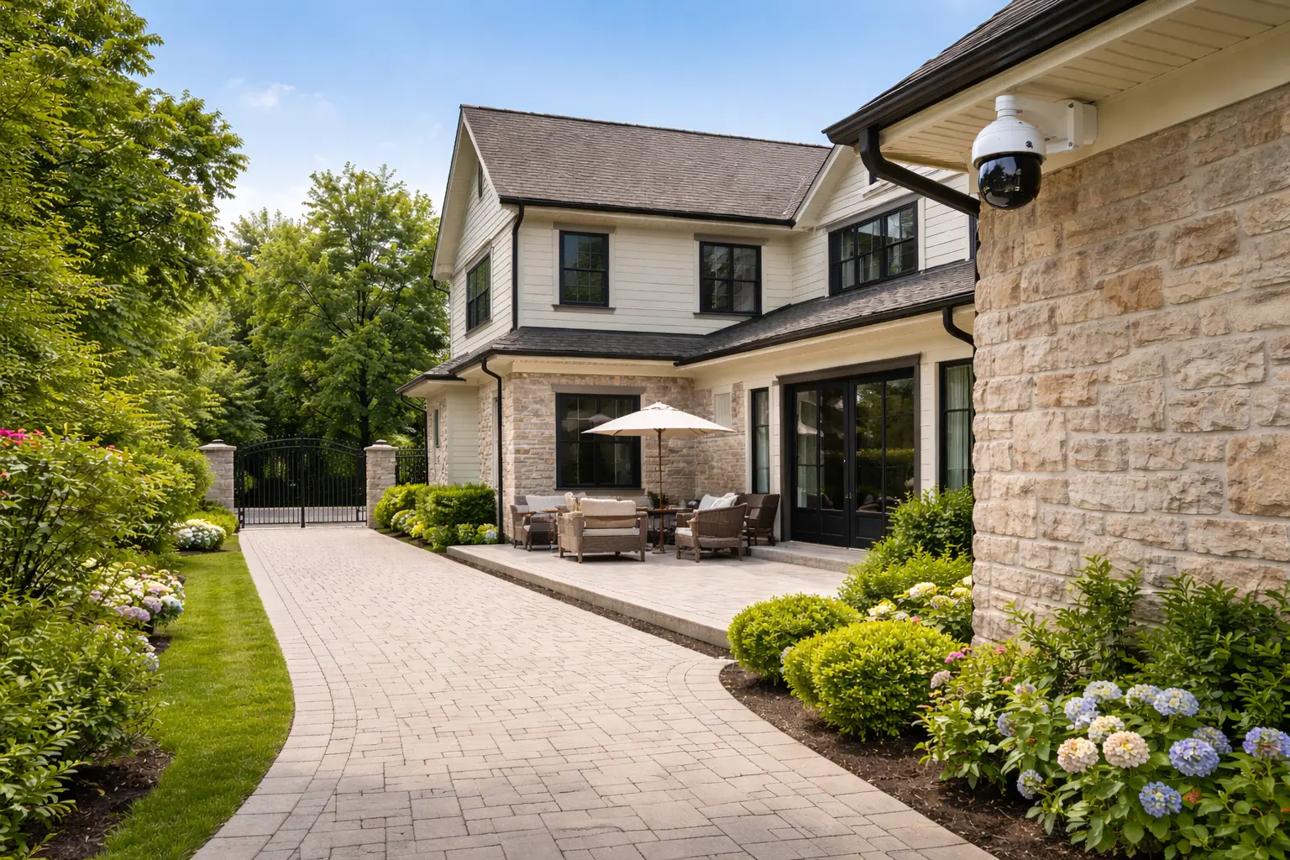
For larger properties
A multi-camera system with suitable outdoor coverage, reliable connectivity, expandable storage and centralized monitoring may be more practical.
A practical buying checklist
Before you buy
0 of 9 checked
Clear video resolution and appropriate viewing angles
Reliable person and motion detection
Customizable activity zones
Night vision suitable for the property
Stable Wi-Fi or another supported connection
Local or cloud storage that meets your needs
Strong account security and privacy controls
Compatibility with existing smart-home devices
Suitable weather resistance and power options
Reset Copy checklist
The Future of AI-Powered Home Security
AI-powered Home Security is moving toward systems that can interpret activity across multiple connected devices rather than relying on isolated camera alerts.
Improvements in computer vision may help cameras distinguish between different objects more consistently, while more capable sensors could provide additional context about events.
Some emerging systems are also exploring automated event summaries, intelligent search through recorded footage and more flexible home automation.
For example, instead of manually scrolling through hours of recordings, a user may be able to search for specific types of activity, provided the system supports that functionality.
However, smarter automation also makes privacy, reliability and human oversight increasingly important. Homeowners should retain control over recording, notifications and automated responses.
Final Thoughts
AI-powered Home Security is changing how homeowners monitor their surroundings. By recognizing people, identifying certain packages, classifying movement and delivering contextual notifications, intelligent systems can make security cameras more useful in everyday life.
The real value lies in choosing features that match your needs. Person detection can make alerts more relevant, package monitoring can help manage deliveries, and customizable activity zones can focus attention on important areas.
At the same time, no AI system is perfect. Detection errors, connectivity interruptions and environmental conditions can affect performance, so smart monitoring should complement rather than replace sensible security practices.
Ultimately, the best approach is to invest in reliable cameras, meaningful detection, strong privacy protections and convenient controls. When those elements work together, intelligent Home Security can become a practical part of a modern, connected home.
FAQs
1. What is AI-powered Home Security?
AI-powered Home Security uses artificial intelligence, computer vision and connected sensors to analyze activity around a property. Depending on the system, it can recognize people, identify packages, classify movement and deliver more informative alerts.
2. Can AI security cameras distinguish people from animals?
Many AI-enabled cameras can distinguish people from animals, although detection capabilities vary by model. Camera angle, distance, lighting and environmental conditions can affect accuracy.
3. Can AI detect suspicious activity around a home?
AI can identify predefined activity patterns, such as prolonged movement in designated areas or activity at certain times. However, it cannot reliably determine criminal intent, and alerts should be reviewed in context.
4. How does AI package detection work?
Package detection uses image-recognition technology to identify objects resembling deliveries in a monitored area. Some systems can also recognize when a detected package is picked up, depending on the camera and its software.
5. Does AI-powered Home Security work at night?
Yes, many systems combine AI with infrared night vision or low-light imaging. However, visibility, lighting, camera positioning and the capabilities of the detection model influence nighttime performance.
6. Does AI security require an internet connection?
Many connected features, including remote notifications and cloud storage, require internet connectivity. Some systems can perform local AI processing and continue certain functions without internet access, depending on their design.
7. Is AI-powered Home Security safe for privacy?
It can be, provided the system has suitable security protections and is configured responsibly. Strong passwords, two-factor authentication, appropriate camera placement, access controls and regular software updates can help protect household footage.
8. Can AI security cameras reduce false alarms?
AI-based classification can reduce some unnecessary motion notifications by distinguishing between different types of activity. However, false alarms can still occur, particularly in challenging lighting, weather or viewing conditions.
9. Are AI security cameras worth buying?
They can be useful for households that want more informative alerts, remote monitoring, package detection and customizable activity zones. The value depends on your property, budget, privacy preferences and the quality of the system.
10. What is the difference between AI cameras and traditional CCTV?
Traditional CCTV generally records video or detects motion, whereas AI-enabled cameras can additionally analyze footage to classify objects and identify certain activity patterns. Both can be useful, but AI adds contextual monitoring capabilities.