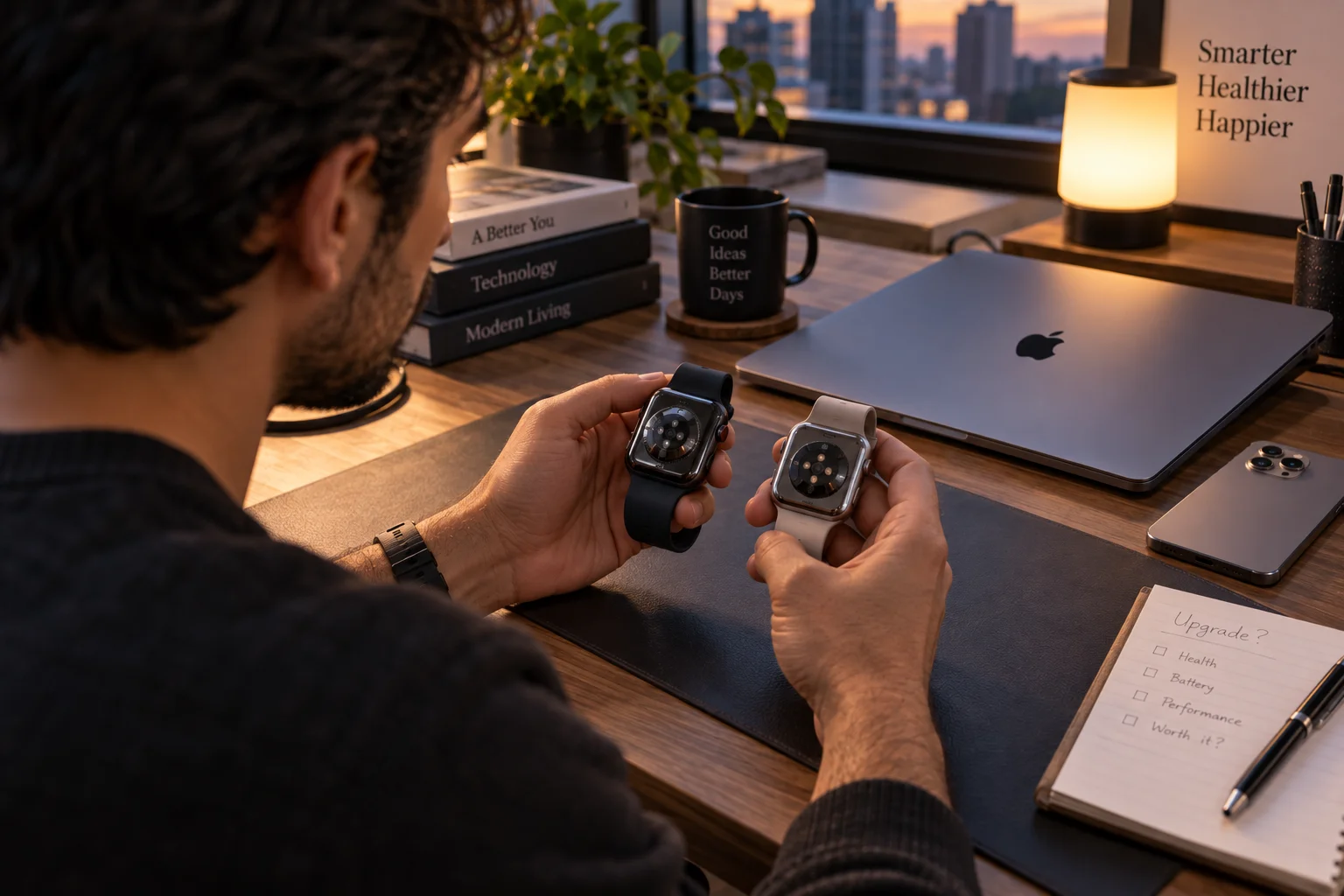
The Apple Watch Series 12 is one of Apple's most health-focused smartwatch upgrades in years, but its biggest improvements aren't immediately visible from the outside.
At first glance, it looks remarkably similar to the Apple Watch Series 11. The more interesting changes are underneath: a redesigned Health Sensing System, an S11 chip, much more frequent heart-rate and HRV measurements, a new Readiness score, daytime Vitals and improved step tracking. Apple says the Series 12 measures background heart rate every five seconds, compared with the much less frequent background sampling of the Series 11.
The result is an Apple Watch that's trying to move beyond simply telling you how many calories you've burned or how many rings you've closed.
It wants to answer a more useful question:
"How ready is your body for today?"
That's where Readiness comes in.
The Series 12 starts at $399 for the 42mm GPS model, the same starting price as the Series 11. It launched on September 18, 2026, and is available in 42mm and 46mm sizes, with aluminum, titanium and ceramic case options.
So, is it worth upgrading?
For owners of older Apple Watches, the answer can be yes. For Series 11 owners, it's much more nuanced.
Apple Watch Series 12 Specs at a Glance
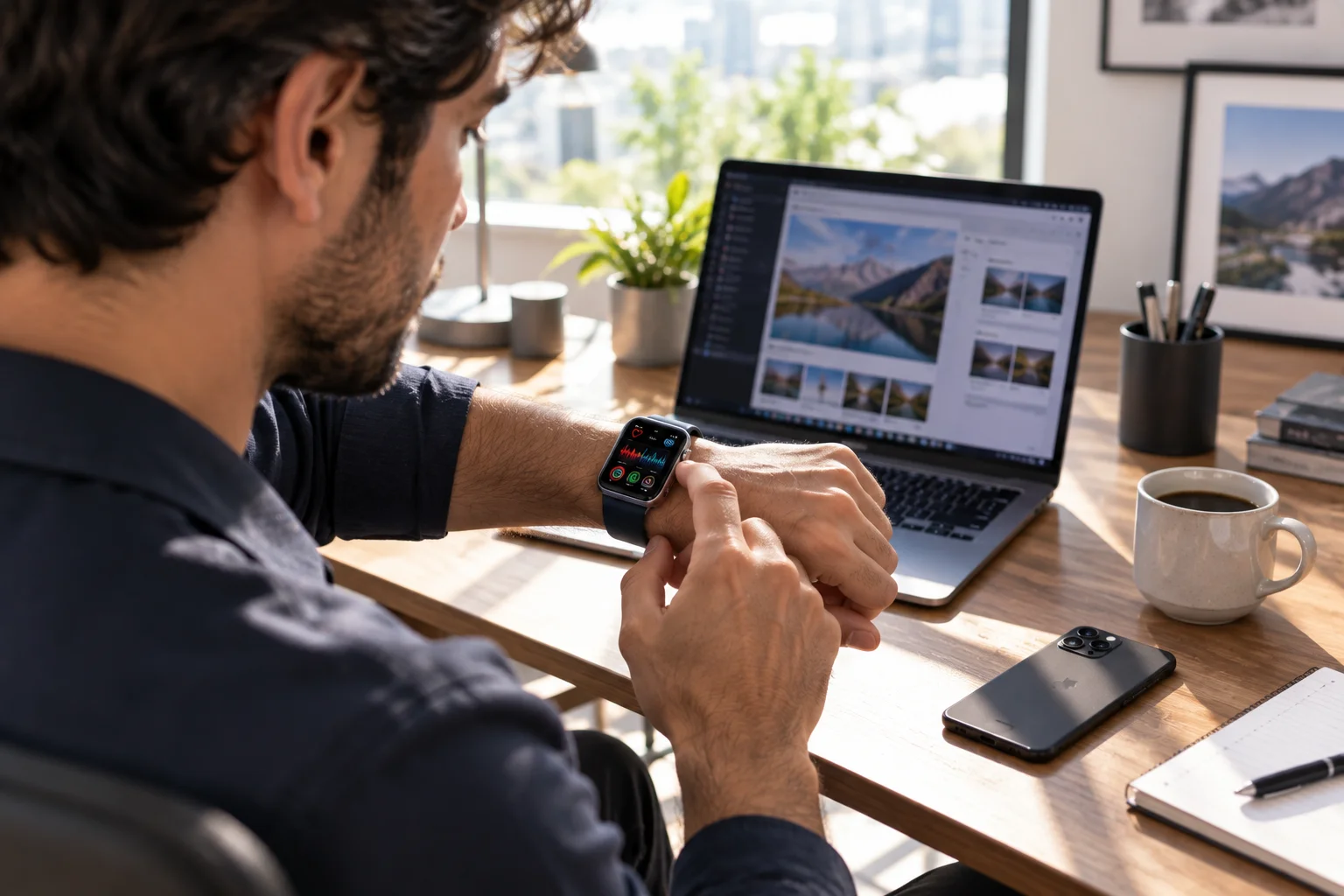
The Series 12 combines Apple's new S11 chip and Health Sensing System with a 24-hour battery, 2,000-nit Always-On OLED display and new recovery-focused health features.
Specification | Apple Watch Series 12 |
|---|---|
Chip | Apple S11 |
Sizes | 42mm, 46mm |
Display | Always-On LTPO3 OLED |
Brightness | Up to 2,000 nits |
Battery | Up to 24 hours |
Workout battery | Up to 10 hours outdoor workout |
Charging | Up to 12 hours in 15 minutes |
Heart-rate sampling | Every 5 seconds |
HRV | Up to 24× more frequent than Series 11 |
Readiness | Yes, 0–10 score |
Vitals | Daytime + overnight |
ECG | Yes |
Sleep tracking | Yes |
Sleep apnea notifications | Yes |
Hypertension notifications | Yes |
Water resistance | 50 meters |
Connectivity | GPS / optional 5G cellular |
Starting price | $399 |
Compatibility | iPhone with iOS 27 or later |
The specifications tell only part of the story.
The major change is how frequently the watch collects physiological data and what Apple does with that information.
The New Health Sensing System Is the Real Series 12 Upgrade
The redesigned Health Sensing System is the biggest hardware change in the Apple Watch Series 12.
Apple has redesigned both the optical and electrical sensing hardware.
The optical heart sensor uses larger, power-efficient green LEDs, while the rear sensor arrangement has been redesigned to improve contact and sensing. The electrical system also uses a new electrode configuration.
Apple says the new system produced the highest heart-rate accuracy among the wearables in its study of more than 1,000 participants. That's an Apple-reported comparison, rather than an independent universal ranking of every wearable on the market.
The more practical improvement is sampling frequency.
The Series 12 can measure background heart rate every five seconds throughout the day, including while you're moving.
That's a significant change in the amount of information the watch can collect.
Why Does Measuring Heart Rate Every Five Seconds Matter?
More frequent heart-rate measurements give the Apple Watch a much richer picture of how your body responds to activity and everyday stressors.
Previously, background measurements were much less frequent when you weren't exercising.
With Series 12, Apple can see more of what's happening between workouts.
For example, the watch can capture changes associated with:
Walking around
Climbing stairs
Household activity
Work stress
Recovery after exercise
Rest
Changes in daily routine
You can also see a rolling two-minute heart-rate graph and new heart-rate complications directly on the watch face.
This doesn't mean more data automatically equals better health decisions.
But it gives Apple's software much more information to work with.
That's important because several of the Series 12's new features depend on this higher-frequency data.
HRV Is One of the Most Important New Health Improvements
The Series 12 measures heart-rate variability much more frequently, making HRV a more useful part of Apple's recovery and stress insights.
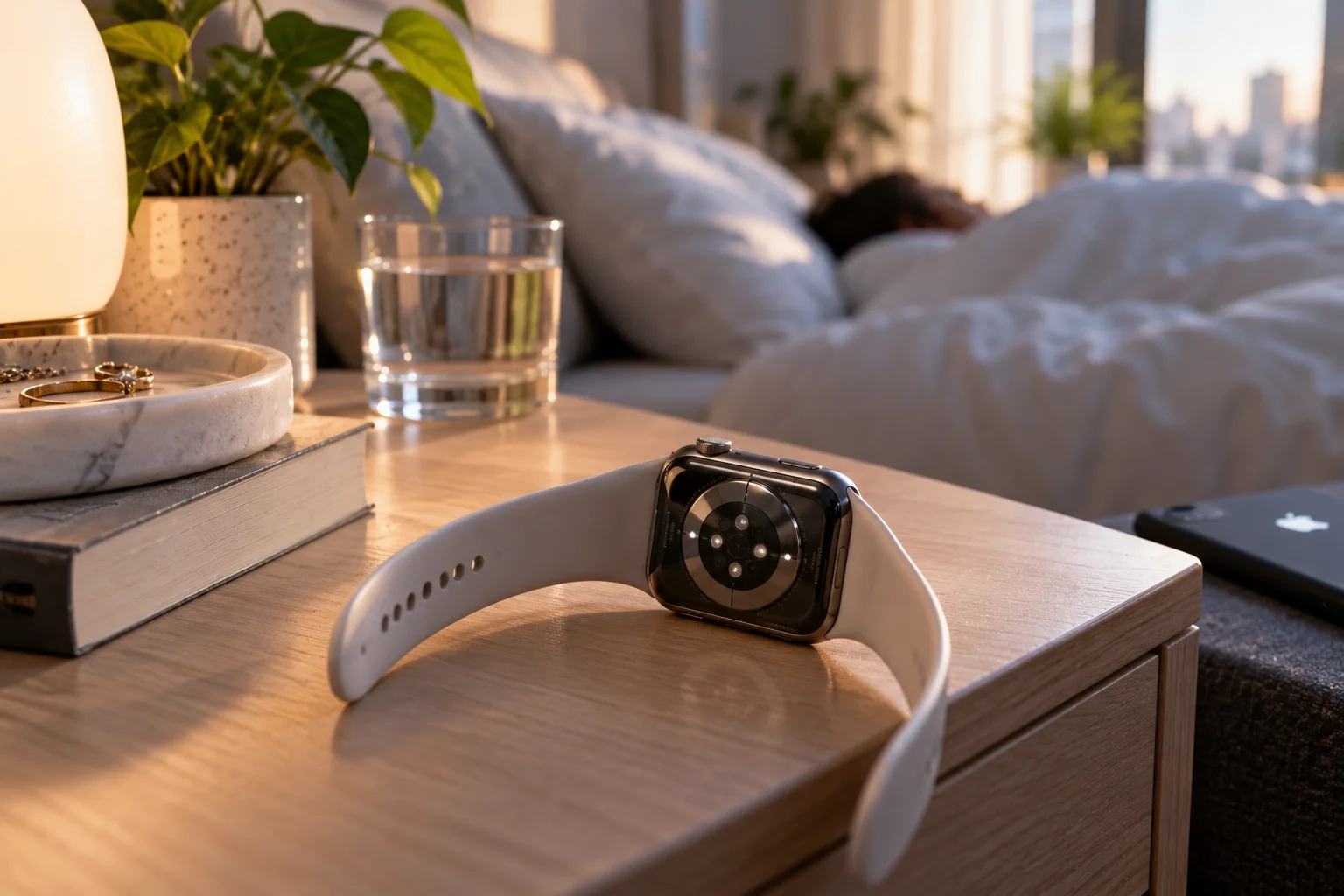
Apple says HRV measurements can now occur up to 24 times more frequently than on Series 11. The watch also distinguishes between Recovery HRV and overall HRV.
Recovery HRV is intended to help identify day-to-day signals associated with stress and recovery.
Overall HRV provides a broader view of health-related patterns.
The Series 12 also incorporates recovery HRV into overnight Vitals and uses personal baselines to put measurements into context.
This is significant because HRV isn't particularly useful when treated as an isolated number.
Your personal baseline matters.
A reading that's normal for one person might be unusual for another.
Apple's approach is therefore more about change from your own baseline than chasing a universally "good" HRV number.
What Is the New Apple Watch Readiness Score?
Readiness is Apple's new 0–10 daily recovery score that combines recent activity, training load, vitals and sleep information.
This is arguably the feature that will matter most to people who already own an Apple Watch but have wanted something closer to the recovery scores offered by Oura and Whoop.
The Series 12 gives you a score from 0 to 10 and one of four recommendations:
Recover
Pace Yourself
Ready
Go For It
Apple says Readiness considers recent activity, training load, Vitals and sleep score. It can also update throughout the day as new information arrives.
The watch doesn't simply say:
"Your sleep was 82."
Instead, it tries to translate multiple measurements into:
"Here's how prepared you appear to be for today's demands."
That's a much easier concept for most people to understand.
Does Readiness Actually Make the Apple Watch Better?
Yes, conceptually, although it shouldn't be treated as a precise measurement of how capable your body is on any particular day.
This is an important distinction.
A proprietary recovery score is an interpretation of physiological data.
It isn't a direct measurement of "readiness."
Apple says its scoring algorithm was developed using data from the Apple Heart and Movement Study in collaboration with exercise scientists and physicians.
Independent testing has generally found the feature useful as a simple daily prompt, while also noting that any single recovery score necessarily simplifies complicated physiological information.
That's probably the best way to use it.
If Readiness says Recover, you don't have to cancel your plans.
Instead, treat it as another piece of information alongside how you actually feel, how you've slept and what your training schedule looks like.
How Long Does It Take to Get a Readiness Score?
You need to establish enough sleep data for Apple Watch to build a baseline, with reviewers reporting roughly seven nights of sleep data before Readiness becomes available.
Tom's Guide found that the watch required seven nights and at least four hours of sleep per night to generate its score.
That means Readiness isn't something you can activate on day one and immediately expect to be meaningful.
The more useful experience comes from wearing the watch consistently, especially overnight.
That also makes the improved charging system important.
Battery Life Is Still Only a Day, But Charging Is Much Better
The Series 12 still has a rated 24-hour battery life, but faster charging makes overnight health tracking considerably easier to maintain.
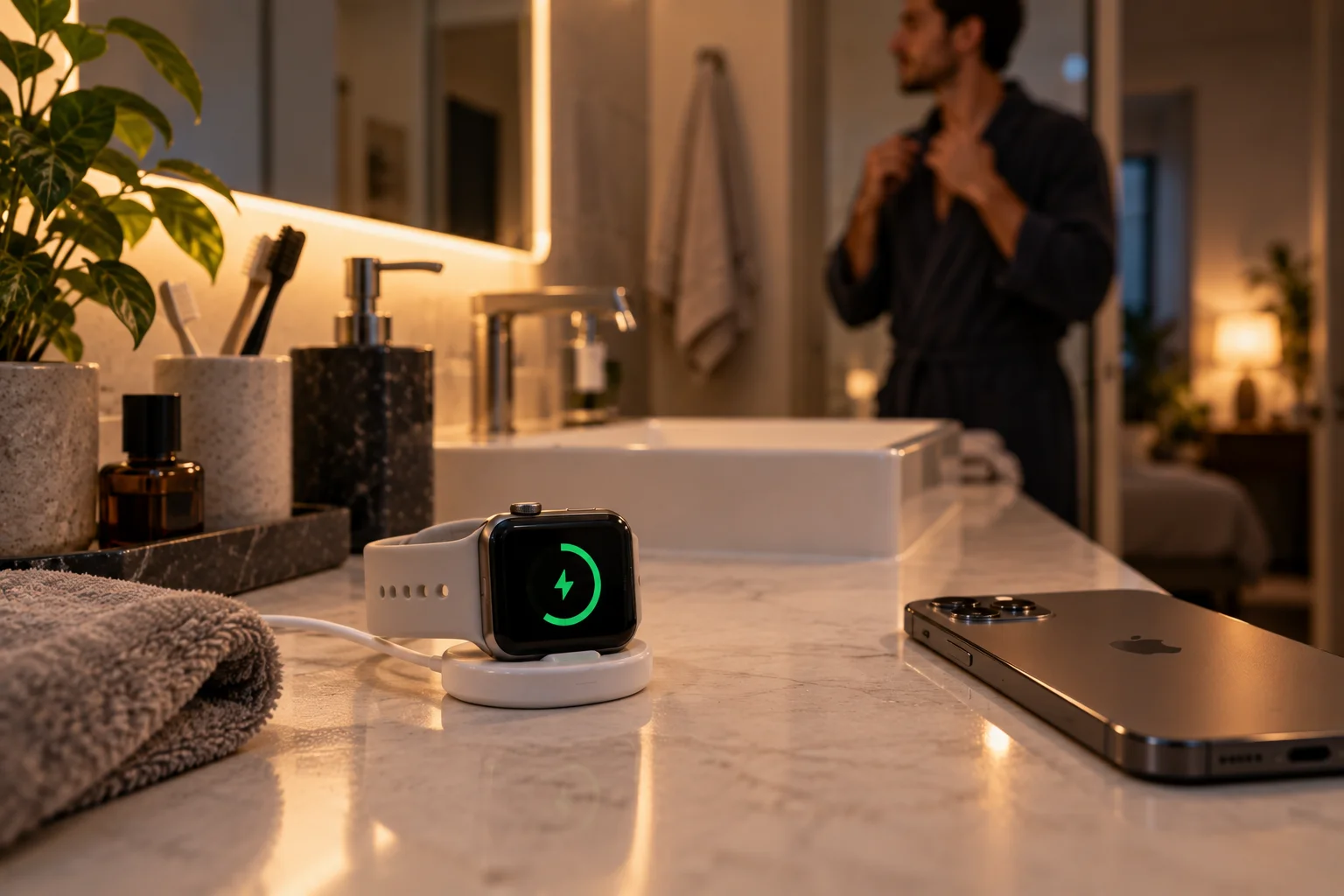
Apple rates the Series 12 for up to 24 hours of everyday use and up to 10 hours during an outdoor workout. That's 25% more outdoor workout battery life than Series 11 according to Apple.
Charging is the bigger practical improvement.
Apple says:
15 minutes of charging → up to 12 hours of additional battery life
and
5 minutes → up to 10 hours of sleep tracking.
That matters because a watch that tracks recovery is most useful when you actually wear it overnight.
You can charge it while showering, getting dressed or eating breakfast rather than leaving it on the charger for a long period.
Is the Apple Watch Series 12 Good for Sleep Tracking?
Yes, particularly because the combination of improved charging and more frequent health measurements makes continuous day-and-night tracking easier to maintain.
The Series 12 continues Apple's sleep tracking features and adds recovery HRV to overnight Vitals. It also supports sleep apnea notifications and other existing health features.
The real benefit isn't simply seeing:
"You slept seven hours."
It's being able to connect sleep with:
sleep → HRV → heart rate → activity → training load → Readiness
That makes Apple's health platform more interconnected than it was before.
What Is Daytime Vitals on Apple Watch Series 12?
Daytime Vitals gives you a way to see changes in heart rate and HRV during the day rather than waiting for the overnight Vitals report.
Previously, Vitals was primarily an overnight experience.
Series 12 adds a daytime view that lets you see how your metrics compare with your usual patterns.
This is a subtle but useful change.
Suppose your heart rate or HRV starts looking unusual during the afternoon.
You don't necessarily have to wait until the next morning to see that something has changed.
The feature is still new, so longer-term testing will tell us how consistently useful those daytime changes are.
Does the Series 12 Have Better Step Tracking?
Yes. Apple has redesigned its pedometer system and added a live Steps complication.

The S11 chip and new machine-learning algorithms are used to improve step counting and distance measurements, particularly during indoor walking and running. Apple says the Series 12 provides its most accurate step tracking in an Apple Watch.
More importantly, you can now place your step count directly on the watch face.
It's a small feature.
But small improvements that remove friction can end up being the ones you use every day.
What About the Series 12 Design and Display?
The Series 12 retains Apple's familiar design, but adds new case materials and stronger front glass on aluminum models.
The watch comes in:
Aluminum
Titanium
Ceramic
The ceramic models return in Pearl White and Night Blue, while aluminum and titanium have their own new finishes.
The sizes are:
42mm
and
46mm
The Always-On LTPO3 OLED display reaches 2,000 nits, making it well suited to outdoor use.
Apple also says the aluminum models use Ceramic Shield 2, which it claims is 60% tougher than the previous Ion-X glass.
Visually, though, don't expect a dramatic redesign.
If you already own a Series 11, people aren't going to immediately recognize that you upgraded.
How Good Is the S11 Chip?
The S11 is less important for raw speed than for enabling the Series 12's new health and intelligence features efficiently.
The Series 12 is powered by Apple's S11 chip.
It handles the normal smartwatch workload easily, but the more interesting role is its ability to process the higher-frequency sensor data while maintaining the watch's battery target.
The chip also supports new Siri AI and Audio Intelligence capabilities arriving on the Series 12.
That means the S11 isn't simply about making apps open slightly faster.
It's part of the infrastructure behind the watch's new sensing and intelligence features.
What Are the New Audio Intelligence Features?
Audio Intelligence adds new AI-powered capabilities to the Series 12, but these are less compelling to me than the health upgrades and some arrive later in 2026.
Apple has announced features including:
Live Rewind
which can capture and provide a recent audio recap, and
Siri Recap
which can summarize information from ambient audio captured during the day.
These features raise legitimate privacy questions because they involve ambient audio.
Apple says raw audio isn't saved, uploaded or retrievable for Siri Recap and that privacy protections are built into the system.
As of September 21, 2026, reviewers have not had enough time with all of the later-arriving Audio Intelligence features to establish how transformative they are in everyday use.
I wouldn't buy the Series 12 specifically for these features.
The health system is the stronger reason.
Apple Watch Series 12 vs Series 11: Is the Upgrade Worth It?
The upgrade is most meaningful if you own a Series 8 or older; Series 11 owners have fewer reasons to upgrade immediately.

Feature | Series 12 | Series 11 |
|---|---|---|
Chip | S11 | S10 |
Background heart rate | Every 5 sec | Less frequent |
HRV | Much more frequent | Less frequent |
Recovery HRV | Yes | No |
Readiness | Yes | No |
Daytime Vitals | Yes | No |
Steps complication | Yes | No |
Battery | Up to 24h | Up to 24h |
Outdoor workout | Up to 10h | Up to 8h |
15-min charging | Up to 12h | Lower |
Display brightness | 2,000 nits | 2,000 nits |
Sizes | 42/46mm | 42/46mm |
Starting price | $399 | $399 at launch |
The most important upgrades aren't display or exterior design.
They're sensing frequency and health interpretation.
That's why the upgrade makes more sense for someone coming from an older model.
Apple Watch Series 12 vs Ultra 4: Which Should You Buy?
The Series 12 is better suited to everyday health and smartwatch use, while the Ultra 4 is designed for longer battery life, tougher outdoor use and specialized activities.
Both models share the new Health Sensing System, S11 chip, Readiness, Recovery HRV and daytime Vitals.
The Ultra 4 adds advantages such as:
Up to 50-hour battery life
Larger, more rugged design
100-meter water resistance
More outdoor-focused capabilities
Higher-brightness 3,000-nit display
More specialized adventure features
The Series 12 starts at $399, while Ultra 4 starts at $799.
If your priority is health tracking, notifications, workouts and everyday comfort, the Series 12 already provides the new health platform.
You don't need the Ultra 4 simply to get Readiness.
Who Should Upgrade to Apple Watch Series 12?
The strongest upgrade case is for owners of older Apple Watches who want more detailed health and recovery tracking.
The Series 12 makes particular sense if you have:
Series 8 or older
You'll see a much more substantial jump in sensing, processing and health features.
Series 9 or Series 10
The new health system and Readiness can make the upgrade meaningful if you care about recovery and physiological trends.
An older watch with poor battery life
The faster charging can make day-and-night tracking easier.
A serious fitness routine
More frequent HR and HRV data, training load and Readiness provide more context around workouts.
An Apple Watch that you don't wear overnight
The improved charging experience reduces one of the biggest barriers to sleep tracking.
Who Should Keep Their Series 11?
Series 11 owners who are happy with their current health tracking and battery life can reasonably wait.

The Series 11 already has:
Strong workout tracking
Sleep tracking
ECG
Heart-rate notifications
Blood oxygen features where available
Sleep apnea notifications
Vitals
Strong battery life
The Apple Watch ecosystem
The Series 12 improves the underlying data collection considerably.
But if you're not interested in HRV, recovery or Readiness, the practical difference may be relatively small.
This is an important distinction.
Series 12 is a major health-platform upgrade, not a major visual redesign.
Apple Watch Series 12 Pros and Cons
Pros
New Health Sensing System
Heart-rate sampling every five seconds
Much more frequent HRV measurements
Recovery HRV
New Readiness score
Daytime Vitals
Better step tracking
Faster charging
Longer outdoor workout battery
S11 chip
2,000-nit Always-On OLED display
42mm and 46mm sizes
New titanium and ceramic options
Strong Apple health ecosystem
Same $399 starting price as Series 11
Cons
Still only around a day of battery life
Design is very similar to Series 11
Readiness is a proprietary interpretation, not a medical measurement
Some Audio Intelligence features aren't available yet
Series 11 owners may not see enough everyday benefit
Ultra 4 remains much better for long outdoor adventures
Some health features vary by country, region and regulatory approval
Requires iPhone with iOS 27 or later
Is Apple Watch Series 12 Worth the Upgrade?
For older Apple Watch owners who care about health and recovery, yes; for Series 11 owners, the decision depends heavily on how much they value the new sensing system and Readiness.
The Series 12 isn't about adding one spectacular new sensor.
It's about making the entire health system more continuous.
Heart rate every five seconds.
More frequent HRV.
Recovery HRV.
Daytime Vitals.
Training load.
Sleep.
Readiness.
Those pieces now work together in a way Apple's previous mainstream watches couldn't replicate.
That makes the Series 12 feel less like a fitness tracker that happens to have health features and more like a wearable health-data platform.
The biggest caveat is that Readiness isn't magic.
A 7/10 doesn't mean you're objectively 70% ready.
It's Apple's interpretation of your recent data.
Used as a trend and decision aid, it's useful. Used as a definitive statement about your health or physical capacity, it's much less appropriate.
The Bottom Line: Apple Watch Series 12 Review
The Apple Watch Series 12 is one of Apple's most meaningful health-focused upgrades in years, and its new sensors are more important than its familiar design.
At $399, the Series 12 keeps the same starting price as its predecessor while adding substantially more frequent physiological measurements and a new recovery-oriented layer through Readiness.
The five-second heart-rate sampling is the headline hardware improvement.
The higher-frequency HRV measurements may be even more important for people interested in stress and recovery.
And Readiness finally gives Apple Watch users the simple daily recovery score that competing health-focused wearables have offered for years.
The catch is battery life.
Apple still rates the Series 12 at up to 24 hours, so it hasn't solved the fundamental need to charge a mainstream Apple Watch roughly every day. What it has done is make charging dramatically faster, with 15 minutes providing up to 12 hours of additional use.
For Series 8 or older, the upgrade is easy to justify if you care about health tracking.
For Series 9 or 10, the new sensing and recovery features make the decision more interesting.
For Series 11, I'd upgrade only if Readiness, higher-frequency HRV and more continuous heart-rate data are features you'll genuinely use.
And if you're choosing between the Series 12 and Ultra 4, remember that you don't need the Ultra simply to get Apple's newest health platform. Both share the major new health features.
The Series 12's biggest achievement isn't making the Apple Watch look new. It's making the watch collect more useful information and turn that information into something easier to understand.
FAQs
What is new about the Apple Watch Series 12?
The biggest changes are the redesigned Health Sensing System, five-second background heart-rate sampling, more frequent HRV measurements, Recovery HRV, daytime Vitals, Readiness, improved step tracking, faster charging and the S11 chip.
Is Apple Watch Series 12 worth upgrading from Series 11?
It depends on how much you value the new health features. Series 11 owners who want Readiness, Recovery HRV and much more frequent heart-rate data have a stronger reason to upgrade than users who mainly use their watch for notifications, workouts and basic activity tracking.
Is Apple Watch Series 12 worth upgrading from Series 9 or older?
The upgrade is more substantial because you're moving to a significantly newer sensing system and chip generation, along with the new health and recovery features.
What is Apple Watch Readiness?
Readiness is a 0–10 score that analyzes recent activity, training load, vitals and sleep to provide a recommendation such as Recover, Pace Yourself, Ready or Go For It.
How often does Apple Watch Series 12 measure heart rate?
The Series 12 can measure background heart rate every five seconds throughout the day, including while you're moving.
How much more frequently does Series 12 measure HRV?
Apple says HRV measurements can be taken up to 24 times more frequently than on Series 11.
Does Apple Watch Series 12 have a blood oxygen sensor?
Apple lists blood oxygen among the Series 12's health capabilities, but availability can vary by country, region and regulatory status. Check the model and market where you're buying it.
Does Apple Watch Series 12 measure blood pressure?
The Series 12 supports Apple's hypertension notifications, but this is not the same as providing a traditional cuff-style blood-pressure measurement. Availability also depends on regulatory approval and region.
How long does the Apple Watch Series 12 battery last?
Apple rates it for up to 24 hours of everyday use and up to 10 hours during an outdoor workout.
How fast does Apple Watch Series 12 charge?
Apple says 15 minutes of charging can provide up to 12 hours of additional battery life, while five minutes can provide up to 10 hours of sleep tracking.
Does Apple Watch Series 12 need an iPhone?
Yes. Series 12 requires an iPhone running iOS 27 or later.
Is Apple Watch Series 12 better than Ultra 4 for health tracking?
The two models share the new Health Sensing System, Readiness, Recovery HRV and daytime Vitals. The Ultra 4 primarily adds longer battery life, greater durability and specialized outdoor capabilities.
Does Apple Watch Series 12 have a new design?
Not substantially. The overall design remains familiar, although Apple has introduced new aluminum, titanium and ceramic finishes and redesigned the rear sensor system.
How accurate is Apple Watch Series 12 heart-rate tracking?
Apple says its study of more than 1,000 participants found the Series 12 had the highest heart-rate accuracy among the wearables tested. Independent reviewers have also reported strong results against other heart-rate equipment, although real-world accuracy varies by activity and individual.
Is Apple Watch Readiness a medical measurement?
No. It is a consumer wellness and fitness interpretation of data such as sleep, activity, training load and vitals. It shouldn't be treated as a medical diagnosis or definitive measurement of health.
What is the biggest reason to buy Apple Watch Series 12?
The strongest reason is the combination of more continuous heart-rate and HRV data with Readiness. The hardware and software now work together to provide a more contextual view of daily recovery rather than simply recording isolated fitness metrics.