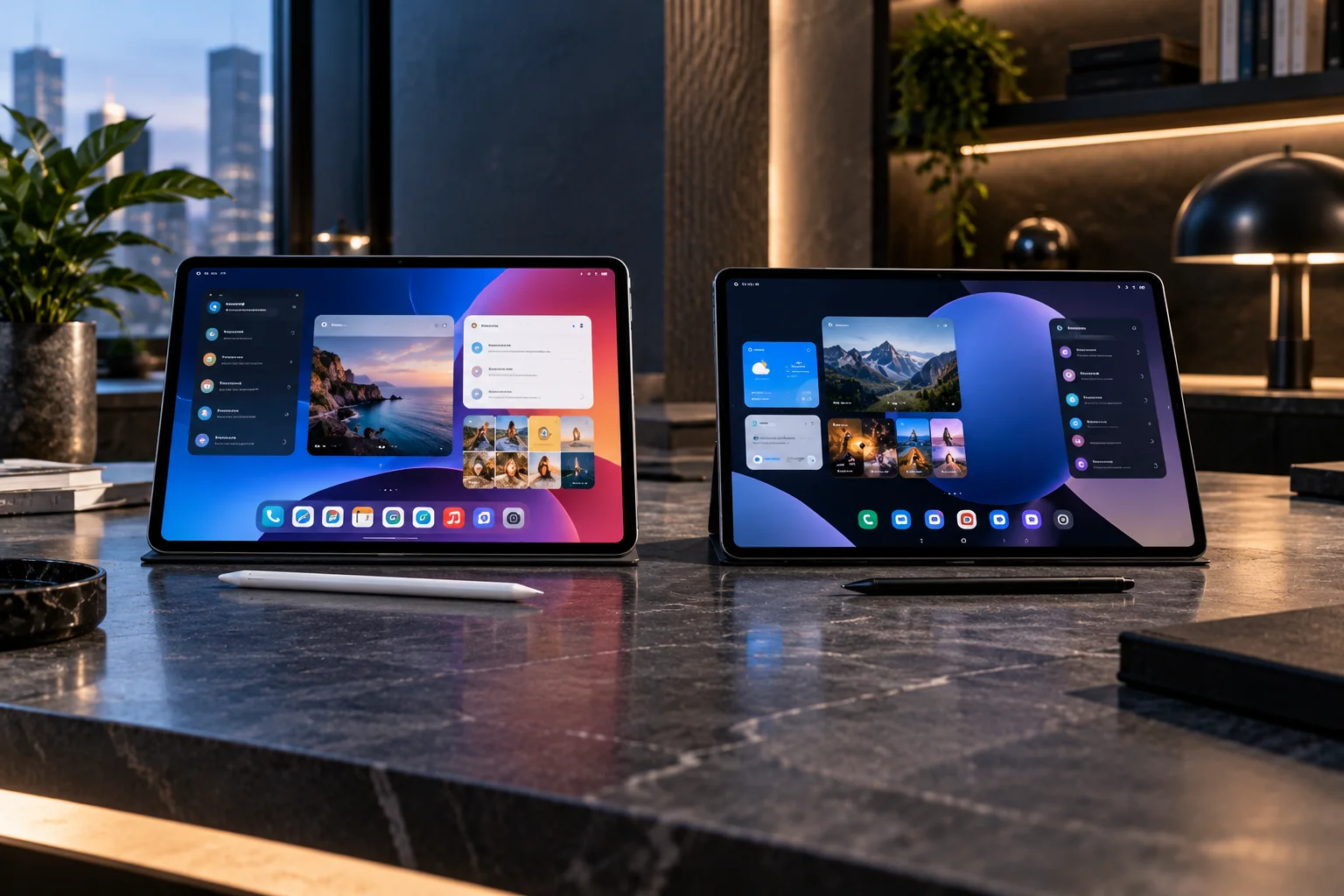
The tablet software landscape has changed considerably in 2026, with Apple and Google taking noticeably different approaches. iPadOS 27 focuses heavily on Apple Intelligence, Siri AI, Visual Intelligence, system refinements and deeper integration between apps. Android 17 is putting greater emphasis on adaptive large-screen design, flexible multitasking and making Android behave more naturally across tablets, foldables and desktop-style environments.
That makes a simple question such as “which changed more?” surprisingly difficult to answer.
Apple has introduced a substantial collection of AI-powered capabilities, including onscreen intelligence, AI-assisted writing and image editing, smarter Safari features and a dedicated Siri experience. Google, meanwhile, has made a structural change to Android's approach to large screens by requiring apps targeting Android 17 to support resizing and orientation changes on displays of at least 600dp.
Here's how the two platforms compare in 2026.
How has iPadOS 27 changed the iPad experience?
iPadOS 27's biggest changes are centered on AI, productivity and system-wide refinement.
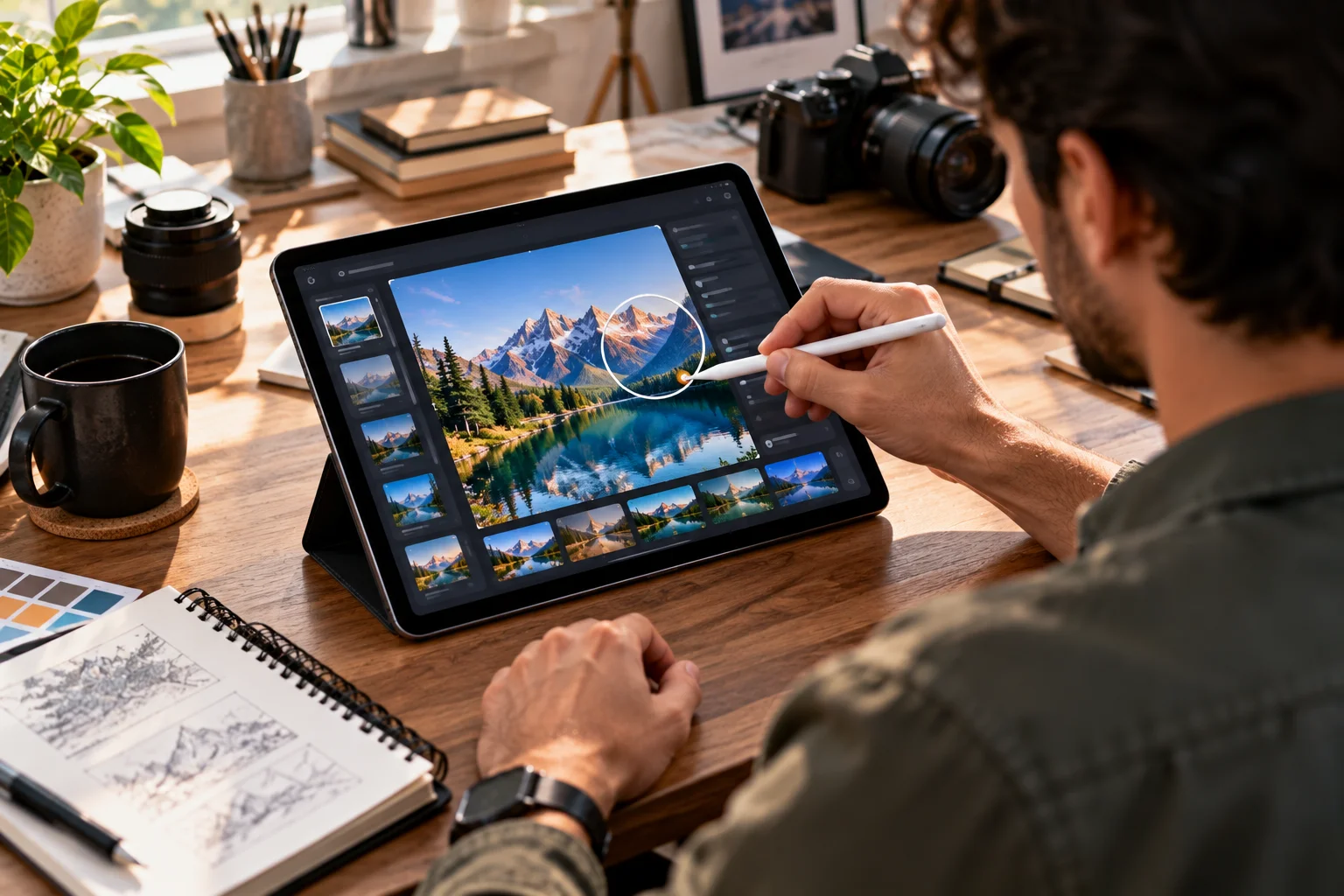
Siri AI is the headline feature on supported iPads. It adds personal-context understanding, onscreen awareness, broader knowledge and app actions. Visual Intelligence lets users ask questions about content on the screen, including content highlighted with an Apple Pencil.
Apple has also integrated intelligence into existing apps.
Photos gains Spatial Reframing, Extend and an enhanced Clean Up tool. Safari can automatically organize tabs by topic and monitor webpages for changes such as price changes or restocks. Shortcuts can be created using natural-language descriptions.
For people who already use an iPad as a work or creative device, these changes are designed to reduce the number of individual steps needed to complete everyday tasks.
What has changed in Android tablets with Android 17?
Android 17's most significant tablet change is its adaptive-first approach to large screens.
For apps targeting Android 17, orientation, resizability and aspect-ratio restrictions are ignored on displays with a smallest width greater than 600dp, with some exceptions such as games. Developers therefore have to build applications that can adapt to different window sizes rather than relying on phone-style restrictions.
This is a deeper platform-level change than a single new feature.
It could gradually affect how thousands of apps behave on Android tablets. Instead of an application simply appearing as a stretched phone interface, developers are being pushed toward layouts that work properly across full-screen, split-screen and free-form windows.
Which platform has made bigger changes to multitasking?
Android 17 has made particularly visible changes to large-screen multitasking, while iPadOS 27 concentrates more on AI-assisted workflows.
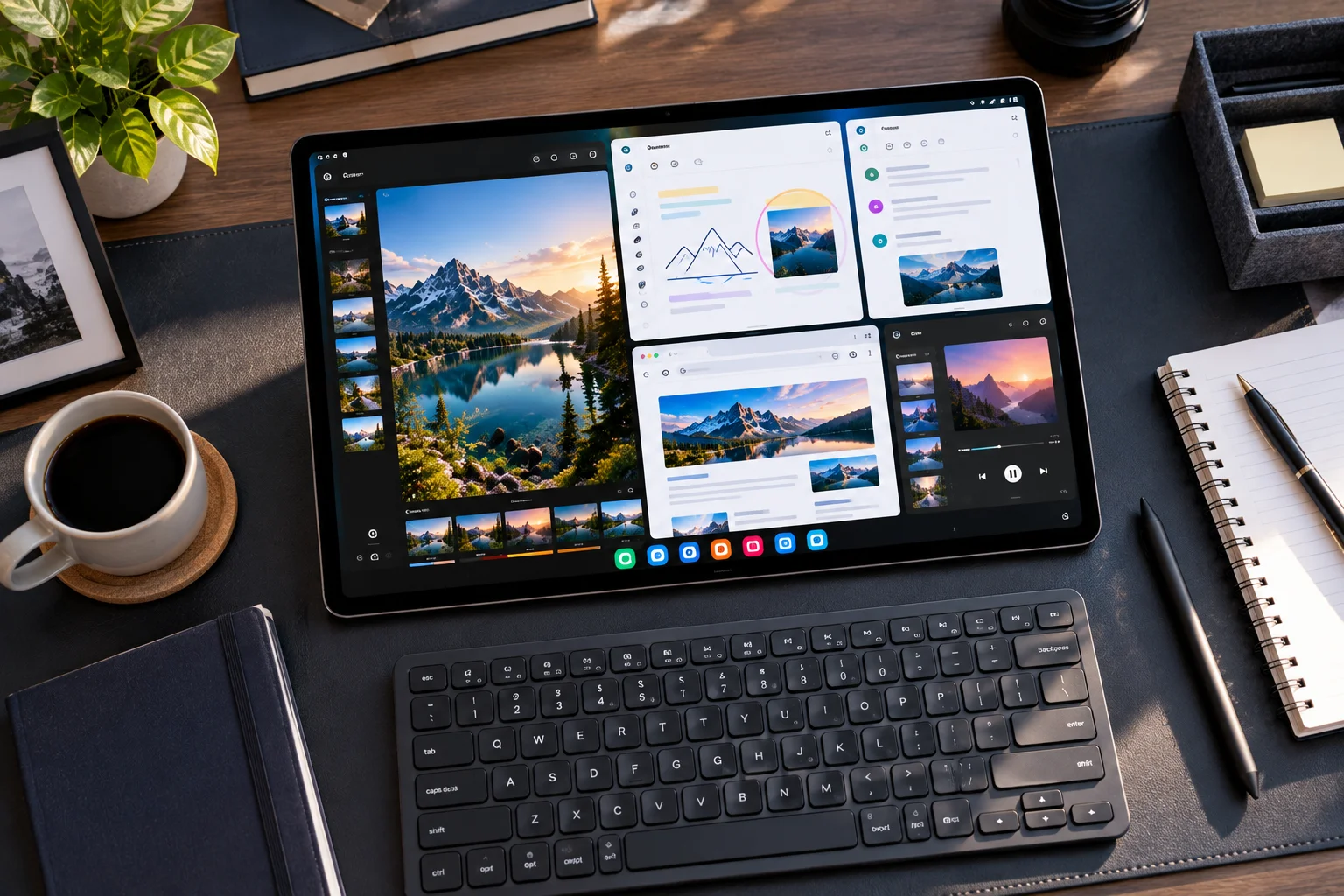
Android 17 introduces App Bubbles that allow users to turn apps into floating bubbles. On tablets and other large screens, these can be organized through a dedicated Bubble Bar. Google has also introduced interactive Picture-in-Picture for desktop environments.
Samsung's implementation shows how this can translate into a real tablet workflow. The Galaxy Tab S12 series runs Android 17 with One UI 9 and can display up to three sections through Multi Window, combining activities such as note-taking, video playback and AI assistance.
Apple's iPadOS approach remains more controlled, with its own windowing and multitasking system rather than Android's more flexible desktop-style model.
Which platform has changed more through AI?
iPadOS 27 currently has a broader set of explicitly documented AI features integrated throughout the operating system, while Android 17 is building an infrastructure for more AI-driven and adaptive experiences.
Apple's AI changes are easy to see at the user level. Siri AI, Visual Intelligence, AI writing, image editing, smarter Notes workflows and natural-language Shortcuts are directly integrated into iPadOS.
Google's Android 17 announcement takes a more platform-oriented approach. Google describes Android 17 as the beginning of a transition toward an “intelligence system” and has introduced AppFunctions designed to make app capabilities accessible to AI agents. Its Gemini integration is currently in private preview with trusted testers.
So the difference is partly about what users can see today versus the underlying platform direction.
Which has better large-screen software support?
Android 17 is making large-screen adaptability a stronger developer requirement, while Apple continues to tightly control the iPad software experience.
Google says Android now has more than 580 million large-screen devices across tablets and other form factors, and its adaptive-first approach is intended to ensure apps work across different window sizes and device types.
The Android 17 requirement to support large-screen resizing is significant because it addresses an issue that has affected Android tablets for years: apps designed primarily around phone assumptions.
Apple has a different advantage. iPadOS is developed specifically for Apple's relatively controlled hardware range, allowing Apple to design software and hardware together.
Neither approach completely eliminates the trade-off. Android offers broader device variety, while Apple's controlled ecosystem gives developers a narrower range of hardware configurations to accommodate.
How do the latest Samsung tablets compare with iPads?
Samsung's 2026 Galaxy Tab S12 series demonstrates how Android tablet manufacturers are using the new platform to create more laptop-like experiences.
The Galaxy Tab S12 Ultra and Tab S12+ run Android 17 with One UI 9 and Galaxy AI. They feature 120Hz Dynamic AMOLED 2X displays, up to 1,600 nits peak brightness and MediaTek's Dimensity 9500 processor. Samsung also includes an S Pen and supports extensive Multi Window workflows.
Apple's latest iPad Pro takes a different route with Apple's M5 chip and iPadOS 27's AI features.
That creates two distinct philosophies: Samsung combines Android's flexible large-screen foundation with its own productivity layer, while Apple combines its own silicon, operating system and AI ecosystem more tightly.
Which platform has changed more in software design?
Both have changed substantially, but in different directions.
iPadOS 27 introduces refinements to Apple's Liquid Glass design, including improved readability and contrast plus a slider that lets users adjust the appearance from ultra-clear to fully tinted. Apple also reports improvements to app launches, AirDrop and external-drive transfers.
Android 17's design-related change is less about a visual redesign and more about how applications behave inside different windows.
That distinction matters. Apple is changing the appearance and intelligence of the operating system, while Google is changing some of the rules developers use to build for large screens.
iPadOS 27 vs Android 17: What's actually different?
Area | iPadOS 27 | Android 17 tablets |
|---|---|---|
AI | Siri AI, Visual Intelligence, Apple Intelligence | AI-agent infrastructure and Gemini integration |
Large-screen apps | Apple-controlled iPad ecosystem | Mandatory adaptive behavior for targeted apps |
Multitasking | iPadOS windowing and multitasking | App Bubbles, Bubble Bar and flexible windows |
Productivity | Apple Intelligence, Notes, Shortcuts | Multi-window workflows and manufacturer features |
Hardware ecosystem | More controlled | Much broader range |
Manufacturer software | Apple controls iPadOS | Samsung and others add their own layers |
Design | Liquid Glass refinements | Adaptive layouts and windowing |
Stylus | Apple Pencil integration | S Pen and other stylus ecosystems |
The comparison shows why there isn't one straightforward measure of “more changed.” The platforms are evolving around different priorities.
Which tablet platform should you choose in 2026?
The choice depends largely on the type of tablet experience you want.
An iPad makes particular sense for someone already invested in Apple's ecosystem and interested in Apple Intelligence, Apple Pencil workflows and tightly integrated hardware and software.
Android tablets offer more hardware variety and, with Android 17, increasingly flexible large-screen behavior. Samsung's latest tablets demonstrate how Android can be combined with extensive multitasking, S Pen features and manufacturer-specific AI tools.
For buyers, the operating system is only one part of the decision. Processor, display, accessory support, software-update policy, app compatibility and the manufacturer's tablet interface can all have a major impact.
iPadOS 27 vs Android Tablets FAQs
Is iPadOS 27 better for AI?
iPadOS 27 includes a broad collection of integrated Apple Intelligence features, including Siri AI and Visual Intelligence. Availability depends on compatible hardware, language and region.
Is Android 17 better for multitasking?
Android 17 introduces App Bubbles and the Bubble Bar, while manufacturers such as Samsung add their own multi-window features. The exact experience depends on the tablet and its software layer.
Does Android 17 improve tablet apps?
Yes. Apps targeting Android 17 on large screens can no longer use certain orientation, resizing and aspect-ratio restrictions, encouraging developers to build more adaptable tablet interfaces.
Does every iPad support Apple Intelligence?
No. iPadOS 27 supports a wider range of iPads than Apple Intelligence does. Siri AI requires an iPad mini with A17 Pro or an iPad with M1 or later, with some capabilities requiring newer hardware.
Has Android or iPadOS changed more in 2026?
The answer depends on what you measure. iPadOS 27 has introduced extensive user-facing AI and system features, while Android 17 has made significant structural changes to large-screen app behavior and multitasking. Both represent meaningful changes, but they address different parts of the tablet experience.