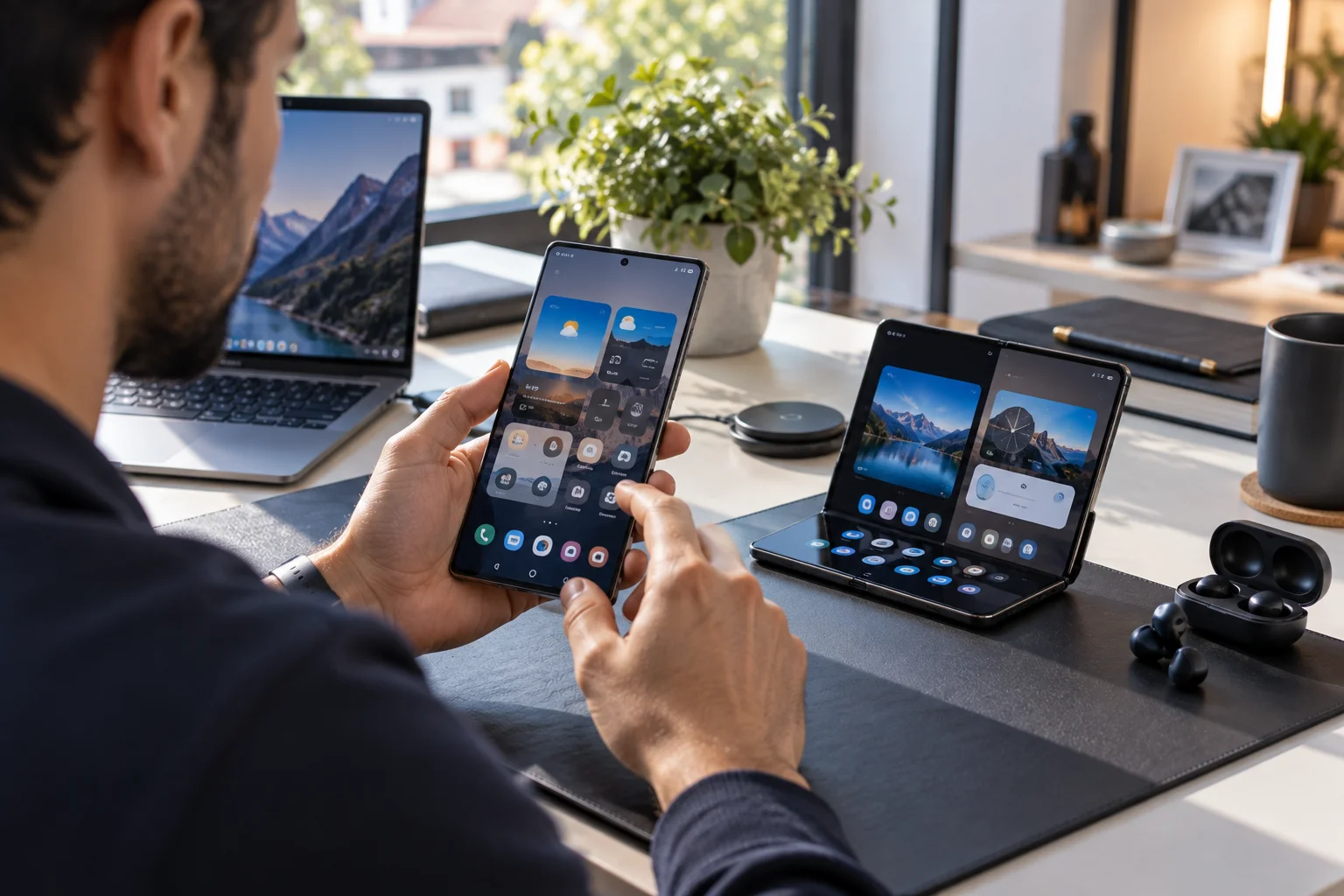
Android vs iPhone is one of those debates that rarely gets settled because the two platforms are built around different ideas of what a smartphone should be.
iPhone emphasizes a tightly integrated ecosystem, predictable software experience and close control over hardware and software. Android takes a more varied approach, giving you phones from multiple manufacturers, different price points, more customization and form factors that range from compact devices to foldables.
In 2026, the gap isn't as simple as it once was. Android has become more polished while continuing to offer considerable flexibility, and iPhone has added more customization and intelligent features through recent iOS releases. Android 16 introduced features such as notification improvements, adaptive refresh rates, desktop-style windowing on larger screens and expanded security tools, while Apple's iOS 26 introduced its Liquid Glass interface alongside Apple Intelligence features and new communication tools.
So the real question isn't simply "Is Android better than iPhone?"
It's which operating system fits the way you actually use your phone?
What is the real difference between Android and iPhone?
The biggest difference is choice versus integration.
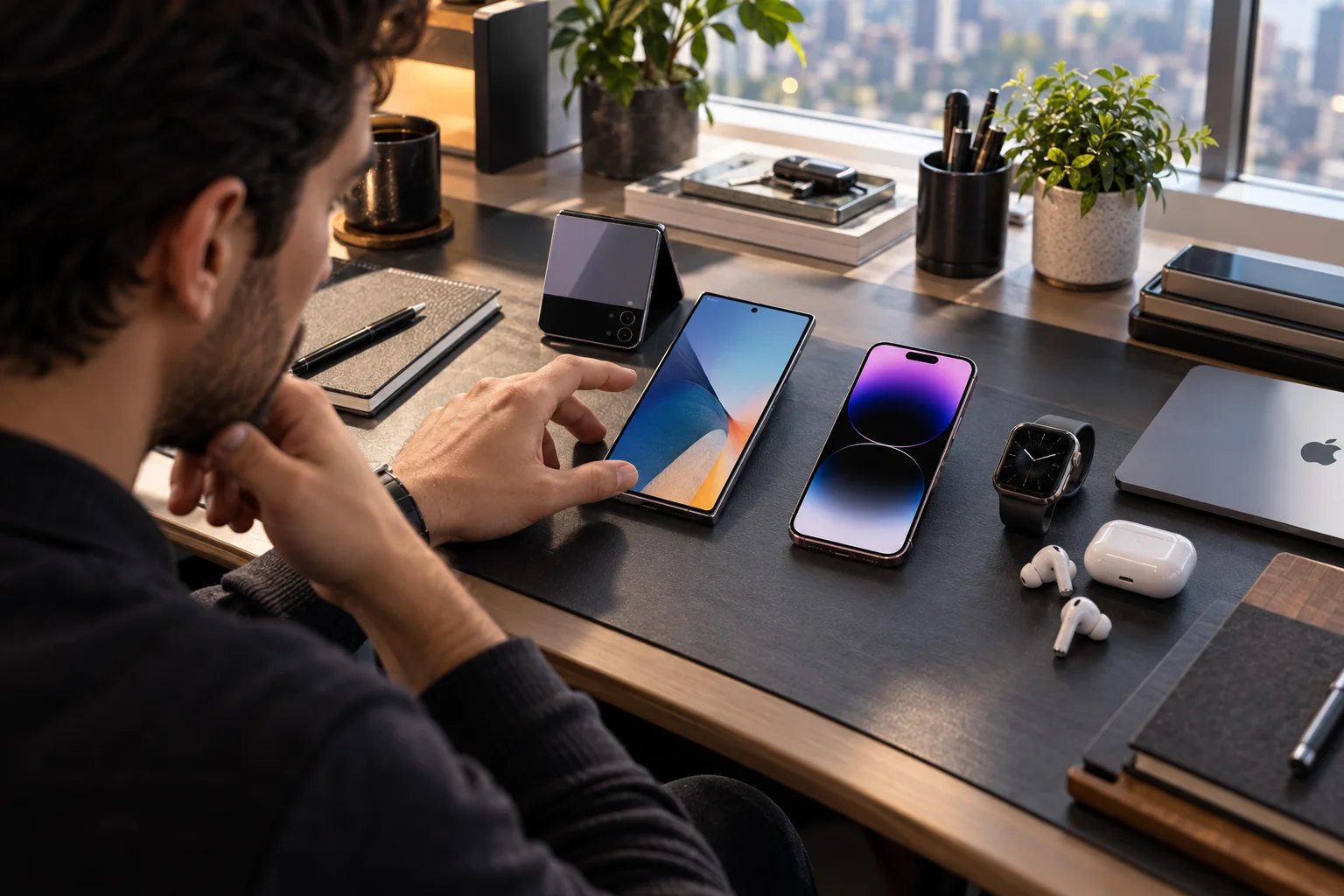
Android gives you more choice in hardware, software customization, file management and device design. iPhone gives you a more controlled experience where the hardware, operating system and wider Apple ecosystem are designed to work closely together.
Category | Android | iPhone |
|---|---|---|
Phone choice | Very wide | Limited to Apple's lineup |
Customization | Extensive | More controlled |
Ecosystem | Google + manufacturer dependent | Deep Apple integration |
File management | Generally more flexible | More controlled |
Foldables | Multiple options | No current iPhone foldable |
Software experience | Varies by manufacturer | Consistent across iPhones |
AI features | Google/manufacturer dependent | Apple Intelligence |
Accessories | Huge variety | Large but tightly integrated |
Gaming | Strong | Strong |
Ease of switching between Apple devices | Good within Android ecosystem | Excellent within Apple ecosystem |
Neither approach is inherently better.
The difference becomes important when you start thinking about what you want your phone to do every day.
Is Android more customizable than iPhone?
Yes. Android generally gives you more control over how your phone looks and behaves.
You can change launchers, widgets, default applications, icon arrangements and many aspects of the interface. Android's current direction continues to emphasize personalization, with features such as custom icon shapes and expanded interface controls in Android 16.
That flexibility is useful if you enjoy making your phone feel distinctly yours.
iPhone has become considerably more customizable too. iOS 26 introduced additional Home Screen and Lock Screen personalization alongside its new Liquid Glass design.
But Apple's approach remains more controlled.
Think of it this way:
Android: "Here are lots of ways to configure your phone."
iPhone: "Here are several ways to personalize a carefully controlled experience."
If customization is one of your main reasons for upgrading, Android generally gives you more room to experiment.
Which has the better ecosystem: Android or iPhone?
iPhone has an unusually cohesive ecosystem if you already use Apple products.
An iPhone can work closely with a Mac, iPad, Apple Watch and AirPods, with features designed around moving between devices.

That becomes particularly useful if your daily routine involves several Apple products.
You might start something on your iPhone, continue it on your Mac and receive notifications through your Apple Watch without thinking much about how the devices communicate.
Android can provide a strong ecosystem too, especially when paired with Google services and devices from manufacturers such as Samsung.
Android's advantage is that it isn't tied to one hardware company. Google describes the platform as offering a balance between consistency and a wide variety of phones, tablets and other devices.
The practical difference is simple:
Already own a Mac, iPad or Apple Watch? The iPhone ecosystem becomes particularly compelling.
Prefer mixing brands and services? Android gives you more freedom.
Is Android better for multitasking and productivity?
Android generally offers more flexibility for multitasking, particularly on larger devices and foldables.
Android 16 introduced desktop-style windowing for larger screens, along with custom keyboard shortcuts and improved taskbar management.
That's significant if your phone is occasionally expected to behave more like a miniature computer.
Some Android manufacturers also build their own desktop-style environments around flagship phones.
iPhone is highly capable for everyday productivity, but Apple's approach is more focused on keeping the iPhone experience distinct from macOS and iPadOS rather than turning every iPhone into a desktop replacement.
For normal tasks such as email, documents, messaging and browsing, either platform is more than capable.
For advanced multitasking, Android offers more room to experiment.
Which has better cameras, Android or iPhone?
There isn't a universal winner because camera quality varies significantly between Android models.
A flagship Android phone can offer extremely sophisticated camera hardware, including high-resolution sensors, powerful zoom systems and computational photography.
iPhone, meanwhile, focuses on a more consistent camera experience across its lineup, with strong integration between photography, video and Apple's broader software ecosystem.
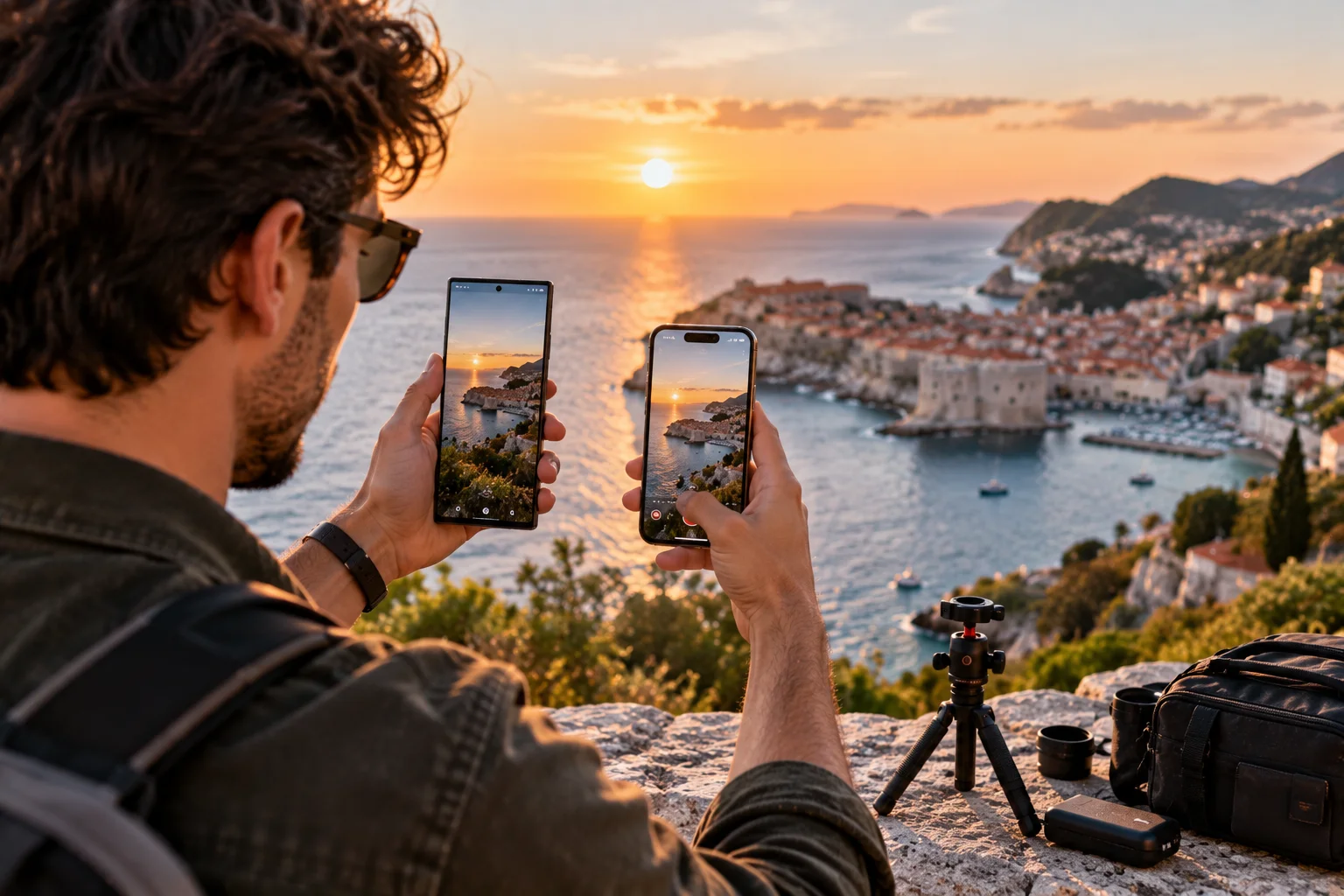
When comparing cameras, look beyond megapixel counts.
Pay attention to:
Main-camera quality
Ultra-wide performance
Optical zoom
Low-light photography
Portrait processing
Video stabilization
Front-camera quality
Skin-tone rendering
Editing tools
Camera-app usability
For someone who shoots lots of video for social media, travel or work, the overall workflow may matter more than a single camera specification.
Which is better for video recording?
iPhone has traditionally been particularly strong for people who care about consistent video capture and editing workflows, while high-end Android phones have become increasingly competitive.
The difference is less about whether an Android phone can record excellent video.
Many can.
It's about consistency across cameras, apps and different lighting conditions.
If video is a major part of your work, compare the specific iPhone and Android models you're considering rather than treating the operating systems as identical.
The same rule applies to photography.
A $300 Android phone and a $1,000 flagship Android phone aren't remotely equivalent camera experiences.
Is Android or iPhone better for AI features?
Both platforms are moving heavily toward AI, but they take different approaches.
Apple's current software strategy puts Apple Intelligence directly into parts of the iPhone experience. Apple's iOS 26 features include Live Translation, visual intelligence and AI-assisted interactions across supported apps.
Apple also previewed its next generation of Apple Intelligence and Siri AI at WWDC 2026, alongside upcoming iOS 27 features.
Android takes a broader ecosystem approach, with Google and individual manufacturers bringing different AI tools to different devices.
Google's current Android features include tools such as Circle to Search, live translation and AI-powered capabilities across supported Android devices.
The important caveat is that AI availability varies by phone, region, language and software version.
So don't buy an Android or iPhone simply because you saw an AI feature advertised.
Check that the exact model you want supports it.
Which is better for gaming?
Both iPhone and premium Android phones can be excellent gaming devices, but the experience differs depending on the games and accessories you use.
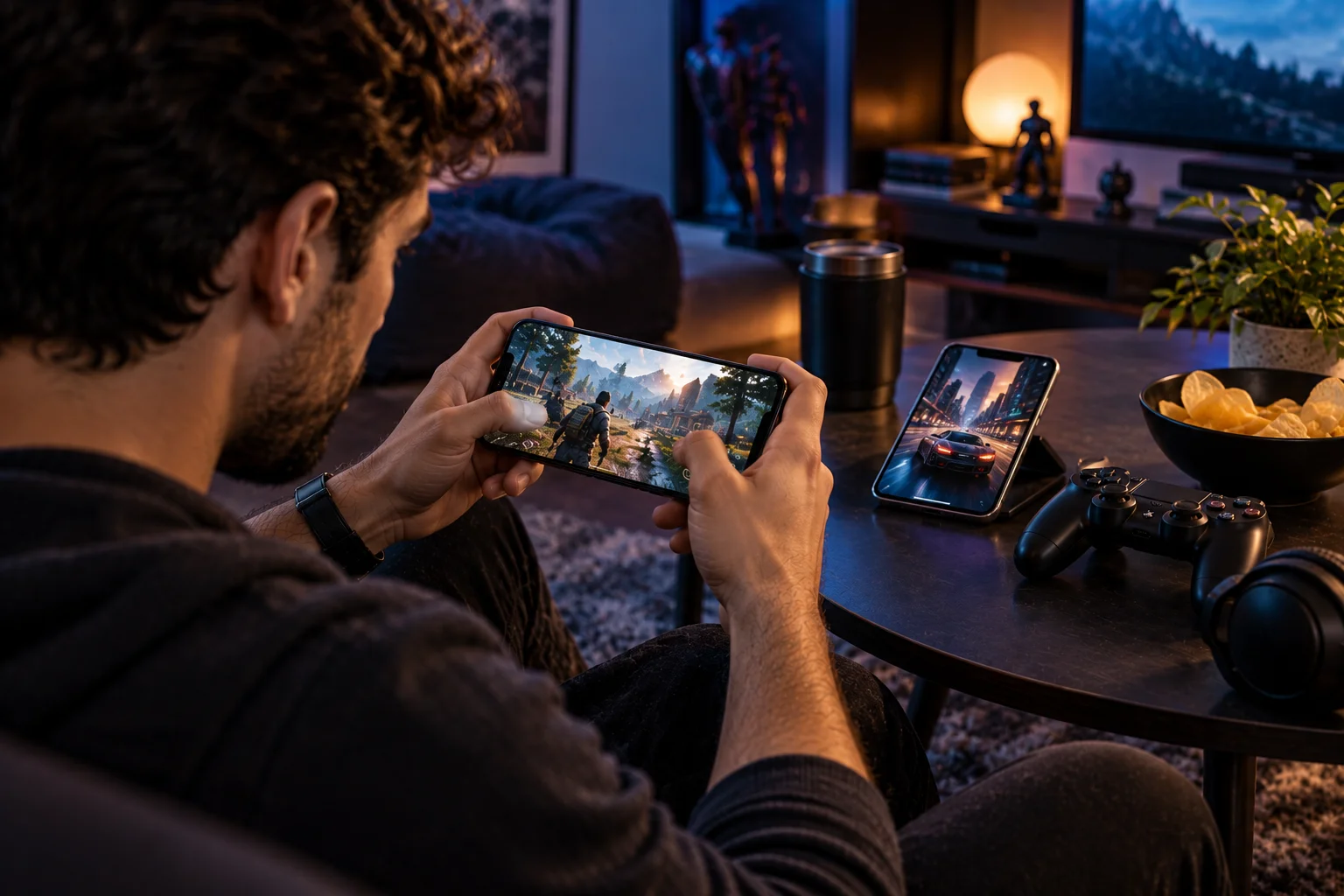
iPhone benefits from Apple's tightly controlled hardware and software environment, while Android offers a wider range of gaming-focused hardware.
Some Android phones provide:
Higher-refresh-rate displays
Gaming modes
Customizable performance controls
Larger cooling systems
Gaming accessories
More unusual form factors
iPhone's advantage is the consistency of the platform and strong access to major mobile games.
For casual gaming, either is more than enough.
For serious mobile gaming, compare the specific devices rather than the operating systems.
Is iPhone more secure than Android?
Both platforms have substantial security and privacy protections, but they approach control differently.
Apple tightly controls the iPhone hardware and software environment, including the App Store distribution model.
Android gives users more flexibility, while Google continues to add security features such as Identity Check and Advanced Protection. Android 16 introduced Identity Check, which can require biometric authentication for sensitive actions outside trusted locations.
Android's flexibility can also mean more variation between manufacturers and devices.
That's why the specific phone matters.
A current flagship with long-term security support is a very different proposition from an inexpensive device that receives limited updates.
Which is better for file transfers and managing files?
Android is generally more flexible if you frequently move files around manually.
Connecting to a computer, managing folders and handling different file types tends to feel more straightforward.
iPhone has improved considerably in file management, but Apple's system remains more controlled.
If your phone is part of a workflow where you routinely download PDFs, move media, transfer folders or work with external storage, Android's flexibility can be useful.
If most of your work happens inside cloud services and apps, the difference becomes much less important.
Which gives you more choice of phones?
Android wins on hardware variety because multiple manufacturers build Android phones.
You can choose between:
Budget phones
Mid-range devices
Premium flagships
Foldables
Gaming phones
Camera-focused phones
Compact models
Large-screen devices
The Android ecosystem therefore lets you prioritize different features at different prices.
Apple's iPhone lineup is more controlled.
That means fewer hardware choices, but it also makes the buying process simpler.
You aren't choosing between dozens of manufacturers.
You're choosing among Apple's current models.
Which is easier to use?
For someone who wants a relatively consistent experience, iPhone can feel easier to understand.
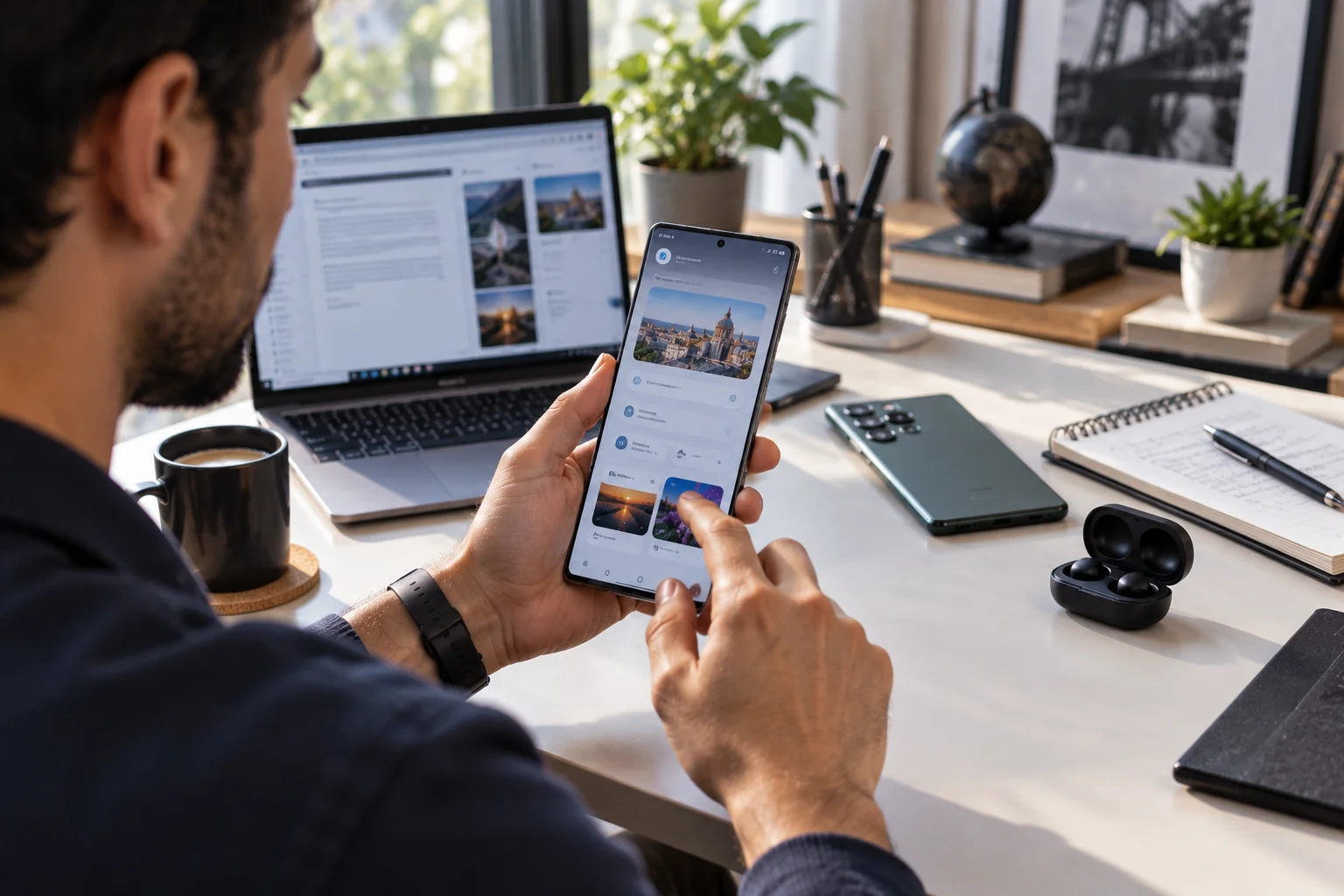
The interface is controlled across Apple's hardware lineup, and many functions behave predictably from one iPhone generation to another.
Android isn't necessarily difficult.
Modern Android is polished and highly accessible.
The complication comes from variation between manufacturers. A Samsung phone, Pixel phone and Xiaomi phone may all run Android but use different interfaces and offer different additional features.
So:
iPhone: more consistency.
Android: more choice.
What about switching from Android to iPhone or iPhone to Android?
Switching is easier than it used to be.
Your contacts, photos, messages and many applications can be transferred or synchronized using the appropriate migration tools.
The bigger issue isn't moving your data.
It's changing your habits.
An iPhone user moving to Android may notice differences in navigation, notifications, file handling and customization.
An Android user moving to iPhone may notice differences in home-screen behavior, defaults and how Apple organizes certain settings.
Give yourself a few days before deciding that the new platform is "bad."
You're often comparing unfamiliarity with familiarity.
Android vs iPhone: which should different users choose?
Instead of asking which phone is universally better, match the platform to your priorities.
If you care most about... | Consider |
|---|---|
Extensive customization | Android |
Apple ecosystem | iPhone |
Foldable phones | Android |
Simple, consistent interface | iPhone |
Hardware variety | Android |
Cross-device Apple workflows | iPhone |
Flexible file management | Android |
Mixing different brands | Android |
Mac + Apple Watch integration | iPhone |
Experimenting with phone features | Android |
This isn't a scorecard.
It's a way to identify which differences actually matter to you.
Should you buy Android or iPhone in 2026?
The best choice depends less on the logo on the back and more on what you expect your phone to do every day.
Choose Android if you value hardware variety, customization, flexible file management, unusual form factors or greater control over the interface.
Choose iPhone if you value Apple's ecosystem, a tightly integrated hardware-and-software experience, a consistent interface and close integration with devices such as the Mac and Apple Watch.
And if you're already invested heavily in one ecosystem, that should be part of your decision.
Switching platforms isn't impossible.
It just changes how several of your everyday devices work together.
The Android vs iPhone debate becomes much easier when you stop looking for a universal winner and start looking at your own habits.
The better phone is the one that fits the way you actually use technology.