A spy camera is a small camera designed to record video while being difficult to notice. The term is commonly used for miniature surveillance cameras, covert cameras and cameras integrated into everyday-looking objects.
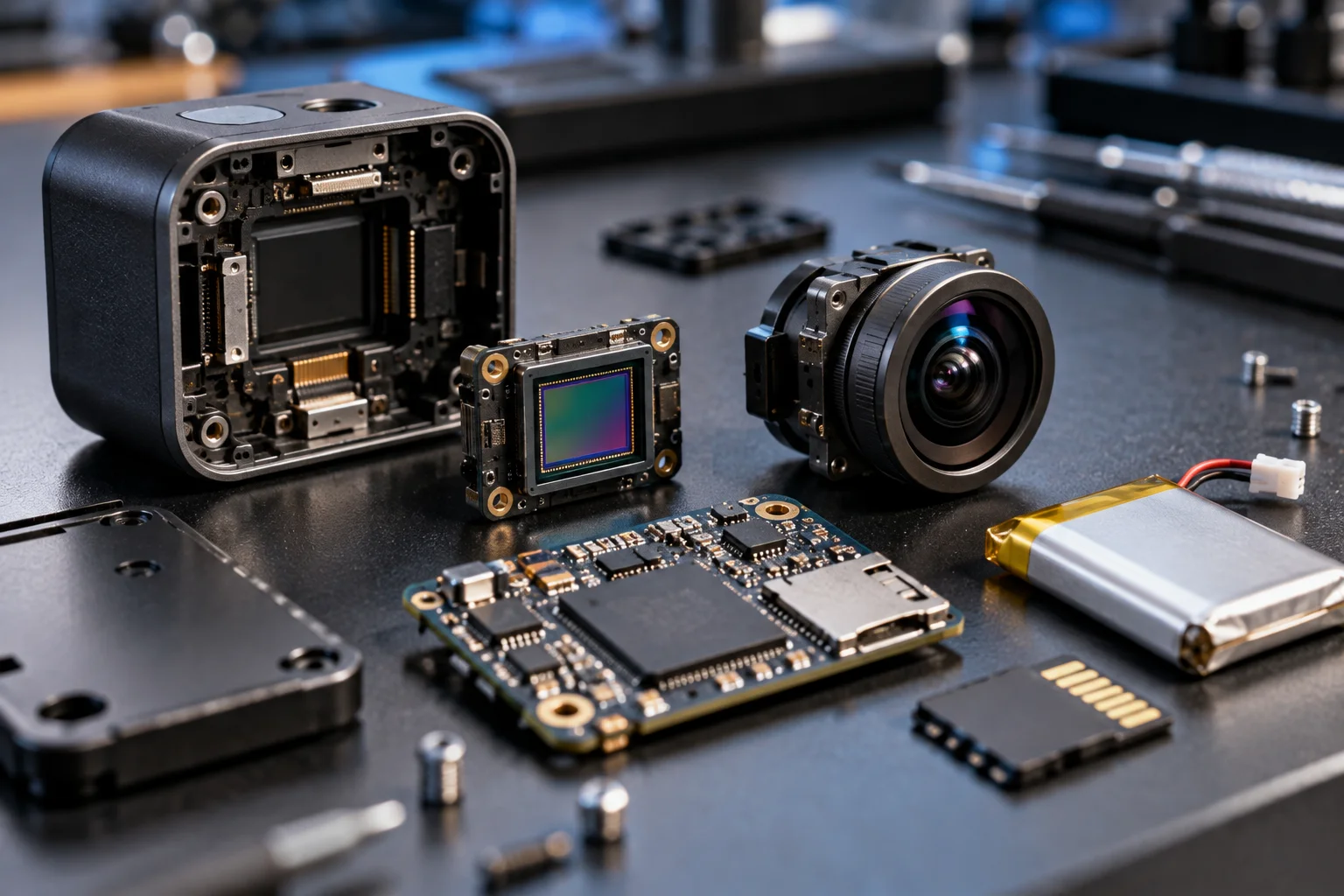
Despite their unusual appearance, the technology inside is familiar. A miniature camera still needs a lens, image sensor, processor, storage, power source and, on connected models, a wireless connection.
The biggest engineering challenge is fitting those components into a very small enclosure without sacrificing too much image quality or battery life.
Some miniature cameras save footage to internal memory or a microSD card. Others transmit video over Wi-Fi to an authorized phone or cloud service. Battery-powered models may use motion detection to reduce power consumption, while continuously powered cameras can record for much longer.
Because these devices can be used for legitimate security purposes but can also invade someone's privacy, where and how they are used matters just as much as what the technology can do.
What Is a Spy Camera?
A spy camera is a compact or concealed camera designed to capture video without being visually obvious.
Unlike a conventional security camera, which usually makes its presence obvious, a miniature camera may be designed around a very small lens and electronics package.
The term doesn't describe one particular technology.
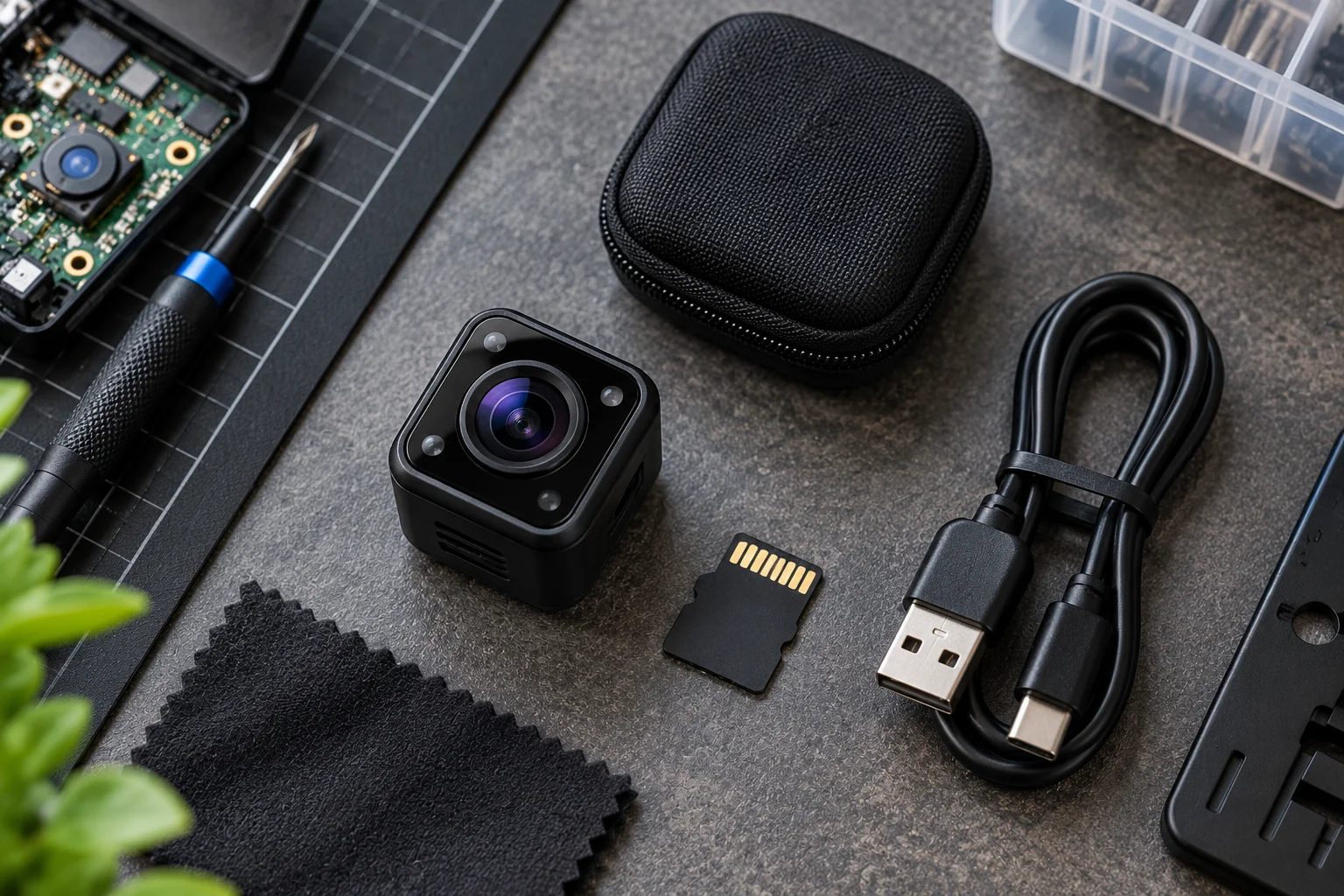
A spy camera might use:
A miniature CMOS image sensor
A tiny fixed-focus or wide-angle lens
Internal storage
A microSD card
Rechargeable battery
USB or external power
Wi-Fi connectivity
Motion detection
Infrared night vision
Some are purpose-built surveillance products, while others are simply very small cameras intended for specialized monitoring applications.
How Does a Miniature Camera Record Video?
A miniature camera records video in essentially the same way as a conventional digital camera.
The process is:
Light → Lens → Image sensor → Processor → Compression → Storage or transmission
The lens focuses light onto the image sensor, usually a CMOS sensor.
The sensor converts the incoming light into electrical signals. The camera's processor then converts those signals into digital frames and compresses them into a video file.
The resulting footage can be stored locally or transmitted over a network.
The small size of the camera doesn't change the fundamental imaging process. It mainly changes the physical size of the components and the compromises made around them.
Why Are Spy Camera Lenses So Small?
The lens can be tiny because the image sensor and optical system are designed specifically for compact devices.
A miniature lens has to fit inside a very small opening while still collecting enough light to produce a usable image.
This creates trade-offs.
A larger conventional camera lens can generally provide more flexibility in light gathering, optical design and focal length. A miniature camera has much less physical space.
As a result, many small cameras use fixed lenses with relatively wide fields of view.
That makes it possible to capture a larger area without mechanically changing the lens.
Where Are Spy Cameras Commonly Found?
Miniature cameras can be integrated into small electronic devices, security equipment or everyday-looking objects, depending on the product and its intended purpose.
Examples of categories where miniature cameras may appear include:
Small security devices
Door and entry monitoring equipment
Vehicle-monitoring systems
Wearable recording equipment
Specialized inspection devices
Baby and pet monitoring products
Compact indoor surveillance systems
Some products are deliberately designed to blend into their surroundings.
However, the fact that a camera can physically fit inside an ordinary object doesn't make its use automatically lawful or appropriate.
The legal distinction often depends on where the camera is placed, what it records and whether people have a reasonable expectation of privacy.
How Do Spy Cameras Store Video?
Miniature cameras generally use local flash storage, removable memory cards or cloud-connected storage.
A camera with a microSD slot can save recordings directly to the card.
Some models instead use internal flash memory.
Network-connected cameras can also transmit recordings to a remote server.
Local storage has the advantage of working without a continuous internet connection, while cloud storage makes remote access and off-device backup possible.
Connected camera systems also introduce cybersecurity concerns. The FTC recommends using strong, unique passwords, enabling available security features such as encryption and keeping camera software and associated apps updated.
Do Spy Cameras Need Wi-Fi?
No. Wi-Fi is optional rather than fundamental to camera recording.
A miniature camera can record locally without an internet connection if it has suitable storage and power.
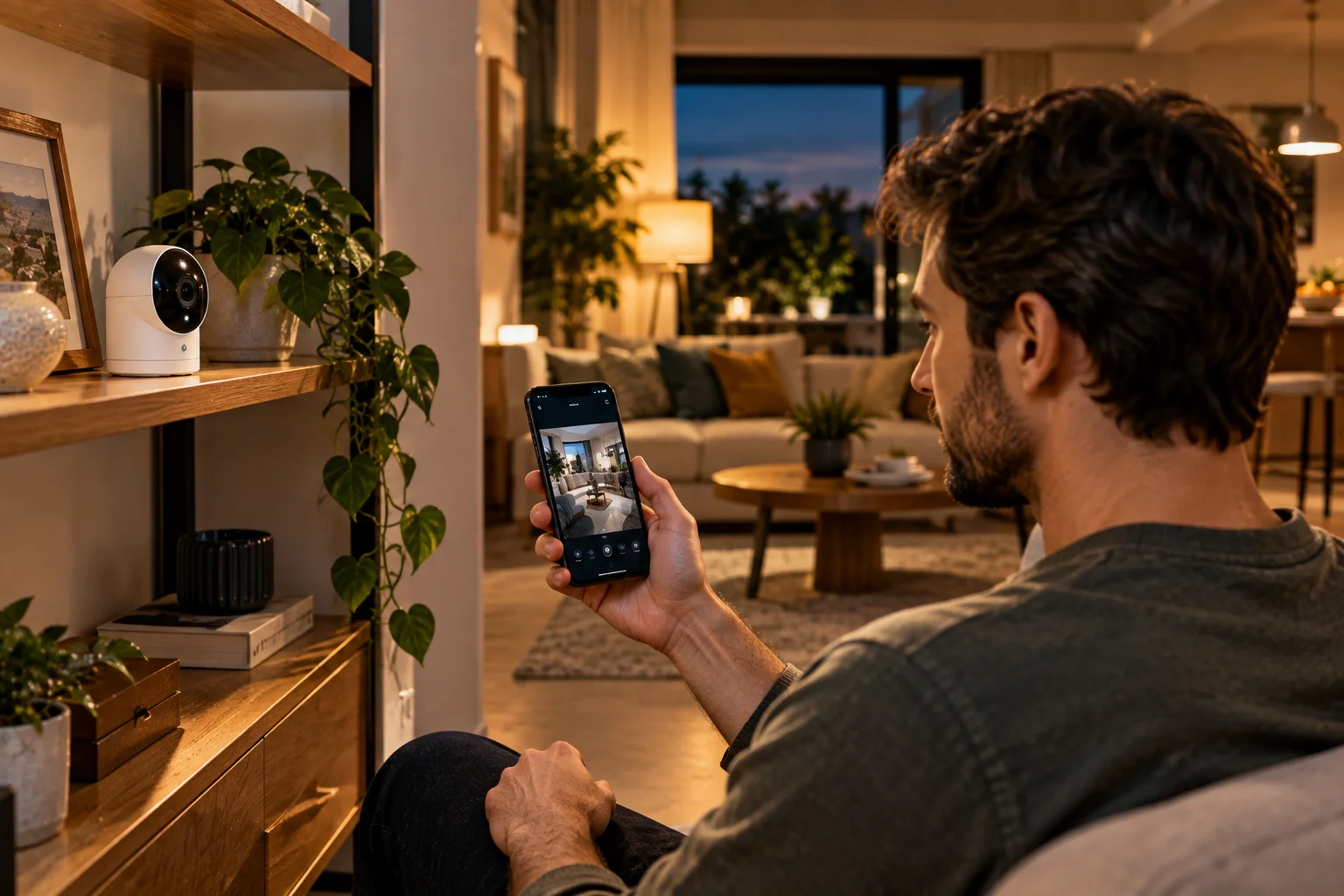
Wi-Fi becomes useful when the camera needs to:
Provide live remote viewing
Send notifications
Upload recordings
Synchronize with an app
Store footage in the cloud
This creates an important distinction:
Recording locally does not necessarily require internet access.
A Wi-Fi connection is mainly useful for communication between the camera and other devices or services.
How Do Battery-Powered Spy Cameras Work?
Battery-powered miniature cameras use rechargeable or replaceable batteries to operate the sensor, processor and other electronics.
The main limitation is energy consumption.
Continuous video recording requires the image sensor and processor to remain active, while Wi-Fi transmission can consume additional power.
That's why some compact surveillance cameras use motion-triggered recording rather than recording continuously.
The camera can remain in a lower-power state and activate recording when its detection system identifies movement.
This can significantly reduce power consumption compared with continuous recording.
How Long Can a Miniature Camera Record?
Recording time depends on storage capacity, video quality, battery capacity and recording mode.
A continuously powered camera can potentially record for much longer than a battery-operated model.
Storage capacity also matters.
Higher resolution and higher bitrate produce larger files, while motion-triggered recording uses less storage than continuous recording.
Some systems use loop recording, where older footage is automatically overwritten when storage becomes full.
So a camera advertised with a particular “recording time” should be evaluated alongside the conditions used to achieve that figure.
Can Spy Cameras Record at Night?
Some miniature cameras can record in low light or darkness using infrared illumination or sensitive image sensors.
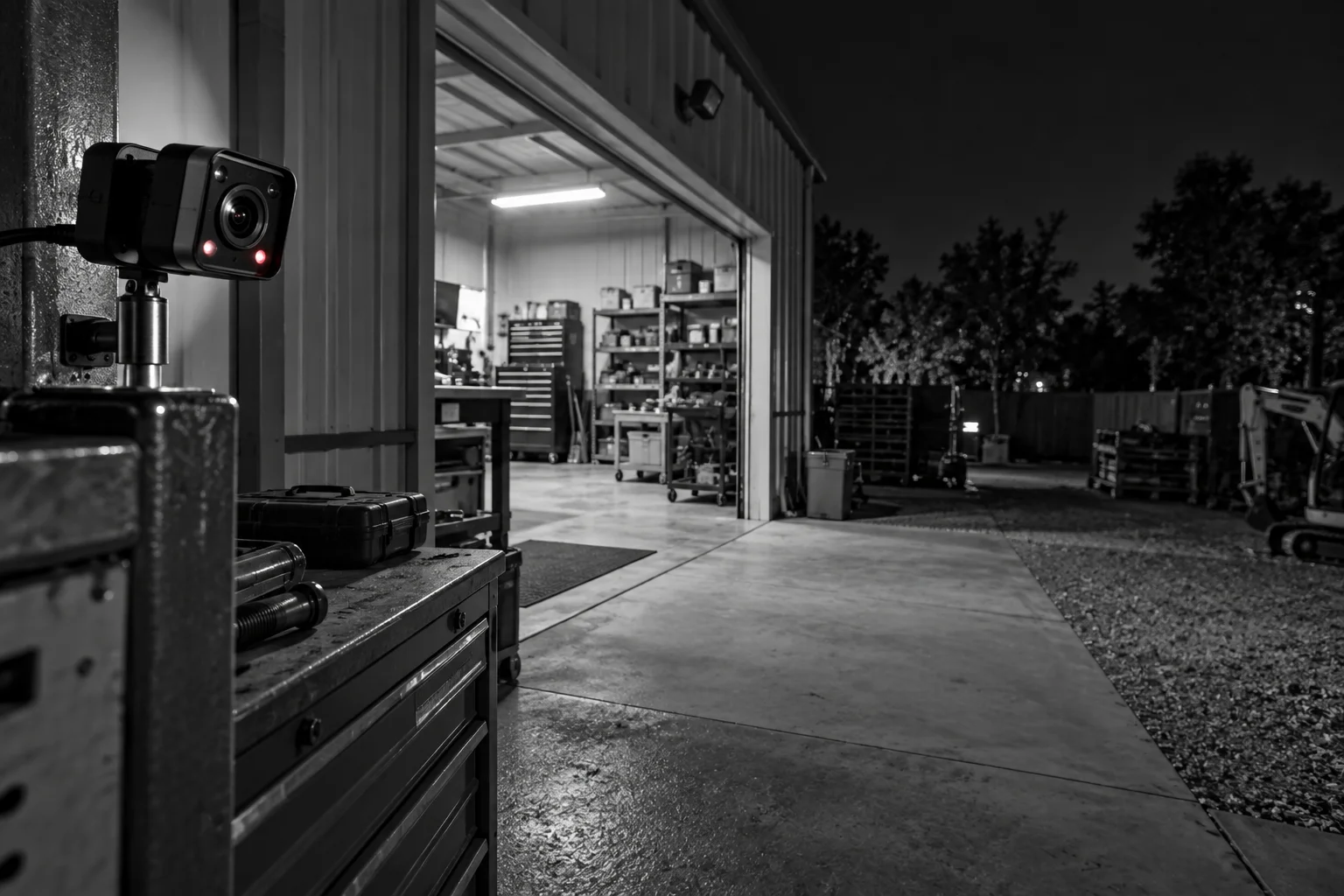
Infrared night vision works by illuminating the scene with infrared light that is outside the visible range for humans while remaining detectable by the camera sensor.
The resulting image may appear monochromatic rather than full color.
Night vision also consumes additional power, which can reduce battery life on compact cameras.
Low-light performance varies substantially between models because sensor size, lens aperture, image processing and infrared hardware all affect the final result.
Can Spy Cameras Stream Video Live?
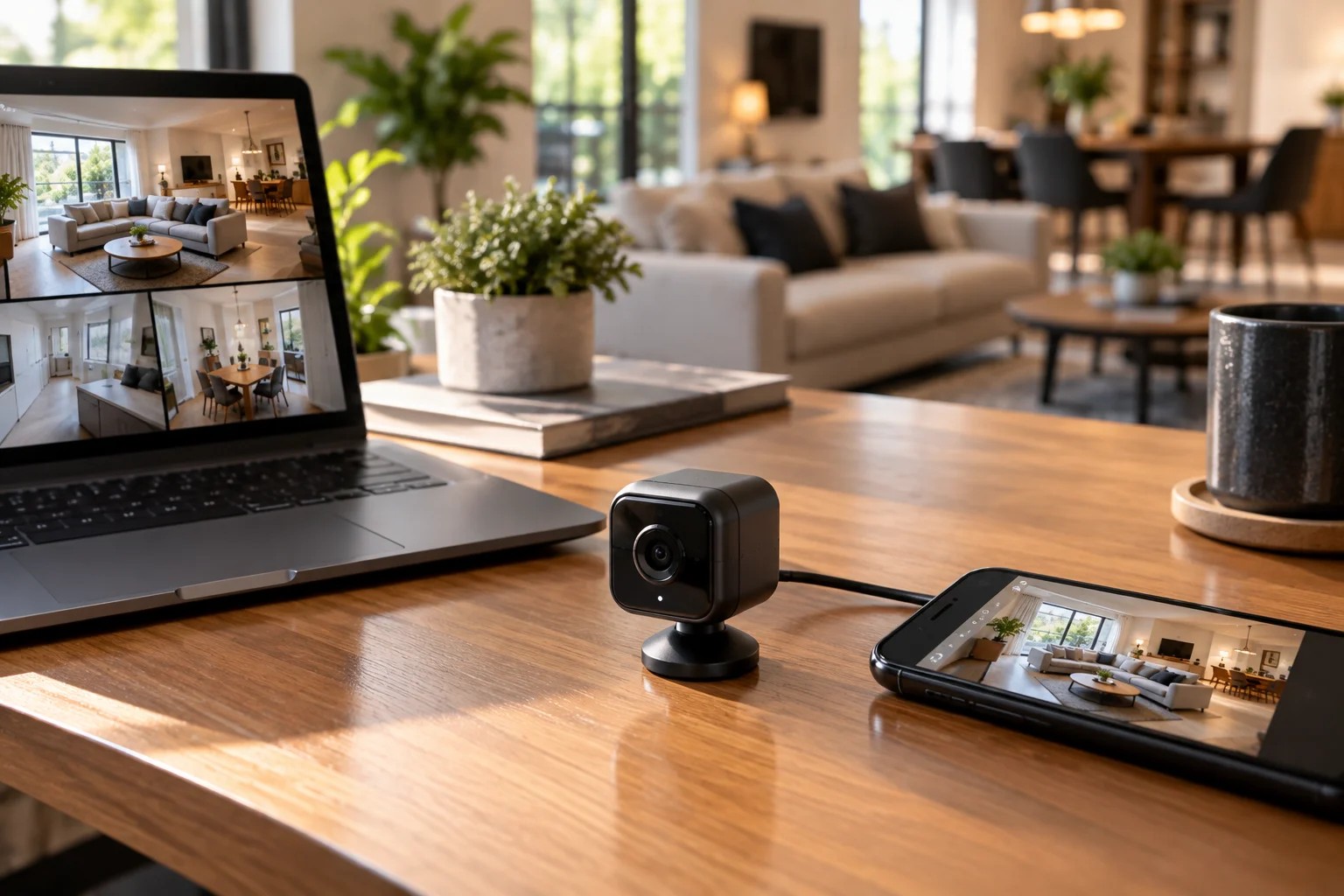
Wi-Fi-equipped cameras can stream live video to an authorized app, computer or cloud service.
The basic process is:
Camera → Wi-Fi network → Internet or local network → Viewing device
This allows someone with authorized access to watch a live feed rather than waiting for a recording to finish.
However, network connectivity also introduces security risks.
The FTC warns that internet-connected cameras can be hacked and recommends changing default credentials, using strong passwords, enabling two-factor authentication where available and keeping software updated.
A camera that is physically small isn't necessarily digitally secure.
Are Spy Cameras the Same as Security Cameras?
Not necessarily. The main difference is usually how visible the camera is and how it is intended to be used.
A conventional security camera is generally installed openly and is intended to monitor an area.
A miniature camera may be designed for situations where a smaller form factor is important.
For example, compact cameras can be useful for specialized equipment monitoring or discreet security applications where a large camera isn't practical.
The important distinction is that covert recording raises additional privacy considerations that don't disappear simply because the camera is small.
Are Spy Cameras Legal?
There is no universal rule that makes every spy camera legal or illegal. The circumstances of the recording matter.
In the United States, hidden-camera laws vary between states.
The Reporters Committee for Freedom of the Press maintains a state-by-state guide covering laws concerning hidden cameras and recording. Its current guidance shows that some states expressly prohibit unauthorized camera use in private places, while others have more specific restrictions involving circumstances such as restrooms, dressing rooms or nudity.
A person's expectation of privacy is therefore an important consideration.
Recording in a location where someone reasonably expects privacy can create serious legal problems even if the camera itself was legally purchased.
Audio can introduce additional issues because wiretap and eavesdropping laws may apply separately from video-surveillance rules.
Can Spy Cameras Be Used for Home Security?
A miniature camera can have legitimate security applications when it is used transparently and in accordance with applicable privacy laws.
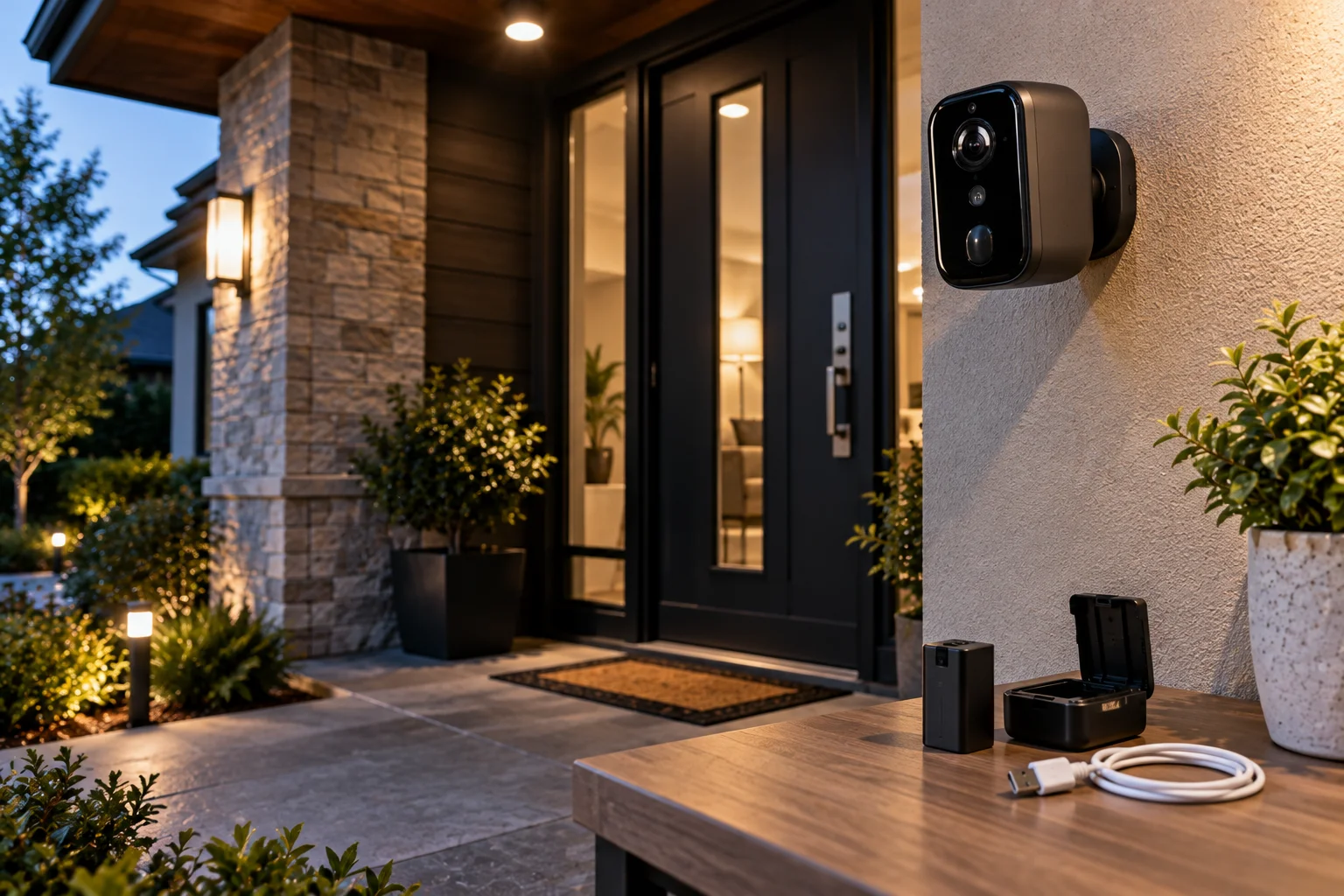
For example, a small camera may be appropriate for monitoring an entrance, property or equipment when people are properly informed where required.
The FTC recommends researching connected cameras before purchasing them and checking what security controls they provide. It specifically advises users to protect live feeds and stored recordings with strong authentication and available encryption.
The goal should be protecting property or people without creating an undisclosed surveillance system.
How Can You Tell If a Camera Is a Spy Camera?
There isn't one universal visual test because miniature cameras come in many designs.
When checking a room or property for unauthorized recording equipment, look for unfamiliar electronic devices, unexpected lenses or equipment that doesn't have an obvious purpose.
But visual inspection alone isn't always reliable.
A suspected camera may also be part of a legitimate device, and a very small lens can be difficult to distinguish from other components.
If you discover a suspected camera in a private area such as a bedroom or bathroom, avoid tampering with it if doing so could destroy evidence. Document what you found and consider contacting the relevant property manager, platform, law-enforcement agency or legal professional depending on the circumstances.
What Is the Difference Between a Spy Camera and Spyware?
A spy camera is physical hardware, while spyware is software designed to secretly collect information from a device.
The distinction matters.
A physical miniature camera needs an optical sensor and physical power source.
Spyware can instead exploit an existing camera, microphone or other sensors inside a phone or computer.
The FTC has documented spyware that can secretly access cameras, microphones and other information on devices without the owner's knowledge.
So a person concerned about surveillance shouldn't look only for physical cameras. Unauthorized monitoring can also happen through compromised devices or software.
FAQs About Spy Cameras
Do spy cameras need Wi-Fi?
No. A camera can record locally to internal storage or a memory card without Wi-Fi. Wi-Fi is mainly needed for remote viewing, cloud storage and network-based features.
Can a spy camera work without electricity?
It still needs a power source. That can be a rechargeable battery, replaceable battery or external power connection.
How small can a spy camera be?
Miniature cameras can be extremely small, but reducing the size of the lens, sensor, battery and electronics creates trade-offs in image quality, battery life and recording capability.
Can spy cameras record audio?
Some cameras include microphones. However, recording conversations can be subject to separate privacy and eavesdropping laws, depending on the jurisdiction.
Are hidden cameras illegal?
Not automatically. The legality depends on factors including location, purpose, consent, the type of recording and applicable local laws. U.S. hidden-camera laws vary considerably by state.
The Bottom Line
A spy camera is essentially a miniature digital camera designed to make the recording hardware less noticeable.
Inside, the technology is familiar: a lens focuses light onto an image sensor, a processor converts that information into compressed video, and the footage is either stored locally or transmitted through a network.
The major engineering challenge is fitting all of that into a very small package while maintaining acceptable image quality, battery life and connectivity.
For legitimate surveillance, compact cameras can be useful where a conventional security camera isn't practical. But their ability to record people without being obvious also creates significant privacy concerns.
The most important distinction isn't simply how small the camera is.
It's whether the person operating it has the legal right and appropriate consent to record what the camera can see or hear.