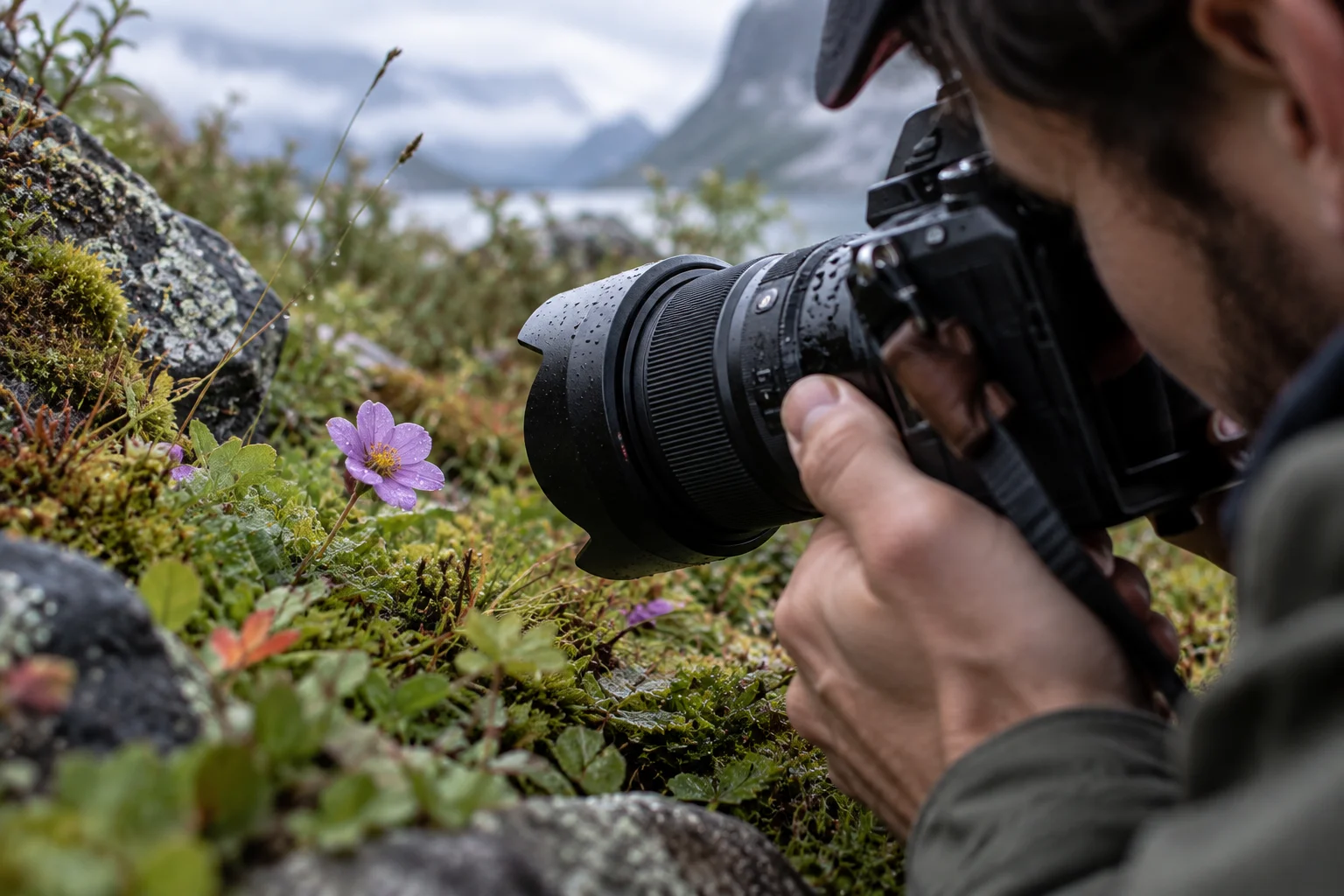
Modern cameras can track a running athlete, bird, racing car or child moving across the frame with a level of autofocus accuracy that would have seemed extraordinary a few decades ago.
The secret starts with how the camera detects focus.
Two of the fundamental autofocus technologies are phase-detection autofocus (PDAF) and contrast-detection autofocus (CDAF). They approach the focusing problem differently. Phase detection can determine whether the lens needs to move closer or farther away and estimate how much movement is required. Contrast detection instead evaluates image sharpness and searches for the position where contrast is maximized.
That difference becomes particularly important with moving subjects.
A phase-detection system can effectively tell the camera, "The subject is out of focus, and you need to move the lens this direction by approximately this much."
Contrast detection is more like asking, "Is the image sharper now? What about here? What about slightly farther?"
Modern cameras have gone much further than that basic distinction. They can combine autofocus measurements with subject recognition, distance information, motion prediction and continuous AF algorithms to keep recalculating where the subject will be when the shutter actually fires. Sony, for example, describes modern subject tracking as analyzing color, patterns, brightness and subject distance in real time.
What Is Phase-Detection Autofocus?
Phase-detection autofocus determines not only that an image is out of focus, but also which direction the lens needs to move and approximately how far.

That's the key advantage.
Imagine photographing a runner approaching you.
The camera detects that the subject isn't focused correctly. Instead of repeatedly moving the lens in both directions to find the sharpest point, phase detection can compare light arriving from different parts of the lens and determine the direction of the focus error.
Canon explains its Dual Pixel CMOS AF system this way: separate photodiode information is compared to determine whether the subject is in focus and, if it isn't, whether the lens needs to move toward a nearer or farther focus position and by how much.
That makes phase detection particularly useful for continuous autofocus.
The camera can measure the focus error, move the lens, measure again and keep updating the focus position as the subject moves.
Why is that important for moving subjects?
Because autofocus isn't just trying to find focus once.
It's constantly trying to answer:
Where is the subject now?
How fast is it moving?
Where will it be a fraction of a second from now?
Where should the focus plane be when the photograph is captured?
That's why modern autofocus systems are much more sophisticated than simply "finding the sharpest image."
What Is Contrast-Detection Autofocus?
Contrast-detection autofocus finds focus by analyzing image contrast and searching for the position where the image appears sharpest.
The basic principle is straightforward.
When an edge is in focus, the transition between light and dark areas becomes more defined. The camera can analyze that contrast and determine whether the image is becoming sharper or softer as it changes the lens position.
Nikon describes contrast-detection AF as analyzing contrast and edge detail under the selected focus area, while Canon explains that contrast detection typically needs to move the lens back and forth to find maximum sharpness.
The weakness becomes obvious with fast-moving subjects.
If the camera doesn't initially know which direction will produce sharper focus, it may need to move the lens, evaluate the result, move again and continue searching.
This behavior is commonly called focus hunting.
Phase Detection vs Contrast Detection: What's the Core Difference?
Phase detection predicts the direction of focus correction, while contrast detection searches for the point of maximum sharpness.

Feature | Phase detection | Contrast detection |
|---|---|---|
Measures | Phase difference | Image contrast |
Knows focus direction | Yes | Not inherently |
Estimates focus error | Yes | Through searching |
Focus hunting | Generally reduced | More likely |
Moving subjects | Excellent foundation | More challenging |
Low-light performance | Depends on implementation | Can be useful in suitable conditions |
Focus accuracy | Very high when properly implemented | Can be extremely accurate |
Modern use | Core technology in many advanced systems | Often used alongside phase detection |
This isn't a case where one technology is always superior.
Modern cameras increasingly combine them.
Sony's advanced systems, for example, can use hundreds of phase-detection points together with contrast-detection measurements, with the company describing the combination as providing high-speed and high-accuracy autofocus.
Why Is Phase Detection So Good for Moving Subjects?
Phase detection gives the autofocus system a useful estimate of the direction and magnitude of the focus error, allowing it to react much faster to movement.
Consider a football player running toward the camera.
With a basic contrast-detection system, the camera could theoretically:
Move the lens slightly.
Check whether contrast improved.
Move again.
Check again.
Reverse direction if necessary.
Continue until maximum sharpness is found.
By then, the player has moved.
Phase detection can instead estimate:
The subject is out of focus.
The focus needs to move closer.
The required adjustment is approximately this much.
Move the lens.
Measure again.
Recalculate as the subject continues moving.
Canon's Dual Pixel CMOS AF was specifically designed to provide this directional and distance information, which Canon says enables smooth continuous autofocus for moving subjects.
That's a major reason phase detection became so important in modern mirrorless cameras.
Does Contrast Detection Still Matter?
Yes. Contrast detection remains useful because it can provide extremely precise focus information and can complement phase detection in difficult situations.
Modern cameras don't necessarily treat phase and contrast detection as competing systems.
They can use both.
Sony's autofocus architecture provides a good example. The company's documentation describes systems combining focal-plane phase detection with hundreds of contrast-detection divisions to achieve high-speed and accurate autofocus, particularly when contrast detection has advantages.
Contrast information can also help verify whether the final image is genuinely sharp.
So instead of thinking:
Phase detection OR contrast detection
it's more useful to think:
Phase detection + contrast analysis + subject recognition + tracking algorithms.
How Does Autofocus Actually Track a Moving Subject?
Modern autofocus continuously measures the subject, estimates its movement and adjusts the lens position repeatedly rather than focusing only once.

This is where continuous AF becomes important.
Sony calls its continuous mode AF-C. When selected, the camera keeps adjusting focus while the shutter button is held, making it suitable for moving subjects such as sports and railway photography.
But continuous autofocus isn't simply repeating the same focus operation hundreds of times.
Advanced cameras can track:
Subject position
Movement direction
Movement speed
Changes in speed
Subject distance
Color
Pattern
Face position
Eye position
Recognized subject type
Sony's current tracking systems, for example, use spatial information including color, pattern, brightness and subject distance for real-time subject recognition and tracking.
The camera is effectively building a constantly updated model of what's happening in front of the lens.
How Does the Camera Know Where a Subject Will Be?
Predictive autofocus uses previous focus measurements and subject movement to anticipate where the subject will be at the moment of exposure.
This is crucial because the camera doesn't take the photograph at the exact instant it begins focusing.
There's always some delay.
The camera has to:
Read the sensor
Analyze focus
Move the lens
Recheck focus
Process the scene
Expose the image
For a stationary subject, tiny delays don't matter much.
For a bird flying toward you, they matter enormously.
This is why modern autofocus systems use predictive algorithms.
Nikon has described focus tracking systems that analyze subject speed from focus-detection information and use that information to anticipate the subject's position at the moment of exposure.
The result is an autofocus system that's effectively trying to focus where the subject will be, rather than merely where it was when the previous measurement was taken.
What Is Dual Pixel Autofocus?
Dual Pixel autofocus is Canon's implementation of phase detection directly on the imaging sensor, using split photodiode information from pixels to measure phase differences.
Canon's Dual Pixel CMOS AF divides each pixel's light-sensitive area into two portions during autofocus. The camera compares their signals to determine the focus error and direction. During image capture, those portions work together to produce the actual image.
One advantage is broad autofocus coverage.
Canon says current implementations can cover approximately 80–100% of the shooting area depending on the camera model.
That matters because older autofocus systems often concentrated their most capable focus sensors around a relatively limited area.
Modern on-sensor phase detection can place focus information across a much larger portion of the frame.
Why Are Mirrorless Cameras So Good at Continuous Autofocus?
Mirrorless cameras can perform autofocus directly from the imaging sensor throughout live view and video capture, giving the camera continuous access to the scene being recorded.
A DSLR traditionally used a separate phase-detection autofocus sensor when shooting through the optical viewfinder.
Mirrorless cameras don't have the same moving mirror mechanism.
Their imaging sensor is continuously involved in forming the electronic preview, and many modern sensors incorporate phase-detection pixels directly into that sensor.
That makes continuous autofocus during video particularly practical.
Canon's Dual Pixel CMOS AF, for example, was developed specifically to provide consistent autofocus during Live View and video as well as still photography.
Why Can Modern Cameras Recognize Faces, Eyes and Animals?
Subject recognition adds another layer of intelligence on top of the basic focus measurement system.
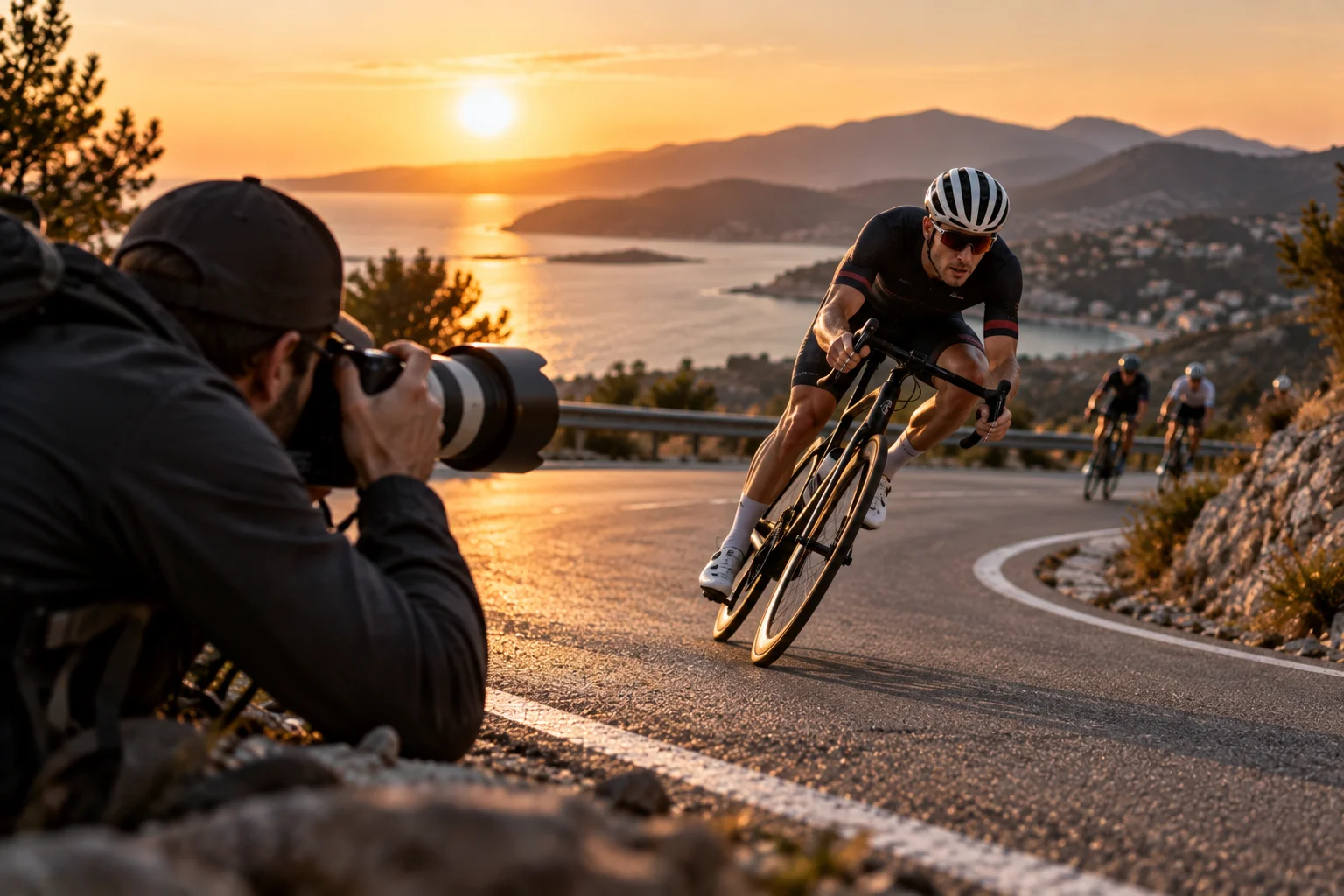
Phase detection tells the camera something like:
"This area needs to be focused farther away."
Subject recognition can add:
"That area contains the eye of the person you're photographing."
The camera can then prioritize that specific region.
This is why modern autofocus systems can track:
Human faces
Human eyes
Animals
Birds
Vehicles
Aircraft
Trains
Other recognized subjects
Sony's current tracking documentation describes real-time recognition based on information such as color, brightness, pattern and subject distance.
The result is a system that isn't merely searching for the highest-contrast object.
It's attempting to understand what you're photographing.
Why Does Autofocus Sometimes Lose a Moving Subject?
Even advanced phase-detection systems can lose tracking when the subject becomes difficult to distinguish from its surroundings or when light and movement exceed the system's capabilities.
Common problems include:
Very low light
Low-contrast subjects
Subject moving unpredictably
Subject temporarily leaving the AF area
Another object crossing between camera and subject
Extremely fast movement
Very small subjects
Difficult backgrounds
Lens limitations
Sony specifically notes that autofocus tracking can struggle with low-contrast subjects and dark environments.
This is also why choosing the right AF-area mode matters.
For an athlete moving unpredictably, a wide or zone tracking area can give the camera more room to maintain the subject. For a stationary subject or a subject you can position precisely, a smaller focus area can provide more control. Sony's current guidance makes the same distinction between smaller areas for predictable movement and wider areas for fast or unpredictable movement.
Does Phase Detection Always Beat Contrast Detection?
No. Phase detection has major speed and directional advantages, but contrast detection can still be valuable for accuracy and difficult focusing situations.
A modern hybrid autofocus system can use the strengths of both.
Phase detection can provide rapid directional information.
Contrast detection can help refine or confirm focus.
Subject recognition can identify what should be prioritized.
Predictive tracking can estimate where that subject will move.
The processor can then coordinate all of this in real time.
That's why comparing today's autofocus systems solely by asking "Does this camera use phase detection or contrast detection?" doesn't tell you very much.
You need to look at the entire autofocus system.
What Actually Makes a Modern Camera's Autofocus Fast?
Autofocus speed is the result of the sensor, phase-detection system, processor, algorithms, lens motor, tracking system and shooting conditions working together.

A camera can have an impressive phase-detection system and still perform poorly if the lens is slow or the subject is difficult to distinguish.
The important components include:
Component | What it contributes |
|---|---|
Phase-detection pixels | Direction and magnitude of focus error |
Contrast detection | Sharpness confirmation/refinement |
Image processor | Processes AF information rapidly |
Subject recognition | Identifies faces, eyes, animals and other subjects |
Tracking algorithms | Maintains the selected subject |
Predictive AF | Anticipates future subject position |
Lens motor | Physically moves focusing elements |
AF coverage | Determines how much of the frame can track |
Sensor readout | Determines how quickly scene information can be updated |
This is why autofocus performance can't be reduced to a single specification such as "693 AF points."
The number of focus points matters, but the processing behind them matters too.
Why Does Lens Performance Matter for Autofocus?
The camera can calculate the correct focus position extremely quickly, but the lens still has to physically move its focusing elements into position.
This is an often-overlooked part of the equation.
The autofocus system tells the lens where to go.
The lens motor has to get there.
A fast, responsive focusing motor can translate the camera's calculations into rapid physical focus adjustments.
This becomes especially important for continuous AF.
Imagine the camera updating the focus position dozens of times while a subject approaches.
If the lens takes too long to respond, the autofocus system can't fully exploit its tracking capabilities.
That's why autofocus performance is a camera-and-lens system, not just a camera specification.
What AF Settings Should You Use for Moving Subjects?
Continuous autofocus with an appropriate tracking area is generally the starting point for moving subjects.
For Sony cameras, this means AF-C. Sony specifically recommends AF-C when photographing subjects moving across the frame.
A practical starting setup is:
AF mode: Continuous AF / AF-C
AF area: Wide or Zone for unpredictable movement
Subject recognition: Enable the appropriate subject type
Tracking: Use subject tracking when available
Drive mode: Continuous shooting for sequences
Shutter speed: Fast enough to control motion blur
Sony recommends wider focus areas when subjects move quickly or unpredictably, while smaller areas can be useful when movement is more predictable.
The exact settings vary by camera, lens and subject.
Phase Detection vs Contrast Detection: Which Is Better for Sports and Wildlife?
Phase detection is particularly well suited to sports and wildlife because its directional focus information works naturally with continuous tracking and predictive autofocus.
For a runner coming toward you, a bird flying across the frame or a car approaching a corner, the ability to rapidly estimate focus direction is extremely useful.
But the best results come from the whole autofocus system, not phase detection alone.
For serious action photography, look for:
On-sensor phase detection
Broad AF coverage
Reliable subject recognition
Eye/animal detection where relevant
Strong AF-C tracking
Fast sensor readout
Responsive lens motors
High processing performance
Customizable tracking sensitivity
Sony's current focus controls, for example, allow photographers to adjust tracking sensitivity and how responsive the system should be to sudden changes in subject speed.
The Bottom Line: Why Can Modern Cameras Focus on Moving Subjects So Quickly?
Modern autofocus is fast because cameras have evolved from simply detecting sharpness to measuring focus direction, recognizing subjects, predicting movement and continuously adjusting the lens.
Contrast detection asks:
"Where is the image sharpest?"
Phase detection adds:
"Which direction is the focus error, and approximately how large is it?"
Modern subject recognition adds:
"Which object should I keep focused?"
Predictive tracking adds:
"Where will that object be next?"
And the lens motor adds:
"Move the focus elements there."
That's the real reason today's cameras can keep up with moving subjects.
The biggest change isn't that contrast detection disappeared. It's that modern cameras combine phase detection, contrast information, subject recognition, tracking algorithms, predictive AF and increasingly powerful processors into one continuous autofocus system. Canon's Dual Pixel CMOS AF demonstrates how phase information can be obtained directly from the imaging sensor, while Sony's current systems show how phase detection, contrast detection and real-time subject recognition can work together.
So when you're choosing a camera for sports, wildlife or video, don't stop at "phase detection autofocus."
Look at how the entire AF system behaves.
That's what determines whether the camera simply finds focus quickly or actually keeps the right subject in focus while the action unfolds.
FAQs
What is the main difference between phase detection and contrast detection autofocus?
Phase detection can determine the direction and approximate amount of focus correction, while contrast detection analyzes image sharpness and searches for the position of maximum contrast.
Is phase-detection autofocus faster than contrast detection?
Phase detection generally has a speed advantage because it can determine the direction of the focus error rather than relying solely on a search for maximum contrast. However, real-world autofocus speed also depends on the camera processor, algorithms, lens motor and shooting conditions.
Why is phase detection good for moving subjects?
It provides directional focus information that allows the camera to continuously adjust the lens as the subject moves. Predictive tracking can then use previous measurements to anticipate the subject's next position.
Do modern mirrorless cameras use both phase and contrast detection?
Many advanced systems do. Sony, for example, documents systems that combine focal-plane phase detection with contrast-detection measurements.
What is Dual Pixel CMOS AF?
It is Canon's phase-detection autofocus technology in which pixels on the imaging sensor provide split photodiode information for determining focus direction and error.
What autofocus mode should I use for sports photography?
Continuous autofocus, such as AF-C, is generally the appropriate starting point for moving subjects. A wider tracking area can help with unpredictable movement, while subject-specific recognition can help the camera prioritize the intended target.
Why does autofocus sometimes hunt even on an expensive camera?
Low light, low contrast, confusing backgrounds, subjects leaving the AF area and objects crossing in front of the subject can all make tracking more difficult. Sony specifically identifies low contrast and dark environments as situations where AF tracking can struggle.
Does more autofocus points mean better autofocus?
Not necessarily. AF coverage, processing speed, subject recognition, tracking algorithms, sensor readout and lens performance can matter just as much as the number of AF points.
Is contrast detection still useful?
Yes. Contrast information can complement phase detection and can be particularly useful for refining or confirming focus. Modern cameras increasingly use multiple sources of focus information rather than relying on one method alone.