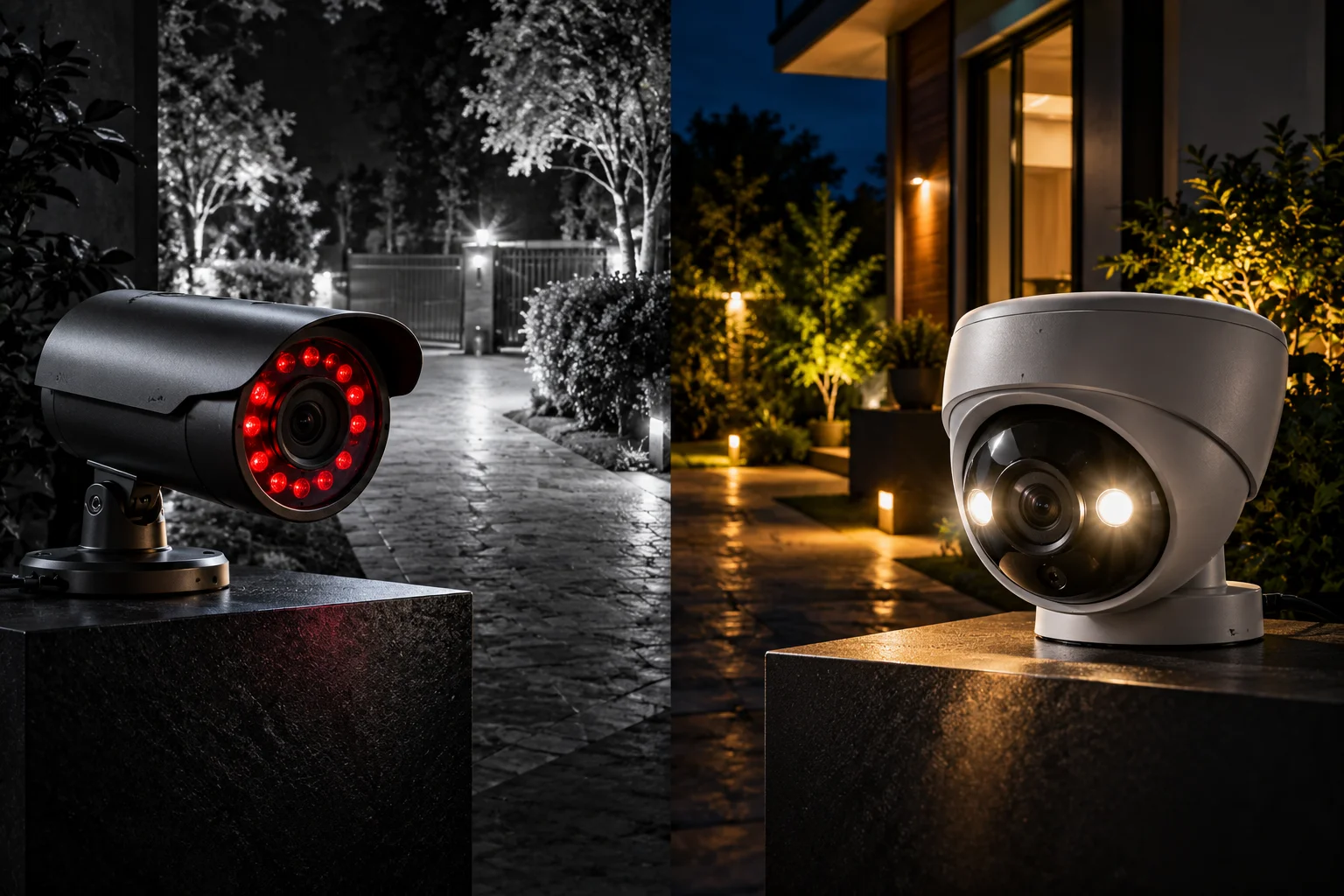
Traditional night vision usually uses infrared light to produce black-and-white footage in darkness, while color night vision uses available light or additional visible illumination to preserve color. Neither approach is automatically better. The right choice depends on how dark the area becomes, how much detail you need and whether you want the camera to illuminate the scene.
Traditional infrared (IR) night vision is designed to work when there is little or no visible light. The camera uses near-infrared illumination, which people generally can't see, and the resulting footage is normally displayed in black and white.
Color night vision takes a different approach. Some cameras use highly light-sensitive sensors and wide-aperture lenses to capture color from very small amounts of ambient light. Others use a visible-light spotlight to illuminate the scene and then capture full-color footage.
That distinction affects everything from nighttime identification to privacy, power consumption and how noticeable the camera is.
What Is Traditional Night Vision on a Security Camera?
Traditional security-camera night vision typically uses infrared illumination to produce a bright monochrome image when visible light is insufficient.
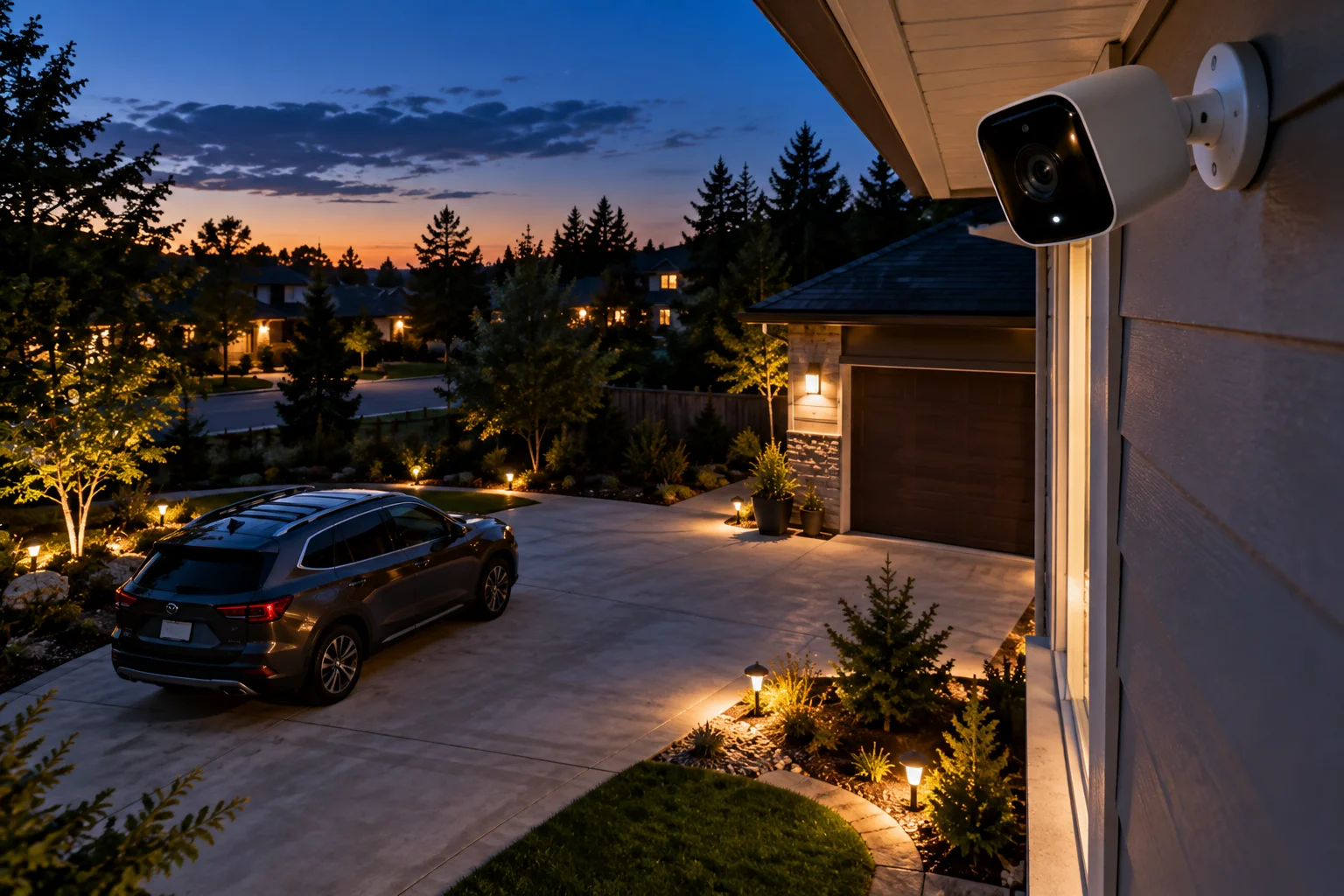
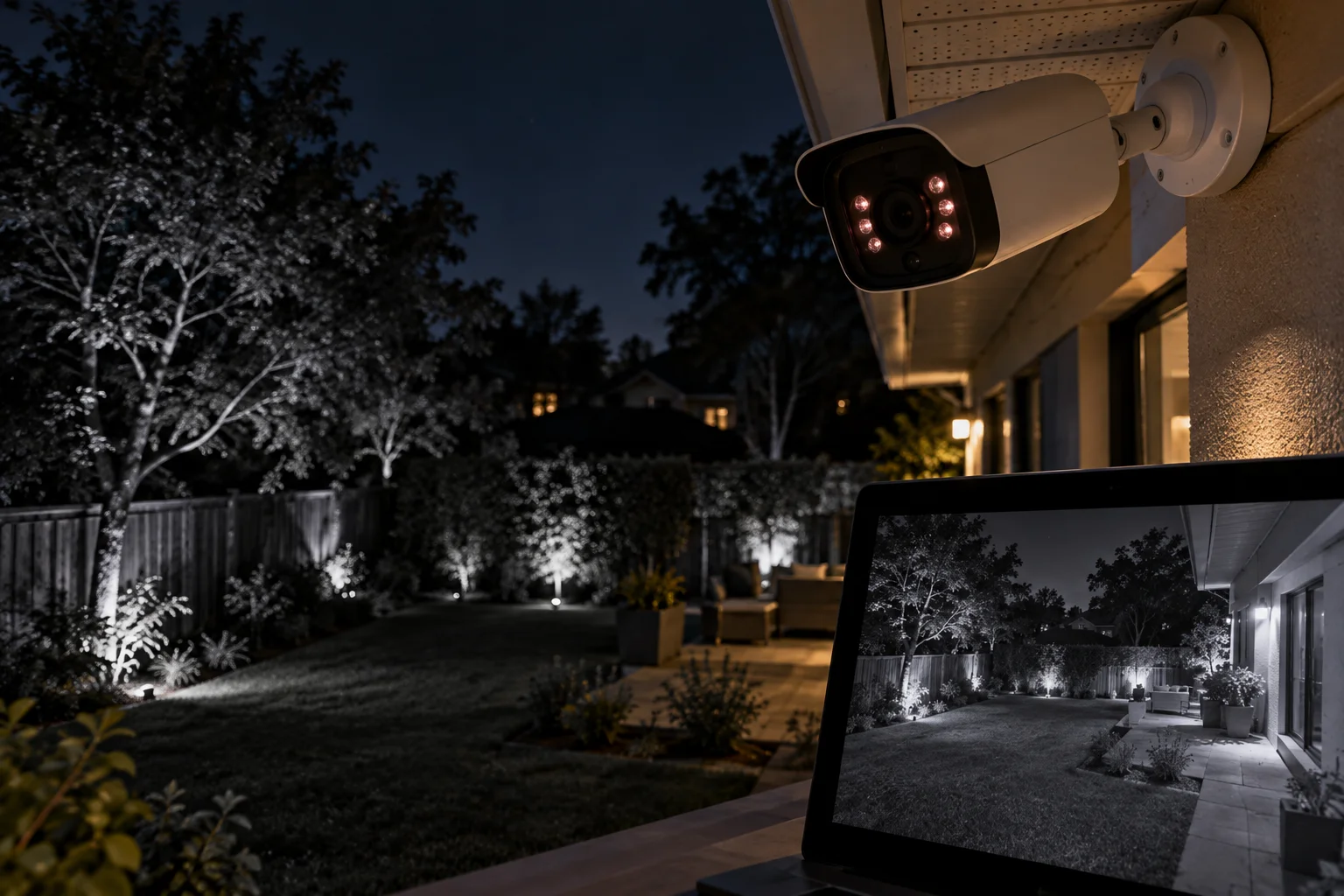
The camera switches into a night mode as the scene becomes darker. An IR-cut filter changes position, allowing the sensor to respond to near-infrared light, while built-in IR LEDs illuminate the scene.
Because the camera isn't relying on visible light to produce the image, it can continue working when an area appears almost completely dark to the human eye.
The trade-off is straightforward: you generally lose color information.
A person's shirt, a vehicle's paint color or another identifying characteristic may therefore appear only as shades of gray.
What Is Color Night Vision?
Color night vision is designed to preserve color information in low-light conditions instead of switching immediately to conventional black-and-white infrared footage.
There are two common approaches.
Low-light color imaging
Some cameras use highly sensitive image sensors, wide-aperture lenses and image processing to capture usable color with very little ambient light.
Technologies such as Axis Lightfinder are designed around this principle, allowing cameras to remain in color at light levels where conventional cameras would normally switch to monochrome night mode.
Spotlight-assisted color night vision
Other cameras use a visible white spotlight to illuminate the scene.
The extra light gives the image sensor enough visible light to reproduce colors.
Some systems can switch between IR and white-light illumination depending on what is happening in the scene. Hikvision, for example, describes Smart Hybrid Light systems that can use IR, white light or an automatic combination of both.
So “color night vision” doesn't always mean the camera can see color in complete darkness without assistance.
Night Vision vs Color Night Vision: What Is the Main Difference?
The main difference is how the camera handles insufficient visible light and whether the resulting image contains real color information.
Feature | Traditional IR Night Vision | Color Night Vision |
|---|---|---|
Typical image | Black and white | Color |
Complete darkness | Very capable with IR illumination | Usually needs some light or visible illumination |
Color information | No | Yes |
IR LEDs | Common | May be used alongside color mode |
Visible spotlight | Usually unnecessary | May be required |
Identification | Shape and movement | Additional color information |
Visibility to people | IR is generally unobtrusive | White light can be noticeable |
Power considerations | IR illumination uses power | Sensor or spotlight may use additional power |
The distinction is important because color isn't automatically a sign of better nighttime performance.
A camera producing a noisy, blurry color image isn't necessarily more useful than a sharp black-and-white image.
Can Color Night Vision Work in Complete Darkness?
Usually, a true color image requires some visible light, although certain cameras can produce surprisingly bright color images in very low light.
This is one of the most important points when comparing security cameras.
A conventional color sensor needs photons from the visible spectrum to determine color. If there is effectively no visible light, there isn't enough color information for the sensor to recover.
A camera can overcome this in two main ways:
Use a highly sensitive sensor to capture tiny amounts of ambient light.
Add visible illumination, such as a white spotlight.
Infrared illumination alone doesn't provide normal visible color information. IR-based night vision therefore normally produces monochrome footage.
Why Does IR Night Vision Look Black and White?
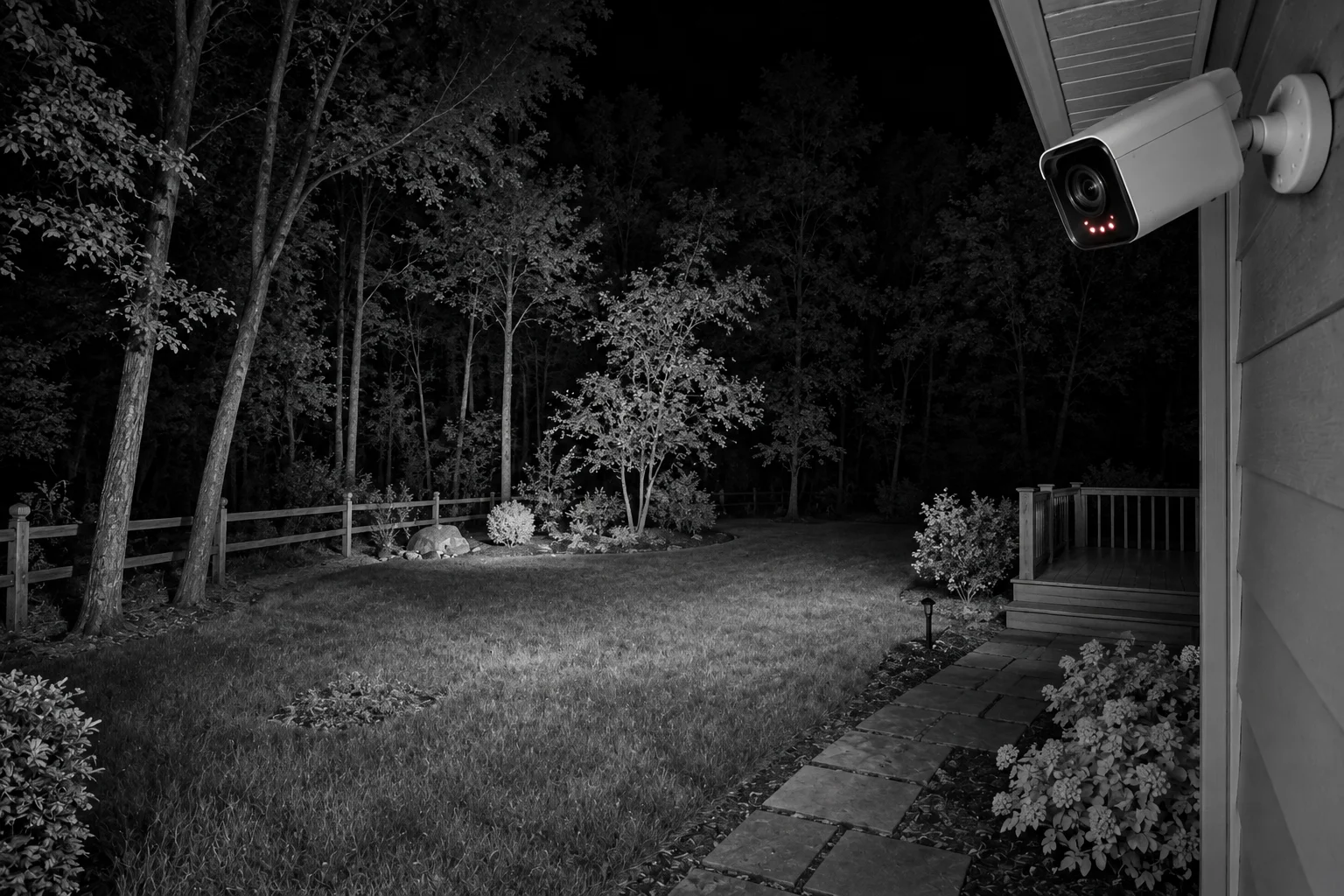
The camera switches to monochrome because near-infrared light doesn't provide the normal color information needed for a conventional color image.
During daytime operation, a camera's imaging system uses visible wavelengths to determine the colors in a scene.
At night, the IR-cut filter can be removed so the sensor becomes more sensitive to near-infrared light. Because that infrared information doesn't correspond to normal red, green and blue color information, the resulting surveillance image is generally displayed in black and white.
The advantage is sensitivity.
Instead of needing visible illumination, the camera can use infrared light that is largely invisible to people.
Which Is Better in Complete Darkness?
Traditional IR night vision is generally the more straightforward choice when the scene can become completely dark.
If there's no street lighting, porch lighting or other ambient illumination, IR provides its own illumination without requiring a visible spotlight.
This can be particularly useful around:
Backyards
Side passages
Garages
Rural properties
Storage areas
Dark entrances
The exact usable distance depends on the camera's sensor, lens, IR illumination and environment.
Don't assume that an advertised “30-meter night vision” rating means you will get equally detailed identification at 30 meters. Image quality can change significantly with distance.
Which Is Better for Identifying People and Vehicles?
Color footage can provide additional identifying information, but sharpness, lighting and motion performance remain critical.
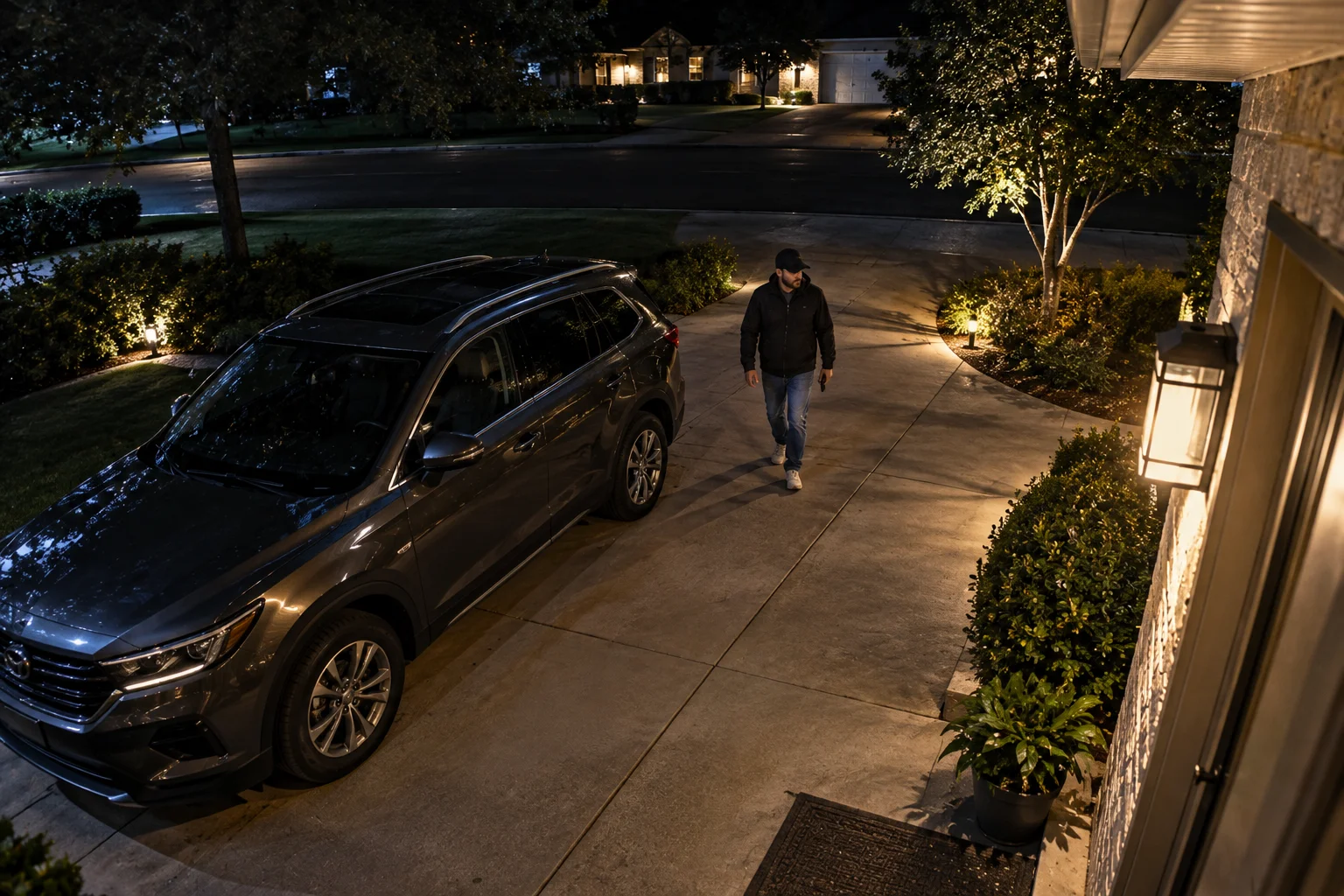
Suppose a nighttime recording shows a person walking toward your property.
An IR camera may clearly show their face, clothing shape and movement in monochrome.
A good color night-vision camera might additionally show the color of their jacket or other visible objects.
That extra information can be useful when reviewing footage.
But color doesn't compensate for motion blur, poor focus or excessive image noise. Axis notes that keeping a camera in color at very low light can increase blur and noise as available light decreases.
That's why the best nighttime camera isn't necessarily the one with the most colorful demo footage.
Does Color Night Vision Use a Spotlight?
Some color night-vision cameras use a visible spotlight, while others rely primarily on extremely sensitive imaging hardware and existing ambient light.
A spotlight-assisted camera effectively creates its own visible illumination.
This has an obvious advantage: more light generally gives the sensor more information.
But it also creates a trade-off.
The light can make the camera more noticeable and may be distracting to people or neighbors.
Some hybrid systems therefore keep the camera in IR mode most of the time and activate visible light only when a person or vehicle is detected. Hikvision describes this type of smart hybrid approach.
Does IR Night Vision Work Better Without Any Ambient Light?
Yes, IR is particularly useful when visible light is extremely limited because the camera supplies its own illumination.
This is one of the biggest practical differences between the two approaches.
A high-sensitivity color camera can perform extremely well in dim conditions, but its performance still depends on the amount and quality of available light unless it adds visible illumination.
IR illumination doesn't have the same requirement.
That makes conventional IR night vision a dependable option for locations where darkness is genuinely extreme.
What About Night Vision Range?
Night-vision range depends on much more than the number printed on the camera's specification sheet.
Important factors include:
IR LED power and beam pattern
Spotlight output
Lens focal length
Sensor sensitivity
Image processing
Weather conditions
Reflective surfaces
Scene contrast
Distance from the subject
For example, a bright wall close to the camera can reflect IR light back into the lens and create overexposure, while a distant person may remain poorly illuminated.
Camera manufacturers therefore publish specific illumination or detection ranges, but real-world performance depends heavily on installation conditions.
Which Uses More Power?
Both systems can consume significant power at night, but the exact difference depends on how the camera creates its nighttime illumination.
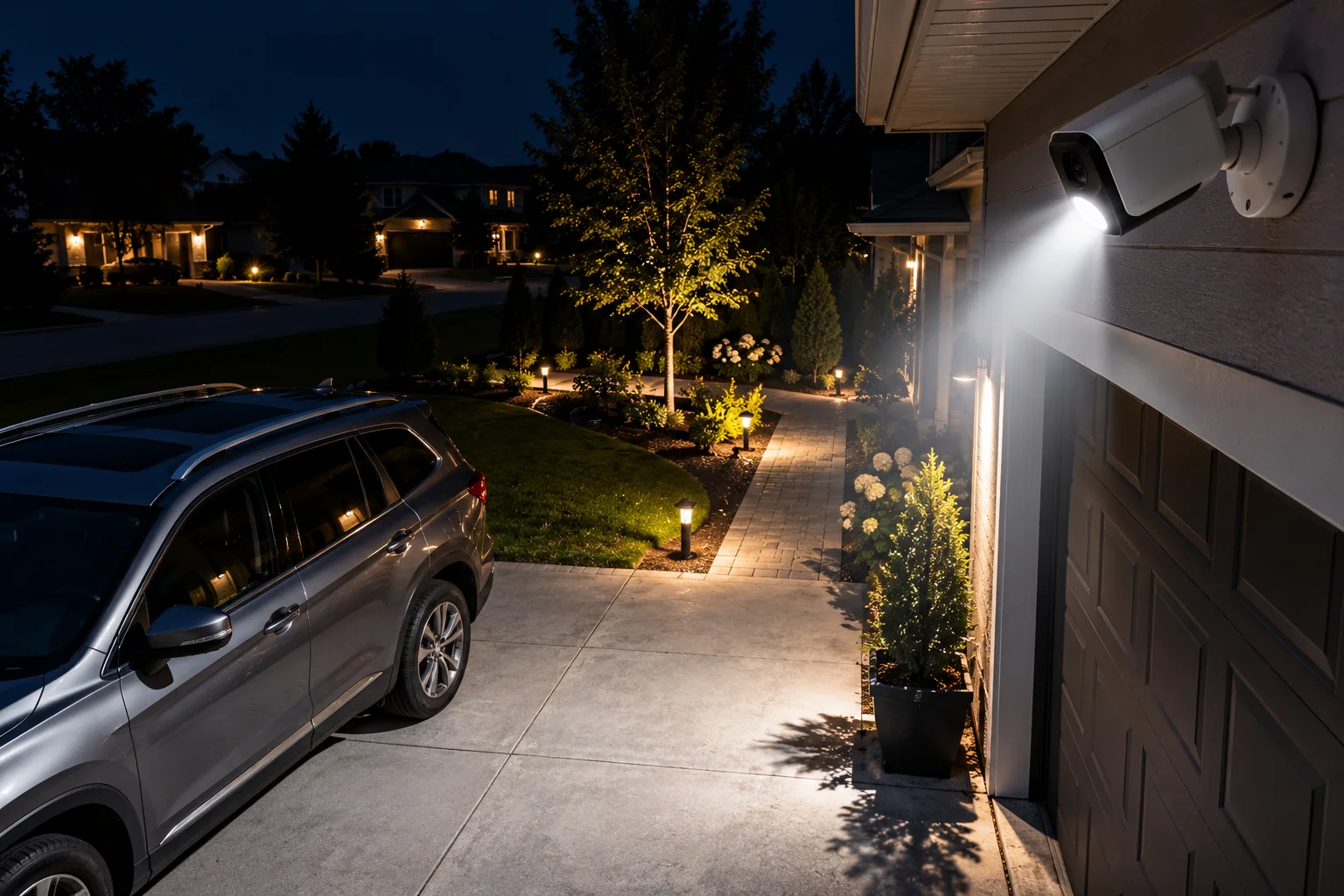
IR LEDs consume power.
Visible spotlights also consume power and can require substantially more illumination than an IR emitter.
A low-light color camera that relies primarily on ambient light may avoid some of that additional lighting power.
This matters particularly for battery-powered security cameras.
A camera that activates a bright spotlight every time motion is detected can have a very different battery profile from one that relies on IR or an extremely sensitive sensor.
Should You Buy IR or Color Night Vision?
Choose based on the actual lighting around the camera rather than simply choosing the technology with the more attractive name.
Choose traditional IR night vision if:
The area can become completely dark
You don't want visible lights turning on
You want dependable nighttime illumination
Black-and-white footage is acceptable
The camera is battery-powered and illumination needs to be controlled
Consider color night vision if:
Some ambient light is always available
Color information is useful for identification
You want more visual detail at night
A visible spotlight is acceptable
The camera has a strong low-light sensor
Consider a hybrid system if:
You want discreet IR monitoring most of the time
You want color footage during important events
You don't mind occasional visible illumination
You want the camera to adapt automatically
What Other Nighttime Specifications Matter?
Sensor sensitivity, lens aperture, image processing and motion performance can matter as much as the advertised night-vision type.
When comparing cameras, look beyond “night vision.”
Check:
Sensor: Larger or more sensitive sensors can perform better in low light.
Lens aperture: A wider aperture can allow more light to reach the sensor.
IR range: Check the manufacturer's rated illumination distance.
Color-light requirements: Find out whether color mode requires ambient light or a built-in spotlight.
Low-light sample footage: Real examples can reveal noise and motion blur that specifications don't show.
Smart illumination: Some cameras automatically switch between IR and white light.
HDR/WDR: Useful when bright lights and dark areas appear in the same scene.
FAQs About Night Vision Security Cameras
Is color night vision better than infrared?
Not universally. Color night vision provides additional color information, while IR night vision can be more dependable in complete darkness.
Can security cameras see color at night?
Yes, if enough visible light reaches the sensor or the camera provides visible illumination. In near-total darkness, conventional IR systems generally produce black-and-white footage.
Can infrared cameras record in total darkness?
Yes, provided the camera has an IR illumination system or access to another suitable infrared light source.
Does night vision work through glass?
It can, but built-in IR illumination may reflect off the glass and create glare. This can significantly reduce image quality.
Do all color night-vision cameras have spotlights?
No. Some use highly sensitive sensors and ambient light, while others use visible supplemental illumination.
Is IR night vision invisible?
The infrared illumination used by many cameras is outside normal human vision, although some IR LEDs can produce a faint visible glow depending on their wavelength and design.
The Bottom Line
Traditional IR night vision is generally the practical choice for complete darkness, while color night vision can provide more identifying information when enough visible light is available.
The difference comes down to how the camera gets enough light to form an image.
IR cameras bring their own invisible illumination and usually produce monochrome footage. Color night-vision cameras either make better use of limited ambient light or add visible illumination so the sensor can preserve color.
For a completely dark backyard, IR can be the simpler solution. For a driveway with street lighting, a sensitive color camera may provide useful additional information such as vehicle or clothing colors.
And if you want both options, a hybrid camera that can switch between IR and visible illumination can provide a practical middle ground.
The most useful question isn't simply “Does this camera have color night vision?”
It's “How much light will actually be available where I plan to install it, and what details do I need the camera to capture?”