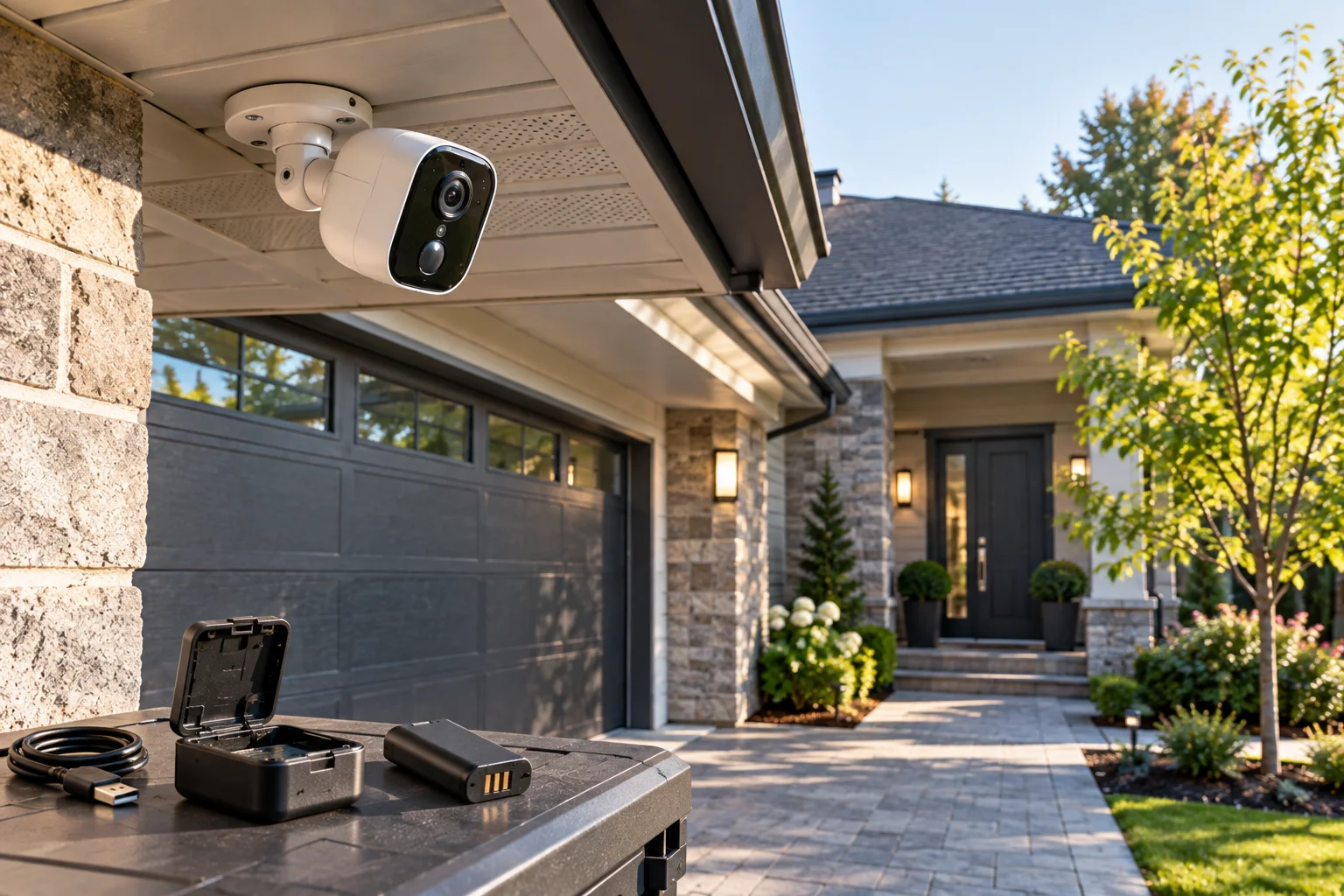
A hidden camera records video using the same basic components found in other digital cameras: an image sensor, lens, processor, storage system and power source. What makes these cameras different is usually their compact design and the way the camera is integrated into a small or inconspicuous device.
The recording process itself is straightforward. Light enters the lens, reaches the image sensor, and is converted into digital image data. The camera's processor compresses that data into a video file, which can then be saved locally or transmitted over a network.
Depending on the model, footage may be stored on a microSD card, internal memory or cloud service. Some cameras require continuous external power, while others use rechargeable batteries. Wi-Fi can provide remote viewing and cloud recording, but a camera doesn't necessarily need an internet connection to save video locally.
Understanding these differences makes it easier to understand what a compact surveillance camera can actually do and what its limitations are.
How Does a Hidden Camera Record Video?
A hidden camera records video by converting light into digital frames and saving or transmitting those frames as a compressed video file.

The basic process is:
Light → Lens → Image sensor → Image processor → Video file → Storage or network
The lens focuses the scene onto the image sensor. The sensor converts incoming light into electrical signals, and the camera's processor turns those signals into digital images.
Multiple images are captured every second to create video. A camera recording at 30 frames per second, for example, captures 30 individual frames every second before processing and compression.
The camera then encodes the footage using a video codec such as H.264 or H.265, reducing the amount of storage required.
Where Do Hidden Cameras Store Video?
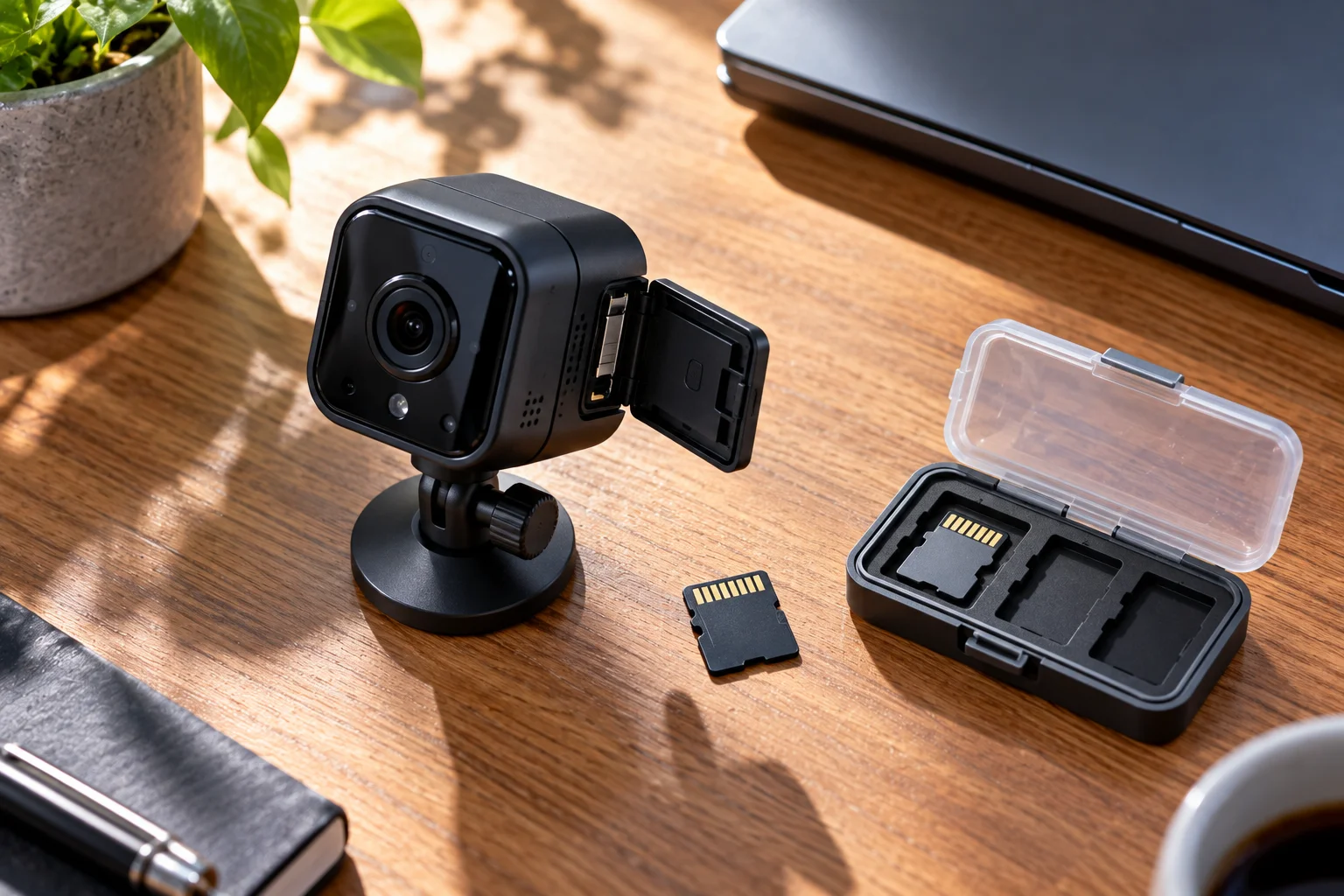
Most compact security cameras use either local memory, a microSD card or cloud storage.
A local-storage camera saves footage directly to the device or removable memory card.
For example, TP-Link's Tapo cameras support microSD storage alongside cloud recording, with some models supporting cards up to 512GB.
Local storage has an important advantage: the camera can continue recording even when the internet connection disappears, provided the camera itself remains powered and is configured for local recording. Xiaomi documents this behavior for cameras using memory-card recording.
Cloud recording works differently because the video has to travel through a network connection to a remote server.
How Much Video Can a microSD Card Store?
Storage capacity depends on resolution, frame rate, compression and whether the camera records continuously or only when motion is detected.
A higher-resolution camera produces larger files.
For example:
Recording style | Storage demand |
|---|---|
Lower resolution | Lower |
Higher resolution | Higher |
Higher frame rate | Higher |
Higher bitrate | Higher |
Continuous recording | Highest |
Motion-triggered recording | Lower |
A camera that records only when movement is detected can preserve storage for much longer than one recording continuously.
Some security cameras also use loop recording, automatically replacing older footage when the storage becomes full.
That means the available storage isn't necessarily a permanent archive. It's often a rolling buffer.
How Does Motion Detection Work?
Motion detection allows a camera to record only when its system determines that activity has occurred.
The simplest systems compare changes between consecutive frames.
More advanced cameras can use computer vision to distinguish people, vehicles or other objects from general movement.
This matters for battery-powered cameras because recording continuously consumes considerably more energy.
TP-Link explicitly notes that its battery-powered Tapo C410 is not designed for continuous recording and instead records motion clips when activity is detected.
Motion recording can therefore extend battery life and reduce storage requirements, although it may not capture everything that happens between trigger events.
Do Hidden Cameras Need Wi-Fi to Record?
No, Wi-Fi isn't necessarily required for local recording.
A camera equipped with local storage can often save footage without an internet connection as long as it has power and its recording system is functioning.
Xiaomi's documentation provides a useful example: a camera with a microSD card can continue recording when Wi-Fi is disconnected as long as the camera remains powered.
Wi-Fi becomes important for features such as:
Remote live viewing
Cloud recording
Remote notifications
App-based playback
Remote configuration
Software updates
So Wi-Fi and recording are separate functions.
A camera can record locally without being continuously connected to the internet.
What Happens When a Wi-Fi Camera Loses Internet?
A Wi-Fi camera may continue recording locally even though remote viewing and cloud features stop working.
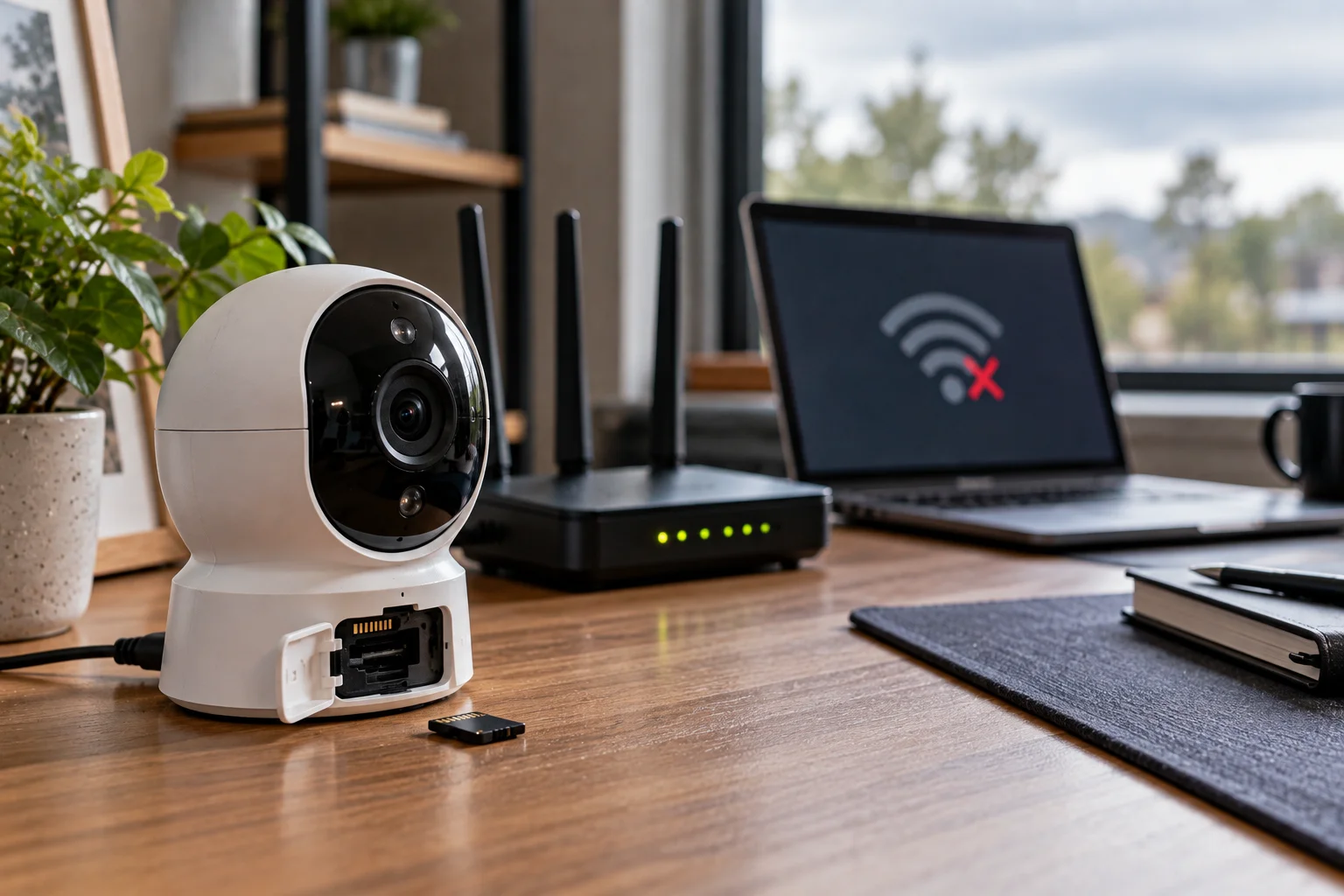
If footage is being saved to a microSD card, the camera can continue writing video to that card.
If the camera relies exclusively on cloud storage, however, an internet outage can prevent footage from reaching the cloud.
Xiaomi specifically distinguishes these two recording methods and notes that cloud recording requires network connectivity, while local memory-card recording can continue without Wi-Fi when the camera remains powered.
This distinction is important when evaluating any network-connected camera.
How Are Battery-Powered Cameras Different?
Battery-powered cameras trade continuous recording capability for easier installation and lower dependence on a permanent power connection.
A rechargeable battery supplies power to the camera's sensor, processor, wireless connection and other components.
Continuous video recording can drain that battery relatively quickly, which is why many battery-operated security cameras rely on motion-triggered recording instead.
TP-Link's current C410 documentation specifically states that its battery-powered design isn't intended for continuous recording.
Battery life depends on factors such as:
Recording frequency
Number of motion events
Wi-Fi activity
Video resolution
Night vision
Temperature
Battery capacity
A camera that records a few short clips each day can operate very differently from one constantly capturing video.
What About Cameras That Use a Constant Power Source?
A continuously powered camera can generally support longer recording sessions because it isn't limited by battery capacity.
Power can come from:
USB
A wall adapter
A dedicated power supply
A compatible rechargeable power system
Solar charging on some outdoor cameras
The advantage is predictable operation.
The disadvantage is that the camera remains dependent on its power source. If power is interrupted, recording stops unless the system has backup power.
For security applications, this is why some installations use backup power systems or battery backup.
Can a Camera Record at Night?
Yes, cameras designed for low-light recording can use infrared illumination or more sensitive imaging systems to capture scenes in darkness.
Many security cameras use infrared LEDs that emit light outside the visible spectrum.
A camera's sensor can detect that infrared illumination even though a person may not see it as normal visible light.
TP-Link's TC70, for example, uses an 850nm infrared LED system for night vision.
Night vision can affect power consumption because infrared illumination requires additional electrical power.
The resulting footage may also appear different from daytime video, often with reduced color information depending on the camera's night mode.
Can Hidden Cameras Stream Video Over Wi-Fi?
Yes, cameras with network connectivity can transmit live video to an authorized phone, computer or cloud service.
The basic path is:
Camera → Wi-Fi → Router/network → App or cloud service
This allows features such as live viewing and remote notifications.
However, streaming requires considerably more network activity than simply recording footage locally.
That's one reason a camera can continue recording to a memory card during an internet outage while its remote-viewing function becomes unavailable.
What Is the Difference Between Local and Cloud Storage?
Local storage keeps footage on the camera or its memory card, while cloud storage transfers it to a remote service.
Local storage
Advantages:
Works without continuous internet access
No recurring cloud-storage fee
Footage remains physically with the camera
Limitations:
Storage capacity is limited
The memory card can fail
Removing or damaging the camera can affect access to footage
Cloud storage
Advantages:
Remote access
Off-device backup
Easier sharing and notifications
Limitations:
Requires network connectivity
May require a subscription
Footage depends on the provider's service and account security
Some cameras support both approaches, allowing users to choose local storage, cloud storage or both.
How Long Can a Camera Record?
There isn't one universal recording time because it depends on storage capacity, battery capacity and recording mode.
A continuously powered camera with sufficient storage can record for extended periods.
A battery-powered camera may operate for much longer if it records only when motion is detected.
Storage also matters.
A 512GB card can hold substantially more footage than a 64GB card, but the exact duration depends on the camera's bitrate and recording settings. TP-Link's specifications illustrate why manufacturers often specify maximum memory-card capacities rather than promising one universal recording duration.
Can a Camera Record Audio Too?
Many compact cameras can record audio through an integrated microphone, but audio creates additional privacy and legal considerations.
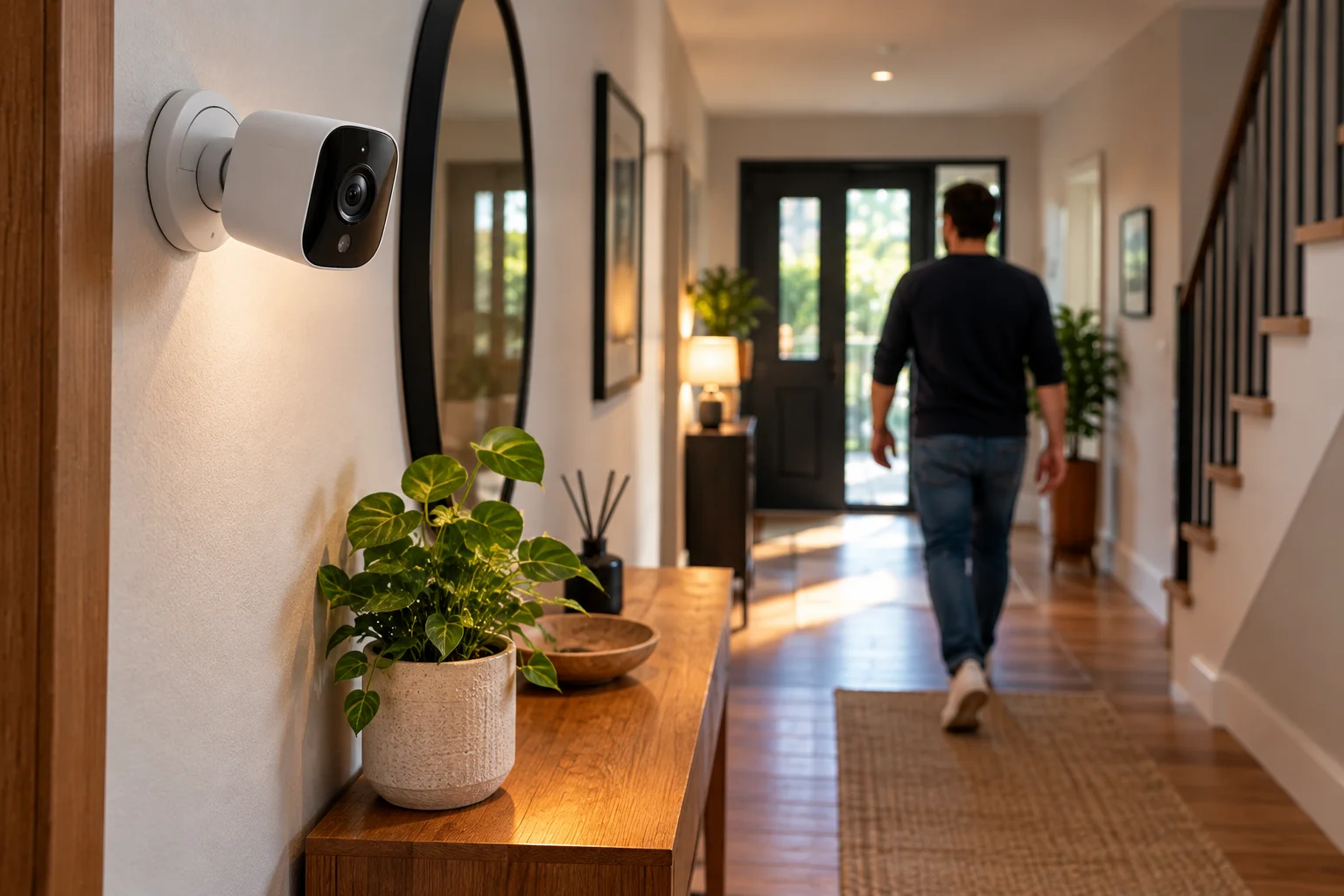
Video and audio aren't treated identically under U.S. law.
Federal law establishes rules governing interception of oral communications, while states can impose additional consent requirements. The Reporters Committee for Freedom of the Press notes that every U.S. state and the District of Columbia has laws addressing certain hidden-camera uses, and state recording laws can impose additional restrictions.
Federal law also specifically prohibits certain forms of non-consensual video voyeurism involving private areas where there is a reasonable expectation of privacy.
So a camera's ability to record audio shouldn't be treated as merely another technical specification.
Are Hidden Cameras Legal?
The legality depends heavily on where the camera is used, what it records, and whether people have a reasonable expectation of privacy.
For example, secretly recording someone in a bathroom or bedroom raises fundamentally different privacy issues from openly operating a security camera in a public-facing area.
In the United States, the legal framework includes federal and state laws, and state requirements can differ significantly. The Reporters Committee maintains a state-by-state guide because hidden-camera and recording laws vary by jurisdiction.
For legitimate security use, cameras should be deployed in accordance with applicable privacy, consent and surveillance laws.
What Happens When the Storage Fills Up?
Many security cameras use loop recording, which continuously replaces older footage with newer footage once storage reaches capacity.
This is useful for systems designed to maintain the most recent recordings rather than preserve everything indefinitely.
Some systems instead stop recording when the storage is full.
The behavior depends on the camera and its software, so this is a specification worth checking before relying on a camera for security evidence.
FAQs About Hidden Camera Recording
Can a hidden camera record without Wi-Fi?
Yes, if it has local storage and sufficient power. A microSD-equipped camera can continue recording locally even when Wi-Fi is unavailable, depending on the model.
Can a hidden camera record without a battery?
Yes. Some cameras are designed for continuous external power rather than battery operation.
Do battery-powered cameras record continuously?
Not always. Many battery-powered security cameras rely on motion-triggered recording because continuous recording uses considerably more energy.
How do cameras store hours of video?
They compress the video using codecs such as H.264 or H.265 and save the resulting files to local storage or a cloud service.
Can a camera record when the internet goes down?
A camera using local storage can often continue recording as long as it remains powered. Cloud-only recording generally requires an internet connection.
Do hidden cameras always record audio?
No. Some cameras have microphones, while others don't. If audio recording is available, privacy and consent laws may apply separately from video.
The Bottom Line
A hidden camera is essentially a compact digital video system built around the same basic components as other security cameras: an image sensor, lens, processor, storage and power source.
The biggest difference between models isn't necessarily how they create the video. It's where the footage goes and how the camera stays powered.
A camera can save video locally to a microSD card, upload it to cloud storage, or support both. It can run continuously from external power or conserve energy through motion-triggered recording when operating from a battery.
Wi-Fi adds remote access and cloud functionality, but it isn't automatically required for local recording.
And because these devices can be used for surveillance, the technical capabilities should always be considered alongside privacy and recording laws. A camera that is technically capable of recording something isn't necessarily legally permitted to do so.