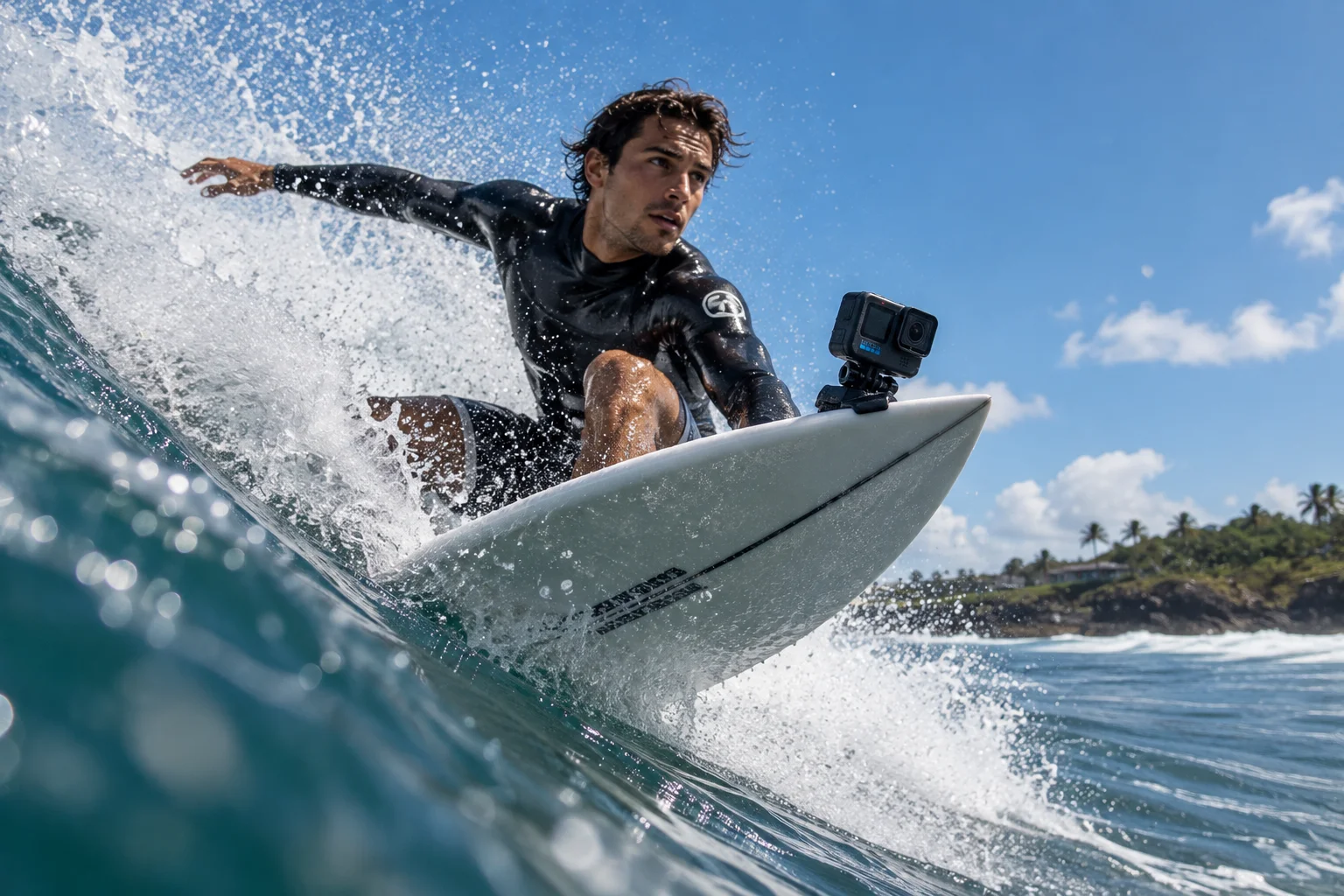
Buying a new GoPro in 2026 isn't as simple as looking at the newest resolution number.
Older GoPros can still produce excellent footage. A HERO10, HERO11 or HERO12 may already offer high-resolution video, strong stabilization, waterproofing and the familiar GoPro wide-angle look. If most of your footage is shot outdoors in daylight, the difference between generations can be smaller than the marketing suggests.
But the latest GoPro cameras have moved beyond incremental resolution upgrades.
GoPro's current lineup includes the HERO13 Black, which introduced interchangeable HB-Series lenses, a larger Enduro battery, 10-bit HLG HDR, Wi-Fi 6 and improved slow motion, while the newer MISSION 1 series moves into a different class with a 50MP 1-inch sensor, GP3 processor, 8K video and substantially stronger low-light ambitions.
So if you're upgrading from an older action camera, the important question isn't:
"How much more resolution do I get?"
It's:
"Which improvements will actually change the footage I shoot?"
Is Resolution the Most Important GoPro Upgrade?
Not necessarily. Resolution matters, but sensor size, processing, stabilization, frame rates and shooting conditions can have a bigger effect on the finished video.

A move from 4K to 5.3K can give you more room to crop and reframe.
But if you're filming at dusk, under trees or indoors, a larger sensor and better image processing can make a more visible difference than additional pixels.
GoPro's MISSION 1 PRO uses a 50MP 1-inch sensor and can record up to 8K60, 4K240 and 1080p960 in 16:9, while also supporting 8K30 and 4K120 Open Gate 4:3 recording.
That's a substantially different proposition from simply increasing the resolution of a conventional action-camera sensor.
For an older GoPro owner, therefore:
More pixels are useful. More usable pixels in difficult light can be more useful.
How Much Does a Larger Sensor Matter?
A larger sensor can improve low-light performance, dynamic range and image quality, although the actual result depends on the sensor, lens, processing and shooting conditions.
This is one of the most significant developments in GoPro's 2026 lineup.
The MISSION 1 series uses a 1-inch sensor, while GoPro says its new cameras deliver major improvements in low-light performance, image quality and thermal capability.
This matters because action cameras frequently encounter difficult lighting.
Think about:
Mountain biking under trees
Sunset surfing
Indoor climbing
Evening skiing
Night streets
Concerts
Camping
Vehicle interiors
An older action camera can produce increasingly noisy footage as light falls.
A newer large-sensor design can potentially give the image-processing system more useful information to work with.
If you mostly film at noon on a sunny day, the difference may be much smaller.
Is Low-Light Performance Worth Upgrading For?
Yes, if you regularly shoot outside bright daylight.
Action cameras have historically been strongest in good light.
Their small sensors and wide lenses make compact designs possible, but low-light scenes are challenging.
The newer MISSION 1 generation is explicitly designed around improved low-light performance, with GoPro describing the 1-inch sensor and GP3 processor as major parts of that improvement.
This makes low-light capability one of the more meaningful reasons to upgrade from an older action camera.

If your footage is almost exclusively:
Sunny beach + daytime cycling + skiing in bright conditions
you may not need the newest hardware.
If you regularly shoot:
Dusk + night + interiors + mixed lighting
the upgrade can be much easier to justify.
Does Stabilization Make a Big Difference Between GoPro Generations?
Stabilization remains one of the most important features for action-camera footage, particularly when the camera is mounted to a helmet, bike, vehicle or body.
GoPro's HERO13 Black uses HyperSmooth 6.0, while GoPro continues to position electronic stabilization as a core part of its camera platform.
But stabilization isn't simply about having a newer version number.
You should look at:
How much cropping stabilization requires
Horizon leveling
Available stabilization at different resolutions
Whether stabilization works with specialized lenses
How well it handles high-frequency vibration
Whether you can stabilize later in software
This is particularly important for motorcycle and mountain-bike users.
A camera can have excellent stabilization in general movement and still struggle with certain vibration frequencies or mounting positions.
What Does Open Gate Video Change?
Open Gate recording uses more of the camera's sensor area, giving you additional flexibility to create both horizontal and vertical versions from the same recording.
This can be particularly useful for creators who publish across:
YouTube
Instagram
TikTok
Shorts
Traditional widescreen video
GoPro's MISSION 1 PRO supports 8K30 and 4K120 Open Gate 4:3 video.
The advantage isn't necessarily that the final video needs to be 8K.
It's that you can capture a taller frame and decide later how to crop it.
For creators producing multiple aspect ratios, that flexibility can be more valuable than simply recording at a higher conventional resolution.
Are Higher Frame Rates Actually Useful?
Yes, but only if you use slow motion or need to capture very fast movement.
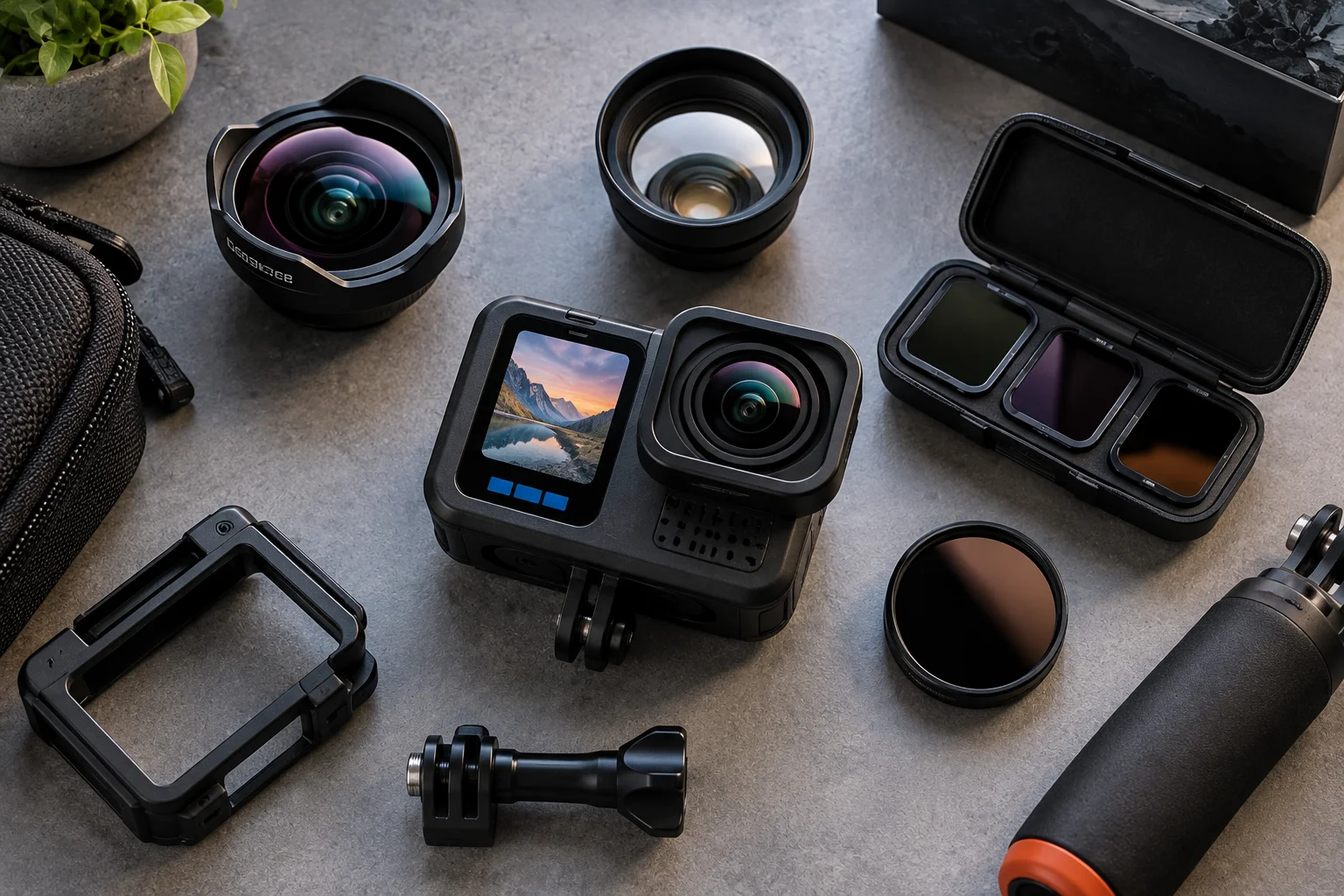
The HERO13 Black can record:
5.3K60
4K120
2.7K120
1080p240
It also introduced Burst Slo-Mo modes reaching 400fps at 720p for short bursts.
The MISSION 1 PRO goes substantially further, reaching 4K240 and 1080p960 in 16:9.
But don't assume higher frame rates automatically produce better-looking footage.
High-frame-rate recording often involves compromises involving:
Resolution
Light requirements
Recording duration
Processing
Storage
Battery consumption
If you rarely slow footage down, 240fps may have little practical value.
If you film:
Mountain biking jumps, surfing, skateboarding, motorsports or sports technique
high frame rates can become genuinely useful.
Does Battery Life Improve Enough to Justify an Upgrade?
Battery improvements can be important for action-camera users because high-resolution and high-frame-rate recording are demanding workloads.
The HERO13 Black introduced a redesigned 1,900mAh Enduro battery, compared with the previous 1,720mAh battery, along with improved efficiency. GoPro rates it for more than 2.5 hours of continuous 1080p30 recording and more than 1.5 hours at 4K30 or 5.3K30 under its specified conditions.
The newer MISSION 1 cameras are designed around the GP3 processor and improved thermal and power efficiency, with GoPro specifically highlighting category-leading runtimes.
This is important because battery life isn't just about capacity.
A more efficient processor can potentially provide:
More recording time without simply making the camera much larger.
For long outdoor sessions, that can be more valuable than another resolution increase.
Why Does Thermal Performance Matter?
A camera that can sustain high-performance recording without overheating is more useful than one that only reaches its headline specification for a short period.
Small action cameras have a difficult thermal problem.
They combine:
High-resolution sensors
Powerful processors
Fast memory
Stabilization
Video encoding
Small enclosures
There's very little room to move heat away from the electronics.
GoPro specifically highlighted improved thermal performance as one of the goals of its GP3-powered 2026 generation.
This matters most if you shoot:
Long continuous clips
8K
4K high-frame-rate footage
Timelapses
Long stationary recordings
Hot-weather footage
For short clips, thermal improvements may not be noticeable.
Are Interchangeable Lenses a Real Upgrade?
Yes, if you want to change the camera's field of view or shoot more specialized footage.
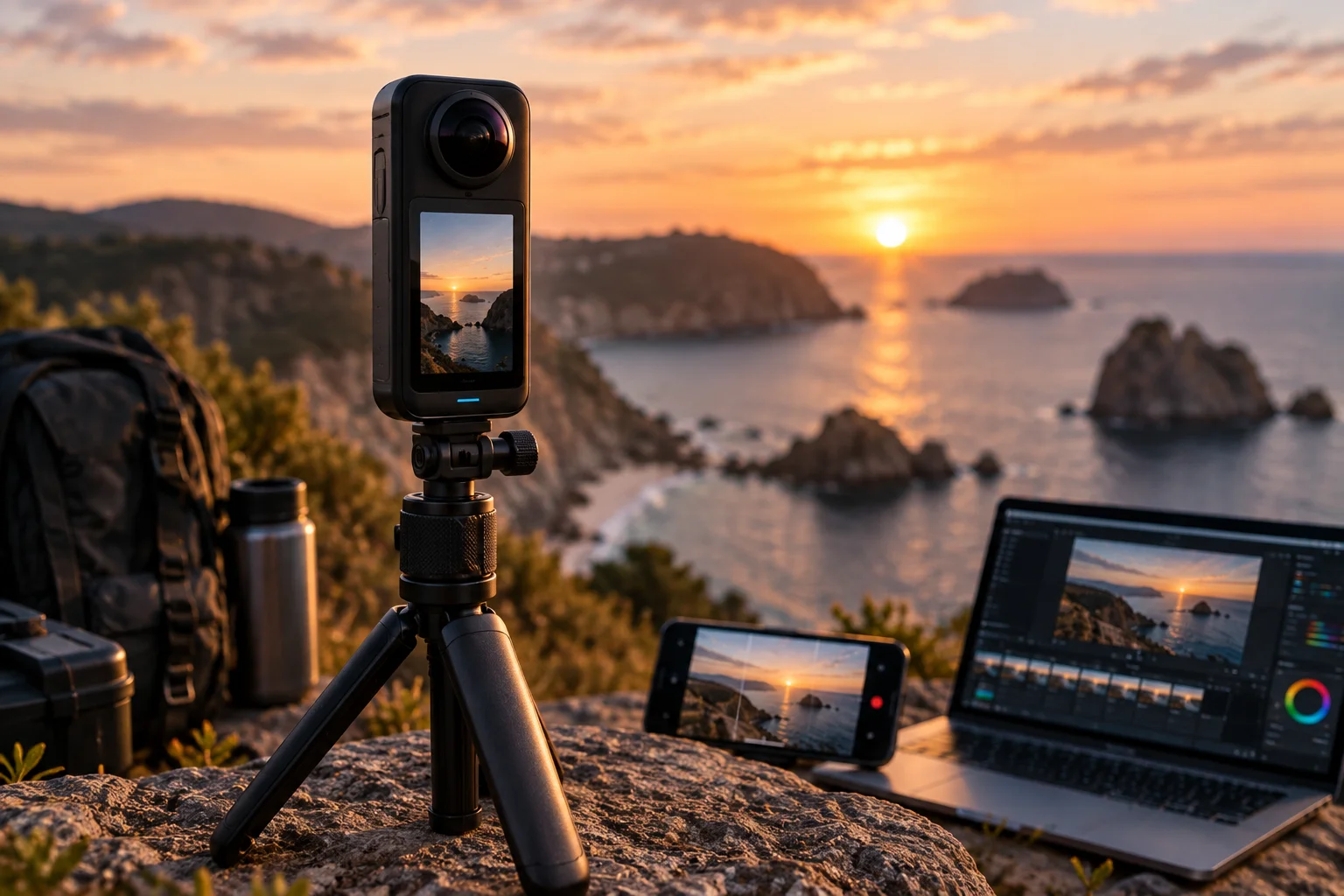
The HERO13 Black introduced GoPro's HB-Series lenses, including:
Ultra Wide Lens Mod
Macro Lens Mod
Anamorphic Lens Mod
ND filter system
The camera automatically detects compatible lenses and adjusts settings accordingly.
The Ultra Wide Lens Mod can provide a 177-degree field of view, while the Macro Lens Mod allows much closer focusing than the standard camera.
This changes the concept of an action camera.
Instead of:
One camera → one visual style
you can have:
One camera → multiple optical setups
For ordinary action footage, you may never need them.
For creators, filmmakers and people who want more control over perspective, they're much more significant.
Does 10-Bit HDR Actually Matter?
10-bit recording can provide more color information and greater flexibility when grading footage, while HDR can improve the range of tones captured in suitable scenes.
The HERO13 Black introduced 10-bit HLG HDR recording. GoPro describes it as broadcast-standard HLG HDR using Rec. 2100 and a wider color gamut.
This isn't necessarily something you'll notice immediately on every phone or TV.
Its value becomes clearer when:
You color-grade footage
You shoot high-contrast scenes
You want more post-production flexibility
You deliver HDR content
You mix action-camera footage with professional cameras
For casual social-media clips, it's less important.
Does Wi-Fi 6 Make a GoPro Upgrade Worth It?
Faster wireless transfers are convenient, but they aren't usually a reason by themselves to replace an otherwise capable action camera.
GoPro says HERO13 Black's Wi-Fi 6 connection provides transfers up to 40% faster than its previous generation under its testing conditions.
That can save time when you're moving large files.
But if you normally:
Remove microSD card → copy to computer
then wireless transfer speed may barely matter.
It's a quality-of-life improvement rather than a fundamental imaging upgrade.
Does GPS Matter When Upgrading?
GPS matters if you use speed, route, altitude or other performance data in your videos.
HERO13 Black restored GPS and supports performance stickers that can display information such as:
Speed
Route
Altitude
Terrain
G-force
GoPro also supports geotagging through compatible third-party media-management workflows.
For a travel vlogger, GPS may be irrelevant.
For cycling, skiing, motorsports or adventure sports, it can become a major reason to choose a particular camera.
How Much Better Is the 2026 GoPro Experience for Creators?
The biggest improvement is flexibility: newer cameras can give creators more control over sensor output, aspect ratios, lenses, frame rates and post-production.
Older GoPros were often designed around a simple philosophy:
Mount → record → stabilize → edit
That remains a major strength.
But newer cameras increasingly allow:
Capture → choose lens → choose aspect ratio → capture more sensor area → crop → grade → deliver to multiple platforms
The MISSION 1 PRO's combination of a 1-inch sensor, 8K, Open Gate, high frame rates and GP3 processing is a clear example of GoPro moving further toward creator-oriented imaging rather than purely rugged action capture.
Should You Upgrade From a HERO10, HERO11 or HERO12?
The answer depends heavily on what you shoot, because newer features have different value depending on your workflow.
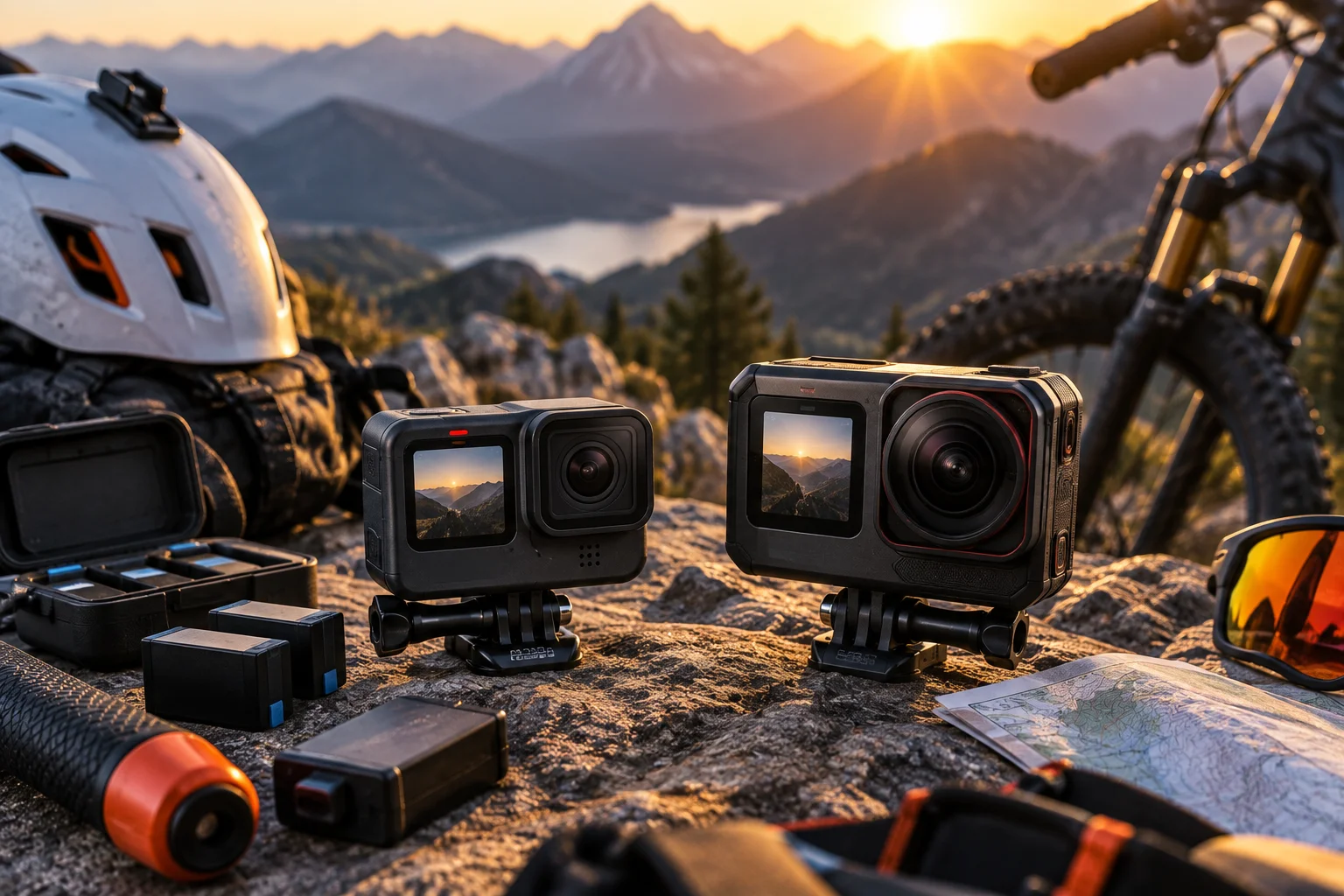
From HERO10
An upgrade can make sense if you want:
Better stabilization
Newer battery options
10-bit/HDR workflows
Improved lens flexibility
Better connectivity
Newer processing
More advanced slow motion
From HERO11
The upgrade is less obvious for basic daytime action footage.
The HERO11 already brought a tall 8:7 sensor format and high-resolution capture.
The stronger reasons to move are:
Lens Mods + battery improvements + HDR + newer processing + specialized shooting.
From HERO12
The case is even more specific.
The HERO12 is already a highly capable action camera.
Moving to HERO13 makes more sense if you want:
HB-Series lenses
GPS
10-bit HLG HDR
Faster Wi-Fi 6
New battery system
Burst Slo-Mo
Moving to the newer MISSION 1 generation is a much larger imaging upgrade because you're moving into the 1-inch sensor + GP3 + 8K/Open Gate class.
Which GoPro Features Actually Matter Most in 2026?
For most people, prioritize image quality in your actual shooting conditions, stabilization, battery life and thermal performance before chasing maximum resolution.
A practical priority list looks like this:
Feature | How much it matters | Best for |
|---|---|---|
Sensor size | Very high | Low light, image quality |
Stabilization | Very high | Action, cycling, motorsports |
Battery life | Very high | Long shoots |
Thermal performance | High | Long high-resolution recording |
Lens flexibility | High | Creators, specialized shots |
Frame rates | High | Slow motion |
Open Gate | High | Multi-platform creators |
HDR/10-bit | Medium-high | Grading, HDR workflows |
GPS | Medium-high | Sports and adventure |
Wi-Fi 6 | Medium | Faster transfers |
Maximum resolution | Medium-high | Cropping, large-format delivery |
RGB/display extras | Low | Convenience |
The exact priorities will obviously change depending on how you shoot.
Is the Newest GoPro Worth It for Casual Users?
Not necessarily.
If your existing action camera already gives you:
Good daylight footage
Reliable stabilization
Adequate battery life
The resolution you need
Waterproofing
The mounts you already own
there may be little reason to replace it simply because a newer model exists.
A new camera becomes easier to justify when your current one has a specific limitation.
For example:
"My footage gets noisy at sunset."
Look at the larger-sensor MISSION 1 generation.
"My battery dies during long rides."
Look at newer battery and power options.
"I need vertical and horizontal versions from one shot."
Look at tall-sensor/Open Gate capabilities.
"I want slow-motion sports footage."
Look at the high-frame-rate options.
That is a much better upgrade strategy than simply buying the newest camera.
Frequently Asked Questions About Upgrading to a GoPro in 2026
Is GoPro still worth upgrading to in 2026?
Yes, particularly if your older action camera is limiting you through low-light performance, battery life, thermal performance, stabilization or shooting flexibility. The size of the improvement depends on which generation you currently own.
Is the GoPro HERO13 still relevant in 2026?
Yes. GoPro still lists HERO13 Black in its current action-camera lineup, alongside the newer MISSION 1 series. It remains a capable 5.3K60 action camera with HyperSmooth 6.0, HB-Series lens support and the larger Enduro battery.
What is the biggest upgrade from an older GoPro?
For many users, the most meaningful improvements are stabilization, battery life, thermal performance and image quality in difficult lighting. The biggest jump can come from moving to a newer sensor architecture rather than simply gaining more resolution.
Does a 1-inch sensor make a GoPro better in low light?
A larger sensor can provide advantages for light gathering and image quality, and GoPro specifically positions the MISSION 1's 1-inch sensor as part of its low-light improvement. Actual results still depend on the lens, processing and shooting conditions.
Is 8K necessary on an action camera?
No. 8K can provide more cropping flexibility and support large-format workflows, but many users will be well served by 4K or 5.3K. Frame rate, stabilization, lighting and lens choice can matter more.
Are GoPro lens mods worth buying?
They can be if you need specialized perspectives. HERO13's HB-Series includes ultra-wide, macro, anamorphic and ND options, but casual users may never need them.
Is GoPro HERO13 better than HERO12?
HERO13 adds several meaningful features, including HB-Series lenses, GPS, 10-bit HLG HDR, Wi-Fi 6, magnetic mounting and a redesigned 1,900mAh Enduro battery. Whether those justify upgrading depends on your shooting needs.
Should I upgrade from HERO12 to MISSION 1?
The MISSION 1 generation represents a more substantial imaging change because it moves to a 50MP 1-inch sensor and GP3 processor, with the MISSION 1 PRO adding 8K and high-frame-rate capabilities. For ordinary daytime action footage, however, the difference may not justify the cost.
The Bottom Line
The best reason to upgrade a GoPro in 2026 isn't the model number. It's a specific limitation in the camera you already own.
If your older GoPro already produces footage you're happy with in good light, another few thousand pixels won't necessarily transform your videos.
But if you're running into problems with low light, overheating, battery life, stabilization, slow motion, framing flexibility or post-production, newer GoPro hardware can make a meaningful difference.
The HERO13 Black is still an important step because it added a larger battery, HB-Series lenses, 10-bit HLG HDR, GPS, Wi-Fi 6 and new slow-motion capabilities.
The newer MISSION 1 generation changes the equation further with its 1-inch 50MP sensor, GP3 processor, 8K capture, Open Gate recording and improved low-light and thermal performance.
So before upgrading, ask one simple question:
What can't my current action camera do that I actually need?
If the answer is nothing, keep shooting.
If the answer is low light, long recording, specialized lenses, serious slow motion or better creator flexibility, that's where the 2026 generation starts making a much stronger case.