You don't automatically need a traditional drone “pilot license” just because you own a drone. The requirement depends on where you fly, what you're doing with the drone, and sometimes the drone's weight and class.
In the U.S., recreational flyers can generally fly under the FAA's limited recreational exception without obtaining a Remote Pilot Certificate, but they still have registration and operating requirements. If you fly under Part 107, which covers most non-recreational operations, you need an FAA Remote Pilot Certificate.
The UK uses a different system. Most people flying drones outdoors that weigh 100g or more need a Flyer ID, while an Operator ID is also required for drones weighing 250g or more and for camera-equipped drones weighing 100g or more.
So before you take off, don't just ask, “Do I need a license?” Ask which rules apply to my type of flight?
Do You Need a Drone License in the U.S.?
For recreational flying, you generally don't need an FAA Remote Pilot Certificate, but you still have to follow FAA rules.
The FAA provides a limited statutory exception for recreational flyers. To use it, you must fly only for recreational purposes, follow a community-based organization's safety guidelines, keep the drone within visual line of sight, give way to manned aircraft and obtain authorization when required to operate in controlled airspace. The drone must also weigh no more than 55 pounds unless an applicable exception applies.
However, recreational flying isn't simply “license-free.”
Depending on your drone, you may still need to:
Register the drone
Comply with Remote ID
Follow airspace restrictions
Maintain visual line of sight
Give way to aircraft
Follow applicable altitude and operating rules
The FAA's current registration guidance says drones must generally be registered, with an exception for drones weighing 0.55 pounds (250g) or less when flown under the recreational exception.
When Do You Need an FAA Part 107 License?
You need an FAA Remote Pilot Certificate when operating under Part 107.
Part 107 covers small unmanned aircraft operations that don't qualify for the recreational exception, including many commercial and business uses.
For example, if you're using a drone to provide aerial photography for a real-estate company, that isn't simply recreational flying. The operation generally falls under the FAA's Part 107 framework.
To become a Part 107 remote pilot, the FAA requires first-time applicants to be at least 16 years old and pass the initial aeronautical knowledge examination, subject to the applicable requirements. Certificate holders must also complete recurrent online training every 24 calendar months to maintain aeronautical knowledge recency.
The FAA calls this credential a Remote Pilot Certificate, rather than simply a “drone license.”
Do You Need to Register a Drone in the U.S.?
Most drones that require registration must be registered with the FAA before you fly them.
The current FAA threshold is based partly on weight and how you're operating the aircraft.
A recreational drone weighing 250g or less can qualify for the registration exception when flown under the limited recreational exception. Heavier recreational drones generally need registration. Drones operated under Part 107 must be registered individually.
FAA registration currently costs $5, and the registration period is three years.
Registration isn't the same thing as a pilot certificate.
Think of it this way:
Registration = identifies the aircraft
Remote Pilot Certificate = qualifies the pilot for Part 107 operations
You may need one, both, or neither depending on the circumstances.
What Is Remote ID in the U.S.?
Remote ID is a system that broadcasts identification and location information from applicable drones while they're flying.
The FAA describes Remote ID as a way for other parties, including authorities, to receive information about a drone in flight. It applies to drones that are required to be registered or are registered, including recreational and business drones.
A drone can comply through Standard Remote ID or, where permitted, a Remote ID broadcast module.
This is separate from your pilot certificate and separate from drone registration.
What Are the Basic U.S. Flight Rules?
Having the correct registration or certificate doesn't automatically give you permission to fly anywhere.
Under Part 107, for example, the FAA currently requires pilots to avoid manned aircraft, generally keep the drone within visual line of sight and avoid careless or reckless operation. Part 107 also includes restrictions involving people, altitude, speed, weather visibility and other operating conditions.
For recreational flyers, the FAA's limited recreational exception also requires visual line of sight, giving way to manned aircraft and airspace authorization where applicable.
This means checking the airspace around your intended launch location is an important part of planning a flight.
Do You Need a Drone License in the UK?
The UK uses Flyer ID and Operator ID requirements rather than simply asking whether you have a “drone license.”
The CAA requires a Flyer ID for most drones and model aircraft weighing 100g or more. An Operator ID is required when the aircraft weighs 250g or more, or when a camera-equipped aircraft weighs 100g or more.
The two IDs serve different purposes.
Flyer ID: demonstrates that the person flying has passed the required basic theory test.
Operator ID: identifies the person or organization responsible for the drone.
The operator must label applicable drones with the Operator ID.
What Are the UK Drone Rules for Small Drones?
Weight and camera equipment can determine which IDs you need.
The CAA's current requirements include:
Drone | Flyer ID | Operator ID |
|---|---|---|
Under 100g | Not required | Optional |
100g–under 250g, no camera | Required | Optional |
100g–under 250g, with camera | Required | Required |
250g–under 25kg | Required | Required |
Even when an ID isn't required, the CAA's Drone Code still applies to the flight.
This is an important difference from simply assuming that a drone under 250g is exempt from all UK requirements.
For example, a lightweight camera drone weighing between 100g and 250g still requires both a Flyer ID and Operator ID under the current rules.
What Is the UK Flyer ID?
A Flyer ID shows that you've passed the CAA's basic competency theory test.
The test is intended to make sure recreational drone pilots understand the basic rules and safety requirements before flying.
The CAA says a Flyer ID is required for drones or model aircraft weighing 100g or more, subject to the applicable category and rules.
It's therefore closer to a basic competency requirement than a professional pilot license.
For more advanced operations, additional qualifications or CAA authorization may be required.
What Is the UK Operator ID?
The Operator ID identifies who is legally responsible for the drone.
The operator is responsible for matters such as maintaining the aircraft and ensuring that anyone flying it has the appropriate level of competence.
The CAA requires the operator to be at least 18 years old. If a person under 18 owns a drone that requires an Operator ID, a parent or guardian must register as the operator.
The Operator ID must also be displayed on applicable drones.
Unlike the Flyer ID, the Operator ID belongs to the responsible operator rather than the individual simply flying the aircraft.
Do UK Drone Owners Need Remote ID?
Some UK drones now have Remote ID requirements.
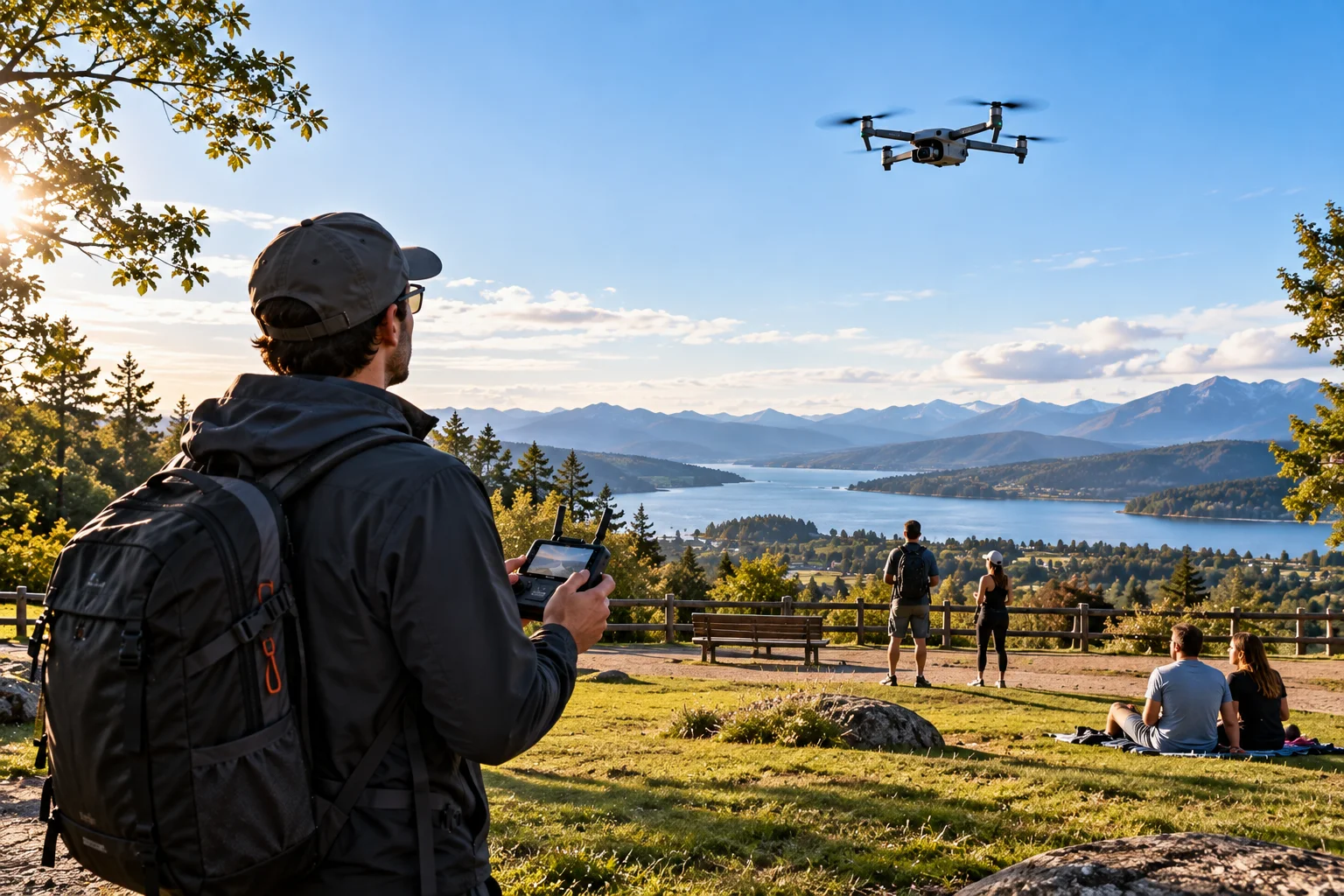
The CAA states that from 1 January 2026, UK1, UK2 and UK3 class drones must have Remote ID switched on before flight. The system transmits the identity and location of the drone while it is airborne.
This is part of the UK's newer class-mark and identification framework.
If you bought an older drone without a UK class mark, don't automatically assume that it is illegal to fly. The CAA says older models can continue to be flown under the applicable rules based on their weight and circumstances.
Can You Fly a Drone Near People in the UK?
The permitted distance from people depends on the drone's class, weight and operating category.
The UK Open Category is divided into A1, A2 and A3 subcategories.
For example, lighter aircraft can qualify for A1 operations closer to people, while A3 operations require significantly greater separation from uninvolved people and certain areas.
The CAA's current guidance also states that pilots wanting to operate in the A2 “Near People” subcategory need an A2 Certificate of Competence.
So owning a small drone doesn't mean you can simply fly it over crowds or close to strangers.
Can You Fly a Drone for Business in the UK?
Commercial use doesn't automatically mean you need a U.S.-style pilot license, but the operation still has to meet the applicable UK requirements.
The UK CAA categorizes drone operations as Open, Specific or Certified depending on their risk and complexity.
Low-risk operations can fall within the Open Category. More complex operations may require CAA authorization and additional competence requirements.
This is why saying “commercial drone flights are illegal without a license” would be an oversimplification of the UK system.
The exact requirements depend on what you're doing and how you're doing it.
U.S. vs UK Drone Rules at a Glance
Requirement | U.S. | UK |
|---|---|---|
Recreational pilot certificate | Generally no | Flyer ID required for most ≥100g drones |
Professional/business pilot credential | Part 107 Remote Pilot Certificate generally required | Depends on operation/category |
Drone registration | Generally required unless eligible for recreational ≤250g exception | Operator ID required for many drones |
Remote ID | Required for drones that must be registered/are registered | Required for UK1–UK3 from 2026 |
Weight matters | Yes | Yes |
Airspace restrictions | Yes | Yes |
Visual line of sight | Generally required under standard rules | Required under applicable Open Category rules |
Advanced operations | May require FAA waiver/authorization | May require CAA authorization |
The systems are structured differently, so a U.S. Remote Pilot Certificate isn't directly equivalent to a UK Flyer ID.
What Should You Do Before Flying a Drone?
Check the rules for your exact drone and intended flight before taking off.
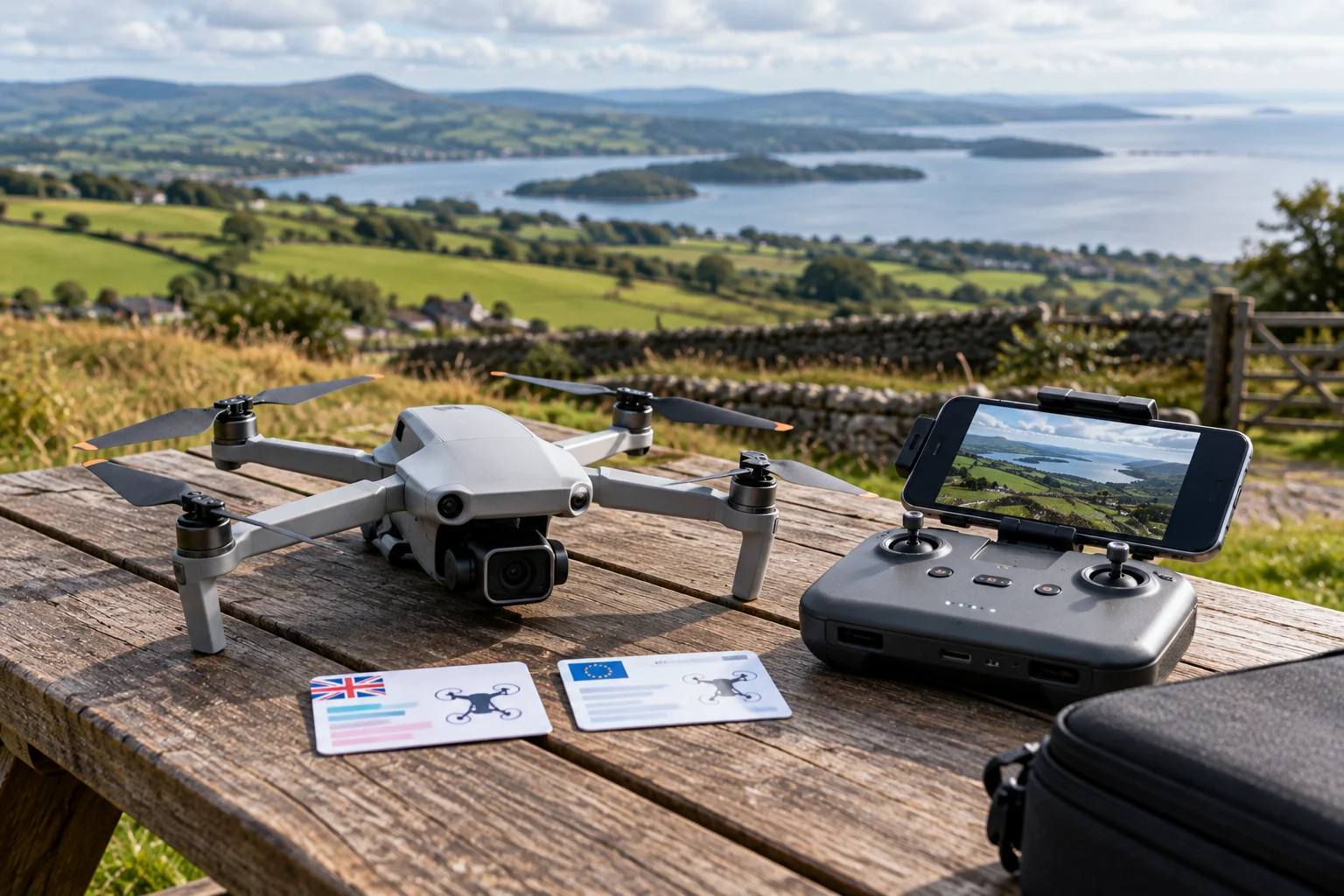
A sensible checklist is:
Check the drone's weight and class.
Determine whether you're flying recreationally or for another purpose.
Complete the required registration or competency process.
Check the airspace and local restrictions.
Understand the visual-line-of-sight requirements.
Check restrictions around people, buildings and crowds.
Understand your drone's Remote ID requirements.
Check weather and battery conditions.
Know your drone's return-to-home and failsafe behavior.
The rules can change, and local restrictions may apply in addition to national aviation rules.
FAQs About Drone Licenses in the U.S. and UK
Do I need a license to fly a drone recreationally in the U.S.?
Generally, no Remote Pilot Certificate is required when you qualify for the FAA's recreational exception. However, you still have to comply with the applicable recreational rules, registration requirements and airspace restrictions.
Do I need a license to fly a drone for business in the U.S.?
For most operations under Part 107, yes. You need an FAA Remote Pilot Certificate and must comply with Part 107 requirements.
Do I need a Flyer ID in the UK?
You generally need one to fly a drone or model aircraft weighing 100g or more, subject to the applicable rules and categories.
Is an Operator ID the same as a Flyer ID?
No. The Flyer ID relates to the competence of the person flying. The Operator ID identifies the person or organization responsible for the drone.
Can I fly a drone under 250g without registration?
In the U.S., a recreational drone weighing 250g or less can qualify for an FAA registration exception. In the UK, a 100g–under-250g drone with a camera requires an Operator ID and Flyer ID.
Do drone rules apply indoors?
The UK CAA states that you don't need a Flyer ID or Operator ID if you only fly indoors or within a closed netted area where the aircraft cannot escape. Other rules and locations can have their own requirements.
The Bottom Line
There isn't one universal “drone license.” The requirement depends on the country, the purpose of the flight, the aircraft and the type of operation.
In the U.S., recreational pilots can generally fly under the FAA's recreational exception without a Remote Pilot Certificate, while business and other Part 107 operations require a Remote Pilot Certificate. Registration and Remote ID requirements can apply separately.
In the UK, most drone pilots flying aircraft weighing 100g or more need a Flyer ID, and many drone owners also need an Operator ID. More advanced operations can require additional competency or CAA authorization.
The safest approach is to check the current aviation rules for the exact country, drone and flight you're planning, rather than assuming that a small or inexpensive drone is automatically exempt.