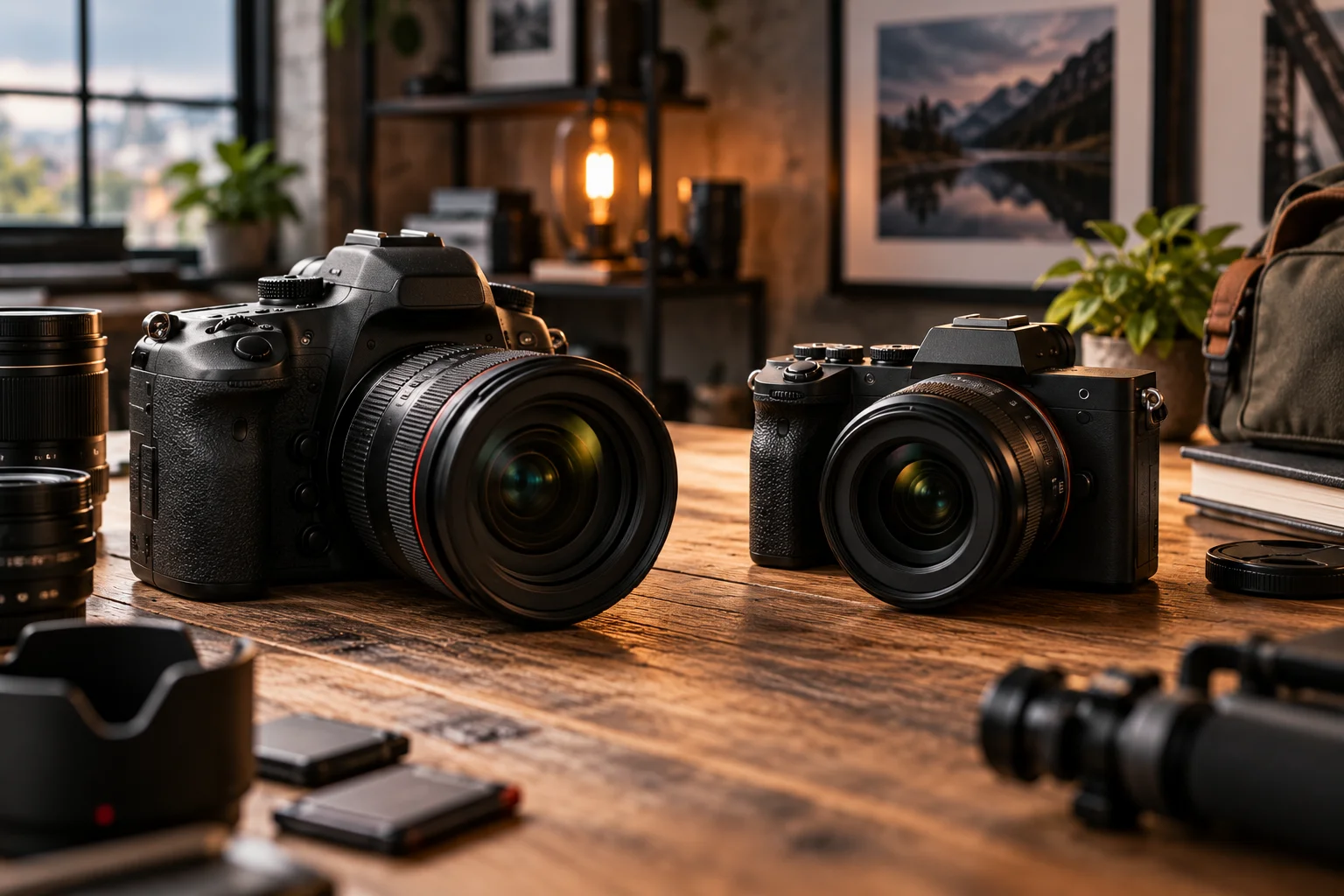
SLR cameras, particularly DSLRs, can still be worth buying in 2026, especially if you find a good used body and want excellent image quality, long battery life and access to an extensive library of affordable lenses. The bigger question is whether you're buying into an older system for its strengths or expecting it to offer the same technology as a modern mirrorless camera.
A DSLR uses a mirror and optical viewfinder to show you the scene through the camera's lens. A mirrorless camera removes that mirror mechanism and uses an electronic viewfinder or screen instead.
That difference sounds simple, but it affects autofocus, size, battery life, video, lens design and the way you see your exposure before taking a picture.
Modern mirrorless cameras have moved ahead in several areas. Their electronic viewfinders can preview exposure, autofocus systems can track subjects using sophisticated recognition algorithms, and newer lens designs can take advantage of the shorter distance between the mount and sensor.
But that doesn't make every DSLR obsolete.
For still photography, a good DSLR can still produce excellent images, and the second-hand market can make older professional cameras particularly interesting.
What Is an SLR Camera?
An SLR camera uses a mirror and optical viewing system to let you see through the lens before taking the photograph.

In a DSLR, light enters through the lens and hits a mirror. The mirror directs that light toward the optical viewfinder.
When you press the shutter, the mirror moves out of the way so light can reach the image sensor.
A mirrorless camera removes this mirror and optical path. Instead, its sensor provides the image for the electronic viewfinder or rear display.
This mechanical difference is responsible for many of the practical differences between the two systems.
What Do You Still Gain From Buying a DSLR?
A good DSLR still offers excellent image quality, physical controls, optical viewing and access to a mature lens ecosystem.
The biggest advantage isn't that DSLRs have suddenly become technologically superior. It's that many of their strengths remain useful even though the industry has shifted toward mirrorless.
Optical viewfinder
An optical viewfinder shows the scene directly through the lens rather than displaying an electronic representation.
There's no electronic preview to process, and the view feels natural and immediate.
For photographers who simply prefer looking through glass rather than at a small display, this remains a meaningful advantage.
Excellent battery life
DSLRs can have an advantage in battery life because optical viewfinder shooting doesn't require the camera to continuously power an electronic display.
Nikon notes that DSLRs generally retain a battery-life advantage, although improvements in mirrorless efficiency have reduced the difference.
For travel, outdoor photography or long shooting sessions, that can be useful.
Large lens selection
The DSLR era produced decades of lenses from Canon, Nikon, Pentax and other manufacturers.
That means the used market contains everything from inexpensive kit lenses to professional telephoto and fast-aperture glass.
Nikon, for example, points out that its DSLR system benefits from a lens collection developed over decades, while its FTZ II adapter allows many F-mount DSLR lenses to be used with Z-series mirrorless cameras.
Strong value on the used market
A DSLR that was expensive when new may be substantially cheaper second-hand.
That can make older full-frame cameras particularly attractive to photographers who care more about still-image quality than having the latest autofocus or video features.
What Do You Give Up Compared With a Modern Mirrorless Camera?
The biggest sacrifices are usually autofocus sophistication, electronic viewfinder features, video capabilities, body size and access to newer lens designs.

This is where the age of the camera starts to matter.
Autofocus
Modern mirrorless cameras can use the image sensor itself for sophisticated subject detection and tracking.
Depending on the model, the camera may recognize people, animals, vehicles and other subjects.
Nikon says newer Z-series cameras use advanced tracking algorithms and subject detection, while Canon describes its newer mirrorless autofocus systems as offering capabilities beyond traditional DSLR autofocus approaches.
Older DSLRs can still have excellent autofocus, particularly professional models.
But newer mirrorless systems have pushed subject recognition and continuous tracking much further.
Electronic viewfinder
An optical viewfinder shows you what the lens sees.
An electronic viewfinder can show you what the camera expects the final exposure to look like.
That means you can often see changes in brightness, white balance and other settings before pressing the shutter.
EVFs can also brighten the preview in low light, making composition easier when an optical viewfinder becomes difficult to see through. Canon specifically highlights this as an advantage of mirrorless EVFs.
For beginners, this can make manual exposure easier to understand.
Size and weight
DSLRs need room for the mirror, prism and associated mechanisms.
Mirrorless cameras don't.
That allows manufacturers to design smaller bodies and, in some cases, smaller overall camera systems.
Nikon specifically identifies the removal of the mirror and prism as a source of size and weight savings in its Z-series cameras.
The difference isn't always dramatic because professional mirrorless bodies and large lenses can still be substantial.
But the system-level advantage is real.
Video
Modern mirrorless cameras are generally the stronger choice if video is an important part of your work.
Newer models can offer advanced autofocus during video, high-resolution recording, image stabilization and sophisticated video codecs.
Canon's current camera lineup, for example, highlights features such as 8K, 4K and in-body stabilization across its mirrorless range.
Some late-generation DSLRs have surprisingly capable video features, but they aren't where most manufacturers are putting their newest development effort.
Are DSLR Photos Still as Good as Mirrorless Photos?
Yes. A DSLR doesn't automatically produce worse photographs simply because it's an older camera design.
Image quality depends on the sensor, lens, exposure, lighting and image processing.
A high-quality full-frame DSLR can still produce excellent files.
The difference becomes more noticeable when you compare the entire shooting experience rather than just the final image.
A modern mirrorless camera may make it easier to achieve that image because its autofocus, stabilization, exposure preview and subject detection can reduce the amount of manual work required.
That doesn't mean the DSLR photograph is inherently inferior.
It means the newer camera may give the photographer more assistance.
Are DSLR Lenses Still Worth Buying?
Yes, particularly if you're buying them at attractive used prices or already own compatible DSLR equipment.
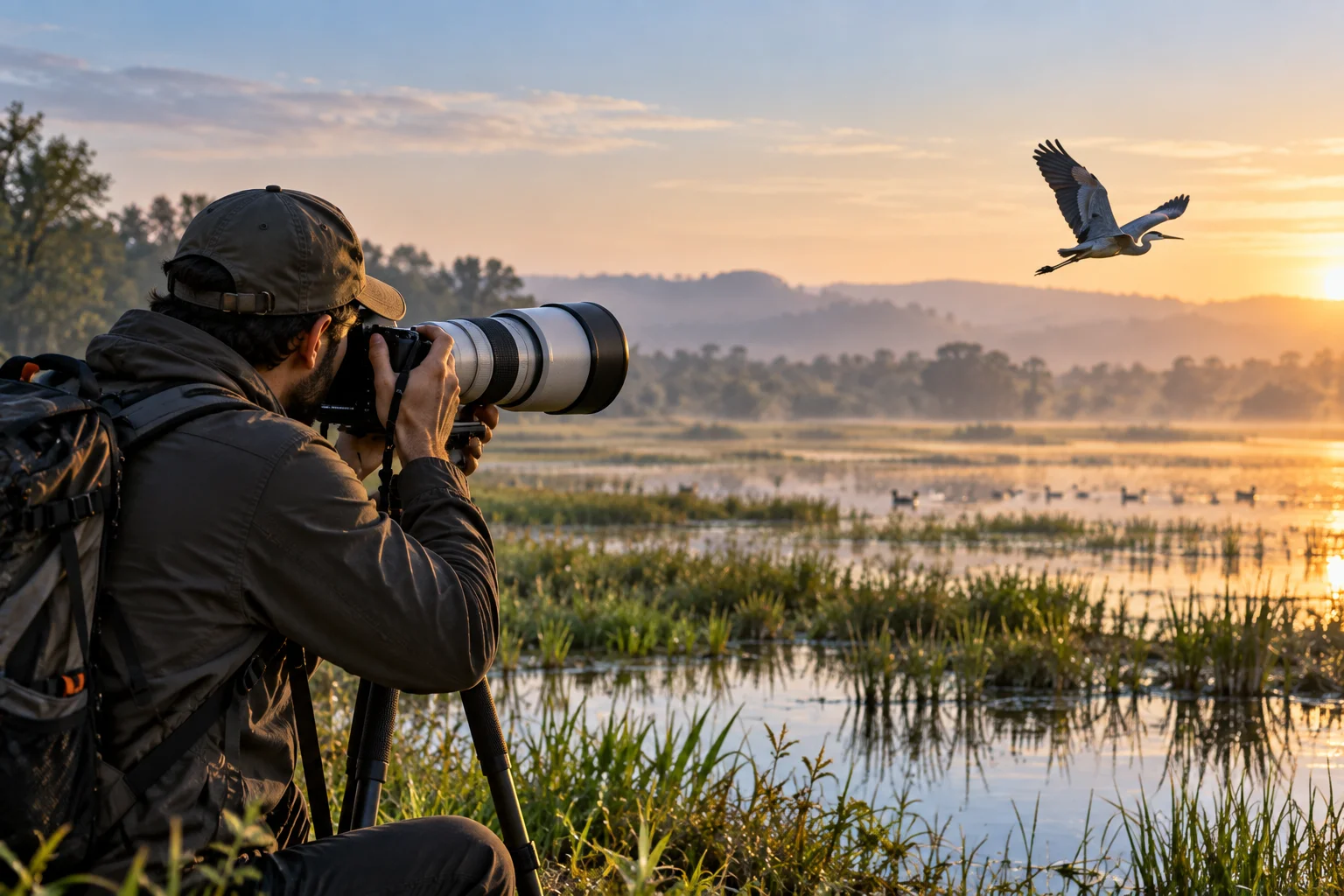
The lens can remain valuable even when the camera body becomes outdated.
However, buying an entire DSLR system from scratch requires more thought.
Modern mirrorless mounts have allowed manufacturers to design newer lenses around shorter flange distances and larger mounts. Canon, for example, says its RF system can enable optical improvements compared with older EF designs.
If you already own several good DSLR lenses, staying with that system can make financial sense.
If you're starting from zero, the newer mirrorless mount may provide a longer runway for future upgrades.
What About Reliability and Mechanical Wear?
A used DSLR can be extremely reliable, but its age and shutter count matter more than they do when buying a new camera.
A DSLR contains mechanical components, including a mirror mechanism and mechanical shutter.
When buying used, check:
Shutter count
Sensor condition
Viewfinder condition
Autofocus accuracy
Memory-card slots
Battery condition
Lens-mount wear
Physical damage
Availability of replacement batteries
Manufacturer service support
This is particularly important because manufacturers eventually stop servicing older models.
Canon's published service information, for example, shows planned end-of-service dates for various older EOS DSLR models.
That doesn't mean a camera suddenly stops working. It means repairs and replacement parts can become harder to obtain.
Who Should Still Buy an SLR Camera?
A DSLR can make sense for photographers who prioritize still photography, value optical viewfinders or want inexpensive access to a mature lens system.
It can be a particularly interesting option if you're buying used.
Consider a DSLR if you:
Mainly shoot still photographs
Prefer an optical viewfinder
Already own compatible lenses
Want strong battery life
Don't need advanced subject recognition
Don't prioritize cutting-edge video
Find a good used full-frame body at a reasonable price
A DSLR can also be an excellent learning tool because its physical controls encourage you to understand shutter speed, aperture, ISO and focusing rather than relying entirely on automation.
Who Should Buy a Modern Mirrorless Camera?
A modern mirrorless camera makes more sense if you want the newest autofocus, electronic viewfinder features, video capabilities and lens designs.
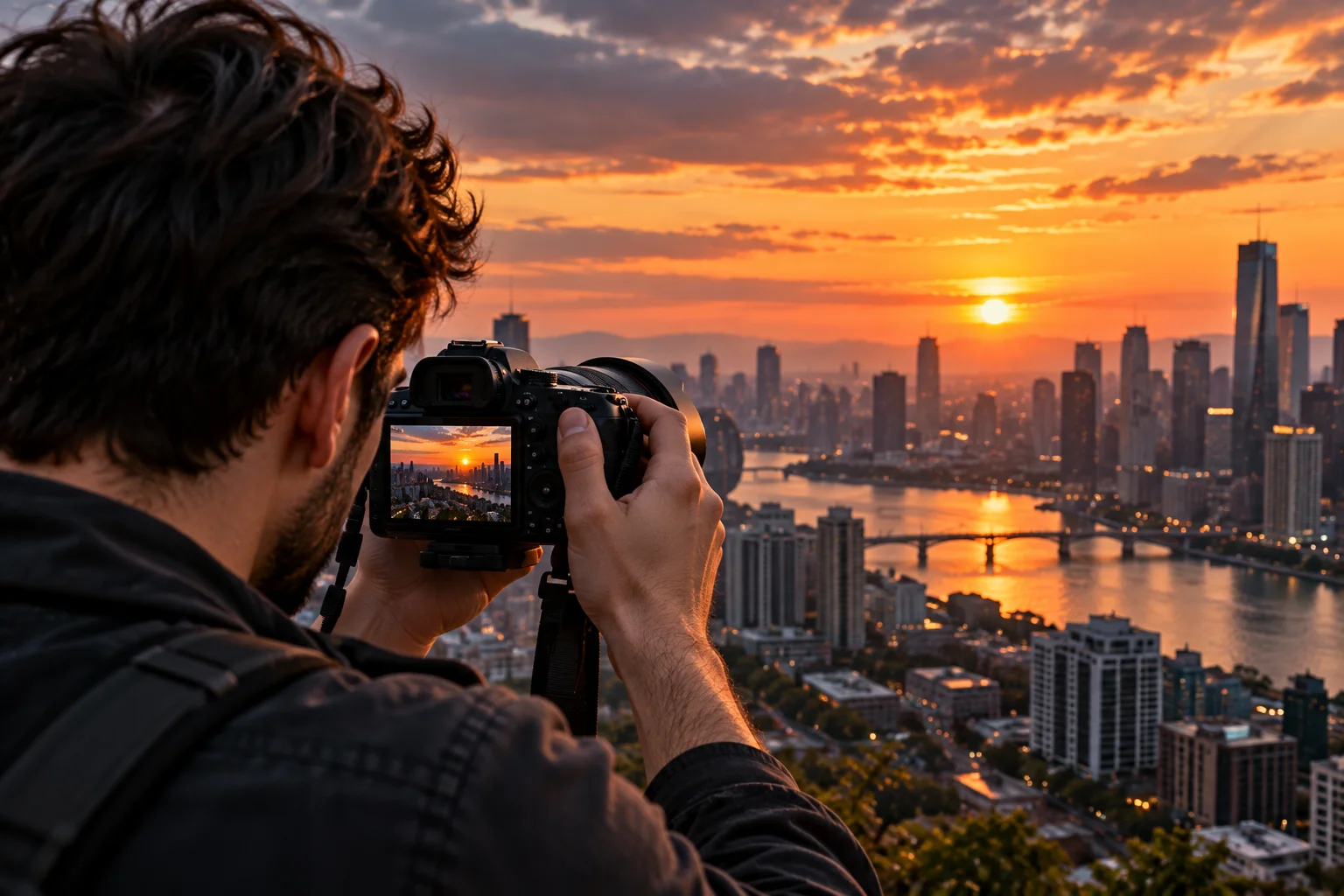
It's particularly worth considering if you:
Shoot moving subjects
Photograph wildlife or sports
Record video regularly
Want subject-detection autofocus
Want exposure preview through the viewfinder
Want a lighter system
Are building a new lens collection
Expect to upgrade your camera body in the future
Modern mirrorless systems are also where Canon, Nikon and other manufacturers are concentrating much of their current interchangeable-lens development. Canon's 2026 market announcement, for example, describes its EOS interchangeable-lens business across both DSLR and mirrorless cameras while its current lineup prominently features the EOS R mirrorless system.
DSLR vs Mirrorless: What Changes in Real Use?
Area | DSLR | Modern Mirrorless |
|---|---|---|
Viewfinder | Optical | Electronic |
Battery life | Often stronger | Improving rapidly |
Body size | Usually larger | Often smaller |
Autofocus tracking | Very capable on newer DSLRs | Generally more advanced |
Subject detection | Limited on older models | Widely available on newer models |
Video | Good on some models | Generally stronger |
Lens ecosystem | Huge mature selection | Rapidly expanding |
Used prices | Often attractive | Higher for newer models |
Exposure preview | Limited through optical viewfinder | Major EVF advantage |
Future development | Mature platform | Current development focus |
Should You Buy a DSLR in 2026?
Yes, but the reason to buy one should be its value, capabilities and your existing equipment, not the assumption that it's equivalent to the newest camera technology.
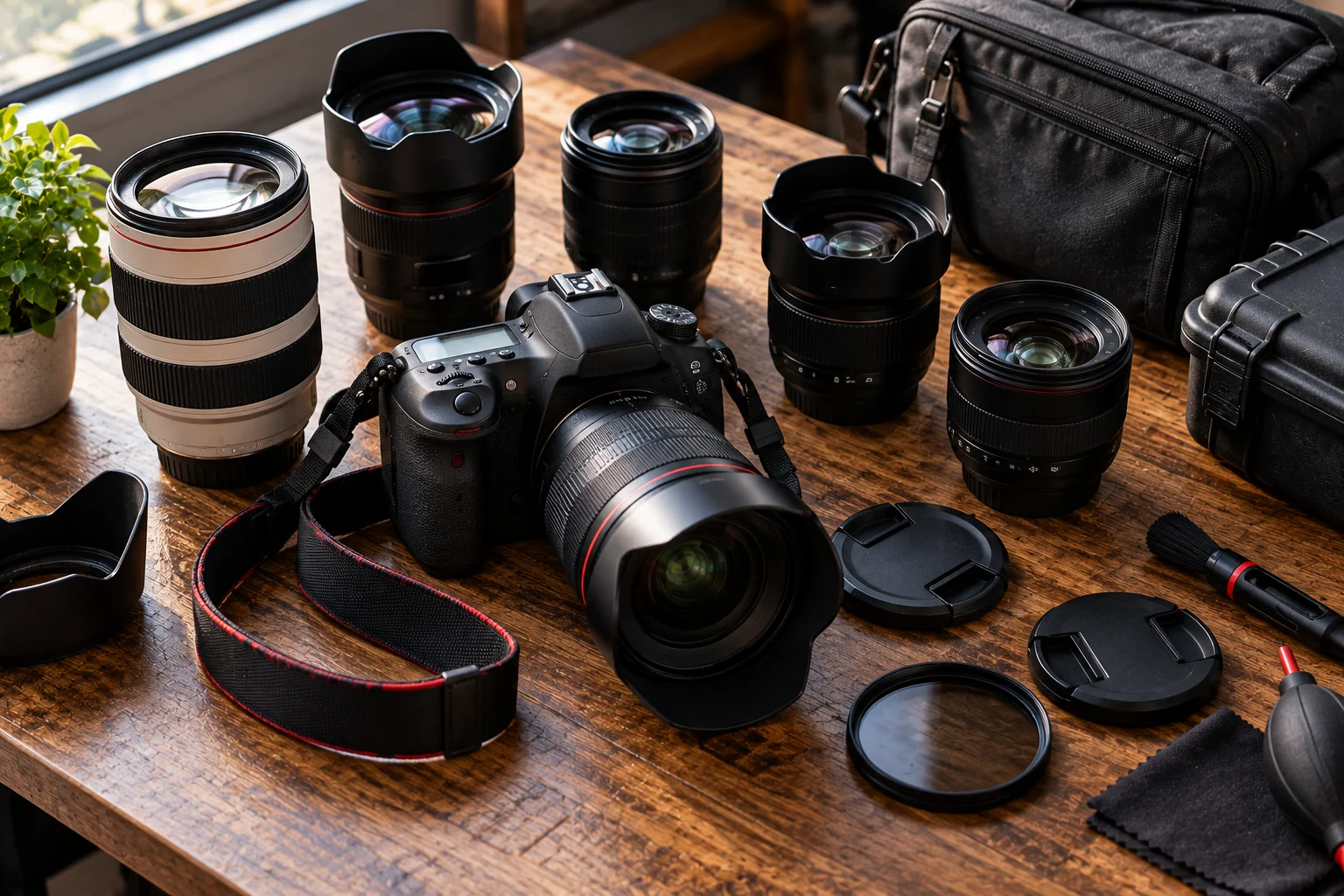
A used DSLR can be a smart way to get a large sensor, interchangeable lenses and serious photographic controls without spending as much as you would on a current mirrorless system.
The calculation changes if you're building a system from scratch and expect to keep upgrading.
In that situation, mirrorless gives you access to the newer autofocus systems, electronic viewfinders and lens platforms that manufacturers are actively developing.
FAQs About SLR Cameras
Are SLR cameras outdated?
The SLR design is mature rather than useless. Many DSLRs can still produce excellent photographs, but newer mirrorless cameras generally offer more advanced autofocus, video and electronic-viewfinder technology.
Are DSLRs cheaper than mirrorless cameras?
Used DSLRs can often provide strong value because many older models and lenses are available on the second-hand market. Pricing varies considerably by model and condition.
Is a DSLR good for beginners?
Yes. A DSLR can be an excellent way to learn exposure, composition and interchangeable-lens photography, particularly if you find one at a good price.
Do professional photographers still use DSLRs?
Yes. Some photographers continue using DSLRs because they already own extensive systems, prefer optical viewfinders or have workflows built around them. The availability of newer mirrorless technology doesn't make existing DSLRs unusable.
Should I buy DSLR lenses in 2026?
It depends on the system. DSLR lenses can be excellent value, especially used, but someone starting a completely new system should also consider the current mirrorless lens mount of the manufacturer they want to use.
The Bottom Line
SLR cameras are still capable photographic tools, but their value in 2026 comes mainly from what they already do well rather than from having the newest technology.
A good DSLR gives you an optical viewfinder, excellent image quality, strong battery life and access to decades of lenses. For still photography, those advantages can remain more than enough.
Modern mirrorless cameras pull ahead when you care about subject-tracking autofocus, electronic viewfinder previews, compact system design, advanced video and newer lens technology.
So if you find an excellent DSLR at a good used price, there's no reason to dismiss it simply because mirrorless cameras are newer.
But if you're starting an interchangeable-lens system from scratch and want the longest access to current camera technology, the mirrorless ecosystem deserves serious consideration.
The camera doesn't need to be new to take a great photograph. What matters is whether its strengths match the way you actually shoot.