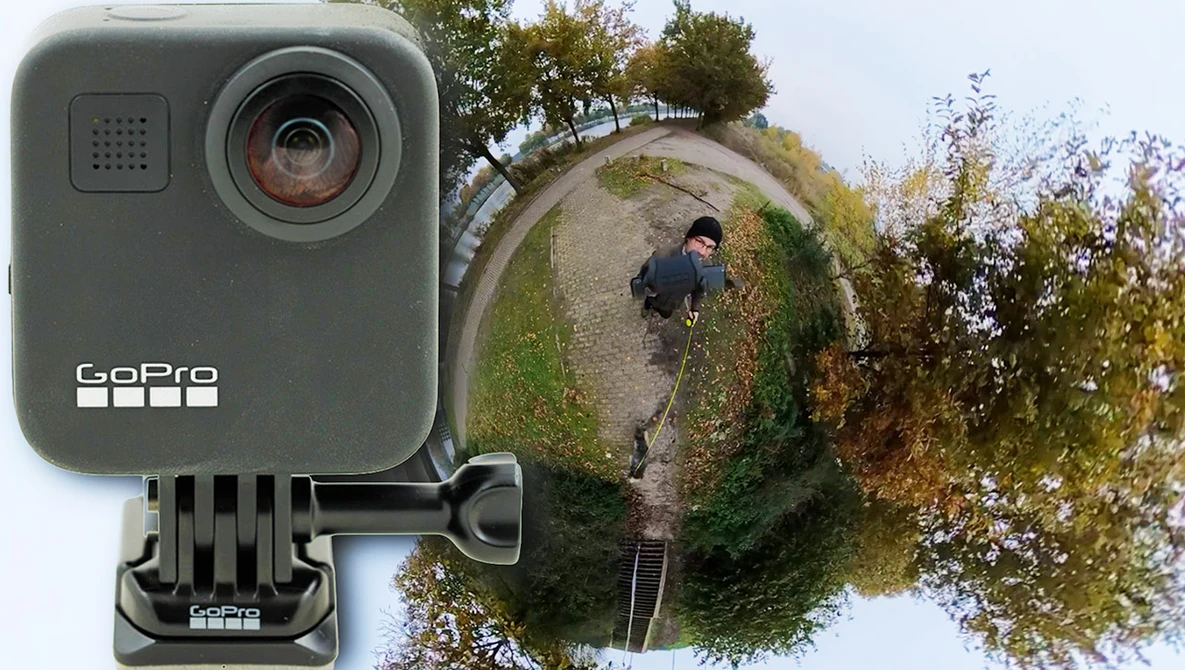
A 360 camera is better when you want to capture everything and decide the framing later, while an action camera is better when you already know what you want the camera to see. That basic difference affects almost everything else, from shooting and stabilization to editing and image quality.
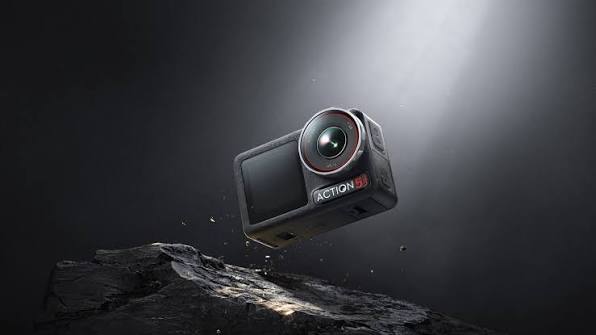
A traditional action camera uses a single forward-facing lens to record a conventional video frame. You point it at the subject, press record and get footage that's generally ready to edit or share.
A 360 camera uses multiple ultra-wide lenses to capture the surrounding environment. Current consumer models such as the Insta360 X5 use two fisheye lenses to create a spherical 360-degree image, while GoPro's current lineup also includes dedicated 360 cameras alongside its conventional HERO action cameras.
Neither approach is universally better. The right choice depends on travel, sports, everyday recording, editing preferences and how much control you want after filming.
360 Camera vs Action Camera: What's the Main Difference?
The biggest difference is how the camera captures and frames the scene.
Feature | 360 Camera | Action Camera |
|---|---|---|
Field of view | Entire surrounding scene | Forward-facing view |
Framing | Choose later | Choose while shooting |
Editing | Usually more involved | Usually simpler |
Stabilization | Often excellent | Often excellent |
Perspective | Highly flexible | More predictable |
Image quality per final frame | Resolution is spread across 360° | Pixels concentrated in the frame |
Best for | Travel, action, creative angles | Sports, POV, everyday video |
Learning curve | Higher | Lower |
A 360 camera essentially gives you a virtual camera that can be repositioned after recording. An action camera behaves more like a conventional camera that happens to be extremely rugged and compact.
Which Is Better for Travel?
A 360 camera can be more versatile for travel because you don't have to predict where the interesting moment will happen.
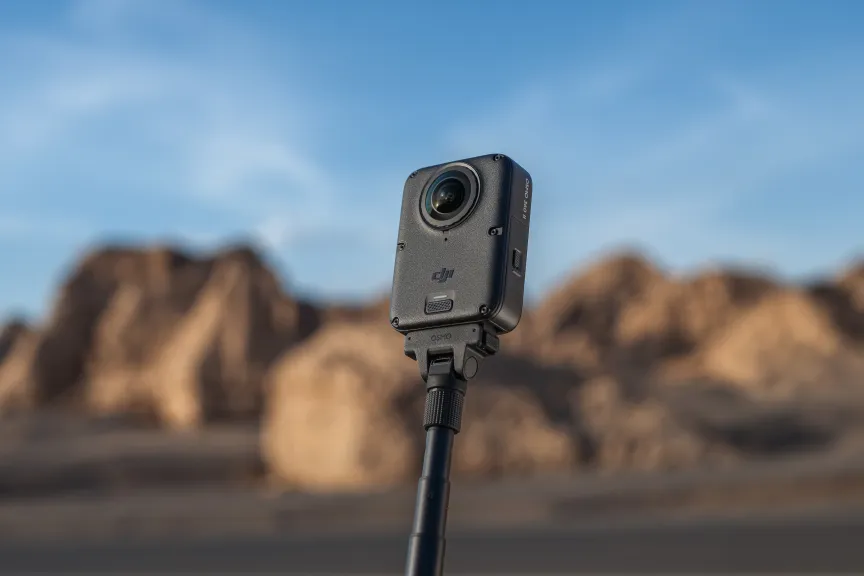
Imagine walking through a busy market. With an action camera, you might point toward the street ahead. With a 360 camera, the camera can simultaneously capture the people, buildings, street and anything happening behind you.
Later, you can reframe the footage into a conventional video.
This is particularly useful for sightseeing, cycling tours, road trips and spontaneous moments where you don't want to constantly turn the camera toward the action.
Current 360 cameras are also increasingly designed for travel and outdoor use. The Insta360 X5, for example, supports 8K 360 video, stabilization and waterproofing to 15 meters (49 feet).
An action camera still has an advantage when you simply want to point, record and keep moving.
If you're hiking and want straightforward footage of the trail ahead, an action camera requires less post-production.
Which Is Better for Sports?
It depends on whether you want predictable POV footage or the freedom to choose the angle afterward.
For skiing, mountain biking, surfing or motorcycling, a 360 camera can be extremely useful because the entire scene is recorded. You can later create a forward-facing shot, a side angle or a shot that follows your movement.
GoPro itself highlights 360 cameras for action sports and reframing, while its conventional HERO cameras remain designed around straightforward action-camera shooting.
A traditional action camera makes more sense when:
You want simple POV footage
You're recording a specific direction
You want minimal editing
You need predictable framing
You're handing the footage directly to someone else
For professional sports footage, the workflow matters just as much as the camera's specifications.
Which Gives Better Image Quality?
An action camera generally has an advantage when comparing a conventional final frame at similar resolution, because its pixels are concentrated on the scene you're actually recording.
A 360 camera has to distribute its image data across the entire sphere.
For example, Insta360 explains that its X5's 8K 360 footage uses a 7680 × 3840 spherical format. When you reframe only part of that sphere into a conventional video, you're effectively cropping a portion of the total image.
That's why “8K 360” shouldn't be interpreted as equivalent to an 8K conventional action-camera shot.
The 360 camera's advantage is flexibility, not necessarily maximum detail in every final crop.
Which Has Better Stabilization?
Both categories can offer very strong electronic stabilization.
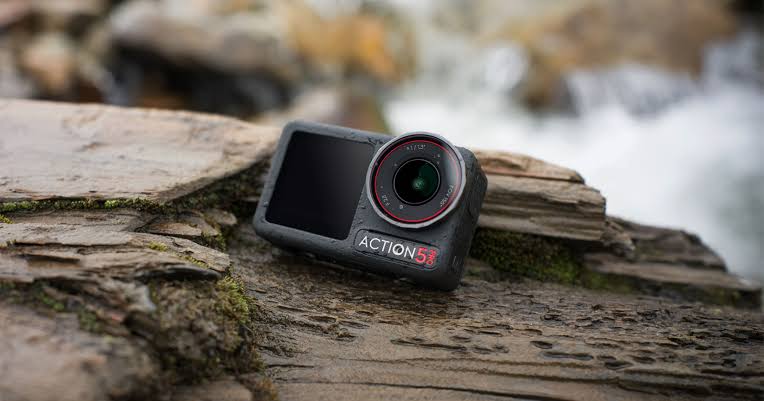
The difference is what happens after stabilization.
A 360 camera can record the complete scene and then use the spherical footage to create a stabilized-looking perspective during reframing. This makes it easier to change the virtual camera direction without physically pointing the camera.
Traditional action cameras instead stabilize the footage captured through their single lens.
GoPro's HERO13 Black, for example, uses HyperSmooth stabilization and can record up to 5.3K at 60fps.
For simple running, cycling or walking footage, both approaches can work extremely well.
Which Is Easier to Use?
An action camera is usually easier for beginners.
The workflow is straightforward:
Point → Record → Transfer → Edit → Share
A 360 camera adds another stage:
Record everything → Choose viewpoint → Reframe → Edit → Export
That extra flexibility comes at the cost of additional editing.
360 footage can also require more storage and processing because the camera is recording a much larger visual field.
If you rarely edit your footage, an action camera can therefore be the more practical choice even if a 360 camera offers more creative possibilities.
Which Is Better for Everyday Video?
For everyday recording, an action camera is usually the simpler option, while a 360 camera becomes more interesting when you want creative reframing.
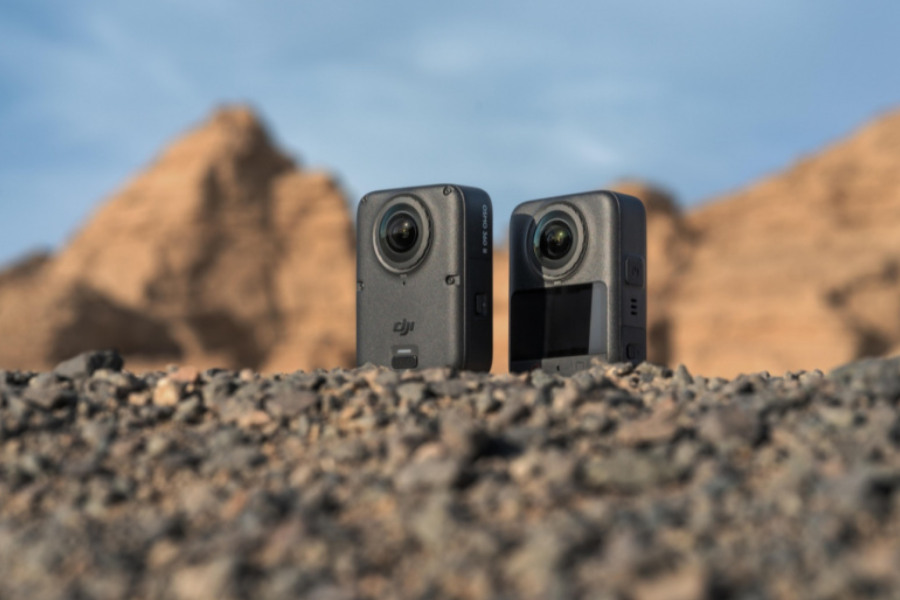
An action camera works well for:
Family trips
Walking tours
Cycling
Beach days
POV videos
Short social clips
Casual outdoor recording
A 360 camera becomes particularly useful when you don't know where the action will happen.
You can record yourself walking through a city and later create a conventional clip that follows your movement. GoPro specifically promotes reframing and creative storytelling as major advantages of its 360 cameras.
Which Is Better for Social Media?
A 360 camera offers more creative flexibility for social media, while an action camera makes faster, simpler content.
Because you capture the whole environment, 360 footage can be reframed into different aspect ratios and viewpoints after shooting.
That means one recording can potentially produce:
A vertical social clip
A conventional horizontal video
A follow-cam perspective
A wide environmental shot
A close-looking crop of the original scene
The trade-off is editing time.
If you're posting several quick clips every day, the simplicity of an action camera can be more valuable.
Which Is Better Underwater?
Both can be suitable for water sports, but 360 underwater shooting has an additional stitching consideration.
The Insta360 X5 is rated waterproof to 15 meters, but Insta360 notes that underwater shooting in 360 mode can produce stitching problems because light bends differently through water. It recommends an Invisible Dive Case for optimal underwater 360 footage.
A conventional action camera doesn't have that particular two-lens stitching problem.
For snorkeling, surfing and simple underwater POV footage, a conventional action camera can therefore offer a more straightforward workflow.
Which Is Better for Low-Light Shooting?
The answer depends more on the specific camera and sensor than on the category alone.
360 cameras have historically faced challenges because their compact lenses and the need to distribute resolution across a spherical image can make low-light footage demanding.
Newer models are improving this. The Insta360 X5, for example, has larger 1/1.28-inch sensors and a dedicated PureVideo mode intended to improve low-light capture.
Still, don't assume that buying a 360 camera automatically gives you better night footage than an action camera. Compare the specific sensors, lenses, processing and shooting modes.
What About Editing and Storage?
This is one of the biggest practical differences between the two.
Action-camera footage generally behaves like conventional video. You can import it into almost any editing application and start cutting clips.
360 footage requires additional processing for reframing and stitching, depending on the camera and workflow.
You also need to think about storage. High-resolution 360 footage can generate substantial files because the camera is recording the entire surrounding environment.
If your priority is a quick workflow, the action camera has a clear advantage.
If you're willing to spend more time editing, 360 footage gives you considerably more freedom.
Can a 360 Camera Replace an Action Camera?
Sometimes, but not completely.
Modern 360 cameras increasingly offer conventional single-lens modes. The Insta360 X5, for example, can record 4K single-lens video as well as 8K 360 footage.
That makes a 360 camera more versatile than older models.
But you're still choosing between two fundamentally different workflows.
If most of your footage is conventional forward-facing video, an action camera remains simpler.
If you frequently want unusual perspectives, invisible-selfie-stick shots or the ability to reframe after recording, a 360 camera can be worth carrying.
360 Camera vs Action Camera: Which One Should You Buy?
The simplest way to decide is to match the camera to your shooting style.
Choose a 360 camera if you:
Don't want to worry about framing
Record travel adventures
Shoot cycling, skiing or other action sports
Want creative camera movements
Create social-media videos
Like reframing footage afterward
Want one recording to produce multiple viewpoints
Choose an action camera if you:
Prefer simple recording
Mostly shoot forward-facing POV footage
Want quick editing
Record sports from a fixed perspective
Frequently share footage without extensive reframing
Want a straightforward everyday camera
There's also nothing wrong with using both. A 360 camera can handle unpredictable action and creative angles, while an action camera can handle conventional POV footage.
FAQs About 360 Cameras and Action Cameras
Is a 360 camera better than a GoPro?
Not automatically. A 360 camera is better suited to capturing the entire environment and reframing afterward, while a conventional GoPro HERO camera is designed around straightforward action-camera footage.
Do 360 cameras have better stabilization?
They can produce extremely flexible stabilized footage because you can choose the viewing direction afterward, but stabilization quality varies by model.
Is 360 video harder to edit?
Usually, yes. You have more creative control, but reframing and processing add steps compared with conventional action-camera footage.
Can you use a 360 camera for normal video?
Yes. Some models offer single-lens or flat-video modes in addition to 360 capture.
Does 360 video use more storage?
It can. High-resolution 360 recording captures a much larger field of view, resulting in substantial video files, particularly at higher resolutions and frame rates.
The Bottom Line
Choose a 360 camera when flexibility matters more than simplicity. Choose an action camera when you want straightforward, high-quality footage with less editing.
A 360 camera changes the fundamental shooting process. You capture the entire environment first and decide what the viewer sees afterward.
An action camera does the opposite. You decide what matters before recording and capture that perspective directly.
For travel and unpredictable sports, that distinction can make a 360 camera incredibly useful. For everyday POV footage, quick social clips and simple workflows, a traditional action camera remains easier to live with.
The most important question isn't “Which camera has better specifications?”
It's “Do I want to choose my shot before I record, or after?”