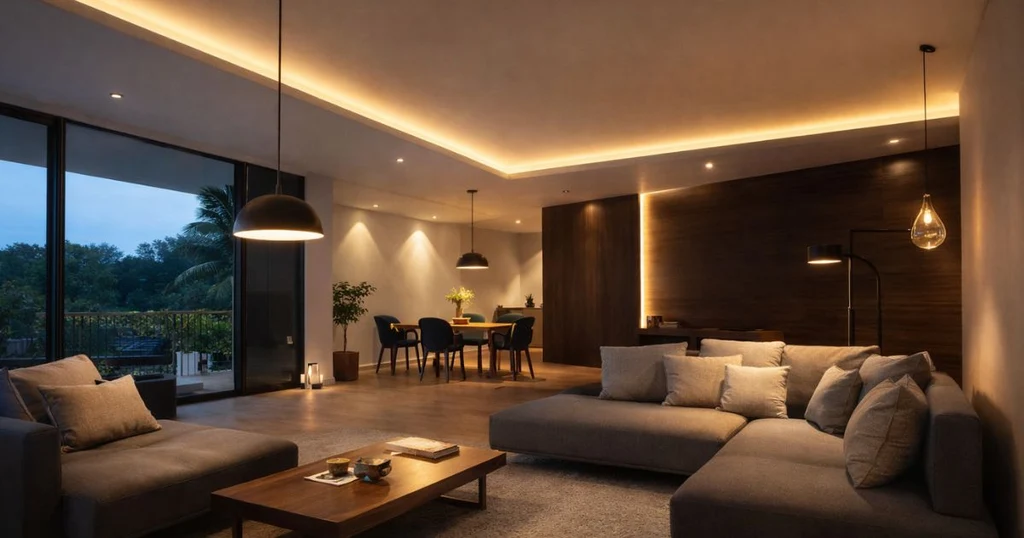
Choosing the right Bauhaus lighting for your home involves more than picking a bulb that fits the socket. The brightness, colour temperature and energy consumption of your lights all influence how a room looks, feels and functions. A kitchen needs clear light for preparing meals, a bedroom benefits from a softer atmosphere, and a home office requires enough illumination to work comfortably without distracting glare.
That's why LED lighting has become such a practical choice for modern Spanish homes. LED bulbs generally use less electricity than traditional incandescent bulbs for comparable light output, and they are available in a wide range of shapes, brightness levels and colour tones.
Still, it's easy to get confused when shopping. Should you choose warm white or cool white? How many lumens do you need for a living room? Is a dimmable bulb worth paying extra for?
The answers depend on the room, the fixture and how you use the space. This guide explains how to choose LED Lighting for each area of your home, understand the numbers on a bulb's packaging and compare suitable options at BAUHAUS Spain. With a little planning, you can create a comfortable, well-lit home without wasting electricity on lighting you don't need.
1. How bright should LED lighting be in each room?
The right brightness depends on the room's size, the tasks you perform there and the amount of natural daylight it receives. Compare bulbs using lumens, which measure the light produced, rather than watts alone, which measure electricity consumption.
Lumens versus watts: what's the difference?
Think of lumens as the amount of light you get and watts as the electricity required to produce it. A traditional 60 W incandescent bulb and a modern LED bulb using around 8–10 W may provide broadly comparable brightness, depending on the products.
For a first estimate, these ranges can help you plan general room lighting:
Room | Approximate general lighting target |
|---|---|
Small bedroom | 1,000–2,000 lumens |
Living room | 1,500–3,000 lumens |
Kitchen | 2,000–4,000 lumens |
Bathroom | 1,500–3,000 lumens |
Home office | 1,500–3,000 lumens |
These are broad planning ranges, not fixed requirements. The number of fittings, ceiling height, wall colour and room layout all affect how bright the space feels. A kitchen may also need additional task lighting over worktops, while a bedroom might feel more comfortable with several lower-output lamps.
Why one powerful bulb isn't always the answer
A single bright ceiling light can leave corners dark and create harsh shadows. Using several light sources often produces a more comfortable result.
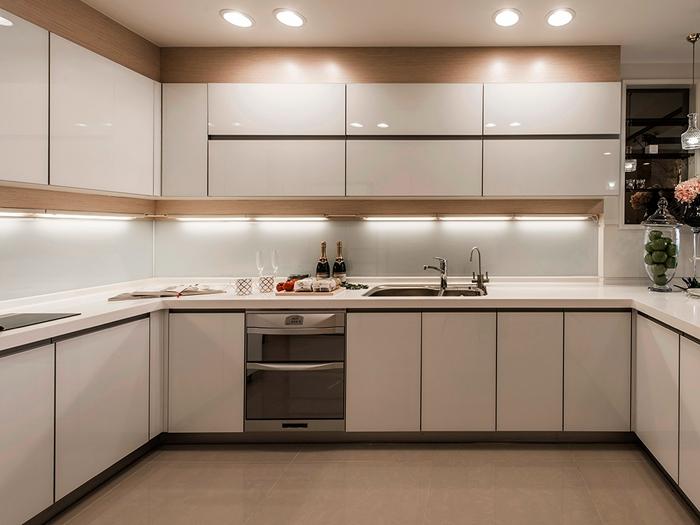
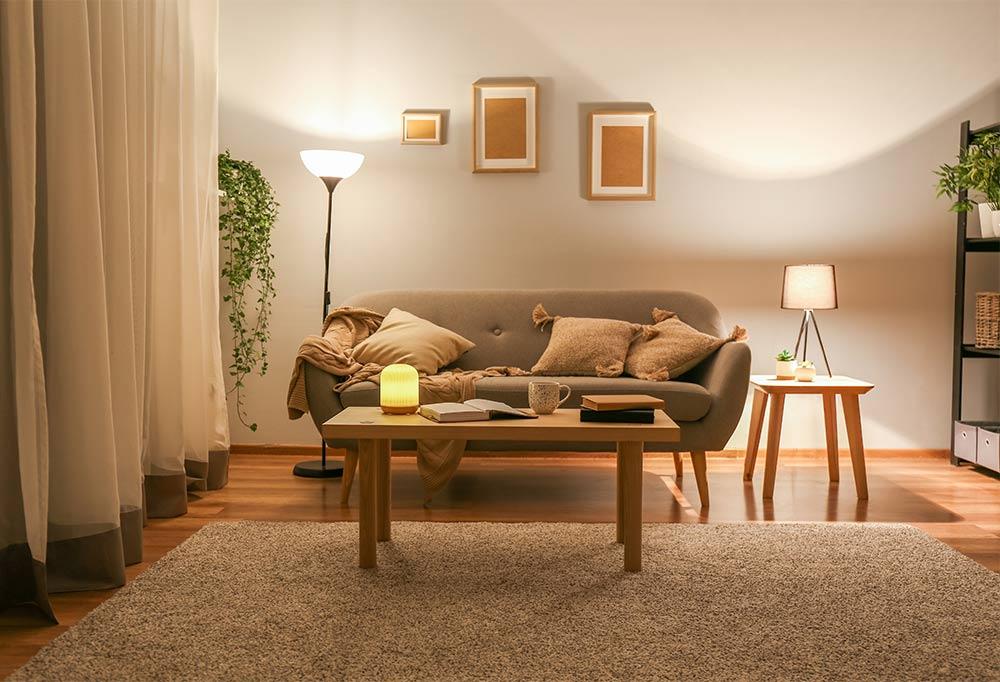
For example, a living room might combine a ceiling fixture for general illumination, a floor lamp beside the sofa and a small reading light. In the kitchen, under-cabinet LEDs can illuminate work surfaces that ceiling lights leave in shadow.
If you're choosing bulbs at BAUHAUS, compare their lumen output and beam angle as well as their wattage. A narrow beam may suit accent lighting, while a wider beam can spread light more evenly across a room.
2. Which LED colour temperature is best for each room?
Colour temperature determines whether a light looks warm and yellowish or cool and bluish. It's measured in kelvins (K): around 2,700 K creates a warm atmosphere, 3,000–4,000 K offers a more neutral appearance, and 5,000 K or above looks cooler and more daylight-like.
Warm white for relaxing spaces
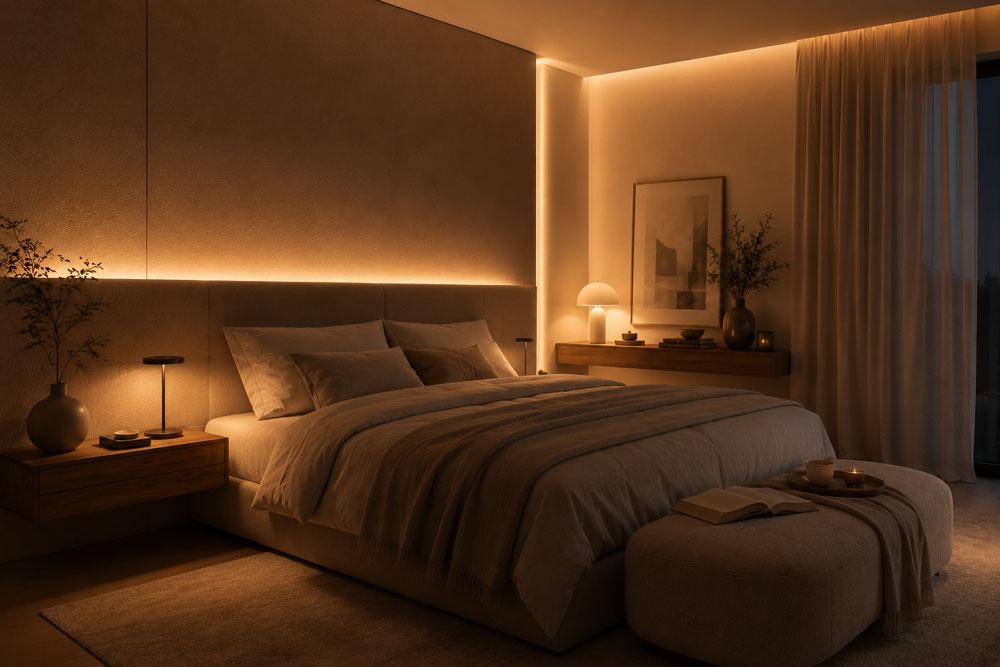
Warm white, typically around 2,700–3,000 K, is a natural fit for bedrooms, living rooms and dining areas. It creates a relaxed atmosphere and works particularly well with wood, beige fabrics and other warm interior finishes.
If you enjoy reading in bed, you can pair warm general lighting with a dedicated reading lamp. The room stays inviting while the area around your book gets enough light.
Neutral white for practical tasks
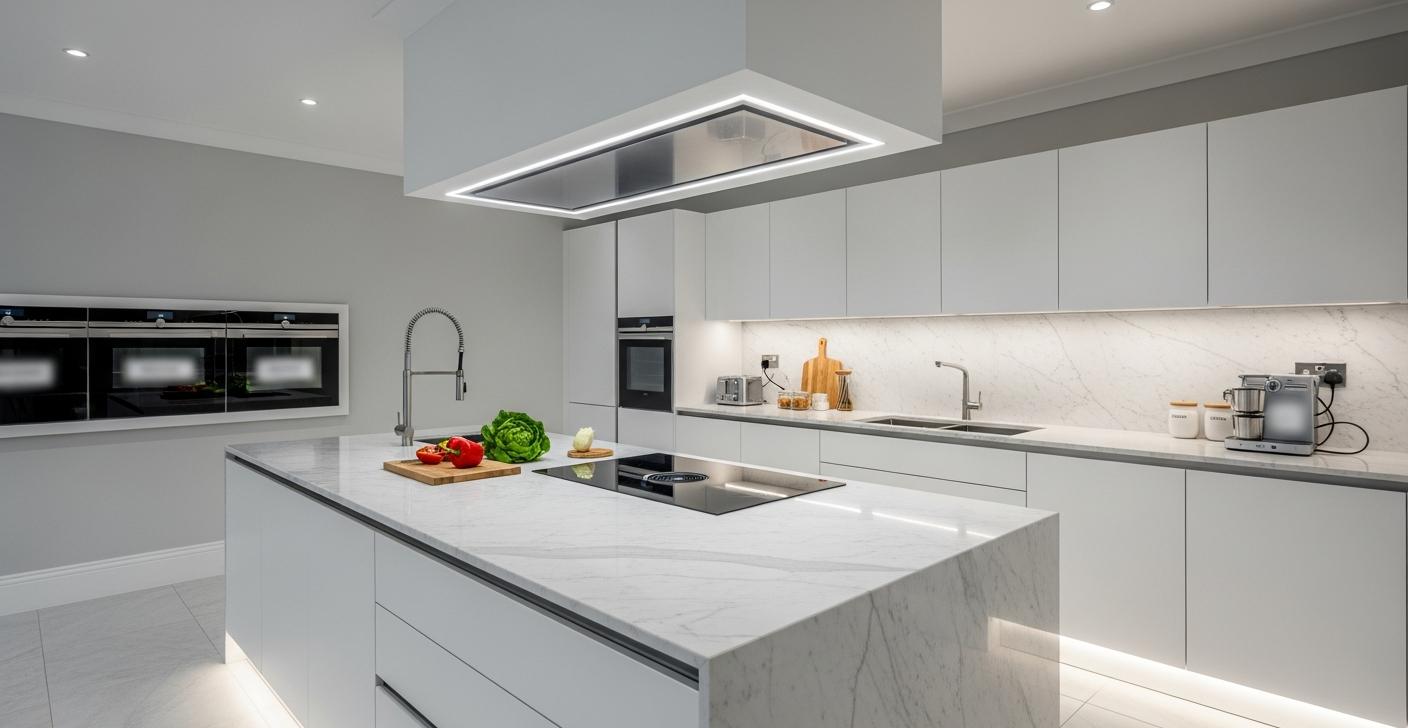
Neutral white, often around 3,500–4,000 K, can work well in kitchens, bathrooms, utility rooms and home offices. It provides a clear appearance without necessarily feeling as cool as daylight-style lighting.
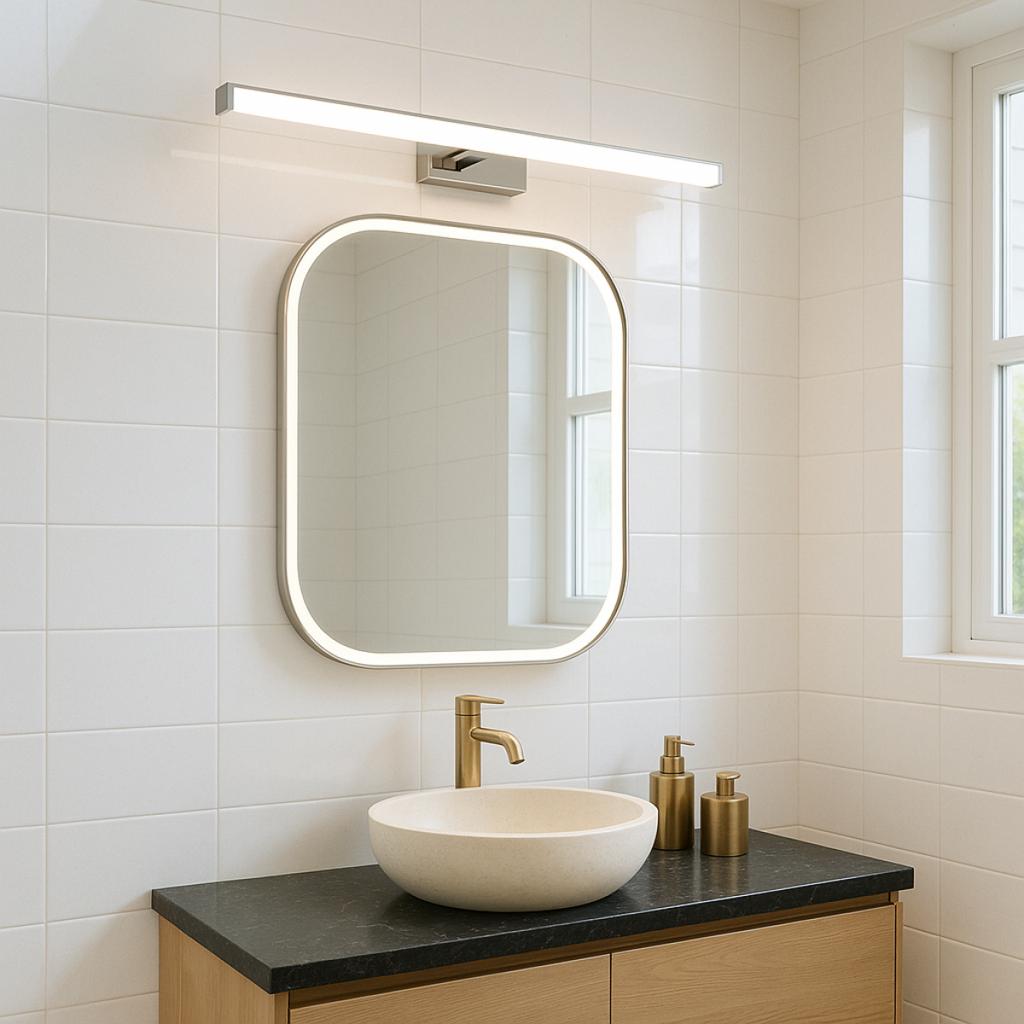
For bathroom mirrors, colour consistency is especially useful when shaving or applying makeup. Look for lighting with a good colour rendering index (CRI), ideally 90 or higher if accurate colour appearance is a priority.
Cool white for specific applications
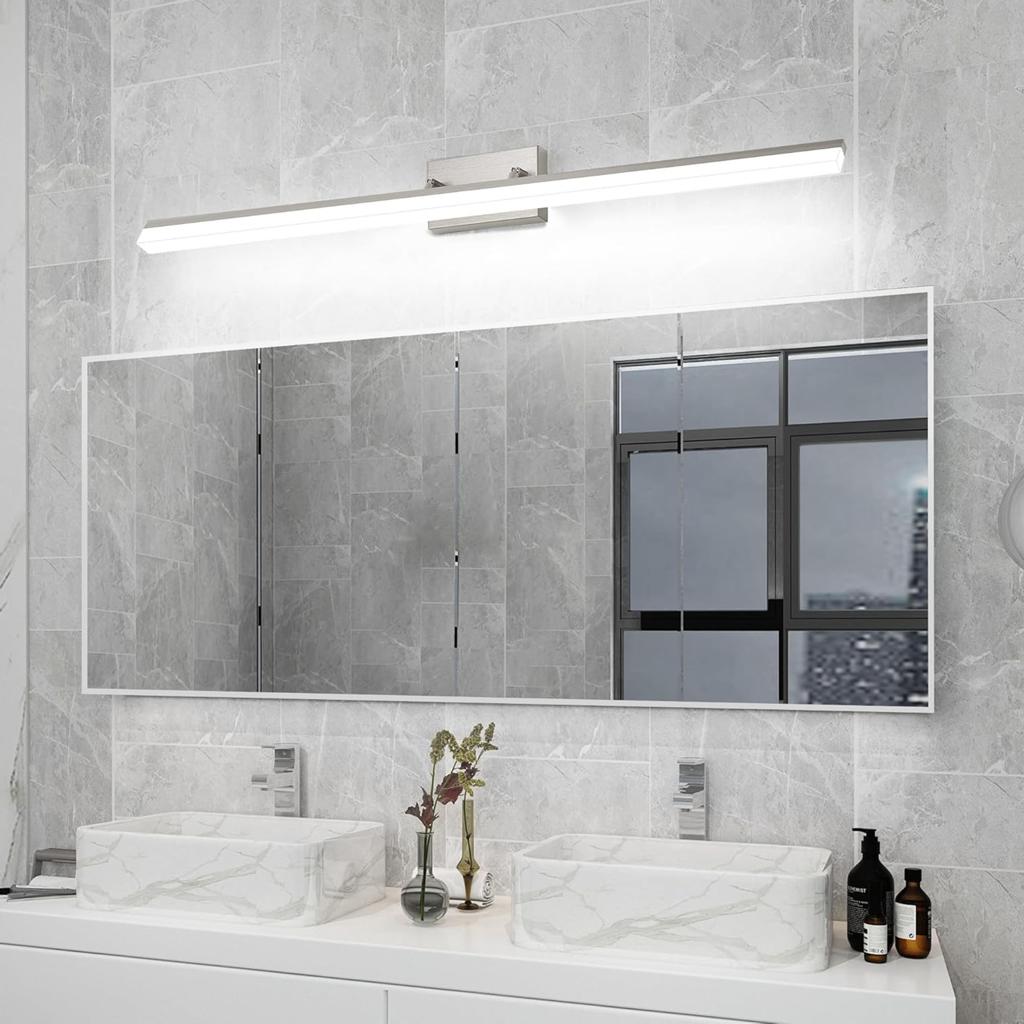
Cooler lighting, often 5,000 K and above, can be useful in workshops, garages and task-focused areas where a crisp appearance is preferred. It isn't automatically brighter or more energy-efficient than warm white, however.
One thing worth remembering: colour temperature and brightness are different measurements. A 4,000 K bulb isn't necessarily brighter than a 2,700 K bulb with the same lumen output.
If you're updating several rooms, avoid choosing bulbs solely by their packaging descriptions. Check the actual kelvin rating, particularly when buying replacements for existing fixtures.
3. How much electricity can LED bulbs save?
LED bulbs generally consume substantially less electricity than incandescent bulbs producing a similar amount of light. Your actual savings depend on the bulbs you replace, their wattage, how many hours they're switched on and the electricity rate you pay.
Here's a simple example. Suppose you replace a 60 W incandescent bulb with an 8 W LED bulb that provides similar brightness.
Measure | 60 W incandescent | 8 W LED |
|---|---|---|
Electricity used in 5 hours | 0.30 kWh | 0.04 kWh |
Electricity used over 30 days at 5 hours/day | 9 kWh | 1.2 kWh |
Monthly cost at €0.25/kWh | €2.25 | €0.30 |
In this example, the LED uses 7.8 kWh less electricity per month. At the assumed rate of €0.25 per kWh, that's a saving of €1.95 for one bulb over 30 days.
The electricity price is illustrative, not a statement of the current Spanish average. Your own tariff may differ.
What about a whole home?
The savings can become more noticeable when you replace several frequently used bulbs. A household with ten lights operating for five hours daily would use considerably less electricity if comparable 8 W LEDs replaced 60 W incandescent bulbs.
LEDs also tend to last much longer than traditional incandescent lamps, which can reduce the frequency of replacements. Check the rated lifetime on the packaging, though, because product quality, heat and operating conditions affect real-world performance.
If your home already uses efficient LED bulbs, replacing them with newer LEDs may produce only modest additional savings. In that case, focus on better placement, dimming where appropriate and switching off lights in unoccupied rooms.
4. What LED lighting works best in a kitchen, bedroom and bathroom?
The best lighting setup combines general illumination with task lighting where you need it. Kitchens benefit from bright, well-distributed light; bedrooms usually work better with warm, adjustable lighting; and bathrooms need suitable fittings designed for damp environments.
Kitchen: illuminate the surfaces you use
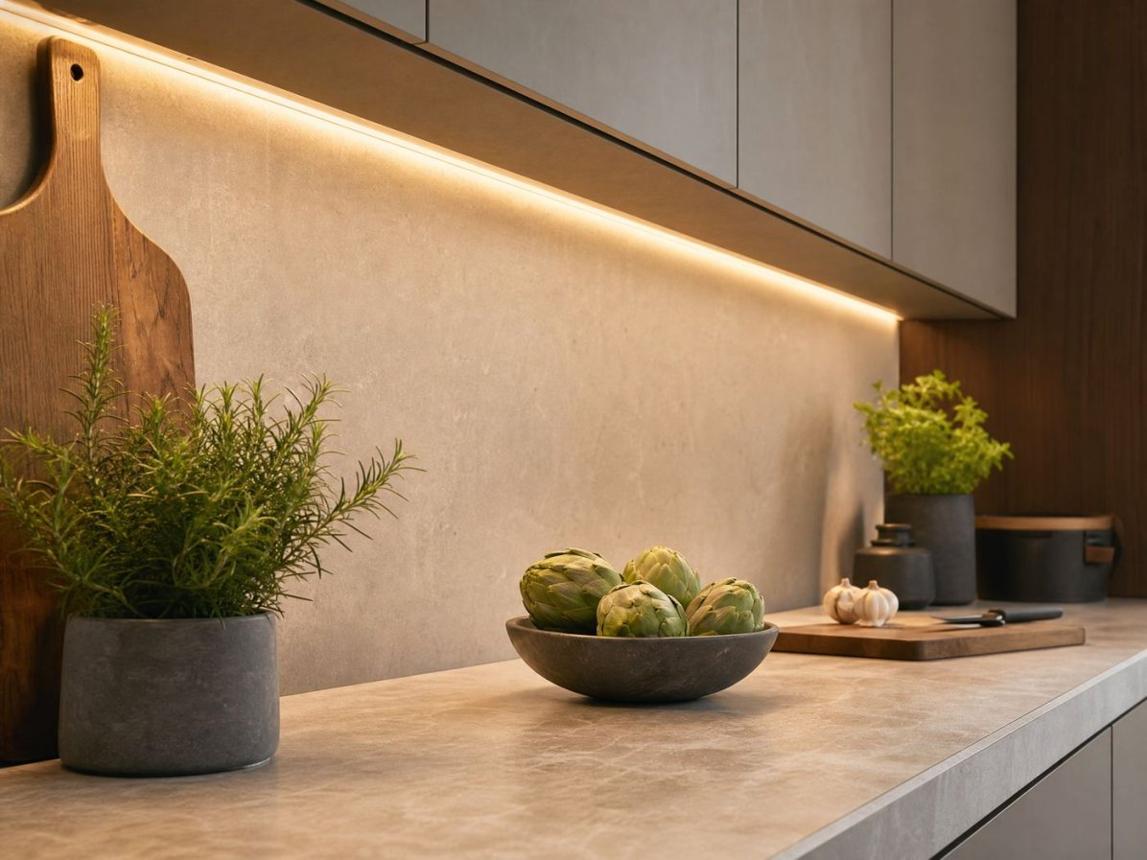
A kitchen needs enough light for chopping ingredients, reading labels and cleaning. A central ceiling fitting can provide general brightness, while under-cabinet LED strips help illuminate worktops without casting shadows from your body.
Neutral white is a sensible starting point for practical kitchen tasks. If you have an open-plan kitchen and living room, consider using separate lighting circuits so you can keep the cooking area bright while creating a softer atmosphere elsewhere.
Bedroom: give yourself control
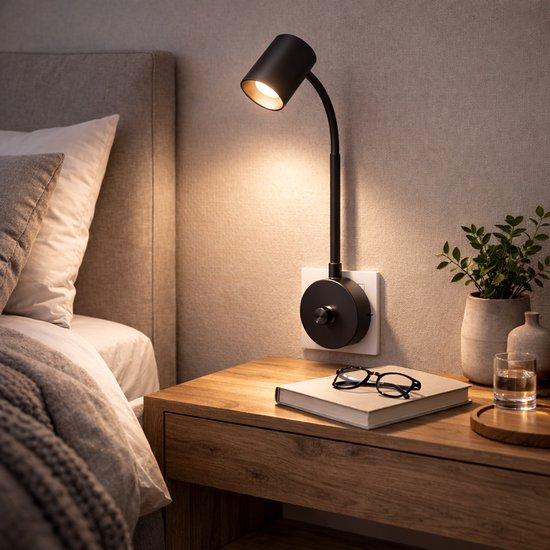
Bedrooms rarely need maximum brightness all evening. Warm white bulbs, bedside lamps and dimmable fixtures let you adjust the atmosphere throughout the day.
If you read before sleeping, position your reading light so it illuminates the page without shining directly into your eyes. It's a small adjustment, but it can make a noticeable difference.
Bathroom: prioritise visibility and safety
Bathroom lighting should make everyday tasks easy while being suitable for the installation location. A well-lit mirror is useful for grooming, while general ceiling lighting should illuminate the room evenly.
Check the fitting's IP rating, which indicates its protection against dust and water, and make sure it is suitable for the specific bathroom zone. Don't assume every LED strip or ordinary indoor light is suitable near a shower or bath.
Living room and home office: layer your lighting
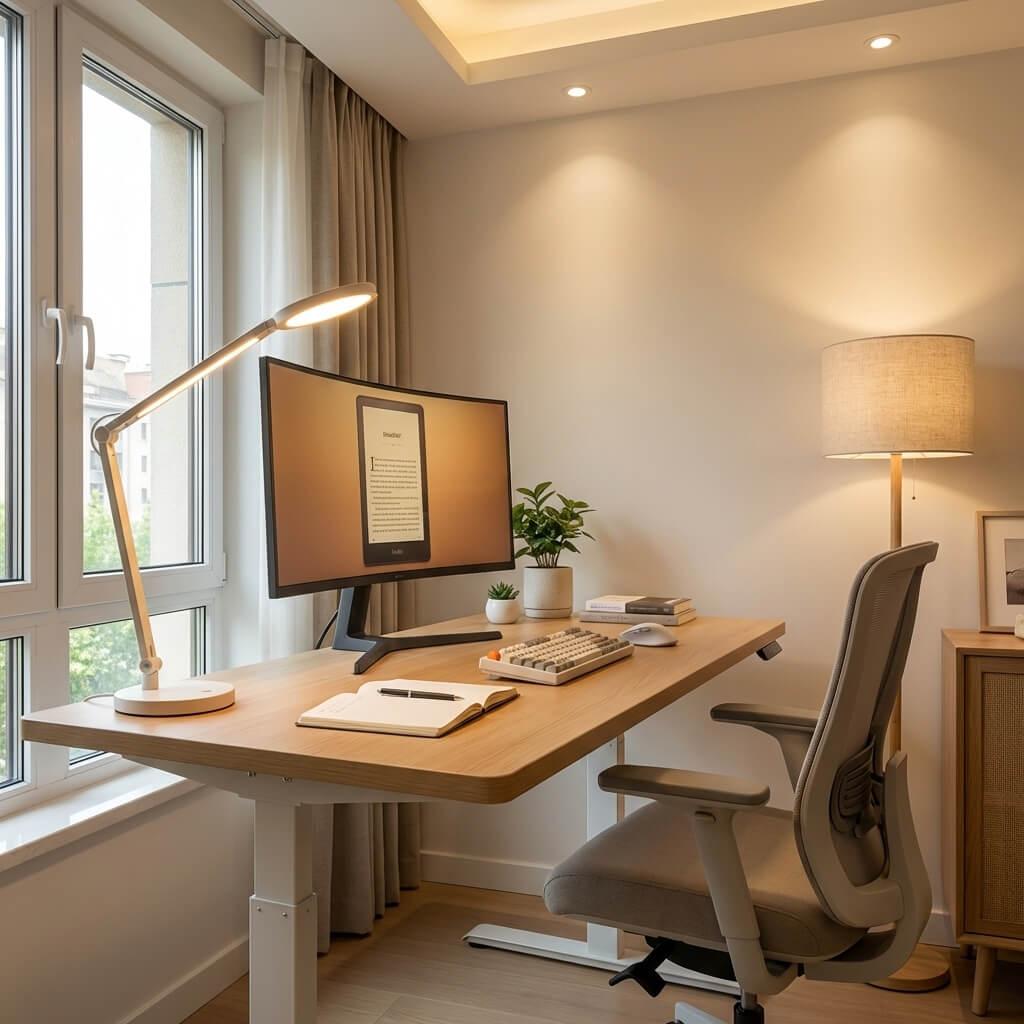
Living rooms often benefit from a combination of ceiling lights, floor lamps and accent lighting. A home office needs adequate illumination across the desk, with positioning that minimises screen reflections and glare.
If you use the same room for working during the day and relaxing at night, adjustable brightness or separate light sources can make it much more versatile.
5. What should you check before buying LED bulbs at Bauhaus?
Before buying LED lighting, check the fitting, brightness, colour temperature, dimmer compatibility and energy label. BAUHAUS Spain is a convenient place to start comparing lighting products, but the right choice depends on your existing fixtures and the result you want.
Use this checklist when shopping:
Check the socket: Make sure the bulb base, such as E27, E14 or GU10, matches your fitting.
Compare lumens: Choose the light output you need rather than relying on wattage alone.
Choose the colour temperature: Match warm, neutral or cool light to the room's purpose.
Check dimming compatibility: Not every LED bulb works with every dimmer switch.
Consider the beam angle: This matters for spotlights and directional fittings.
Review the energy label and lifespan: These help you compare efficiency and expected replacement frequency.
Check enclosed-fixture suitability: Some bulbs aren't designed to operate in fully enclosed fittings, where heat can build up.
For outdoor lighting, check weather resistance and the fitting's suitability for its location. For integrated LED fixtures, also look into whether the light source can be replaced if it fails.
You can browse the available options on the official BAUHAUS Spain website. Compare the product specifications before ordering, especially if you're replacing bulbs in several rooms and want a consistent appearance.
Final thoughts: How can you choose the right LED lighting with Bauhaus?
Good lighting comes down to balancing brightness, colour temperature, energy use and comfort. Warm white suits many relaxing spaces, neutral white is useful for everyday tasks, and cool white can work well in workshops or other practical areas. Choosing the correct lumen output and positioning lights thoughtfully can matter just as much as the bulb itself.
LED lighting can also reduce electricity consumption compared with older incandescent bulbs, particularly when you replace lights that are used for several hours each day.
When exploring Bauhaus, start with the room rather than the product. Decide what you need the light to do, check the fitting and compare the specifications. That approach makes it easier to build a comfortable, efficient lighting setup without spending money on features you won't use.
If you're ready to refresh your home's lighting, visit BAUHAUS Spain to explore the available LED bulbs, fixtures and accessories for your next home improvement project.