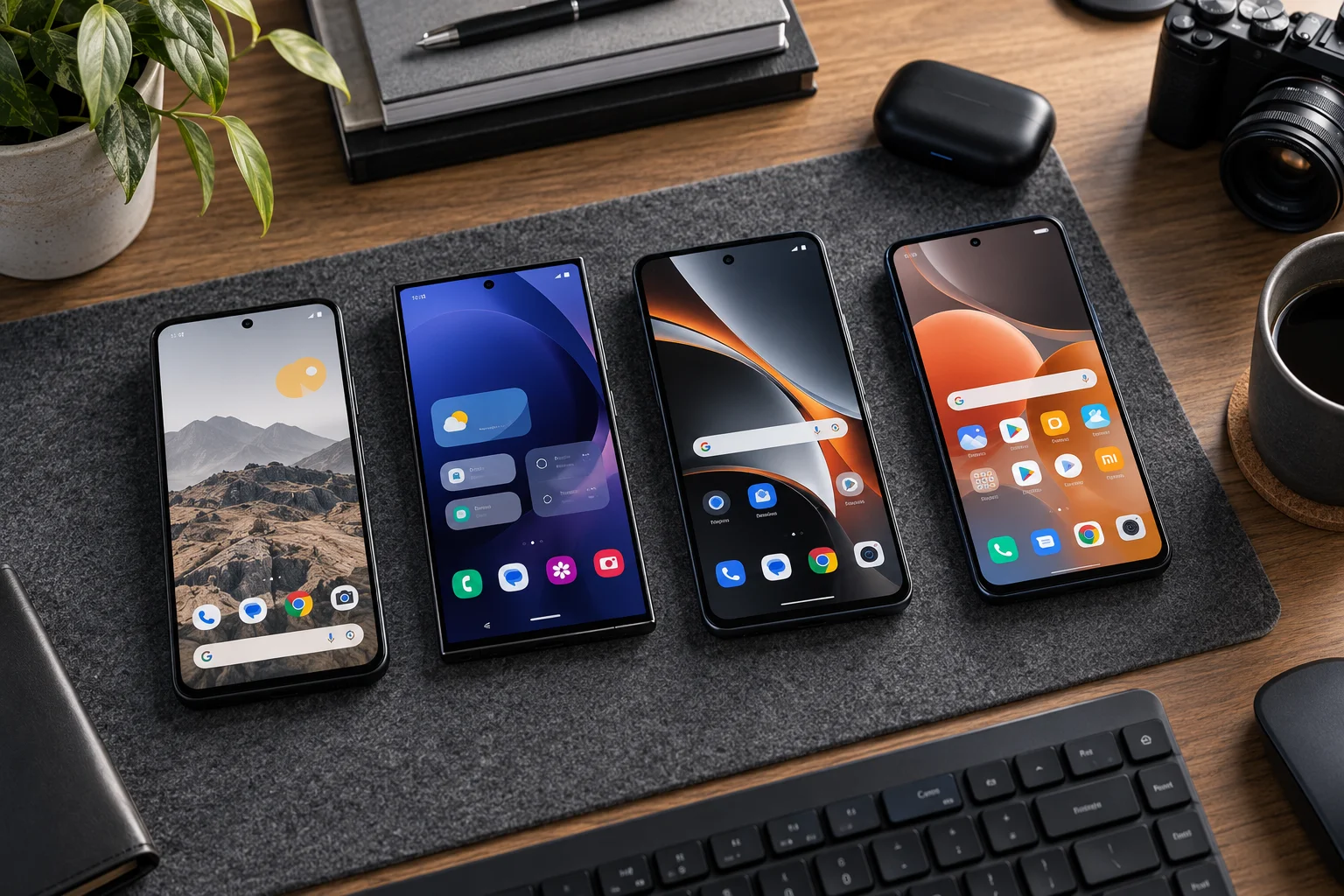
Stock Android and manufacturer Android are built on the same Android foundation, but the experience can be dramatically different once Google’s base software is adapted by each phone maker. Pixel uses Google's own Pixel software layer, while Samsung, OnePlus and Xiaomi add their own interfaces, system apps, AI features, customization tools and ecosystem functions.
That means buying an Android phone isn't simply about choosing Android over iOS. You're also choosing how a manufacturer thinks Android should look, behave and interact with the rest of its products.
Google's Pixel software emphasizes Google's services, AI and a relatively clean interface. Samsung's One UI adds extensive customization, multitasking and Galaxy-device integration. OnePlus uses OxygenOS to focus heavily on customization, animations, multitasking and cross-device features. Xiaomi's HyperOS goes further into device-to-device connectivity, AI and integration across phones, tablets, wearables, cars and smart-home products.
So the real stock Android vs manufacturer Android comparison isn't about which version is "real" Android. It's about what each manufacturer adds, changes or removes from the Android foundation.
Is Pixel Really Stock Android?
No. Pixel isn't technically pure stock Android; it is Google's customized Android experience with Pixel-specific software and features.
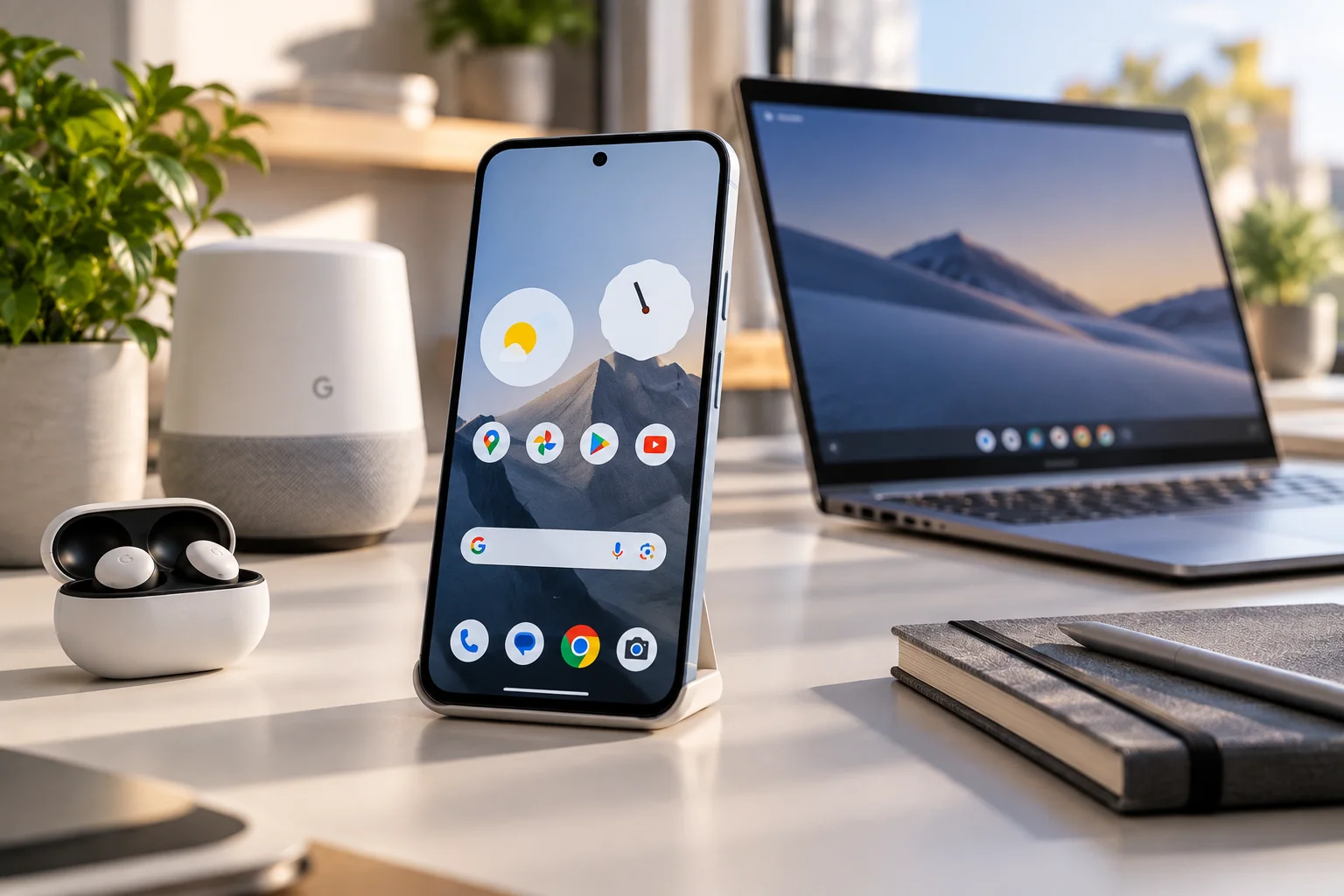
Pure Android from the Android Open Source Project, or AOSP, is much more basic than the software you find on a retail Pixel. It doesn't represent the complete Google-certified smartphone experience with Google Mobile Services and Pixel-specific functionality.
Pixel phones instead use Google's own software layer on top of Android.
That distinction matters because Pixel gets features that aren't simply generic Android features. Google integrates Gemini, Pixel-specific camera processing, Circle to Search, Pixel Drops and other Google services directly into the experience. Google currently describes Pixel as offering features and AI capabilities that are exclusive to Pixel, alongside seven years of OS and security updates on Pixel 8 and later devices.
So when people say "stock Android," Pixel is usually what they mean in practical terms, even though technically it isn't untouched AOSP.
What Does Samsung Change With One UI?
Samsung's One UI changes Android more extensively, adding customization, multitasking tools, Galaxy ecosystem features and Samsung-specific AI functionality.
The visual difference is obvious. Samsung reorganizes settings, notifications, quick controls, lock-screen behavior, widgets and system apps around its own design language.
But the bigger difference is functionality.
One UI 8, based on Android 16, adds features including:
Now Bar for live activities and information
Now Brief personalized updates
Galaxy AI features
Gemini Live integration
AI Results View
Drawing Assist and Writing Assist
Audio Eraser
Call Captions
Extensive Galaxy-device integration
Samsung Knox security features
Samsung says One UI 8 is designed across different Galaxy form factors, including phones, tablets and foldables, rather than simply changing the appearance of Android.
That's particularly noticeable on Galaxy foldables. One UI has to accommodate Samsung's larger screens, FlexWindow experiences and multitasking workflows.
What does that mean in everyday use?
A Pixel generally feels closer to Google's interpretation of Android.
A Galaxy feels more like Samsung's operating system built on Android.
The underlying Android platform is shared, but the user experience isn't.
What Makes OxygenOS Different on OnePlus Phones?
OxygenOS takes Android in a more customization-heavy and performance-oriented direction while adding OnePlus-specific AI and cross-device features.
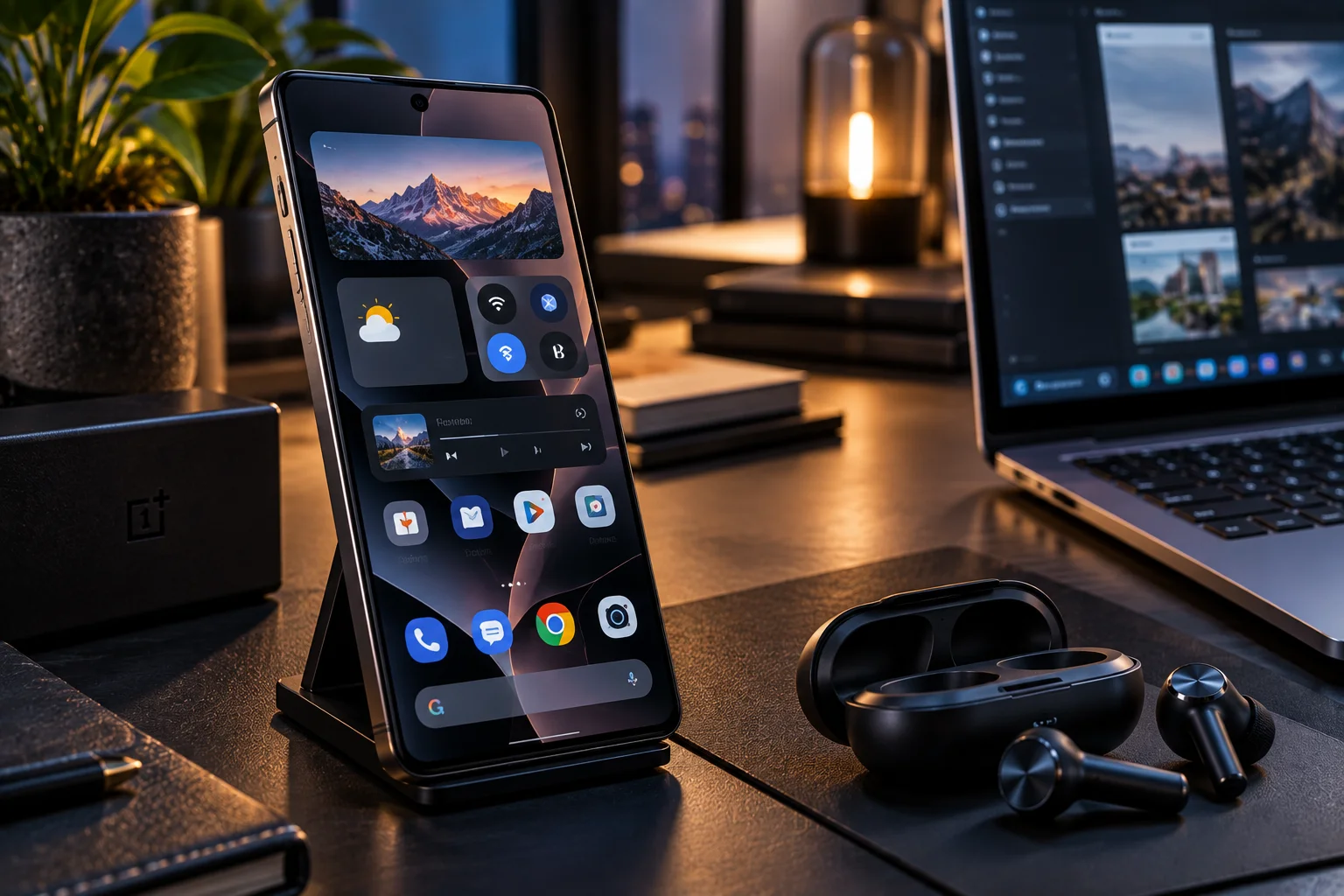
Current OxygenOS 16 includes extensive home-screen and lock-screen customization, scalable icons, widgets, motion-photo lock screens, Fluid Cloud and enhanced multitasking. OnePlus also integrates features for connecting phones with Windows PCs, Macs, iPhones and OnePlus tablets.
OnePlus has also added AI functions through its own software layer, including writing tools, AI scanning, image-generation features and Mind Space integration. The company says Gemini integration with Mind Space is coming to compatible OnePlus flagship devices, with availability varying by device and region.
OnePlus therefore occupies an interesting middle ground.
It retains a relatively recognizable Android foundation while adding a significant amount of OnePlus-specific behavior.
For example, the interface isn't just about changing icons. OxygenOS changes how you multitask, personalize the interface, move information between devices and interact with AI.
What Does Xiaomi Add With HyperOS?
Xiaomi's HyperOS extends Android into a broader Xiaomi ecosystem, combining interface changes with AI, cross-device connectivity and smart-home integration.
HyperOS 3, based on Android 16 on current compatible devices such as the Xiaomi 17T, includes redesigned system animations, Xiaomi HyperIsland, redesigned icons and widgets, AI features and cross-device functionality.
Xiaomi also pushes its software beyond the phone itself.
HyperOS 3 supports features such as:
Xiaomi HyperAI
AI writing and search
AI-generated wallpapers
Cross-device connectivity
Home screen integration with iPad
Resizable phone-app windows
Smart-home integration
Car connectivity
Cross-device biometric features
Xiaomi describes HyperOS as an intelligence layer connecting the phone, home and car, rather than simply a smartphone interface.
This illustrates one of the biggest changes manufacturer Android brings: the phone becomes part of an ecosystem rather than being just an Android handset.
How Different Are Pixel, Samsung, OnePlus and Xiaomi?
The easiest way to understand the differences is to look at what each manufacturer prioritizes.
Experience | Pixel | Samsung | OnePlus | Xiaomi |
|---|---|---|---|---|
Android foundation | Android + Pixel software | Android + One UI | Android + OxygenOS | Android + HyperOS |
Interface philosophy | Google-focused, relatively clean | Feature-rich and customizable | Customizable and fluid | Highly integrated ecosystem |
AI | Google Gemini + Pixel AI | Galaxy AI + Gemini | OnePlus AI + Gemini integration | Xiaomi HyperAI + Gemini |
Customization | Moderate | Extensive | Extensive | Extensive |
Multitasking | Strong | Very strong | Strong | Strong |
Ecosystem | Google/Pixel | Galaxy ecosystem | OnePlus ecosystem + cross-platform tools | Xiaomi ecosystem |
Foldable optimization | Pixel-specific | Extensive | Strong on compatible devices | Model-dependent |
Cross-device features | Google ecosystem | Galaxy ecosystem | PC, Mac, iPhone and OnePlus | Phone, tablet, home and car |
Software identity | Google's Android vision | Samsung's Android vision | OnePlus's Android vision | Xiaomi's Android vision |
These aren't completely separate operating systems. They are different implementations of Android, with varying degrees of manufacturer software layered on top.
Does Manufacturer Android Make Phones Slower?
A heavier Android interface doesn't automatically make a phone slower, but additional services and system features can increase software complexity.
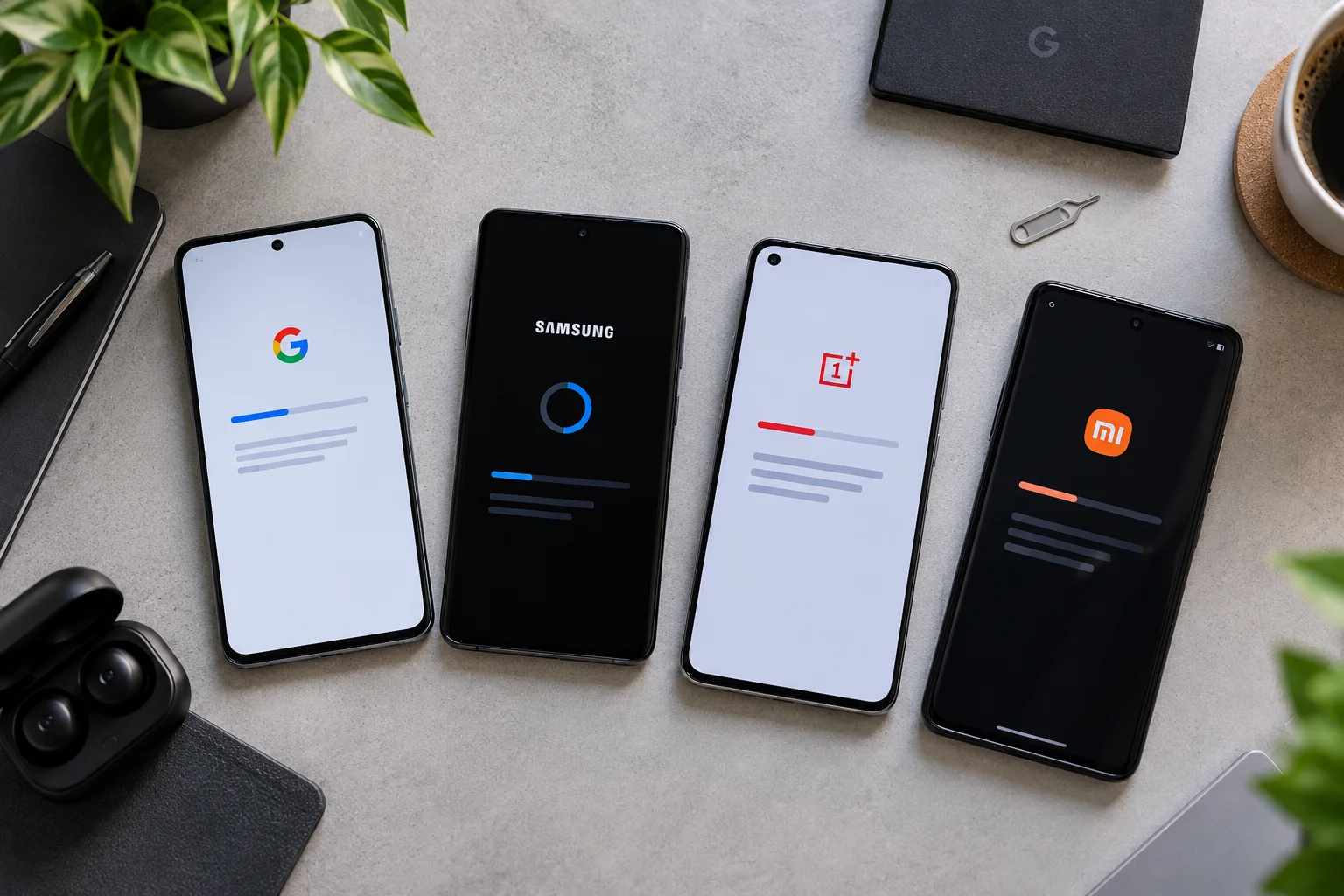
Older Android skins sometimes developed reputations for excessive background processes, duplicated apps and unnecessary features.
Modern flagship phones are much more capable, though, and manufacturers increasingly optimize their software around their hardware.
OnePlus, for example, emphasizes parallel processing and system-level optimization in OxygenOS 16. Xiaomi says HyperOS 3 includes kernel and graphics optimizations designed to improve efficiency and rendering. Samsung similarly integrates One UI with Galaxy hardware and its AI and security architecture.
The more useful question is therefore not:
"Does this phone have a skin?"
Almost every modern Android manufacturer does something to Android.
Instead ask:
"Does this manufacturer's software add features I actually use?"
If yes, the extra software can be useful rather than unnecessary.
Does Stock Android Get Updates Faster?
Google has a structural advantage on Pixel because it controls both the Android software and Pixel hardware, but update speed varies by manufacturer, model, region and carrier.
Pixel devices receive Google's Android updates and Pixel-specific feature updates directly through Google's software ecosystem. Google says Pixel 8 and newer devices receive seven years of OS and security updates, with Pixel Drops adding new and upgraded features.
Manufacturer phones have an additional software layer to maintain.
Samsung, for example, has to integrate Android updates into One UI and test them across a much broader range of Galaxy hardware. Samsung's current One UI 8 documentation also notes that supported functions and schedules can vary by model, country and network operator.
That doesn't mean a manufacturer skin automatically means poor update support. The manufacturer's actual update policy matters more than how visually close its interface is to stock Android.
Which Android Version Has the Most Features?
Manufacturer Android generally offers more built-in customization and device-specific features than a minimalist Android experience.
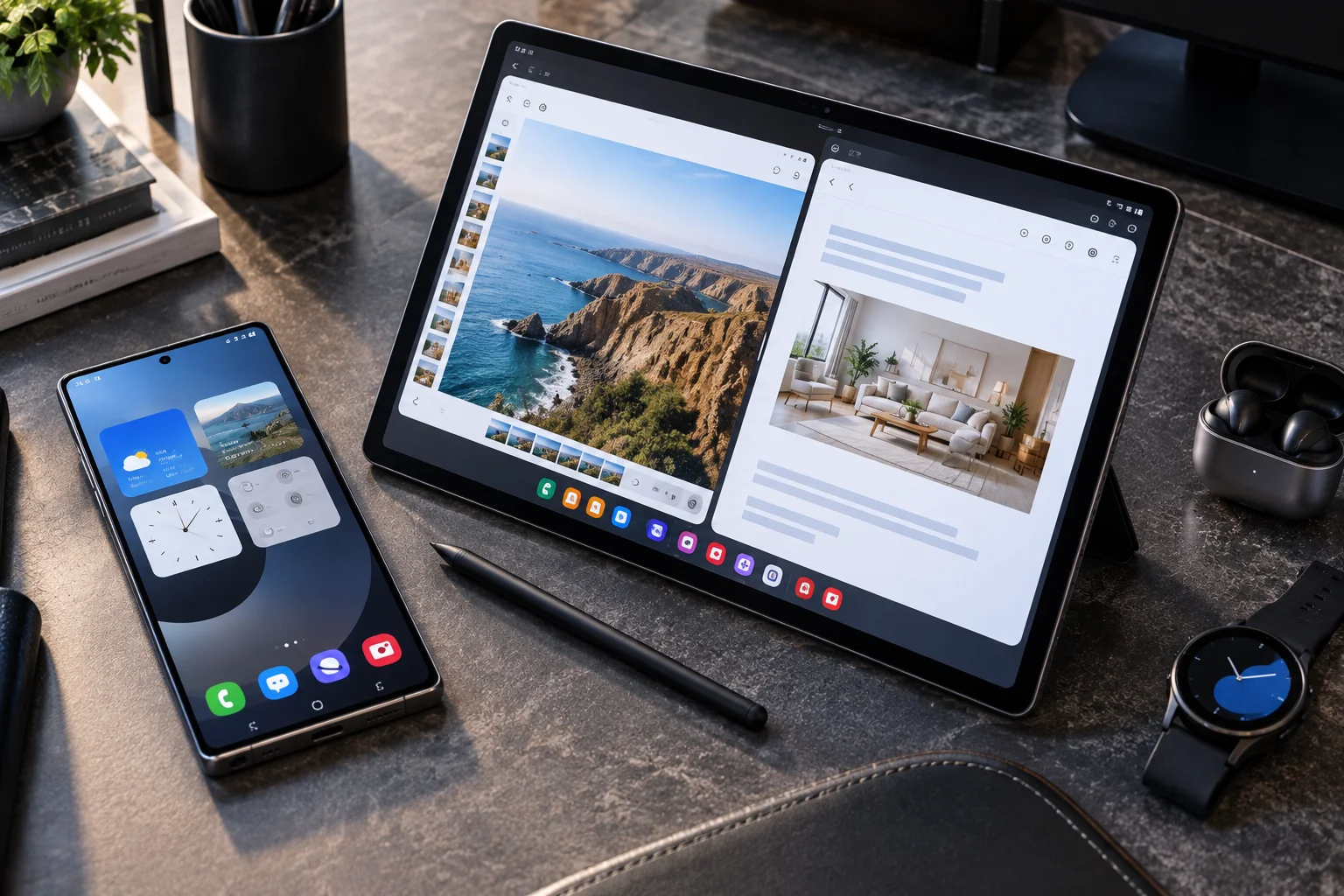
Samsung is a good example.
One UI can provide features designed specifically around Galaxy tablets, foldables, watches, earbuds and other devices. Samsung's AI Results View and Multi Window integration are examples of software functionality that goes beyond simply changing Android's appearance.
Xiaomi takes a similar approach with HyperOS and its wider hardware ecosystem.
OnePlus emphasizes customization, multitasking and cross-device workflows.
Pixel instead concentrates heavily on Google's AI, camera processing, security and Google-service integration.
So "more features" doesn't necessarily mean "better." It means there's more software to explore, configure and potentially use.
What Actually Changes When You Switch Android Brands?
The biggest changes are usually the interface, system apps, notifications, multitasking, AI features, ecosystem integration and update experience.
Your basic Android fundamentals remain recognizable.
You still have:
Android apps
Google Play on certified devices
Android permissions
Google services
Standard Android APIs
Notifications
Widgets
Bluetooth and Wi-Fi
USB connectivity
Android security architecture
But the details around those fundamentals can change considerably.
Your Samsung may handle multitasking differently from your Pixel.
Your Xiaomi may organize system controls differently from your OnePlus.
Your OnePlus may give you customization options that aren't available in the same way on Pixel.
That's why two Android phones with the same Android version can feel like completely different phones.
Stock Android vs Manufacturer Android: Which One Should You Choose?
Choose based on the software experience you want, not simply on whether a phone uses a lighter or heavier Android skin.
Pixel makes sense if you want Google's services, Pixel-specific AI and camera features, and a relatively clean Google-designed interface.
Samsung makes sense if you want extensive customization, multitasking, Galaxy ecosystem integration and a broad collection of Samsung-specific features.
OnePlus makes sense if you value customization, fluid interface behavior, multitasking and cross-device connectivity.
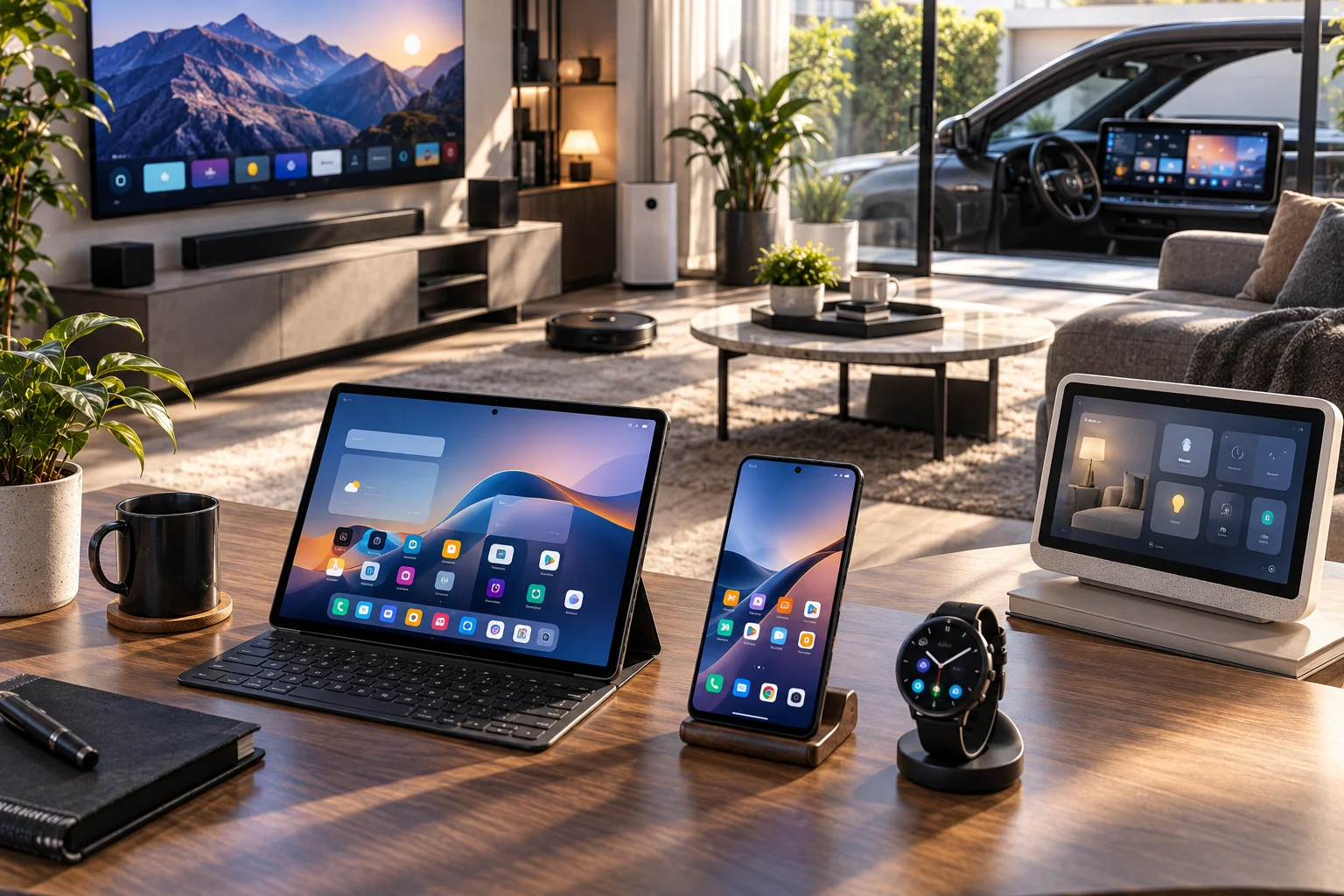
Xiaomi makes sense if you're interested in HyperOS features extending across phones, tablets, smart-home products and other connected devices.
The important point is that there is no single "correct" version of Android.
Android has become a platform on which manufacturers build their own software experiences. The best fit depends on whether you value Google's simplicity, Samsung's depth, OnePlus's customization or Xiaomi's broader ecosystem approach.
FAQ: Stock Android vs Manufacturer Android
Is Pixel stock Android?
Not technically. Pixel uses Google's customized Android software with Pixel-specific features and Google services. It is closer to what many people informally call stock Android than heavily customized manufacturer interfaces, but it isn't untouched AOSP.
Is Samsung One UI Android?
Yes. One UI is Samsung's software interface and platform layer built around Android. Current One UI 8 is based on Android 16.
Is OxygenOS still close to stock Android?
OxygenOS retains an Android foundation but has become substantially more feature-rich. OxygenOS 16 includes extensive customization, multitasking, AI and cross-device functions.
Is HyperOS Android?
Yes. Current Xiaomi devices such as the Xiaomi 17T run HyperOS 3 based on Android 16.
Does manufacturer Android use more storage?
It can. Manufacturer interfaces may include additional system applications, services and resources compared with a minimal Android installation. The exact amount varies significantly by manufacturer and model.
Can two phones running the same Android version feel different?
Absolutely. Android provides the underlying platform, while manufacturers can significantly change the interface, system apps, multitasking, AI tools, ecosystem features and device-specific behavior.