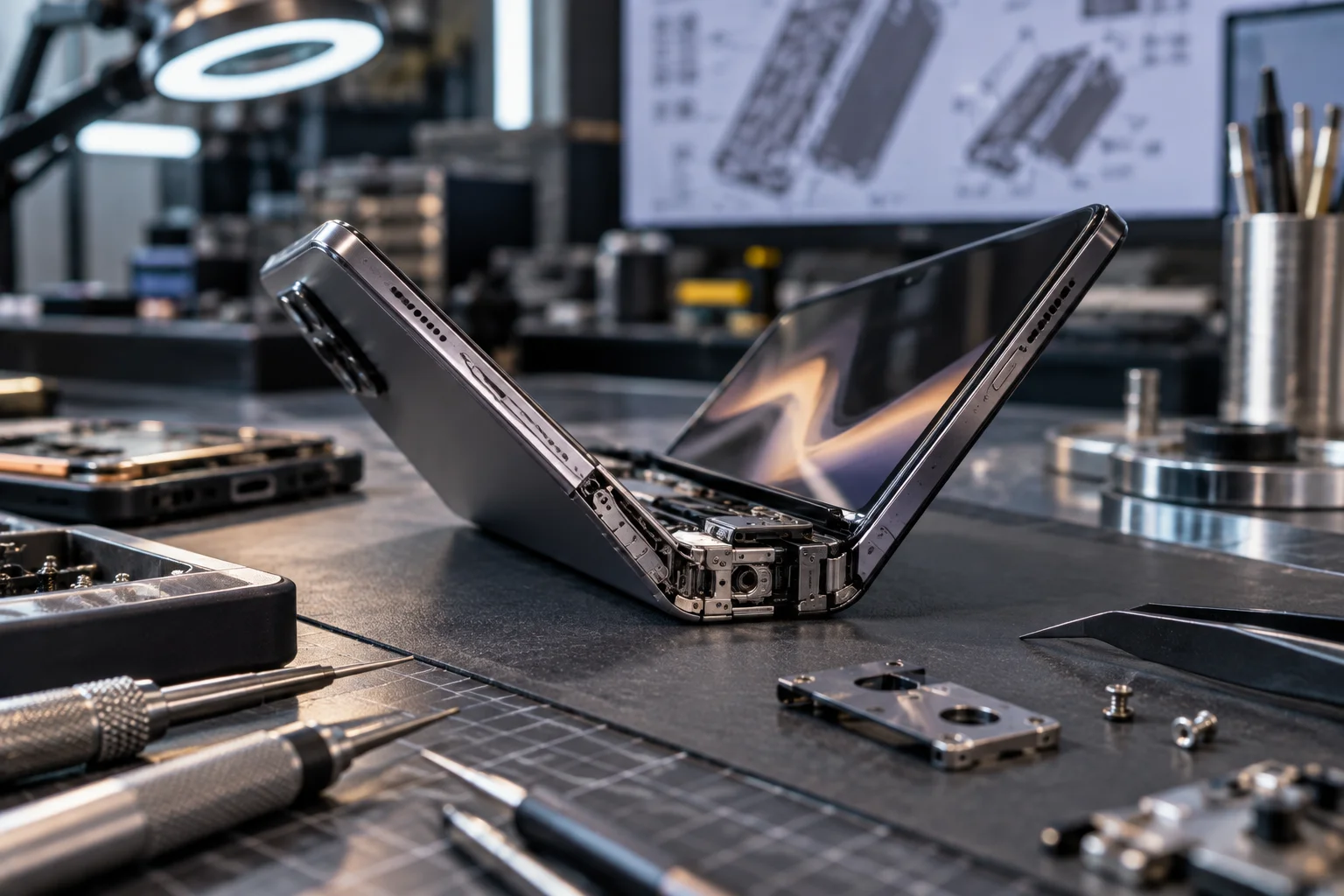
Modern foldable phones are considerably more durable than the first generation, but they still require more care than conventional smartphones. The biggest improvements have come from stronger hinge mechanisms, better protective layers around flexible displays, improved water and dust resistance, and more sophisticated ways of managing the stress created by repeated folding.
Current examples show how quickly the category has evolved. Samsung's Galaxy Z Fold8 uses an Armor FlexHinge and titanium reinforcement beneath the inner display, Google's Pixel 10 Pro Fold has a gearless hinge rated for 10+ years of folding, and Apple's new iPhone Duo combines a Grade 5 titanium frame with a hinge containing more than 100 components and an IP68 rating.
But durability isn't simply about the number of folds a manufacturer claims. The hinge, inner display, crease, dust protection and repairability all matter.
How Durable Are Foldable Phone Hinges in 2026?
Modern foldable hinges are engineered for hundreds of thousands of opening and closing cycles, but real-world durability depends on more than a laboratory fold test.
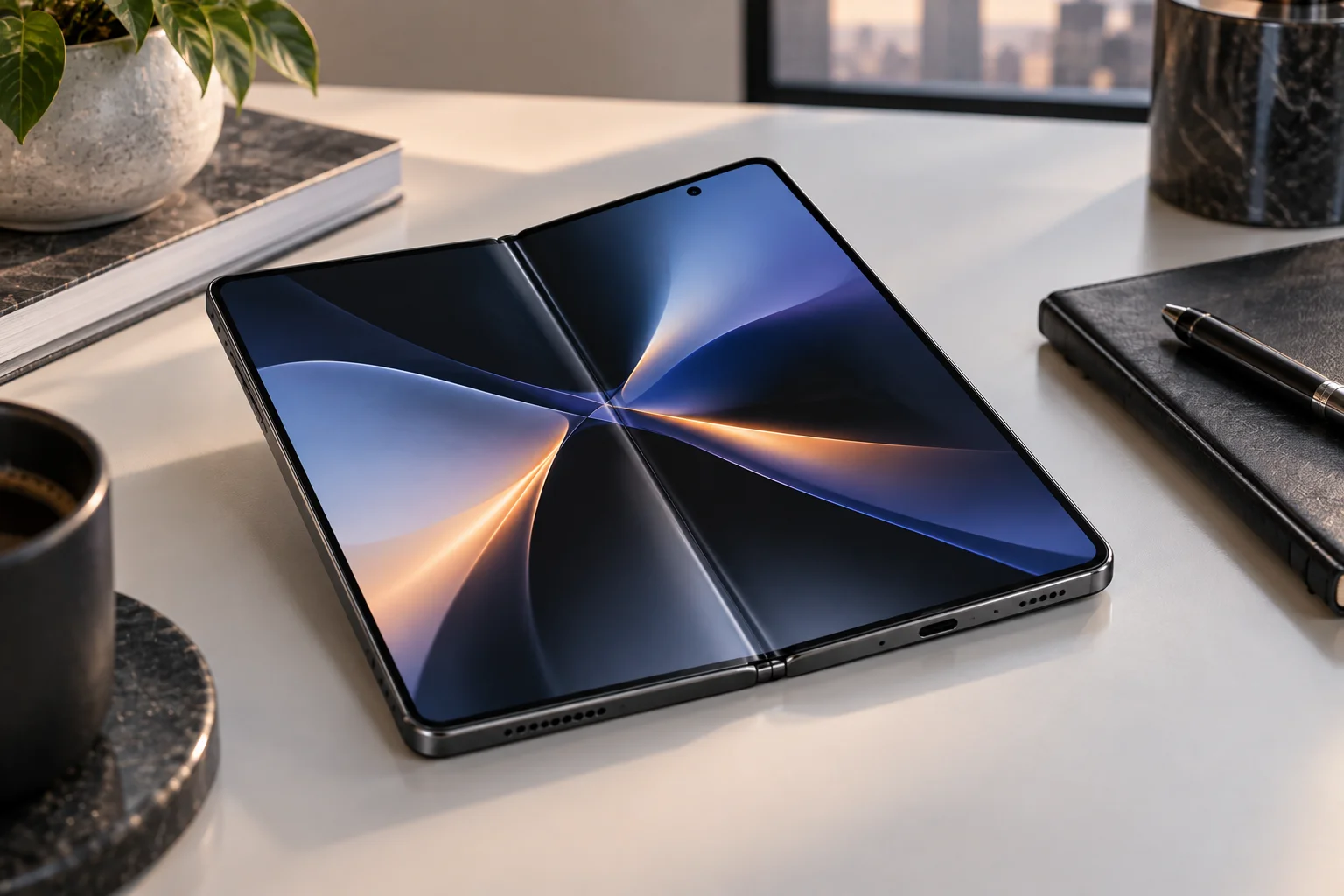
A hinge has to perform several jobs simultaneously:
Control how the phone opens and closes
Support the folding display
Distribute mechanical stress
Keep the two halves aligned
Prevent excessive pressure on the flexible panel
Protect internal components from debris
Samsung's Galaxy Z Fold8 uses an Armor FlexHinge designed to be thinner and rigid while helping the phone open more smoothly. The company also uses two titanium layers beneath the display as part of its structural reinforcement.
Google takes a different approach with the Pixel 10 Pro Fold, using a gearless high-strength hinge that Google says is capable of handling 10+ years of folding.
Apple's iPhone Duo uses a precision hinge made from more than 100 components. Apple says the mechanism supports the center of the display while controlling opening and closing.
The takeaway is simple: hinge engineering has become significantly more sophisticated, but it remains one of the most mechanically complex parts of a foldable.
Are Foldable Inner Displays Still Fragile?
The inner display remains the component that deserves the most care, even though modern designs are substantially tougher than early foldables.
A conventional smartphone can use a rigid glass panel. A folding phone needs a display stack that can repeatedly bend.
That means manufacturers have to balance flexibility with resistance to:
Scratches
Pressure
Impact
Repeated bending
Debris
Delamination
Creasing
Apple's iPhone Duo illustrates the layered approach. Its 7.6-inch folding display uses a scratch-resistant coating and nano-textured cover layer, with high-strength glass above and below the folding panel. Apple says custom adhesives allow the layers to move relative to one another as the display bends, reducing bending stress.
That doesn't make the inner display equivalent to the rigid glass on a traditional phone.
You should still avoid pressing hard on the folding panel, using sharp objects near it or placing debris between the two halves when closing the phone.
Why Do Foldable Phones Have a Crease?
The crease exists because the display and its supporting layers have to bend repeatedly around a central area.
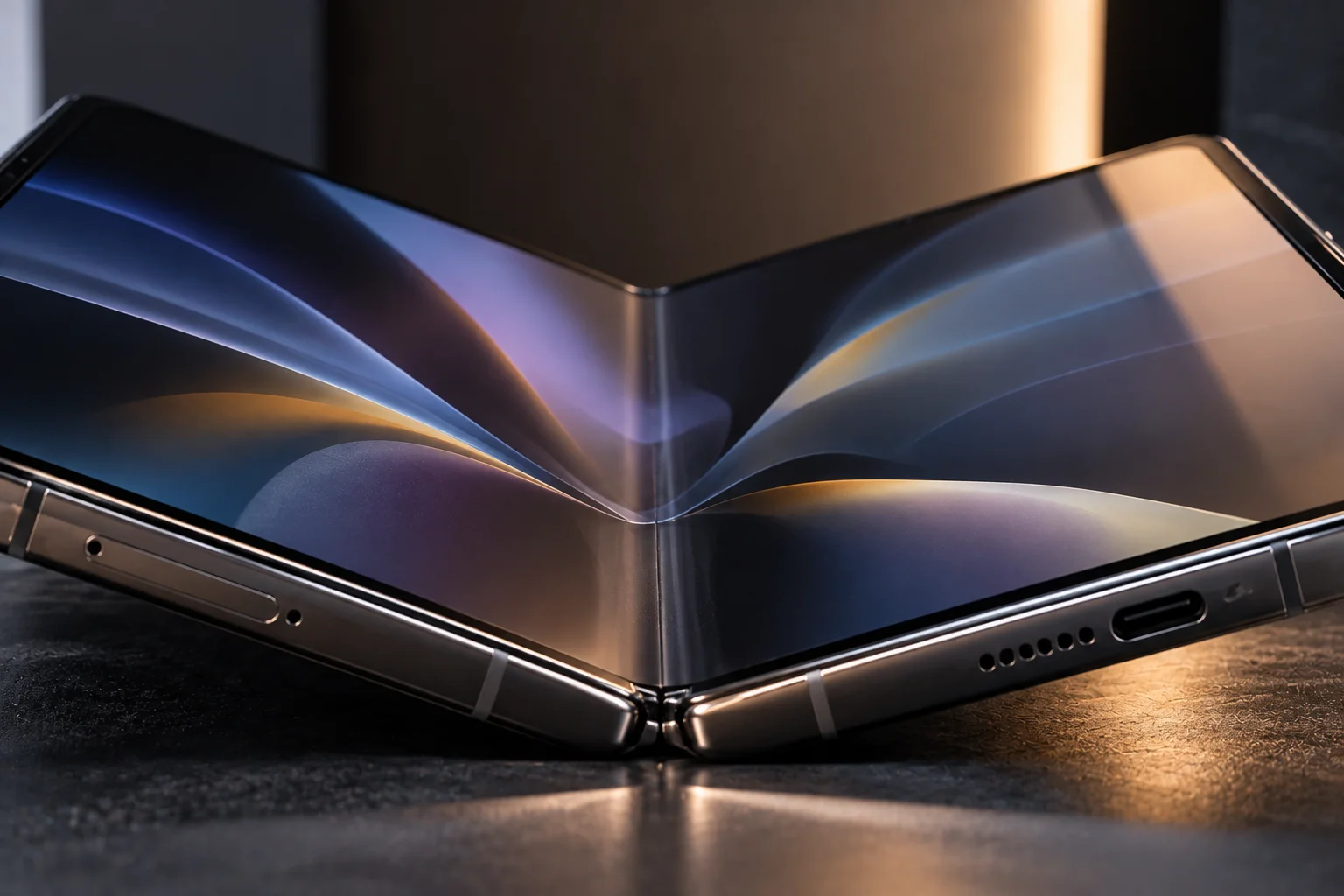
The visibility of that crease depends on the hinge architecture, display stack and how the screen is supported.
Manufacturers have been working to make creases less visible and reduce mechanical stress around the fold.
Samsung says the Galaxy Z Fold8's redesigned hinge and inner-bezel geometry help create a flatter main screen, while Apple says its optical adhesives allow the layers of the iPhone Duo display to glide as the screen folds, minimizing stress and the appearance of a crease.
A crease isn't necessarily evidence that a display is failing.
What matters more is whether you notice:
New lines or discoloration
Flickering
Dead pixels
Touch problems
A sudden increase in crease depth
Bubbles or separation in the display layers
Those symptoms can indicate a problem that deserves professional inspection.
Are Foldable Phones Dustproof?
Dust protection has improved, but the hinge remains a difficult engineering challenge because it contains moving mechanical parts.
This is where IP ratings can be misleading.
The Galaxy Z Fold8 has an IP48 rating. Samsung says this provides protection against everyday dust exposure and water, but the “4” does not mean the phone is completely dust-tight.
Google's Pixel 10 Pro Fold goes further with IP68, meaning the device has a higher level of protection against solid particles and water under the specified test conditions.
Apple's iPhone Duo also carries IP68, with Apple specifying testing under IEC 60529 conditions.
However, an IP rating doesn't mean you should deliberately expose a foldable to sand or dust.
iFixit's 2026 Galaxy Z Fold8 teardown found that very small particles could enter the hinge area and reported that the hinge began making grinding noises during testing. The teardown illustrates an important limitation: a phone can protect its sealed electronics reasonably well while still having a vulnerable mechanical hinge.
Can Sand Damage a Foldable Phone?
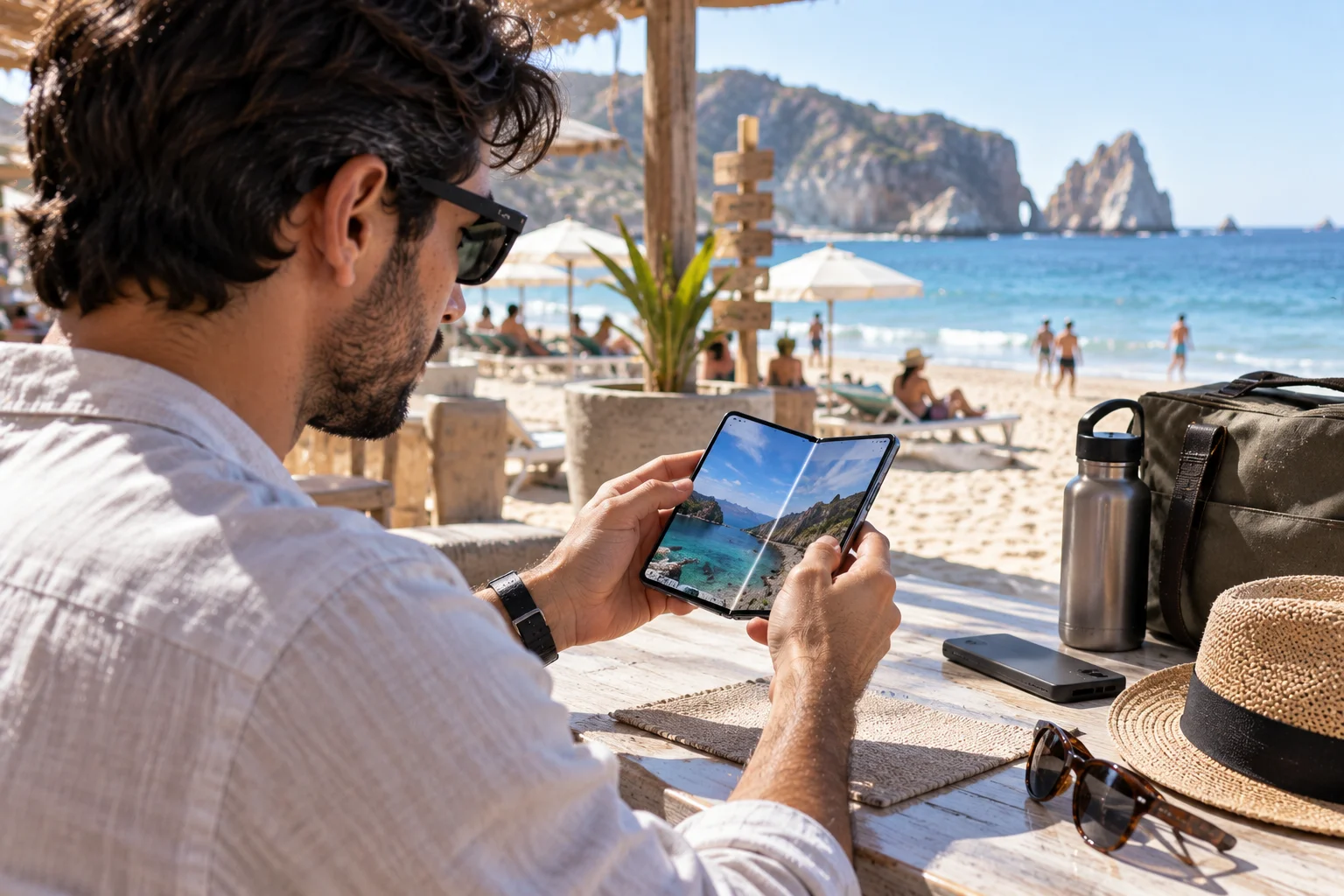
Yes. Sand is one of the environments where you should be especially careful with a foldable.
Tiny particles can potentially work their way into mechanical areas around a hinge. Once inside, they can interfere with moving components.
That's why a beach is a much more challenging environment for a foldable than an ordinary smartphone might suggest.
If you use one near sand:
Keep it inside a clean pocket or case when not in use.
Don't open or close it immediately after handling sand.
Don't intentionally brush particles into the hinge.
Don't use compressed air unless the manufacturer specifically recommends it.
Follow the manufacturer's cleaning instructions.
The fact that a phone has IP68 or another dust/water rating doesn't make it immune to mechanical contamination.
Are Foldable Phones Water Resistant?
Many modern foldables have meaningful water resistance, but water resistance is not permanent or unlimited.

Current models demonstrate the progress.
The Pixel 10 Pro Fold and iPhone Duo both have IP68 ratings, while the Galaxy Z Fold8 carries IP48.
Still, manufacturers test phones under controlled conditions. Normal wear, drops, repairs and aging can affect seals.
Treat water resistance as protection against accidents, not an invitation to use your foldable underwater.
What Actually Damages Foldable Phones?
The biggest risks are usually mechanical stress, debris, drops and improper handling rather than normal opening and closing.
Risk | Potential problem |
|---|---|
Sand/dust | Hinge contamination |
Sharp objects | Inner-display scratches |
Debris between panels | Pressure damage when closing |
Drops | Hinge/frame/display damage |
Excessive pressure | Flexible-panel damage |
Damaged screen protector | Display-layer problems |
Liquid exposure | Corrosion or component damage |
Improper repair | Loss of structural integrity |
One particularly important rule is never put anything between the two halves when closing a foldable.
That includes cards, coins, keys and other objects that can create concentrated pressure on the inner display.
How Long Can a Modern Foldable Phone Last?
A well-maintained modern foldable can potentially last for years, but its long-term reliability depends on the hinge, display, battery and repair options as much as the manufacturer's fold rating.
The headline durability claims are useful because they demonstrate that manufacturers are designing for repeated use. Google's 10+ year folding claim for the Pixel 10 Pro Fold, for example, provides a useful indication of the intended mechanical lifespan.
But a phone can develop other problems long before its theoretical fold limit.
Battery aging, accidental damage, hinge contamination and display wear can all become more relevant than the number of times the device has technically been opened.
How to Make a Foldable Phone Last Longer
Good everyday handling can significantly reduce unnecessary stress on a foldable.
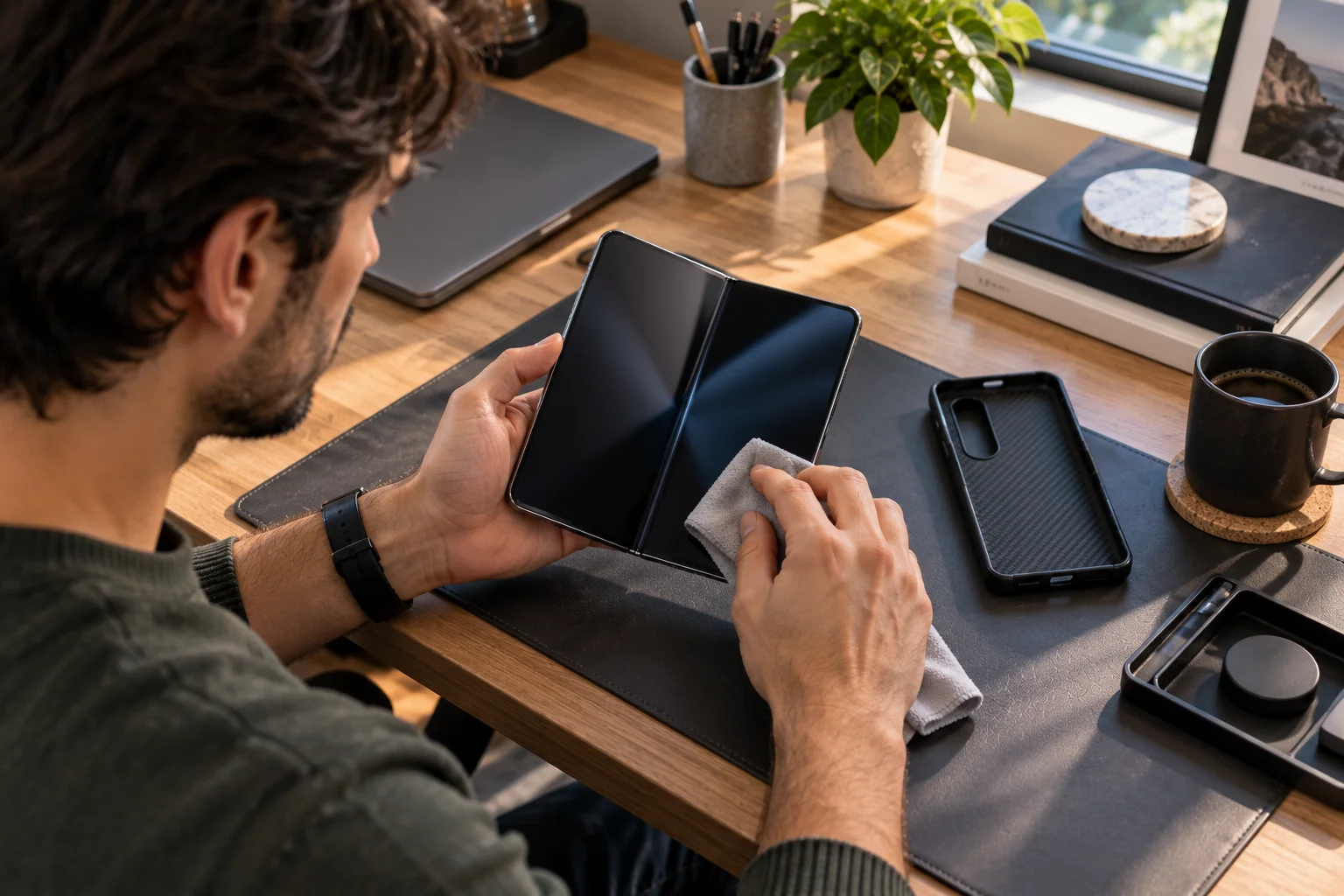
Follow these habits:
Keep sand and fine dust away from the hinge.
Don't press hard on the inner display.
Never close the phone with objects between the screens.
Don't remove a factory-installed inner-screen protector unless the manufacturer instructs you to.
Use a case if you regularly drop your phone.
Clean the device according to the manufacturer's instructions.
Don't treat water resistance as waterproofing.
Get unusual hinge noises, display lines or touch problems checked promptly.
Frequently Asked Questions About Foldable Phone Durability
Are foldable phones durable enough for everyday use?
Yes. Current foldables are designed for everyday use and have stronger hinges, improved display structures and better resistance to water and dust than earlier generations. However, their flexible displays and mechanical hinges still require more care than conventional phones.
Does the crease mean a foldable screen is damaged?
Not necessarily. A visible crease is a normal characteristic of many folding displays. A sudden change in the crease accompanied by flickering, dead pixels, touch problems or display separation is more concerning.
Can dust get inside a foldable phone?
It can, particularly around mechanical areas such as the hinge. An IP rating provides a defined level of protection but does not make every moving part completely immune to fine particles.
Is IP68 better than IP48 for a foldable?
For dust protection, IP68 provides a higher level of solid-particle protection than IP48. However, the complete durability picture also depends on hinge construction, seals, display design and how the phone is used.
Can I take a foldable phone to the beach?
It's better to avoid exposing a foldable directly to sand. Fine particles can create problems for mechanical hinge components even when the phone has a formal dust or water-resistance rating.
Are modern foldables more durable than older models?
Manufacturers have made substantial improvements in hinges, display materials and environmental protection. Current models such as the Galaxy Z Fold8, Pixel 10 Pro Fold and iPhone Duo demonstrate different approaches to improving durability.
What is the most fragile part of a foldable phone?
The inner folding display and hinge deserve the most attention because both are mechanically more complex than the rigid glass and frame of a conventional smartphone.
The Bottom Line on Foldable Phone Durability
Modern foldables are no longer the fragile experiments they were several years ago, but they still aren't conventional smartphones with a hinge added to them.
The Galaxy Z Fold8, Pixel 10 Pro Fold and iPhone Duo show three different approaches to solving the same engineering problem: creating a large flexible display while making the hinge, frame and display layers durable enough for everyday use.
The biggest lesson for buyers is to look beyond the fold-count number.
Check the hinge design, inner-display construction, IP rating, dust protection, repair options and manufacturer's handling instructions. And if you regularly spend time around beaches, construction sites or dusty environments, those factors become even more important.
A foldable can be a durable everyday phone. It just rewards a little more awareness about where and how you use it.