
Android 17 and iOS 27 mark a shift in smartphone AI from answering questions to actually helping users get things done. Google's Android strategy is increasingly built around Gemini, with Gemini Intelligence designed to understand context, automate multi-step tasks and work across apps. Apple's iOS 27 takes a similar direction with Siri AI, which can understand personal context, what's on the screen and information across apps.
The difference is in how each company approaches that future. Google is building an increasingly proactive AI layer around Android and the wider Google ecosystem, while Apple is integrating AI more tightly into the iPhone's existing apps, operating system and privacy architecture. Android 17 also brings AI-assisted accessibility and security features, while iOS 27 expands Visual Intelligence, AI photo editing and natural-language Shortcuts.
Both platforms are moving toward phones that understand what you're doing rather than simply waiting for a command.
That's probably the most important change in Android 17 and iOS 27.
How is AI different in Android 17 and iOS 27?
Android 17 emphasizes proactive Gemini assistance and multi-step actions, while iOS 27 focuses on Siri AI's personal context, onscreen awareness and deeper integration with Apple's apps.
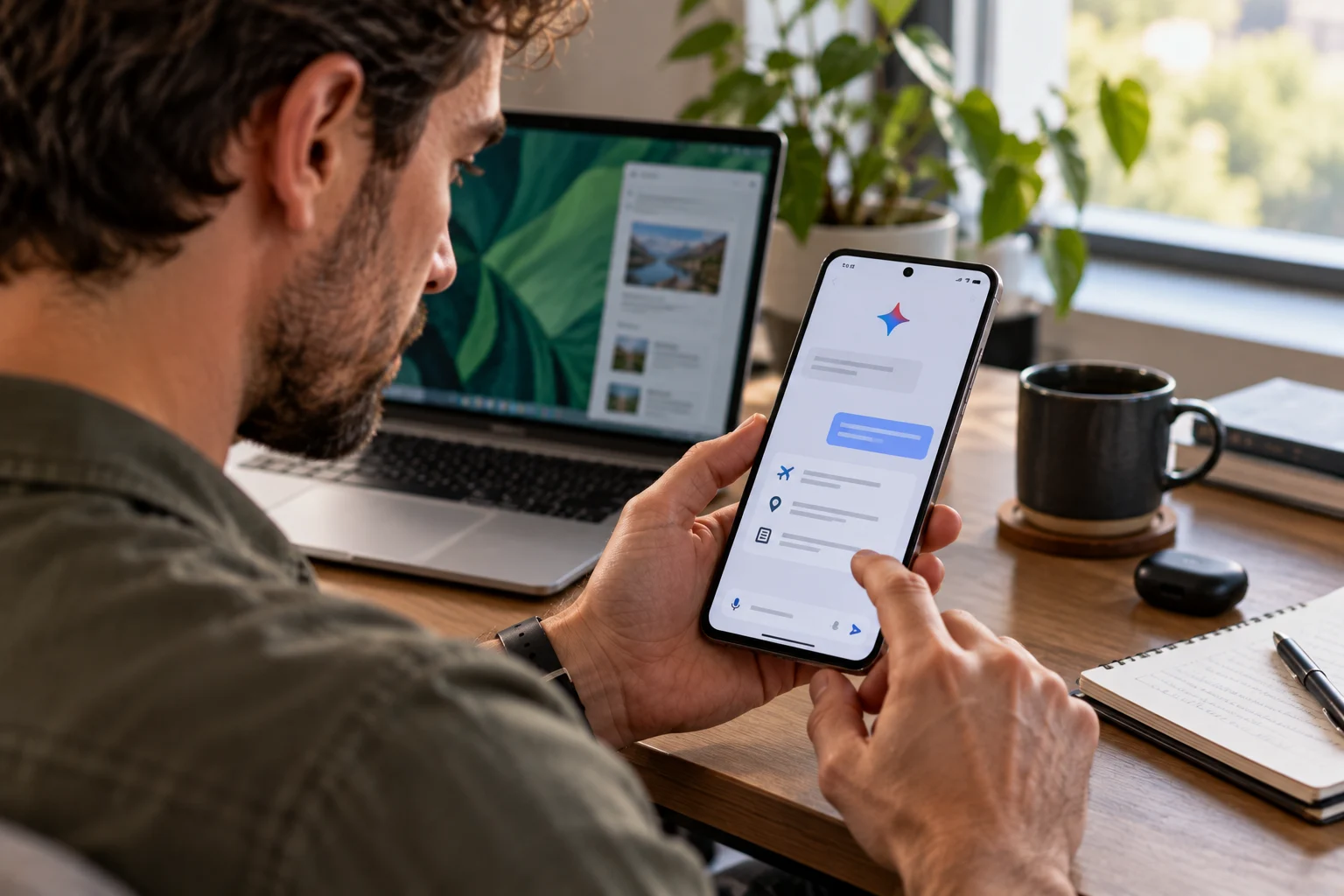
Google describes Gemini Intelligence as a way for Android devices to understand context and complete tasks on a user's behalf. It can automate actions across apps, help fill out forms, summarize web content and turn spoken thoughts into polished messages.
Apple's Siri AI takes a somewhat different route.
It can draw information from messages, emails and photos, understand what's displayed on screen and perform actions across apps. Apple describes it as a more conversational version of Siri built around personal context.
So the two companies are chasing a similar destination.
The route is different.
AI capability | Android 17 | iOS 27 |
|---|---|---|
Main AI system | Gemini / Gemini Intelligence | Apple Intelligence / Siri AI |
Personal context | Gemini Personal Intelligence | Siri AI personal context |
Multi-step tasks | Gemini Intelligence | Siri systemwide app actions |
Screen understanding | Gemini-powered features | Visual Intelligence |
Camera AI | Gemini and Guided Vision | Visual Intelligence |
AI automation | Gemini + Android APIs | Siri + Shortcuts |
AI writing | Gemini tools | Siri Writing Tools |
On-device AI | Gemini Nano / Android AI stack | Apple Foundation Models |
Cloud AI | Gemini services | Private Cloud Compute |
Cross-app actions | Expanding | Built into Siri AI |
Can Android 17's Gemini actually perform tasks for you?
Yes. Gemini Intelligence is designed to go beyond generating answers by navigating supported apps and completing multi-step tasks with user control.
This is one of the biggest changes in Google's Android strategy.
Imagine telling your phone:
"Find the restaurant I saved, check when it's open and help me book a ride there."
The traditional smartphone model would make you open several apps and perform each step yourself.
The Gemini Intelligence model is different. Google says Gemini can automate tasks across apps, including examples such as booking rides and finding information in Gmail before adding related products to a shopping cart.
That doesn't mean every Android phone can autonomously perform every task.
Availability depends on supported hardware, apps and rollout.
But the direction is clear: Google wants Gemini to become an agent that operates the phone, not simply a chatbot sitting inside it.
What makes Siri AI different on iOS 27?
Siri AI is designed to understand personal context, onscreen information and app content, allowing the assistant to answer questions and take actions using information already on your iPhone.

This is a major change from the Siri many iPhone owners have used for years.
Instead of asking only things like "What's the weather?" or "Set a timer," you can ask Siri about information buried in your own digital life.
Apple gives examples involving finding a particular photo, locating an email or saved note and then taking action across apps, such as drafting an email or editing and sharing photos.
The key idea is personal context.
Your phone already contains a huge amount of useful information. Siri AI is designed to make that information easier to retrieve without forcing you to remember exactly where you stored it.
There is a catch, though.
Siri AI is currently rolling out as a beta and requires an Apple Intelligence-compatible device. Apple says support for French, Japanese, Korean, Portuguese and Spanish is coming in October, while availability also varies by region.
How is AI changing the way Android phones see the world?
Android 17 is expanding Gemini's ability to understand visual information, including real-time camera assistance through Guided Vision for supported users.
Google's approach isn't limited to asking a camera to identify an object.
With Guided Vision, Gemini can use the camera to help users understand their surroundings. Google describes scenarios such as reading fine print on packaging, navigating a menu in a dim restaurant or identifying household objects. The system can also provide voice guidance if the camera needs to be repositioned.
That's particularly meaningful for accessibility.
Instead of taking a photograph and uploading it somewhere for analysis, the phone can become an interactive visual assistant.
And this is where smartphone AI starts becoming less about "generating content" and more about understanding the physical world around you.
How does Visual Intelligence work on iOS 27?
Apple's Visual Intelligence uses the iPhone camera and onscreen content to help users search, ask questions and take actions based on what they're looking at.
Point your camera at something and the iPhone can use AI to understand the scene.
Apple gives examples such as asking questions about what the camera sees or using Visual Intelligence for practical tasks. The feature is also integrated with Siri AI, making it possible to move from understanding something visually to taking an action.
The broader idea is similar to Google's.
Your phone shouldn't require you to describe everything manually.
If the camera can see it, the AI can potentially understand it.
Which company is making AI more proactive?
Google is putting particularly strong emphasis on proactive AI, with Gemini Intelligence designed to anticipate needs and complete multi-step tasks rather than simply respond to individual prompts.
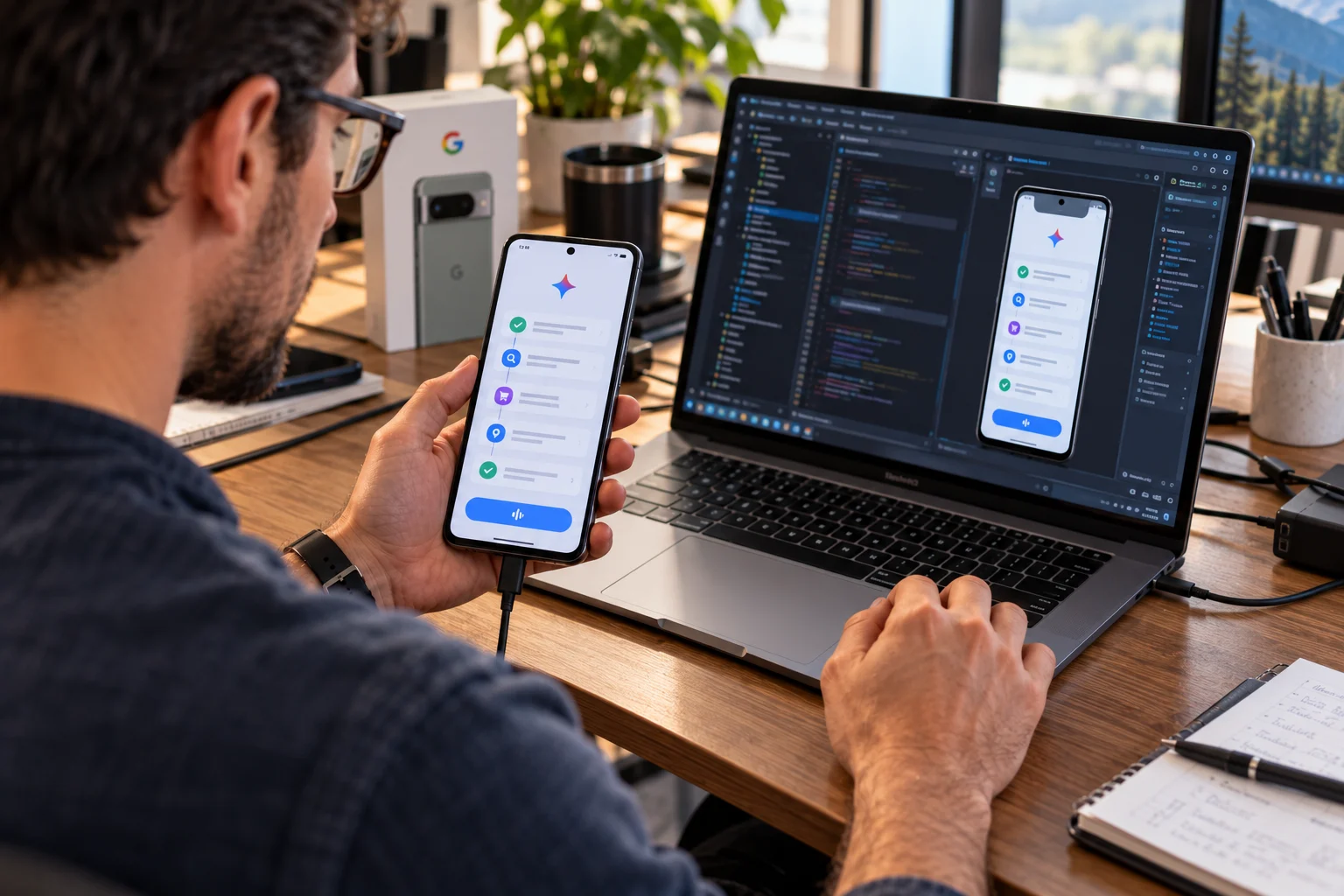
Google explicitly describes Android as evolving toward an "intelligence system" in which Gemini can understand context, anticipate needs and complete tasks on a user's behalf.
The company is also building developer tools that make Android applications easier for AI agents to interact with.
Google's AppFunctions API is designed to let apps expose functions that proactive features, assistants and agents can use. Android Computer Control is another framework for assistant-driven task automation inside supported apps.
That's a significant architectural change.
AI isn't just being added to Android.
Android is being designed so AI can interact with Android applications.
Apple is heading in a similar direction through Siri's systemwide app actions and Shortcuts, but its approach remains more tightly controlled within Apple's software ecosystem.
How are Android 17 and iOS 27 using AI for everyday tasks?
Both platforms are moving AI into ordinary phone activities such as writing, searching, photography, accessibility and automation instead of keeping it inside a standalone chatbot.
On Android, Gemini can help with things such as:
Automating tasks across supported apps
Summarizing web content
Filling out forms
Turning spoken thoughts into polished messages
Creating personalized widgets
Understanding camera content
Providing accessibility assistance
On iOS 27, Apple Intelligence can help with:
Finding information across personal content
Drafting and rewriting text
Understanding what's on screen
Editing photographs
Creating images
Using Shortcuts with AI
Taking actions across supported apps
This is an important shift.
A few years ago, the question was:
"What can AI generate?"
Now it's increasingly:
"What can AI do for me?"
Is AI running on the phone or in the cloud?
Both Google and Apple use a combination of on-device and cloud-based AI, but they emphasize different architectures and privacy approaches.

Android uses technologies including Gemini Nano for on-device AI, alongside Google's larger Gemini models and cloud services. Google's Android AI developer platform also provides APIs for on-device Gemini Nano models.
Apple uses its own Apple Foundation Models for Apple Intelligence, with processing split between the device and Private Cloud Compute when greater computational capacity is required. Apple says Private Cloud Compute is designed so user data isn't stored or made accessible to Apple when requests are processed there.
This matters because smartphones have a basic limitation.
The most powerful AI models require considerable computing resources.
Phones are becoming increasingly capable, but they can't run every large model locally at full speed.
So both companies are effectively creating a hybrid system:
small or suitable tasks on the phone, more demanding tasks through cloud infrastructure.
How important is privacy to Android 17 and iOS 27 AI?
Both Google and Apple are treating privacy as a central part of their AI strategies, particularly because AI assistants increasingly need access to personal information and app data.
Google says Gemini Intelligence is built around three principles: explicit user control, comprehensive data protection and operational transparency.
That becomes particularly important when an AI can access Gmail, apps, messages or other personal information.
Apple takes a similarly privacy-focused approach with its Apple Intelligence architecture. The company says its AI uses on-device processing where possible and Private Cloud Compute for more demanding requests.
But there's a fundamental tension here.
The more useful an assistant becomes, the more context it needs.
A phone that knows nothing about you can't do much beyond answering generic questions.
A phone that understands your schedule, messages, photos, apps and preferences can be dramatically more useful.
The challenge is making sure users remain in control of that information.
Will AI make Android and iPhone apps less important?
AI is unlikely to eliminate apps, but Android 17 and iOS 27 suggest that users may increasingly interact with apps through AI rather than opening every app manually.
Consider ordering food.
Today, you open a restaurant app, search, select an item, enter details and check out.
An AI agent could eventually handle much of that process after receiving a natural-language request.
Google is already building Android APIs specifically so AI agents can interact with application functions.
Apple's Siri AI similarly has systemwide app actions.
This creates a new role for apps.
Instead of being destinations users constantly visit, apps could increasingly become services that AI accesses on the user's behalf.
That's a pretty significant change in the way mobile software could work.
Which AI approach will matter more to smartphone users?
Android 17 and iOS 27 are both moving toward agentic, context-aware AI, but their priorities differ: Google is emphasizing proactive task completion and an open developer ecosystem, while Apple is emphasizing personal context, privacy and tightly integrated system experiences.
Android's advantage is breadth.
Google can connect Gemini with Search, Gmail, Maps, Chrome, Android applications and a wide range of devices. The company is also giving developers APIs for building applications that AI agents can interact with.
Apple's approach is more vertically integrated.
It controls the iPhone hardware, iOS, Apple Intelligence models and the apps that form the core experience. Siri AI can therefore operate within a tightly coordinated ecosystem.
Neither approach guarantees that every AI feature will work perfectly.
In fact, both companies are still developing this technology.
Siri AI is explicitly in beta, while Google's agentic Android features are rolling out progressively to supported hardware and apps.
What does Android 17 and iOS 27 mean for the future of phones?
The biggest change is that smartphones are becoming interfaces for AI agents rather than simply collections of individual apps.

Android 17 is laying the groundwork for Gemini to understand context, use applications and complete tasks.
iOS 27 is turning Siri into a more capable assistant that can understand personal information, see what's on screen and interact with Apple's ecosystem.
And the development isn't stopping with these releases.
Google is already developing APIs that allow AI agents to interact with Android apps, while Apple continues expanding Apple Intelligence across its operating systems and applications.
The result could be a very different smartphone experience over the next few years.
You might not think:
"Which app should I open?"
You might simply tell your phone:
"Find it, compare it, book it and put it on my calendar."
The apps would still be there.
You'd just have less reason to think about which one handles each individual step.
Android 17 vs iOS 27 AI: The key differences
Area | Android 17 | iOS 27 |
|---|---|---|
AI assistant | Gemini | Siri AI |
Core direction | Proactive and agentic | Personal and contextual |
Multi-step actions | Gemini Intelligence | Siri systemwide actions |
Camera understanding | Gemini / Guided Vision | Visual Intelligence |
Personal information | Gemini Personal Intelligence | Siri personal context |
AI automation | Gemini + AppFunctions | Siri + Shortcuts |
On-device AI | Gemini Nano and Android AI stack | Apple Foundation Models |
Cloud AI | Google Gemini | Private Cloud Compute |
Developer access | Broad Android APIs | Apple's controlled ecosystem |
Accessibility | Guided Vision and Gemini | Apple Intelligence accessibility features |
Current maturity | Rolling out across supported devices | Siri AI in beta |
The bottom line
Android 17 and iOS 27 are changing the role of AI on smartphones.
Google is trying to make Android more proactive, with Gemini capable of understanding context and eventually completing increasingly complicated tasks across apps. Apple is making the iPhone more personal and context-aware through Siri AI, Visual Intelligence and deeper Apple Intelligence integration.
The most interesting part isn't that both phones can write text or answer questions.
That's old news now.
The real shift is agency.
Your phone is beginning to understand what you're trying to accomplish and, in supported situations, take steps toward completing it.
We're still early in that transition. Siri AI remains in beta, Google's Gemini Intelligence rollout is expanding gradually, and developers are only beginning to build applications designed for AI agents.
But Android 17 and iOS 27 make the direction clear.
The next generation of smartphones won't just be smarter places to run apps. They'll increasingly become AI systems that help you use those apps.