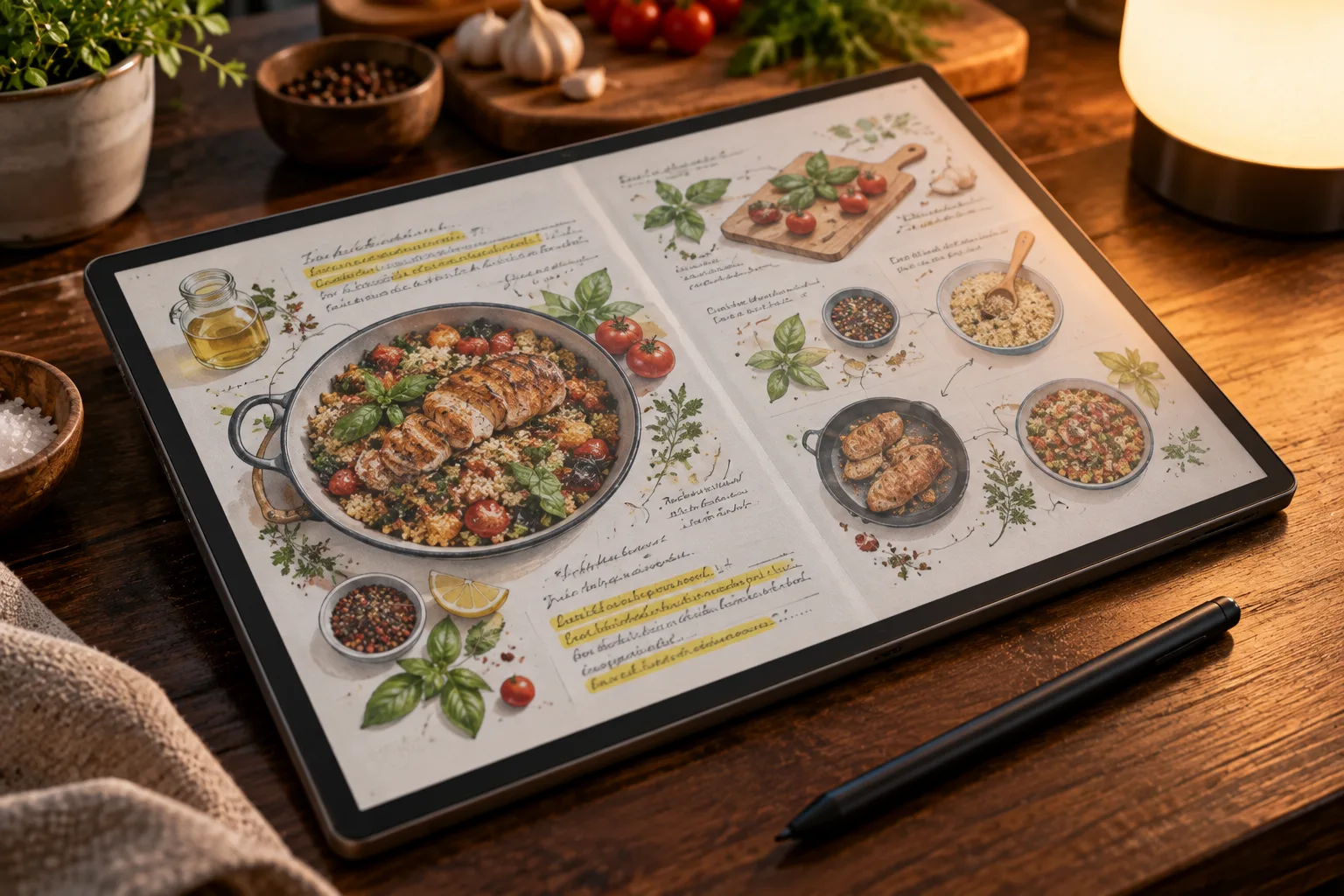
E-readers are becoming smarter, but the biggest changes aren't about turning them into miniature tablets. AI is gradually being used to help readers understand books, organize notes, search content and interact with text, while new E Ink display technology is bringing color, better contrast and more flexible reading experiences to dedicated devices.
Amazon is leading the AI push with newer Kindle Scribe features such as Story So Far, Ask This Book, AI-powered notebook summaries, handwriting search and handwriting-to-text conversion. Its Colorsoft and Scribe Colorsoft devices also bring color E Ink to more Kindle products. (aboutamazon.com)
Kobo is taking a somewhat different approach. Its color readers, including the Kobo Libra Colour and Clara Colour, use E Ink Kaleido 3 technology to display color illustrations, covers and highlights while retaining the low-glare characteristics of E Ink. The Libra Colour also supports handwritten annotations with the Kobo Stylus 2. (kobo.com)
The result is an interesting middle ground.
E-readers aren't becoming tablets.
They're becoming more intelligent reading tools that happen to keep the advantages of E Ink.
How is AI changing the way people use e-readers?
AI is shifting e-readers from passive book displays toward interactive reading assistants that can help explain, summarize, search and organize information.
For years, an e-reader essentially did one thing extremely well: display digital text.
That simplicity was the whole appeal.
Now companies are asking a different question:
What if the device could help you understand what you're reading without getting in the way?
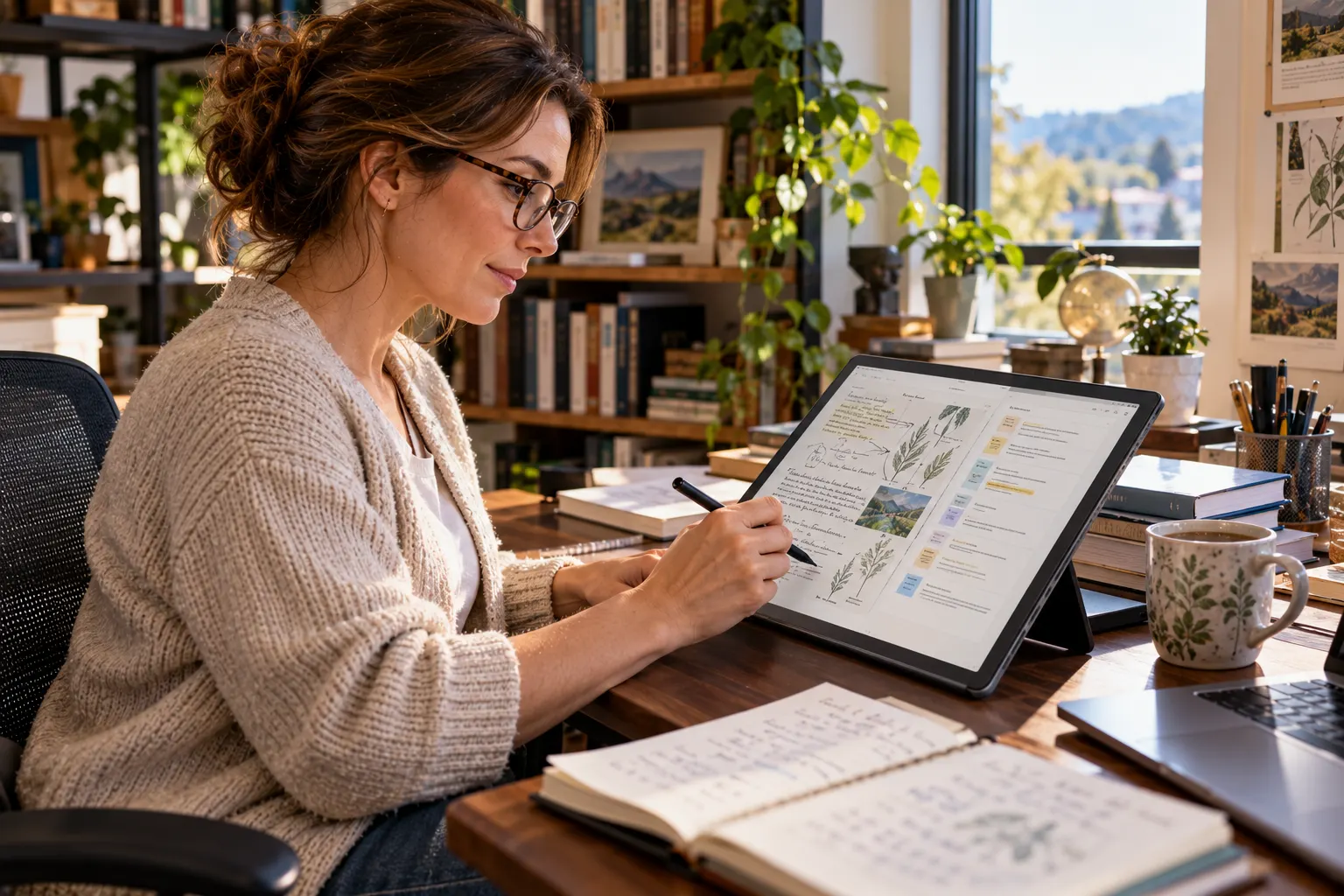
Amazon's newer Kindle Scribe models provide a good example. Its AI tools can summarize handwritten notes, search handwriting and convert notes into editable text. Amazon has also introduced Story So Far and Ask This Book for supported Kindle titles. (aboutamazon.com)
Story So Far is particularly suited to long books.
If you put down a novel for several weeks and can't quite remember where you left off, an AI-generated recap can help you return to the story without rereading several chapters.
Ask This Book takes another approach.
You can ask questions about the story and receive answers designed to avoid revealing future events.
That's a subtle but meaningful change.
The e-reader isn't replacing your reading.
It's helping you read.
Can AI summarize books on a Kindle?
Yes, selected newer Kindle devices can use AI-powered features to provide summaries and answer questions about supported books, although availability depends on the device, title and market.
Amazon calls one of these features Story So Far.
It can summarize what you've read up to your current position in supported books, rather than summarizing the entire story and potentially spoiling it. (aboutamazon.com)
There's an obvious benefit for people who read slowly.
Maybe you read 20 pages before bed, then don't pick up the book again for a week. A short recap can save you from scrolling backward trying to remember which character was introduced.
But there is a trade-off.
The more AI becomes involved in reading, the more readers need to distinguish between the author's words and an AI interpretation of those words.
For factual books, textbooks and research material, that distinction becomes especially important.
AI can summarize.
It can also misunderstand.
So these features work best as reading aids rather than replacements for the original text.
How are AI note-taking tools changing e-readers?
AI is making handwriting and annotations more useful by turning handwritten notes into searchable, summarized and editable information.
This is where devices such as the Kindle Scribe become more interesting than conventional e-readers.
Amazon says newer Scribe models can search handwritten notes, summarize them and convert handwriting to text. (aboutamazon.com)
Imagine reading a business book and writing:
"Chapter 4 — check this against our pricing strategy."
Six months later, you could search your handwritten notebooks rather than remembering which page you wrote it on.
That's a very different experience from the old Kindle.
The device becomes a combination of:
book + notebook + searchable archive.
Kobo has taken a more traditional approach to digital handwriting.
The Kobo Libra Colour supports handwritten annotations with the optional Stylus 2, while larger devices such as the Elipsa 2E are designed for reading and writing on a bigger screen. (kobo.com)
Kobo isn't pushing the same AI-heavy notebook experience as Amazon.
And for some readers, that's perfectly fine.
Why is color E Ink becoming important?
Color E Ink makes e-readers more useful for illustrated books, comics, children's books, maps, magazines and color-coded annotations without replacing the paper-like advantages of electronic ink.

Traditional E Ink readers have historically been monochrome.
That's fantastic for novels.
Less so for anything where color communicates information.
Modern color E Ink technologies such as E Ink Kaleido 3 address that limitation. Kobo's Libra Colour and Clara Colour use the technology to display color content while maintaining 300 ppi resolution for black-and-white text. Color content is displayed at 150 ppi. (kobo.com)
Amazon has also moved deeper into color with Kindle Colorsoft.
The result isn't the same as a high-end OLED display.
Color E Ink tends to look softer and less saturated.
But that's actually part of the appeal.
You're still looking at a display designed for long reading rather than watching video.
Is E Ink getting sharper as well as more colorful?
Yes. Modern E Ink devices continue to offer high-resolution black-and-white text, while color models are improving the visual quality of illustrations and annotations.
The important thing to understand is that color E Ink involves a compromise.
On Kobo's Kaleido 3 devices, black-and-white text can reach 300 ppi, while color content is displayed at 150 ppi. (kobo.com)
So if your reading consists almost entirely of novels, a black-and-white reader can still provide a cleaner-looking page.
But if you read graphic novels, cookbooks or illustrated nonfiction, the additional color can be worth that compromise.
That's one reason e-readers are likely to remain diverse rather than converging on one "perfect" display.
Different readers want different things.
Could e-readers eventually use AI to understand everything you read?
They could become considerably more context-aware, but there are good reasons for AI reading tools to remain optional rather than becoming the default way people consume books.
Technically, an AI assistant could do much more than summarize.
It could potentially:
Explain unfamiliar terminology
Translate passages
Compare ideas between chapters
Create revision notes
Answer questions about characters
Find recurring themes
Generate study questions
Connect notes to other documents
Create flashcards from nonfiction
Summarize research papers
Some of these capabilities already exist in various forms across reading apps and AI tools.
The challenge is integrating them without destroying the simplicity that makes e-readers attractive.
Nobody buys an e-reader because they want 47 notifications.
The best AI reading experience may therefore be one where the intelligence is available when requested but invisible when you're simply reading.
Will AI make e-readers more useful for students?
Potentially, especially for students who read textbooks, research papers and study material, because AI can make annotation, summarization and information retrieval faster.
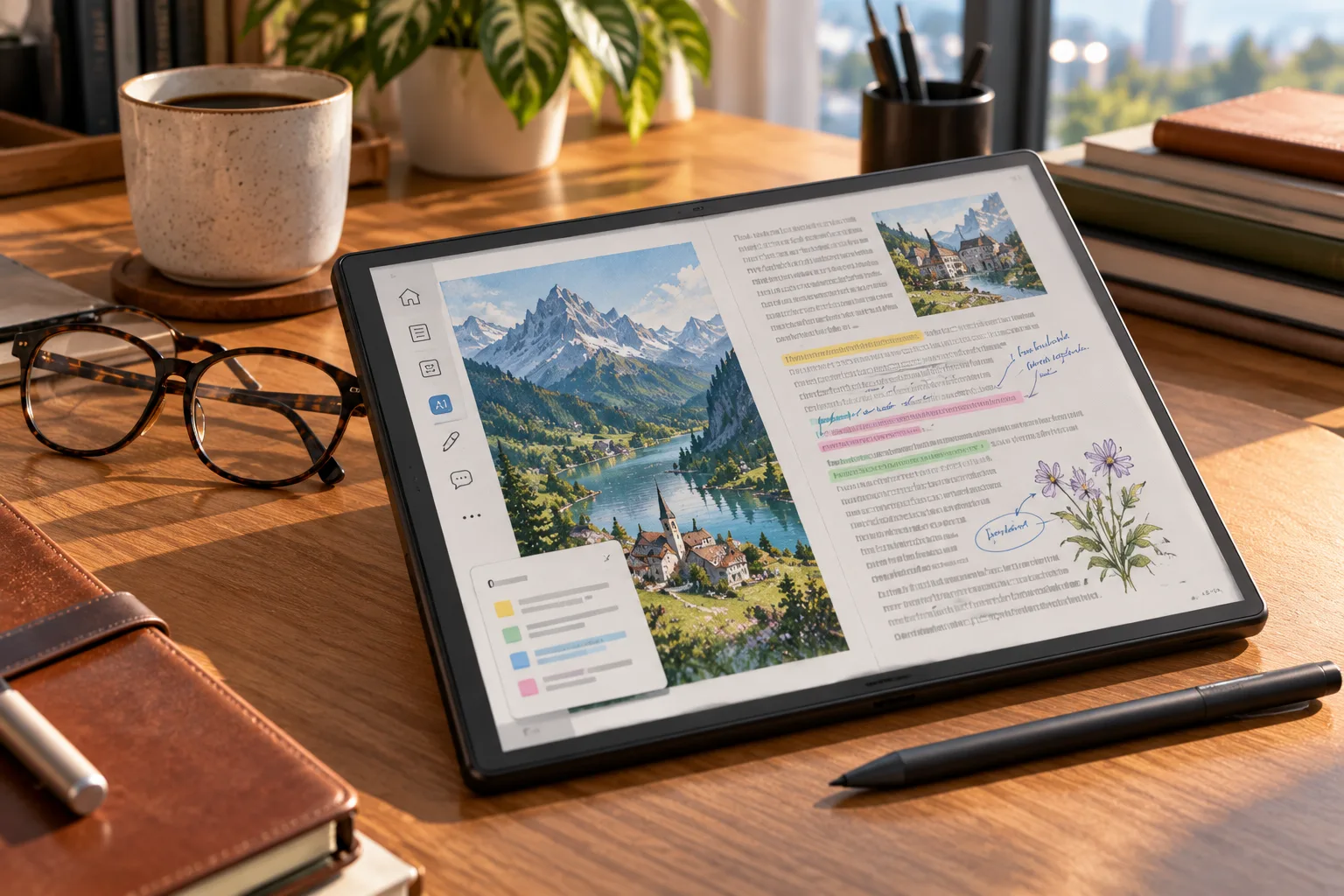
A large writing-focused e-reader can already replace several pieces of physical stationery.
Add searchable handwriting and AI summaries, and it becomes more useful for studying.
The Kindle Scribe is designed around this kind of workflow, with a large display and tools for writing and organizing notes. Amazon also supports importing documents from services such as Google Drive and Microsoft OneDrive. (aboutamazon.com)
A student could read a document, annotate it, convert handwritten notes into text and then create a summary.
But there is a catch.
AI-generated study notes should still be checked against the original material.
A concise summary isn't necessarily an accurate summary.
That's especially important when the source contains technical definitions, equations or nuanced arguments.
Are e-readers becoming more like tablets?
They're becoming more capable, but the fundamental design philosophy remains different from tablets.
A tablet is designed to do almost everything.
An e-reader is designed to help you focus on reading.
That difference still matters.
E Ink consumes very little power when displaying a static page. It doesn't produce the same kind of direct backlighting associated with conventional LCD and OLED displays, and it remains highly readable in bright ambient light.
That's why e-readers can offer battery life measured in weeks rather than hours or a day.
Adding AI doesn't change that fundamental advantage.
In fact, the best new e-readers seem to be following an interesting philosophy:
Make the device smarter without making it more distracting.
That's harder than it sounds.
How are new e-reader displays improving reading?
The biggest display advances are color E Ink, improved front lighting, adjustable color temperature and better support for handwriting and illustrations.

Modern premium e-readers increasingly let users adjust the warmth of the front light depending on the environment.
Color models add another layer.
Kobo's Libra Colour combines a 7-inch color E Ink screen with adjustable lighting, dark mode and waterproofing. (kobo.com)
Amazon's Colorsoft similarly brings color to the Kindle ecosystem while maintaining the dedicated-reader format.
The result is an interesting evolution.
The display itself isn't becoming more like an iPad.
It's becoming better at displaying the kinds of content people actually want to read on an e-reader.
What role will flexible E Ink play in the future?
Flexible E Ink could eventually make larger reading surfaces easier to carry, although flexible displays remain less common in mainstream consumer e-readers than conventional rigid panels.
The appeal is obvious.
A large screen is useful for PDFs, newspapers, textbooks and comics.
A smaller device is easier to carry.
A flexible display potentially bridges those two needs.
The technology has existed in various experimental and commercial forms, but mass-market e-readers still largely use rigid panels.
For now, companies are solving the size problem in simpler ways.
Kobo offers devices ranging from compact 6-inch readers to the 10.3-inch Elipsa 2E. (kobo.com)
Amazon's Scribe takes a similar approach with a much larger fixed screen.
So flexible E Ink is interesting, but it isn't yet the defining feature of today's e-reader market.
Will e-readers get faster processors for AI?
Yes, increasingly capable processors will be important as manufacturers add more AI features, but e-readers don't need smartphone-class performance for every task.
The ideal architecture is likely to divide the workload.
Simple tasks can happen directly on the device.
More demanding AI processing can happen through the cloud.
Amazon already uses this kind of model for AI-powered Kindle features, while Apple, Google and other technology companies are following similar hybrid approaches in smartphones.
For e-readers, battery efficiency matters enormously.
A processor that is incredibly powerful but drains the battery quickly would undermine one of the category's biggest advantages.
So future e-readers will probably prioritize efficient AI rather than maximum AI performance.
What will the next generation of e-readers look like?
The next generation is likely to combine better color displays, more capable handwriting tools, AI-assisted reading and longer-lasting hardware while keeping the distraction-free nature of E Ink.

The current direction gives us some clues.
Amazon is pushing toward an AI-assisted Kindle that can understand books and notes. Kobo is expanding color E Ink and handwriting across its lineup. Both companies are moving beyond the idea that an e-reader is simply a digital replacement for a paperback.
The next step could be more contextual.
Imagine opening a technical book and asking the device to explain a term without leaving the page.
Or highlighting a paragraph and asking it to connect the idea with your handwritten notes from three months earlier.
Or reading a color textbook where diagrams, annotations and text all appear naturally on the same low-power display.
Those experiences aren't all standard features today.
But the underlying technology is moving in that direction.
Are smarter e-readers actually better for readers?
They can be, provided the new technology supports reading instead of distracting from it.
That's the real test.
AI summaries are useful when you've forgotten what happened in a book.
Searchable handwriting is useful when you have hundreds of pages of notes.
Color is useful when illustrations and diagrams actually matter.
Better displays are useful when they make long reading sessions more comfortable.
But none of these features automatically makes an e-reader better.
A person who reads 50 novels a year may still prefer a simple black-and-white reader with excellent contrast and a long battery life.
Someone studying medicine, law or business may get much more value from AI summaries, color diagrams and handwritten annotations.
The right device depends on the reading.
The bottom line: Are e-readers getting smarter?
Yes, but the smartest e-readers aren't trying to become tablets. They're becoming more capable tools for reading, understanding and organizing information while preserving the focused experience that made E Ink popular in the first place.
Amazon's Kindle Scribe shows where AI-assisted reading and note-taking could go, with features such as Story So Far, Ask This Book, handwriting search and AI-generated summaries. (aboutamazon.com)
Kobo's color readers show another important direction: better displays without sacrificing the fundamental advantages of E Ink. The Libra Colour and Clara Colour bring color to books, illustrations and annotations while keeping the reading experience distinctly different from a tablet. (kobo.com)
The most interesting change isn't that your e-reader can now do more.
It's that manufacturers are trying to make it smarter without making it busier.
And for a device whose main job is still to help you sit down and read, that may be exactly the right direction.