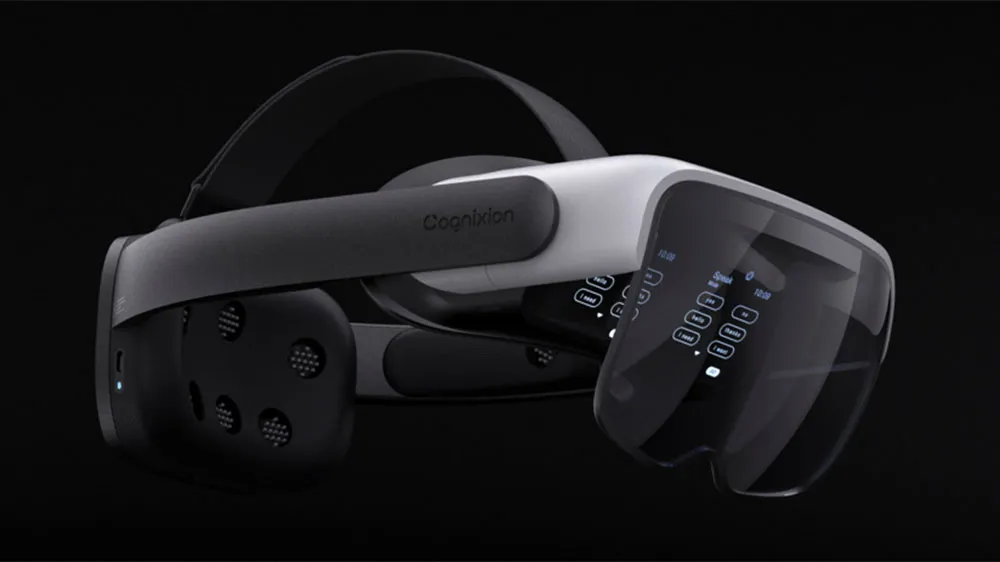
Virtual reality (VR) and augmented reality (AR) both put digital content into your experience, but they do it in very different ways. VR replaces your view of the physical world with a digital environment, while AR keeps the real world visible and adds digital information or objects on top of it. Microsoft describes VR as an immersive experience that can occlude the physical environment, while AR overlays digital content onto the physical world.
That difference affects almost everything: the hardware you wear, how you interact with digital content, what applications are possible and when each technology is useful.
VR is particularly effective when you want to become immersed in another environment. Gaming, simulations, virtual tourism and immersive entertainment are natural examples. AR is more useful when you still need to see and interact with the world around you, such as following navigation directions, visualizing furniture in a room or receiving contextual information.
So which technology is more useful? Neither is universally better. VR is better when immersion is the goal; AR is better when digital information needs to complement the real world.
VR vs AR: What Is the Main Difference?
The simplest distinction is this: VR takes you into a digital environment, while AR brings digital content into your environment.
Put on a VR headset and you might find yourself inside a virtual game world, a simulated cockpit or a 3D training environment. The physical room around you is largely replaced by what the headset displays.
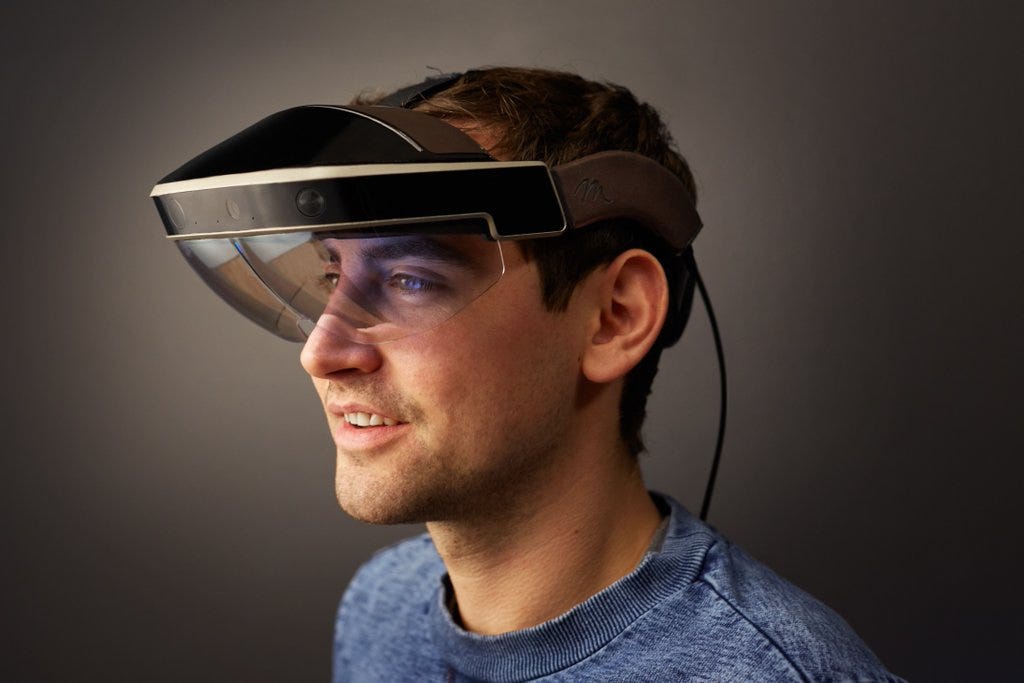
With AR, you can continue seeing your surroundings while digital elements appear alongside them. A phone camera can display your room while an AR application places a virtual object on the floor, for example. Apple describes AR as using a device's camera to show the physical world while superimposing virtual objects over it.
Feature | VR | AR |
|---|---|---|
Physical world | Mostly blocked or replaced | Remains visible |
Digital content | Surrounds the user | Overlays the real world |
Typical hardware | VR headset | Smartphone, tablet, smart glasses or headset |
Immersion | Very high | Usually lower |
Common uses | Gaming, simulation, training, entertainment | Navigation, visualization, education, information |
Interaction | Controllers, hands, eyes, body movement | Touch, camera, gestures, eyes and other sensors |
Best suited to | Fully immersive experiences | Real-world tasks enhanced by digital information |
The boundaries are becoming less rigid as modern headsets combine VR and AR capabilities.
How Does Virtual Reality Actually Work?
VR creates the impression that you are physically inside a computer-generated environment.
A headset displays separate images to your eyes and tracks movements such as head rotation and position. The software then changes the scene as you move, creating a sense of depth and presence.
Modern standalone VR hardware can also track your hands and surroundings. Meta's current Quest devices, for example, support six-degrees-of-freedom movement, hand tracking and passthrough capabilities.
This makes VR particularly effective for experiences where the outside world would be a distraction.
Imagine learning to operate a virtual aircraft. You don't necessarily want your living room visible while you're trying to concentrate on the cockpit. VR can instead put the controls, instruments and surrounding environment entirely inside the simulation.
How Does Augmented Reality Work?
AR works by keeping the physical environment visible and placing digital information within it.
A smartphone is the simplest familiar example. The camera captures your surroundings while software identifies surfaces, movement or other environmental information and places virtual objects on the screen.
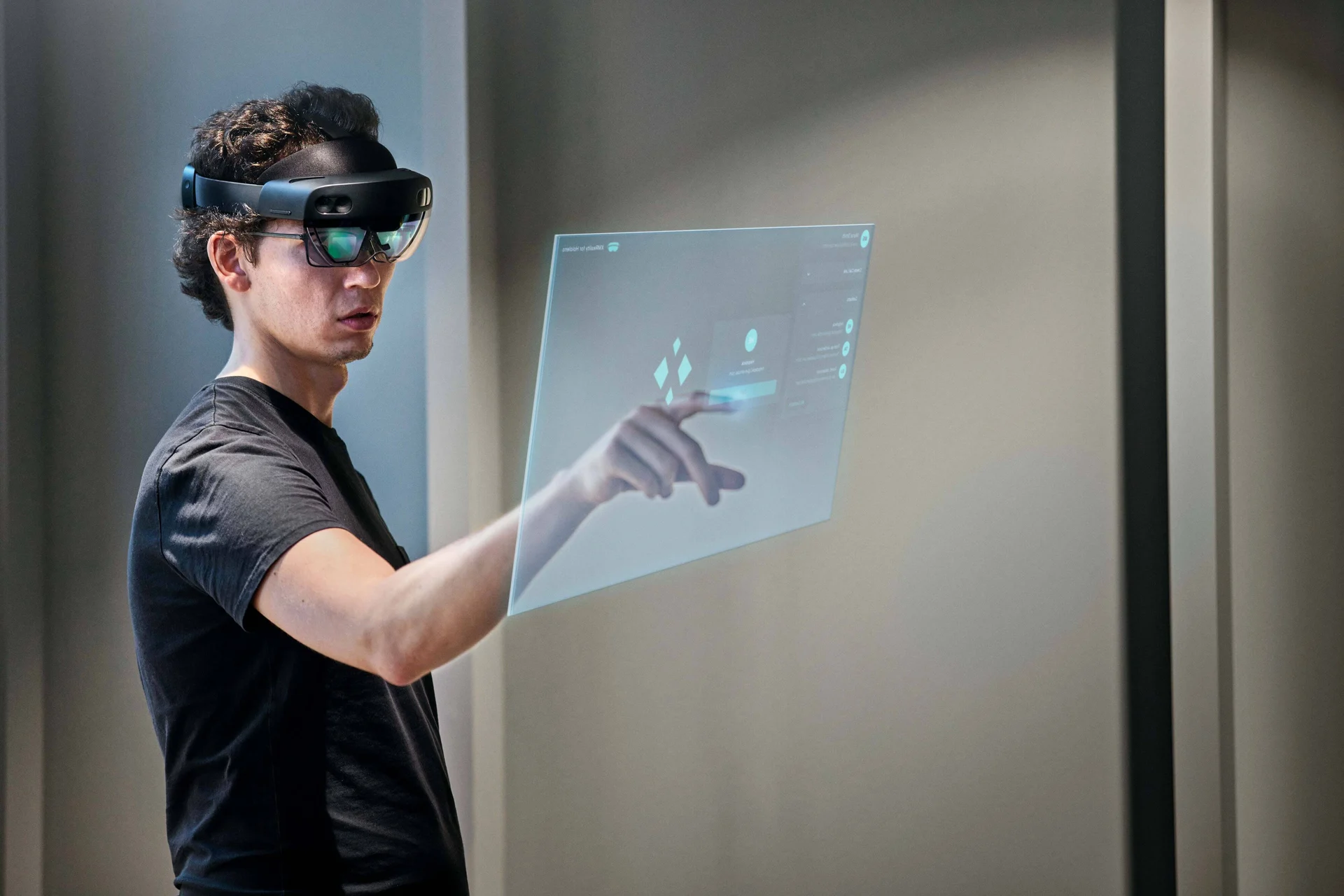
AR can also work through wearable devices. Instead of looking down at a phone, digital information can appear within your field of view.
The important distinction is that AR adds to reality rather than replacing it. Microsoft describes AR experiences as those that overlay graphics, video or holographic content onto the physical world.
What Is Mixed Reality?
Mixed reality (MR) is where the distinction becomes more complicated.
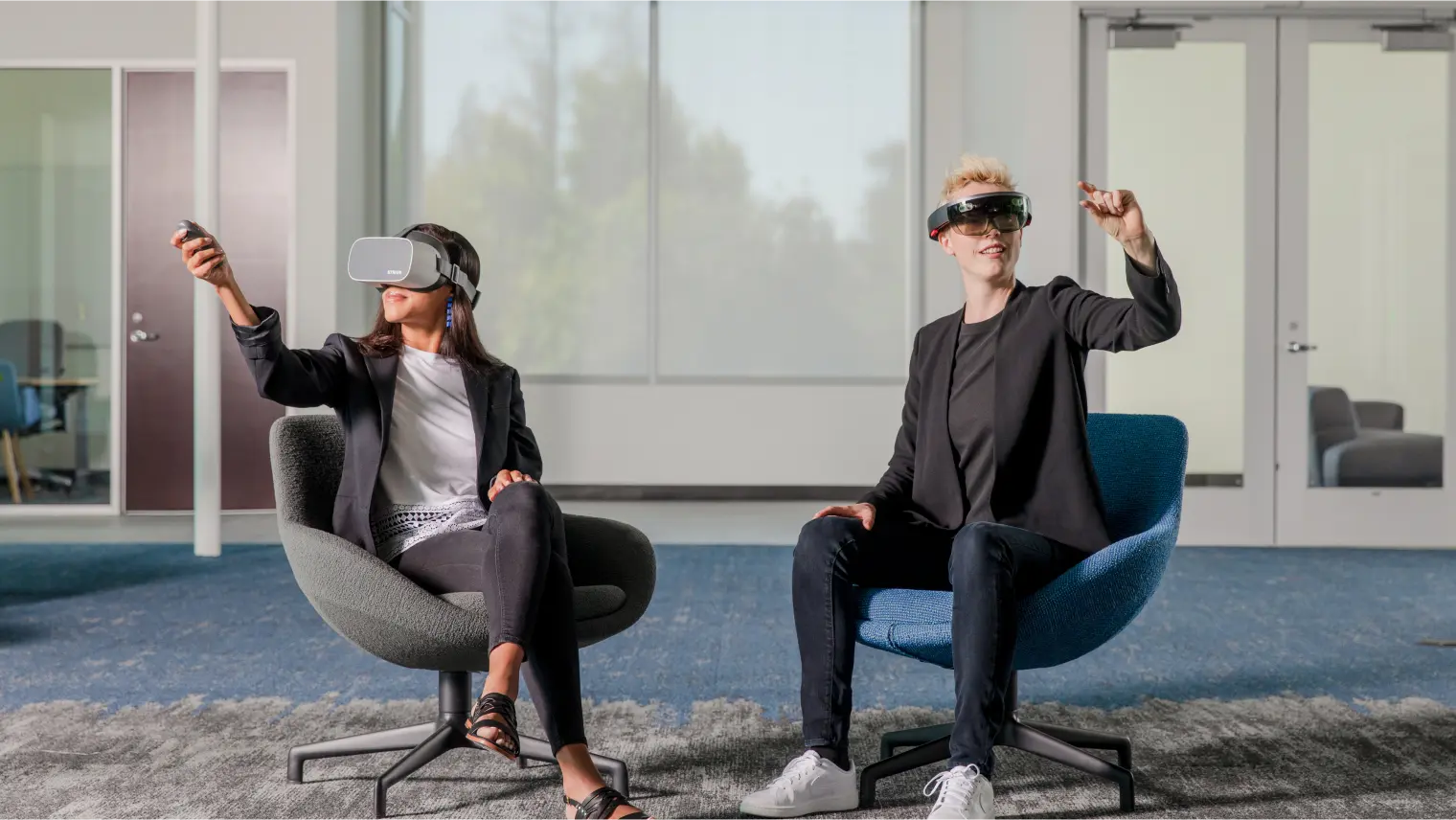
MR combines physical and digital environments so that virtual objects can interact with the surrounding space. A digital object might appear to sit on a real table, hide behind furniture or respond to the boundaries of a room.
Meta describes MR as combining elements of VR and AR, with virtual content able to interact with the user's physical environment.
This is why some modern headsets shouldn't be thought of as simply "VR headsets." Meta Quest devices, for example, support color passthrough and environmental features that allow virtual experiences to blend with the physical surroundings.
You can think of the technologies as a spectrum:
Real world → AR → Mixed Reality → VR → Fully virtual environment
The boundaries aren't always absolute, but this makes the basic relationship easier to understand.
Which Is Better for Gaming: VR or AR?
VR has a major advantage for games that depend on immersion.
A VR headset can place you inside a racing cockpit, fantasy world, sports simulation or first-person game. Your head and hand movements can become part of the interaction, creating an experience that a conventional monitor cannot reproduce in the same way.
Meta lists gaming, fitness, entertainment and social experiences among the applications of its VR platform.
AR gaming takes a different approach. Instead of leaving your environment behind, the game can use your surroundings as part of the experience.
That makes the two technologies useful for different styles of gaming:
VR: immersive worlds and simulations
AR: games that incorporate your surroundings
MR: virtual objects that understand and interact with your physical space
For someone who wants the strongest sense of actually being inside a digital game, VR is generally the more appropriate technology.
Which Is More Useful for Education?
Both can be useful, but they solve different problems.
VR can transport students into environments that would otherwise be inaccessible. A learner could explore a historical setting, examine a simulated scientific environment or practice a procedure inside a controlled virtual space.
AR can bring digital information into the classroom without completely disconnecting students from their surroundings. A physical model could be supplemented with labels, animations or interactive information.
The choice therefore depends on whether the lesson benefits more from immersion or contextual information.
How Are VR and AR Used for Training?
Training is one of the most practical applications for immersive technology.
VR can simulate environments where practicing in the real world would be expensive, dangerous or difficult. Flight simulation is an obvious example, but similar principles can apply to industrial, technical and other forms of training.
AR can be useful when workers need information while performing a real task. Digital instructions, diagrams or visual guidance can be presented alongside physical equipment rather than requiring the worker to switch between the equipment and a separate manual.
Microsoft identifies physical-world task guidance and environmental interaction as examples of mixed-reality experiences.
Is AR More Practical for Everyday Life?
AR can have an advantage in everyday situations because it doesn't necessarily require you to disconnect from your surroundings.
Consider a few examples:
Navigation: Directions or contextual information can potentially be displayed relative to the environment.
Shopping: AR can allow you to visualize how furniture or other products might look in a physical space.
Learning: Digital labels and information can be attached to physical objects.
Maintenance: Instructions or diagrams could appear alongside machinery.
Translation: Text in the physical environment can potentially be recognized and presented in another language.
Apple's AR framework is specifically designed around combining digital objects with the user's physical environment.
The practical advantage is simple: you can use digital information without completely leaving the real world.
Is VR More Immersive Than AR?
Yes. That's essentially the point of VR.
A VR system is designed to create a sense of presence inside a digital environment. The headset blocks or replaces much of your ordinary visual field, allowing the software to control what you see.
AR deliberately doesn't do that. You still need to see the physical world because the digital content is designed to supplement it.
The trade-off is important:
More immersion can mean less awareness of your surroundings.
That is useful when you're playing a game or practicing a simulation. It can be inconvenient when you're trying to walk around, interact with physical objects or stay aware of other people.
Which Technology Requires More Specialized Hardware?
VR generally requires a dedicated headset, although modern standalone devices don't necessarily require a gaming PC.
Current Meta Quest devices, for example, are standalone wireless headsets with their own processors, displays, tracking systems and controllers.
AR can be much more accessible because smartphones and tablets can provide AR experiences through their cameras and sensors. Apple describes AR experiences specifically around using a device's camera to present the physical environment with digital objects overlaid on it.
Wearable AR introduces another category, ranging from smart glasses to more advanced spatial-computing devices.
Apple Vision Pro illustrates how the boundaries are evolving. It combines a fully three-dimensional interface with cameras and sensors that allow digital content to interact with the user's physical environment.
What Are the Main Limitations of VR?
VR's biggest strength, immersion, is also one of its limitations.
You generally need to wear a headset, and that can mean dealing with weight, battery limitations, heat, motion discomfort or simply the inconvenience of putting the device on.
You also have less awareness of your physical surroundings.
Modern systems use passthrough cameras and environmental tracking to address some of these limitations, but passthrough is not identical to natural vision. Meta notes that passthrough can involve reduced depth perception and visual distortions compared with seeing the physical environment directly.
What Are the Main Limitations of AR?
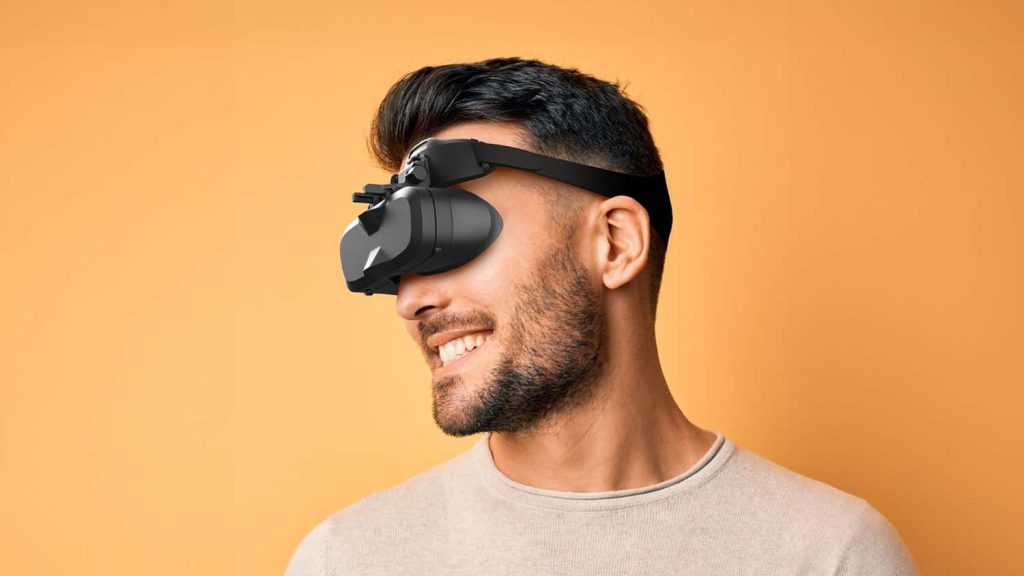
AR has a different set of challenges.
The digital content needs to remain properly aligned with the physical environment. If tracking is inaccurate, an object can appear to move, float or sit incorrectly.
The quality of the experience also depends heavily on cameras, sensors, displays and software.
AR glasses introduce additional challenges because they need to remain lightweight while providing enough computing power, battery life, display quality and environmental awareness to be genuinely useful.
There is also the social question. Wearing a headset or smart glasses in public can change how you interact with people around you.
VR vs AR: Which Technology Is More Useful?
There isn't one answer because the technologies are designed around different goals.
If you want to... | Technology that fits the use case |
|---|---|
Play immersive games | VR |
Explore virtual environments | VR |
Practice simulations | VR |
Experience immersive entertainment | VR |
Add information to the real world | AR |
Visualize products in your home | AR |
Get contextual information while moving | AR |
Combine digital objects with your room | MR |
Interact with virtual and physical environments together | MR |
The more important question is what problem are you trying to solve?
If you want to escape the physical environment and enter a digital one, VR is the natural fit. If you want digital technology to help you understand or interact with your surroundings, AR is usually more appropriate.
Is VR or AR the Future?
Both are likely to remain relevant because they address different computing experiences.
VR is well suited to applications where complete immersion has value. AR is better suited to situations where digital information needs to coexist with physical reality. Mixed reality increasingly connects the two approaches.
The hardware is also evolving toward more flexible devices. Meta's current platform includes both standalone Quest headsets and newer glasses-oriented hardware, illustrating how immersive computing is expanding beyond traditional VR headsets.
At the same time, products such as Apple Vision Pro show how spatial computing can combine immersive environments with digital content that remains connected to the user's physical space.
The future may therefore be less about choosing VR versus AR and more about choosing the appropriate level of immersion for a particular task.
Frequently Asked Questions
What is the main difference between VR and AR?
VR replaces or largely blocks the physical environment with a digital one, while AR keeps the physical environment visible and adds digital information or objects to it.
Is VR better than AR?
Neither technology is universally better. VR is better suited to fully immersive experiences such as gaming and simulations, while AR is better suited to applications that enhance the real world with digital information.
Can a VR headset also do AR?
Some modern headsets can support both immersive VR and passthrough-based mixed-reality experiences. Meta Quest devices, for example, support passthrough and environmental features alongside traditional VR experiences.
Is mixed reality the same as AR?
Not exactly. AR overlays digital content onto the physical world, while mixed reality can allow digital objects to interact more deeply with the physical environment.
Can AR work without special glasses?
Yes. Smartphones and tablets can provide AR experiences using their cameras and sensors.
Which is better for gaming, AR or VR?
VR is generally better suited to games where immersion is central. AR and MR can be more interesting when the physical environment itself forms part of the game.
Final Takeaway
VR and AR aren't competing versions of exactly the same technology.
VR creates a digital world for you to enter. AR brings digital information into the world you're already in.
That makes VR particularly compelling for gaming, simulations, immersive entertainment and experiences where isolation from the physical environment is useful. AR has a different strength: it can make the physical world more informative without requiring you to leave it.
And as mixed reality becomes more capable, the distinction is becoming less rigid. Modern headsets can move between immersive virtual environments and experiences that incorporate your actual room.
So rather than asking which technology is universally more useful, ask what you want the technology to do. If the goal is immersion, look toward VR. If the goal is enhancement, look toward AR. If you want both, mixed reality is increasingly where the two meet.