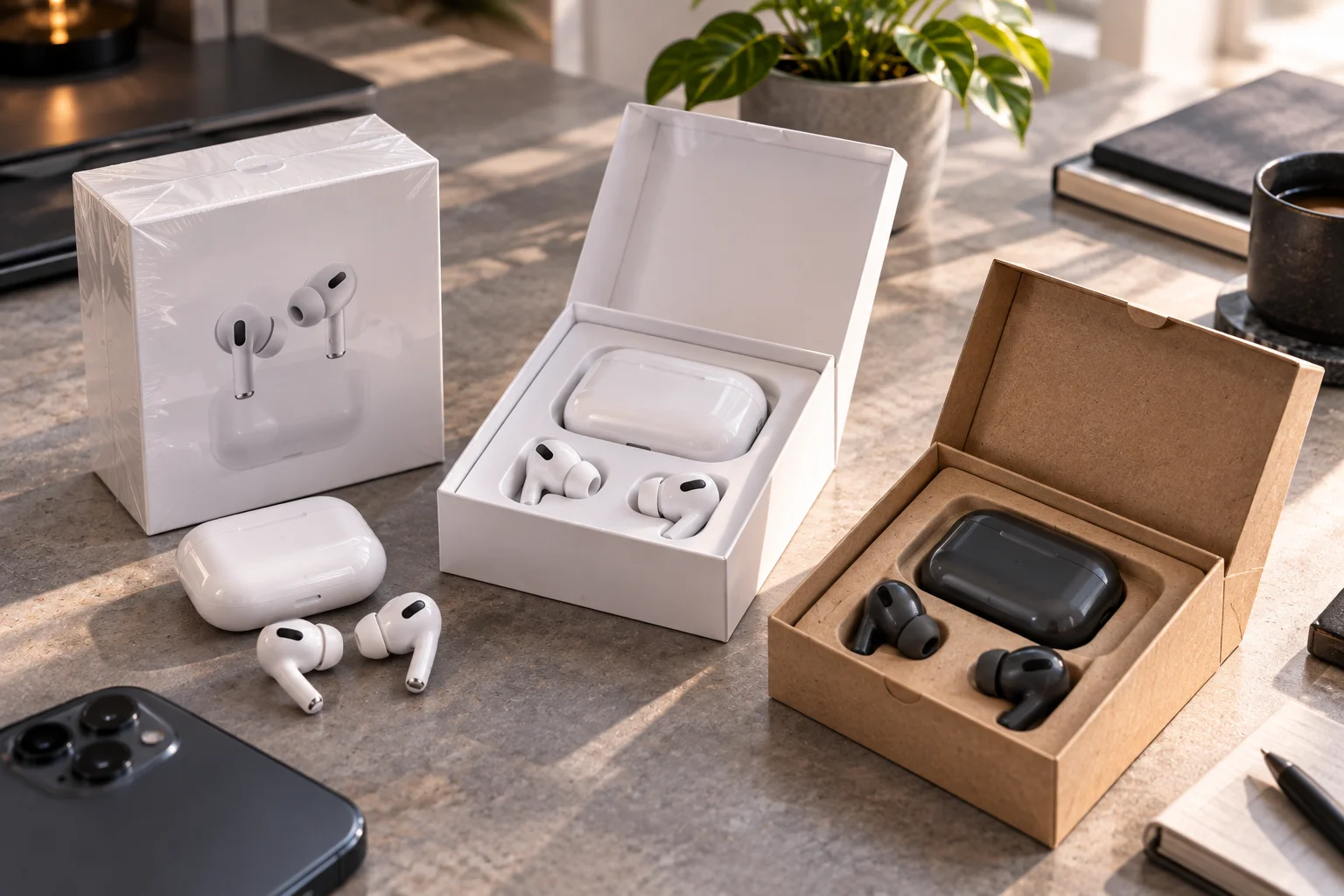
Open-box and refurbished earbuds can save you a meaningful amount of money, but the discount needs to be large enough to compensate for uncertainty around battery health, hygiene, accessories, return rights and warranty coverage.
That's particularly important with true wireless earbuds.
A laptop can have its SSD or battery replaced. A smartphone may have an officially supported battery service. But tiny wireless earbuds are much more difficult to repair economically, and their batteries naturally lose capacity over time.
That makes the difference between brand-new, open-box and refurbished more important than it might be for some other electronics.
A pair of new earbuds might cost $179.
An open-box pair could be $135.
A refurbished pair could be $115.
At first glance, the $115 option looks like the obvious bargain.
But if the refurbished earbuds already have significant battery wear, have a shorter warranty, use third-party replacement parts or come with a limited return period, the $64 saving may not be enough.
The right question isn't:
"How much cheaper are they?"
It's:
"How much am I saving for the additional risk?"
What Is the Difference Between Brand-New, Open-Box and Refurbished Earbuds?
Brand-new earbuds are unused retail products, open-box earbuds have typically been opened or returned, and refurbished earbuds have been previously owned and then inspected, repaired or restored according to the seller's process.
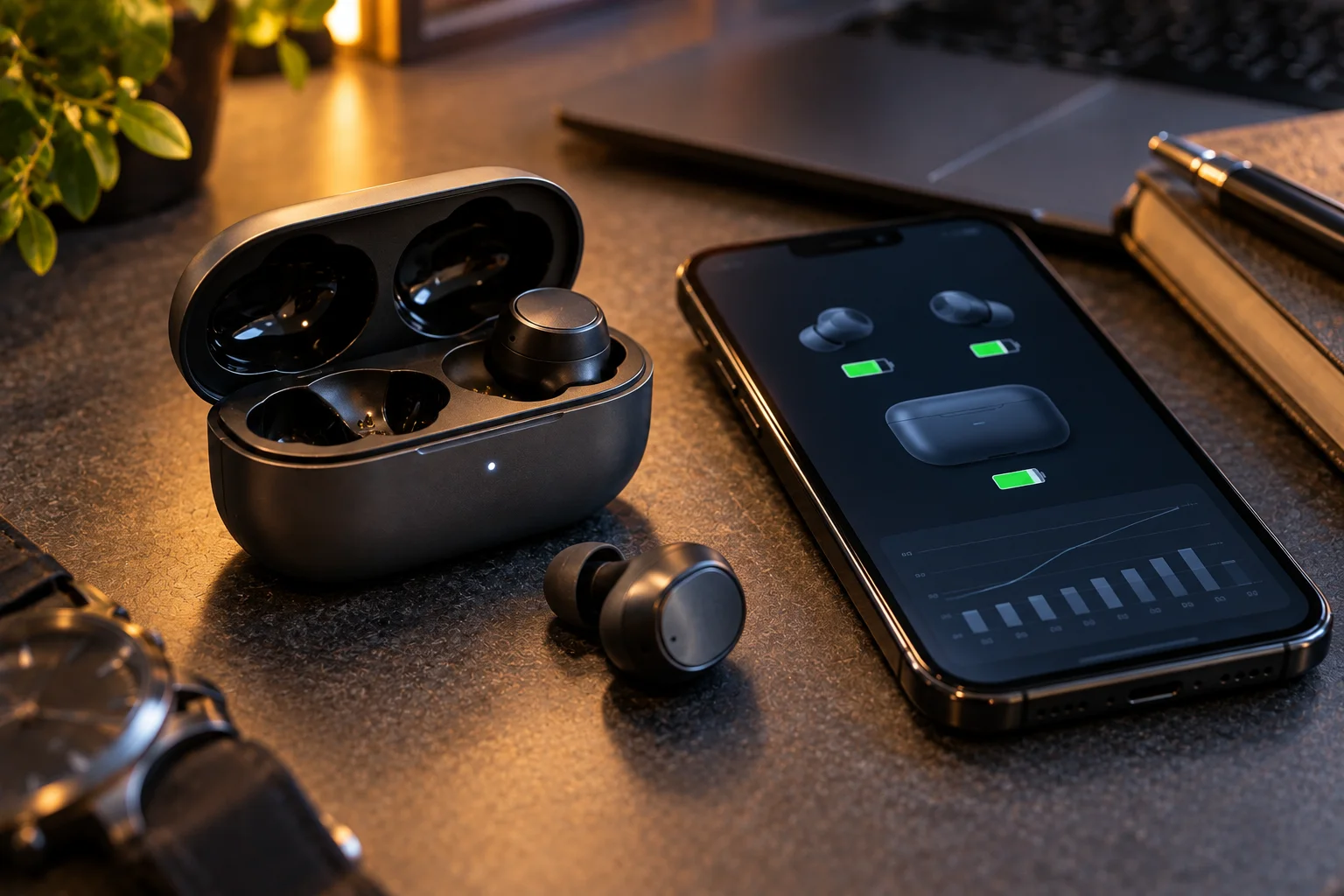
The terminology is important because these categories aren't interchangeable.
Brand-new
Generally means:
Previously unopened or unused
Original retail condition
Full manufacturer warranty where applicable
Full battery capacity
Original accessories and packaging
Open-box
Usually means:
Packaging has been opened
Product may have been returned
Product may have been used briefly or not used at all
Seller has inspected or tested it
Condition can vary considerably
Best Buy, for example, describes open-box products as customer returns and says its open-box items are tested or inspected and assigned conditions such as Excellent, Good or Fair.
Refurbished
Generally means:
Previously owned or returned
Inspected and tested
Repaired or restored when necessary
Resold at a lower price
Warranty depends on the manufacturer or refurbisher
Best Buy describes refurbished products as products that have been repaired and restored to a like-new state by its repair centers, the manufacturer or a third-party refurbishment company.
But there's an important caveat:
"Refurbished" doesn't have one universal quality standard.
The identity of the refurbisher matters.
Why Earbuds Are Different From Refurbished Phones and Laptops
Battery degradation is a bigger concern with true wireless earbuds because their small built-in batteries are difficult to replace and are constantly cycled during normal use.
Every listening session consumes battery capacity.
The earbuds charge again.
Then you use them.
Then they charge again.
Over time, lithium-ion batteries lose capacity.
With a laptop, losing some battery capacity is annoying but often manageable.
With earbuds, a relatively small reduction can become noticeable because their original batteries are already tiny.
For example, if an earbud originally delivers around six hours of listening time, substantial battery degradation can turn that into several hours or less.
The charging case has its own battery, so there are actually multiple batteries to consider.
That means an older refurbished set could have:
Reduced left-earbud runtime
Reduced right-earbud runtime
Reduced charging-case capacity
Uneven battery aging
Faster battery drain under ANC
Less useful total listening time
This is one reason the age of the earbuds matters almost as much as their cosmetic condition.
How Much Battery Health Should You Expect From Refurbished Earbuds?
There is no universal battery-health requirement for refurbished earbuds, so you need to check the specific seller's standard.
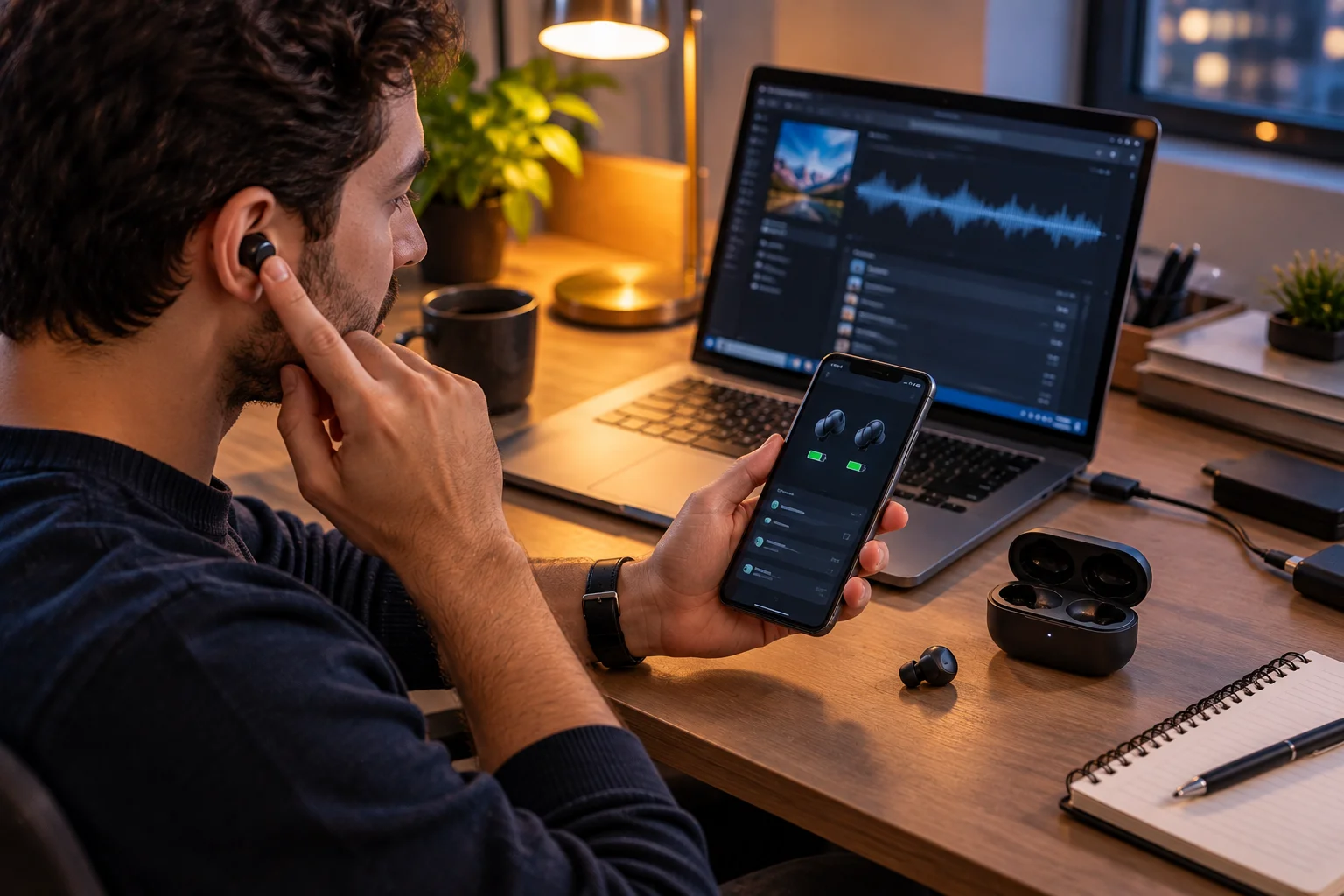
Amazon's current Renewed program provides a useful example of why condition grades matter. Amazon says Renewed products in its refurbished categories can have batteries with at least 80% of original capacity, while Renewed Premium products are specified at more than 90% capacity at the time of sale.
That doesn't mean every refurbished earbud sold elsewhere will meet those numbers.
It means you shouldn't assume:
"Refurbished = new battery."
Ask:
Has the battery actually been tested?
And:
What minimum capacity, if any, does the seller guarantee?
If the seller doesn't disclose battery health, treat that uncertainty as part of the price.
Open-Box Earbuds Can Be the Most Interesting Middle Ground
A good open-box deal can offer much of the value of new earbuds without necessarily carrying the same battery-age risk as older refurbished stock.
Why?
Because open-box products are often returned relatively soon after purchase.
A customer might have:
Opened the box
Tried the earbuds
Decided they didn't like the fit
Returned them
The earbuds could therefore have very little battery wear.
But there's no universal guarantee.
An open-box product could also have been:
Used for weeks
Used as a display unit
Returned after extensive use
Missing accessories
Returned because of a problem
Best Buy's open-box system illustrates the range: its conditions include Excellent, Good and Fair, with differences in cosmetic condition and potentially included accessories.
So open-box isn't automatically "almost new."
You need to check the individual unit's condition and seller policy.
The Biggest Open-Box Risk: You Don't Always Know the Usage History
An open-box label tells you how the item is being sold, not necessarily how much it has been used.
That's particularly relevant to earbuds.
A laptop can often reveal usage through battery-cycle information or system diagnostics.
Earbuds can be harder to evaluate.
Some manufacturers expose battery information through their companion apps, but the available diagnostics vary by product.
If you're buying open-box earbuds, check whether you can verify:
Manufacturing date
Battery condition
Firmware
Charging behavior
Left/right battery balance
Case battery behavior
Serial number
Warranty status
If the seller can't provide meaningful information about the unit, the return policy becomes even more important.
Hygiene Is a Bigger Consideration With Open-Box Earbuds
Earbuds are worn directly in or around the ear, so cleanliness and included replacement ear tips deserve more attention than they would with most electronics.
This is one area where an open-box deal can be less attractive.
Check whether the package includes:
Original ear tips
New replacement tips
Cleaning or hygiene treatment
Original charging case
Original charging cable
Silicone tips can usually be replaced relatively cheaply.
But the important part is the earbud body and charging case, particularly around:
Speaker mesh
Microphone openings
Charging contacts
Ear-detection sensors
Vent openings
Don't assume a product is hygienically equivalent to a new retail unit simply because the seller says it has been inspected.
Refurbished Does Not Automatically Mean Worse Than Open-Box
A professionally refurbished pair can actually be a safer purchase than an unknown open-box unit when the refurbisher provides clear testing, battery standards and warranty coverage.
This is where the seller matters enormously.
Consider two offers:
Open-box
$129
No disclosed battery-health measurement.
90-day return period.
Limited warranty.
Certified refurbished
$119
Battery tested to a defined minimum.
Full functional testing.
One-year warranty.
30-day return period.
The refurbished pair may actually carry less uncertainty despite having been previously owned.
This is why the label itself shouldn't determine the decision.
Look at the process behind the label.
Apple Certified Refurbished Is a Different Category
Manufacturer-certified refurbishment can offer considerably stronger guarantees than generic marketplace refurbishment.
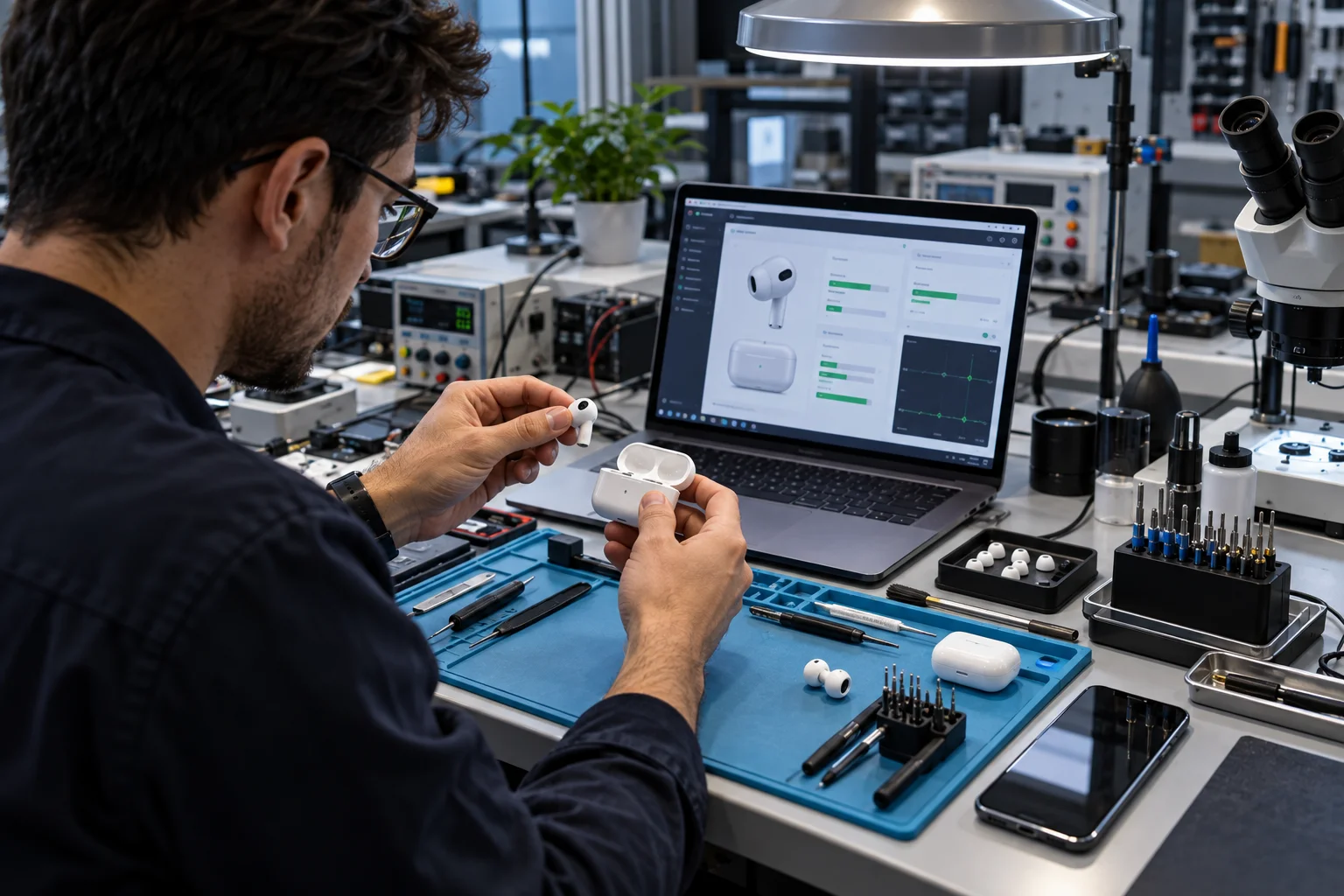
Apple is a useful example.
Apple says its Certified Refurbished products undergo full functional testing and receive genuine Apple replacement parts where needed. For refurbished iOS devices, Apple says the battery and outer shell are new. Apple Certified Refurbished products also include the company's standard one-year limited warranty.
That is important because it demonstrates the difference between:
"Refurbished by an unspecified seller"
and:
"Refurbished under the manufacturer's own program."
For Apple earbuds, however, don't assume that every third-party "refurbished AirPods" listing receives the same battery replacement treatment as products covered by Apple's own refurbishment program.
Check who actually refurbished the product.
Warranty Can Be Worth More Than Another $20 Discount
A longer, clearly defined warranty can justify paying more for refurbished or open-box earbuds.
Imagine three offers:
Condition | Price | Warranty | Battery information |
|---|---|---|---|
New | $179 | Manufacturer warranty | New |
Open-box | $139 | Limited/remaining warranty | Unknown |
Refurbished | $119 | 90 days | Tested, >80% |
Certified refurbished | $149 | 1 year | Defined refurbishment |
The $119 pair has the lowest sticker price.
But the $149 certified-refurbished pair may offer a more predictable ownership experience.
The extra $30 buys:
Better warranty protection
More predictable battery condition
Greater confidence in testing
Potentially easier support
This is why warranty-adjusted price is a useful way to think about refurbished electronics.
How to Calculate a Warranty-Adjusted Earbud Price
Instead of comparing only the purchase price, assign value to the protection you're receiving.
For example:
New earbuds: $179
Open-box: $139
Refurbished: $119
The apparent savings are:
Open-box: $40
Refurbished: $60
Now consider the warranty.
If the refurbished product only has 90 days of coverage while the new pair has a one-year manufacturer warranty, you're accepting more risk for the extra $20 savings versus open-box.
You don't need to put a precise dollar value on warranty coverage.
Simply recognize that:
$119 refurbished isn't automatically a better deal than $139 open-box.
When Is Open-Box Worth Buying?
Open-box earbuds are worth considering when the discount is meaningful, the seller has inspected the unit, the return period is long enough to test it and the remaining warranty is clear.
A reasonable open-box checklist includes:
At least a meaningful discount from new
Exact condition grade
Clear return policy
Warranty information
All essential accessories
Clean charging contacts
Working ANC
Working Transparency/Ambient mode
Functional microphones
Proper left/right pairing
No charging problems
The bigger the discount, the more uncertainty you may be willing to accept.
But earbuds are one category where you shouldn't chase tiny discounts.
Saving $15 on a $180 product may not justify taking on substantially more uncertainty.
When Is Refurbished Worth Buying?
Refurbished earbuds make the most sense when the refurbisher provides clear testing, a defined battery standard and meaningful warranty coverage.
Look for:
Battery standard
Does the seller specify a minimum capacity?
Testing process
Are the microphones, drivers, ANC and charging systems tested?
Replacement parts
Are batteries or other components replaced when necessary?
Warranty
How long is coverage?
Return policy
Can you return the earbuds if battery life is unacceptable?
Seller reputation
Is the refurbisher established and accountable?
A $100 refurbished pair with a strong warranty can be more attractive than a $90 marketplace listing with no meaningful support.
When Should You Just Buy Brand-New?
Brand-new earbuds make the most sense when the price difference is small, battery life is a major priority or the new product has a substantially better warranty.
Suppose:
New: $149
Open-box: $129
Refurbished: $119
You save:
$20 with open-box
$30 with refurbished
For a relatively small difference, the new pair may be easier to justify.
Now imagine:
New: $199
Open-box: $139
Refurbished: $119
The savings become:
$60
$80
At that point, the discount is large enough to make the additional risk more meaningful.
There's no universal percentage threshold.
The key is the absolute dollar difference and the quality of the protection you're giving up.
Check Battery Life Under the Features You Actually Use
Don't judge refurbished earbuds only by their maximum advertised battery life.
Manufacturers commonly quote different figures depending on:
ANC on or off
Volume level
Spatial audio
Codec
Calls
Streaming conditions
Earbud versus case usage
Apple, for example, provides different battery specifications for AirPods depending on listening mode and model, while its service documentation separately addresses battery service. Apple says its limited warranty covers manufacturing issues for one year, and AppleCare can provide battery service when capacity falls below 80%.
When testing open-box or refurbished earbuds, use the features you actually care about.
If you always use ANC, test with ANC enabled.
If you use them for calls, test the microphones.
If you use spatial audio, test it.
A battery test that produces excellent results with every extra feature disabled doesn't tell you much about your normal experience.
Test Both Earbuds Separately
A refurbished or open-box pair should be tested as two independent earbuds because battery degradation or hardware problems can affect one side more than the other.
Check:
Charge both to 100%.
Connect them to your phone.
Play continuous audio.
Check the left and right battery levels periodically.
Test ANC.
Test Transparency/Ambient mode.
Make a phone call.
Test touch or physical controls.
Place both earbuds back in the case.
Confirm that both charge correctly.
A significant difference between left and right battery behavior is worth investigating.
Check the Charging Case Too
The charging case is part of the battery equation and can be just as important as the earbuds themselves.
A case with degraded battery capacity may no longer provide the number of recharges you expect.
Test:
USB-C or Lightning charging
Wireless charging if supported
Magnetic alignment if applicable
Case battery percentage
Earbud charging contacts
Automatic charging
Case speaker if equipped
Lid detection/pairing behavior
A pair of earbuds can appear perfectly healthy while the case battery has deteriorated significantly.
Verify the Serial Number and Warranty Before Buying
Checking the serial number and warranty status can reveal whether you're buying a legitimate product and how much manufacturer coverage remains.
For expensive earbuds, especially premium models, check:
Serial number
Model number
Warranty status
Original purchase information where available
Seller invoice
Return period
This is particularly important with open-box and marketplace listings.
A product can look genuine while still having an unclear ownership or warranty history.
Beware of Refurbished Earbuds With Generic Accessories
Generic accessories aren't necessarily a deal-breaker, but they reduce the value of a refurbished package if you expected the original charger, case or accessories.
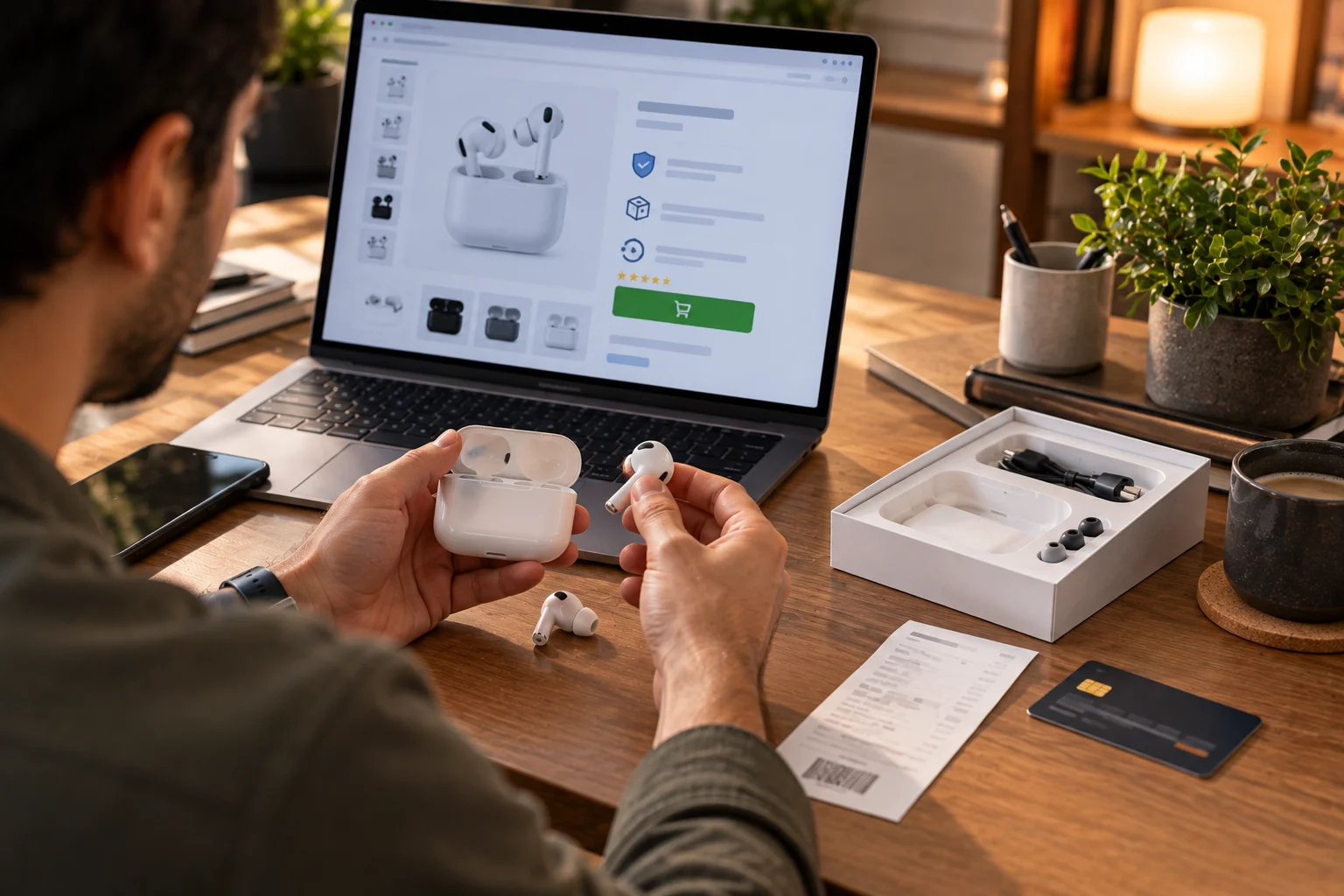
Amazon's Renewed program states that products may come with generic or original-equipment-manufacturer accessories and packaging depending on the product.
For earbuds, check whether you're receiving:
Original charging case
Original ear tips
Original cable
Replacement tips
Documentation
The charging case is especially important because an incorrect or non-original case may affect charging, pairing or feature compatibility.
A Simple Price-to-Risk Comparison
The best way to compare new, open-box and refurbished earbuds is to consider discount, battery uncertainty and warranty together.
Option | Typical risk | Battery uncertainty | Warranty | When it makes sense |
|---|---|---|---|---|
Brand-new | Lowest | Lowest | Usually strongest | Small price difference |
Open-box | Moderate | Moderate | Depends on seller | Large discount + strong returns |
Refurbished | Variable | Variable | Depends on refurbisher | Tested + clear battery standard |
Manufacturer refurbished | Lower than generic refurb | Lower when battery is replaced/tested | Often strong | Significant discount + strong warranty |
These aren't universal classifications. Seller policies vary, so the actual listing and terms should always take precedence.
How Big Should the Discount Be?
There is no universal discount percentage that makes refurbished earbuds worthwhile, but the discount should be meaningful enough to compensate for battery and warranty uncertainty.
As a practical framework:
Small discount
Under roughly 10%
Usually difficult to justify for unknown open-box or generic refurbished earbuds.
Moderate discount
Around 10–25%
Potentially worthwhile if the seller has a strong return policy and warranty.
Large discount
25–40%+
Can make sense when the condition, battery standard and warranty are clearly documented.
Very large discount
40%+
Investigate carefully.
A huge discount can be legitimate, but it can also indicate:
Older generation
Poor battery condition
Missing accessories
Short warranty
Marketplace seller
Clearance stock
Cosmetic damage
Limited returns
The percentage itself doesn't tell you why the product is cheap.
Example: Which Earbud Deal Is Better?
A simple calculation shows why the cheapest listing isn't always the strongest deal.
Suppose the new price is:
$179
Option A: Open-box
$139
Excellent condition
30-day return
Remaining manufacturer warranty
Battery condition unknown
Option B: Refurbished
$119
Battery guaranteed above 80%
90-day warranty
Generic charging cable
30-day return
Option C: Manufacturer-certified refurbished
$149
Full testing
New battery where the manufacturer specifies it
One-year warranty
Original accessories
The cheapest option is B.
But Option C could be the more predictable value because you're paying only $30 more for stronger protection.
Option A sits between them and could be attractive if the earbuds are genuinely lightly used and retain substantial manufacturer warranty.
There isn't a universal winner.
The important point is that price is only one variable.
What Should You Check Before Buying Used or Refurbished Earbuds?
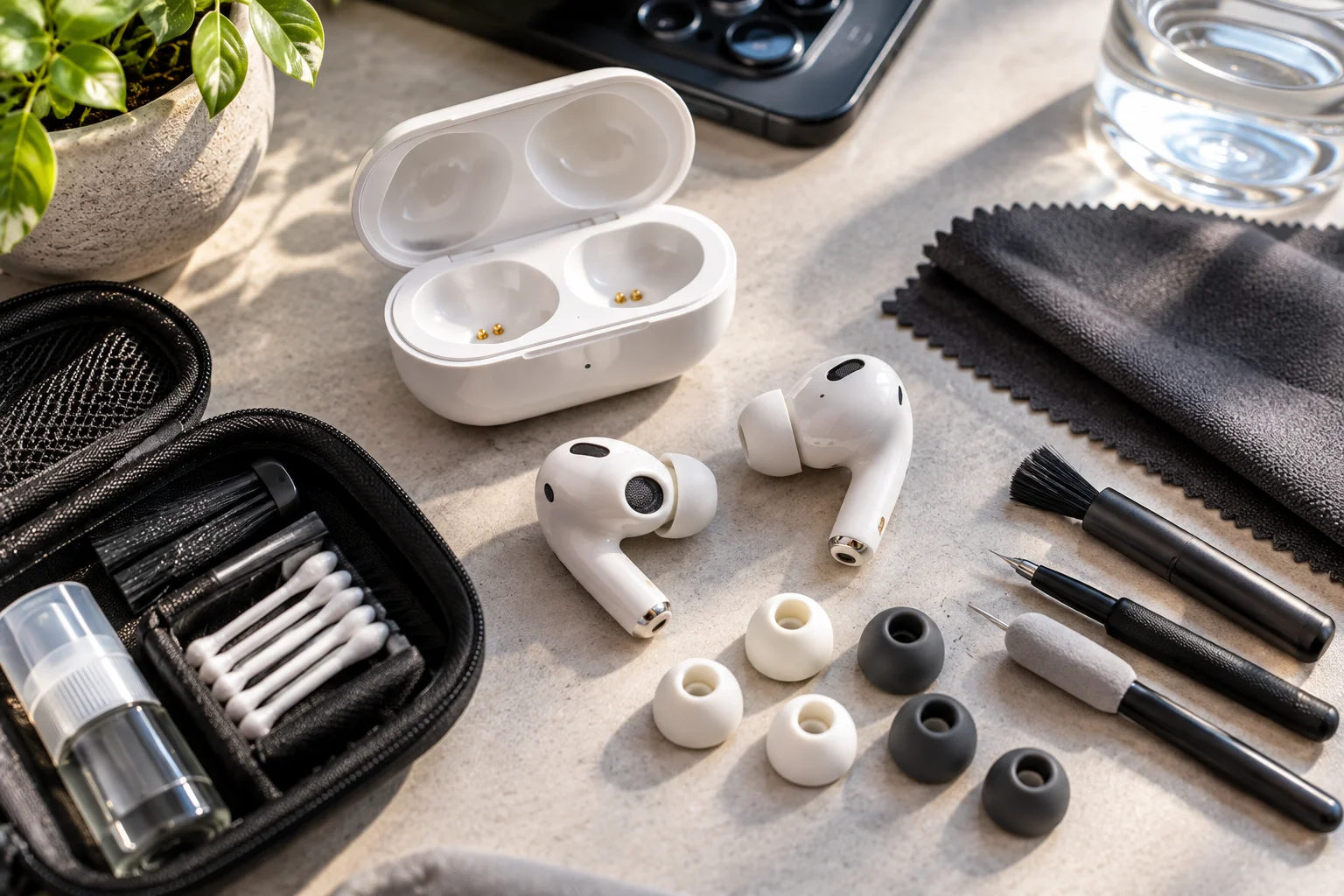
Use this checklist before paying for any non-new pair.
Condition
Is it open-box, refurbished, used or certified refurbished?
Battery
Is capacity measured or guaranteed?
Warranty
Who provides it and for how long?
Returns
How many days do you have to test the earbuds?
Hygiene
Have the earbuds and tips been properly cleaned or replaced?
Accessories
Are the original case, cable and ear tips included?
Authenticity
Can you verify the serial number and model?
Functionality
Do ANC, microphones, controls and charging work?
Age
When was the product manufactured or originally sold?
Price
How much are you actually saving compared with a new pair?
If several of these questions have no clear answer, the discount should be substantial before you consider taking the risk.
FAQ: Open-Box vs Refurbished vs New Earbuds
Are refurbished earbuds worth buying?
They can be, particularly when the refurbisher provides clear testing, battery standards, a meaningful warranty and a reasonable return period. Generic refurbished listings with unclear battery condition deserve more caution.
Are open-box earbuds basically new?
Not necessarily. Open-box products are typically opened or returned products, but their usage history can vary. Best Buy, for example, grades open-box products based on condition and says they can include customer returns or display units.
Do refurbished earbuds have new batteries?
Not always. Battery treatment depends on the refurbisher and product. Amazon Renewed currently specifies minimum battery capacity for its refurbished categories, while manufacturer refurbishment programs can have different requirements.
How much battery health should refurbished earbuds have?
There is no universal standard. Amazon's current Renewed specifications say standard refurbished products have batteries at more than 80% of original capacity, while Renewed Premium products are specified above 90% at the time of sale.
Is manufacturer-refurbished better than third-party refurbished?
It can provide more predictable quality because the manufacturer controls the testing and replacement process. Apple, for example, says its Certified Refurbished products undergo full functional testing and include a one-year limited warranty.
Are open-box AirPods worth buying?
They can be if the discount is meaningful and you have enough time to test battery life, ANC, microphones, charging and pairing. Verify the remaining warranty and return policy before buying.
Should I buy refurbished earbuds from Amazon?
Amazon Renewed can be an option, but check the exact condition grade, battery standard, return window and seller information. Amazon currently states different battery requirements for standard Renewed and Renewed Premium products.
How can I test refurbished earbuds?
Fully charge both earbuds and the case, test playback with your normal settings, compare left/right battery drain, test ANC and transparency, make calls, check the microphones and verify that the case consistently charges both earbuds.
Is a $20 discount enough to buy open-box earbuds?
Usually, the smaller the discount, the less attractive the additional risk becomes. If the new product has a strong warranty and the open-box pair has unknown battery condition, a $20 saving may not compensate for the uncertainty.
Why is battery health so important for wireless earbuds?
True wireless earbuds use small rechargeable batteries that naturally lose capacity over time. Because the batteries are compact and generally difficult to replace economically, significant degradation can reduce the useful life of the product.
The Bottom Line: Discount vs Battery Risk
Open-box and refurbished earbuds can be excellent ways to save money.
But earbuds are one of the electronics categories where condition and battery age deserve unusually high attention.
A $179 pair for $129 can be attractive.
A $179 pair for $159 with a full manufacturer warranty may still be the safer purchase.
A $179 pair for $99 can be an outstanding bargain if the battery is healthy and the refurbisher stands behind the product.
Or it can be cheap for a reason.
The safest way to evaluate the options is to work through four questions:
1. How much am I actually saving?
2. What do I know about the battery?
3. Who stands behind the warranty?
4. Can I return the earbuds if the battery or condition isn't acceptable?
If you can answer all four confidently, refurbished or open-box earbuds can make financial sense.
If you can't answer them, the discount may not be large enough to compensate for the uncertainty.
And remember that "refurbished" is not a universal quality grade. A manufacturer-certified product with documented testing and a one-year warranty is a very different proposition from a marketplace listing with an unspecified refurbishment process.
For true wireless earbuds, the smartest bargain isn't necessarily the one with the biggest percentage discount.
It's the pair that gives you enough savings to accept the remaining battery and warranty risk without turning a cheap purchase into an early replacement.