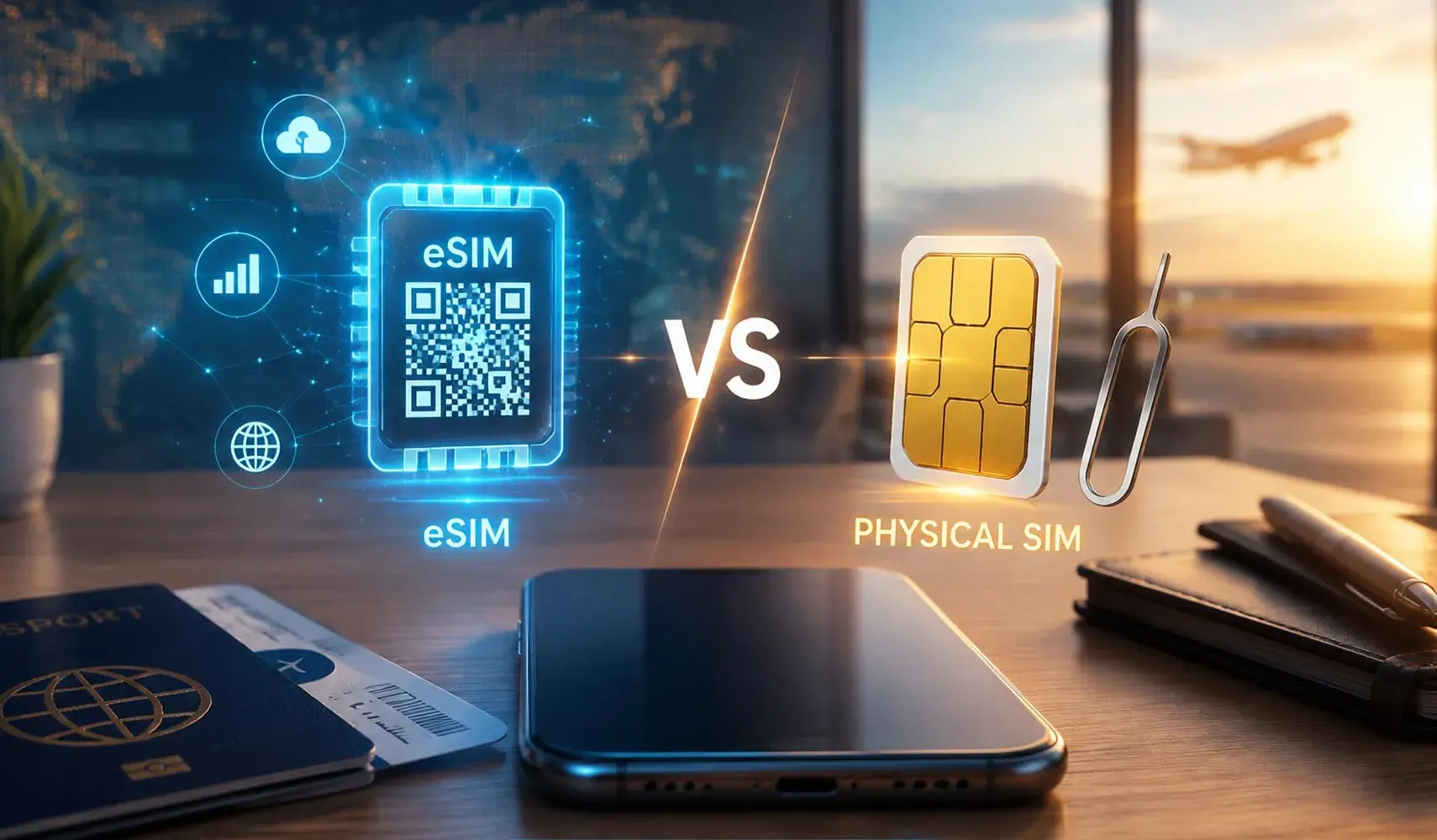
A modern smartphone can be much more than a device for making calls. It can be a work phone, travel companion, hotspot, banking tool, entertainment device, and personal communication hub.
For people who need more than one mobile connection, Dual SIM technology can make everyday life considerably easier. Instead of carrying two phones, users can manage multiple numbers or mobile plans from a single device.
The rise of eSIM technology has made this even more flexible. Rather than relying entirely on physical SIM cards, compatible smartphones can store digital SIM profiles and switch between supported mobile plans electronically.
But which setup makes more sense?
The answer depends on how you use your smartphone. Someone who needs separate work and personal numbers may have different priorities from an international traveler who wants to keep a home number while using a local data plan.
Understanding how Dual SIM and eSIM work can help you choose a phone and mobile setup that fits your routine.
What Is Dual SIM?
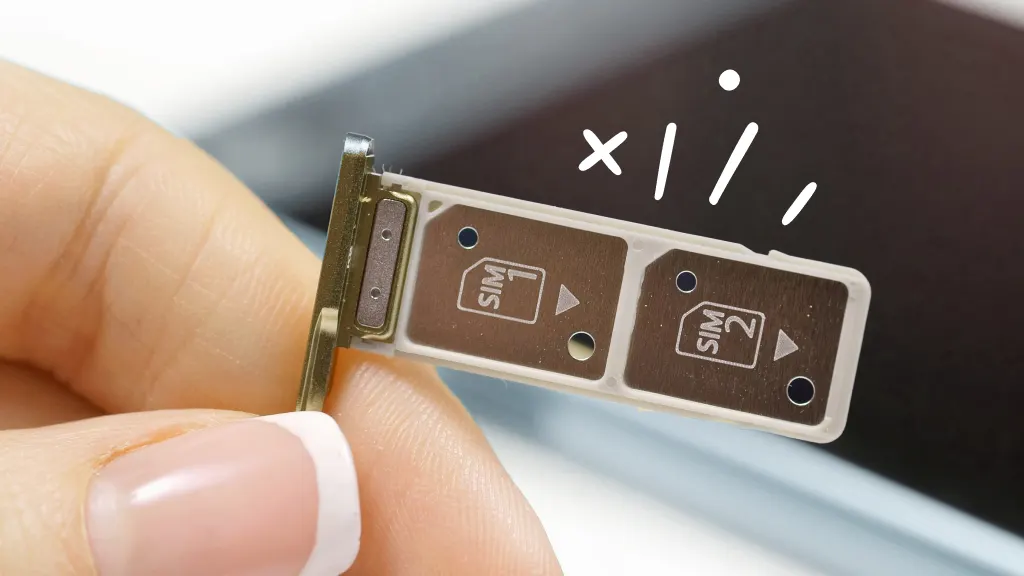
Dual SIM means a smartphone can use two SIM connections.
The exact implementation varies between devices.
Some smartphones use two physical SIM cards. Others combine one physical SIM with an eSIM. Newer devices may support multiple eSIM profiles, although the number that can be active simultaneously depends on the model.
With two connections available, you may be able to assign different numbers to different purposes.
For example, one line could be used for personal communication while another is dedicated to work.
Some devices allow you to choose which line handles calls, messages, and mobile data. The available controls depend on the smartphone and operating system.
The important distinction is that Dual SIM describes the ability to manage multiple cellular subscriptions, while eSIM describes the digital SIM technology that can be used to provide one of those connections.
What Is eSIM?
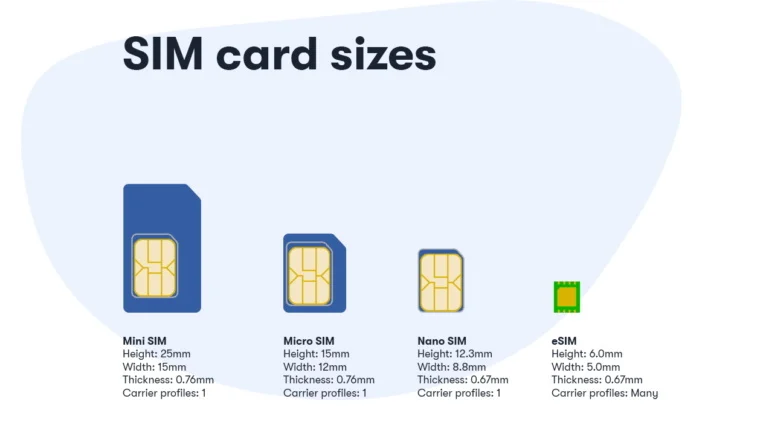
An eSIM is an embedded SIM that allows a compatible smartphone to store a cellular subscription digitally.
There is no physical card to insert.
Depending on the carrier and phone, an eSIM can usually be activated through a QR code, carrier application, activation link, or manual setup process.
The technology can make switching mobile services more convenient.
For example, a traveler can purchase a supported international plan before leaving home, install it on a compatible phone, and use it after arriving at the destination.
An eSIM can also be useful for maintaining separate personal and business numbers without carrying another device.
However, eSIM support varies by phone, carrier, and region.
Dual SIM vs eSIM: The Key Difference
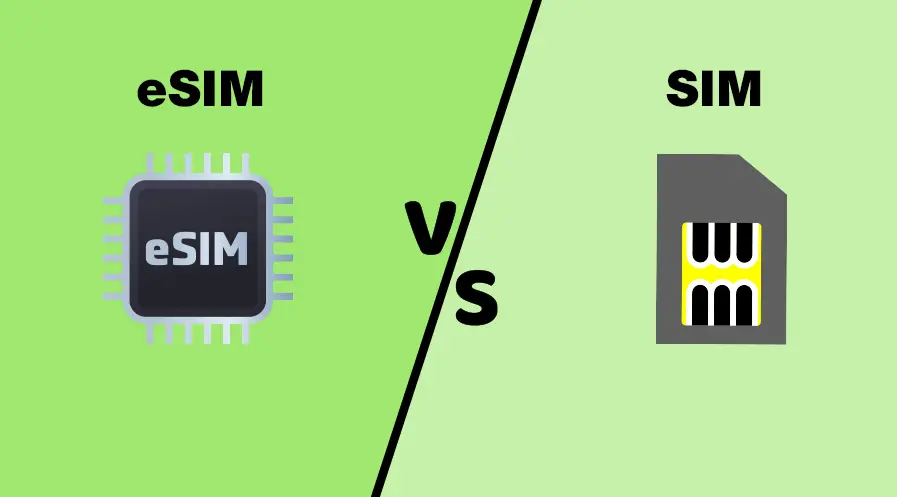
The terms are sometimes treated as competing technologies, but they are actually describing different things.
Dual SIM describes a phone's ability to use multiple cellular subscriptions.
eSIM describes the method used to store a cellular subscription digitally.
A smartphone can therefore support both.
For example, a phone may have one physical SIM slot and eSIM support. When both connections are active, it effectively provides a Dual SIM setup.
Feature | Physical Dual SIM | Dual SIM With eSIM |
|---|---|---|
Physical SIM cards | Two may be required | One or none may be required |
Digital activation | Limited | Supported |
Switching plans | Requires changing cards in many cases | Can often be done digitally |
Travel flexibility | Good | Often very good |
Risk of losing SIM | Possible | No physical card to lose |
Device compatibility | Broad on supported models | Requires eSIM compatible device |
Carrier flexibility | Depends on device | Depends on carrier and device |
Multiple profiles | Limited by physical slots | Potentially several stored profiles |
The most important thing to remember is that eSIM does not replace Dual SIM functionality. It can actually make Dual SIM setups more flexible.
Why Use Two Numbers on One Phone?
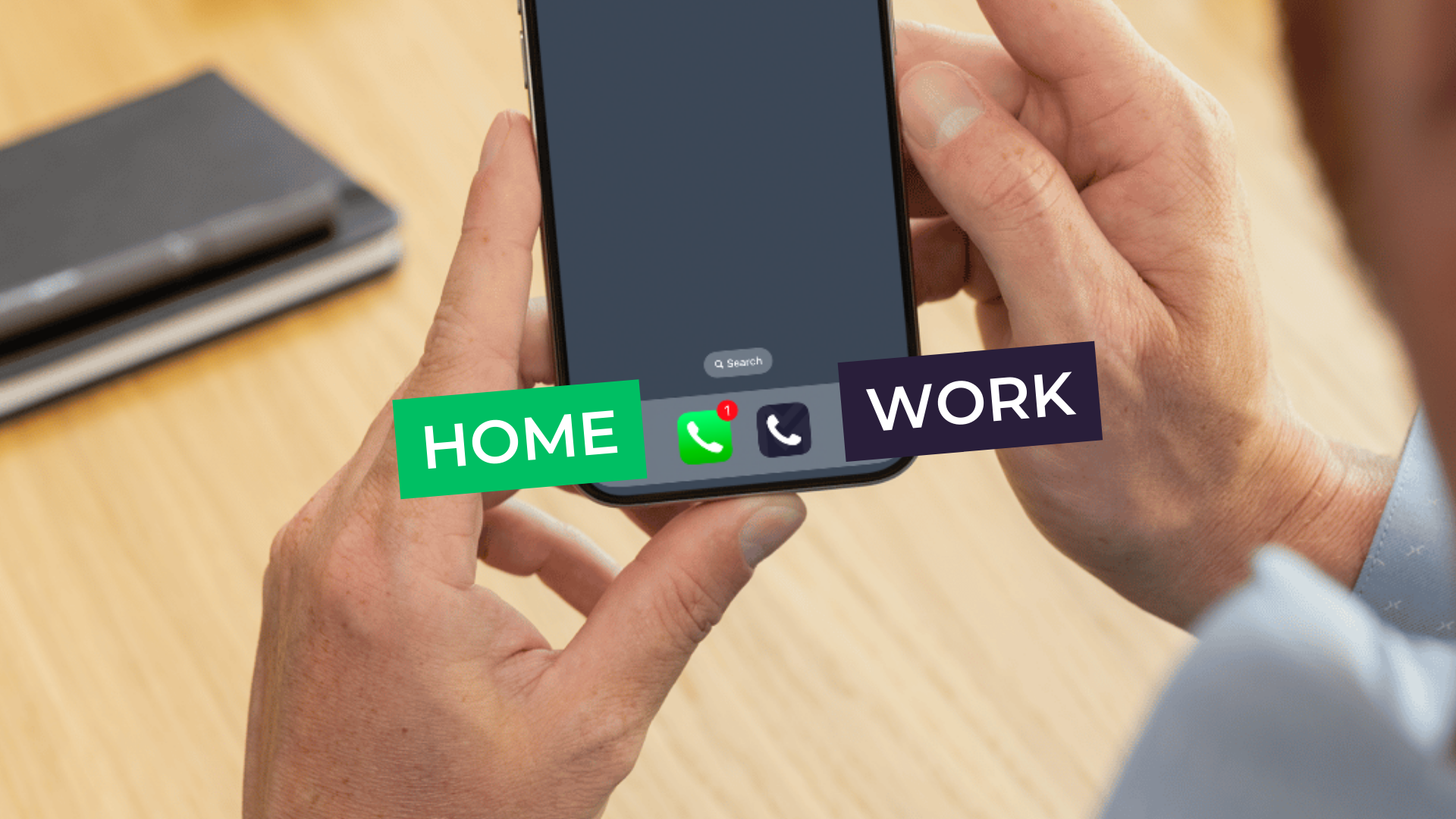
There are several practical reasons to use two cellular lines.
Work and Personal
Keeping separate numbers can help organize professional and personal communication.
Instead of carrying two smartphones, you can manage both lines from one device.
International Travel
Travelers can keep their primary SIM active while adding a local or international eSIM for mobile data.
This can reduce the need to remove the primary SIM.
Better Coverage
In some situations, users may choose different carriers because one network provides better coverage in certain locations.
Whether both lines can remain connected simultaneously depends on the device.
Separate Data Plans
One line may provide the main voice service while another provides additional mobile data.
This can be useful for users who regularly travel or have different requirements throughout the month.
The Biggest Advantage of eSIM Is Flexibility
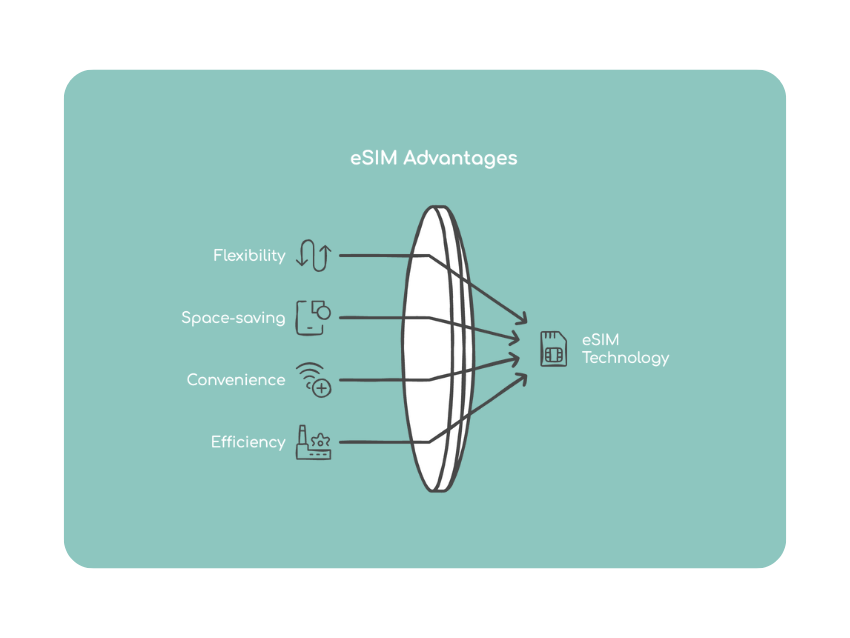
The convenience of eSIM becomes particularly obvious when changing mobile plans.
With a physical SIM, changing providers can involve obtaining a new card and physically inserting it.
With eSIM, the activation process can often be completed digitally.
This makes eSIM especially useful for travelers.
Imagine visiting three countries during one trip. Instead of purchasing and physically changing SIM cards along the way, you may be able to install a regional eSIM that works across supported destinations.
You can also potentially keep your primary number available while using the travel plan for data.
This does depend on the phone's Dual SIM capabilities and the terms of the carriers involved.
Physical SIM Still Has Advantages
Despite the convenience of eSIM, physical SIM cards remain useful.
The biggest advantage is broad compatibility.
If you frequently change phones, a physical SIM can be transferred to another compatible unlocked device relatively easily.
This can be useful in situations where a phone needs to be replaced unexpectedly.
Physical SIM cards can also be convenient in countries where local prepaid services are primarily distributed through physical cards.
For some users, the simplicity of moving a card from one device to another is still valuable.
What About Dual eSIM?
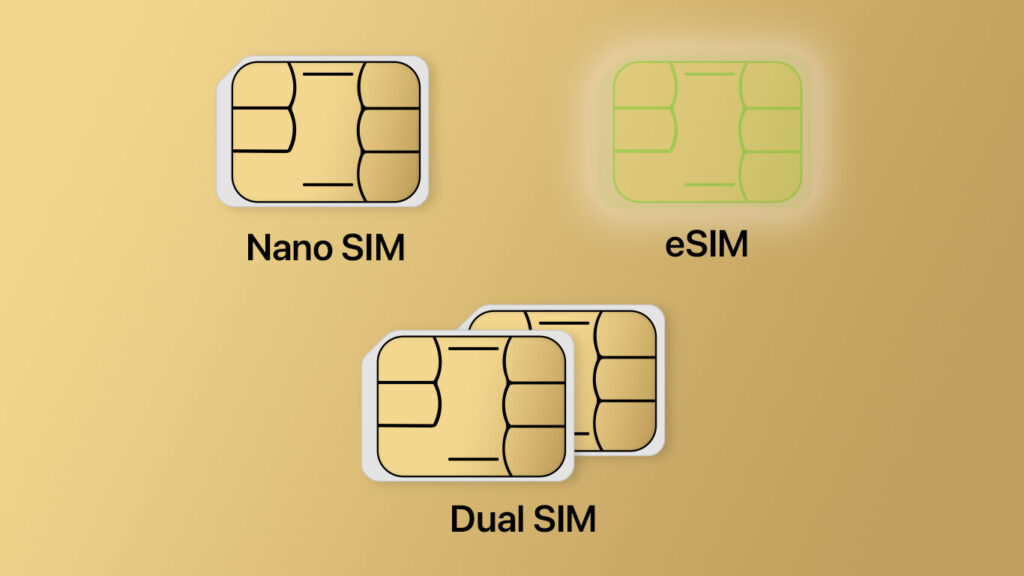
Some modern smartphones support multiple eSIM profiles and may allow more than one eSIM to be active at the same time.
This can provide an extremely flexible setup.
For example, a user could have a personal line and a work line stored digitally, while also maintaining another travel profile that can be activated when needed.
However, there is an important distinction between storing multiple profiles and using multiple lines simultaneously.
A phone may allow several eSIM profiles to be stored but restrict the number that can be active at once.
Always check the exact specifications of the smartphone you are considering.
Which Setup Is Better for Travelers?
For frequent international travelers, eSIM can provide significant convenience.
A typical setup could involve keeping your normal SIM for your primary number while using an eSIM for mobile data abroad.
This can make it easier to stay connected without physically replacing the primary SIM.
Travelers should still check several factors before buying an international eSIM.
Confirm that the phone is unlocked.
Check whether the eSIM covers every destination on the itinerary.
Look at the available data allowance.
Check whether hotspot use is permitted.
Verify the validity period.
Also confirm whether the plan supports 4G or 5G networks in the destination.
An eSIM is only useful when the underlying network service meets your needs.
Which Setup Is Better for Work and Personal Use?
For people who want separate work and personal numbers, both physical Dual SIM and eSIM can work well.
The choice depends mainly on the phone and carriers involved.
A physical Dual SIM phone may be appealing if you frequently move SIM cards between devices.
An eSIM setup may be more convenient if you prefer digital activation and regularly change plans.
Some users may also prefer having one physical SIM and one eSIM because this provides a combination of physical flexibility and digital convenience.
The ideal arrangement depends on which carriers you use and whether both lines need to remain active simultaneously.
What Should You Check Before Buying a Dual SIM Phone?
Do not assume that every phone marketed as Dual SIM offers the same functionality.
Before buying, check the following specifications.
Number of Active Lines
A phone may store several SIM profiles but allow only a certain number to be active simultaneously.
Physical SIM Slots
If you want two physical SIM cards, confirm that the specific regional model includes two SIM slots.
eSIM Support
Check whether the exact model supports eSIM.
Regional versions can have different capabilities.
Carrier Compatibility
Make sure your preferred carriers support the phone's SIM configuration.
5G Support
If fast mobile connectivity is important, check whether both lines can access the relevant 5G networks or whether network capabilities differ between the primary and secondary line.
Data Switching
Some phones allow mobile data to switch between SIMs under certain conditions.
This can be useful when traveling.
VoLTE Support
Voice over LTE compatibility can matter for reliable calling, particularly as older cellular networks are phased out in some regions.
Can Both SIMs Use Mobile Data at the Same Time?
Usually, a Dual SIM phone selects one cellular line as the primary mobile data connection.
Some devices offer advanced features that can manage connectivity differently, but simultaneous cellular data usage across two networks is not a standard capability on every phone.
This is an important distinction.
Having two active SIMs does not necessarily mean the phone combines both data connections to create a faster internet connection.
If you need additional data, the device may allow you to switch the preferred data line rather than using both simultaneously.
Check the manufacturer's documentation before assuming that Dual SIM means combined mobile data.
Does eSIM Affect Battery Life?
The eSIM itself is not generally the main factor determining battery consumption.
Battery usage is more closely related to how many cellular connections are active, network conditions, signal strength, and how frequently the phone communicates with cellular networks.
A phone operating with two active lines may consume more power than one using a single line, particularly when both networks have weak coverage.
This is not unique to eSIM.
The same principle can apply to physical Dual SIM configurations.
If battery life is important, consider your actual network environment rather than assuming that eSIM automatically uses more or less power.
eSIM and Privacy
An eSIM removes the physical card, but it does not eliminate the need for good account security.
Your mobile account is still associated with your carrier and cellular subscription.
Protect your carrier account with strong authentication where available.
Keep your smartphone protected with a secure passcode or biometric authentication.
When using travel eSIM services, purchase plans from reputable providers and carefully review their activation and account procedures.
The key security advantage of an eSIM is physical. There is no small SIM card that can be removed from the phone and misplaced.
However, digital account security remains important.
eSIM vs Dual SIM for Frequent Travelers
For frequent travelers, a combination of physical SIM and eSIM can be particularly practical.
Your normal number can remain associated with your primary SIM while an eSIM provides local or regional data.
This arrangement can reduce the disruption caused by changing physical SIM cards.
For example, a traveler could keep their primary number available while using a travel eSIM for maps, messaging, ride booking, email, and other data services.
The exact behavior of calls, SMS, and mobile data depends on the device and carrier settings.
Before traveling, it is worth testing the configuration at home so you understand which line handles calls and which one handles data.
Common Mistakes to Avoid
One of the most common mistakes is assuming that all Dual SIM phones have identical capabilities.
They do not.
Another mistake is purchasing a phone without checking the regional model.
A smartphone sold in one country can have different SIM and eSIM capabilities from the version sold elsewhere.
Travelers can also forget to check whether the phone is carrier unlocked.
Another issue is assuming that multiple stored eSIM profiles mean multiple active connections.
It is also important to understand which line is being used for mobile data. If a travel eSIM is intended to handle data abroad, the correct line needs to be selected in the phone's cellular settings.
Which Setup Makes More Sense?
There is no single setup that is ideal for everyone.
Choose Physical Dual SIM When
• You frequently move SIM cards between phones.
• Your carriers primarily provide physical SIM cards.
• You want two physical SIM connections.
• You value easy physical transfer between compatible devices.
Choose eSIM When
• You regularly travel internationally.
• You frequently change mobile plans.
• You want to activate services digitally.
• You prefer not to handle physical SIM cards.
• Your phone supports multiple eSIM profiles.
Consider a Physical SIM Plus eSIM Setup When
• You want a permanent primary number.
• You travel regularly.
• You want a separate data plan abroad.
• You need flexibility between local and international services.
For many modern smartphone users, the physical SIM plus eSIM combination offers a useful balance between flexibility and familiarity.
A Simple Buying Checklist
Before purchasing a phone or changing your SIM setup, check:
• Does the phone support Dual SIM?
• Does the exact regional model support eSIM?
• How many SIM profiles can be stored?
• How many lines can be active simultaneously?
• Does your carrier support eSIM?
• Is the phone unlocked?
• Which 4G and 5G bands are supported?
• Can you choose which SIM handles mobile data?
• Can you switch data lines easily?
• Does the phone support the features you need while traveling?
• Are calls and SMS supported on both lines?
• Does your phone support the required eSIM features in your country?
These questions can prevent compatibility problems later.
Frequently Asked Questions About eSIM and Dual SIM
Is eSIM the same as Dual SIM?
No. eSIM is a digital SIM technology, while Dual SIM describes a smartphone's ability to use multiple cellular subscriptions.
Can I use a physical SIM and eSIM together?
Many modern smartphones support a physical SIM and eSIM simultaneously. The exact functionality depends on the device and carrier.
Can I have multiple eSIMs on one phone?
Many compatible smartphones allow multiple eSIM profiles to be stored. The number that can be active simultaneously depends on the device.
Is eSIM better for international travel?
It can be more convenient because you can often purchase and activate a travel plan digitally without removing your primary SIM.
Can both SIMs receive calls?
Many Dual SIM smartphones can keep both lines available for calls, although exact behavior varies by device and network configuration.
Can I use two mobile data connections at once?
Most smartphones select one preferred cellular data line. Some devices provide additional data management features, but simultaneous use of two cellular data connections is not universal.
Does eSIM work without internet?
An eSIM does not itself provide internet access. It is a way of storing a cellular subscription. Once the profile is activated and connected to a supported mobile network, it can provide cellular service according to the plan.
Should I choose eSIM or physical SIM?
The choice depends on your needs. eSIM is particularly convenient for travel and digital plan management, while physical SIM cards remain useful for compatibility and easy transfer between devices.
Final Thoughts
The choice between Dual SIM and eSIM is less about choosing one technology over another and more about understanding how the two can work together.
Dual SIM gives you the ability to manage multiple cellular subscriptions from one smartphone. eSIM provides a digital way to add and manage those subscriptions without requiring a physical card.
For travelers, the combination can be particularly useful. A primary number can remain connected while a separate eSIM provides mobile data abroad. For professionals, two lines can separate work and personal communication. For people who regularly change carriers, digital activation can make eSIM especially convenient.
Physical SIM cards still have their place, particularly for users who value easy transfer between compatible phones or live in markets where physical SIM services are widely available.
Before choosing a smartphone, look beyond the words "Dual SIM" or "eSIM." Check the exact model, regional configuration, carrier compatibility, number of active lines, network support, data switching capabilities, and eSIM availability.
The best setup is ultimately the one that matches how you communicate, travel, work, and use mobile data every day.