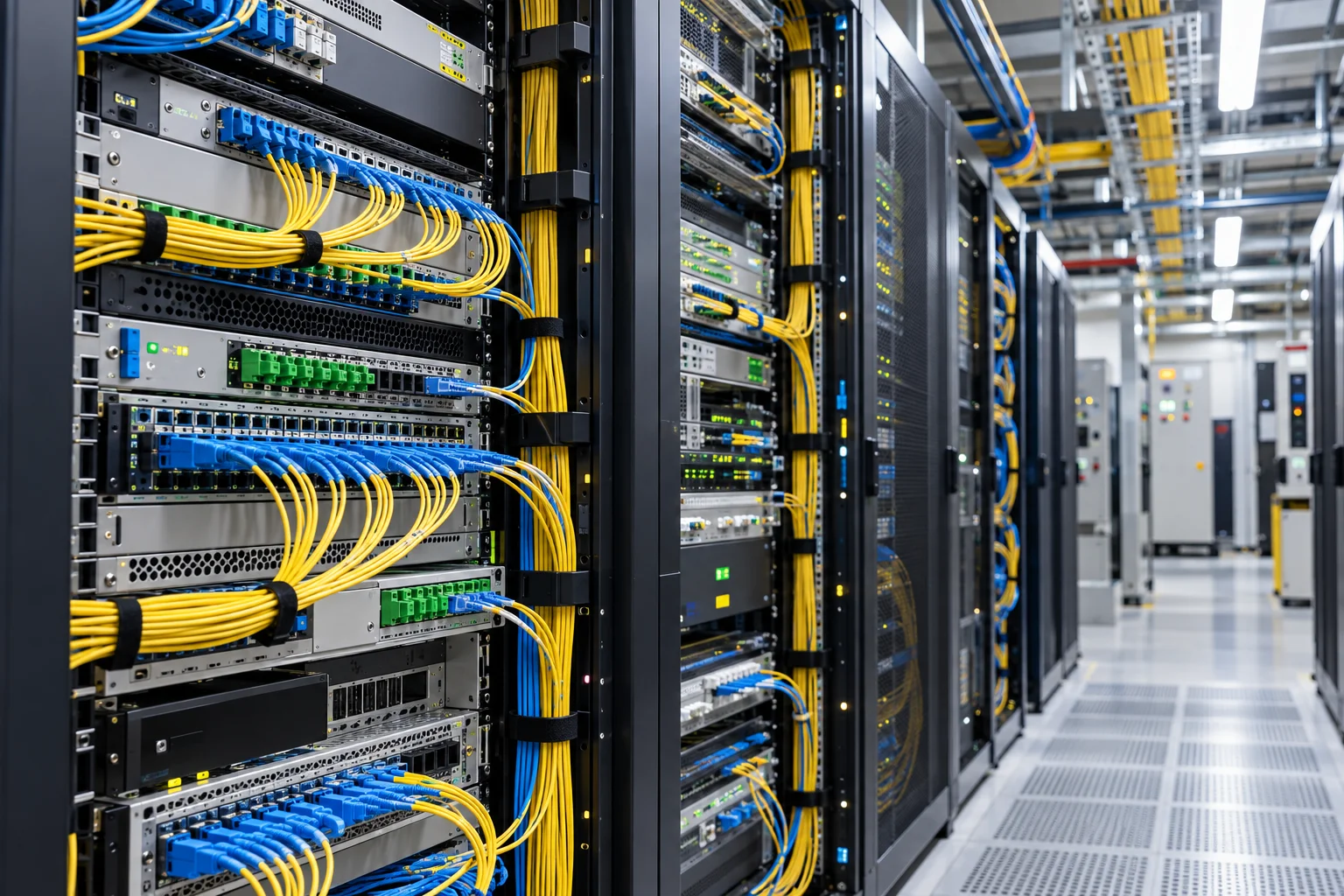
Cable and fiber internet can deliver similar services to your home, but the equipment sitting at the end of each connection looks very different because the two access networks transmit information in fundamentally different ways.
A cable internet connection typically ends at a DOCSIS cable modem, which converts radio-frequency signals traveling over coaxial cable into Ethernet or Wi-Fi networking.
A fiber-to-the-home connection normally ends at an Optical Network Terminal (ONT) or Optical Network Unit (ONU), which converts optical signals traveling through fiber into an Ethernet connection for your home network.
The difference starts before the equipment in your house.
Cable broadband usually uses a Hybrid Fiber-Coaxial (HFC) network: fiber carries the signal toward the neighborhood, then coaxial cable completes the connection to the home. Fiber broadband carries the optical signal all the way to the premises.
That physical difference determines why you need a cable modem for DOCSIS and an ONT for fiber.
What Is DOCSIS and Why Does Cable Internet Need a Modem?
DOCSIS is the technology that allows internet data to travel over a cable television network, including the coaxial portion of an HFC network.
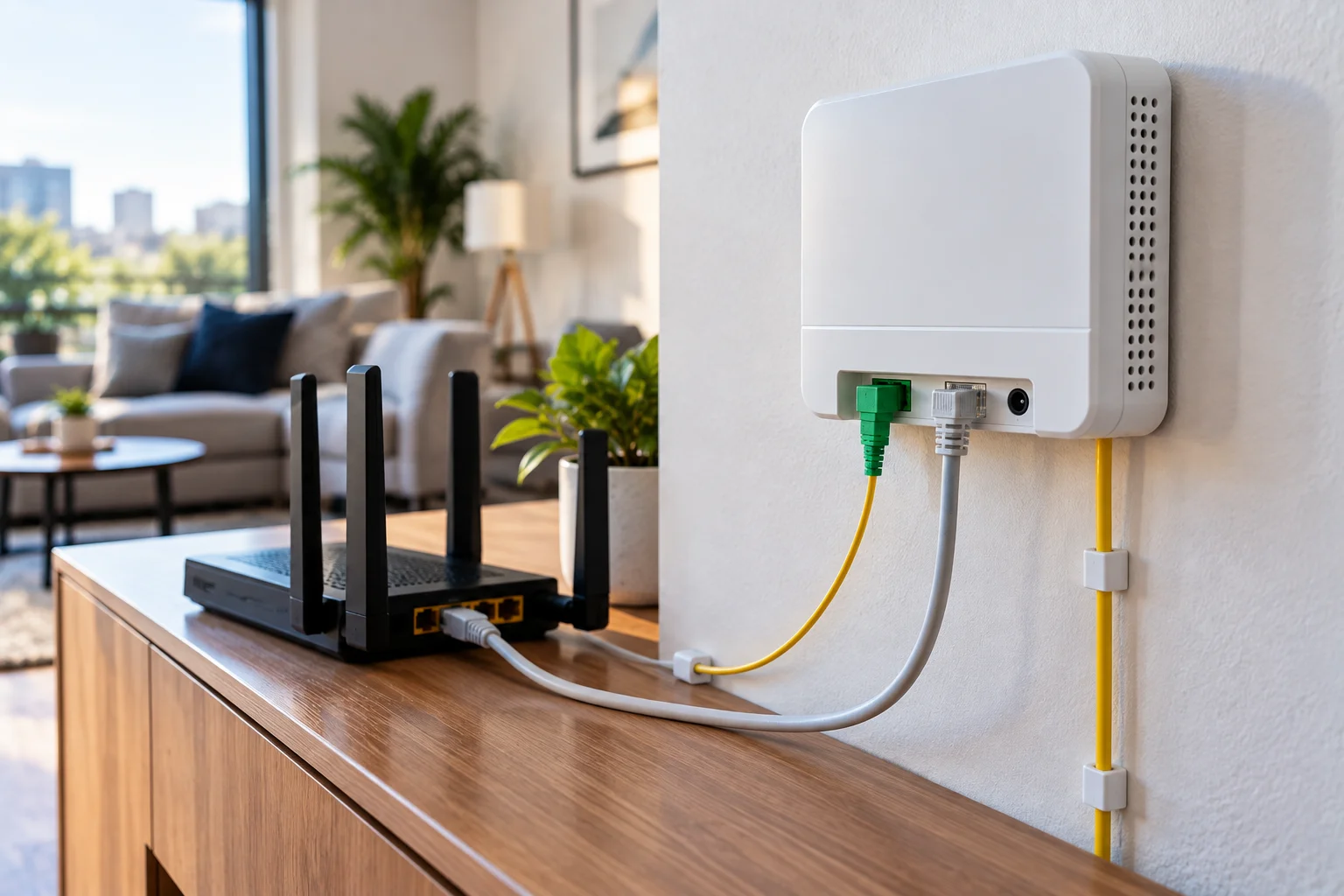
DOCSIS stands for Data Over Cable Service Interface Specification.
The cable operator's network contains equipment called a Cable Modem Termination System (CMTS), or newer architectures that perform equivalent functions. The customer's cable modem communicates with this equipment over the HFC network.
The path looks roughly like this:
Internet → operator network → CMTS/CCAP → fiber → optical node → coaxial cable → cable modem → router
The optical node converts the signal between the fiber portion and the RF electrical signal used on the coaxial network.
Your cable modem performs the corresponding conversion at home.
What Does a DOCSIS Cable Modem Actually Do?
A cable modem converts the DOCSIS signal on the coaxial cable into normal IP networking that your home router and devices can use.
The coaxial cable isn't carrying ordinary Ethernet frames in the same way an Ethernet cable between your router and PC does.
DOCSIS defines how IP traffic is transported over the cable access network.
The modem therefore has specialized hardware and software for:
DOCSIS signaling
RF tuning
Upstream transmission
Downstream reception
Network authentication
Channel management
Error correction
Ethernet networking
CableLabs describes DOCSIS as enabling bidirectional IP traffic between the cable network headend and customer locations.
That's why you can't normally replace a cable modem with an ordinary Ethernet switch.
What Is an ONT in a Fiber Internet Connection?
An ONT converts the optical signals traveling over a fiber access network into an electrical Ethernet connection for the customer's network.
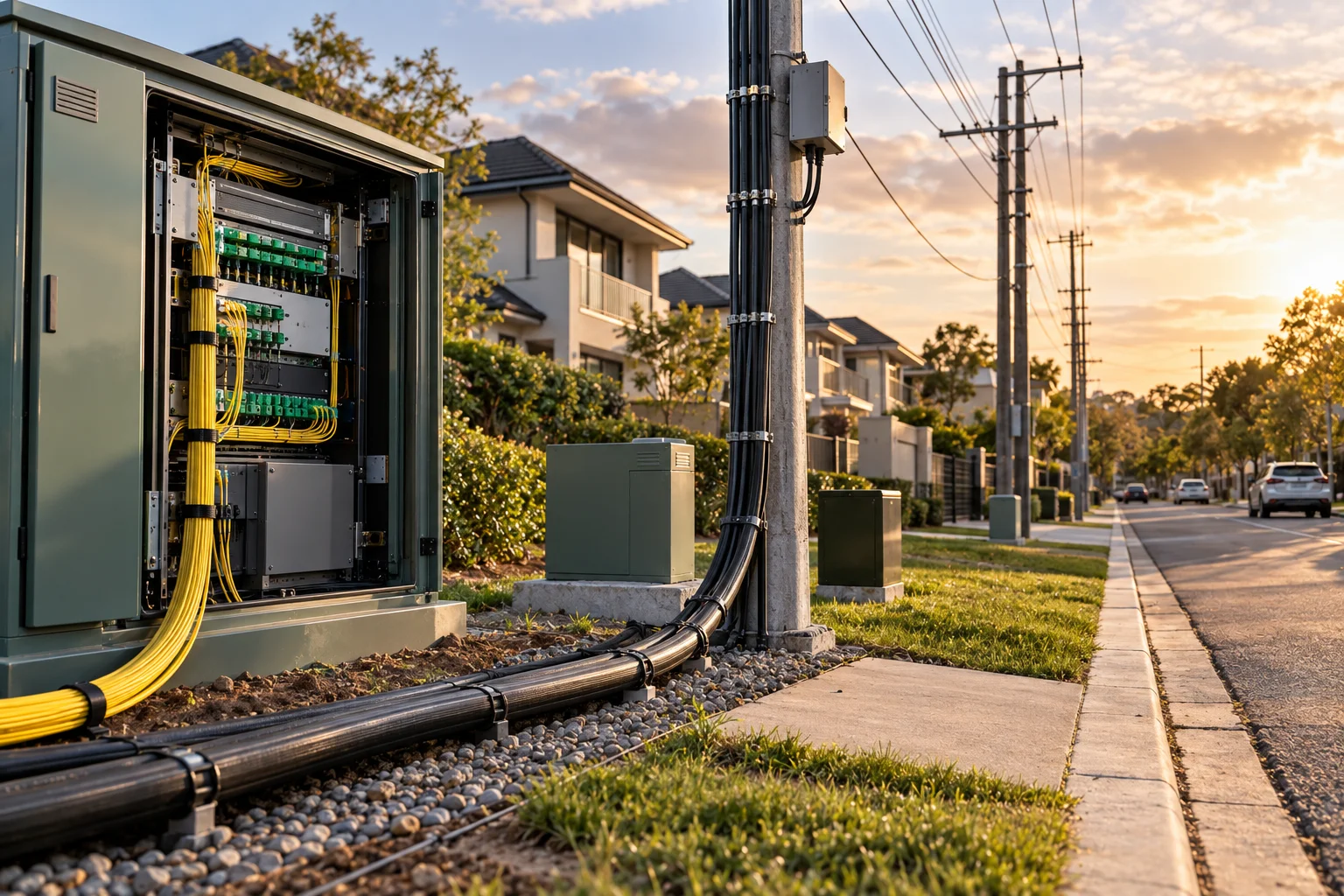
ONT stands for Optical Network Terminal.
ITU-T documentation notes that an ONU used for FTTH is commonly referred to as an ONT.
A simplified fiber connection looks like:
Internet → operator network → OLT → optical fiber → ONT → Ethernet → router
The equipment at the provider side is generally called an Optical Line Termination (OLT).
The OLT communicates with multiple optical network units over the passive optical network.
Unlike the cable modem, the ONT doesn't tune an RF signal from a coaxial cable. It communicates using optical signals over the fiber.
What Is the Difference Between an OLT and an ONT?
The OLT is the provider-side optical access device, while the ONT is the customer-side device that terminates the fiber connection.
The OLT sits in the operator's network.
The ONT sits at or near your home.
They form the two ends of the optical access system.
In an XGS-PON architecture, for example, the ITU-T network architecture shows an OLT communicating over fiber with ONUs/ONTs at customer premises.
This is broadly analogous to the relationship between a cable operator's CMTS and your DOCSIS cable modem, although the underlying technologies are very different.
Why Doesn't Fiber Internet Use a Cable Modem?
Because a fiber connection doesn't carry the access signal over coaxial RF channels that DOCSIS is designed to process.
A DOCSIS modem expects the electrical/RF signaling used by the cable network.
A fiber ONT expects optical signaling from the PON.
Trying to connect a DOCSIS modem to a fiber service is therefore like connecting a television antenna tuner to an optical network.
The connector and transmission technology are different, and so is the protocol stack used to access the provider's network.
How Does a Fiber ONT Convert Light Into Internet Data?
The ONT contains optical electronics that receive and transmit information through the fiber and present a conventional network interface to the customer's equipment.
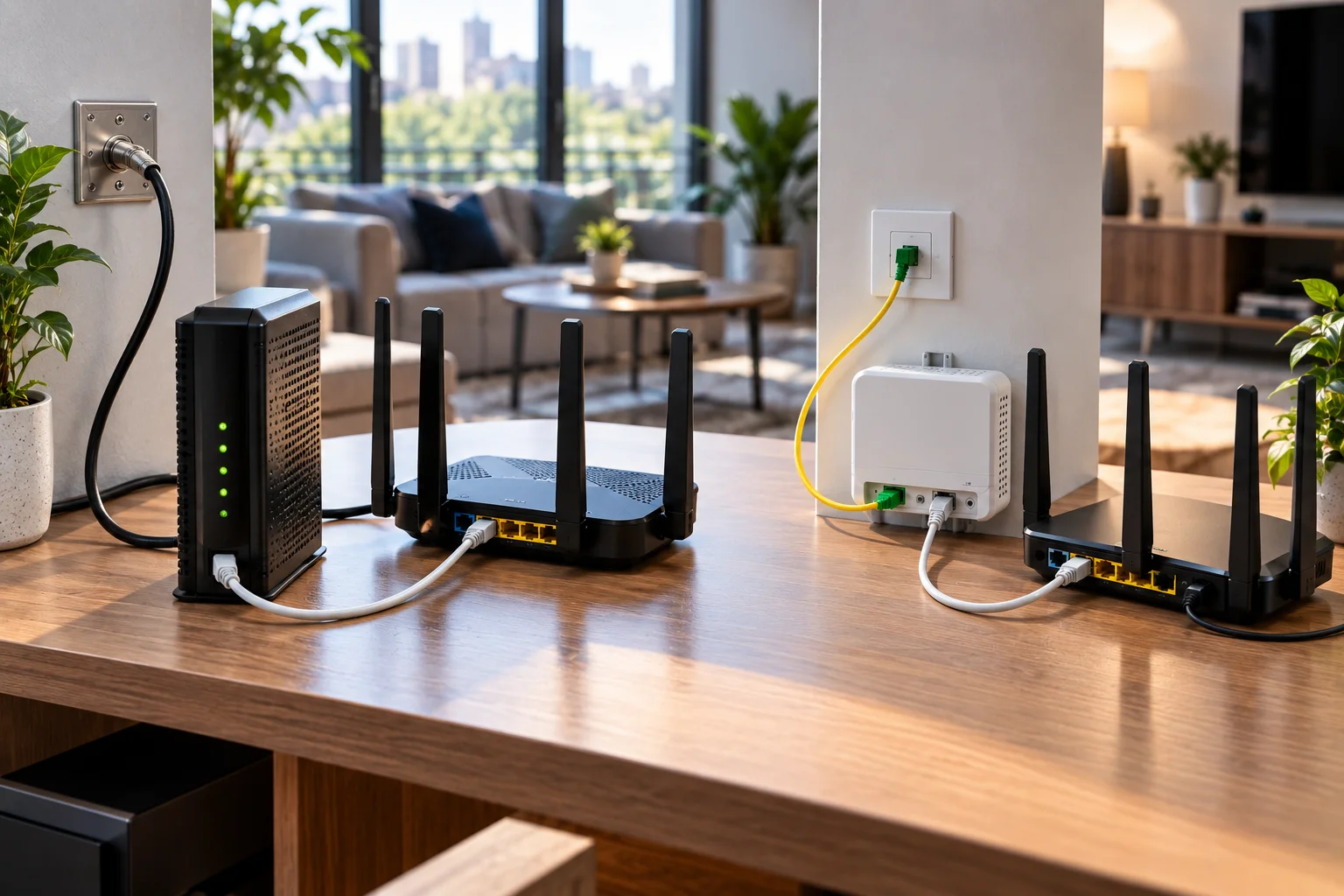
Inside the ONT are components responsible for converting between optical and electrical signals.
The exact implementation depends on the PON technology.
For example, XGS-PON is a 10-Gigabit-capable symmetric passive optical network technology standardized by ITU-T. Its architecture uses an OLT on the provider side and ONUs/ONTs on the customer side.
The ONT therefore acts as the boundary between the provider's optical access network and your home's Ethernet network.
Why Does Cable Internet Need Coaxial Cable After Fiber?
HFC networks were designed to reuse existing coaxial cable infrastructure that originally carried cable television signals.
The "hybrid" in Hybrid Fiber-Coaxial is important.
Fiber can carry the network deeper into the neighborhood, while coaxial cable handles the final distribution to homes.
CableLabs describes HFC as a combination of fiber and coaxial infrastructure, with an optical node converting the signal between the two portions.
This architecture allowed cable operators to upgrade broadband capacity without replacing every existing coaxial connection with fiber.
DOCSIS continues to evolve that infrastructure.
Is Fiber Always Faster Than DOCSIS?
Not automatically, but fiber has important technical advantages that make very high and symmetric capacity easier to deliver.
Current DOCSIS 4.0 specifications support up to 10Gbps downstream capacity and 6Gbps upstream capacity under the specification's stated limits.
Modern PON technologies can also provide multi-gigabit capacity. XGS-PON, for example, is designed for 10-Gigabit symmetric operation.
But the speed you actually receive depends on the service tier, network architecture, provider configuration and shared capacity.
So comparing "cable" and "fiber" solely by their theoretical maximum isn't particularly useful.
Why Is Fiber Hardware Usually Smaller Than a Cable Modem?
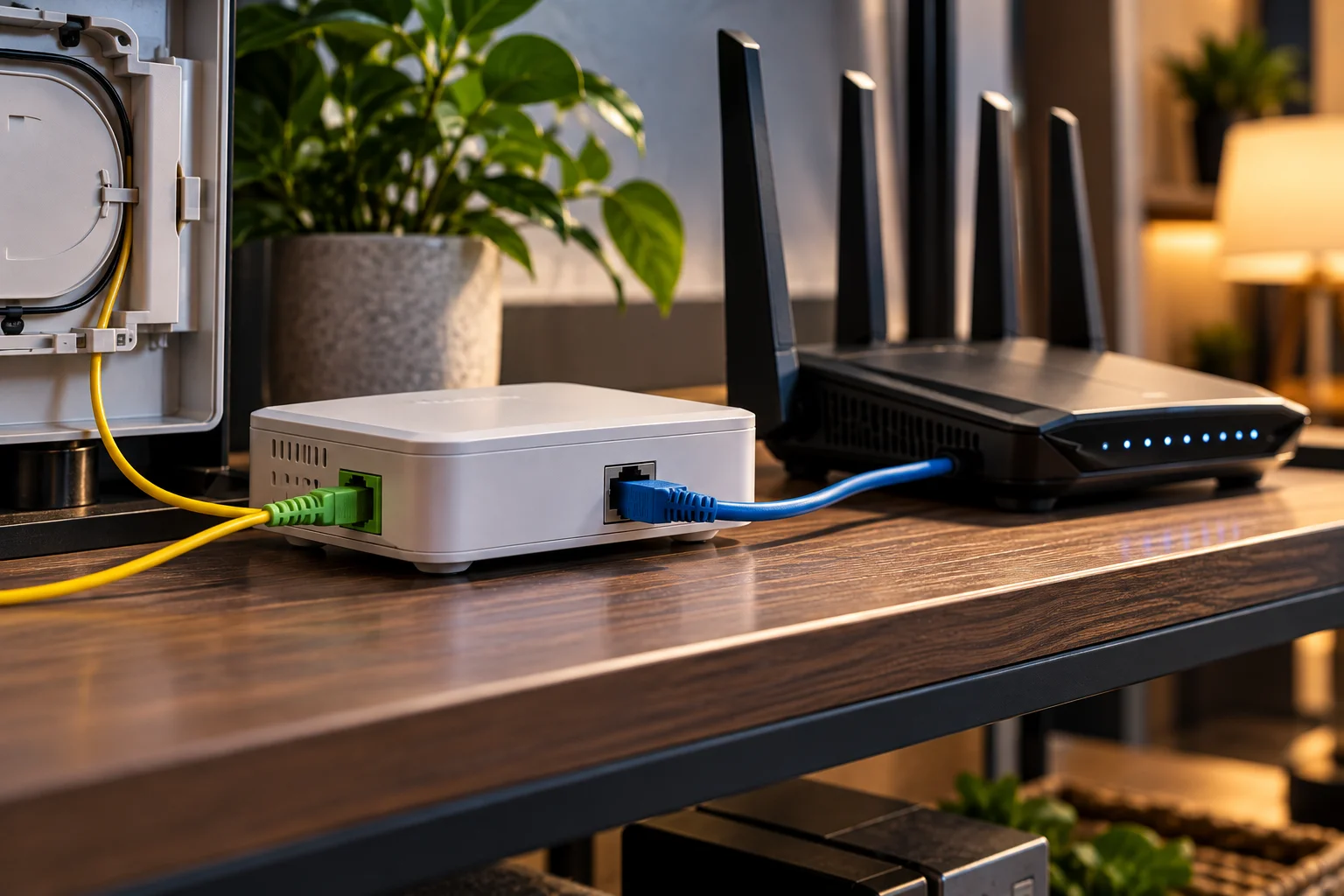
An ONT and cable modem perform different jobs, and their physical designs vary significantly by manufacturer and service configuration.
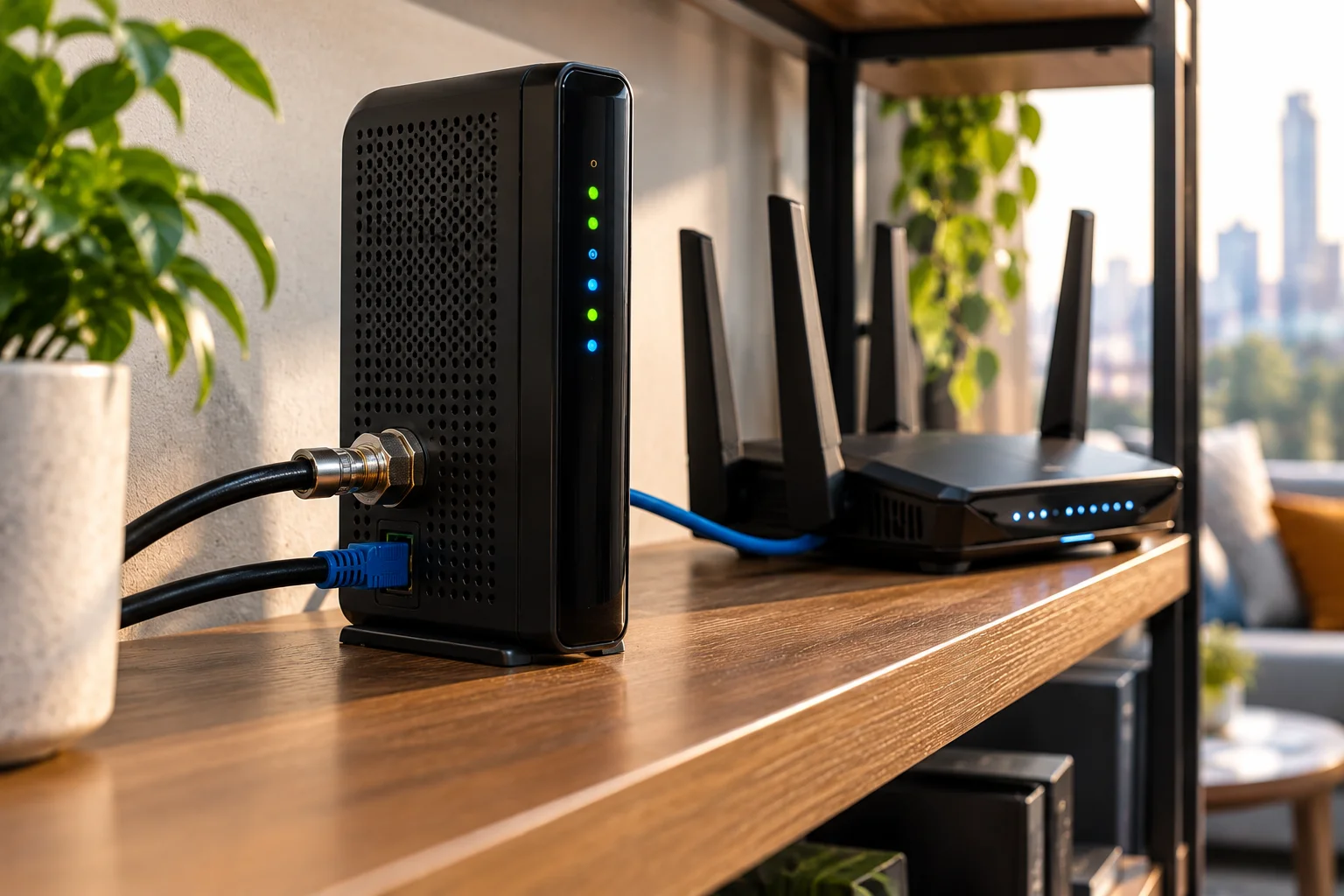
A traditional cable modem needs RF tuners and DOCSIS-specific electronics designed to operate over coaxial frequencies.
An ONT instead contains optical transceivers and PON-specific electronics.
Modern fiber installations can also combine the ONT and router into a single gateway, just as cable operators commonly provide cable modem/router combination units.
So the box sitting next to your router doesn't necessarily tell you the entire architecture.
The important question is what physical medium reaches the device.
Does Fiber Have a Modem?
Fiber internet doesn't normally use a "modem" in the traditional cable or DSL sense, but the ONT performs the network-termination role that users often associate with a modem.
That's why people sometimes casually call an ONT a fiber modem.
Technically, the terminology is different because the ONT is terminating an optical access network rather than modulating and demodulating a traditional RF carrier in the way a cable modem does.
The ONT then typically provides Ethernet to your router.
Are Cable and Fiber Networks Both Shared?
Yes. Both can use point-to-multipoint architectures where network capacity is shared among multiple customers.
This is an important misconception about fiber.
A PON is not necessarily a private fiber running directly from your home to an internet router.
The OLT can serve multiple ONTs over shared passive optical infrastructure.
Cable HFC networks also share access capacity among customers.
CableLabs explicitly describes both HFC and PON as shared point-to-multipoint access networks.
What differs is the physical medium and access technology used to share that capacity.
What Happens Inside Your Home After the ONT or Cable Modem?
Both systems ultimately need to hand the internet connection to your home network equipment.
A common setup looks like:
Cable:
Coax → DOCSIS modem → Ethernet → router → Wi-Fi
Fiber:
Fiber → ONT → Ethernet → router → Wi-Fi
In some installations, the modem or ONT and router are combined into one gateway.
The Wi-Fi part of your connection is therefore separate from the DOCSIS-versus-fiber question.
You can have an extremely fast fiber connection and still experience poor Wi-Fi because of router placement, wireless interference or an outdated wireless standard.
DOCSIS vs Fiber ONT: What's the Hardware Difference?
Component | Cable internet | Fiber internet |
|---|---|---|
Final physical medium | Coaxial cable | Optical fiber |
Home termination | DOCSIS cable modem | ONT/ONU |
Provider-side termination | CMTS/CCAP | OLT |
Signal type at home | RF/electrical | Optical |
Local handoff | Ethernet | Ethernet |
Access architecture | HFC | PON or other FTTH architecture |
Typical home connection | Coax → modem | Fiber → ONT |
The most important difference isn't the shape of the box.
It's what signal the box is designed to terminate.
Frequently Asked Questions
Is an ONT the same as a cable modem?
No. Both terminate broadband access connections, but a cable modem handles DOCSIS over coaxial/RF infrastructure, while an ONT terminates an optical access network.
Can I use a cable modem with fiber internet?
No. A standard DOCSIS cable modem isn't designed to terminate a PON fiber connection. Fiber services normally require an ONT or compatible optical network device.
Does fiber internet need a router after the ONT?
Usually, yes. The ONT commonly provides the Ethernet handoff, while the router manages your home network, Wi-Fi, firewall and connected devices.
Is DOCSIS 4.0 faster than fiber?
There isn't a universal answer. DOCSIS 4.0 supports up to 10Gbps downstream and 6Gbps upstream at the specification level, while technologies such as XGS-PON support 10Gbps-class symmetric access. Actual service depends on the provider's network and plan.
Why does cable internet use both fiber and coax?
HFC networks use fiber to carry the network deep into the distribution network and coaxial cable for the final connection to homes. This allows operators to reuse substantial existing coaxial infrastructure.
Can an ONT provide Wi-Fi?
Sometimes. Some providers install an ONT combined with a router or Wi-Fi gateway. A standalone ONT generally provides the network handoff to a separate router.
The Bottom Line
DOCSIS and fiber internet may both deliver a familiar Ethernet connection to your home, but they get there through very different technologies.
DOCSIS uses RF signaling over a hybrid fiber-coaxial network and terminates at a cable modem. Fiber-to-the-home uses optical signaling and terminates at an ONT.
Cable's architecture evolved from television networks and makes extensive use of existing coaxial infrastructure. Fiber access uses optical networking technologies such as GPON and XGS-PON, with an OLT communicating with ONTs over the optical distribution network.
Neither box is simply a faster or slower version of the other.
The cable modem speaks DOCSIS. The ONT speaks the optical access technology. Your router then turns either connection into the home network you actually use.