Mobile connectivity has changed dramatically over the last few years. What once felt like a major upgrade from 4G has become the foundation for faster smartphones, connected devices, cloud services, streaming, gaming, and increasingly intelligent digital experiences.
Today, however, simply seeing a 5G symbol on a smartphone does not always tell the complete story. Many users are beginning to encounter terms such as 5G+, 5G Ultra Wideband, 5G Ultra, and other carrier specific names. These labels can make it difficult to understand what type of network a phone is actually using and whether there is a meaningful difference in everyday performance.
The important point is that 5G+ is not a completely separate generation of mobile technology. In many markets, it is a carrier’s way of identifying a particular type or tier of 5G service, often associated with additional spectrum or enhanced network capabilities.
Understanding the difference can make it easier to choose a phone, evaluate a mobile plan, and understand why connection speeds can vary so much from one location to another.
What Is 5G?
5G is the fifth generation of cellular network technology. It was designed to deliver higher capacity, faster data rates, lower latency, and better support for large numbers of connected devices compared with previous generations.
The technology is more than simply faster downloads. Modern 5G networks can use different types of spectrum and network configurations to balance coverage, capacity, speed, and reliability.
For smartphone users, this can translate into quicker downloads, smoother high resolution video streaming, faster cloud access, improved multiplayer gaming, and better performance in crowded areas where older networks may become congested.
5G can operate across low band, mid band, and high band spectrum.
Low band 5G can travel relatively far and penetrate buildings more effectively, making it useful for broad coverage.
Mid band 5G provides a balance between coverage and capacity and is particularly important for delivering noticeably faster performance in many urban and suburban areas.
High band 5G, often associated with millimeter wave technology, can provide extremely high capacity and very fast speeds over shorter distances.
This combination is one reason why two phones showing a 5G indicator can deliver very different experiences.
What Does 5G+ Mean?
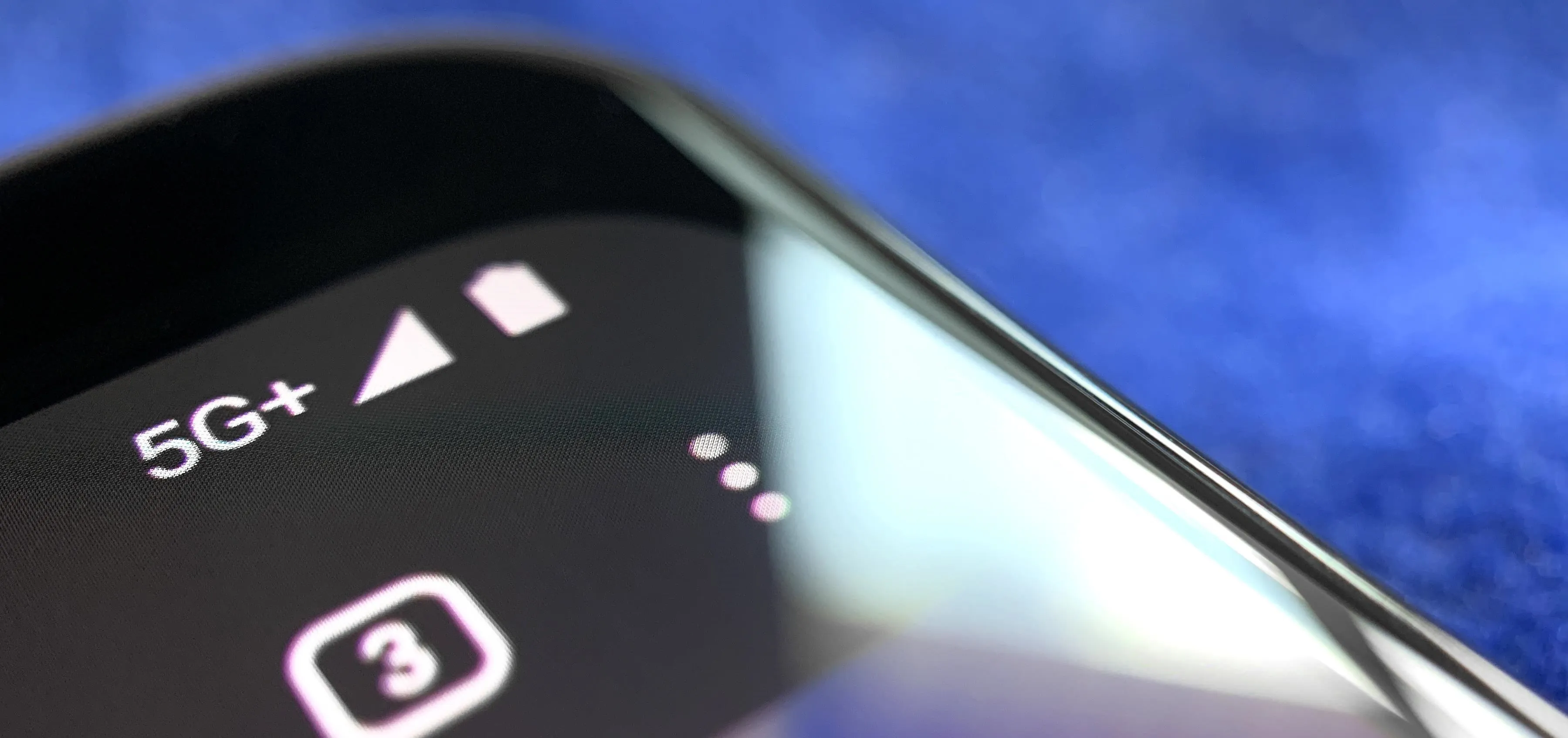
5G+ generally refers to an enhanced form of 5G service offered by a mobile network operator.
The exact meaning depends on the carrier and country. There is no single global technical standard that makes every 5G+ network identical.
A carrier may use the 5G+ label when a device is connected to particular spectrum, such as mid band or high band frequencies, or when it is receiving an enhanced configuration that provides greater capacity and performance.
For example, some operators use 5G+ to identify higher capacity portions of their 5G networks. Other operators use different branding for similar technology.
That means the 5G+ symbol should not automatically be interpreted as a completely new generation beyond 5G.
Instead, think of it as a network branding or indicator that can identify enhanced 5G connectivity.
5G vs 5G+: What Is the Difference?
The biggest difference is usually the network resources available to the device.
Feature | 5G | 5G+ |
|---|---|---|
Technology generation | Fifth generation | Still 5G |
Network capability | Depends on spectrum and deployment | Often enhanced capacity or speed |
Spectrum | Low, mid or high band | Often selected higher capacity spectrum |
Speed | Can range widely | May offer higher speeds |
Coverage | Can be broad | Often more location dependent |
Availability | Increasingly widespread | Usually available in selected areas |
Carrier branding | Common | Carrier specific |
Device requirements | Compatible 5G device | Compatible device and supported network |
The table highlights an important point: 5G is not automatically slow, and 5G+ is not automatically faster in every situation.
Actual performance depends on the spectrum being used, network congestion, signal conditions, device capabilities, backhaul, carrier configuration, and location.
Why Can 5G+ Be Faster?
One major reason is spectrum.
Wireless spectrum is a limited resource. When a carrier has access to additional spectrum or wider channels, it can potentially provide more capacity to connected devices.
Imagine a busy highway.
A narrow road can carry traffic, but congestion becomes a problem when many vehicles arrive at the same time. A wider highway can accommodate more traffic.
Mobile networks work differently in technical terms, but the basic concept of capacity is useful for understanding why additional spectrum can improve performance.
This is especially important in places such as airports, stadiums, shopping centers, business districts, and large events where thousands of people may be trying to access the network simultaneously.
5G+ can also benefit from newer network configurations that allow compatible devices to combine or efficiently use available resources.
Does 5G+ Always Mean Faster Internet?
No.
A 5G+ indicator does not guarantee that every activity will feel dramatically faster.
Network speed is influenced by several factors.
Your distance from the cell site matters. Physical obstacles can affect signal quality. Network congestion can reduce performance. Your phone's modem and antenna design also influence what it can support.
The application itself matters too.
If you are browsing a simple website, sending a message, or checking email, you may not notice a substantial difference between different 5G configurations.
Large downloads, high resolution video, cloud gaming, large file transfers, and other bandwidth intensive activities are more likely to benefit from additional network capacity.
Latency is another consideration. A network can have excellent download speeds while still experiencing delays caused by congestion, routing, or the application server.
How 5G Spectrum Affects Your Experience
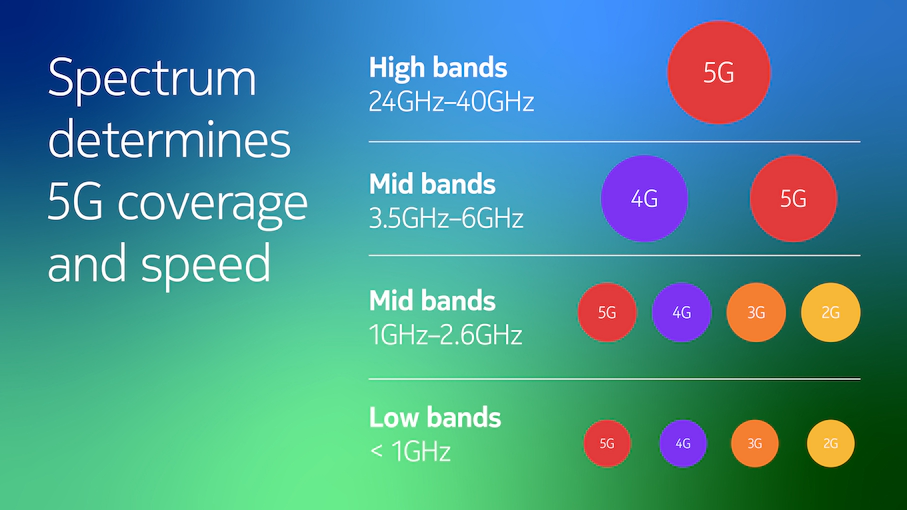
One of the easiest ways to understand modern 5G is to look at the different spectrum ranges.
Low Band 5G
Low band frequencies provide broad coverage and can travel relatively long distances.
They are useful for extending 5G availability across large areas, including suburban and rural locations.
However, low band 5G may not provide the dramatic speed increase that people originally associated with the term 5G.
Mid Band 5G
Mid band spectrum is particularly important because it offers a useful balance between coverage and performance.
It can deliver significantly more capacity than traditional low band deployments while still covering a practical area.
Many modern 5G deployments rely heavily on mid band spectrum to provide a noticeable improvement over 4G.
High Band 5G
High band spectrum can provide extremely high capacity and very fast data rates.
The tradeoff is shorter range and greater sensitivity to obstacles.
This makes high band technology particularly useful in dense locations where operators can install network equipment close to users.
What Does 5G Mean for Everyday Smartphone Use?
For most people, the biggest benefits of 5G are not simply a number displayed by a speed test.
Faster Downloads
Large applications, operating system updates, videos, and other files can download more quickly when network capacity is available.
Better Streaming
Higher capacity can make high resolution streaming more practical, particularly in areas where many people are connected at once.
Mobile Gaming
Lower latency and improved network capacity can help online gaming, although the quality of the game server and internet route remains important.
Video Calls
5G can provide the bandwidth needed for high quality video calls, especially in busy areas.
Hotspot Connectivity
A capable 5G connection can make a smartphone more useful as a temporary hotspot for laptops and tablets.
Connected Devices
5G is also important beyond smartphones. Industrial equipment, vehicles, sensors, cameras, and other connected devices can use cellular networks for communication.
Does Your Phone Need Special Hardware for 5G+?
Potentially, yes.
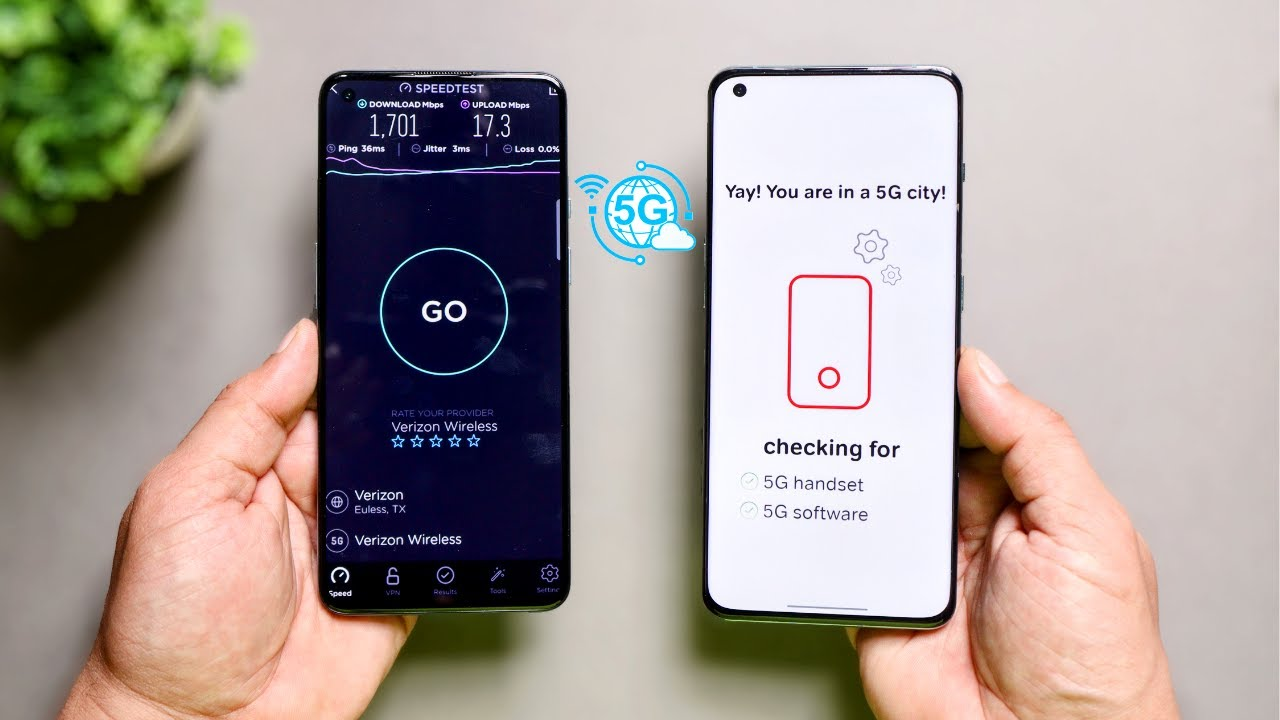
A smartphone needs a compatible modem and radio hardware to support the particular 5G bands and technologies used by a carrier.
A phone may support 5G but lack support for certain spectrum bands used for enhanced services.
This is one reason checking network compatibility before buying a phone is important.
The carrier also needs to support the device and its capabilities. In some cases, access to a particular network tier may depend on the mobile plan as well.
For international travelers, compatibility becomes even more important because 5G spectrum allocations differ between countries.
Is 5G+ Worth Paying More For?
That depends on how you use mobile data.
Someone who mostly sends messages, browses websites, checks social media, and occasionally watches videos may not experience enough difference to justify choosing a more expensive plan solely for an enhanced 5G label.
A heavy mobile data user may have a different experience.
If you regularly download large files, use your phone as a hotspot, stream high resolution content, work from different locations, or frequently use data in crowded areas, additional network capacity can be more valuable.
When comparing plans, look beyond the network label.
Consider data allowances, coverage in the places you actually visit, hotspot policies, network prioritization, device compatibility, roaming support, and total monthly cost.
How to Check Whether You Are Actually Using 5G+
The easiest method is to check your phone's network indicator.
Some carriers display 5G+ or another enhanced 5G label when your device connects to the relevant network.
You can also review your phone's cellular settings and carrier information.
For a more practical test, use a reputable speed testing application at different locations and times.
Try testing during both quiet and busy periods. A single speed test does not provide a complete picture of network quality.
Pay attention to download speed, upload speed, latency, and consistency.
A stable connection that performs well during busy periods can be more useful than an extremely fast result that only appears under ideal conditions.
5G and 5G+ in the Future
The evolution of 5G is continuing.
The industry is moving toward more advanced 5G capabilities designed to improve efficiency, coverage, positioning, device connectivity, and support for new applications.
This broader evolution is sometimes discussed under the term 5G Advanced.
The future of mobile connectivity is therefore not simply about achieving higher peak download speeds.
Networks are increasingly expected to support artificial intelligence applications, connected vehicles, industrial automation, immersive experiences, massive numbers of sensors, and communication between increasingly intelligent devices.
For consumers, these developments may gradually become visible through better network reliability and more capable applications rather than through a single dramatic change in the status bar.
What Should You Look For When Choosing a 5G Phone?
If you are buying a new smartphone, network support should be considered alongside the usual features such as battery life, camera quality, display, processor performance, storage, and software support.
Check which 5G bands the phone supports.
Then check whether those bands are compatible with your mobile operator.
It is also worth considering whether the phone supports newer network technologies and carrier specific features.
A more expensive phone is not automatically guaranteed to deliver better 5G performance. Modem capability, antenna design, supported bands, software optimization, and carrier compatibility all matter.
A Simple 5G Checklist
Before choosing a device or mobile plan, consider these questions:
• Does the phone support the 5G bands used by your carrier?
• Is 5G coverage strong where you live and work?
• Does your carrier offer enhanced 5G services in those locations?
• Does your mobile plan include the relevant network features?
• Do you regularly use large amounts of mobile data?
• Do you use your phone as a hotspot?
• Is low latency important for gaming or other applications?
• Does the phone support the latest modem and network features within your budget?
These questions provide a more useful way to evaluate mobile connectivity than simply looking for the 5G+ symbol.
Frequently Asked Questions About 5G and 5G+
Is 5G+ the same as 5G?
5G+ is generally an enhanced form or carrier specific designation for 5G service. The exact meaning varies between operators and countries.
Is 5G+ faster than regular 5G?
It can be, particularly when it uses additional spectrum or higher capacity network resources. However, actual speeds depend on location, congestion, device hardware, spectrum, and other network conditions.
Does every 5G phone support 5G+?
Not necessarily. The phone needs compatible hardware and support for the relevant network bands and technologies.
Can 5G work indoors?
Yes. Low and mid band 5G can provide indoor coverage, although building materials, frequency, network design, and distance from the cell site affect signal quality.
Is 5G better than Wi Fi?
They serve different purposes. 5G provides mobile connectivity over a cellular network, while Wi Fi typically connects devices to a local wireless network. A good home Wi Fi connection can be faster and more consistent than mobile connectivity, while 5G provides mobility.
Will 5G replace Wi Fi?
There is unlikely to be a simple replacement scenario. Cellular and Wi Fi networks serve different use cases and will continue to complement each other.
Final Thoughts
The difference between 5G and 5G+ is easier to understand when you stop thinking of them as two completely separate generations.
5G is the broader fifth generation of cellular technology. 5G+ is commonly used by carriers to identify enhanced 5G connectivity, although the exact definition depends on the operator and market.
For everyday users, the most important factors remain practical ones: coverage, capacity, device compatibility, network congestion, latency, and the quality of the service available in the places where you actually use your phone.
As mobile networks continue evolving toward more advanced 5G capabilities, the real value will not simply be a faster number on a speed test. The bigger opportunity is a more capable connectivity layer that can support smartphones, businesses, vehicles, smart devices, cloud applications, and the next generation of connected experiences.
Understanding what your carrier and phone actually support is therefore more useful than choosing a plan simply because it displays a particular 5G label.