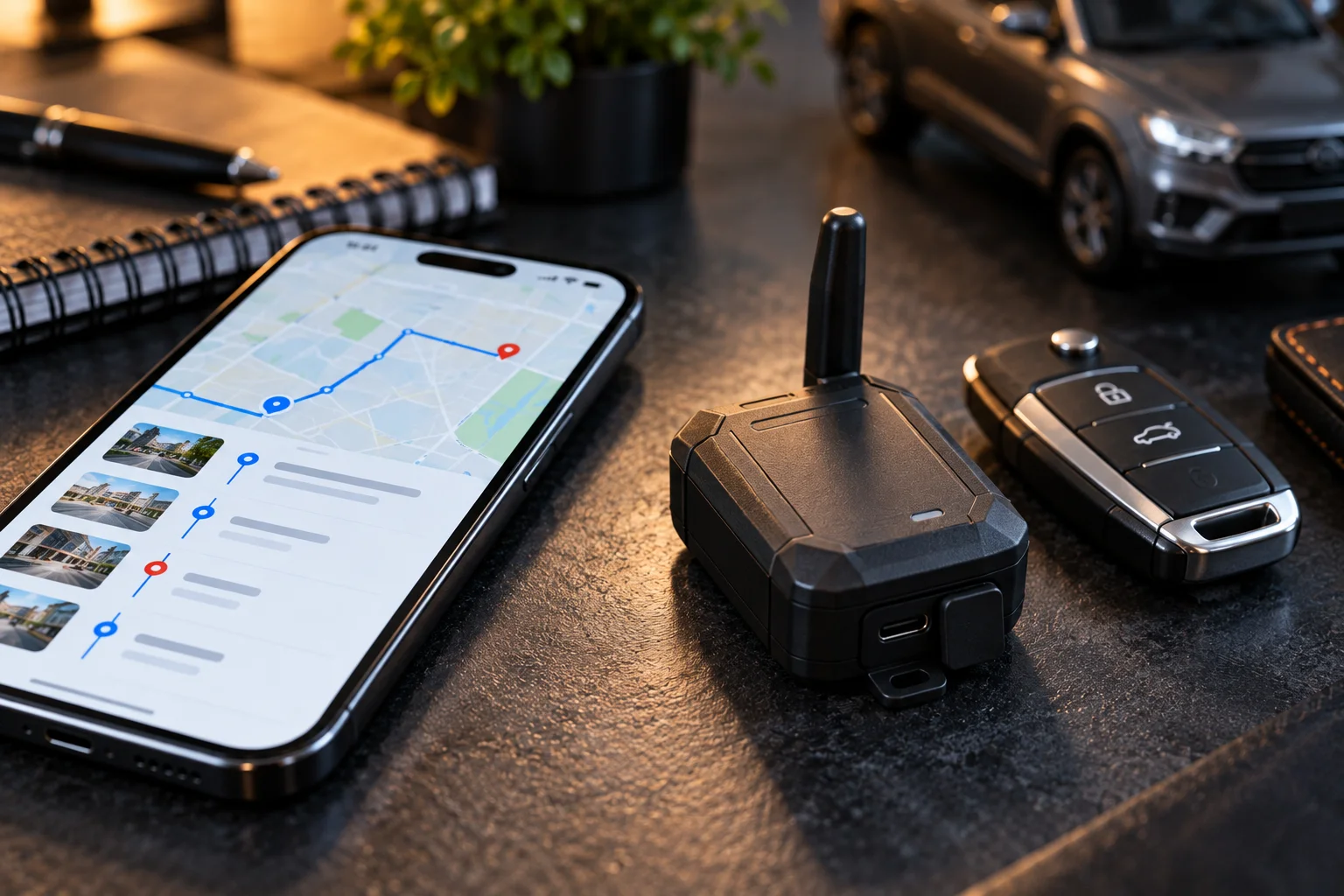
A Bluetooth tracker is usually the better choice for keys, wallets, bags and luggage, while a GPS tracker makes more sense when you need to monitor a moving vehicle, pet or other asset from far away. The biggest difference isn't simply tracking accuracy. It's how each device gets its location back to you.
A Bluetooth tracker such as an AirTag or Tile normally broadcasts a short-range Bluetooth signal. Your phone, or compatible devices belonging to a tracking network, can detect that signal and help report the tracker's approximate location. Apple's current AirTag, for example, uses Bluetooth and the Find My network rather than having its own cellular connection.
A dedicated GPS tracker works differently. It uses GPS or another GNSS system to determine its position and typically uses cellular connectivity to send that position to a server, where you can view it through an app.
That difference creates a very practical divide:
Use case | Bluetooth tracker | GPS tracker |
|---|---|---|
Keys | Excellent | Overkill |
Wallet | Excellent | Overkill |
Luggage | Very good | Useful for specialized needs |
Backpack | Very good | Useful for higher-risk situations |
Car | Limited | Better for live/remote tracking |
Pet | Useful for finding a lost pet | Better for roaming pets |
Bicycle | Useful | Better for theft/remote tracking |
Fleet vehicle | Not suitable | Designed for this |
Real-time location | No | Usually yes |
Subscription | Usually no | Often yes |
Battery life | Usually long | Usually shorter |
Best for | Finding things | Monitoring movement |
The right choice depends on what you want the tracker to do after the item leaves your immediate surroundings.
How Does a Bluetooth Tracker Work?
A Bluetooth tracker broadcasts a Bluetooth signal that nearby phones or compatible devices can detect and use to update the tracker's location.
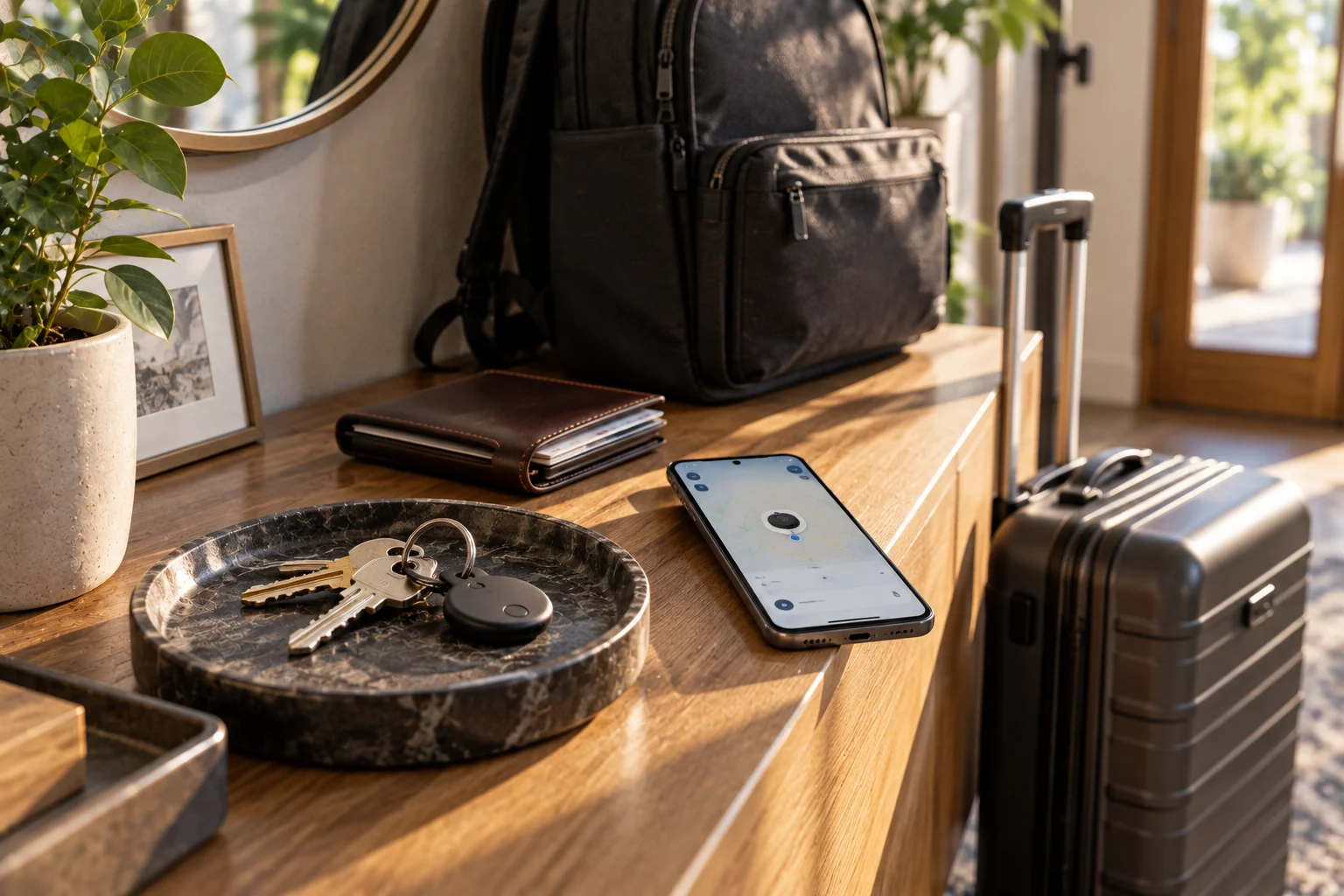
The tracker itself generally isn't determining its location with GPS.
Take the current AirTag as an example. It sends out a secure Bluetooth signal. Nearby devices participating in Apple's Find My network can detect that signal and relay the approximate location back to the owner. Apple says the Find My network contains more than a billion Apple devices that can help locate compatible items.
Tile works on a similar basic principle, although its ecosystem is different. Tile states that its trackers don't contain GPS or provide real-time location monitoring. When a Tile connects to the Tile app, the phone can update the tracker's location. Tile can also use its network to help locate a tracker outside the owner's Bluetooth range.
So a Bluetooth tracker isn't necessarily "limited to Bluetooth range."
Its direct connection is limited by Bluetooth range.
Its network-assisted finding can work much farther away if compatible devices happen to detect the tracker.
How Does a GPS Tracker Work?
A GPS tracker determines its position using satellite signals and normally uses a cellular connection to send that position to you remotely.
The two technologies have different jobs.
GPS/GNSS
The satellite receiver determines where the tracker is.
Cellular connectivity
The cellular modem sends that information somewhere you can access it.
Tracking app
The app displays the reported position and may provide additional information such as movement history, alerts or geofencing.
This is why a dedicated GPS tracker can continue reporting the location of a moving car even when your phone is hundreds or thousands of miles away.
It doesn't need your phone to be physically near the tracker.
That's one of the most important differences between the two categories.
GPS vs Bluetooth: What's the Real Difference?
GPS trackers are built for remote location reporting, while Bluetooth trackers are primarily built for finding nearby or misplaced belongings.
The distinction becomes clearer when you imagine losing a suitcase.
Scenario 1: You leave your suitcase at an airport
A Bluetooth tracker can be excellent.
If another compatible device detects it, the network can update its approximate location.
Scenario 2: Your car is driven 50 miles away
A Bluetooth tracker may not provide a continuous location trail.
A dedicated GPS/cellular tracker can continue reporting the car's location, assuming it has adequate cellular coverage and power.
Scenario 3: Your dog runs across a large park
A Bluetooth tracker might eventually be detected by another participating phone.
A GPS tracker designed for pets can provide much more direct location information over cellular networks.
That's why the same tracker shouldn't automatically be considered suitable for every situation.
Is an AirTag a GPS Tracker?
No. The current AirTag is a Bluetooth-based item tracker, not a standalone GPS/cellular tracker.
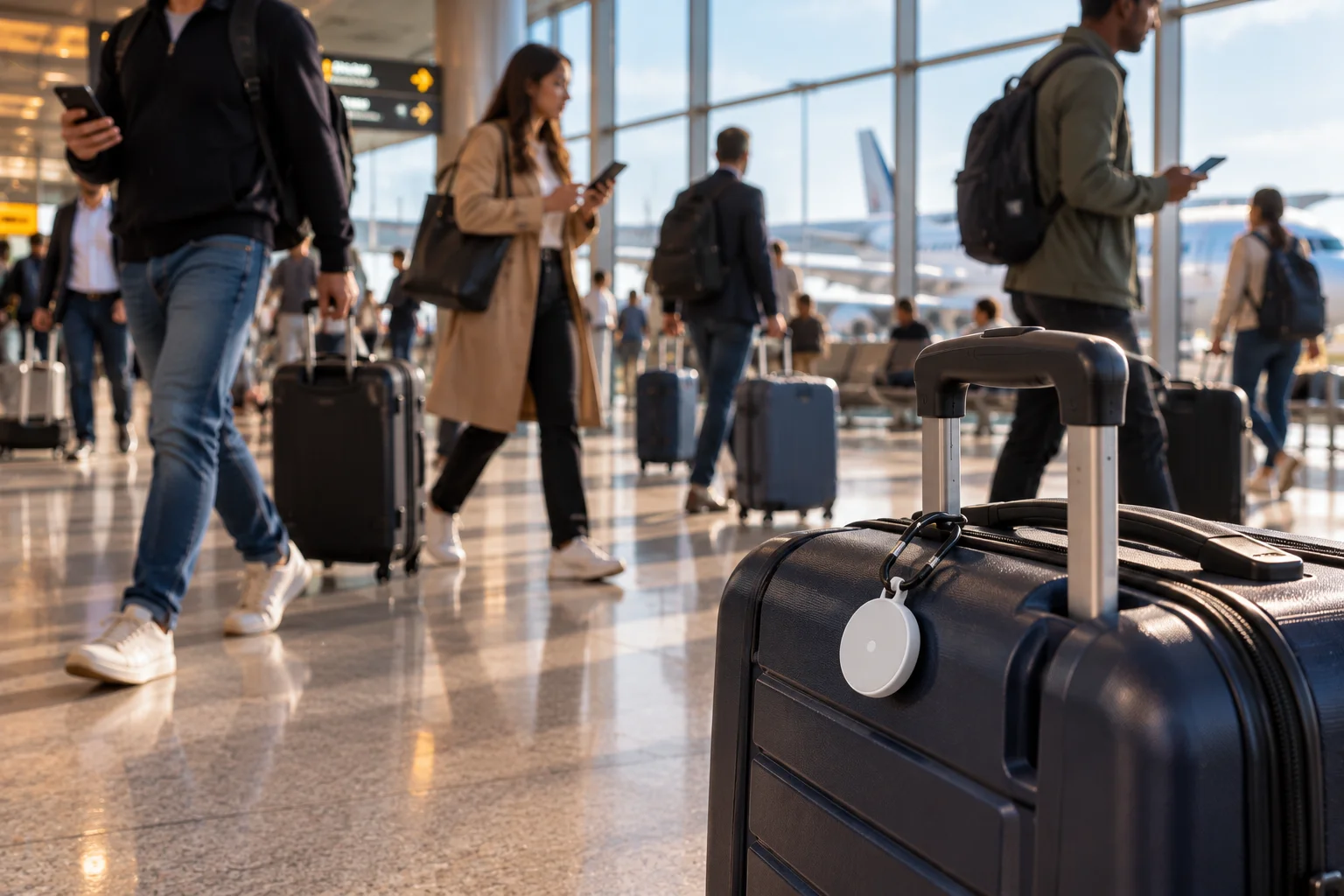
Apple explicitly describes AirTag's connectivity as Bluetooth for proximity finding, combined with its Ultra Wideband hardware for Precision Finding on compatible devices.
When an AirTag is away from your iPhone, nearby Apple devices can detect its Bluetooth signal and anonymously relay its approximate location through the Find My network.
This can make an AirTag incredibly useful over long distances.
But that doesn't turn it into a GPS tracker.
The difference matters because the AirTag depends on the availability of participating devices around it.
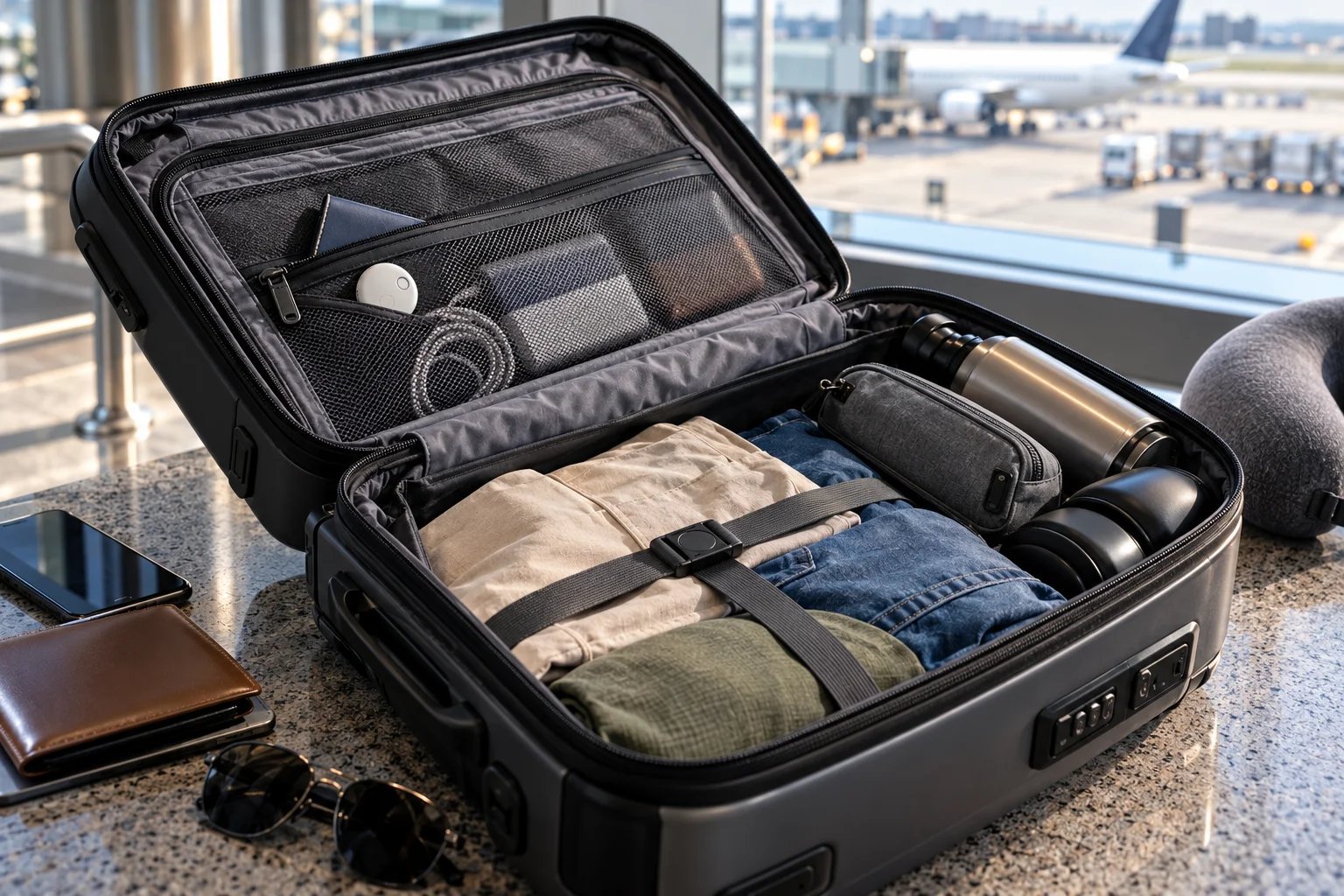
Is a Bluetooth Tracker Good for Luggage?
Yes. Luggage is one of the strongest use cases for a Bluetooth tracker.
AirTags and similar trackers can be particularly useful when checked luggage disappears from your immediate surroundings.
The tracker doesn't need to maintain a direct Bluetooth connection to your phone throughout the flight.
If the luggage is detected by a compatible device participating in the relevant network, its approximate location can be updated.
Apple has also introduced Share Item Location for AirTag and compatible Find My accessories, allowing users to temporarily share an item's location with participating organizations such as airlines. Apple says it has partnered with more than 50 airlines for this capability.
For ordinary luggage, that's usually much more practical than paying for a cellular GPS tracker and its associated service.
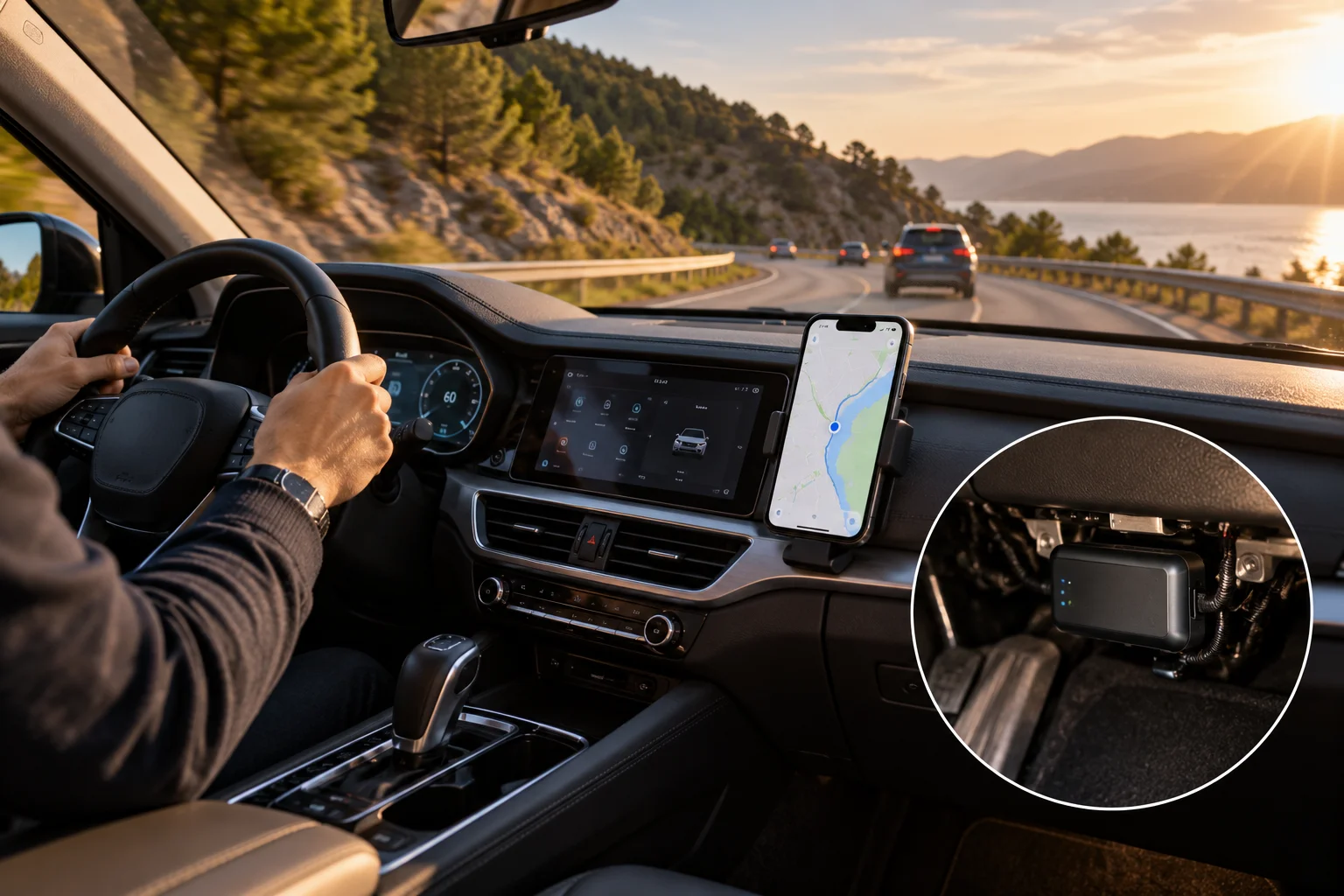
Is a GPS Tracker Better for a Car?
If your objective is remote or ongoing vehicle tracking, a dedicated GPS tracker is generally the more appropriate technology.
A Bluetooth tracker can help you determine that your car, keys or vehicle-related belongings are somewhere nearby or were detected by a network.
But it isn't designed to provide the same kind of continuous tracking as a dedicated GPS/cellular device.
A proper vehicle tracker may provide features such as:
Current location
Location history
Geofencing
Movement alerts
Ignition information
Speed information
Trip history
Battery-voltage monitoring
The exact features depend on the device.
A GPS tracker also introduces another consideration:
Power.
A vehicle tracker can be connected to the car's electrical system, plugged into a diagnostic port or powered by its own battery, depending on the design.
That gives it capabilities that a small coin-cell Bluetooth tracker isn't designed to provide.
Can You Use a Bluetooth Tracker on a Car?
Yes, but it should generally be treated as an item-finding tool rather than a substitute for a dedicated vehicle-tracking system.
An AirTag can be useful for locating your parked car or recovering a vehicle-related item.
For example, if you forget where you parked, a compatible iPhone can use Find My and Precision Finding to help locate the AirTag nearby. Apple's current AirTag supports Ultra Wideband Precision Finding on compatible devices.
But if you need:
"Tell me where my car is right now while someone else is driving it,"
that's a different requirement.
That's where GPS/cellular tracking becomes much more relevant.
Is a GPS Tracker Better for Pets?
For pets that regularly roam outside a Bluetooth tracker's useful network environment, a GPS/cellular tracker can provide more dependable remote location information.
A Bluetooth tracker can still be useful on a pet collar.
Tile specifically lists pet leashes among suitable uses for its Bluetooth trackers.
But consider the environment.
A dog escapes into a densely populated neighborhood.
A Bluetooth network may have plenty of compatible phones nearby.
The same dog disappears into a rural area with few participating devices.
The tracker may have fewer opportunities to report its location.
A GPS pet tracker doesn't depend on nearby strangers' phones in the same way. Instead, it generally uses its own satellite positioning and cellular connection.
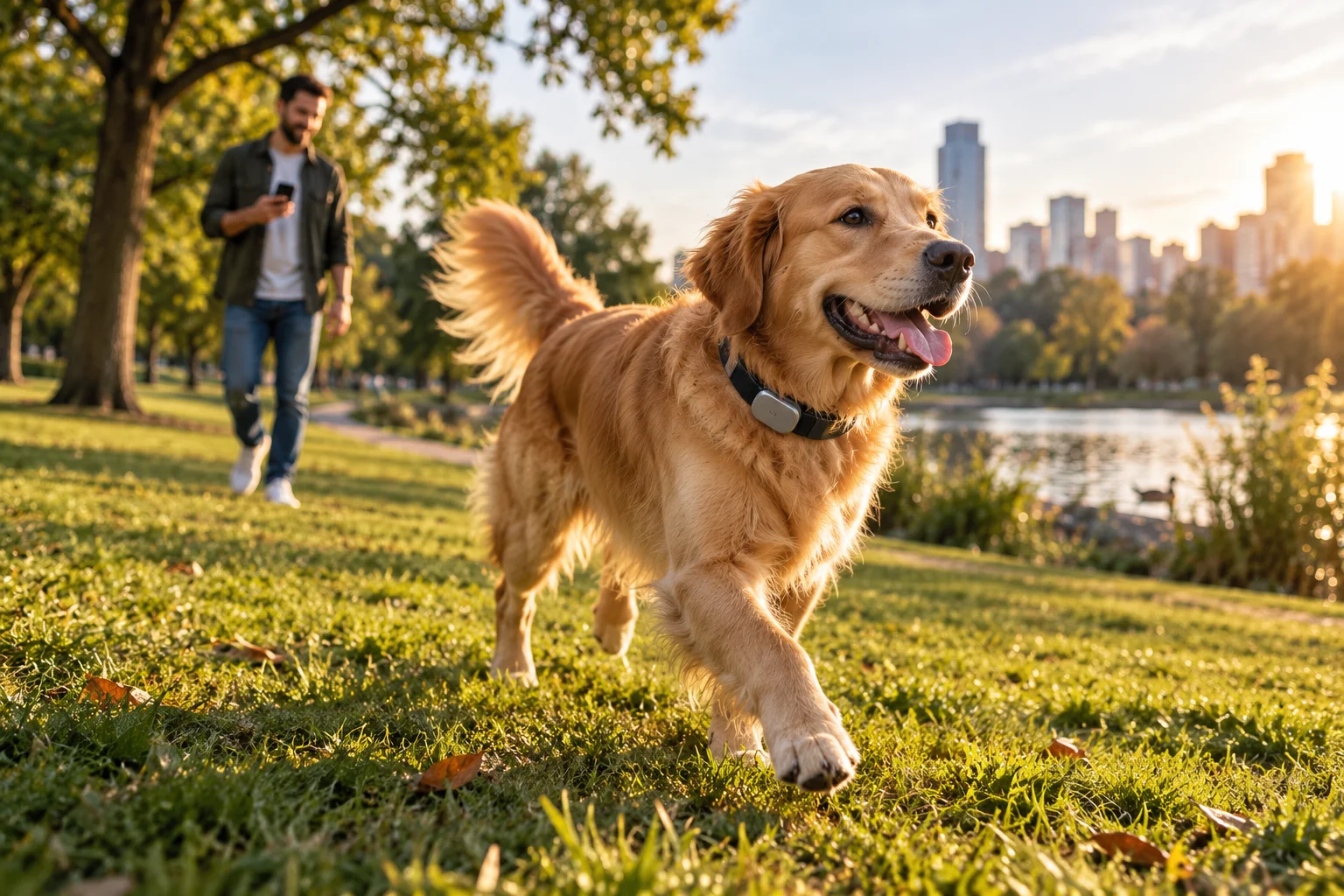
That makes it better suited to:
Hiking dogs
Rural properties
Large open spaces
Frequently roaming pets
Owners who want location history
The trade-off is usually higher cost, charging requirements and potentially a subscription.
What About Cats?
A Bluetooth tracker can work well for an indoor or neighborhood cat, while a GPS tracker becomes more useful when the cat regularly travels farther from populated areas.
For a cat that mostly moves around your neighborhood, a Bluetooth network may provide useful location updates.
For a cat that routinely travels long distances, a dedicated GPS device can offer more direct location reporting.
The physical design matters too.
A pet tracker needs to be:
Lightweight
Secure
Comfortable
Water resistant
Suitable for the animal's collar
Easy to recharge or replace batteries
Don't choose based purely on tracking technology.
The hardware has to be appropriate for the animal.
Which Tracker Is Better for Everyday Items?
Bluetooth trackers are usually the better fit for everyday belongings because they are small, relatively simple and designed specifically for finding misplaced objects.
Good candidates include:
Keys
Wallets
Backpacks
Luggage
Camera bags
Bicycle accessories
Remote controls
Tool cases
School bags
Travel equipment
The current AirTag is only 31.9mm in diameter and weighs 11.8g, making this type of tracker practical for small belongings. It also has an IP67 rating.
You don't need a cellular subscription to find your keys.
You don't need a GPS receiver to find a suitcase.
And you don't need a high-capacity rechargeable battery for something that may spend most of its life sitting inside a drawer.
That's where Bluetooth trackers make sense.
Why GPS Trackers Usually Cost More
GPS trackers need more hardware and connectivity than simple Bluetooth item trackers, which can increase both purchase and operating costs.
A dedicated GPS/cellular tracker may need:
GNSS receiver
Cellular modem
SIM or eSIM
Larger battery
GPS antenna
Cellular antenna
Location-processing hardware
Server infrastructure
Mobile application
The cellular connection can also involve a recurring subscription.
A Bluetooth tracker can avoid much of this because it uses your phone or a broader device network to relay its location.
That creates a useful rule:
If you don't need independent remote tracking, don't automatically pay for independent remote tracking.
Which Has Better Battery Life?
Bluetooth trackers generally have the advantage because they can operate with extremely low-power radios and don't need to maintain a cellular connection.
The exact battery life depends on the product.
AirTag is designed around a replaceable coin-cell battery, while dedicated GPS trackers often use rechargeable batteries because cellular communication and GPS positioning consume considerably more energy.
This creates a trade-off:
Requirement | Bluetooth tracker | GPS tracker |
|---|---|---|
Tiny battery | Excellent | Difficult |
Long unattended use | Excellent | Depends on device |
Frequent location updates | Not designed for it | Better |
Rechargeable battery | Sometimes | Common |
Cellular connection | No | Usually |
Low maintenance | Excellent | More maintenance |
If your priority is:
"I don't want another gadget to charge every few days,"
a Bluetooth tracker is generally more convenient.
Does GPS Always Mean More Accurate Tracking?
Not necessarily. GPS provides geographic positioning, but the quality of the final location depends on satellite visibility, antenna design, signal conditions and how the tracker reports that position.
A GPS tracker can determine its coordinates without needing your phone.
But GPS signals can be affected by:
Buildings
Underground locations
Dense tree cover
Indoor environments
Urban canyons
Poor satellite visibility
Bluetooth trackers have a different concept of accuracy.
A network-based Bluetooth tracker may tell you:
"This item was detected at this location."
Then, when you're physically near it, technologies such as Ultra Wideband can provide much more precise directional finding.
Apple's current AirTag combines Bluetooth with second-generation Ultra Wideband technology for Precision Finding on compatible hardware.
So "GPS vs Bluetooth accuracy" isn't really an apples-to-apples comparison.
They solve different location problems.
What Happens If There Are No Phones Nearby?
A Bluetooth tracker can become difficult to locate remotely if no compatible devices detect its signal.
This is one of the most important limitations to understand.
Imagine leaving a Bluetooth tracker in:
An empty warehouse
There may be nobody nearby to relay its location.
Now imagine the same tracker in:
A busy international airport
There may be thousands of compatible devices nearby.
The tracking experience can therefore vary dramatically depending on the environment.
A GPS/cellular tracker doesn't depend on another person's phone in the same way.
It needs satellite visibility and cellular coverage instead.
What Happens If There Is No Cellular Coverage?
A GPS tracker may still be able to calculate its location without cellular service, but it generally cannot send that location to you remotely until it regains a communication path.
This distinction is important.
GPS determines:
Where am I?
Cellular determines:
How do I tell the owner where I am?
A tracker can therefore know its position while being unable to report it.
Some devices can store location data and upload it later, but that depends on the hardware and software.
So when buying a GPS tracker, check both:
GPS/GNSS coverage
and
cellular network compatibility.
What About Bluetooth Range?
Bluetooth range varies by device and environment, so the advertised number shouldn't be treated as a guaranteed real-world distance.
Tile currently states that its trackers can connect within ranges of roughly 100 to 500 feet depending on the model.
Walls, vehicles, buildings and radio interference can reduce effective range.
More importantly, Bluetooth range isn't the same thing as network coverage.
A tracker might be hundreds of miles away from you and still be found by a compatible device through a crowdsourced network.
That's why the simple statement:
"Bluetooth only works within 100 feet"
is incomplete.
Which Is Better for Theft Recovery?
For an asset where you need ongoing remote location information, a dedicated GPS/cellular tracker is generally better suited to the job.
Bluetooth trackers can still be valuable for recovering stolen or misplaced property, particularly when the device passes through an environment with a dense tracking network.
But don't confuse:
network-assisted item finding
with:
continuous vehicle tracking.
If the requirement is:
"Show me where my vehicle has traveled over the last six hours,"
you need a tracker designed to collect and transmit that data.
If the requirement is:
"Help me find my backpack after I accidentally leave it at a café,"
a Bluetooth tracker is much more appropriate.
Which Should You Buy for Luggage?
Buy a Bluetooth tracker for ordinary luggage tracking.
It is small, low-maintenance and designed for exactly this type of use.
The current AirTag is particularly useful for Apple users because it integrates directly into Find My and can use the large Find My network when it is away from your iPhone.
Android and mixed-device households should look at Bluetooth trackers compatible with their preferred ecosystem.
Which Should You Buy for a Car?
Choose a GPS/cellular tracker if you need remote, ongoing vehicle tracking; choose a Bluetooth tracker if you mainly want to remember where you parked or locate a misplaced vehicle-related item.
The distinction is about the requirement, not the brand.
Choose Bluetooth if you want:
Parking-location help
Recovery assistance for misplaced items
A low-cost secondary tracker
No cellular subscription
Choose GPS if you want:
Live or frequent location updates
Trip history
Geofencing
Fleet tracking
Remote vehicle monitoring
Which Should You Buy for a Pet?
Choose Bluetooth for a pet that mostly stays around populated areas and GPS/cellular for a roaming pet where dependable remote location matters.
Consider:
Pet size
Range
Cellular coverage
Battery life
Charging frequency
Weight
Water resistance
Subscription cost
A tiny Bluetooth tracker can be convenient, but a dedicated GPS pet tracker is built around a fundamentally different job.
Which Should You Buy for Everyday Items?
Choose Bluetooth.
For keys, wallets, bags, luggage and similar belongings, a Bluetooth tracker is usually the more appropriate technology.
Apple's current AirTag, for example, is explicitly designed for tracking objects and includes protections against unwanted tracking.
Tile similarly positions its trackers around everyday items such as wallets, luggage, keys and pet leashes rather than continuous GPS monitoring.
A Simple Buying Decision
Use this rule:
Buy a Bluetooth tracker if:
You want to find something you might lose.
Buy a GPS tracker if:
You want to monitor something that moves.
That's not an absolute rule, but it's a remarkably useful starting point.
Your requirement | Better fit |
|---|---|
Find keys | Bluetooth |
Find wallet | Bluetooth |
Track luggage | Bluetooth |
Find backpack | Bluetooth |
Remember where you parked | Bluetooth |
Track a roaming dog | GPS |
Track a roaming cat | GPS |
Monitor a car remotely | GPS |
Monitor a fleet | GPS |
Track a bicycle continuously | GPS |
Recover an occasionally misplaced item | Bluetooth |
Long-term asset monitoring | GPS |
FAQ: GPS Trackers vs Bluetooth Trackers
Is a Bluetooth tracker the same as a GPS tracker?
No. Bluetooth trackers generally use Bluetooth signals and nearby phones or network devices to help determine an item's location. GPS trackers use satellite positioning and typically cellular connectivity to report their location remotely.
Can an AirTag track a car?
An AirTag can help locate a car or a misplaced vehicle-related item, particularly through Apple's Find My network. But it isn't a dedicated GPS vehicle tracker and doesn't provide the same type of continuous location reporting. Apple describes AirTag as an item tracker rather than a people or pet tracker.
Can a Bluetooth tracker work without a phone nearby?
It can continue broadcasting its signal, but remote location updates generally depend on compatible nearby devices detecting that signal. Apple's Find My network and Tile's network can provide this type of network-assisted finding.
Does a GPS tracker need a SIM card?
Most standalone GPS trackers that provide remote tracking need some form of cellular connectivity, usually through a SIM or eSIM, although the exact implementation varies by product.
Does GPS work without mobile data?
The GPS receiver can determine the tracker's position without mobile data. However, the device generally needs another communication path, such as cellular connectivity, to send that position to your phone remotely.
Which has better battery life, GPS or Bluetooth?
Bluetooth trackers generally consume less power and can run for long periods on small batteries. GPS/cellular trackers usually consume more power because they periodically determine and transmit their location.
Is an AirTag good for pets?
It can be useful as an item-finding device attached to a pet's collar, but it isn't designed as a dedicated pet GPS tracker. For pets that roam widely, a purpose-built GPS tracker can provide more direct remote tracking.
Can GPS trackers work anywhere in the world?
Not automatically. GPS satellite positioning is global in principle, but a cellular tracker also depends on compatible cellular networks and service coverage. International use therefore depends on the tracker's supported networks and subscription.
Do GPS trackers require a monthly fee?
Many standalone GPS/cellular trackers do because cellular connectivity and cloud services have ongoing costs. Some products use different connectivity models, so check the specific device before buying.
Can Bluetooth trackers be used for stolen property?
They can help locate lost or stolen belongings if the tracker is detected by your phone or a compatible tracking network. But they aren't a substitute for a dedicated anti-theft GPS system when continuous tracking is required.
The Bottom Line: Buy Based on the Tracking Problem, Not the Technology Name
GPS and Bluetooth trackers aren't really competing versions of the same product.
They're designed around different problems.
A Bluetooth tracker is excellent when the problem is:
"I lost something. Help me find it."
A GPS/cellular tracker becomes much more useful when the problem is:
"This thing is moving somewhere without me. Tell me where it is."
That distinction explains why a small Bluetooth tracker can be perfect for luggage but inadequate for fleet management.
It explains why an AirTag can help you recover a misplaced backpack without needing a monthly cellular subscription.
And it explains why a dedicated GPS tracker makes more sense when you're monitoring a vehicle, roaming pet or other moving asset.
Current AirTag technology demonstrates how far Bluetooth-based item finding has evolved: Apple's latest model combines Bluetooth, Ultra Wideband Precision Finding and a crowdsourced Find My network with more than a billion participating Apple devices. Tile takes a similar network-assisted approach but explicitly states that its trackers don't contain GPS or offer real-time GPS monitoring.
So before buying, ask one question:
Do I need to find an item, or do I need to monitor its movement?
If it's the first, start with Bluetooth.
If it's the second, look at GPS/cellular.
That's the simplest way to avoid paying for tracking hardware and subscriptions you don't actually need.