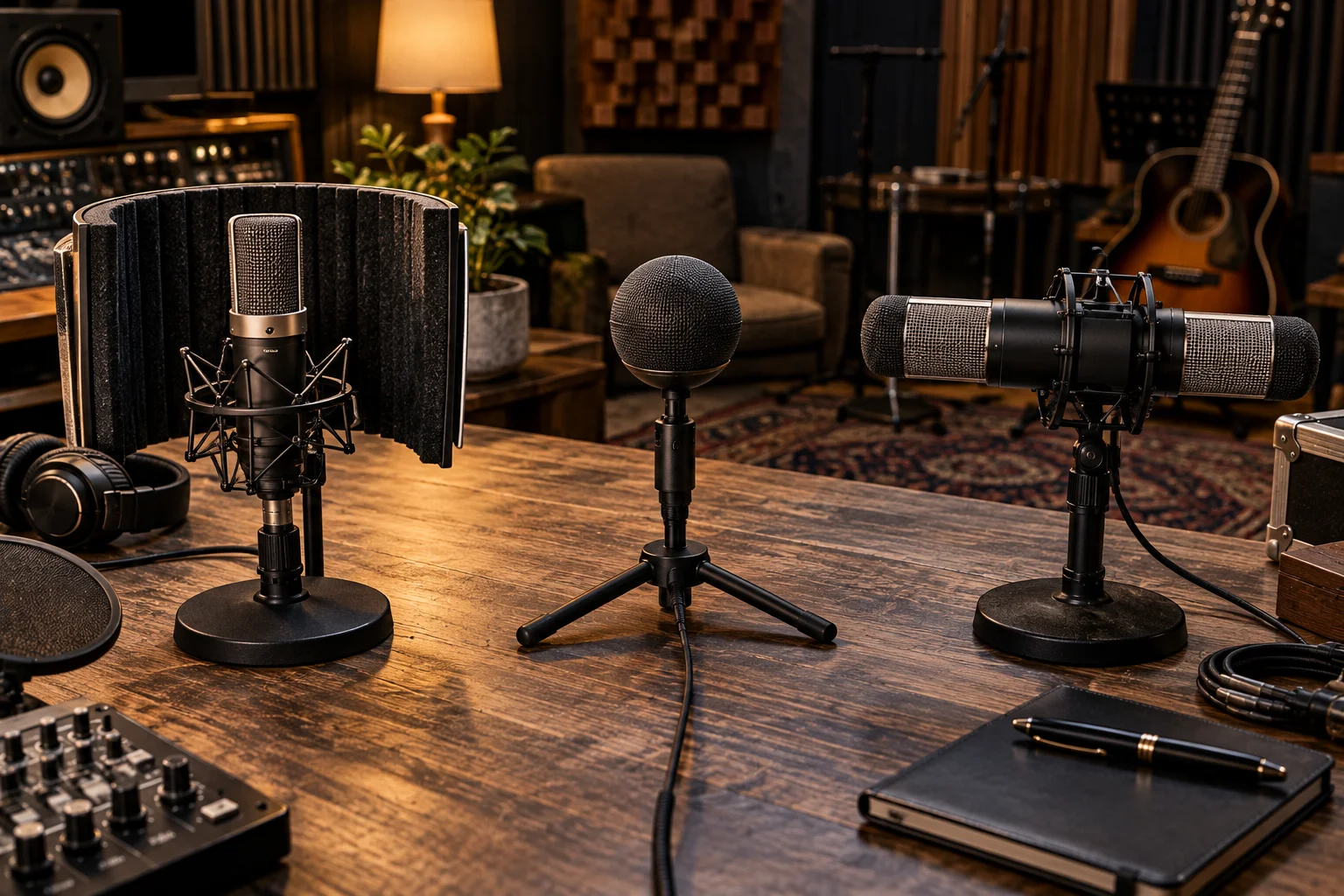
Cardioid is usually the most practical microphone pickup pattern for streaming, solo podcasts and video calls, while omnidirectional and bidirectional patterns make more sense for specific recording situations. The difference comes down to where each microphone is most sensitive to sound.
A cardioid microphone favors sound from the front and reduces pickup from the rear. An omnidirectional microphone captures sound from essentially all directions. A bidirectional, sometimes called figure-eight, microphone is sensitive from the front and rear while rejecting sound from the sides.
That pattern affects much more than the microphone's technical specification. It determines how much room noise, keyboard sound, other speakers and reflections reach your recording.
For a US-based streamer recording alone in a bedroom, a cardioid mic will generally be the sensible starting point. For two people sitting opposite each other, bidirectional can be useful. For a meeting where people are positioned around a table, omnidirectional pickup can make more sense.
What Is a Microphone Pickup Pattern?
A pickup pattern describes how sensitive a microphone is to sounds arriving from different directions.
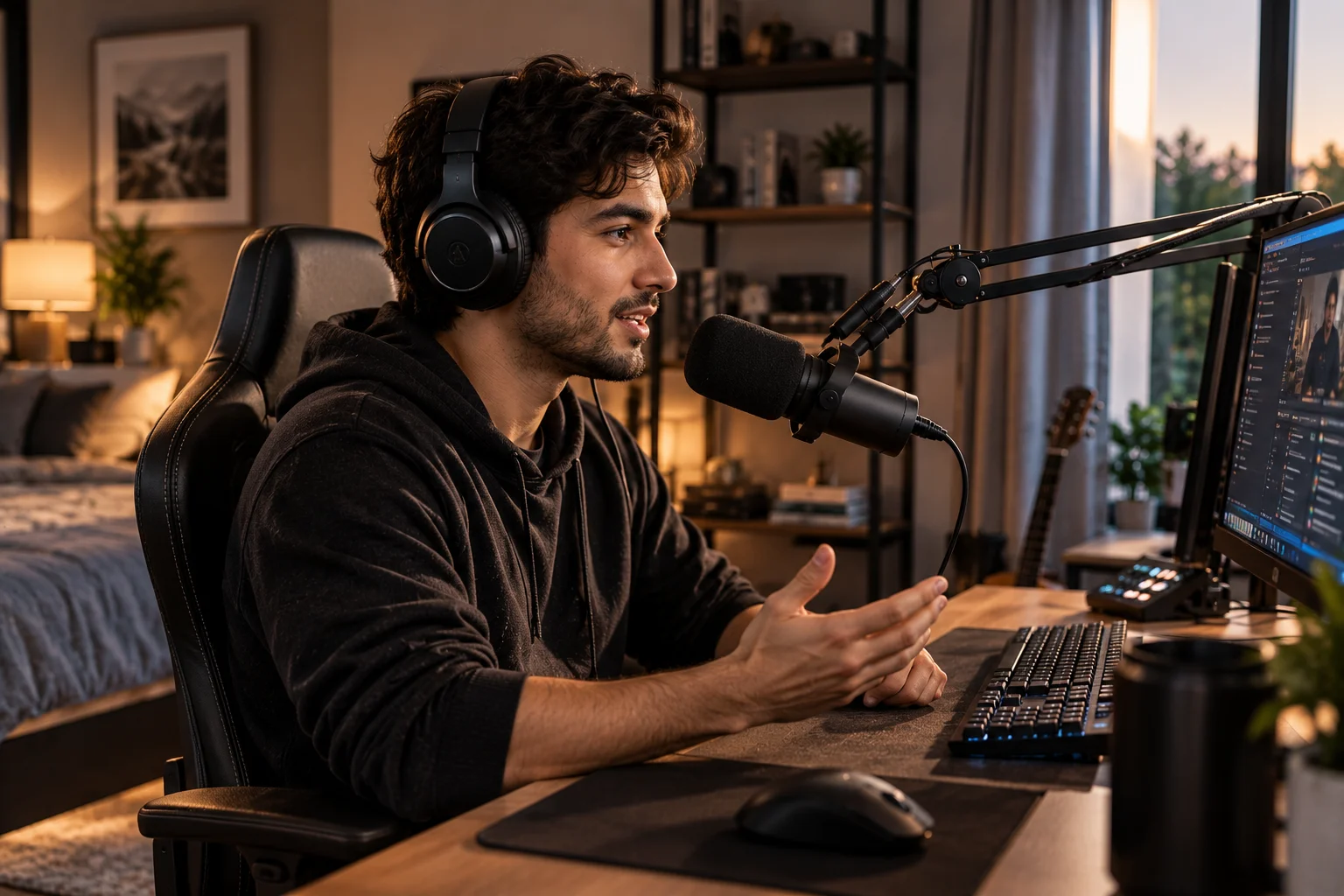
Microphone directionality is normally represented using a polar-pattern diagram, showing sensitivity around the microphone at different angles.
The three patterns in this comparison behave differently:
Pickup pattern | Most sensitive to | Useful for |
|---|---|---|
Cardioid | Front | Streaming, solo podcasts, calls |
Omnidirectional | All directions | Meetings, room sound, group pickup |
Bidirectional | Front and rear | Two-person face-to-face recording |
The important point is that none of these patterns is universally "better."
You're choosing which sounds you want the microphone to hear and which ones you want it to reduce.
How Does a Cardioid Microphone Work?
A cardioid microphone is most sensitive to sound from the front and least sensitive directly behind it.
The pattern gets its name from its roughly heart-shaped response.
Shure describes cardioid as the most common unidirectional pattern, with maximum sensitivity on-axis and substantially reduced sensitivity at the rear.
That makes it particularly useful when you have one primary sound source.
Imagine you're streaming from a desk. Your mouth is directly in front of the microphone. Your computer fan, keyboard and room reflections are somewhere else.
A cardioid pattern gives you a way to favor your voice rather than treating every direction equally.
Shure specifically recommends cardioid pickup for podcasting because it can reduce room noise and reflections.
Why Is Cardioid Good for Streaming?
Cardioid is usually the easiest choice for a solo streamer because the microphone can prioritize your voice while reducing sound arriving from behind it.
It works particularly well when:
You're the only person speaking.
The microphone stays on your desk.
Your room isn't acoustically treated.
You have a keyboard or PC nearby.
You want a focused vocal sound.
There's still an important limitation: cardioid doesn't magically remove background noise.
A loud air conditioner, keyboard or computer fan can still be audible if it's close enough.
Microphone distance and placement matter just as much as the polar pattern.
Why Is Cardioid Popular for Podcasts?
Cardioid works well for solo podcasts because it provides focused vocal pickup while reducing some room ambience.
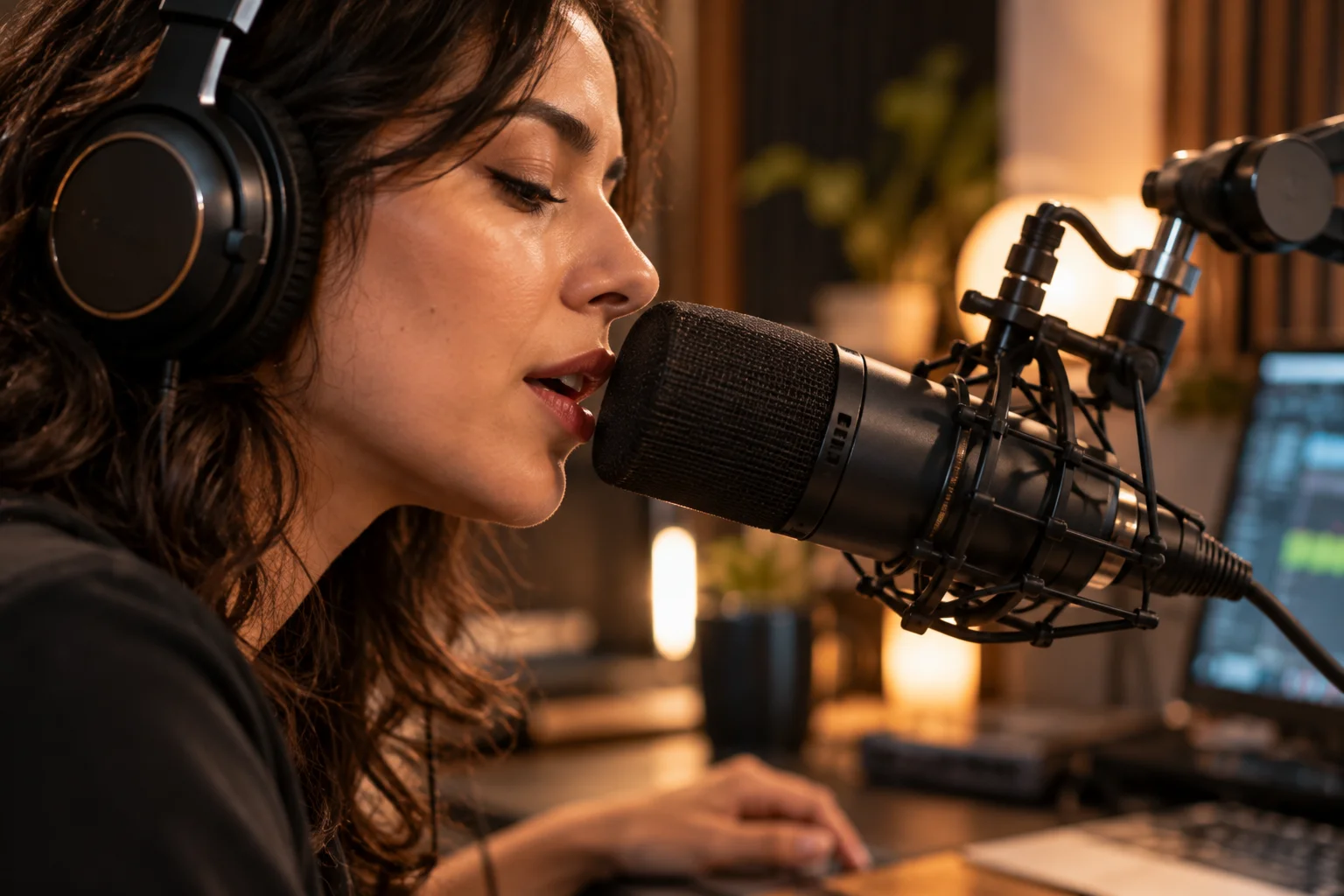
Home podcast rooms aren't always acoustically ideal. Hard walls, floors and furniture can create reflections that make speech sound distant or boxy.
A directional microphone can reduce some of that unwanted room contribution.
Shure recommends cardioid pickup as one of the key characteristics to look for in a podcasting microphone, particularly when reducing room noise is important.
For a single host, the basic arrangement is simple:
Host → front of microphone
Room noise → sides/rear → reduced sensitivity
This isn't acoustic isolation, but it can make recording easier.
How Does an Omnidirectional Microphone Work?
An omnidirectional microphone is designed to capture sound from all directions rather than strongly favoring one side.
Its pickup pattern is approximately 360 degrees.
That makes an omni microphone useful when you want several people or environmental sounds to be captured without constantly repositioning the microphone.
For example, imagine a small meeting around a table.
Instead of pointing a cardioid microphone toward one person, an omnidirectional microphone can capture voices from around the microphone.
The trade-off is obvious:
It doesn't know which sound you want and which sound you don't.
If someone is typing nearby, an air conditioner is running or a room has significant reverberation, an omni microphone can capture those sounds too.
Is Omnidirectional Good for Video Calls?
Omnidirectional pickup can work well for group calls when several people need to be heard from different directions, especially with a microphone designed for conferencing.
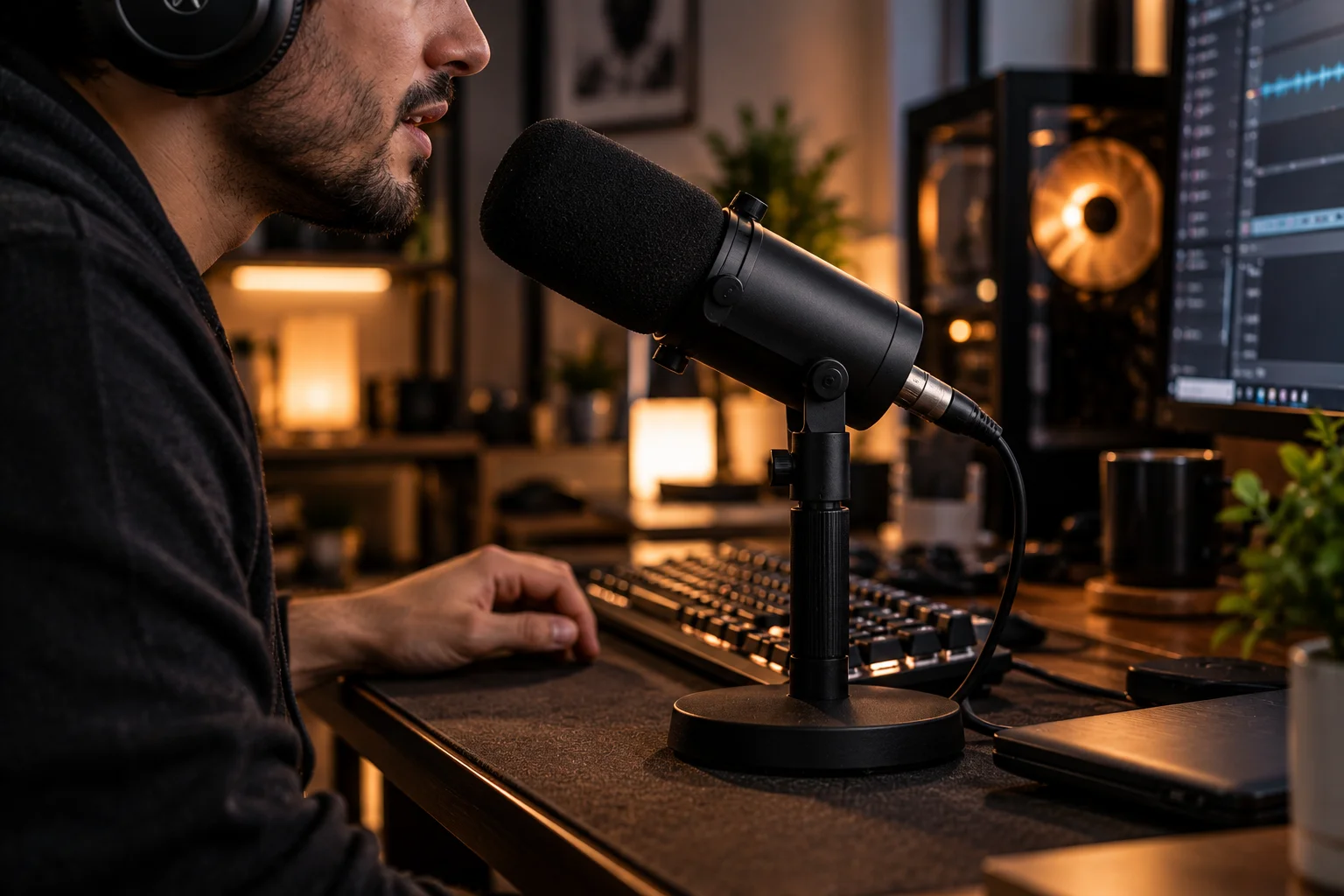
It's less attractive for a solo caller sitting beside a noisy computer.
For a conference table, however, the ability to capture people around the microphone can be useful.
The same principle applies to interviews and field recording. Shure notes that omnidirectional microphones can be useful when capturing multiple people and some room ambience.
The key is controlling the environment.
An omni microphone in a quiet room can sound natural.
An omni microphone in a noisy room can sound like it has no idea what you want.
How Does a Bidirectional Microphone Work?
A bidirectional microphone captures sound primarily from the front and rear while rejecting sound from the sides.
Its polar pattern is often called a figure-eight.
Imagine drawing a figure eight around the microphone:
Front → strong pickup
Sides → strong rejection
Rear → strong pickup
Shure identifies bidirectional microphones as useful for capturing two sound sources positioned in front of and behind the microphone while minimizing sound arriving from the sides.
That makes the pattern particularly interesting for face-to-face conversations.
Is Bidirectional Good for Two-Person Podcasts?
Yes, bidirectional pickup can work well when two people sit opposite each other and share one microphone.
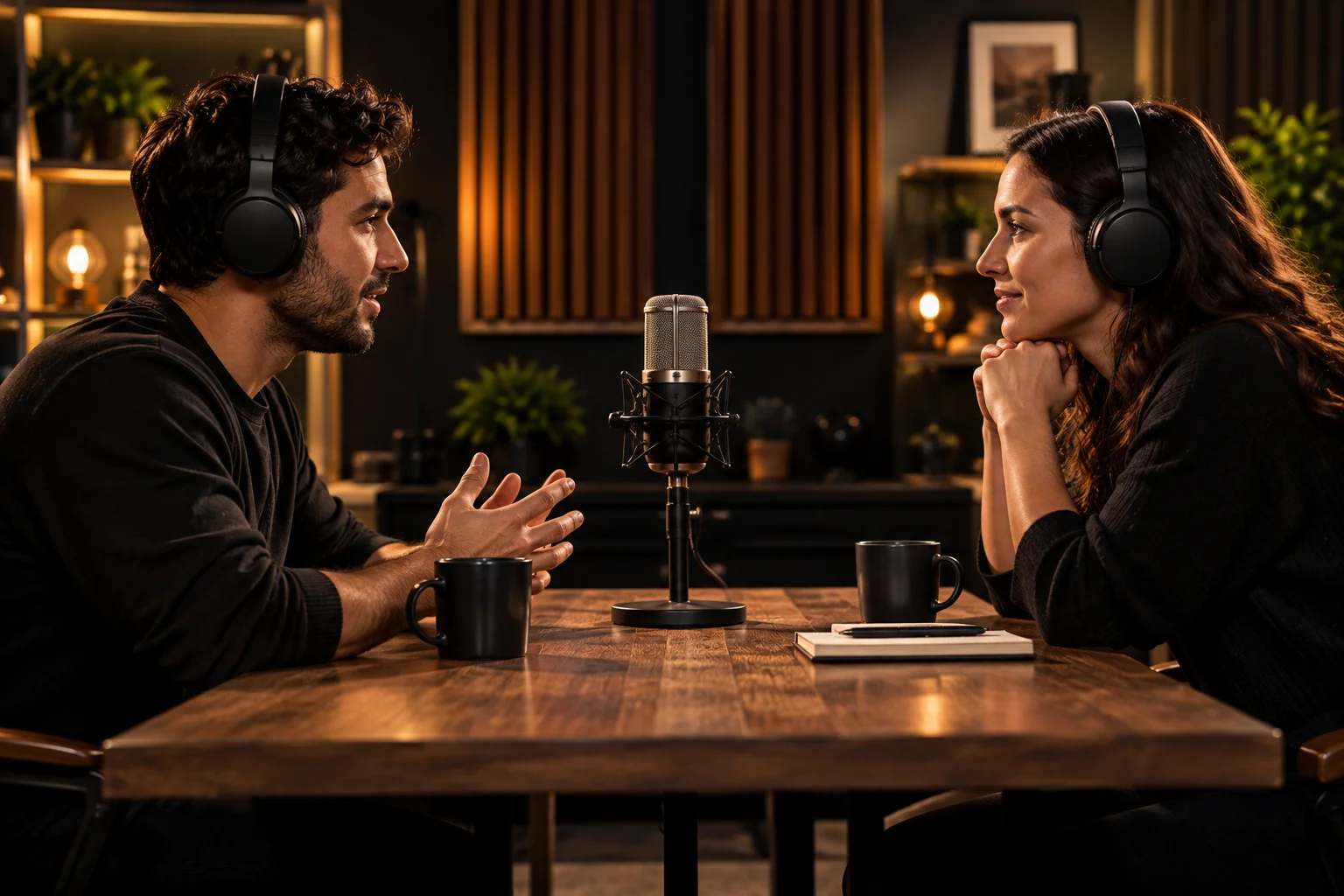
One person sits in front.
The other sits behind.
The microphone captures both while rejecting more sound from the sides.
This can be useful for certain interview or podcast setups, although two individual microphones often provide greater control over each person's level during mixing.
The physical arrangement matters enormously.
If both speakers sit beside a figure-eight microphone rather than opposite each other, you're putting them in the pattern's rejection zone.
That's the opposite of what you want.
Cardioid vs Omnidirectional vs Bidirectional: Which Should You Choose?
Choose the pattern based on how many people are speaking, where they're positioned and how noisy the room is.
Situation | Recommended pattern | Why |
|---|---|---|
Solo streaming | Cardioid | Focuses on the speaker |
Solo podcast | Cardioid | Reduces some room pickup |
One-person video call | Cardioid | Helps reduce unwanted room sound |
Two people facing each other | Bidirectional | Picks up front and rear |
Conference table | Omnidirectional | Captures voices around the mic |
Room ambience | Omnidirectional | Captures sound broadly |
Interview with one mic | Bidirectional or omni | Depends on positioning |
Noisy home office | Cardioid | Better directional control |
These are starting points, not rigid rules. Room acoustics, microphone placement and the microphone's actual design can change the result.
Which Pattern Is Best for Streaming?
For most solo streamers, cardioid is the most practical starting point.
A typical streaming setup has one person sitting in front of a microphone.
You generally don't need the microphone to hear the entire room.
You want it to hear you.
A cardioid pattern gives you directional control while remaining relatively forgiving of small changes in speaking position. Shure describes cardioid as a common choice for vocal applications and podcasting because it reduces unwanted ambient pickup.
If your room is particularly noisy, a tighter pattern such as supercardioid may also be worth considering, although it requires more precise positioning.
Which Pattern Is Best for Podcasts?
Cardioid is generally the easiest choice for a solo podcast, while bidirectional can make sense for a two-person face-to-face setup.
For a solo host:
Cardioid → one person → controlled room pickup
For two people sharing one microphone:
Bidirectional → person A → microphone → person B
For several people around a table:
Omnidirectional → microphone → multiple directions
If you're building a podcast studio, using separate microphones for each speaker can still provide more control than trying to make one microphone cover everyone.
Which Pattern Is Best for Video Calls?
The right pattern depends on whether you're alone or participating in a group around one microphone.
For a single person at a desk, cardioid can help reduce unwanted room sound.
For several people sitting around a table, omnidirectional pickup can be more practical.
For two people facing each other, bidirectional can work if the microphone is positioned correctly.
This is why a microphone marketed simply as a "conference mic" may have very different pickup behavior from a streaming microphone.
The microphone isn't necessarily better or worse.
It's designed for a different geometry.
Does Cardioid Reduce Keyboard Noise?
It can reduce keyboard pickup from less-sensitive directions, but it won't eliminate keyboard noise.
Suppose your microphone is facing you and your keyboard is positioned underneath it.
The keyboard may still be relatively close to the capsule.
Even a directional microphone can hear it.
Placement can therefore be more important than changing microphones.
Try positioning the microphone closer to your mouth and farther from the keyboard, while keeping the capsule aimed correctly.
Shure emphasizes microphone placement as an important part of controlling unwanted sound.
What Is the Proximity Effect?
The proximity effect is a bass increase that occurs as you move closer to many directional microphones, particularly cardioid designs.

This can make a voice sound fuller and deeper.
It can also make the recording sound excessively boomy if the speaker gets too close.
Shure notes that cardioid microphones are affected by proximity effect, while omnidirectional microphones do not exhibit the same proximity effect.
So don't judge a microphone's sound without considering how far your mouth is from the capsule.
Two people using the same cardioid microphone at different distances can produce noticeably different results.
Does Pickup Pattern Affect Microphone Placement?
Yes, and the correct placement depends directly on the pattern.
With cardioid:
Put the sound source in front.
With omnidirectional:
Positioning is less direction-critical, but distance still matters.
With bidirectional:
Put the two sound sources in front and behind.
A polar pattern isn't a software setting that fixes poor positioning.
It's a characteristic of how the microphone responds to sound.
Frequently Asked Questions
Is cardioid better than omnidirectional?
Neither is universally better. Cardioid is generally more useful when you want to isolate one primary speaker, while omnidirectional is useful when you need sound from multiple directions.
Is cardioid good for streaming?
Yes. Cardioid is commonly suited to solo streaming because it favors sound from the front and reduces sound arriving from the sides and rear.
Is omnidirectional good for podcasts?
It can be, particularly for group recording or when natural room ambience is desirable. For a solo podcast in an untreated room, cardioid is often easier to control.
Is bidirectional good for two people?
Yes. A figure-eight microphone can capture people positioned in front of and behind it while rejecting more sound from the sides.
What microphone pattern is best for Zoom or Teams calls?
For one person at a desk, cardioid is a useful starting point. For several people around one microphone, omnidirectional pickup can be more appropriate.
Does cardioid completely block background noise?
No. It reduces sensitivity to sound arriving from certain directions, but nearby or loud sounds can still be captured.
Can one microphone switch between cardioid, omni and bidirectional?
Yes. Some multi-pattern microphones allow you to select different polar patterns. Shure, for example, offers microphones with selectable cardioid, omnidirectional and bidirectional modes.
The Bottom Line
Cardioid, omnidirectional and bidirectional microphones aren't competing technologies so much as different ways of controlling what the microphone hears.
For most solo streaming and podcasting, cardioid is the practical starting point because it favors your voice and reduces some unwanted room pickup.
For group calls, room ambience and situations where sound comes from many directions, omnidirectional can make more sense.
For two people sitting opposite each other, bidirectional can be particularly useful because it captures sound from the front and rear while rejecting the sides.
The biggest mistake is choosing a pickup pattern based only on the microphone's specification sheet. Think about where the speakers will sit, where the unwanted noise is coming from and how controlled the room is.
Once you match the pickup pattern to that physical setup, the microphone has a much better chance of doing what you actually bought it to do.